How we make this list: we compare pricing pages, product documentation and public user reviews. Ratings come from G2, Capterra or Trustpilot, with the date we checked them.
Key takeaways
- Cala suits brands that want design, tech packs, and production in one platform, from sketch to factory.
- The New Black and Designovel suit designers who want AI-assisted ideation, patterns, and trend analysis.
- Botika and YesPlz suit e-commerce teams that want AI model imagery and styling without photoshoots.
- AI fashion tools speed ideation and visualization, but fit, fabric, and manufacturing still need human expertise.
Quick comparison
| Tool | Best for | Starting price | Free plan |
|---|
 Cala | Design to production platform | See website | No |
 The New Black | AI fashion ideation | See website | Free trial |
 Designovel | AI trend and design analysis | See website | No |
 Ablo | AI brand and collection design | See website | Free trial |
 Botika | AI model imagery for e-commerce | See website | Free trial |
 YesPlz | AI styling and recommendations | See website | No |
 Raspberry AI | AI design and rendering | See website | Free trial |
 Refabric | AI fashion design suite | See website | Free trial |
Is your product missing or out of date?
We review this list regularly. Vendors can request a listing, send updated pricing or ask about featured placement.
#1
Cala
Best for: Design to production platform
Visit ca.la
Starting priceSee website
Free planNo
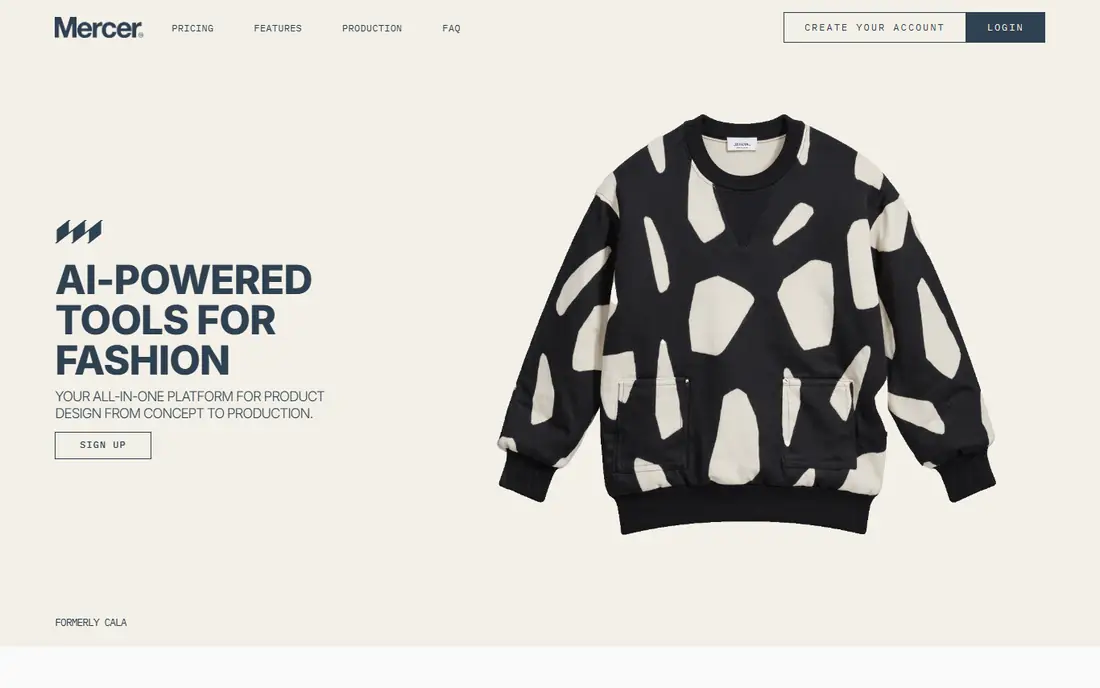
Cala is an AI-powered fashion platform that covers design, tech packs, sampling, and production, connecting brands with suppliers through one workflow. Designers generate concepts, refine them into tech packs with measurements and materials, and move to sampling and manufacturing without switching systems. Its supplier network suits brands that lack their own factory relationships.
Pricing is aimed at brands rather than hobbyists, and smaller designers may find it more platform than they need. Cala also provides costing and margin tools that help brands price collections profitably before production begins. Cala fits fashion brands that want design-to-production in one system, with AI speeding the early stages and real suppliers handling manufacturing.
What we like- Design plus tech packs plus production
- Supplier network
- Brand workflows
Watch out for- Enterprise pricing
- Best for brands, not solo hobbyists
Starting priceSee website
Free planFree trial
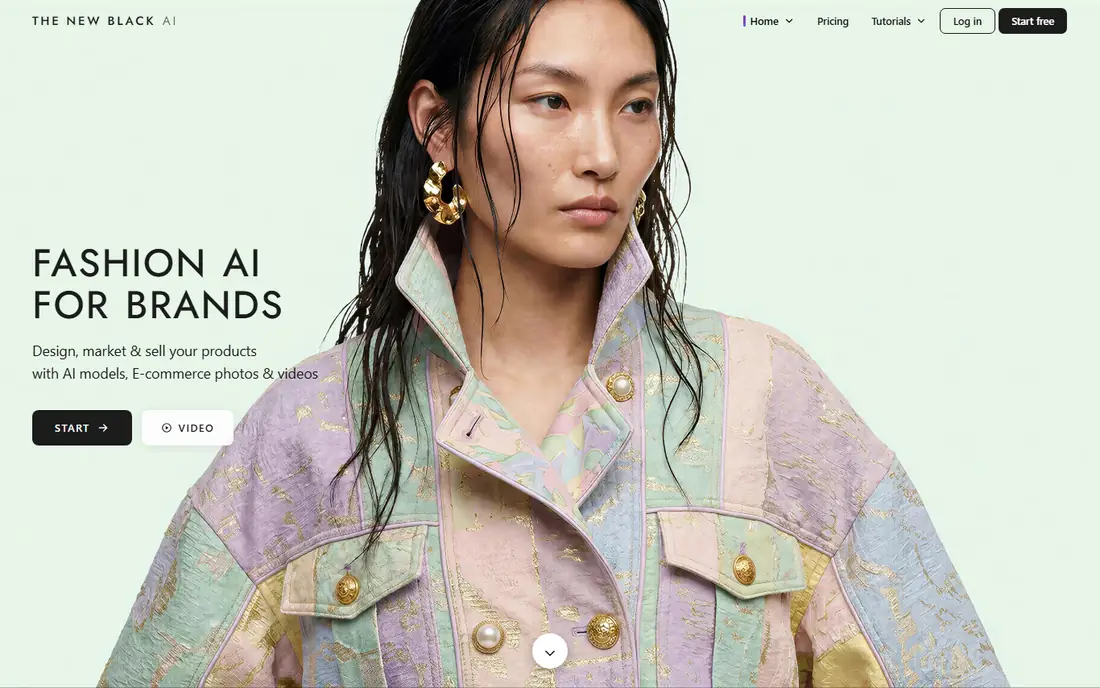
The New Black generates fashion imagery from prompts and references, helping designers explore silhouettes, fabrics, and styles quickly before committing to samples. Its style controls let designers iterate on collections visually, producing portfolio-ready imagery for presentations and mood boards. Designers use it to expand ideation beyond their first few concepts.
Generated images are starting points, not production-ready designs: fit, construction, and materials still need designer and pattern expertise. The New Black also supports collaborative boards where teams collect and refine concepts together. The New Black fits designers and brands that want fast visual ideation and presentation imagery, with human refinement before production.
What we like- Fast AI fashion imagery
- Style controls
- Portfolio-ready visuals
Watch out for- Output needs designer refinement
- Production specs are limited
Starting priceSee website
Free planNo

Designovel uses AI to analyze fashion trends from sales, social, and search data, then recommends designs and assortments that match emerging demand. Its enterprise clients use it to plan collections and reduce unsold inventory, since trend data grounds creative choices in market evidence. The platform suits merchandising and planning teams as much as designers.
It is enterprise-focused with non-public pricing, and its hands-on design tooling is thinner than Cala's or The New Black's. Designovel also provides demand forecasting that helps brands size production runs more accurately. Designovel fits larger brands and retailers that want data-driven trend and assortment planning behind their design decisions.
What we like- Trend analysis from data
- Design recommendations
- Enterprise clients
Watch out for- Enterprise focus
- Pricing not public
- Less hands-on design tooling
Starting priceSee website
Free planFree trial
Ablo helps users create fashion brands and collections with AI-generated designs, imagery, and brand assets, through a simple workflow aimed at creators and small brands. Its tools cover concept generation, collection building, and presentation, lowering the barrier for new labels. Creators use it to launch small collections without hiring a full design team.
As a newer vendor, its production and supplier support is limited compared with Cala. Ablo also includes storefront tools that help new labels sell collections directly to customers. Ablo fits creators and small brands that want AI help launching a fashion label, with design and branding covered before manufacturing.
What we like- Brand and collection creation
- AI imagery
- Simple workflow
Watch out for- Newer vendor
- Production support limited
Starting priceSee website
Free planFree trial
Botika generates on-model fashion imagery with AI models, letting e-commerce brands show garments on diverse models without photoshoots. Brands upload flat product photos and receive styled, on-model images in various sizes, skin tones, and settings, which speeds catalog launches and reduces shoot costs. Its realism suits online stores where imagery drives conversion.
Botika creates imagery, not designs: it does not design garments or handle production. Botika also supports consistent model identities across a catalog, so shoppers see the same model wearing different items. Botika fits e-commerce fashion brands that want fast, diverse on-model imagery without the cost and logistics of photoshoots.
What we like- Realistic AI models
- On-model imagery without shoots
- Size and diversity options
Watch out for- E-commerce imagery only
- Not a design tool
Starting priceSee website
Free planNo
YesPlz provides AI visual search, styling, and product recommendations for fashion e-commerce, helping shoppers find items by image, style, and fit preferences. Retailers integrate it into stores to improve discovery and conversion, since shoppers often know the look they want better than the keywords to describe it. Its recommendation engine learns from browsing and purchase behavior.
It serves retailers, not individual designers, and it does not design garments. YesPlz also powers outfit completion suggestions that show shoppers how to style an item with other products. YesPlz fits fashion retailers that want AI styling and discovery on their stores, improving shopper experience and conversion.
What we like- Visual search and styling
- Recommendations
- E-commerce integration
Watch out for- Retailer-focused
- Not a design tool for creators
Starting priceSee website
Free planFree trial
Raspberry AI turns fashion sketches and concepts into rendered designs, visualizing fabrics, colors, and details before sampling. Designers use it to present collections convincingly and to iterate on details without making physical samples for every variation. Its fashion focus shows in material and silhouette handling that generic image tools lack.
As a newer vendor, its production and tech pack features are limited, and its track record is shorter than Cala's. Raspberry AI also supports colorway variations that let designers test palettes quickly across a collection. Raspberry AI fits designers who want AI rendering for presentations and iteration, before committing to physical samples.
What we like- Design rendering from sketches
- Material visualization
- Fashion-focused
Watch out for- Newer vendor
- Production features limited
Starting priceSee website
Free planFree trial
Refabric offers an AI fashion design suite covering ideation, rendering, and collection workflows, with trend inputs that ground designs in current market signals. Its tools suit brands building collections seasonally, with workflows from concept to presentation. Designers value its fashion-specific features over generic image generators.
Its supplier network and production support are thinner than Cala's, and as a newer vendor its long-term roadmap is less proven. Refabric also offers fabric and texture libraries that help designers visualize materials realistically. Refabric fits brands and designers that want a fashion-specific AI design suite for collection work, with production handled separately.
What we like- Design suite for fashion
- Trend inputs
- Collection workflows
Watch out for- Newer vendor
- Supplier network thinner than Cala
How we chose
We compared pricing pages, product documentation, and public user reviews for AI fashion design tools that are actively sold in 2026. We favored tools with real fashion-specific capability, current availability, and clear use cases, whether design, rendering, imagery, or retail. We checked production claims carefully, since design tools and manufacturing platforms solve different problems, and we left out tools that no longer sell a current product.
AI speeds ideation, humans own fit and fabric
The honest limit of AI fashion tools is physical: an image cannot tell you how a garment fits, drapes, or wears, and generated designs often ignore construction, seam allowances, and fabric behavior. Use AI for ideation, presentation, and early iteration, then bring in pattern makers and sample makers to test fit and construction. Brands that skip physical sampling for AI-only designs risk returns, poor reviews, and wasted production runs.
Protect originality and avoid copying
AI models trained on fashion imagery can produce designs close to existing brands, raising intellectual property risk. Review generated designs against known brands, avoid prompting with brand names or designer names, and keep records of your design process. When a generated design resembles an existing product too closely, change it materially before production.
Use AI imagery honestly in e-commerce
AI model imagery, like Botika's, must not mislead shoppers about fit, color, or fabric. Disclose AI-generated imagery where platforms or law require it, keep color and fit information accurate, and offer real photos or detailed measurements alongside AI visuals. Honest imagery reduces returns and builds trust with shoppers who cannot touch products online.
Test AI designs with real customers early
AI-generated collections can look strong in renders and fail with real customers, so test early with small drops, pre-orders, or focus groups before scaling production. Early feedback reveals fit, color, and styling issues that renders hide, and it protects brands from large unsold runs. Treat the first AI-assisted collection as an experiment, not a proven line.
Plan collections with data, not only taste
Trend tools like Designovel help, but data should inform taste, not replace it. Combine trend signals with brand identity, customer feedback, and sales history when planning assortments, and test small runs before committing to large production. AI trend analysis reduces guesswork, but fashion still rewards distinctive design that data alone cannot produce.
Frequently asked questions
Can AI design tools replace fashion designers?
No. They speed ideation, rendering, and presentation, but fit, construction, fabric choice, and brand vision still need human designers and pattern experts. AI is a powerful assistant, not a replacement for design judgment, and the best results come from designers directing AI tools rather than accepting their first output.
Which AI fashion tool is best for a new brand?
Cala for design-to-production, Ablo for brand and collection creation on a budget, and The New Black for visual ideation. Choose by whether you need production support, branding help, or design imagery most.
Do AI fashion images work for e-commerce listings?
Yes, with care. Botika's on-model imagery works well for catalogs, but keep fit, color, and fabric information accurate, disclose AI imagery where required, and add real measurements to reduce returns. Shoppers trust listings more when AI visuals are paired with honest product details.
How much does AI fashion software cost?
Pricing is mostly quote-based or tiered, with free trials for several tools. Small brands can start with free trials and lower tiers, while Cala and Designovel target brand and enterprise budgets.
Can AI tools handle tech packs and production?
Cala covers tech packs and production through its supplier network, while most other tools focus on design and imagery only. If production support matters, shortlist Cala first and confirm supplier coverage for your product types.
Sources we checked (8)
- https://ca.la
- https://thenewblack.ai
- https://www.designovel.com
- https://ablo.ai
- https://www.botika.io
- https://yesplz.com
- https://raspberry.ai
- https://refabric.com
Is your product missing or out of date?
We review this list regularly. Vendors can request a listing, send updated pricing or ask about featured placement.

Shihab Mia · Founder, Rankite
Shihab has 5+ years in B2B and SaaS SEO. He writes Rankite's software buying guides from pricing pages, documentation and public user reviews. More about Shihab.