How we make this list: we compare pricing pages, product documentation and public user reviews. Rankite is independent; if a vendor ever pays for a featured spot, that listing is clearly labeled Partner.
Key takeaways
- Almost every vendor on this list prices by custom quote, so budget for a sales process and get storage, user, and contract-volume limits in writing.
- PandaDoc is the accessible end of the market with a free plan and public pricing, while Ironclad, Icertis, and Sirion target larger legal operations.
- AI features worth paying for: clause extraction, automated redlining, risk scoring, and conversational search across your repository.
- DocuSign CLM is the natural upgrade if your team already signs everything in DocuSign, but it is not the cheapest path to AI contract review.
Quick comparison
| Tool | Best for | Starting price | Free plan |
|---|
 Ironclad Ironclad | Legal teams automating the full contract lifecycle | See website | No |
 Icertis Icertis | Large enterprises with complex contracting | See website | No |
 Agiloft Agiloft | Teams that want to configure CLM without code | See website | Free trial |
 LinkSquares LinkSquares | In-house legal teams modernizing contract operations | See website | No |
 Luminance Luminance | Legal teams that negotiate in Microsoft Word | See website | Free trial (14 days) |
 Juro Juro | Business teams that want to self-serve contracts | See website | No |
 DocuSign CLM DocuSign CLM | Companies already living in DocuSign eSignature | See website | No |
 Sirion Sirion | Procurement and supplier contract management | See website | No |
 CobbleStone CobbleStone | Organizations that want deep configurability and US-based support | See website | Free trial |
 PandaDoc PandaDoc | Sales teams and small businesses that need contracts fast | See website | Yes |
Is your product missing or out of date?
We review this list regularly. Vendors can request a listing, send updated pricing or ask about featured placement.
The best ai contract management software
Most contract software is a filing cabinet with a workflow attached. AI contract management software is supposed to be different: it reads your contracts, pulls out the clauses that matter, flags the risky ones, and sometimes drafts the first version for you. Some tools here genuinely do that. Others bolted a chatbot onto a repository and called it AI. This list separates the two, with honest notes on who each tool fits and what the AI actually handles.
#1
Ironclad
Best for: Legal teams automating the full contract lifecycle
Visit ironclad.ai
Starting priceSee website
Free planNo
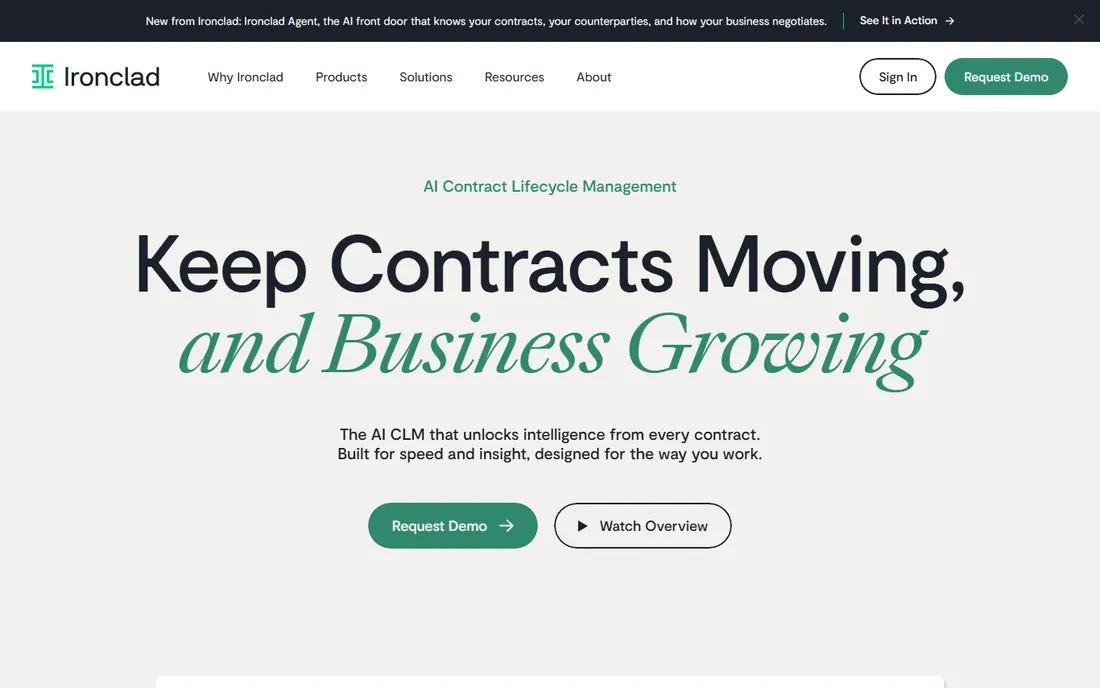
Ironclad is the contract platform that Silicon Valley legal teams standardized on. It handles the entire lifecycle: business users request contracts through guided intake, legal reviews with AI-suggested redlines, and everything lands in a searchable repository with obligation tracking. The AI layer summarizes contracts, extracts key terms, and drafts first passes, which is why legal operations teams defend the price tag.
That price tag is custom and unapologetically enterprise. Ironclad fits companies with enough contract volume to justify a dedicated legal ops function; a ten-person startup will drown in the implementation. If your legal team is the bottleneck on every deal, this is the tool that removes them from the critical path without removing their control.
What we like- End-to-end workflows from intake to signature to renewal on one platform
- AI-assisted redlining and clause extraction built for legal reviewers
- Deep integrations with Salesforce, Slack, and DocuSign
Watch out for- Enterprise pricing with no public numbers
- Implementation takes planning and legal-team buy-in
Starting priceSee website
Free planNo
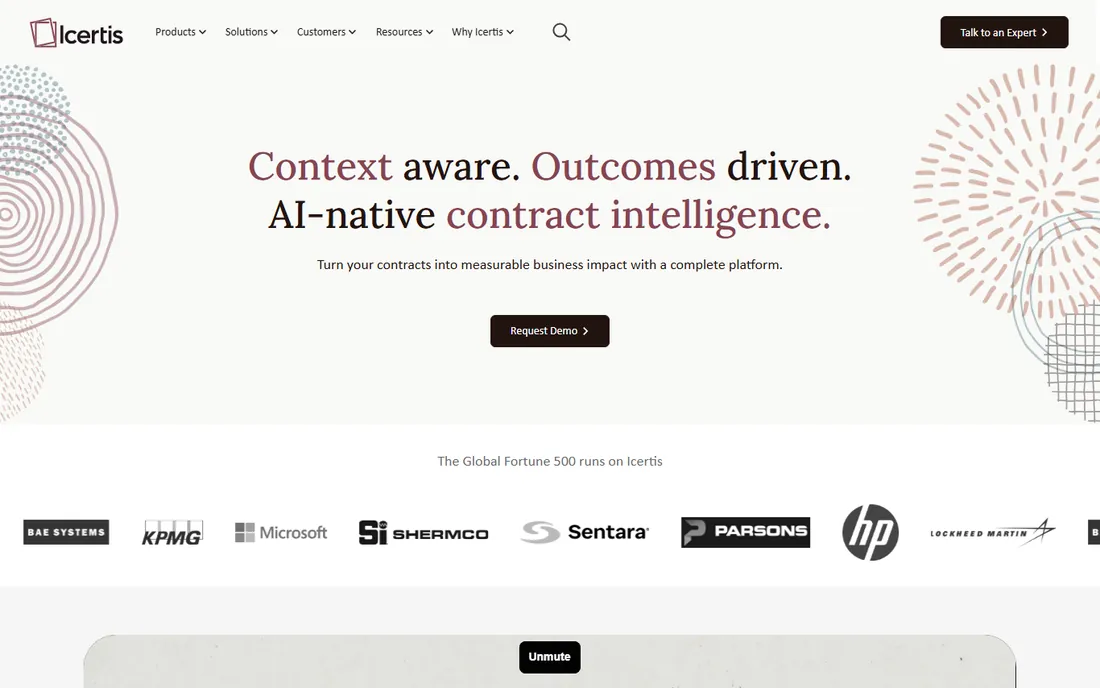
Icertis plays at the top of the market: global enterprises managing tens of thousands of contracts across procurement, sales, and legal. Its platform structures every agreement into searchable data, then applies AI to surface obligations, flag compliance risks, and track performance against commitments. For companies where a missed renewal or an unmonitored obligation costs real money, that intelligence layer is the product.
The honest reality is that Icertis is not a self-serve tool. Expect a long sales cycle, a custom quote, and an implementation project with services hours. Smaller companies will find the platform overpowered and the cost unjustifiable. If you are a large enterprise with contracting spread across business units, Icertis is the category's heavyweight.
What we like- AI-powered contract intelligence across buy-side and sell-side agreements
- Strong compliance and obligation management for regulated industries
- Proven at very large contract volumes
Watch out for- Quote-only pricing aimed at enterprise budgets
- Implementations are measured in months, not weeks
Starting priceSee website
Free planFree trial
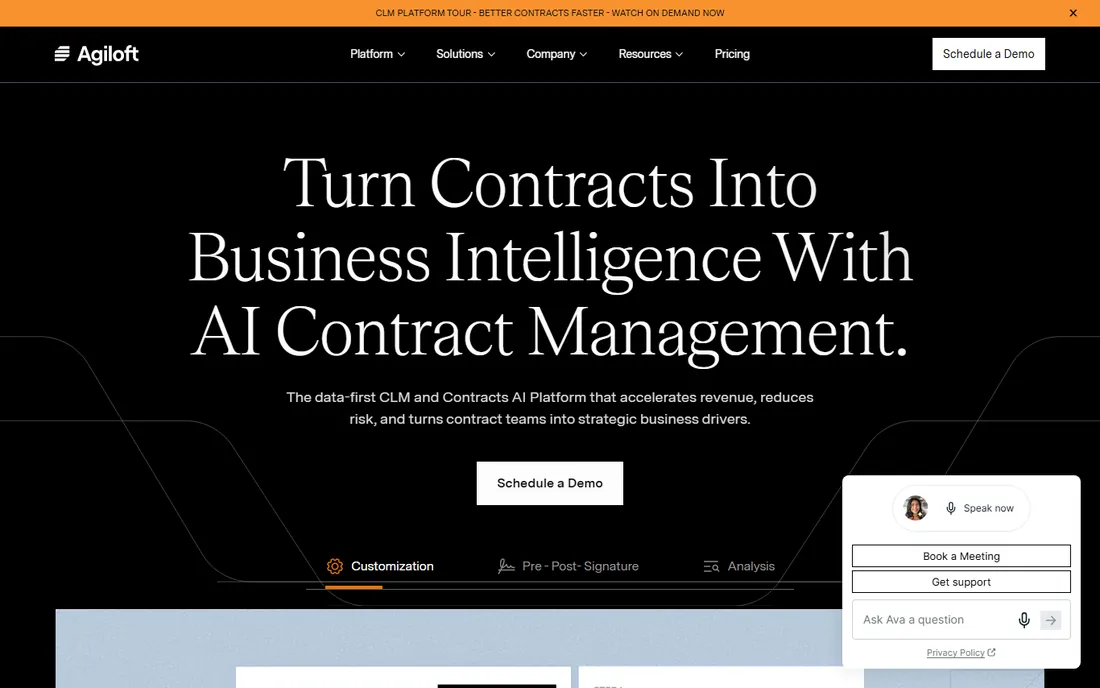
Agiloft's differentiator is control: a no-code platform where your own team can configure workflows, approval chains, and data models without waiting on the vendor. Its Astra AI layer reviews contracts, extracts terms, and surfaces risks, and the company claims integrations with more than a thousand systems. For legal ops teams that hate being locked into a vendor's idea of a process, that configurability is the whole pitch.
The flip side of no-code is that someone has to do the configuring. Agiloft fits organizations with a legal ops or IT owner who will shape the system to their process; teams that want software to work perfectly out of the box will find the setup work annoying. Pricing is custom with a free trial available. It is the tinkerer's CLM.
What we like- No-code platform lets admins build custom workflows and fields
- Embedded AI for contract review and data extraction
- Integrates with over 1,000 systems per the vendor
Watch out for- Pricing is quote-based
- The flexibility means you need someone to own configuration
Starting priceSee website
Free planNo
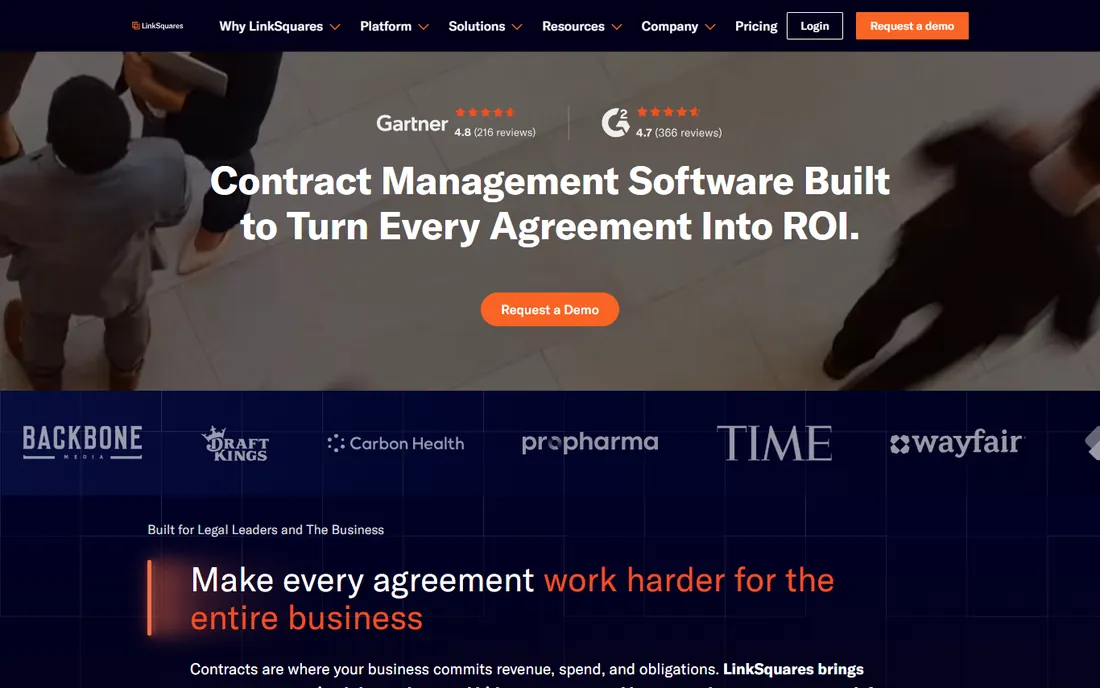
LinkSquares built its AI specifically on legal documents rather than bolting on a general model, and reviewers notice the difference in extraction quality. The platform splits into Analyze, an AI-powered repository that turns executed contracts into searchable data, and Finalize, which handles drafting, negotiation, and approvals. Recent releases add agentic AI features like automated risk scoring across contract versions.
Pricing is custom and the product is aimed squarely at in-house legal teams, not sales-led organizations. Implementation is lighter than the enterprise giants, but you still need legal's commitment to make the repository the source of truth. For a general counsel building a modern legal ops function, LinkSquares is the specialist's choice.
What we like- AI purpose-built for legal documents with strong extraction accuracy
- Analyze for repository intelligence plus Finalize for drafting and negotiation
- Used by 1,000-plus in-house teams per the vendor
Watch out for- No public pricing
- The full platform works best when legal commits to it as the system of record
Starting priceSee website
Free planFree trial (14 days)
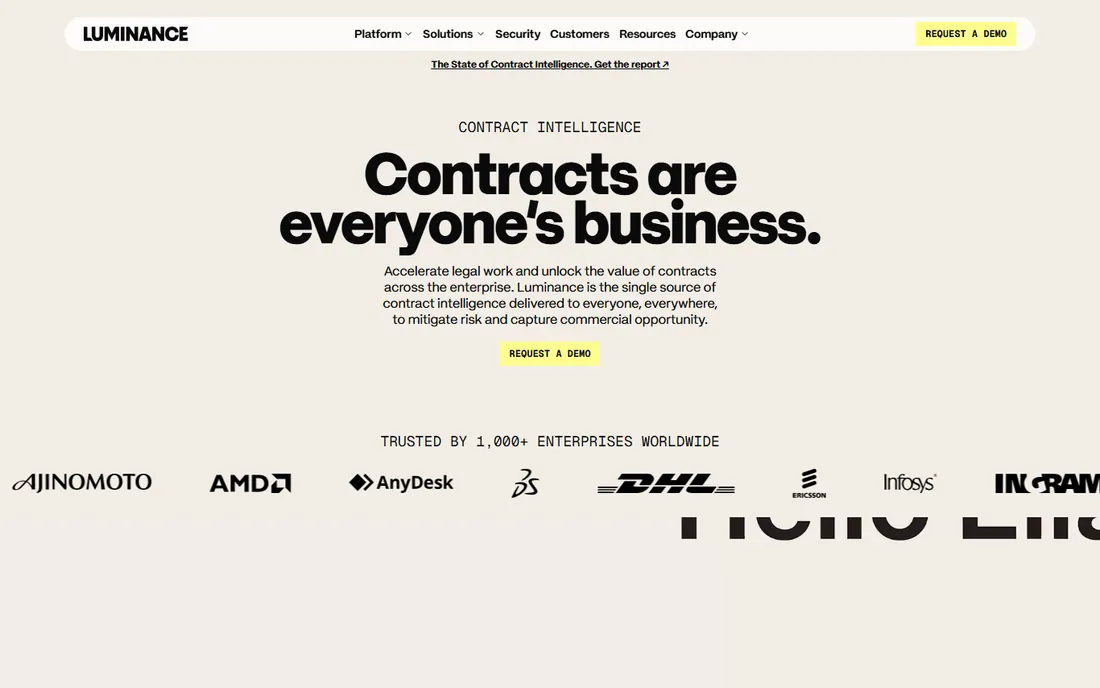
Luminance, from Cambridge, UK, takes the most lawyer-centric approach here: its AI reads an incoming contract and produces a first-pass review directly in Microsoft Word, marking clauses as acceptable, non-standard, or risky, with your preferred fallback language one click away. The system learns from how your senior lawyers negotiate, so the review quality compounds over time. A two-week trial on your own contracts lets you test that claim before buying.
The catch is that the AI needs volume to learn, so a team reviewing a handful of contracts a month will not see the compounding benefit. Pricing is custom. For legal departments drowning in third-party paper, especially in procurement-heavy businesses, Luminance's Word-native review is the least disruptive way to add AI to the negotiation.
What we like- First-pass contract review with color-coded risk analysis inside Word
- AI learns from your lawyers' preferred positions over time
- Multi-language contract support
Watch out for- Quote-based pricing with no public numbers
- Best value requires enough review volume to train the models
#6
Juro
Best for: Business teams that want to self-serve contracts
Visit juro.com
Starting priceSee website
Free planNo
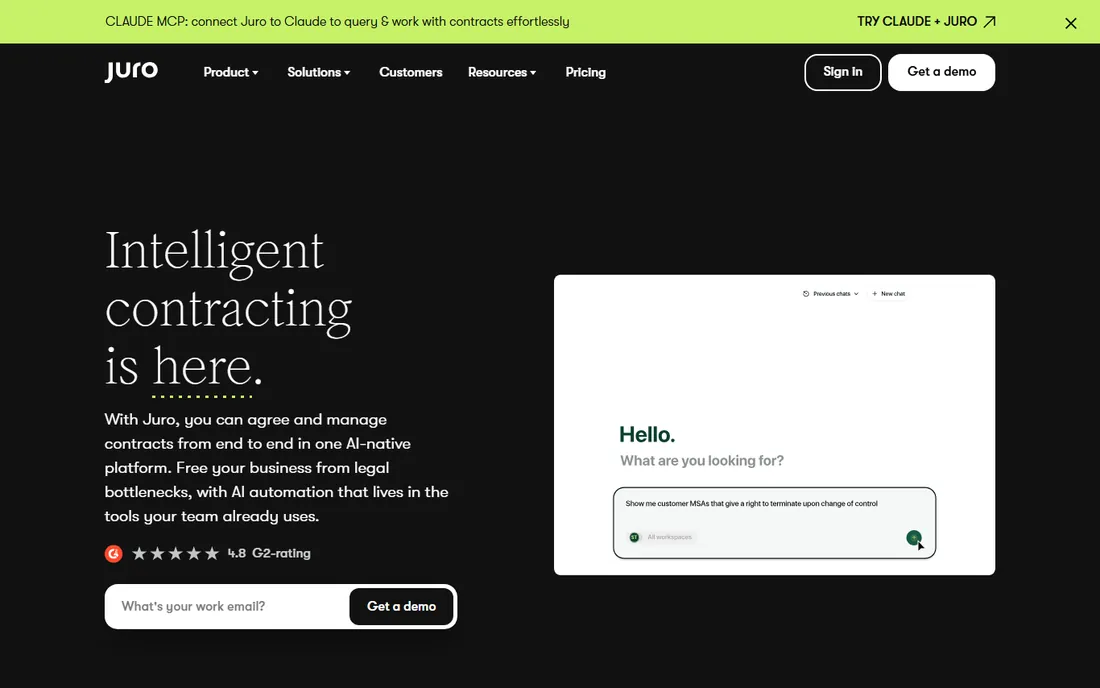
Juro flips the CLM model: instead of software for lawyers, it is software that lets sales, HR, and procurement create contracts themselves inside guardrails legal sets. Templates, approval workflows, and AI-assisted drafting live in the browser, and the dynamic repository gives instant visibility into contract data. The London-based company has grown fast on the promise that contracts should not require a legal degree to start.
That business-user focus means Juro is weaker on the heavy analytics and obligation tracking that enterprise legal teams demand. Pricing is custom with no public tiers. For scale-ups where legal is one person and sales needs to move, Juro's self-serve model beats a legal-only platform that nobody outside the department will touch.
What we like- Browser-based editor lets non-lawyers generate compliant contracts from templates
- AI drafting and negotiation guardrails for business users
- Strong adoption beyond the legal department
Watch out for- Custom pricing
- Lighter on deep legal analytics than the enterprise platforms
#7
DocuSign CLM
Best for: Companies already living in DocuSign eSignature
Visit docusign.com
Starting priceSee website
Free planNo
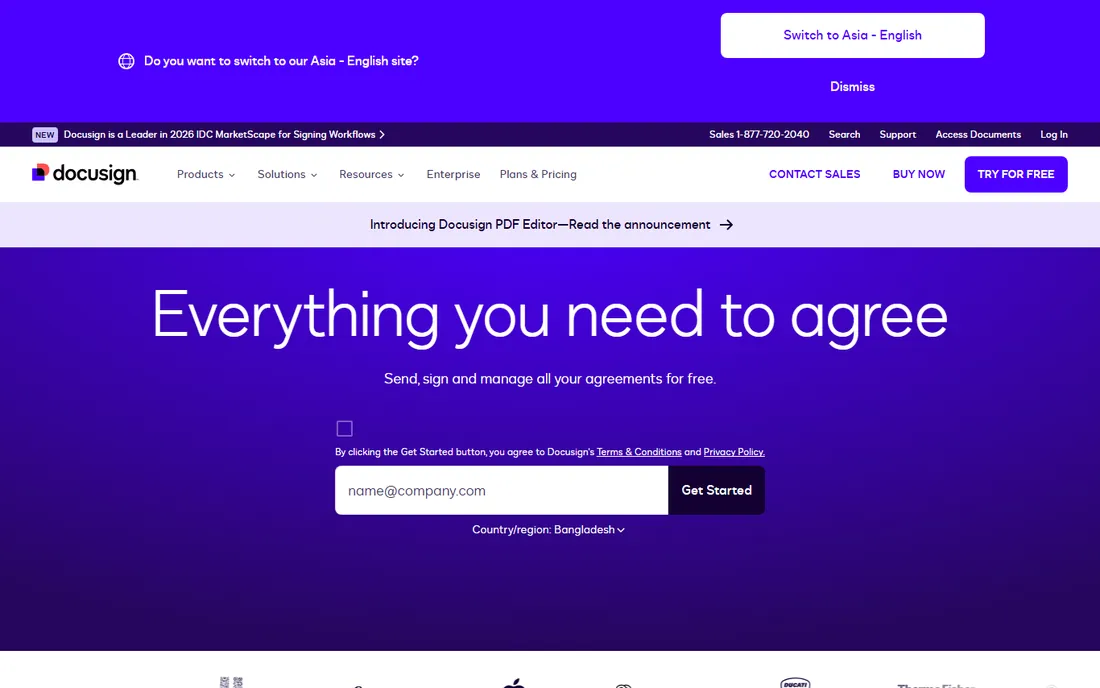
DocuSign CLM is the obvious upgrade for the million-plus organizations that already sign in DocuSign. It extends the signature workflow backward into generation, negotiation, and approval, and forward into a searchable repository, with over 100 pre-trained AI models on the CLM+ tier for extraction and analysis. Salesforce, SAP Ariba, and Workday integrations cover the enterprise stack.
The honest catch is that DocuSign CLM makes the most sense inside the DocuSign world, and pricing is entirely custom. Standalone AI review tools may be cheaper if you do not need the full lifecycle. But if your contracts already flow through DocuSign eSignature, adding CLM removes the gaps between signing and managing better than any third-party connector can.
What we like- Native integration with DocuSign eSignature and the Agreement Cloud
- AI models for clause extraction and contract analytics on higher tiers
- Named a Leader in Gartner's CLM Magic Quadrant six years running
Watch out for- Custom pricing with no public numbers
- The ecosystem lock-in is real if you ever want to leave
#8
Sirion
Best for: Procurement and supplier contract management
Visit sirion.ai
Starting priceSee website
Free planNo
Sirion built its reputation on the buy side: procurement teams managing supplier contracts, tracking obligations, and measuring performance against commitments. Its AI-native platform extracts terms automatically, supports conversational search across millions of contracts, and monitors service levels and deliverables. The vendor reports managing over 7 million contracts worth nearly $800 billion, which tells you the scale it is built for.
That scale is also the filter: Sirion is an enterprise purchase with enterprise pricing and no public numbers. Sales-led organizations will find the sell-side workflows thinner than Ironclad or LinkSquares. For procurement and vendor management teams at large companies, it is one of the strongest AI options available.
What we like- AI-native platform with strong extraction and conversational search
- Excels at obligation and performance management on buy-side contracts
- Recognized as a leader by Gartner, IDC, and Spend Matters
Watch out for- Enterprise pricing with no public numbers
- Buy-side focus means sell-side workflows are less central
Starting priceSee website
Free planFree trial
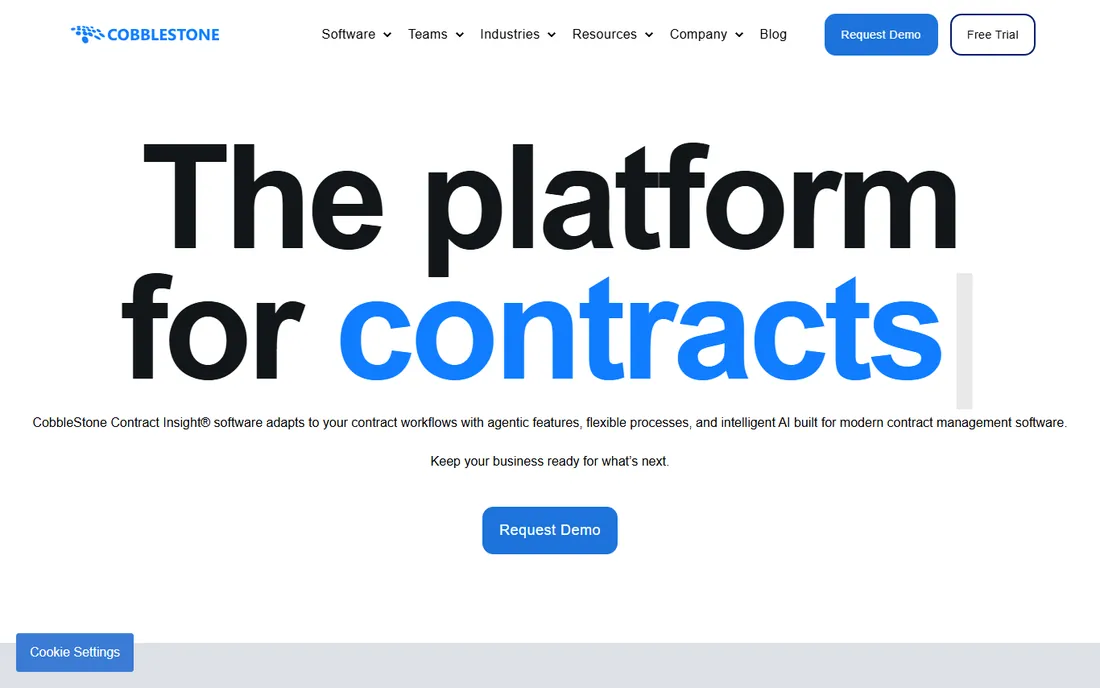
CobbleStone Contract Insight is the veteran on this list: in business since 1995, with a large footprint in government, healthcare, and higher education. It offers AI-powered contract review, clause extraction, and obligation tracking inside a deeply configurable platform, plus vendor management and e-sourcing modules that procurement teams use alongside CLM. A free trial lets you evaluate before the sales process.
The interface will not win design awards, and pricing requires a quote. What you get is a mature product with US-based support and a vendor that has survived multiple technology cycles. For public-sector buyers and regulated industries that value stability and configurability over the newest AI branding, CobbleStone is the safe pair of hands.
What we like- Highly configurable workflows with AI-assisted review and extraction
- Long track record since 1995 with strong public-sector presence
- Free trial available
Watch out for- Pricing is quote-based
- The interface prioritizes function over modern design
#10
PandaDoc
Best for: Sales teams and small businesses that need contracts fast
Visit pandadoc.com
Starting priceSee website
Free planYes
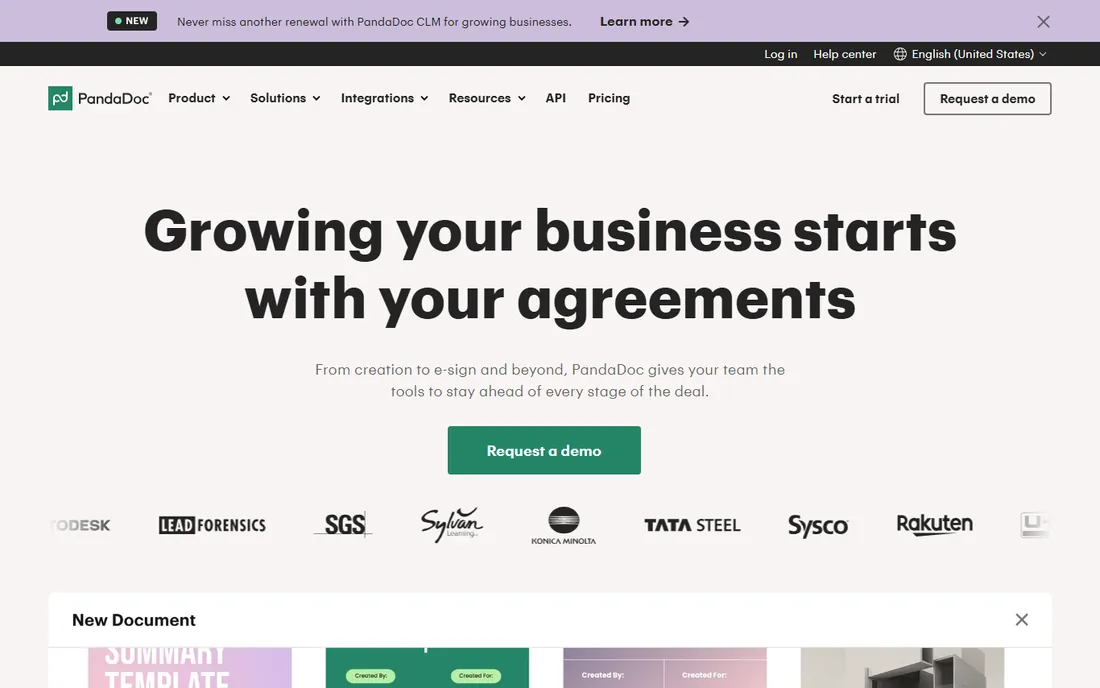
PandaDoc is the accessible end of this market: a document automation platform with e-signatures, templates, and approval workflows that a sales team can adopt in an afternoon. The free plan covers the basics, and paid tiers add CPQ, advanced analytics, and integrations. For proposals, quotes, and standard sales agreements, it is faster to value than any enterprise CLM.
The trade-off is depth: PandaDoc's AI and contract intelligence features do not match Ironclad, LinkSquares, or Luminance, and complex multi-party negotiations will outgrow it. But for a small business whose "contract management" today is a shared drive, PandaDoc is the pragmatic first step, and the free plan makes that step free.
What we like- Free plan available with core document and e-signature features
- Template library and CPQ features built for sales workflows
- Fast setup with no implementation project
Watch out for- AI features are lighter than the dedicated CLM platforms
- Not built for complex legal negotiation workflows
Choosing AI contract software without regrets
Start by naming the job: is the AI supposed to draft contracts, review incoming paper, or find answers in your existing repository? Tools here specialize: Luminance and LinkSquares review, Juro and PandaDoc draft for business users, Ironclad and Sirion manage the lifecycle, and Icertis structures everything into data. Buying a lifecycle platform when you needed a review tool is the most expensive mistake in this category.
Then test the AI on your contracts, not the demo set. Extraction accuracy varies by document type, and every vendor's demo uses clean samples. Run the trial with your ugliest third-party paper and your most negotiated template, and have the lawyers who will live with the output do the scoring. The gap between demo AI and production AI is where buyer's remorse lives.
What AI can and cannot do in contracts
The AI in these tools is genuinely good at extraction and first-pass review: finding renewal dates, flagging non-standard clauses, summarizing long agreements, and answering "what did we agree to?" across thousands of contracts. That work used to take junior lawyers weeks, and the best tools here do it in minutes with accuracy that improves as the models see your documents.
What it cannot do is exercise judgment. No AI on this list should approve a contract, accept liability language, or negotiate strategy on its own. The tools that work best keep a human in the loop: AI drafts and flags, lawyers decide. Buy the AI for speed and coverage, keep the decisions with your people, and be skeptical of any vendor that suggests otherwise.
How we chose
We listed AI contract management and contract analysis products with active US availability and live homepages, then reviewed each vendor's product pages, AI feature documentation, and pricing pages. We verified plan structures and trial terms against the vendors' own sites and cross-checked capabilities against public reviews on G2, Capterra, and Slashdot, plus analyst evaluations from Gartner and IDC where available. We included quote-only enterprise tools where their market position is well documented, and excluded discontinued products and tools without a working homepage.
Frequently asked questions
What is AI contract management software?
It is software that manages contracts across their lifecycle while using artificial intelligence to read, summarize, and analyze agreements. Typical AI features include clause extraction, automated redlining suggestions, risk scoring, obligation tracking, and natural-language search across your contract repository.
How much does AI contract management software cost?
Most vendors price by custom quote based on users, contract volume, and modules, which makes public pricing rare. PandaDoc is the exception with a free plan and public tiers; enterprise platforms like Ironclad, Icertis, and Sirion require a sales conversation. Expect five to six figures annually for enterprise CLM.
Can AI review contracts without a lawyer?
No. AI is reliable for first-pass review, extraction, and flagging non-standard language, but final approval still needs a lawyer's judgment. The best setups use AI to do the reading and lawyers to do the deciding, which cuts review time without adding risk.
What is the difference between CLM and contract analysis tools?
CLM, or contract lifecycle management, covers the whole process from drafting to signature to renewal. Contract analysis tools focus on reading and understanding contracts, often third-party paper, without managing the workflow around them. Some products like Ironclad and LinkSquares do both.
Do I need AI contract software if I already use DocuSign?
DocuSign eSignature handles signing, but it does not manage drafting, negotiation, obligation tracking, or repository search. DocuSign CLM adds those lifecycle features with AI extraction; third-party AI tools can also layer analysis on top of your existing DocuSign workflow.
How long does implementation take?
It ranges from an afternoon for PandaDoc or Juro to several months for Icertis or Sirion at enterprise scale. The main drivers are data migration, workflow configuration, and how many teams need training. Ask the vendor for a reference customer of your size before committing to a timeline.
Sources we checked (0)
Is your product missing or out of date?
We review this list regularly. Vendors can request a listing, send updated pricing or ask about featured placement.

Shihab Mia · Founder, Rankite
Shihab has spent more than a decade helping SaaS and e-commerce brands grow through search. He writes Rankite's software buying guides from pricing pages, documentation and public user reviews. More about Shihab.