How we make this list: we compare pricing pages, product documentation and public user reviews. Rankite is independent; if a vendor ever pays for a featured spot, that listing is clearly labeled Partner.
Key takeaways
- 6sense and Demandbase are the enterprise ABM platforms: account identification, intent scoring, and orchestration in one contract.
- Bombora is a pure intent data provider, not a platform. You buy the data and run it inside your CRM, ad tools, or another ABM platform.
- ZoomInfo, Cognism, Clearbit, and Apollo sell contact and account data first, with intent and enrichment layered on top.
- Apollo is the only option with a usable free tier, which makes it the right starting point for small teams testing account-based motions.
Quick comparison
| Tool | Best for | Starting price | Free plan |
|---|
 6sense 6sense | Enterprise ABM with predictive account intelligence | See website | No |
 Demandbase Demandbase | B2B companies aligning marketing and sales on target accounts | See website | No |
 DemandScience DemandScience | Buyer intelligence without a heavy platform rollout | See website | No |
 AdRoll ABM AdRoll ABM | Mid-market teams starting account-based advertising | See website | No |
 Bombora Bombora | Intent data that plugs into your existing tools | See website | No |
 ZoomInfo ZoomInfo | Teams that need contact data plus intent in one contract | See website | Yes |
 Cognism Cognism | EMEA-focused teams that need compliant contact data | See website | No |
 Clearbit Clearbit | Real-time enrichment and anonymous visitor identification | See website | No |
 Apollo Apollo | Small teams running account-based prospecting on a budget | See website | Yes |
Is your product missing or out of date?
We review this list regularly. Vendors can request a listing, send updated pricing or ask about featured placement.
The best account-based data software
#1
6sense
Best for: Enterprise ABM with predictive account intelligence
Visit 6sense.com
Starting priceSee website
Free planNo
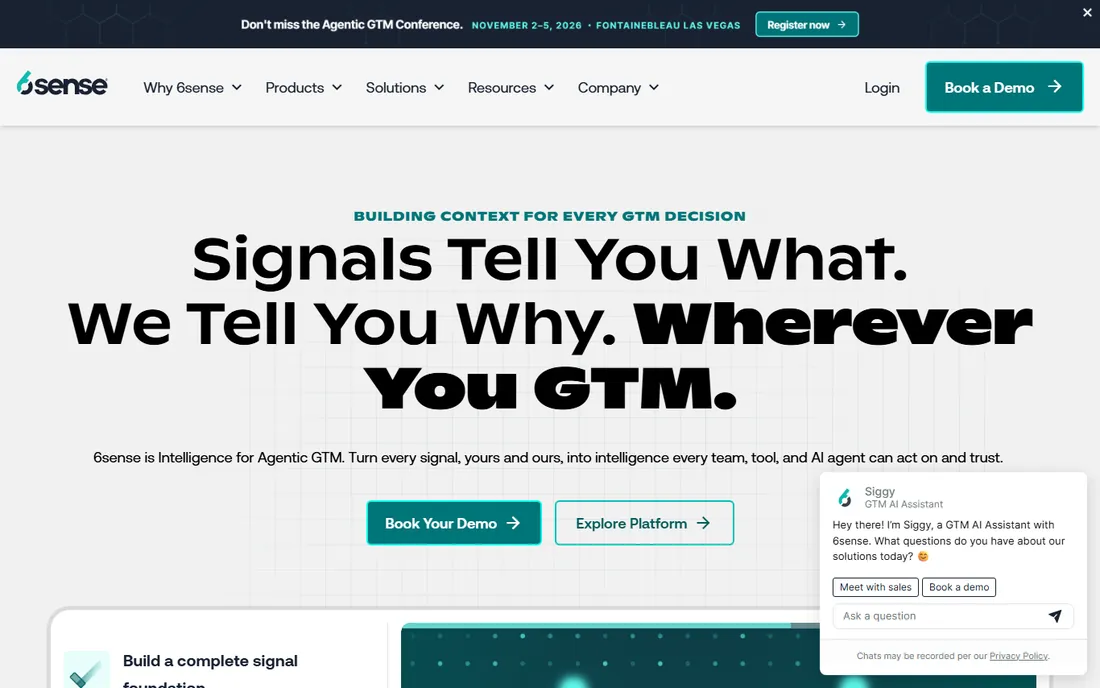
6sense defined the modern ABM platform category, and it still sets the pace. The product identifies in-market accounts from intent signals, predicts which ones will buy, and orchestrates outreach across advertising, email, and sales workflows from one canvas. The newer conversational AI layer answers account research questions in plain language, grounded in the buyer's signal history. For a marketing team running true account-based programs at scale, this is the reference implementation.
The cost is enterprise in every sense. Pricing is quote-based and typically lands in five or six figures annually, and implementations run for months. 6sense also works best when you already have clean CRM data and real website traffic, because its models need signal volume to be accurate. Small teams should look at Apollo or AdRoll ABM instead.
What we like- Predictive intent modeling is among the strongest in the category
- Orchestration across ads, email, and sales workflows
- Conversational AI for account research
Watch out for- Enterprise pricing with no public numbers
- Implementation takes months, not weeks
- The platform rewards teams that feed it good first-party data
#2
Demandbase
Best for: B2B companies aligning marketing and sales on target accounts
Visit demandbase.com
Starting priceSee website
Free planNo
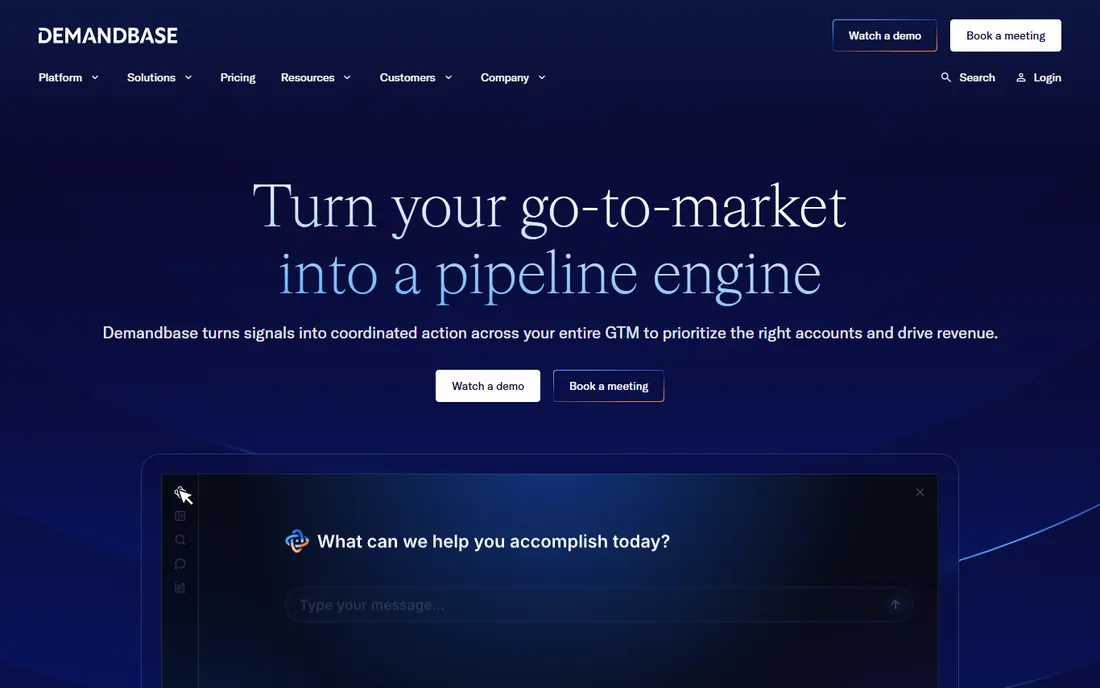
Demandbase competes head to head with 6sense for the enterprise ABM platform slot, and buyers usually evaluate both. The pitch is a pipeline engine: identify in-market accounts, engage them with targeted ads and programs, expand within buying groups, and measure what actually drove revenue. The sales-facing side gives reps visibility into which accounts are active and who is involved, which helps with the perennial marketing-to-sales handoff.
Like 6sense, Demandbase prices by quote and builds for companies with real ABM budgets and headcount. The platform's breadth is both the strength and the catch: you get advertising, personalization, sales intelligence, and measurement, but you need people to run each motion. Mid-market teams often get more value from a focused tool.
What we like- Full-funnel ABM from identification to measurement
- Strong account-based advertising
- Solid buying-group analytics for sales teams
Watch out for- Quote-only enterprise pricing
- The platform is broad, which means a longer learning curve
- Smaller teams pay for capability they will not use
Starting priceSee website
Free planNo
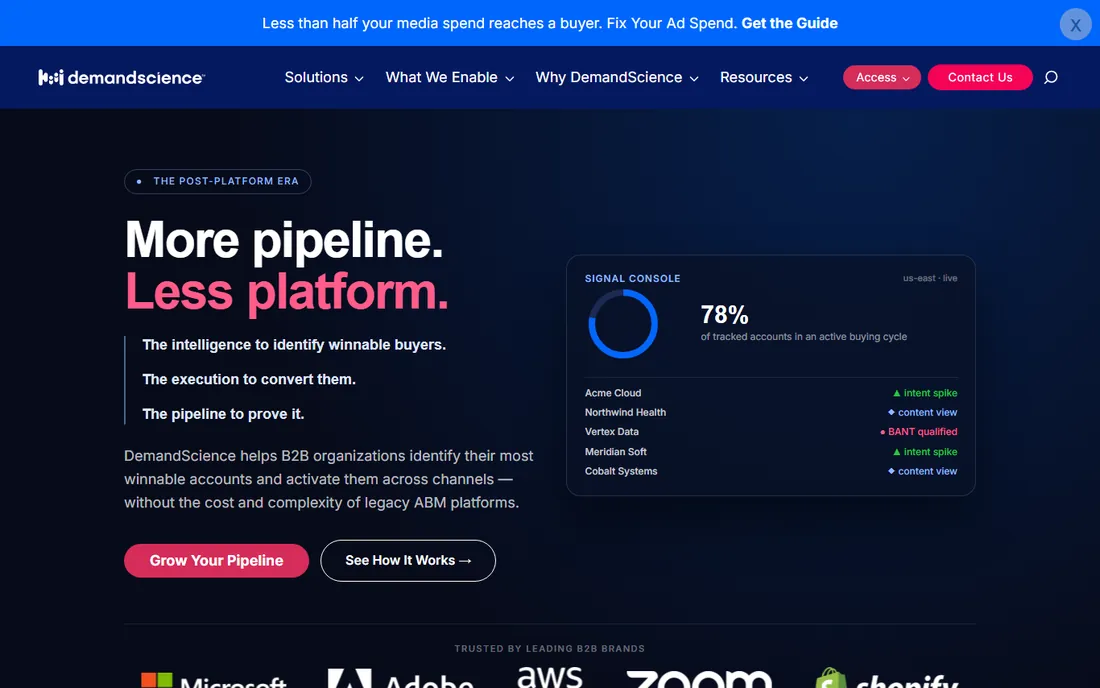
DemandScience is the new name for the company long known as Terminus, one of the original ABM platforms. The rebrand came with a repositioning: instead of selling platform licenses that sit half-used, DemandScience sells buyer intelligence plus the execution to turn it into pipeline, including content syndication, programmatic advertising, and web personalization run as services.
That model is honest about how most teams actually buy. If you want intelligence and someone to run the programs, it is efficient. If you want to own the platform and run everything in-house, 6sense or Demandbase fit better. Pricing is customized, so get a scoped proposal before comparing.
What we like- Combines intent data with done-for-you demand programs
- No platform license or long implementation
- Transparent positioning against "platform tax"
Watch out for- Service-heavy model means less control than a platform
- Pricing is customized
- The rebrand from Terminus may confuse long-time buyers
Starting priceSee website
Free planNo
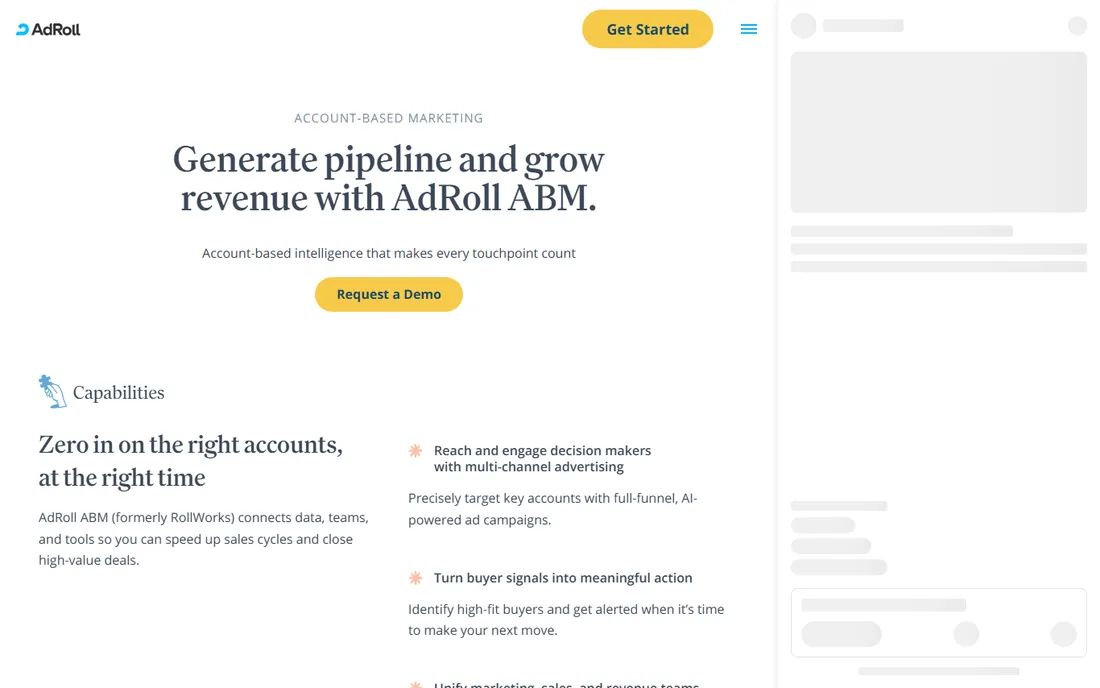
AdRoll ABM is the current name for what used to be RollWorks, now folded into AdRoll's brand. The product targets the mid-market gap: account-based advertising and buyer insights without the enterprise platform commitment. It draws on a large identity graph to find high-fit accounts and runs multi-channel ad campaigns to engage them, with basic orchestration into CRM and sales workflows.
This is the pragmatic pick when your ABM program starts with paid media. It will not replace 6sense's predictive modeling or Bombora's intent depth. But for a team that wants to run account-based ads this quarter rather than implement a platform this year, AdRoll ABM is the faster route.
What we like- Account-based ads built on a proven ad platform
- Buyer insights from billions of digital identities
- Easier entry point than the enterprise platforms
Watch out for- Ad-centric, so intent and orchestration are thinner than 6sense
- Pricing is not published
- The rename from RollWorks needs a mention in your vendor review
#5
Bombora
Best for: Intent data that plugs into your existing tools
Visit bombora.com
Starting priceSee website
Free planNo
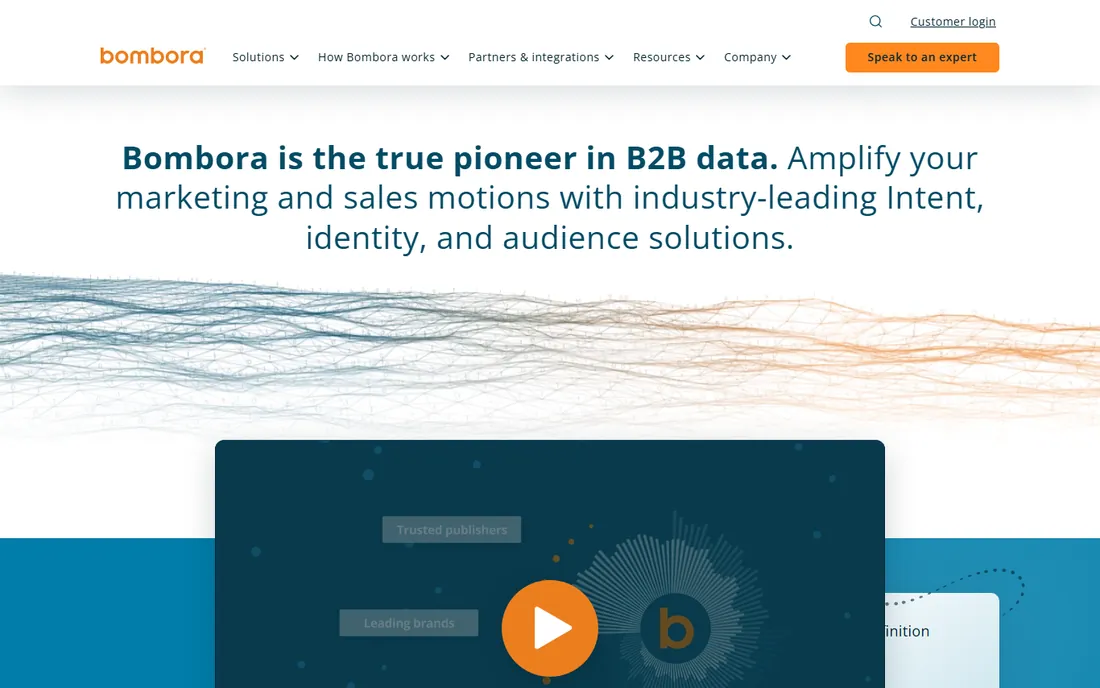
Bombora tracks intent across more than 25,300 topics, according to its own site, and that number explains both the product's power and its learning curve. Company Surge intent data tells you which accounts are researching topics related to your product, based on consumption across a co-op of B2B publishers. The key point: Bombora is a data company, not a platform. You pipe the data into Salesforce, HubSpot, 6sense, or your ad tools and act on it there.
That makes Bombora a complement rather than a competitor to the platforms above. Many 6sense and Demandbase customers license Bombora data underneath. Pricing is customized. If your stack already has a place to activate intent, Bombora's data quality is the benchmark. If you need the platform too, buy the platform first.
What we like- The reference standard for B2B intent data with 25,300+ topics
- Data co-op model gives broad coverage
- Activates inside your CRM, MAP, and ad platforms
Watch out for- Data only, so you need a platform to act on it
- Pricing is customized and opaque
- Topic taxonomy needs tuning to your business
#6
ZoomInfo
Best for: Teams that need contact data plus intent in one contract
Visit zoominfo.com
Starting priceSee website
Free planYes
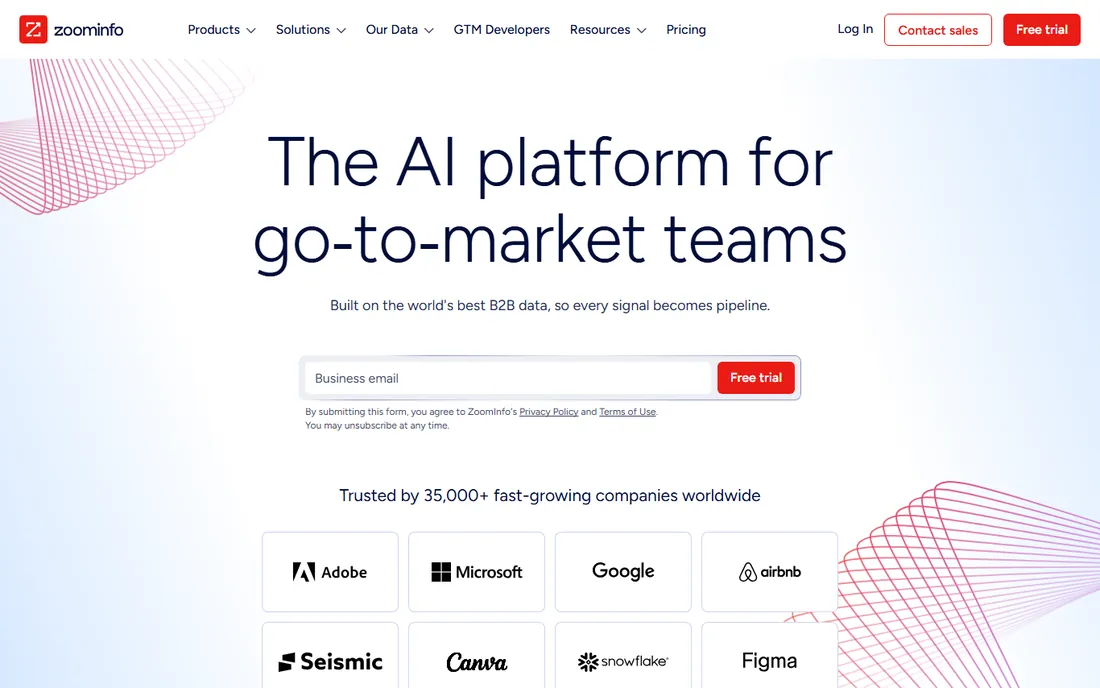
ZoomInfo started as a contact database and has grown into an AI go-to-market platform with intent data, enrichment, and sales automation. The database scale is the headline: 500 million contacts and 100 million companies, with AI-assisted verification and human researchers in the loop. Intent signals, org charts, and technographics layer on top of the contact data.
Pricing moved to usage-based credits, which scales with consumption but makes budgeting harder than the old seat tiers. ZoomInfo Lite, the free plan, is a real free tier with no credit card required, which is rare in this category. For teams that need both contact data and account signals from one vendor, ZoomInfo is the default shortlist entry, with Apollo as the budget alternative.
What we like- Massive database of 500M+ contacts and 100M+ companies
- ZoomInfo Lite is a genuinely free plan
- Intent signals and enrichment included
Watch out for- Usage-based credit pricing is hard to forecast
- Data accuracy varies by segment
- The platform has grown complex as features multiplied
#7
Cognism
Best for: EMEA-focused teams that need compliant contact data
Visit cognism.com
Starting priceSee website
Free planNo
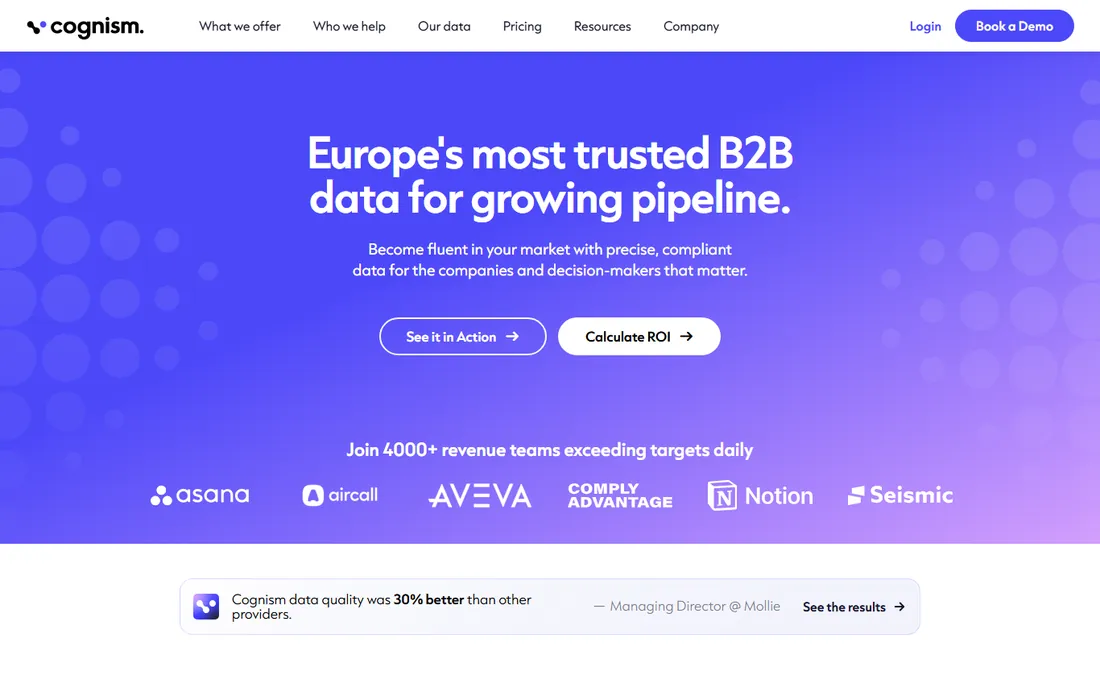
Cognism built its reputation on compliant B2B data for Europe, where GDPR makes contact data a legal question as well as a quality question. The product combines account and contact data with intent signals, phone-verified mobiles, and do-not-call coverage across European markets. For a team selling into the UK and EU, that compliance posture matters more than raw database size.
Pricing is quote-based. US-focused teams will find ZoomInfo or Apollo stronger on domestic coverage. But if your ICP sits in Europe and your legal team reviews every data vendor, Cognism's compliance-first approach shortens the procurement conversation considerably.
What we like- Compliance-first positioning with strong GDPR coverage
- Phone-verified mobile numbers with high connect rates
- Built for European markets
Watch out for- Quote-only pricing
- US data coverage is thinner than ZoomInfo
- Intent features are newer than the contact data
#8
Clearbit
Best for: Real-time enrichment and anonymous visitor identification
Visit clearbit.com
Starting priceSee website
Free planNo
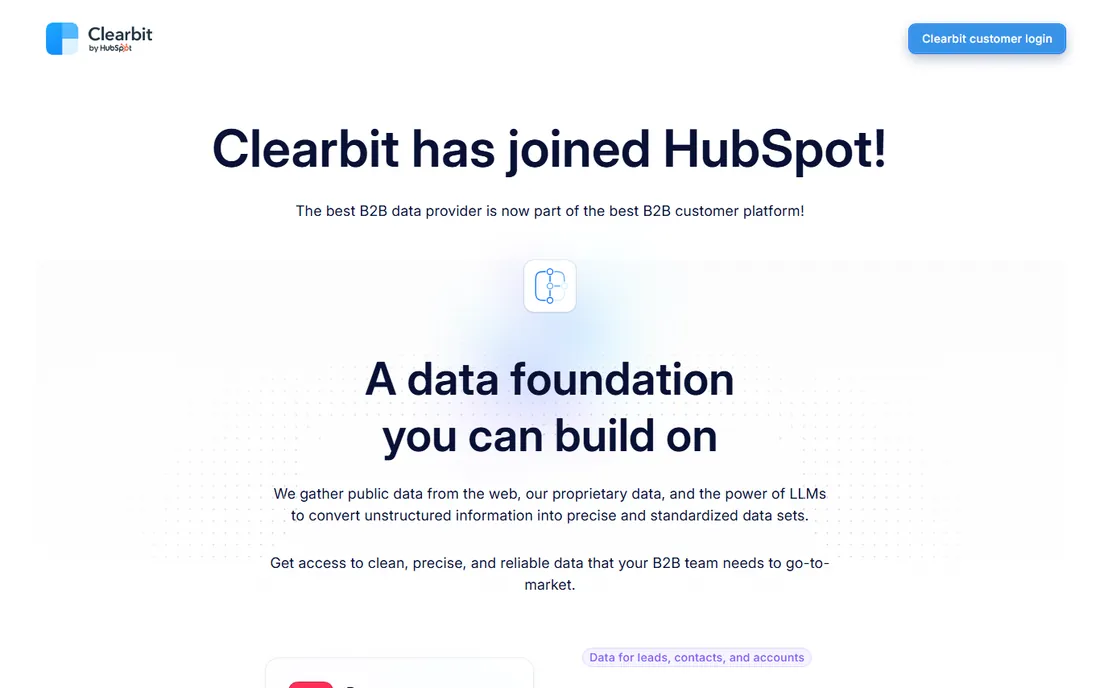
Clearbit is now part of HubSpot, and the product has settled into its role as a data layer: enrichment, lead scoring inputs, form shortening, and website visitor identification. Give it an email address and it returns firmographics, technographics, and role data. The visitor identification product turns anonymous web traffic into named companies showing intent, which feeds directly into account-based workflows.
Clearbit is not an ABM platform and does not try to be. Buy it when your problem is data quality and real-time enrichment inside HubSpot or your own stack. Teams already on HubSpot get the smoothest experience. Pricing is not public, so talk to sales with your volume numbers ready.
What we like- Best-in-class enrichment from just an email or domain
- Website visitor identification for intent
- Now backed by HubSpot's platform
Watch out for- No public pricing
- Standalone future is tied to HubSpot's roadmap
- More of a data layer than an ABM platform
#9
Apollo
Best for: Small teams running account-based prospecting on a budget
Visit apollo.io
Starting priceSee website
Free planYes
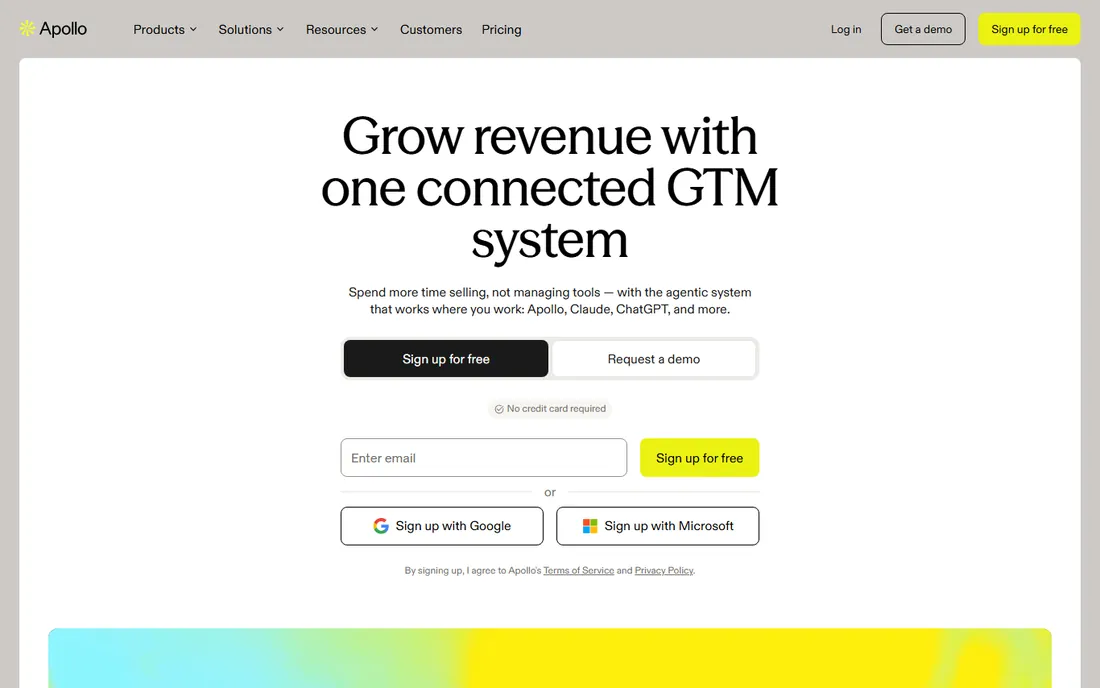
Apollo is the value play in this category and the only tool here with a free plan worth using. The free Starter tier stays free with no time limit, and paid plans add credits for emails, phone numbers, and AI features. With 240 million contacts and 30 million accounts, the database is large enough for most prospecting, and the built-in sequencing and dialing mean a small team can run outreach without a second tool.
The trade-offs are real but proportionate to the price. Data accuracy is good rather than best, and the credit model needs monitoring on larger teams. Apollo will not replace 6sense for enterprise ABM orchestration. For a startup or small sales team building its first account-based motion, it is the obvious place to start.
What we like- Free Starter plan with no time limit
- 240M+ contacts and 30M+ accounts
- Prospecting, sequencing, and dialing in one tool
Watch out for- Data quality trails ZoomInfo at the top end
- Credit system adds usage math
- ABM orchestration is lighter than the enterprise platforms
How we chose
We researched the account-based data market through vendor sites, pricing pages, feature documentation, and public reviews on G2 and Capterra. Every product listed exists today and fits account-based marketing data or intent as of October 2026. We noted two renames during research: Terminus is now DemandScience, and RollWorks is now AdRoll ABM. Prices come from vendor pricing pages only; this category is largely quote-based, so we say "See website" where vendors do not publish numbers. We weighted data quality, intent signal depth, ABM workflow fit, integrations, and value for small and mid-size teams.
Common mistakes teams make with ABM data
The first mistake is buying intent data with no plan to act on it. Bombora's 25,300 topics are useless if nobody defines which ten matter to your business, builds the audiences, and routes them to sales. Before any purchase, write down the three plays you will run in the first 90 days and who owns each one.
The second mistake is trusting contact data without testing it. Every vendor claims verified data, but accuracy varies by industry, company size, and region. Run a 500-record sample against your ICP before signing an annual contract, and measure bounce rates and connect rates yourself. The sample test takes a week and has saved many teams from a bad year-long commitment.
The third mistake is buying a platform when you need data, or data when you need a platform. If your team already runs Salesforce, HubSpot, and an ad stack, intent data from Bombora or enrichment from Clearbit may be all you need. If you have no orchestration layer, a platform like 6sense or Demandbase earns its keep. Match the purchase to the gap, not the demo.
What to ask vendors before you buy
Ask how the intent data is sourced and how often it refreshes. Co-op data, bidstream data, and first-party publisher data behave differently, and refresh cadence determines whether you see buying signals in time to act. Ask for the topic taxonomy and confirm your product categories are covered before you believe the demo.
Ask about match rates and data rights. What percentage of your target account list can the vendor actually identify? Do you own the enriched data, or does it expire with the contract? Can you export everything, including intent history, if you leave? The answers separate vendors who sell data from vendors who rent it.
Ask about the credit and consumption model in writing. Usage-based pricing is now standard, and the unit economics decide your real bill. Get the overage rates, the reset rules, and a twelve-month estimate based on your actual volume before you sign. A vendor that will not model your bill is a vendor that plans to surprise you.
Frequently asked questions
What is account-based data software?
It is software that provides the account and contact data, intent signals, and analytics that power account-based marketing. Some products are full ABM platforms with orchestration and advertising, while others sell intent data or contact data that you activate inside your existing stack.
What is intent data?
Intent data captures signals that a company is researching topics related to your product, such as content consumption, search behavior, and website visits. Providers like Bombora aggregate these signals so you can prioritize accounts that are actively in a buying cycle instead of cold-calling your whole list.
6sense vs Demandbase: which is better?
Both are enterprise ABM platforms with similar capabilities. 6sense leads on predictive modeling and AI-driven orchestration, while Demandbase is strong on full-funnel measurement and buying-group analytics. Most buyers evaluate both, run a proof of concept with their own data, and choose based on fit with their existing stack.
Do we need intent data if we already have ZoomInfo or Apollo?
Contact data tells you who to reach; intent data tells you when to reach them. ZoomInfo and Apollo include some intent signals, but dedicated providers like Bombora go deeper on topic coverage. Teams with mature outbound often add intent data once the contact database is working.
How much does account-based data software cost?
Apollo starts free and paid plans are the cheapest entry point. ZoomInfo, Cognism, and Clearbit run on custom or usage-based pricing that typically lands in the thousands to tens of thousands annually. Enterprise ABM platforms like 6sense and Demandbase are five to six figure annual commitments. Bombora intent data is priced by volume and topics.
Can small teams do account-based marketing?
Yes, but scale the tooling to the team. Apollo's free plan plus a tight target account list is enough to run account-based prospecting with a few reps. Add intent data or an ABM platform when the motion works and you need to scale it, not before.
Sources we checked (9)
- https://6sense.com
- https://demandbase.com/
- https://demandscience.com/
- https://www.rollworks.com
- https://bombora.com
- https://zoominfo.com/
- https://www.cognism.com
- https://clearbit.com/
- https://www.apollo.io/pricing
Is your product missing or out of date?
We review this list regularly. Vendors can request a listing, send updated pricing or ask about featured placement.

Shihab Mia · Founder, Rankite
Shihab has spent more than a decade helping SaaS and e-commerce brands grow through search. He writes Rankite's software buying guides from pricing pages, documentation and public user reviews. More about Shihab.