How we make this list: we compare pricing pages, product documentation and public user reviews. Ratings come from G2, Capterra or Trustpilot, with the date we checked them.
Asana vs ClickUp: which one should your team choose?
Direct answer: pick Asana if your team wants a polished, structured tool with strong timelines, portfolios and workload views, and pick ClickUp if you want the most features per dollar and one workspace for tasks, docs, whiteboards and time tracking. Asana Starter costs $10.99 per user per month billed annually, while ClickUp Unlimited costs $7 on its legacy line. If neither fits, monday Work Management is the strongest visual alternative, Trello is the simplest, and Jira is the best pick for software teams.
The real difference is not the feature list. Both cover tasks, boards, timelines, automations and reporting. Asana is opinionated and consistent, so projects look the same across teams and onboarding is faster. ClickUp is flexible to a fault: you can build almost any workflow, but setup takes longer and teams that skip it often end up with messy workspaces. Price also separates them. ClickUp is cheaper at every comparable tier and its free plan has no seat limit, while Asana charges more and its free Personal plan is limited to two users. That gap narrows once you add ClickUp AI, a paid add-on, while Asana bundles basic AI into its paid plans. Prices were checked on 2026-11-17.
How much do Asana and ClickUp cost in 2026?
Asana lists four plans. Personal is free for up to two users. Starter costs $10.99 per user per month billed annually, or $13.49 billed monthly. Advanced costs $24.99 per user per month billed annually, or $30.49 billed monthly. Enterprise and Enterprise+ are custom priced. Watch out for a common error in third-party comparisons: several pages quote $13.49 and $30.49 as the annual rates. Those are the monthly billing rates. The annual rates are $10.99 and $24.99. A 10-person team pays about $110 a month on Starter and about $250 on Advanced, billed annually.
ClickUp pricing is in transition, which matters more than the headline number. The legacy line still shown on its pricing page is Free Forever at $0, Unlimited at $7 per user per month billed annually ($10 monthly), Business at $12 billed annually ($19 monthly), and Enterprise on quote. A second line is rolling out: Core at $9, Business at $17 and Max at $100 per user per month billed annually. ClickUp says price updates begin no earlier than January 2027, so confirm which line your workspace is on before you budget. ClickUp AI is a separate add-on: Brain AI at $9 and Everything AI at $28 per user per month, so a Business seat with full AI can cost $40, more than three times the advertised $12. For a straight comparison, a 10-person team pays about $70 a month for ClickUp Unlimited or $120 for Business on the legacy line, against about $110 for Asana Starter or $250 for Advanced.
Start with how your team actually works, not with the feature table. A marketing team that runs campaigns needs timelines, approvals and proofing. A software team needs backlogs, sprints and release tracking. A small team that lives in spreadsheets may only need boards and checklists. The tool that matches your workflow will get used. The tool with the longest feature list will sit half configured. Check five things before you buy: the seat minimum and free plan limits, the automation and integration caps, time tracking (native in ClickUp from $7, gated behind Pro in monday Work Management), reporting and portfolios, and AI pricing, since most vendors charge for AI separately or meter it in credits. All eight tools discount annual billing, usually by 15 to 20 percent. Finally, run a two-week trial with a real project before you buy.
Quick comparison
| Tool | Best for | Starting price | Free plan |
|---|
 Asana | Cross-functional teams that want structured projects, timelines, portfolios and workload views without heavy setup | $10.99 per user per month billed annually (Starter); $13.49 billed monthly. Advanced is $24.99 billed annually or $30.49 monthly. | Personal plan is free for up to 2 users, with unlimited tasks and basic project views |
 ClickUp | Teams that want one workspace for tasks, docs, whiteboards, goals and time tracking at the lowest entry price | $7 per user per month billed annually (Unlimited, legacy line); $10 billed monthly. Business is $12 billed annually or $19 monthly. A new Core $9 and Business $17 line is rolling out. | Free Forever plan at $0 with unlimited tasks and unlimited members, 60 MB storage |
 monday Work Management | Non-technical teams that want colourful visual boards, timelines and automations with minimal training | $9 per seat per month billed annually (Basic); $12 billed monthly. Standard is $12 billed annually, Pro is $19 billed annually. | Free plan for up to 2 seats |
 Trello | Small teams and individuals who want simple Kanban boards with almost no learning curve | $5 per user per month billed annually (Standard); $6 billed monthly. Premium is $10 billed annually or $12.50 monthly. Enterprise is $17.50 billed annually. | Free plan at $0 for up to 10 collaborators and 10 boards per Workspace |
 Notion | Teams that want docs, wikis and lightweight project tracking in one connected workspace | $10 per member per month billed annually (Plus); $12 billed monthly. Business is $20 billed annually or $24 monthly. | Free plan at $0 for individuals, with unlimited pages and blocks for personal use |
 Jira | Software and engineering teams that run agile sprints, backlogs and releases | Standard from $7.53 per user per month billed annually; Premium from $13.53. See the price note in the write-up below. | Free plan for up to 10 users, with boards, backlogs and basic reporting |
 Wrike | Larger teams and enterprises that need resource management, portfolios and detailed reporting | $9.80 per user per month billed annually (Team). Business is $24.80 per user per month billed annually. Enterprise and Pinnacle are custom priced. | Free plan for up to 5 users with basic task management |
 Smartsheet | Teams that think in spreadsheets and want grid, Gantt, card and calendar views of the same work | $9 per member per month billed annually (Pro); $12 billed monthly. Business is $19 billed annually or $24 monthly. Enterprise and Advanced Work Management are custom priced. | No free plan for new signups; a 30-day free trial is offered instead, with no credit card required |
Is your product missing or out of date?
We review this list regularly. Vendors can request a listing, send updated pricing or ask about featured placement.
| Tool |
Starting paid price (annual billing) |
Free plan |
Best for |
| Asana |
$10.99 per user per month (Starter) |
Personal, up to 2 users |
Structured cross-functional teams |
| ClickUp |
$7 per user per month (Unlimited, legacy line) |
Free Forever, unlimited members |
Most features per dollar |
| monday Work Management |
$9 per seat per month (Basic) |
Free, up to 2 seats |
Visual, non-technical teams |
| Trello |
$5 per user per month (Standard) |
Free, up to 10 collaborators |
Simple boards and light work |
| Notion |
$10 per member per month (Plus) |
Free for individuals |
Docs plus lightweight projects |
| Jira |
$7.53 per user per month (Standard, see note) |
Free, up to 10 users |
Software and engineering teams |
| Wrike |
$9.80 per user per month (Team) |
Free, up to 5 users |
Enterprise work management |
| Smartsheet |
$9 per member per month (Pro) |
No free plan, 30-day trial |
Spreadsheet-style project tracking |
Prices checked 2026-11-17. All prices are list prices in US dollars before tax. Monthly billing costs more on every tool.
#1Asana
Best for: Cross-functional teams that want structured projects, timelines, portfolios and workload views without heavy setup4.4/5 on
G2 (13,930 reviews, checked Oct 2026)
Visit asana.com
Starting price$10.99 per user per month billed annually (Starter); $13.49 billed monthly. Advanced is $24.99 billed annually or $30.49 monthly.
Free planPersonal plan is free for up to 2 users, with unlimited tasks and basic project views
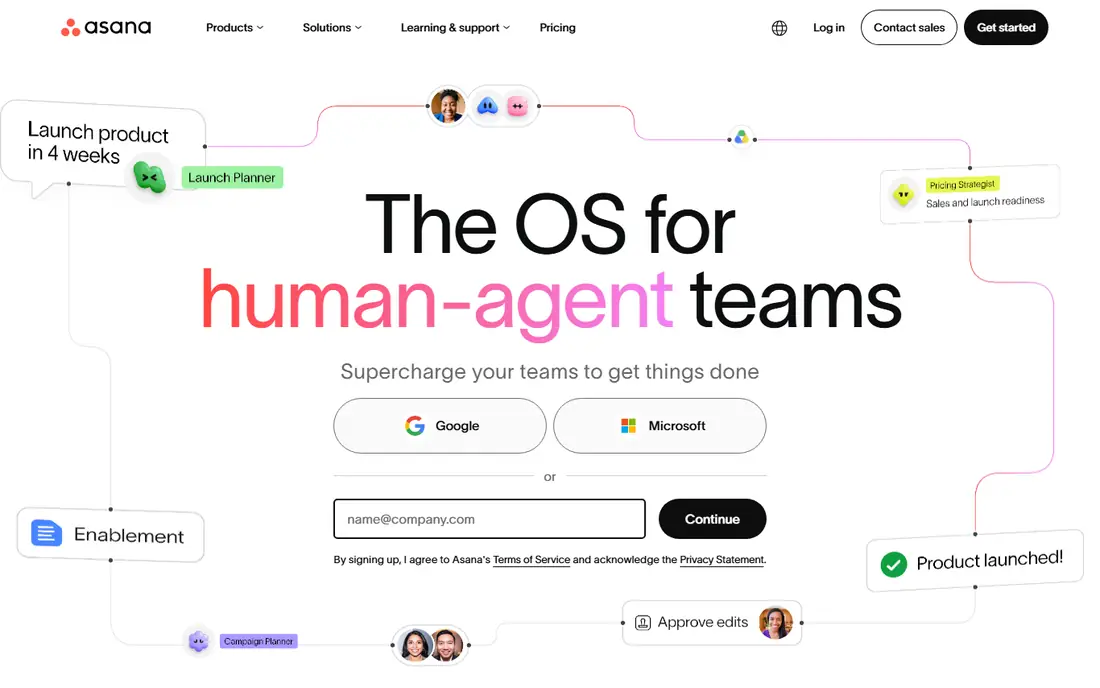
Asana is the most polished tool here for teams that want structure. You create a project, pick a view, add tasks with owners and due dates, and the Timeline shows the whole plan at a glance. Starter adds dependencies, custom fields, forms and unlimited automations. Advanced adds portfolios, goals, approvals and time tracking, and AI features are bundled into paid plans. The main weakness is price: Advanced costs more than double Starter.
What we like- Clean interface, strong Timeline and Gantt views, portfolios and workload views on Advanced, unlimited free guests
Watch out for- Free plan is limited to two users, Advanced is a large price jump from Starter, per-user pricing gets costly as teams grow, and some third-party pages quote monthly rates as annual rates
#2ClickUp
Best for: Teams that want one workspace for tasks, docs, whiteboards, goals and time tracking at the lowest entry price4.6/5 on
G2 (14,878 reviews, checked Oct 2026)
Visit clickup.com
Starting price$7 per user per month billed annually (Unlimited, legacy line); $10 billed monthly. Business is $12 billed annually or $19 monthly. A new Core $9 and Business $17 line is rolling out.
Free planFree Forever plan at $0 with unlimited tasks and unlimited members, 60 MB storage
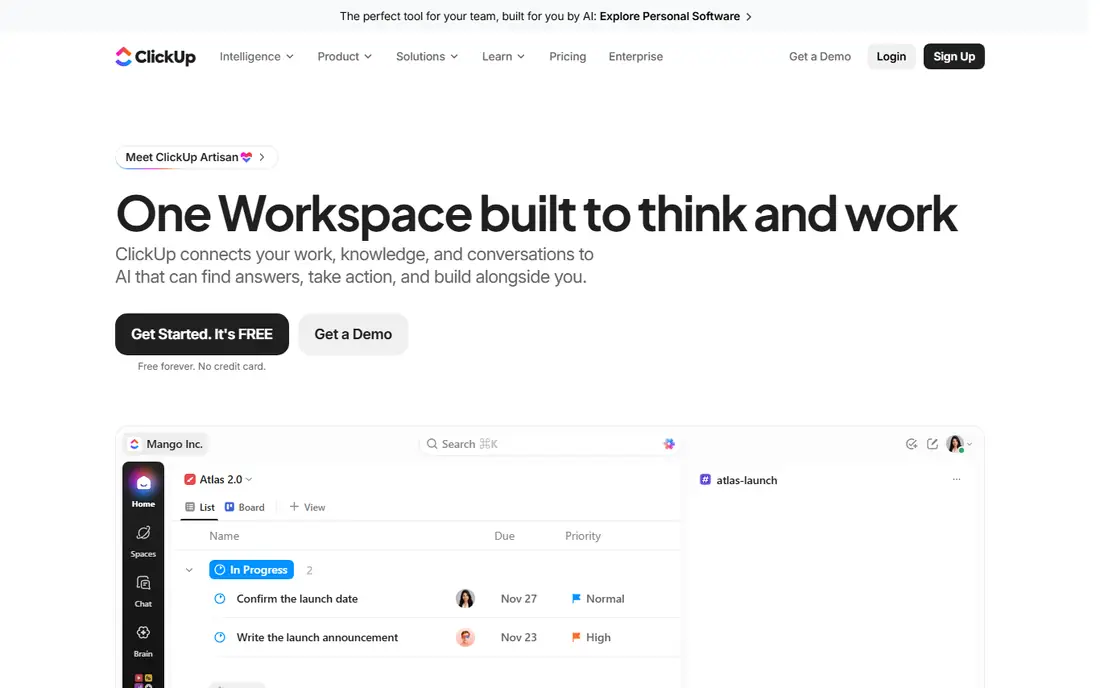
ClickUp packs more into one subscription than any other tool here. Tasks offer list, board, calendar, Gantt and timeline views. Docs, whiteboards and dashboards share one workspace. The free plan has no seat limit. Unlimited at $7 adds storage, integrations and Gantt charts. Business at $12 adds workload management. The catch is the pricing transition: new workspaces may be sold Core at $9, Business at $17 and Max at $100, and AI is a paid add-on.
What we like- Lowest entry price here, free plan has no seat limit, native time tracking from the $7 plan, docs, whiteboards and dashboards in one subscription
Watch out for- Two price lines are live at once, which makes budgeting uncertain, AI is a paid add-on rather than bundled, the interface can feel crowded and the setup takes real time, and goals and workload management sit behind the $12 Business tier
#3
monday Work Management
Best for: Non-technical teams that want colourful visual boards, timelines and automations with minimal training
Visit monday.com
Starting price$9 per seat per month billed annually (Basic); $12 billed monthly. Standard is $12 billed annually, Pro is $19 billed annually.
Free planFree plan for up to 2 seats
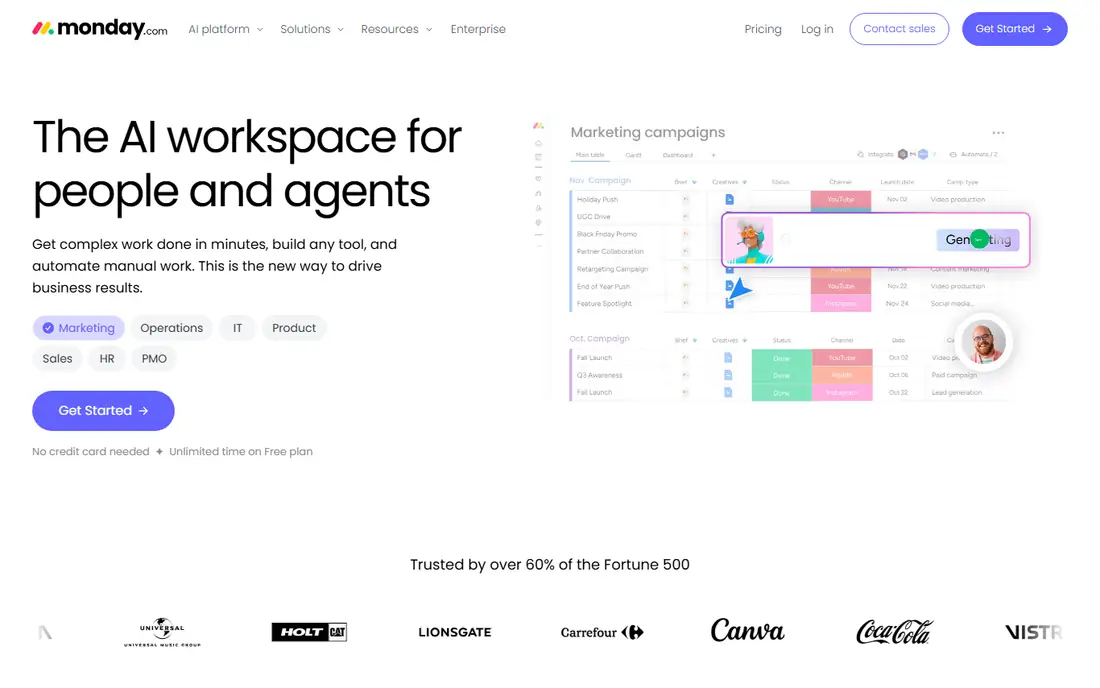
monday Work Management is the easiest tool in this guide for a non-technical team to adopt. Boards are visual and the layout is clear within an hour. Basic at $9 covers unlimited items and free viewers, but it has no Timeline or Gantt view. Standard at $12 adds those views plus 250 automation and integration actions a month. Pro at $19 raises the allowance to 25,000 actions and adds time tracking and private boards. The main weakness is the three-seat minimum.
What we like- Very visual and easy to learn, Timeline and Gantt from Standard, strong automations on Pro, unlimited free viewers, AI credits bundled
Watch out for- Three-seat minimum on paid plans, so a solo user pays for three seats, time tracking is only on Pro, the pricing page shows limited-time discounts that make the real total harder to read, and monday CRM prices differ (Basic $12, Standard $17, Pro $28), which buyers often mix up
#4Trello
Best for: Small teams and individuals who want simple Kanban boards with almost no learning curve4.4/5 on
G2 (14,064 reviews, checked Oct 2026)
Visit trello.com
Starting price$5 per user per month billed annually (Standard); $6 billed monthly. Premium is $10 billed annually or $12.50 monthly. Enterprise is $17.50 billed annually.
Free planFree plan at $0 for up to 10 collaborators and 10 boards per Workspace
Trello is the simplest tool here, and that is its strength. A board is lists of cards, and anyone can use it in minutes. Standard at $5 removes the board and collaborator caps, adds custom fields, advanced checklists, card mirroring and 1,000 automation runs a month. Premium at $10 doubles the price and adds Calendar, Timeline, Table, Dashboard and Map views, plus unlimited automations. Trello suits simple, visual work. It is the wrong pick when you need portfolios or detailed reporting.
What we like- Cheapest paid tier here, simplest interface of the eight, unlimited Power-Ups per board, Premium adds Calendar, Timeline, Table, Dashboard and Map views
Watch out for- Weak reporting and no native portfolios, Timeline and Calendar views cost double the Standard price, the free plan caps at 10 collaborators and 10 boards, and Enterprise requires at least 50 seats with a $10,000 minimum spend
#5Notion
Best for: Teams that want docs, wikis and lightweight project tracking in one connected workspace4.6/5 on
G2 (13,834 reviews, checked Oct 2026)
Visit notion.com
Starting price$10 per member per month billed annually (Plus); $12 billed monthly. Business is $20 billed annually or $24 monthly.
Free planFree plan at $0 for individuals, with unlimited pages and blocks for personal use
Notion is a docs and wiki tool first and a project tracker second, which is why many teams choose it. Pages, databases, tables, Kanban boards and calendars share one workspace, so notes, specs and tasks stay connected. Plus at $10 adds unlimited file uploads, 30-day page history and unlimited guests. Business at $20 unlocks full Notion AI, including Notion Agent and AI Meeting Notes, plus 90-day history. Since October 2026, AI on Business is metered in credits. Notion suits teams that live in documents.
What we like- Flexible docs and databases in one place, Plus covers most small-team needs at $10, Business includes full Notion AI, generous guest access
Watch out for- Project management features are lighter than dedicated tools, with weaker timelines and no native workload view, full AI requires the Business tier at double the Plus price, and AI use on Business is now metered in monthly credits, which adds a second cost to track
#6Jira
Best for: Software and engineering teams that run agile sprints, backlogs and releases4.3/5 on
G2 (7,984 reviews, checked Oct 2026)
Visit atlassian.com
Starting priceStandard from $7.53 per user per month billed annually; Premium from $13.53. See the price note in the write-up below.
Free planFree plan for up to 10 users, with boards, backlogs and basic reporting
Jira is the default issue tracker for software teams, and it earns that position. Backlogs, sprints and release reports are native, not added through plugins. Standard at $7.53 covers user roles, permissions and external collaboration. Premium at $13.53 adds cross-team planning, dependency management and more automation. The free plan covers up to 10 users. Atlassian raised list prices effective 13 October 2026: Standard is $9.70 a month for 1 to 100 users, and Premium is $19.60. Check your headcount in the Atlassian pricing calculator before you budget.
What we like- Best agile tooling here, with scrum and Kanban boards, backlogs, sprints and releases, deep Atlassian integrations, strong permission controls, rates step down at higher seat bands
Watch out for- Pricing is tiered by seat band and hard to quote without the Atlassian calculator, the interface is dense and takes time to learn, non-technical teams often find it heavy, and Atlassian raised list prices effective 13 October 2026, so older $7.53 and $13.53 figures may already be stale
#7Wrike
Best for: Larger teams and enterprises that need resource management, portfolios and detailed reporting4.2/5 on
G2 (4,540 reviews, checked Oct 2026)
Visit wrike.com
Starting price$9.80 per user per month billed annually (Team). Business is $24.80 per user per month billed annually. Enterprise and Pinnacle are custom priced.
Free planFree plan for up to 5 users with basic task management
Wrike is built for teams that manage many projects with shared resources. Gantt charts, workload views and proofing are core features, not add-ons. Team at $9.80 adds Gantt charts, dashboards and automations, but it locks out the features that make Wrike different. Business at $24.80 unlocks custom workflows, resource management, time tracking and portfolios, the tier most serious buyers need. One page lists Business at $24.99 rather than $24.80, but most 2026 sources support $24.80. Wrike suits teams with 20 or more people.
What we like- Strong Gantt charts, workload view and resource management, custom workflows and request forms, detailed analytics, good fit for marketing and creative teams at scale
Watch out for- Team plan locks out resource management, time tracking and custom workflows, Business costs two and a half times Team, the interface feels heavy for small teams, and minimum user counts apply per tier, with Team covering 2 to 25 users and Business 5 to 200 users
#8Smartsheet
Best for: Teams that think in spreadsheets and want grid, Gantt, card and calendar views of the same work4.4/5 on
G2 (22,767 reviews, checked Oct 2026)
Visit smartsheet.com
Starting price$9 per member per month billed annually (Pro); $12 billed monthly. Business is $19 billed annually or $24 monthly. Enterprise and Advanced Work Management are custom priced.
Free planNo free plan for new signups; a 30-day free trial is offered instead, with no credit card required
Smartsheet is a spreadsheet that grew into a work management platform. If your team plans in sheets, the grid view feels natural, and the same data can be shown as Gantt, card or calendar views. Pro at $9 covers 1 to 10 members, with unlimited sheets, forms and dashboards and 250 automation runs a month. Business at $19 adds unlimited automations, Timeline view, workload tracking and baselines, with a three-member minimum. Only Members are billed seats, while Contributors and Guests are unlimited and free.
What we like- Familiar spreadsheet interface, strong Gantt engine and baselines on Business, unlimited free Contributors and Guests, unlimited automations on Business
Watch out for- No free plan for new signups, Pro is capped at 10 members so a team of 11 cannot buy it at any price, Resource Management is a paid add-on with no published price, and the interface feels dated next to Asana and monday Work Management
Frequently asked questions
Is Asana or ClickUp better for a small team?
ClickUp is usually the better pick for a small team on a tight budget. Its free plan has no seat limit, and Unlimited costs $7 per user per month billed annually against $10.99 for Asana Starter. Asana suits teams that value a clean, structured interface and want timelines and reporting without a long setup phase.
What is the cheapest project management tool in this comparison?
Trello Standard is the cheapest paid tier here at $5 per user per month billed annually, and ClickUp Free Forever is the most generous free plan because it has no seat limit. Asana Personal and monday Work Management Free are both limited to two users.
Does ClickUp really cost $7 per user per month?
Yes, on the legacy line, Unlimited costs $7 per user per month billed annually, or $10 billed monthly. Business on the same line costs $12 billed annually. ClickUp is rolling out a new line with Core at $9, Business at $17 and Max at $100 per user per month billed annually, and price updates begin no earlier than January 2027.
Which tool is best for software development teams?
Jira is the best pick for software teams in this guide. It has native backlogs, sprints, releases and agile reporting, plus deep integrations with Confluence and Bitbucket. Asana and ClickUp can manage software work, but they lack Jira depth on sprint planning. Non-technical teams will usually find Jira heavy and prefer Asana or monday Work Management instead.
Can I switch from Asana to ClickUp, or the other way, without losing data?
Yes, both tools offer importers, and ClickUp has a built-in Asana importer that moves projects, tasks, assignees and due dates. Asana can import from CSV and from other tools through its importer and integrations. Expect to rebuild automations, custom fields and dashboards by hand, because those rarely transfer cleanly. Migrate one project first and check the result before you move everything.
Sources we checked (8)
- https://asana.com/pricing
- https://clickup.com/pricing
- https://monday.com/pricing
- https://trello.com/pricing
- https://www.notion.com/pricing
- https://www.atlassian.com/software/jira/pricing
- https://www.wrike.com/pricing
- https://www.smartsheet.com/pricing
Is your product missing or out of date?
We review this list regularly. Vendors can request a listing, send updated pricing or ask about featured placement.

Shihab Mia · Founder, Rankite
Shihab has 5+ years in B2B and SaaS SEO. He writes Rankite's software buying guides from pricing pages, documentation and public user reviews. More about Shihab.