How we make this list: we compare pricing pages, product documentation and public user reviews. Ratings come from G2, Capterra or Trustpilot, with the date we checked them.
Key takeaways
- Kotlin is the best Scala alternative for JVM teams, with null safety, coroutines, and full Java interop that let you migrate one module at a time.
- Java itself remains the safest enterprise alternative, with the largest hiring pool and long-term support releases, including Java 25 LTS by 2026 guides.
- Go suits cloud-native microservices, with goroutines and fast builds, while Rust suits systems work where memory safety without garbage collection matters and performance is critical.
- Python suits data and machine learning work, while Clojure, Haskell, and Elixir suit teams that want functional programming with different trade-offs, from JVM interop to purity to fault tolerance.
- Migrate incrementally where possible: Kotlin and Clojure run on the JVM beside existing Scala code, while Go and Rust need a rewrite, so start with a new service rather than a big-bang migration.
Quick comparison
| Tool | Best for | Starting price | Free plan |
|---|
 Kotlin | JVM teams leaving Scala | Free | Yes |
 Java | Enterprise stability | Free | Yes |
 Go | Cloud microservices | Free | Yes |
 Rust | Systems safety | Free | Yes |
 Python | Data and ML | Free | Yes |
 Clojure | JVM functional programming | Free | Yes |
 Haskell | Pure functional programming | Free | Yes |
 Elixir | Distributed fault tolerance | Free | Yes |
Is your product missing or out of date?
We review this list regularly. Vendors can request a listing, send updated pricing or ask about featured placement.
The best alternatives to scala
Starting priceFree
Free planYes
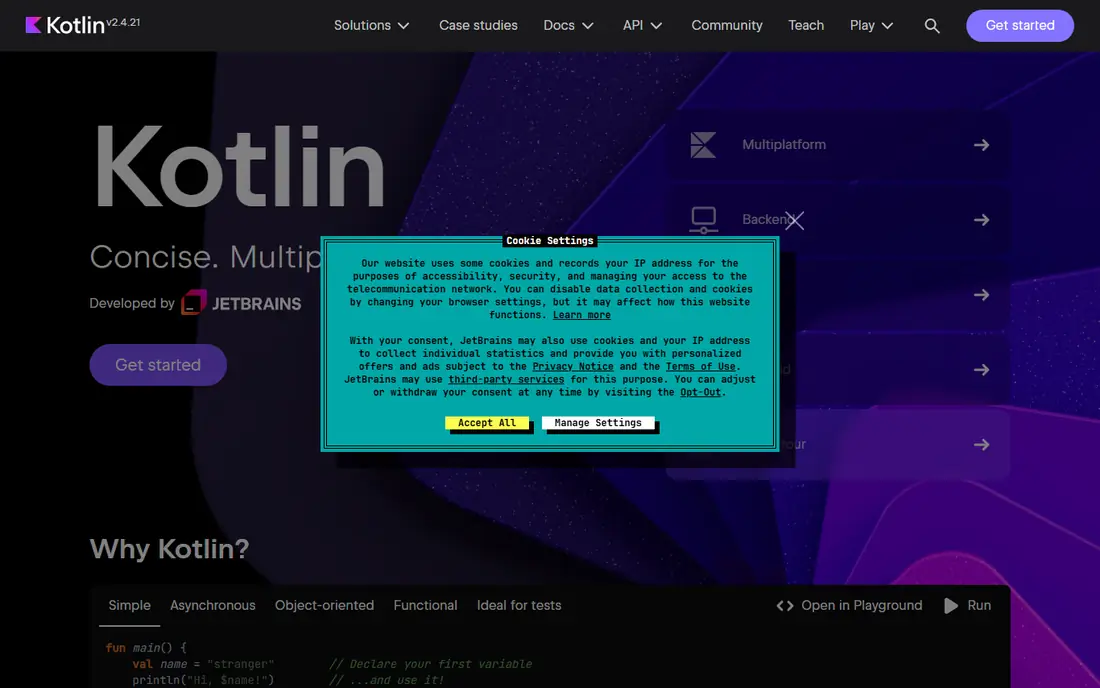
Kotlin wins for Java migrations and for JVM teams leaving Scala, with full interop that lets Kotlin code call Java and Scala libraries directly without a rewrite. Null safety catches a whole class of errors at compile time, coroutines simplify async code, and guides cite 40 percent faster compiles than older JVM setups, though results vary by project size.
The community is smaller than Java, and Kotlin offers fewer functional features than Scala, so teams that loved Scala type-level programming may feel constrained. For a JVM team that wants a modern, pragmatic language with an easy migration path, Kotlin is the top alternative.
What we like- Full Java interop
- Null safety
- Coroutines
- 40 percent faster compiles by guides
- Android and backend
Watch out for- Smaller community than Java
- Build tooling still evolving
- Fewer functional features than Scala
Starting priceFree
Free planYes
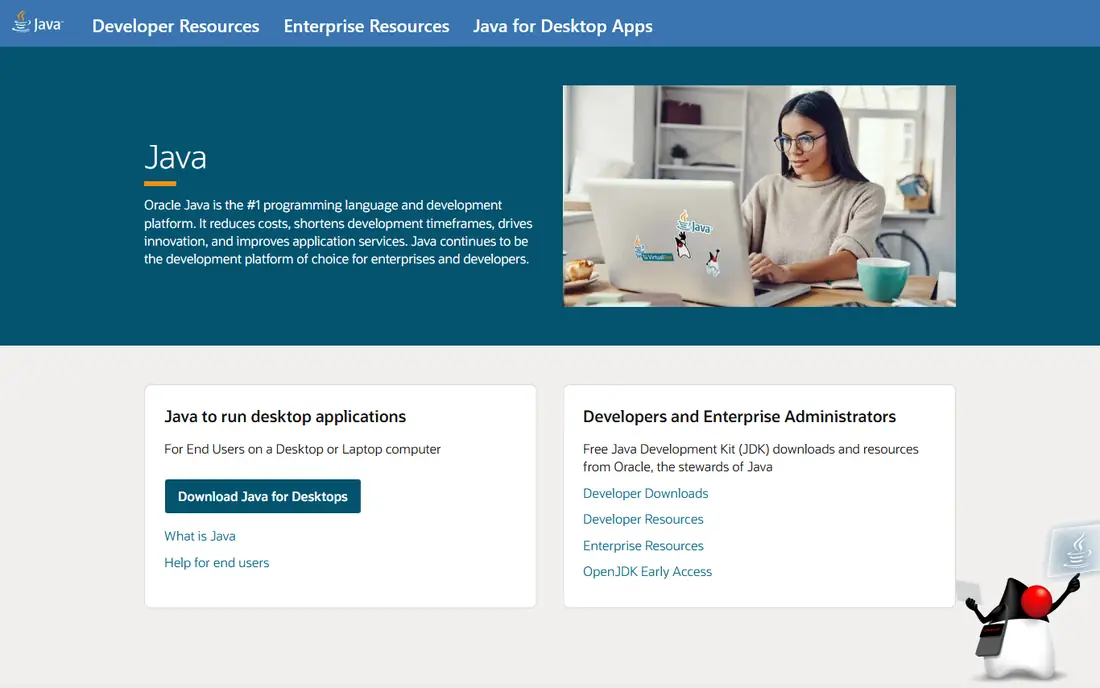
Java remains the safest enterprise alternative to Scala, with the largest hiring pool, long-term support releases, and a vast library ecosystem. Java 25 LTS by 2026 guides gives enterprises a stable target, and modern practices like structured concurrency close much of the gap with newer languages.
Verbosity remains the main cost, though records, pattern matching, and virtual threads reduce boilerplate. For an enterprise team that values stability, hiring, and support above language novelty, Java is the default alternative.
What we like- Largest hiring pool
- Long-term support releases
- Java 25 LTS by 2026 guides
- Vast libraries
Watch out for- More verbose than Kotlin or Scala
- Boilerplate needs modern practices
- Slower language evolution
Starting priceFree
Free planYes
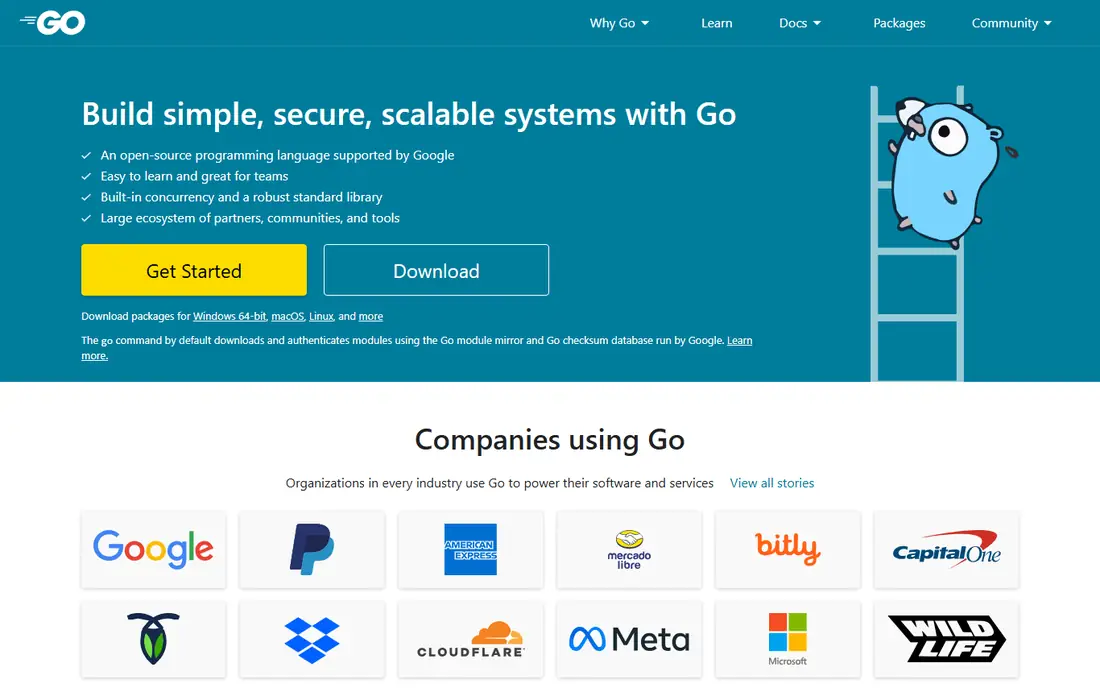
Go excels in concurrency for microservices, powering Kubernetes and much of the cloud-native toolchain. Goroutines make concurrent code simple, builds are fast, and the standard library covers most backend needs without extra dependencies.
Error handling is explicit and repetitive, the language is opinionated with fewer ways to express abstractions, and testing libraries lag other ecosystems. For a team building cloud services where latency and operating cost matter, Go is a strong Scala alternative, though migration means a rewrite.
What we like- Goroutines for easy concurrency
- Fast builds
- Simple syntax
- Powers Kubernetes and cloud tooling
Watch out for- No JVM interop
- Verbose error handling
- Fewer ways to express abstractions
- Library gaps for testing
Starting priceFree
Free planYes
Rust offers memory safety without garbage collection, competing in performance where Scala on the JVM cannot reach. Zero-cost abstractions mean high-level code runs as fast as hand-written low-level code, and Rust grows in AI infrastructure and systems work.
The learning curve is steep, and the borrow checker frustrates beginners. For systems programming, performance-critical services, or safety-critical code, Rust is the most capable Scala alternative, provided the team accepts the learning investment.
What we like- Memory safety without garbage collection
- Zero-cost abstractions
- Growing in AI infrastructure
Watch out for- Steep learning curve
- Borrow checker friction
- Smaller hiring pool than Java or Go
Starting priceFree
Free planYes
Python suits data-heavy work and prototyping, with the largest data and machine learning ecosystem and the lowest verbosity here. For a Scala team whose real work is Spark jobs, notebooks, and ML pipelines, Python often fits better than any JVM language, and hiring is easy.
Runtime speed trails JVM languages, typing is opt-in rather than enforced, and there is no JVM interop. For data and ML teams, Python is the practical alternative. For backend services, Go or Kotlin fit better.
What we like- Largest data and ML ecosystem
- Low verbosity
- Fast prototyping
- Huge hiring pool
Watch out for- Slower runtime than JVM languages
- No JVM interop
- Typing is opt-in, not enforced
Starting priceFree
Free planYes
Clojure suits teams that want functional programming on the JVM without leaving the platform, running beside existing Scala and Java code with full interop. Lisp simplicity, immutable data by default, and interactive REPL development make it a favorite for teams that value simplicity over type systems.
The community is smaller, Lisp syntax divides teams, and hiring is harder than for Kotlin or Java. For a JVM team that wants functional programming with a simpler language than Scala, Clojure is the most faithful alternative.
What we like- Runs on the JVM beside existing code
- Lisp simplicity
- Immutable data by default
- Interactive REPL development
Watch out for- Smaller community
- Lisp syntax divides teams
- Hiring pool small
- Tooling less mainstream
Starting priceFree
Free planYes
Haskell suits teams and learners who want pure functional programming with the strongest type system here. Laziness, purity, and expressive types make it the best language for learning functional concepts deeply, and its type system catches errors that other languages miss.
The hiring pool is the smallest here, and the academic reputation means fewer mainstream backend libraries. For a team committed to functional programming as a discipline, Haskell is the purest alternative. For production hiring, Kotlin or Clojure fit better.
What we like- Pure functional programming
- Strong type system
- Excellent for learning functional concepts deeply
Watch out for- Smallest hiring pool here
- Academic reputation
- Library gaps for mainstream backend work
Starting priceFree
Free planYes
Elixir suits teams that loved Scala Akka actor model, since Elixir runs on the BEAM virtual machine with actors, fault tolerance, and hot code reloading built in. Distributed, concurrent systems that must stay up under failure are Elixir natural home, and the syntax is friendlier than Erlang.
The community is smaller than JVM languages, and the BEAM ecosystem is narrower. For a team building fault-tolerant distributed systems, Elixir is a compelling Scala alternative with a gentler learning curve than Haskell.
What we like- Actor model like Scala Akka
- BEAM fault tolerance
- Excellent for distributed, concurrent systems
Watch out for- Smaller community
- BEAM ecosystem narrower than JVM
- Hiring pool small
How we chose
We compared Scala alternatives on JVM fit, concurrency model, type system strength, hiring pool, ecosystem depth, and migration path, using vendor pages and October 2026 language guides, and we favored languages with real production use. We favored languages with real production use and active communities, and we left out niche languages with no hiring signal, except where functional purity justified inclusion, as with Haskell for pure functional programming.
How to pick an alternative to Scala
Start with your platform, then your team. JVM teams should shortlist Kotlin first, then Java or Clojure, since all three run beside existing Scala code with full interop. Cloud teams should look at Go for microservices and fast builds. Systems teams should look at Rust for safety without garbage collection. Data teams should look at Python for ML ecosystems. Functional purists should look at Haskell or Elixir.
Migrate incrementally where you can
Kotlin and Clojure run on the JVM beside existing Scala code, so migrate one module at a time and keep the system running throughout the transition. Go, Rust, Python, and Elixir need rewrites, so start with a new service rather than a big-bang rewrite, and prove the new stack in production before migrating critical paths that users depend on daily. Incremental migration minimizes risk, which matters more than language elegance, since a failed big-bang rewrite costs far more than a slower gradual move.
Weigh hiring against language power
The most powerful language helps little if you cannot hire for it. Java and Python offer the largest pools, Kotlin and Go offer growing pools, and Haskell, Clojure, and Elixir offer small but passionate pools that suit teams willing to train hires. Balance language fit against hiring reality, especially for teams that plan to grow quickly and cannot afford long vacancies for niche roles.
Test the new stack on a real service first
Before committing a whole codebase to a new language, build one real service in it and run it in production for a month, with real traffic and real on-call responsibility. Measure build times, debugging effort, library gaps, and on-call pain, since tutorials hide all four and production reveals them within weeks. A language that feels elegant in a demo can frustrate in production, and a month of real use reveals more than any comparison article, including this one, so trust your own production data above any ranking. Keep the old Scala service running beside the new one until the new stack proves itself under real load, and keep rollback possible until the new service has survived a full release cycle.
Frequently asked questions
What is the best alternative to Scala?
Kotlin, for JVM teams, with null safety, coroutines, and full Java interop that make migration incremental. Java is the safest enterprise pick, Go the best cloud pick, and Rust the best systems pick, depending on your platform and on whether your team values stability, speed, or safety most.
Can I migrate from Scala to Kotlin gradually?
Yes. Kotlin runs on the JVM beside existing Scala and Java code, with full interop in both directions. Migrate one module at a time, keeping the system running, rather than rewriting everything at once, and keep shared libraries in Java where both languages call them easily.
Is Go better than Scala for microservices?
For cloud-native microservices, often yes: goroutines simplify concurrency, builds are fast, and operating costs run lower. For JVM-based data work or teams with heavy Scala investment, Kotlin or Java fit better than a rewrite in Go, since migration cost can outweigh runtime savings.
Should I learn Rust instead of Scala?
Only if your work needs systems performance or memory safety without garbage collection. Rust learning curve is steep, and the hiring pool is smaller, so pick Rust for systems work, not as a general Scala replacement, and budget learning time for the borrow checker.
Which Scala alternative has the most jobs?
Java and Python, by far, with the largest hiring pools and the most enterprise and data roles. Kotlin and Go follow with growing pools, while Haskell, Clojure, and Elixir offer fewer but specialized roles for teams that value functional programming depth.
Sources we checked (8)
- https://kotlinlang.org
- https://www.java.com
- https://go.dev
- https://www.rust-lang.org
- https://www.python.org
- https://clojure.org
- https://www.haskell.org
- https://elixir-lang.org
Is your product missing or out of date?
We review this list regularly. Vendors can request a listing, send updated pricing or ask about featured placement.

Shihab Mia · Founder, Rankite
Shihab has 5+ years in B2B and SaaS SEO. He writes Rankite's software buying guides from pricing pages, documentation and public user reviews. More about Shihab.