How we make this list: we compare pricing pages, product documentation and public user reviews. Ratings come from G2, Capterra or Trustpilot, with the date we checked them.
Key takeaways
- Python is the most practical Julia alternative for most teams, since its scientific libraries, hiring pool, and tooling dwarf every rival.
- R suits statisticians and data analysts who work mainly with data frames, plots, and statistical models rather than general software.
- MATLAB suits engineering teams that need polished toolboxes and Simulink, while Octave offers a free, compatible option for basic MATLAB-style work.
- C++, Fortran, and Rust suit performance-critical numerical code, with Fortran still strong in legacy high-performance computing.
Quick comparison
| Tool | Best for | Starting price | Free plan |
|---|
 Python | General scientific computing | Free | Yes |
 R | Statistics and data analysis | Free | Yes |
 MATLAB | Engineering toolboxes | See website | No |
 Octave | Free MATLAB-style work | Free | Yes |
 C++ | High-speed numerical code | Free | Yes |
 Fortran | Legacy HPC codes | Free | Yes |
 Mathematica | Symbolic math exploration | See website | No |
 Rust | Safe fast numerics | Free | Yes |
Is your product missing or out of date?
We review this list regularly. Vendors can request a listing, send updated pricing or ask about featured placement.
The best alternatives to Julia
Starting priceFree
Free planYes
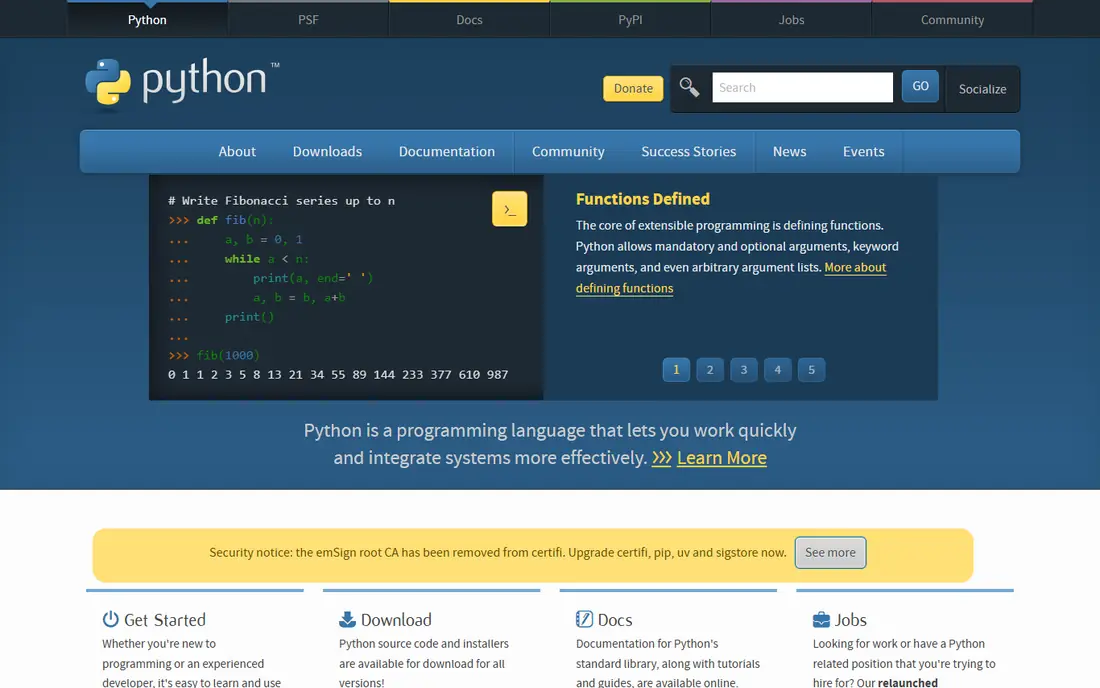
Python is the default answer for teams leaving Julia, and the ecosystem is why. NumPy and SciPy cover arrays and numerical routines, Pandas handles data frames, and Matplotlib covers plots, while PyTorch, JAX, and scikit-learn cover machine learning. That depth means most Julia workflows have a direct Python equivalent, and hiring Python developers is far easier than hiring Julia developers.
Raw speed is the honest gap. Python loops run much slower than Julia loops, so performance-critical code needs NumPy vectorization, Numba, or a compiled extension. Packaging and environment management also frustrate teams that juggle many dependencies. For most scientific and data work, though, Python breadth outweighs its speed limits.
What we like- NumPy, SciPy, and Pandas depth
- Largest hiring pool
- Strong ML libraries
Watch out for- Slower than Julia for raw loops
- Packaging can frustrate
Starting priceFree
Free planYes
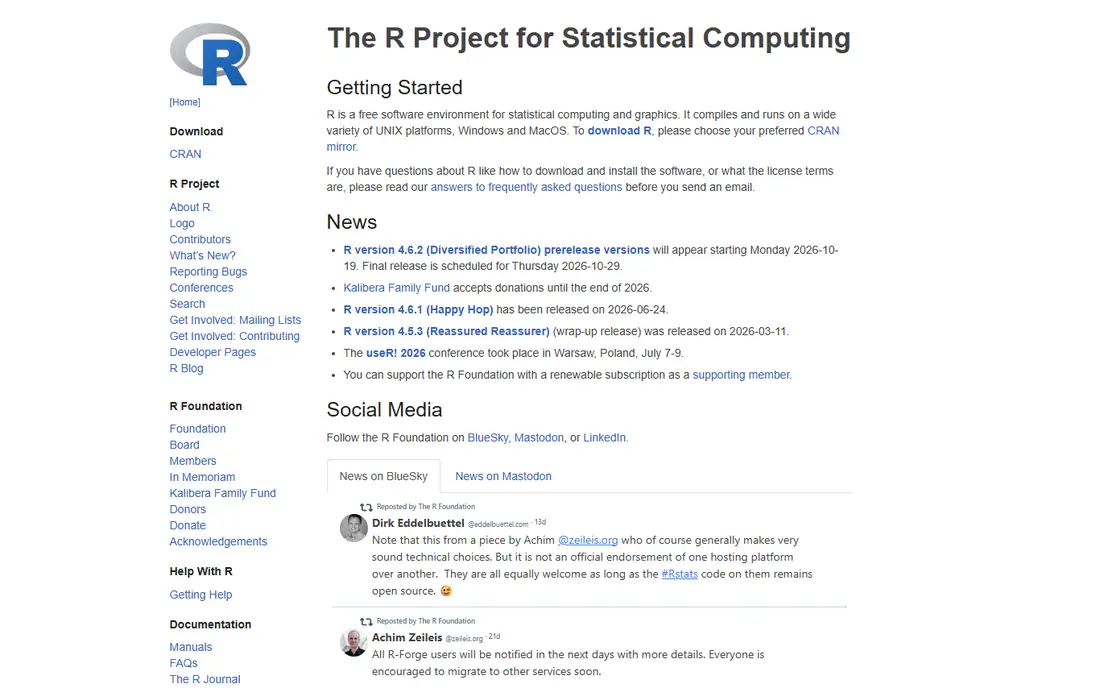
R suits analysts whose work centers on statistics rather than software engineering. Its package archive covers almost every statistical method, ggplot2 produces publication-quality plots with little code, and data frames are first-class citizens rather than an add-on. Teams in biostatistics, social science, and survey research often find R faster to write than any general language.
General software is where R struggles. Building APIs, services, or large applications in R feels awkward compared with Python or Julia, and performance on very large data needs care with data.table or Arrow. R is best treated as an analysis language with a software wrapper around it, not as a full application platform.
What we like- Deep statistics libraries
- Excellent plotting
- Huge package archive
Watch out for- Weaker for general software
- Slower on large data without care
Starting priceSee website
Free planNo
MATLAB remains the standard in many engineering departments, and its toolboxes are the reason. Signal processing, control systems, optimization, and image processing come as tested, documented toolboxes rather than community packages of varying quality. Simulink adds visual modeling for dynamic systems, which has no direct Julia equivalent at the same polish level.
Licensing is the barrier. MATLAB and its toolboxes cost far more than free languages, and code written for MATLAB stays tied to MathWorks products. Universities often cover the cost through campus licenses, while startups and small teams feel it keenly. For engineering teams that already standardize on MATLAB, it is the safe, productive choice.
What we like- Polished engineering toolboxes
- Simulink integration
- Strong documentation
Watch out for- License costs are high
- Code is tied to MathWorks
Starting priceFree
Free planYes
Octave gives teams MATLAB-style computing without the license bill. Its syntax is largely compatible with MATLAB for core numerical work, so scripts and teaching material often transfer with little change. For coursework, prototyping, and basic engineering computation, Octave covers the essentials at zero cost.
Toolbox depth and polish trail MATLAB clearly. Advanced toolboxes, Simulink-style modeling, and the newest MathWorks features have no Octave equal, and performance lags on some workloads. Octave suits budget-conscious teams and classrooms, not engineering groups that depend on specialized toolboxes daily.
What we like- Free and open source
- Largely MATLAB-compatible syntax
- Good for teaching
Watch out for- Fewer toolboxes
- Slower and less polished than MATLAB
Starting priceFree
Free planYes
C++ is the performance ceiling for numerical work, and it suits teams that need every cycle. Libraries like Eigen, Armadillo, and BLAS bindings cover linear algebra at high speed, and C++ code runs anywhere from laptops to supercomputers. Simulation, graphics, and embedded numerics all benefit from its control over memory and hardware.
Development time is the cost. Manual memory management, long compile times, and verbose code make C++ far slower to write than Julia or Python, and bugs are harder to find. Teams should reserve C++ for hot paths and libraries, wrapping them in Python or Julia for everyday use, rather than writing whole applications in it.
What we like- Top speed
- Mature numerical libraries
- Full hardware control
Watch out for- Manual memory management
- Long development time
Starting priceFree
Free planYes
Fortran still powers a large share of high-performance computing, and that legacy weight keeps it relevant. Its array handling compiles to very fast code, decades of weather, climate, and physics models run on it, and modern Fortran with the fortran-lang community has improved tooling, package management, and learning resources. For maintaining or extending an existing HPC code, Fortran is often the only sensible choice.
New applications rarely start in Fortran. The community is small, general-purpose libraries are thin, and hiring Fortran developers is difficult outside HPC centers. Teams without a legacy Fortran codebase should pick Python or Rust for new numerical work, and reserve Fortran for the codes it already runs.
What we like- Excellent array performance
- Huge legacy HPC codebase
- Modern Fortran is improving
Watch out for- Small modern community
- Weak tooling for new applications
Starting priceSee website
Free planNo
Mathematica suits researchers who work symbolically rather than numerically. It handles algebra, calculus, equation solving, and symbolic simplification with a depth that numerical languages cannot match, and its built-in knowledge covers data, units, and entities across many domains. Notebooks combine code, math notation, and plots in a form that suits exploration and teaching.
Cost and niche status limit it. Licensing is expensive, and Wolfram Language skills transfer poorly to other jobs compared with Python. Teams that need symbolic results occasionally can often use SymPy in Python instead. For deep symbolic work and mathematical exploration, Mathematica remains exceptional.
What we like- Superb symbolic computation
- Rich built-in knowledge
- Beautiful notebooks
Watch out for- Expensive licensing
- Wolfram Language is niche
Starting priceFree
Free planYes
Rust is the modern systems choice for numerical code that must be both fast and safe. Its ownership model prevents memory bugs at compile time, and crates like ndarray, nalgebra, and Polars cover arrays, linear algebra, and data frames with growing maturity. For new high-performance services where Julia speed matters but safety and deployment matter more, Rust is a strong candidate.
The scientific ecosystem is still young compared with Python or Julia. Some numerical methods lack mature crates, and the learning curve slows teams for months. Rust suits teams building numerical infrastructure as software products, not analysts doing exploratory work. As its science crates mature, Rust will only grow more attractive here.
What we like- Memory safety without garbage collection
- Fast numerics
- Growing science crates
Watch out for- Scientific ecosystem is young
- Learning curve is steep
How we chose
We compared numerical and scientific languages on library depth, speed, hiring, and cost, using language documentation and public ecosystem evidence. Julia users were the reference buyer, so each pick was judged on how it replaces Julia strengths: speed, array math, and scientific libraries. Where a language is niche or expensive, we said so plainly. Cost was judged honestly too: free languages still cost hiring and training time, while licensed tools add a cash cost that only makes sense when their toolboxes save real engineering weeks.
How to pick the right replacement
Start from your workflow, not the language
Analysts should weigh Python and R first, engineers should weigh MATLAB and Octave, and performance teams should weigh C++, Fortran, and Rust. Matching the workflow beats chasing benchmark speed. A benchmark win on a toy problem rarely survives contact with real data, messy inputs, and production constraints, so trust workflow fit over headline numbers.
Keep a two-language strategy where it fits
Many teams write exploration code in Python and hot paths in Rust or C++, getting both productivity and speed. That split costs more in skills, but it avoids forcing one language to do everything poorly. It also keeps hiring flexible, since Python developers are plentiful and systems specialists can focus on the few paths that truly need them.
Check library coverage for your exact methods
List the numerical methods your work depends on, then confirm each one has a maintained library in the new language. A language with great arrays but no solver for your problem is a poor fit. Also check that the library is actively maintained, with recent releases and real users, since an abandoned numerical library can strand a project just as surely as a missing one.
Frequently asked questions
Is Python faster than Julia?
No, raw Python loops are much slower than Julia, but NumPy vectorization and tools like Numba close much of the gap for array work. Teams that need top speed usually move hot paths to a compiled language. Profile first, since most programs spend their time in a few routines, and optimizing only those routines saves weeks. That profiling habit also prevents wasted effort on code that barely affects runtime. Keep hot paths small, well tested, and clearly separated from exploratory code. That separation keeps both parts maintainable. It also makes performance work easier to review, since reviewers can focus on the few routines that matter.
Should statisticians pick R or Python?
R suits pure statistical work with its deep package archive and plotting, while Python suits teams that also build software, pipelines, or machine learning systems. Many analysts learn both and use each where it fits. Learning both takes time, but it removes the need to force one language into work it handles poorly. Employers also value both, so the pair strengthens a resume.
Is Octave a full MATLAB replacement?
Octave replaces core MATLAB numerical work well, but it lacks many specialized toolboxes and Simulink. Teams that depend on those toolboxes should stay with MATLAB or budget for rework. Check each toolbox you rely on before committing to a switch.
Is Fortran still used in 2026?
Yes, Fortran remains widely used in weather, climate, physics, and other high-performance computing fields, where large legacy codes still run. New projects rarely start in Fortran unless they extend those codes. Its staying power comes from proven codes that would cost years to rewrite. Universities still teach it in computational science programs for that reason. Students learn it because the jobs that maintain those codes still exist.
Can Rust replace Julia for scientific computing?
Rust can replace Julia for performance-critical numerical software, but its scientific ecosystem is younger. Analysts doing exploratory work will usually prefer Python, while Rust suits production numerical systems. Teams should also budget learning time, since Rust takes months to learn well.
Sources we checked (8)
- https://www.python.org
- https://www.r-project.org
- https://www.mathworks.com/products/matlab.html
- https://octave.org
- https://isocpp.org
- https://fortran-lang.org
- https://www.wolfram.com/mathematica
- https://www.rust-lang.org
Is your product missing or out of date?
We review this list regularly. Vendors can request a listing, send updated pricing or ask about featured placement.

Shihab Mia · Founder, Rankite
Shihab has 5+ years in B2B and SaaS SEO. He writes Rankite's software buying guides from pricing pages, documentation and public user reviews. More about Shihab.