How we make this list: we compare pricing pages, product documentation and public user reviews. Ratings come from G2, Capterra or Trustpilot, with the date we checked them.
Key takeaways
- Gumloop and Relay are the closest no-code alternatives for building AI workflows without engineering help.
- Stack AI and Dust suit teams that want AI assistants grounded in their own documents and data.
- Lindy suits teams that want AI agents to handle multi-step tasks across apps.
- Zapier and Make suit teams that need broad app integrations with AI steps added in.
- AirOps-style workflows pay off when the same content or data task repeats weekly, so start with one repeatable workflow.
AirOps helps marketing and content teams run AI workflows at scale: briefs, outlines, drafts, enrichment and quality checks chained into repeatable processes. Alternatives split into no-code workflow builders, AI agent platforms, and general automation tools with AI steps. The eight below cover that range, and all of them let non-engineers build workflows that call AI models.
Pricing usually runs by credits, runs or users, and AI model costs sit inside or on top of plans. Prices below are marked "See website" where credit systems and tiers change often. Most tools offer a free tier or trial, so build one real workflow before paying.
Quick comparison
| Tool | Best for | Starting price | Free plan |
|---|
 Gumloop | No-code AI workflows | See website | Yes |
 Relay.app | Human-in-the-loop automation | See website | Yes |
 Stack AI | AI assistants on your data | See website | Free trial |
 Dust | Team AI assistants | See website | Free trial |
 Lindy | AI agents for tasks | See website | Yes |
 Bardeen | Browser automation with AI | See website | Yes |
 Zapier | Broad app automation | See website | Yes |
 Make | Visual automation at scale | See website | Yes |
Is your product missing or out of date?
We review this list regularly. Vendors can request a listing, send updated pricing or ask about featured placement.
The best AirOps alternatives
#1Gumloop
Best for: No-code AI workflows4.8/5 on
G2 (7 reviews, checked Oct 2026)
Visit gumloop.com
Starting priceSee website
Free planYes
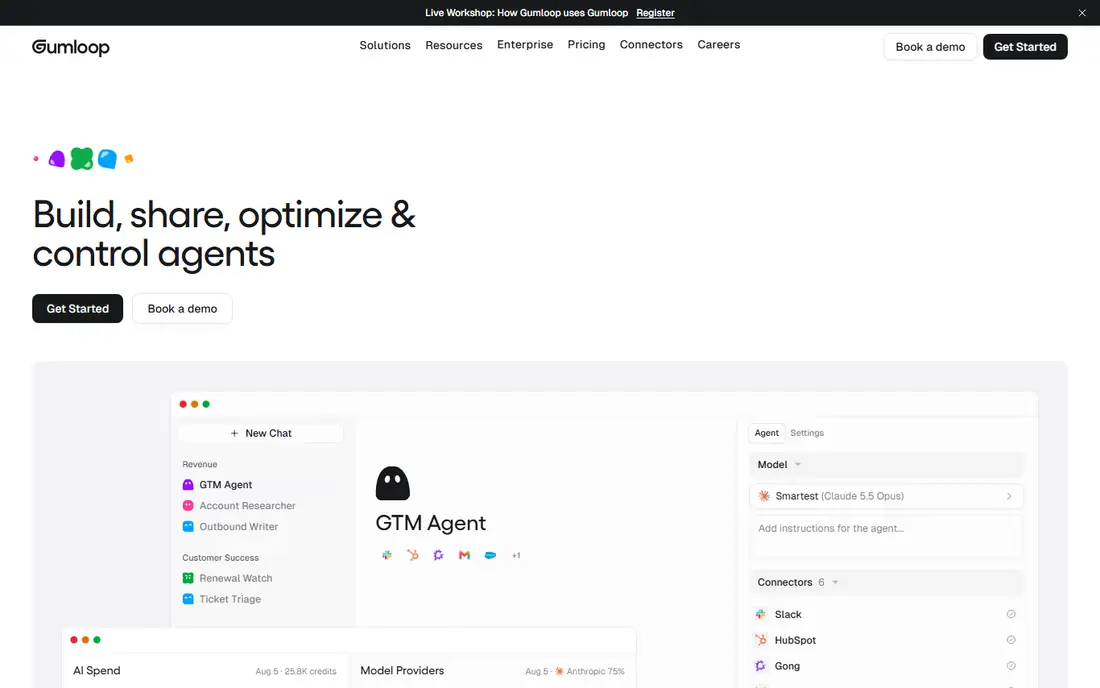
Gumloop is a no-code builder for AI workflows, where nodes for web scraping, AI models, spreadsheets and apps chain into repeatable processes. Marketing teams use it for content pipelines that mirror AirOps: research a topic, draft an outline, write sections, check quality and export to a doc. The visual builder keeps the flow readable, and templates cover common content and data tasks.
The platform is newer than Zapier or Make, so the template library is smaller, and credit costs climb on heavy workflows. For a team that wants AirOps-style AI pipelines without code, Gumloop is the closest direct alternative.
What we like- Drag-and-drop AI workflow builder
- Nodes for scraping, AI and spreadsheets
- Good for content pipelines
Watch out for- Newer platform with a smaller template library
- Heavy workflows can cost credits quickly
Starting priceSee website
Free planYes
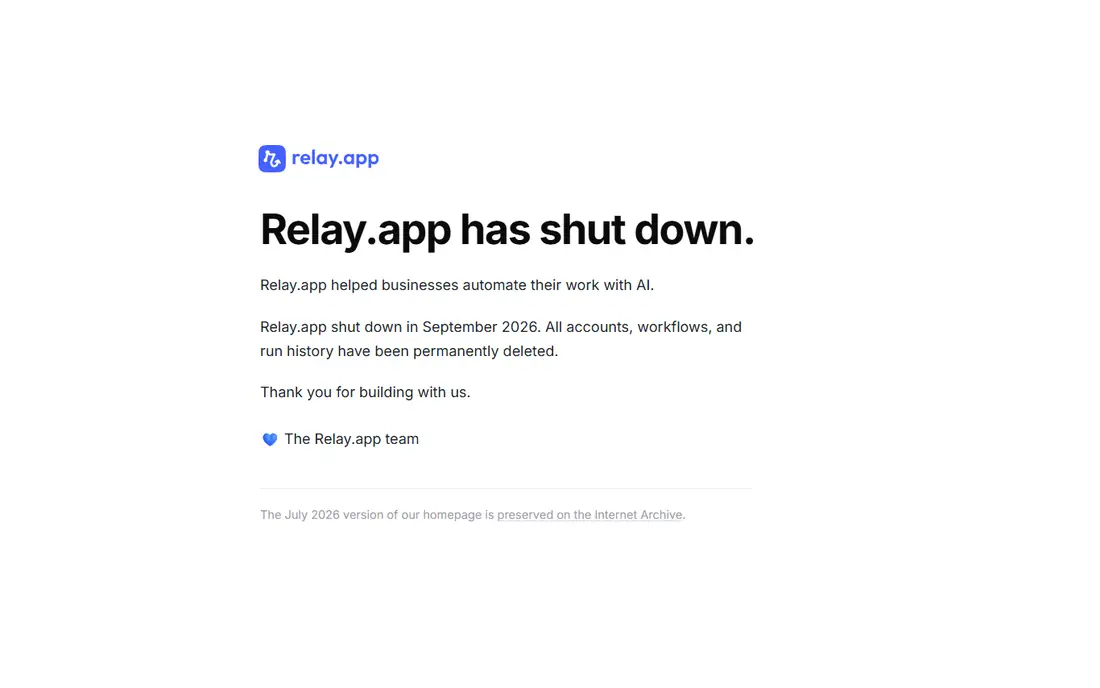
Relay.app is built around human-in-the-loop automation, which fits content workflows where AI drafts but a person approves. Workflows combine app actions with AI steps and approval gates, so a draft, enrichment or outreach message pauses for review before it goes out. The builder is clean, and the free tier covers small teams.
The integration list is smaller than Zapier's, so some niche apps may need a workaround. For teams that want AI speed with human control at key steps, Relay.app is a thoughtful alternative.
What we like- Human approval steps built into workflows
- AI steps alongside app actions
- Clean builder
Watch out for- Smaller integration list than Zapier
- AI features are newer
Starting priceSee website
Free planFree trial
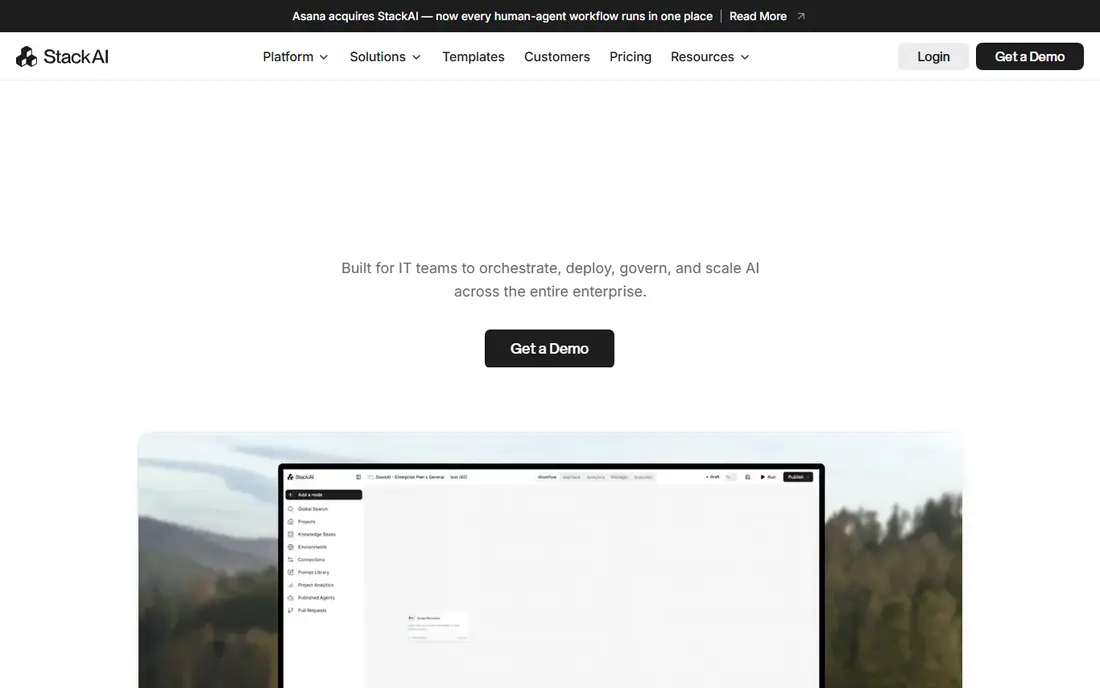
Stack AI lets teams build AI assistants, agents and workflows grounded in their own documents and data sources. The no-code builder connects data, picks models and deploys assistants as internal tools or chatbots. Businesses use it for support assistants, document question-answering and content workflows that need company knowledge.
Pricing scales toward enterprise for larger deployments, and assistant quality depends heavily on the underlying data. For a team that wants AI workflows tied to its own knowledge base, Stack AI is a strong platform choice.
What we like- Build assistants and agents on company data
- No-code builder with model choice
- Good for internal tools
Watch out for- Enterprise pricing for larger deployments
- Assistant quality depends on data quality
Starting priceSee website
Free planFree trial
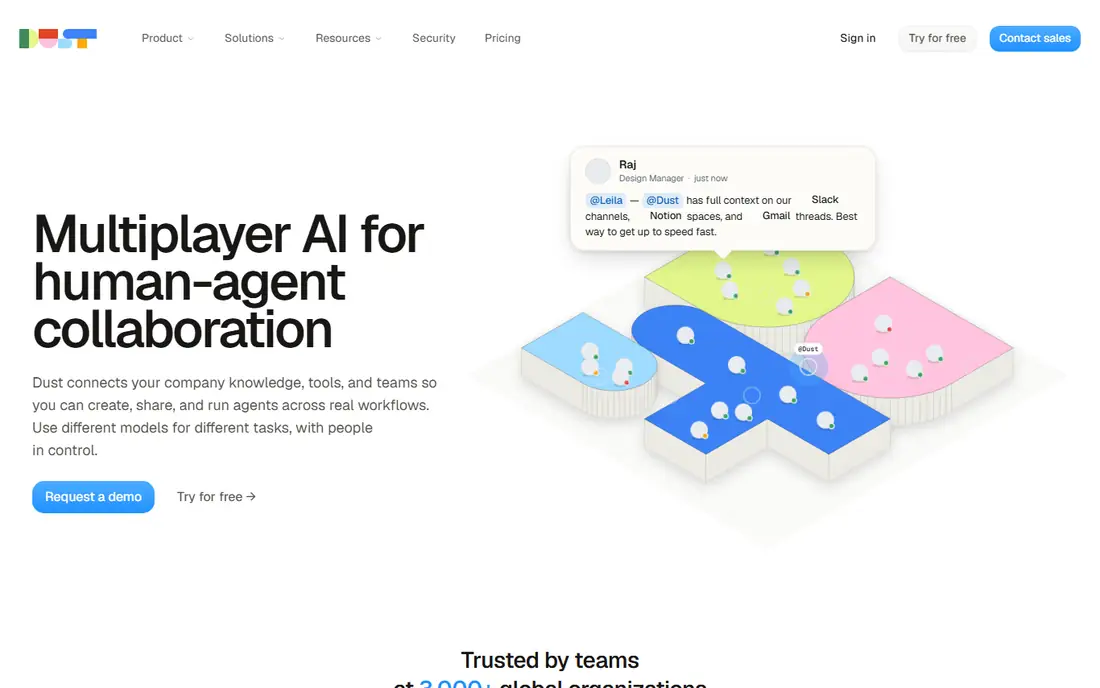
Dust builds team AI assistants that connect to company tools and documents, so staff can ask questions and run tasks against real company knowledge. Multi-model support lets teams pick the best model per task, and assistants can be shared across a workspace. The focus is knowledge work: research, drafting, analysis and internal Q&A.
Workflow automation depth is thinner than Gumloop or Relay, since Dust centres on assistants rather than pipelines. For a team that wants AI helpers grounded in its docs, Dust is the most polished assistant platform here.
What we like- Assistants connected to company tools and docs
- Multi-model support
- Good for knowledge work
Watch out for- Less workflow automation depth than Gumloop
- Pricing is per user
#5Lindy
Best for: AI agents for tasks4.9/5 on
G2 (171 reviews, checked Oct 2026)
Visit lindy.ai
Starting priceSee website
Free planYes
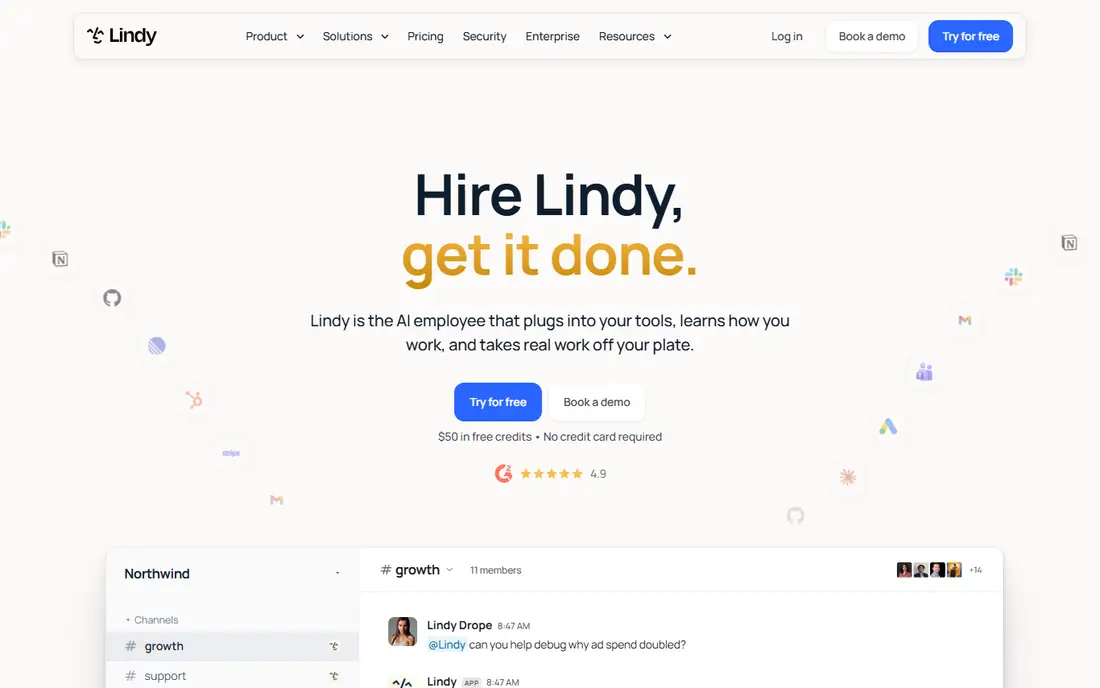
Lindy builds AI agents that carry out multi-step tasks across apps, from scheduling and inbox triage to lead research and follow-ups. Agents are described in natural language, and templates cover common sales, support and operations tasks. The platform suits teams that want tasks done, not just drafts written.
Agent reliability varies with task complexity, and heavy use consumes credits quickly. For a team that wants AI to act across tools rather than just generate content, Lindy is the agent-first alternative.
What we like- AI agents handle multi-step tasks across apps
- Natural language agent building
- Many templates
Watch out for- Agent reliability varies by task complexity
- Credit costs on heavy use
#6Bardeen
Best for: Browser automation with AI4.8/5 on
G2 (36 reviews, checked Oct 2026)
Visit bardeen.ai
Starting priceSee website
Free planYes
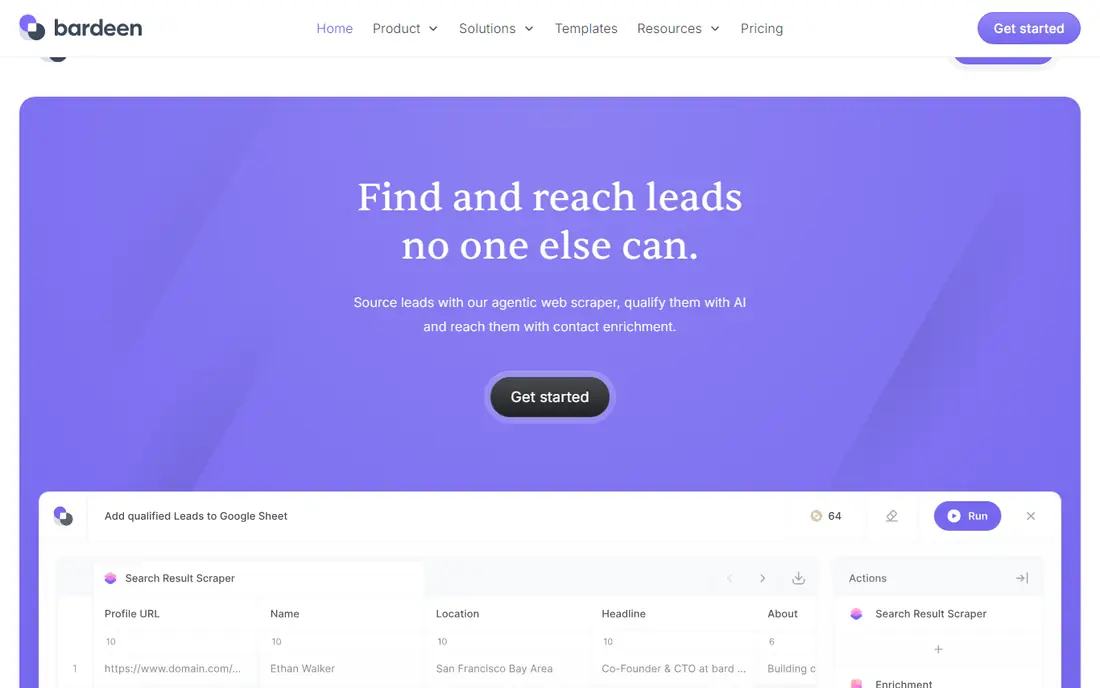
Bardeen automates browser work with AI, which matters when the data you need sits behind a website with no API. Playbooks scrape pages, enrich lists, draft outreach and move data into sheets and CRMs, with AI steps for summarising and writing. The library of ready playbooks covers sales, recruiting and marketing tasks.
Browser automations can break when sites change layout, and heavier use needs paid tiers. For content and data workflows that start from the web, Bardeen covers ground that API-only tools cannot reach.
What we like- Browser automations plus AI for scraping and enrichment
- Large playbook library
- Works where APIs do not exist
Watch out for- Browser-based, so some workflows are fragile
- Heavier tasks need paid tiers
#7Zapier
Best for: Broad app automation4.5/5 on
G2 (2,088 reviews, checked Oct 2026)
Visit zapier.com
Starting priceSee website
Free planYes
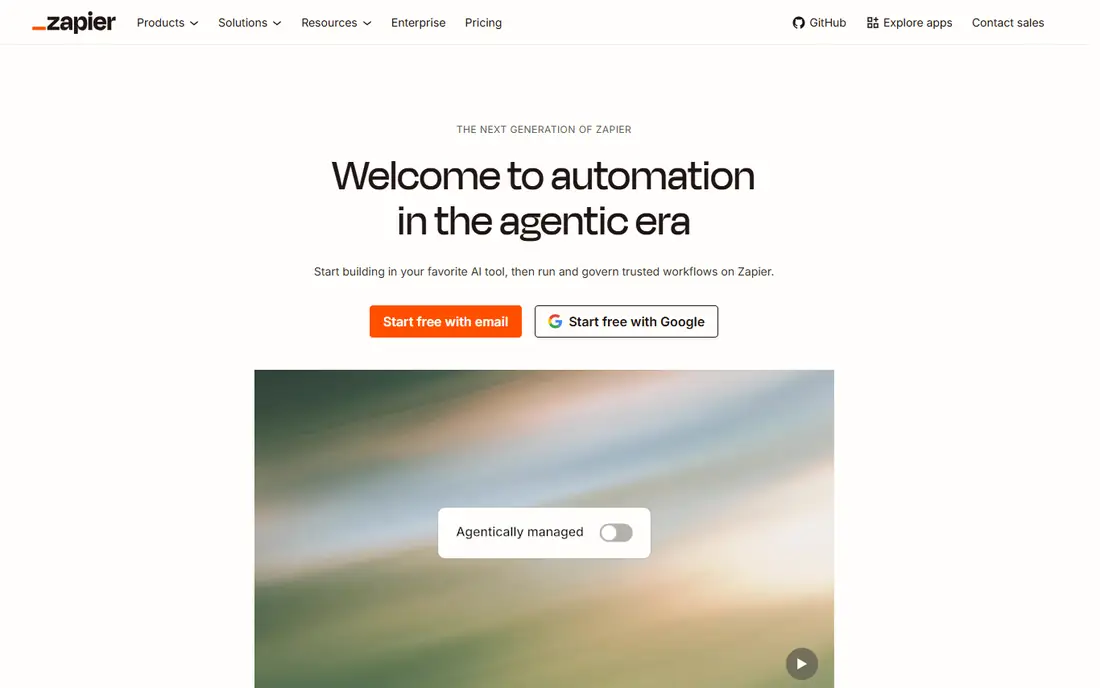
Zapier is the automation standard, with thousands of app integrations and a mature builder. AI steps, including its agent features, let Zaps summarise, draft and decide inside classic automations. The platform is reliable, well documented and supported by nearly every SaaS vendor, which makes it the safe default for connecting tools.
AI workflow design is less visual and less AI-native than Gumloop or Stack AI, and task-based pricing climbs with volume. For a team that needs AI steps inside a broad automation estate, Zapier is the most dependable choice.
What we like- Largest app integration library
- AI steps and agents added to classic Zaps
- Reliable and well documented
Watch out for- AI workflow design is less visual than Gumloop
- Costs rise with task volume
#8Make
Best for: Visual automation at scale4.6/5 on
G2 (347 reviews, checked Oct 2026)
Visit make.com
Starting priceSee website
Free planYes

Make, formerly Integromat, offers a visual automation builder with branching, routers and data manipulation that suits complex scenarios. AI modules from major providers plug into scenarios for drafting, summarising and classification, and the free tier is generous for small teams. The builder shows data flow clearly, which helps debugging.
Complex scenarios take learning, and AI features are newer than those in Gumloop or Stack AI. For a team that already automates with Make and wants to add AI steps, it is the natural extension rather than a new platform.
What we like- Visual scenario builder with branching and logic
- Strong data handling
- Generous free tier
Watch out for- Learning curve for complex scenarios
- AI features are newer than dedicated AI tools
How we chose
We compared tools on their published workflow features, AI model support, integration lists, pricing pages and public reviews from marketing and operations teams. We favoured tools with no-code builders, AI steps or agents, and a clear path from a single workflow to a repeatable pipeline. Prices were marked "See website" because credit and task pricing changes often. We did not claim hands-on testing.
Start with the job. If the job is a content pipeline with repeated steps, Gumloop or Relay fits best. If the job is answering questions from company documents, Stack AI or Dust fits better. If the job is acting across apps, Lindy or Zapier fits better. If the job starts from web data, Bardeen fits best.
Then test one workflow end to end, including the failure cases. Check what happens when an AI step returns poor output, when a source site changes, and when a human needs to approve. The tool that handles those cases cleanly is the one that survives real use. Finally, watch credit costs on a realistic volume before committing, since AI workflows consume credits faster in production than in a demo.
AI workflow tools prove their worth on one repetitive process first. Choose a task your team repeats weekly, such as triaging support tickets, drafting status reports or enriching new leads, and automate that single workflow end to end during the trial. Measure hours saved per week and error rates before and after, since a workflow that saves two hours weekly across a team of ten pays for itself fast, while a flashy demo that saves nobody's time does not. Keep a human approval step for external messages and financial actions, because fully automatic outreach and payments create mistakes that cost more than the time saved. Review automations monthly, since the apps and data sources they connect to change often, and a workflow nobody maintains quietly breaks.
Frequently asked questions
What is the best AirOps alternative?
Gumloop is the closest no-code alternative for AI content workflows, with a visual builder for scraping, AI and publishing steps. Relay.app suits teams that want human approval inside workflows. The best pick depends on whether you need content pipelines, assistants or agents.
Can I build AI workflows without coding?
Yes. Gumloop, Relay.app, Stack AI, Lindy and Bardeen all offer no-code or natural language builders for AI workflows. You describe steps and connect apps visually, and the platform handles model calls. Complex logic still benefits from technical help, but basic pipelines need no code.
How much do AI workflow tools cost?
Most tools charge by credits, runs or users, with free tiers for small use. Costs depend on workflow volume and model choice, since larger models cost more per run. Check the vendor's pricing page and estimate credits from a realistic monthly workflow volume before committing.
What is the difference between AI workflows and AI agents?
AI workflows run a fixed sequence of steps, such as research, draft and check, while AI agents decide steps themselves to complete a goal. Workflows suit repeatable content tasks with predictable steps, while agents suit varied tasks like inbox triage. Lindy leans toward agents, while Gumloop leans toward workflows.
Do these tools work with my existing apps?
Most connect to common tools such as Google Sheets, Notion, Slack, HubSpot and Salesforce, with Zapier and Make offering the widest coverage. Check the integration list for your specific stack before buying, and confirm whether the connection needs a paid tier.
Is my data safe in AI workflow tools?
Reputable tools offer encryption, access controls and data processing terms, but AI model providers may process data differently by plan. Check the vendor's security page, data retention policy and whether enterprise tiers offer zero-retention options before running sensitive workflows.
Sources we checked (8)
- https://www.gumloop.com
- https://www.relay.app
- https://www.stack-ai.com
- https://dust.tt
- https://www.lindy.ai
- https://www.bardeen.ai
- https://zapier.com
- https://www.make.com
Is your product missing or out of date?
We review this list regularly. Vendors can request a listing, send updated pricing or ask about featured placement.

Shihab Mia · Founder, Rankite
Shihab has 5+ years in B2B and SaaS SEO. He writes Rankite's software buying guides from pricing pages, documentation and public user reviews. More about Shihab.