How we make this list: we compare pricing pages, product documentation and public user reviews. Ratings come from G2, Capterra or Trustpilot, with the date we checked them.
Key takeaways
- SoFi, LightStream and Discover suit strong credit borrowers best, with no origination fees and direct payment to creditors in some cases.
- Happy Money, Upgrade, Best Egg and Achieve cover fair credit borrowers, with different strengths in speed, direct payoff and rate discounts.
- National Debt Relief is a settlement program, not a loan, and it works very differently for credit, taxes and timing.
- A consolidation loan only helps when the new rate, fee and monthly payment beat the combined cost of the old debts.
- This is not financial advice. Compare a personalized offer, total interest and fees before signing any loan or settlement agreement.
Quick comparison
Is your product missing or out of date?
We review this list regularly. Vendors can request a listing, send updated pricing or ask about featured placement.
The best debt consolidation companies
Starting priceSee website
Free planNo
SoFi suits a borrower with good to excellent credit who wants to replace several high rate card balances with one fixed loan. Company materials reported in 2026 guides describe no origination fee, no late fee and no prepayment penalty, plus a Direct Pay option that sends funds to eligible credit card companies and personal loan lenders. That direct payment matters, since money sent straight to creditors cannot be spent elsewhere before old balances are cleared.
Loan amounts up to $100,000 are reported for SoFi personal loans, with terms that vary by borrower, though the exact rate depends on credit, income and a personalized offer. Direct Pay excludes mortgages, auto loans and student loans, and at least part of the proceeds must go to creditors in that option. SoFi fits a disciplined borrower with strong credit who wants one payment and a lower rate, and it fits less well for a borrower with fair credit who may not qualify for the best terms.
What we like- No origination fee, late fee or prepayment penalty reported
- Direct Pay to eligible creditors
- Loans up to $100,000 reported
Watch out for- Needs good to excellent credit for best terms
- Direct Pay excludes some debt types
Starting priceSee website
Free planNo
LightStream, the online lending division of Truist, appears at the top of many 2026 consolidation lists for borrowers who want a no-fee loan with a low rate. The appeal is simple: a fixed rate loan, no fees to eat into the savings, and one monthly payment instead of several card minimums. For a borrower with excellent credit and stable income, that structure can cut total interest sharply compared with carrying card balances at high rates.
The limit is qualification. LightStream targets strong credit profiles, and a borrower with fair credit or a thin file may be declined or offered a rate that does not beat current card rates. LightStream also puts more responsibility on the borrower to pay off old cards after funding, unless a direct payment option is arranged. Use LightStream when credit is strong and the math clearly beats old debts, and look elsewhere when credit is still being rebuilt.
What we like- No-fee loan structure highlighted in 2026 guides
- Low rates for strong credit
- Simple online application
Watch out for- Strict credit requirements
- No direct creditor payment emphasis
Starting priceSee website
Free planNo
Discover Personal Loans suits a borrower who wants the old cards paid off without handling the payoff money directly. Guides in 2026 highlight zero fees and direct creditor payment, which reduces the risk that loan funds sit in a checking account while card interest keeps running. A single fixed payment then replaces several variable card payments, which makes budgeting easier month to month.
The rate still depends on credit history, income and loan term, so two borrowers can receive very different offers for the same loan amount. Discover also works best for unsecured debts that qualify for direct payment, and secured debts such as a mortgage do not fit this product. Check the personalized rate, the monthly payment and the total interest over the full term, not just the headline rate, before accepting.
What we like- Zero fees reported in 2026 guides
- Direct payment to creditors available
- Fast funding for qualified borrowers
Watch out for- Rate depends heavily on credit
- Loan amounts and terms vary by borrower
Starting priceSee website
Free planNo
Happy Money focuses on one job: paying off credit card debt with a fixed rate personal loan. That focus helps a borrower whose main problem is card balances, since the loan can pay card issuers directly and leave one predictable payment behind. Guides in 2026 list Happy Money for fair credit card consolidation, which makes it a useful step for borrowers who do not qualify for the lowest rates at premium lenders.
The narrow focus is also a limit. A borrower with mixed debts, such as personal loans, medical bills and cards, may need a more general lender. Happy Money still underwrites on credit and income, so approval and rate are not guaranteed. Use it when card debt is the core problem and the new payment fits the budget with room for emergencies, not when the loan only works if nothing else goes wrong.
What we like- Built specifically for credit card debt payoff
- Direct payment to card issuers
- Fair credit access better than premium lenders
Watch out for- Focused mainly on card debt
- Rate and fees vary by borrower
Starting priceSee website
Free planNo
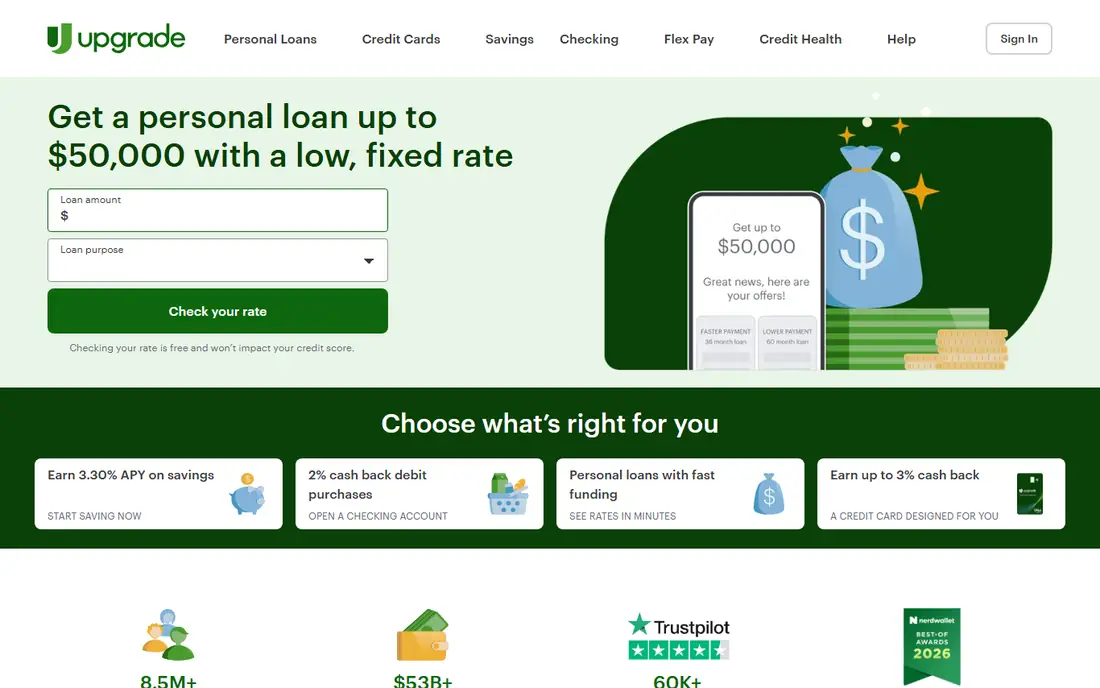
Upgrade appears in 2026 guides as a strong overall option for borrowers with fair credit, with reports of acceptance for scores around 580 and above. That access matters, since many low rate lenders decline fair credit borrowers outright. Upgrade offers personal loans that can consolidate cards and other unsecured debts, with prequalification that lets a borrower see a possible offer without a hard credit pull at the first step in many cases.
Fees and rates need close reading. Origination fees can apply and reduce the amount that actually reaches creditors, and a lower credit score usually means a higher rate. A borrower should compare the total cost, including any fee, with the total cost of keeping old debts, and should confirm whether direct payment to creditors is included. Upgrade fits a fair credit borrower who needs access and a single payment, and it fits less well when the fee and rate together erase the savings.
What we like- Accepts borrowers with lower credit scores reported
- Direct payment options
- Clear online prequalification
Watch out for- Origination fees can apply
- Rate can be high for lower scores
Starting priceSee website
Free planNo
Best Egg suits a borrower who needs a decision and funding quickly, without waiting weeks for a bank process. Guides highlight fast funding and direct creditor payment, which together can stop card interest sooner than a slower lender. A secured loan option also exists for some borrowers, which can improve approval or rate when a borrower has collateral and understands the risk of securing a loan.
Speed should not replace math. A fast loan at a high rate with fees can cost more than a slower loan at a lower rate, and a secured loan puts collateral at risk if payments are missed. Best Egg fits a borrower with a clear payoff plan and a deadline, such as a card rate increase or a balance transfer ending, and it fits less well for a borrower who has time to shop for a lower total cost.
What we like- Fast funding reported in 2026 guides
- Direct creditor payment option
- Secured loan option for some borrowers
Watch out for- Fees and rates vary by borrower
- Fast funding does not guarantee a low rate
Starting priceSee website
Free planNo
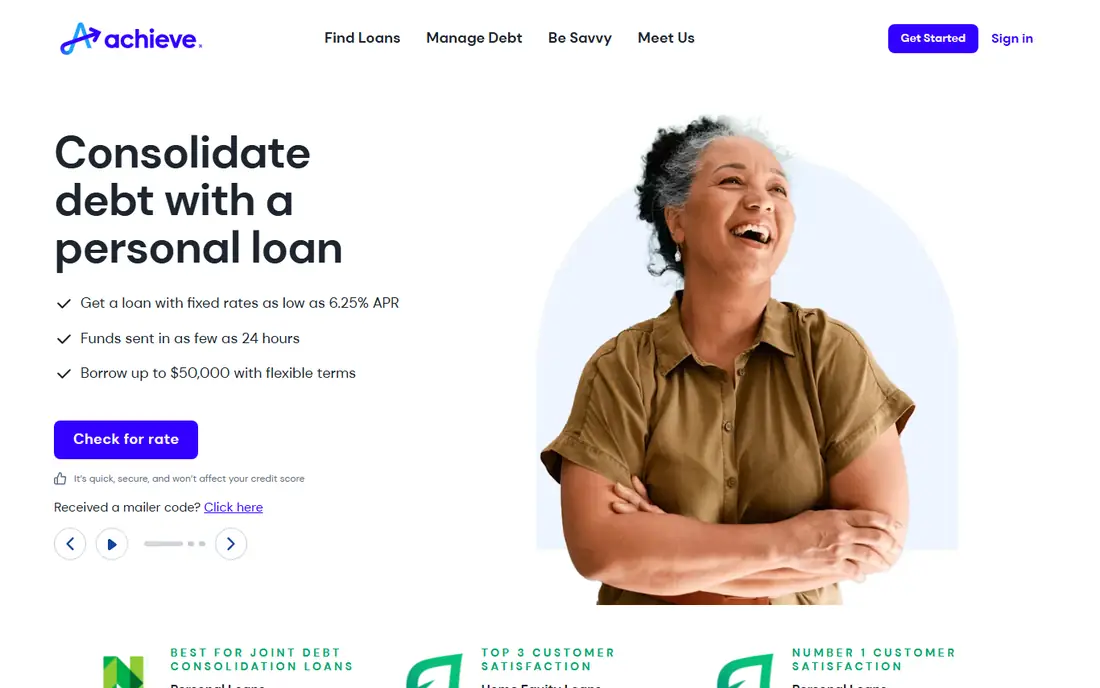
Achieve, formerly Freedom Financial Network, offers personal loans with a concierge payoff service that helps pay creditors directly. Guides note rate discounts tied to direct payment and autopay in some cases, which can lower the total cost for a borrower who commits to that structure. That help matters, since paying off several cards correctly, with the right amounts and timing, is easy to get wrong under stress.
Direct payment rules can be strict, with a high share of proceeds required to go to creditors in some options, which leaves less flexibility for other costs. Achieve still prices on credit and income, so fair credit borrowers should expect a higher rate than premium lenders offer. Use Achieve when a guided payoff and a single payment help, and confirm the fee, rate and direct payment share in the personalized offer before signing.
What we like- Concierge payoff service reported
- Rate discounts for direct payment
- Flexibility for fair credit borrowers
Watch out for- Direct payment requirements can be strict
- Fees and terms vary by borrower
Starting priceSee website
Free planNo
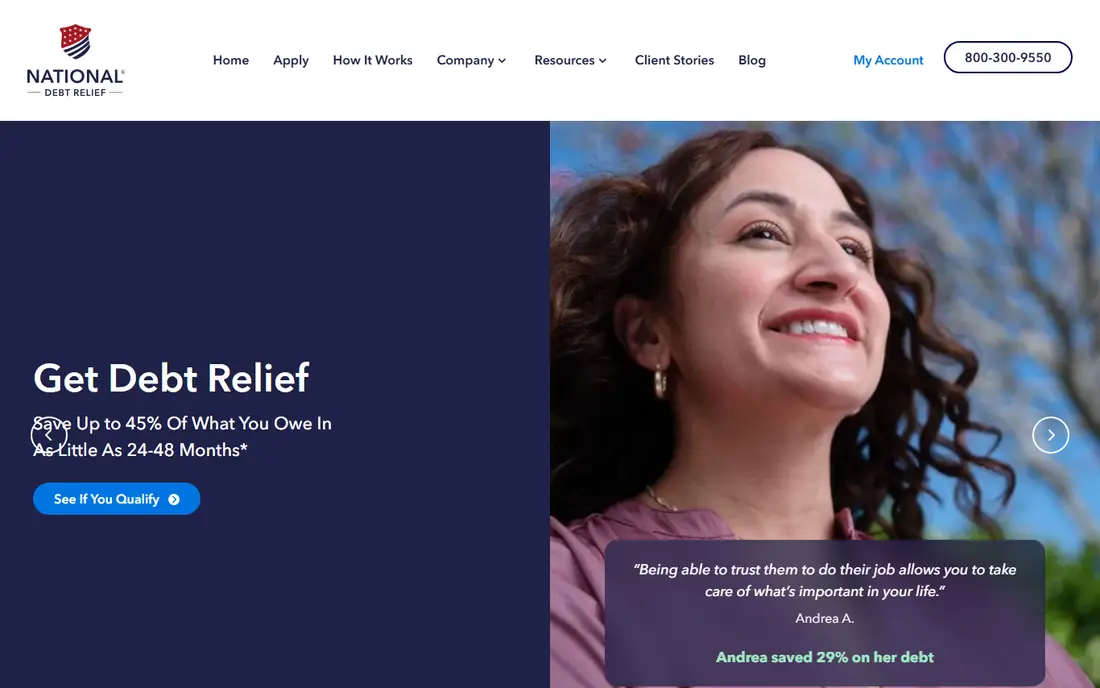
National Debt Relief is not a loan, and that difference decides whether it fits. In a settlement program, a client stops paying creditors directly, saves into a special account, and the company negotiates lower balances. That path can help a borrower in true hardship who cannot afford minimum payments and cannot qualify for a loan, and guides list National Debt Relief for large balances and a cleaner regulatory record than some settlement rivals.
The costs are serious and must be weighed first. Credit scores can fall sharply during a program, creditors may still pursue collection, and forgiven amounts above $600 can count as taxable income. Fees typically run as a share of enrolled debt, often reported in the 15 to 25 percent range for settlement programs, and programs often take two to four years. This is not financial advice. Speak with a nonprofit credit counselor or a licensed professional before choosing settlement over a loan, a debt management plan or other options.
What we like- Handles large unsecured balances
- Negotiates with creditors on behalf of clients
- Structured program with a timeline
Watch out for- Settlement can harm credit for years
- Forgiven debt over $600 can be taxable
- Fees are a share of enrolled debt
How we chose
We reviewed pricing pages, lender terms and public reviews on NerdWallet, G2 and Reddit, and we compared loan versus settlement models, fees, direct payment, credit fit and funding speed. We marked prices as See website because loan rates, fees and settlement fees depend on a personalized offer, credit and enrolled debt, and a single headline rate would mislead borrowers. We favored companies that state fees and terms in plain terms and that distinguish loans from settlement clearly.
Loan versus settlement: the choice that matters most
A consolidation loan replaces old debts with a new loan at a fixed rate and term, and on-time payments can help credit over time. A settlement program aims to pay less than the full balance, but it usually involves missed payments, credit harm and tax consequences. A nonprofit debt management plan sits between those paths, with negotiated rates and one payment through a counselor, without a new loan or settlement.
Checking the math before you sign
Add up old minimum payments, old rates and old total interest, then compare the new monthly payment, new rate, any origination or program fee, and total interest or fees over the full term. A lower monthly payment that stretches the term for years can cost more in total, even when cash flow feels easier. Keep an emergency buffer in the budget, since a loan that leaves no room for a car repair or medical bill often leads back to card debt.
Red flags to avoid
Avoid any company that guarantees a specific rate before checking credit, charges large upfront fees for a loan, or promises to erase debt quickly with no credit impact. Read whether a settlement company charges fees before settling any debt, since rules limit that practice in many cases, and confirm the company is clear about tax and credit risks. This is not financial advice, and a nonprofit credit counselor can review options without selling a loan or a settlement program.
Frequently asked questions
Who is the best debt consolidation company overall?
No single company fits every borrower, since credit, debt type and income change the best offer. SoFi and LightStream suit strong credit borrowers, Upgrade and Achieve suit fair credit borrowers, and National Debt Relief suits hardship cases where a loan is not possible. Compare personalized offers on total cost, not just monthly payment, before choosing.
Is debt consolidation a loan or a settlement program?
It can be either, and the terms are often mixed up in advertising. A loan replaces old debts with a new loan that is repaid in full, while settlement negotiates lower balances after missed payments. Ask every company which model it sells, what fees apply, and how credit and taxes are affected, and get those answers in writing.
Will debt consolidation hurt my credit?
A loan application can cause a small, short term dip from a hard credit check, while on-time payments on the new loan can help credit over time. Settlement usually causes a larger and longer lasting drop, since it involves missed payments and settled accounts. Check your credit report, keep old card accounts open when advised, and avoid new card debt after consolidation.
How much debt do I need to consolidate?
Most lenders set minimum loan amounts, often around $5,000, while settlement programs usually require a larger unsecured balance and proof of hardship. Small balances may be better handled by a focused payoff plan, a balance transfer with a clear payoff date, or a nonprofit counselor review. The right amount is the amount where the new total cost clearly beats the old total cost.
Can I consolidate debt with fair credit?
Yes, through lenders such as Upgrade, Achieve and Happy Money, though rates and fees will usually be higher than for strong credit borrowers. Prequalify with several lenders, compare total cost including fees, and check whether direct payment to creditors is included. Avoid a loan that only lowers the monthly payment by stretching the term so long that total interest rises sharply.
What should I do if I cannot afford any payment?
Contact creditors directly to ask about hardship programs, and speak with a nonprofit credit counselor about a debt management plan before choosing settlement or bankruptcy. A counselor can review income, debts and options without selling a product. This is not financial advice, and legal or tax advice should come from a licensed professional in your state.
Sources we checked (4)
- https://www.nerdwallet.com/m/loans/personal-loans/consolidation-loans
- https://www.xcnnews.com/2026/06/02/best-debt-consolidation-companies-2026/
- https://creditconsensusindex.com/personal-debt-consolidation-loans/direct-to-creditor-debt-consolidation
- https://azbigmedia.com/business/financial-management/7-best-debt-consolidation-services-that-actually-lower-your-monthly-payments/
Is your product missing or out of date?
We review this list regularly. Vendors can request a listing, send updated pricing or ask about featured placement.

Shihab Mia · Founder, Rankite
Shihab has 5+ years in B2B and SaaS SEO. He writes Rankite's software buying guides from pricing pages, documentation and public user reviews. More about Shihab.
 SoFi
 LightStream
 Discover Personal Loans
 Happy Money
 Upgrade
 Best Egg
 Achieve
 National Debt Relief