How we make this list: we compare pricing pages, product documentation and public user reviews. Rankite is independent; if a vendor ever pays for a featured spot, that listing is clearly labeled Partner.
Key takeaways
- OneStream and CCH Tagetik anchor the enterprise end, built for complex global consolidations with heavy compliance needs.
- NetSuite and Sage Intacct consolidate inside the accounting system itself, which suits multi-entity companies that want one system of record.
- FloQast and BlackLine attack the close from the workflow side, automating reconciliations and intercompany matching around your existing ERP.
- Vena and Datarails keep finance teams in Excel while adding governance, which shortens adoption for spreadsheet-native teams.
Quick comparison
| Tool | Best for | Starting price | Free plan |
|---|
 OneStream OneStream | Large enterprises unifying close, planning and reporting | See website (custom quote) | No |
 Oracle NetSuite Oracle NetSuite | Multi-entity companies wanting ERP plus consolidation | See website (custom annual license) | Free trial (3 days) |
 Sage Intacct Sage Intacct | Mid-market multi-entity accounting | See website (custom quote) | No |
 FloQast FloQast | Accounting teams that want a faster close | See website (tailored packages, no per-user fees) | No |
 Prophix Prophix | Mid-market FP&A plus consolidation | See website (custom quote) | No |
 Vena Vena | Excel-native finance teams | See website (custom quote) | No |
 CCH Tagetik CCH Tagetik | Complex global consolidations | See website (not published) | No |
 Planful Planful | Finance teams wanting planning plus close | See website (not published) | No |
 Datarails Datarails | Excel-heavy mid-market teams | See website (custom quote) | No |
 BlackLine BlackLine | Intercompany-heavy closes | See website (custom platform pricing) | No |
Is your product missing or out of date?
We review this list regularly. Vendors can request a listing, send updated pricing or ask about featured placement.
The best accounting consolidation software
#1
OneStream
Best for: Large enterprises unifying close, planning and reporting
Visit onestream.com
Starting priceSee website (custom quote)
Free planNo
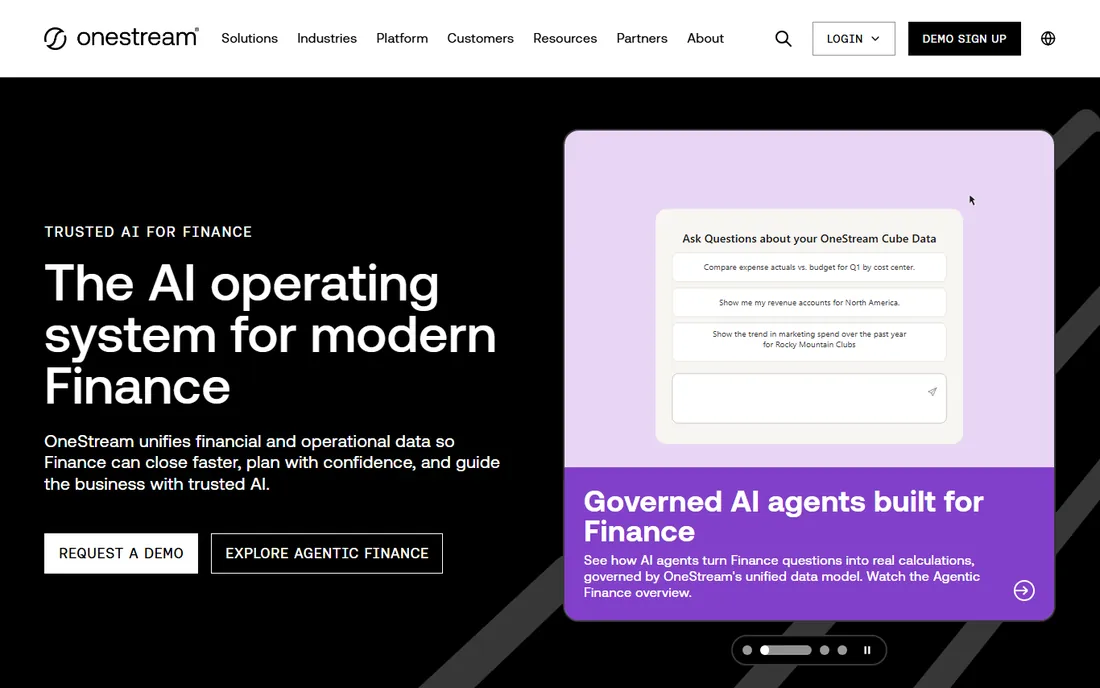
OneStream built its reputation replacing fragmented Hyperion installations with a single platform for consolidation, planning and reporting. More than 1,900 companies use it, including nearly a fifth of the Fortune 500, and Gartner names it a Leader in both financial close and financial planning categories. The pitch is one governed dataset for everything finance does, instead of separate tools stitched together.
That unity comes with enterprise weight. Pricing is custom, implementations run for months, and the platform assumes a finance team with the bandwidth to run it. Companies with three entities and a simple close will drown in capability. For complex groups consolidating dozens of entities across currencies and standards, it is the reference platform.
What we like- Close, planning, reporting and analytics in one platform
- Strong analyst ratings including Gartner Leader
- Scales to the largest enterprises
Watch out for- Enterprise pricing with a sales-led process
- Implementation is a major project
- More than smaller teams need
#2
Oracle NetSuite
Best for: Multi-entity companies wanting ERP plus consolidation
Visit netsuite.com
Starting priceSee website (custom annual license)
Free planFree trial (3 days)
NetSuite takes the opposite approach from OneStream: instead of consolidating on top of your ERP, it is the ERP. The OneWorld module handles multi-subsidiary consolidations with automated intercompany eliminations and currency translation, all inside the same system that runs your books. Pricing is a custom annual license based on modules and users, plus a one-time implementation fee.
The advantage is a single system of record from transaction to consolidated statement. The limitation is depth: dedicated consolidation platforms offer richer close workflows, journal management and disclosure reporting. NetSuite's homepage currently advertises a free 3-day trial of its new AI-infused version. It fits growing multi-entity companies that want consolidation without a second platform.
What we like- Consolidation inside the ERP, no separate system
- Multi-currency and multi-book support
- Scales from startup to enterprise
Watch out for- Annual license quoted per deployment
- Implementation fees on top
- Consolidation depth lags dedicated platforms
#3
Sage Intacct
Best for: Mid-market multi-entity accounting
Visit sage.com
Starting priceSee website (custom quote)
Free planNo
Sage Intacct is the mid-market accountant's consolidation tool. Multi-entity consolidation, currency translation and intercompany eliminations are native, not add-ons, and the dimensional general ledger lets you slice consolidated reports without a maze of accounts. Sage targets it at organizations above roughly $4 million in revenue or 20 employees, and it is a default shortlist pick for nonprofits and professional services.
Sage does not publish pricing; expect a tailored quote and an annual subscription, with implementations running three to six months. Third-party estimates put typical deployments in the tens of thousands per year, but treat those as rough. If you have outgrown QuickBooks and consolidation takes days in spreadsheets, Intacct is the natural next step.
What we like- Native multi-entity consolidation with automatic eliminations
- Dimensional chart of accounts
- Strong for nonprofits and services
Watch out for- No public pricing
- Implementations typically take 3 to 6 months
- Per-entity costs add up
Starting priceSee website (tailored packages, no per-user fees)
Free planNo
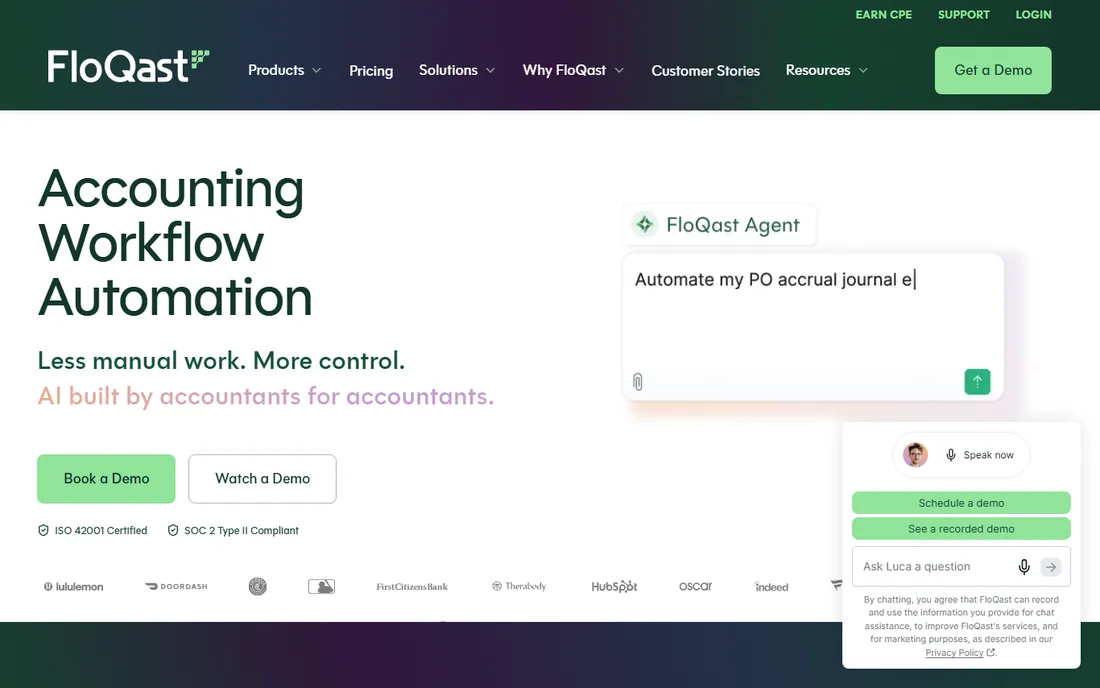
FloQast approaches consolidation from the close-management side. Instead of replacing your ERP, it layers checklists, reconciliations, task tracking and AI assistance over it, with a consolidation module that handles multi-entity close workflows. Pricing is tailored with no per-user fees, which is unusual and welcome in a category that usually charges by seat. More than 3,500 companies run on it.
The model suits teams whose ERP already holds the data but whose close process is chaos. If you need deep statutory consolidation with complex ownership structures, the dedicated platforms go further. For controllers who want the close organized, visible and faster without ripping out systems, FloQast is the pragmatic pick.
What we like- No per-user fees, pricing scales with outcomes
- Close checklist plus reconciliations in one place
- Trusted by 3,500+ companies
Watch out for- Tailored pricing means a sales conversation
- Consolidation features are newer than the close tools
- Built around your existing ERP
Starting priceSee website (custom quote)
Free planNo
Prophix One targets the exact middle of this market: companies too complex for spreadsheets but not ready for OneStream-scale projects. Consolidation comes with prebuilt models handling multi-currency, multi-GAAP and intercompany matching, sitting alongside budgeting, forecasting and reporting. Implementation is faster than the enterprise platforms, which is the point.
Pricing is quoted per deployment based on entities, users and scope. The platform is finance-owned by design, meaning less IT dependency than older tools. Large multinationals with exotic consolidation needs will outgrow it; mid-market groups with five to fifty entities are the sweet spot.
What we like- Planning, consolidation and close in one mid-market platform
- Out-of-the-box consolidation models
- AI-assisted reconciliation
Watch out for- Quote-based pricing tied to entities and users
- Mid-market focus limits the largest enterprises
- Sales-led buying
Starting priceSee website (custom quote)
Free planNo
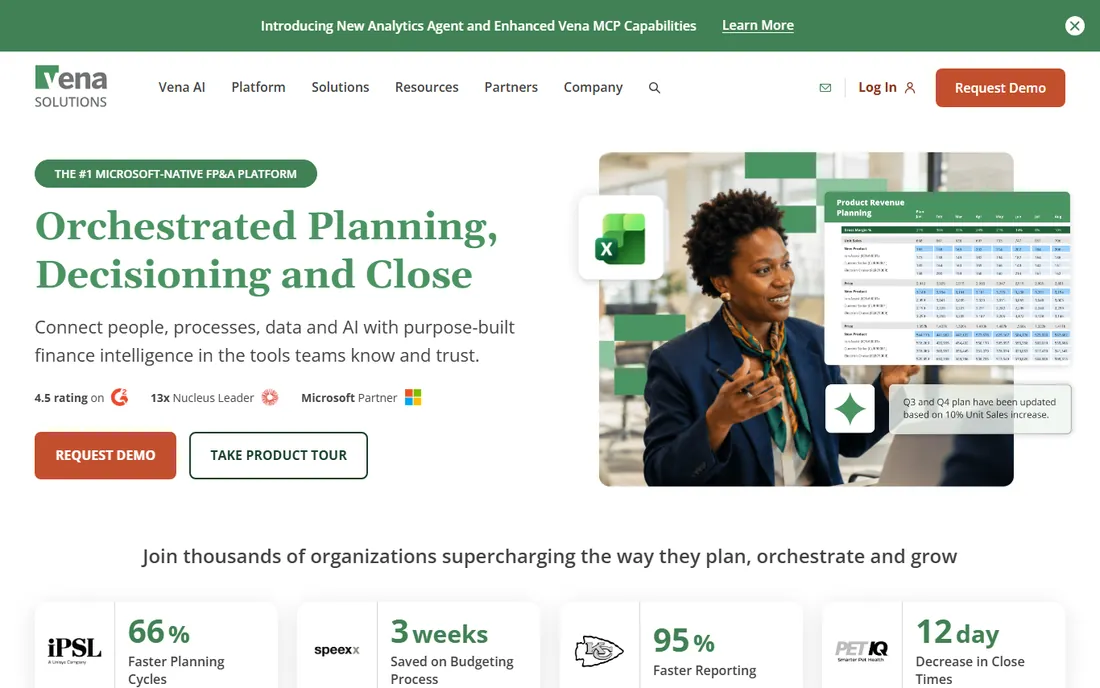
Vena's bet is simple: finance teams will not leave Excel, so bring governance to Excel instead. Its financial consolidation product is Excel-native with a central database behind it, handling intercompany matching, eliminations, multi-currency translation and audit-ready reporting. Two plans, Professional and Complete, are custom-priced, and the company scores well on price-to-value in user surveys.
The Excel interface is both the appeal and the ceiling. Adoption is fast because nobody needs retraining, but massive datasets can strain the model. Teams that have outgrown spreadsheet consolidation but refuse to abandon the interface get the best of both. If your team already thinks in workbooks, start here.
What we like- Works inside Excel, which finance teams already know
- Standalone consolidation product available
- Strong customer satisfaction scores
Watch out for- Custom pricing with no public numbers
- Excel dependence can limit very large datasets
- Implementation needs planning
Starting priceSee website (not published)
Free planNo
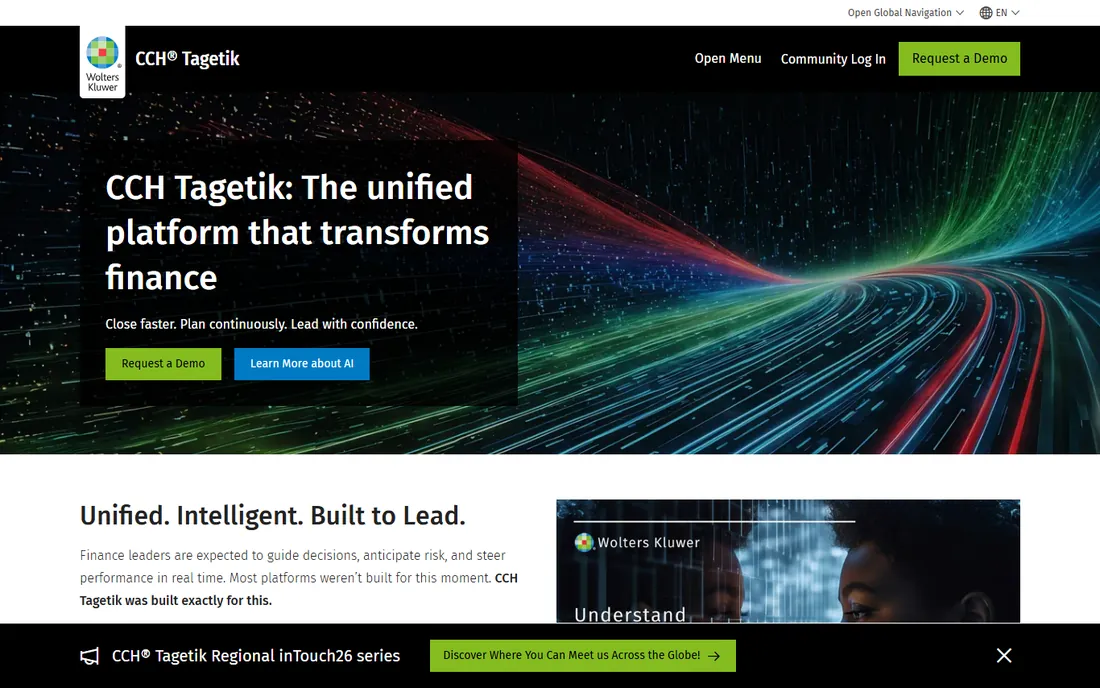
CCH Tagetik, from Wolters Kluwer, is built for the hardest consolidation problems: layered ownership, joint ventures, multiple GAAPs and regulatory disclosure in one flow. It unifies budgeting, planning, consolidation and management reporting, and deploys as SaaS, private cloud or on-premise. Finance teams at large multinationals run statutory and management consolidations side by side.
Everything about buying it is enterprise: no published pricing, no trial, tailored quotes through sales. Implementation is a serious project measured in months. This is not a tool you evaluate casually. For groups where consolidation complexity is the business problem, Tagetik belongs on every shortlist.
What we like- Deep consolidation for complex ownership structures
- Unified CPM with planning and disclosure
- Flexible deployment options
Watch out for- No public pricing or trial
- Enterprise sales and implementation cycle
- Complexity exceeds smaller teams
Starting priceSee website (not published)
Free planNo
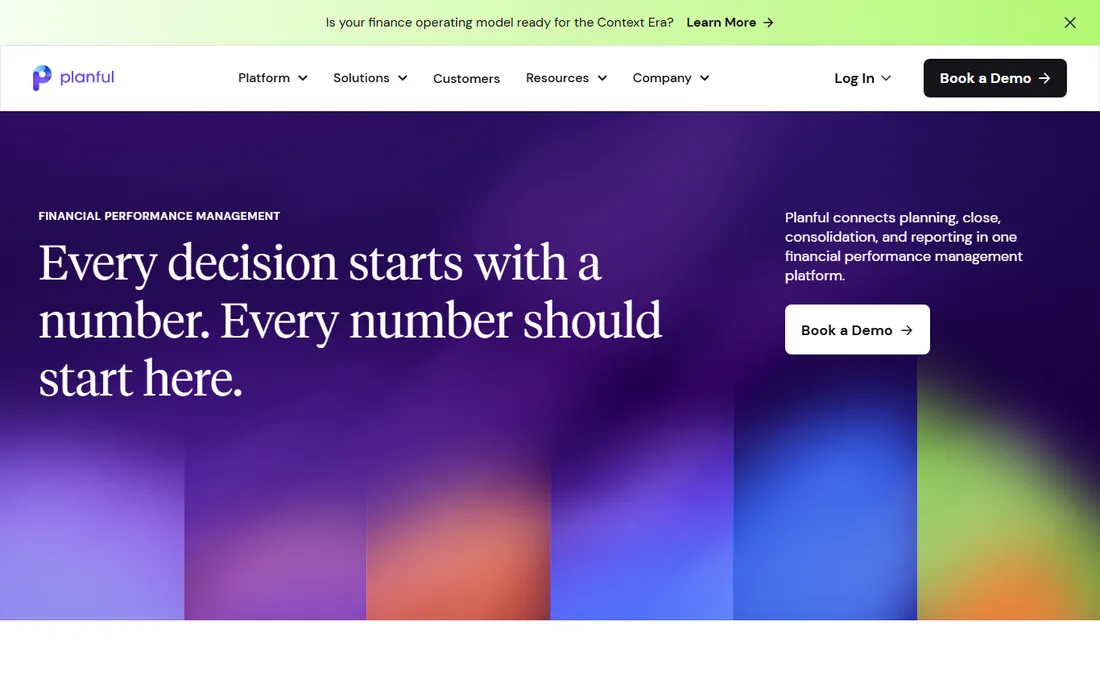
Planful, formerly Host Analytics, combines financial planning with close and consolidation for mid-market to enterprise teams. Intercompany eliminations, currency translation and non-controlling interests are automated inside a model that adapts as you add entities or reorganize. More than 1,500 finance teams use it, and its AI features cover anomaly detection and forecasting.
Pricing is not published, and implementations typically run eight to twelve weeks. The Excel experience comes through an add-in rather than a native interface, which matters to spreadsheet-first teams. For finance leaders who want planning and consolidation from one vendor without enterprise-platform weight, Planful is a strong contender.
What we like- Planning, consolidation and close on one platform
- Handles multi-entity structures without rebuilds
- 1,500+ customers
Watch out for- Pricing not publicly available
- Implementations run 8 to 12 weeks
- Excel integration via add-in rather than native
Starting priceSee website (custom quote)
Free planNo
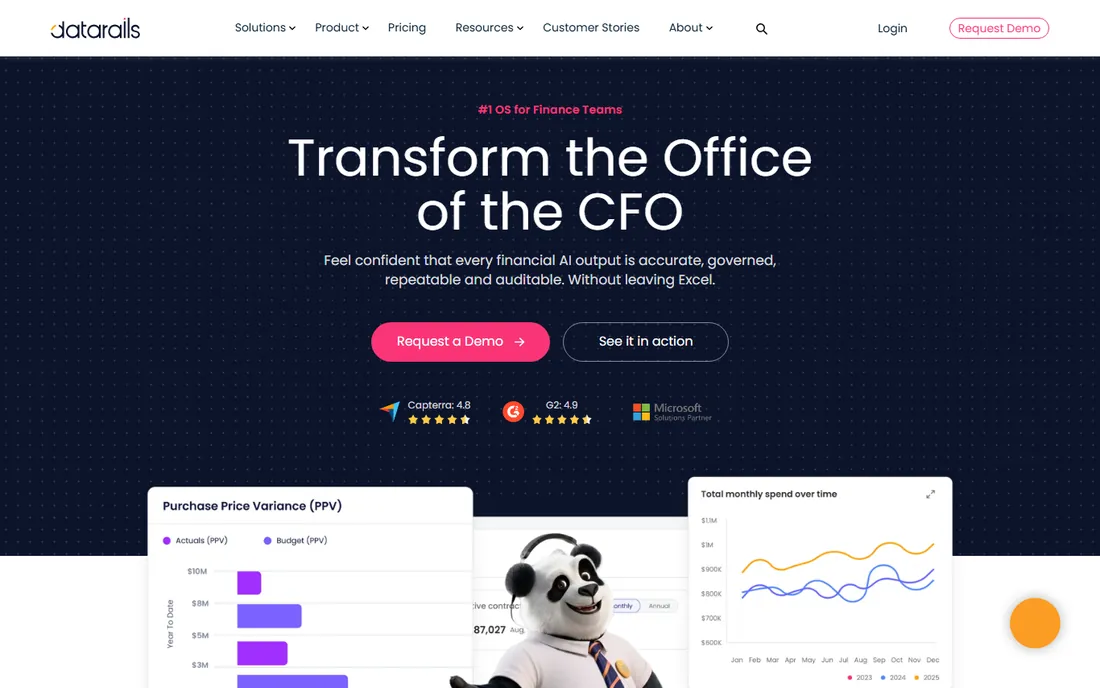
Datarails keeps your Excel models and connects them to live data from your ERP, automating consolidation, reporting and forecasting without leaving the spreadsheet. More than 2,000 companies use it, and implementation is famously fast, often without consultants. The AI layer adds automated variance commentary and dashboards.
It is an FP&A platform with consolidation rather than a consolidation specialist, so the deepest statutory requirements may need more. Pricing is custom for the mid-market. For finance teams of 50 to 2,500 employees that live in Excel and want consolidation without a platform migration, Datarails is the low-friction choice.
What we like- Fully Excel-native with live data connections
- Fast implementation without consultants
- Strong AI reporting features
Watch out for- Custom mid-market pricing
- Broader FP&A platform, not a pure consolidation tool
- Smaller-company focus
Starting priceSee website (custom platform pricing)
Free planNo

BlackLine pioneered cloud close automation and remains the leader, with more than 4,400 customers. Its strength for consolidation buyers is intercompany: automated matching, variance resolution, netting and settlement across entities and currencies, feeding clean numbers into the consolidation. Journal entries, reconciliations and task management round out the close.
It is a close platform, not a full corporate performance management suite, so planning and forecasting live elsewhere. Pricing follows a platform model quoted per deployment. Companies whose close stalls on intercompany chaos, especially SAP shops, get the most value. Pair it with a planning tool and the finance stack is complete.
What we like- Market leader in close automation
- Deep intercompany matching and netting
- Strong SAP and ERP integrations
Watch out for- Custom platform pricing
- Close-focused rather than full CPM
- Enterprise orientation
How we chose
I built the shortlist from analyst coverage, G2 and Capterra consolidation categories, and the platforms finance teams recommend in practitioner communities. I verified each vendor's current site and documentation, noted where pricing is public versus quote-based, and confirmed that every product is actively sold today. No vendor paid for placement, and nothing here is based on hands-on testing.
What actually drives consolidation software costs
Almost nobody publishes prices in this category, so understanding the cost drivers matters more than any sticker price.
Entities, users and complexity
Vendors quote on the number of entities consolidated, the number of users, and the complexity of ownership structures, currencies and reporting standards. A five-entity domestic group and a forty-entity multinational buy very different projects from the same vendor. Get quotes scoped to your structure, not a generic demo price.
Implementation is a second price tag
License fees are only part of the total. Enterprise platforms need months of implementation with partner consultants; mid-market tools like Datarails or Vena go live faster with less outside help. Ask every vendor for the typical implementation timeline and whether services are included or billed separately.
The ERP question
Tools like NetSuite and Sage Intacct consolidate inside the accounting system, which can replace a separate consolidation purchase entirely. Close-automation tools like FloQast and BlackLine layer over your existing ERP. Dedicated platforms like OneStream and CCH Tagetik sit alongside it. Knowing which architecture you want narrows the field before you talk to sales.
When you do not need consolidation software
Not every multi-entity company needs a consolidation platform. If you have two or three entities in one currency with simple intercompany activity, your ERP's built-in consolidation or even a well-built spreadsheet may be enough. The pain that justifies dedicated software is specific: closes that take weeks, intercompany balances that never tie, currency translation done by hand, or auditors asking for controls you cannot produce. If none of that sounds familiar, spend the budget elsewhere and revisit when the entity count or complexity grows.
Frequently asked questions
What is accounting consolidation software?
Accounting consolidation software combines the financial results of multiple entities, subsidiaries or business units into unified financial statements. It automates currency translation, intercompany eliminations, ownership calculations and reporting, replacing spreadsheet-based consolidation.
How much does consolidation software cost?
Most vendors quote custom pricing based on entities, users and complexity. Mid-market tools typically run in the tens of thousands per year; enterprise platforms run into six figures plus implementation. NetSuite and Sage Intacct bundle consolidation into broader licenses. Always get a scoped quote.
Do I need consolidation software if I have NetSuite or Sage Intacct?
Possibly not. Both handle multi-entity consolidation natively, including eliminations and currency translation. You need a dedicated platform when your close needs richer workflow automation, complex ownership structures, or disclosure reporting beyond what the ERP offers.
What is the difference between consolidation software and close management software?
Consolidation software produces the combined financial statements across entities. Close management software organizes the month-end process: task lists, reconciliations, journal approvals and deadlines. Many platforms do both, but specialists like BlackLine and FloQast lean toward close workflow while OneStream and CCH Tagetik lean toward consolidation depth.
How long does implementation take?
Lightweight Excel-native tools can go live in weeks. Mid-market platforms typically need two to four months. Enterprise consolidations on OneStream, CCH Tagetik or SAP-family tools run six months or more, especially with data migration and complex entity structures.
Sources we checked (10)
- https://www.onestream.com/
- https://www.netsuite.com/portal/products/erp/financial-management/global-accounting-consolidation.shtml
- https://www.sage.com/en-us/sage-business-cloud/intacct/
- https://www.floqast.com/pricing
- https://www.prophix.com/blog/best-financial-close-software/
- https://www.venasolutions.com/blog/vena-vs-anaplan
- https://tagetik.com/
- https://planful.com/financial-consolidation-tools/
- https://www.datarails.com/best-financial-consolidation-tools-and-software/
- https://www.blackline.com/blog/redefining-intercompany-for-the-next-era-of-finance/
Is your product missing or out of date?
We review this list regularly. Vendors can request a listing, send updated pricing or ask about featured placement.

Shihab Mia · Founder, Rankite
Shihab has spent more than a decade helping SaaS and e-commerce brands grow through search. He writes Rankite's software buying guides from pricing pages, documentation and public user reviews. More about Shihab.