How we make this list: we compare pricing pages, product documentation and public user reviews. Ratings come from G2, Capterra or Trustpilot, with the date we checked them.
Key takeaways
- Vercel and Netlify are the shortest path from a Git push to a live frontend, with free tiers for personal projects.
- Heroku, Render and Railway suit full-stack apps with databases, workers and background jobs in one dashboard.
- Fly.io and Cloudflare Workers suit developers who want apps close to users worldwide or at the network edge.
- DigitalOcean App Platform gives predictable pricing for teams that want platform ease without hyperscaler complexity.
- Free tiers differ greatly: some sleep when idle, some cap usage credits, and some are personal-use only, so read the limits before launch.
Quick comparison
| Tool | Best for | Starting price | Free plan |
|---|
 Vercel | Frontend-led apps and previews | $20 per user/month | Yes |
 Netlify | Marketing sites and full-stack apps | $9 per month | Yes |
 Heroku | Ops-free full-stack deployment | $5 per month | No |
 Render | Heroku-style apps with managed databases | See website | Yes |
 Railway | Indie teams and rapid prototypes | $5 per month | Trial |
 Fly.io | Global container apps near users | See website | Trial |
 DigitalOcean App Platform | Predictable platform pricing | $5 per month | Yes |
 Cloudflare Workers | Edge APIs and low-latency apps | $5 per month | Yes |
Is your product missing or out of date?
We review this list regularly. Vendors can request a listing, send updated pricing or ask about featured placement.
The best cloud app deployment providers
#1Vercel
Best for: Frontend-led apps and previews4.7/5 on
G2 (87 reviews, checked Oct 2026)
Visit vercel.com
Starting price$20 per user/month
Free planYes
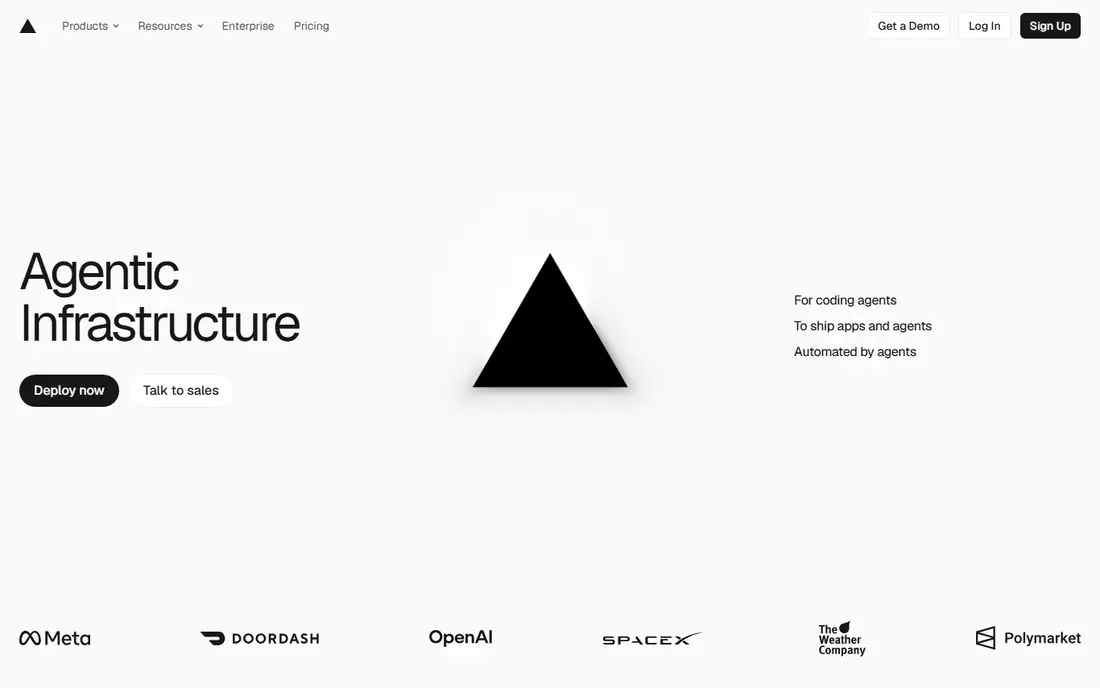
Vercel turns a Git push into a live site with almost no configuration, and its preview deployments are the feature teams mention most. Every pull request gets its own URL, so designers and reviewers can check a change before it merges. For Next.js and React apps, the framework support is deep, including server components and edge functions.
The Hobby plan is free but limited to personal, non-commercial projects, so a business app needs Pro at $20 per user per month, plus usage. Teams should watch bandwidth and function usage, which can grow faster than seat costs. For frontend-led products, Vercel remains the smoothest deployment path.
What we like- Excellent Next.js and React support
- Preview deployment for every pull request
- Global edge network
Watch out for- Hobby plan is personal and non-commercial only
- Pro seats add up for teams
- Usage overages can surprise
#2Netlify
Best for: Marketing sites and full-stack apps4.5/5 on
G2 (83 reviews, checked Oct 2026)
Visit netlify.com
Starting price$9 per month
Free planYes
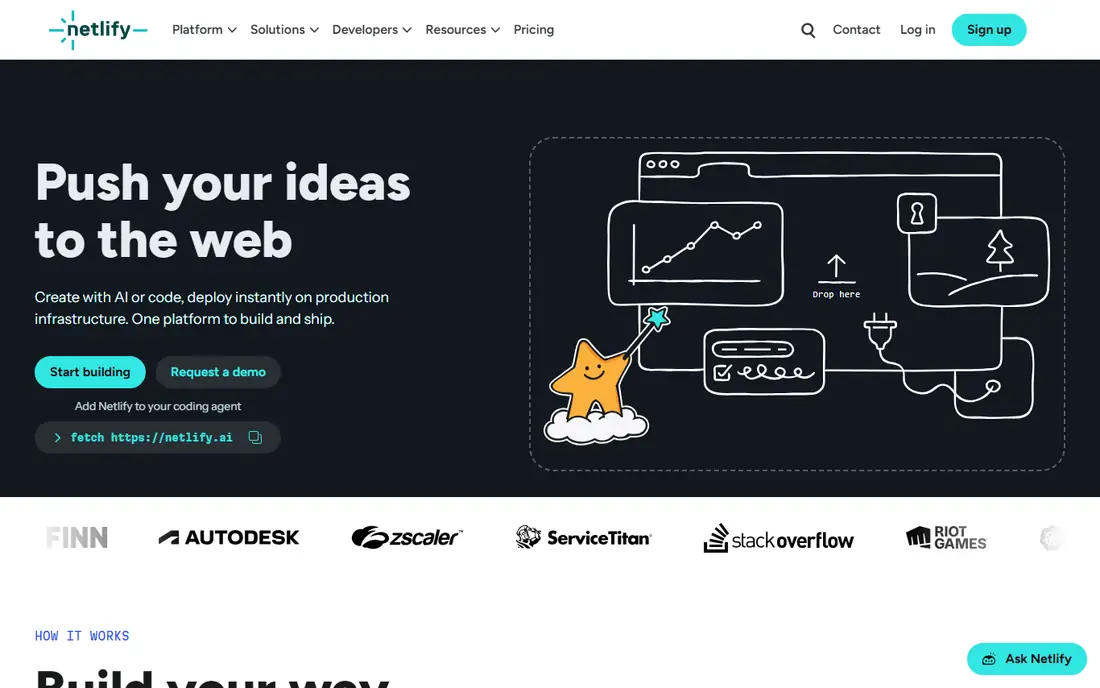
Netlify has grown from static hosting into a full-stack platform with serverless functions, scheduled functions and database options. Its free tier includes 300 usage credits per month, and the Personal plan starts at $9 per month, with Pro at $20 per user per month. Deploy previews, rollbacks and branch deploys make it a strong fit for agencies and marketing teams.
The credit model is the catch. Bandwidth, build minutes and function calls all draw from the same pool, and overage rates, especially for egress, can lift a bill quickly once a site grows. For sites with steady, predictable traffic, Netlify is excellent. For spiky traffic, model the credits first.
What we like- Free tier with monthly usage credits
- Strong deploy previews
- Forms, identity and database add-ons
Watch out for- Credit-based usage can be hard to forecast
- Pro is $20 per user per month
- Egress overages are pricey
Starting price$5 per month
Free planNo
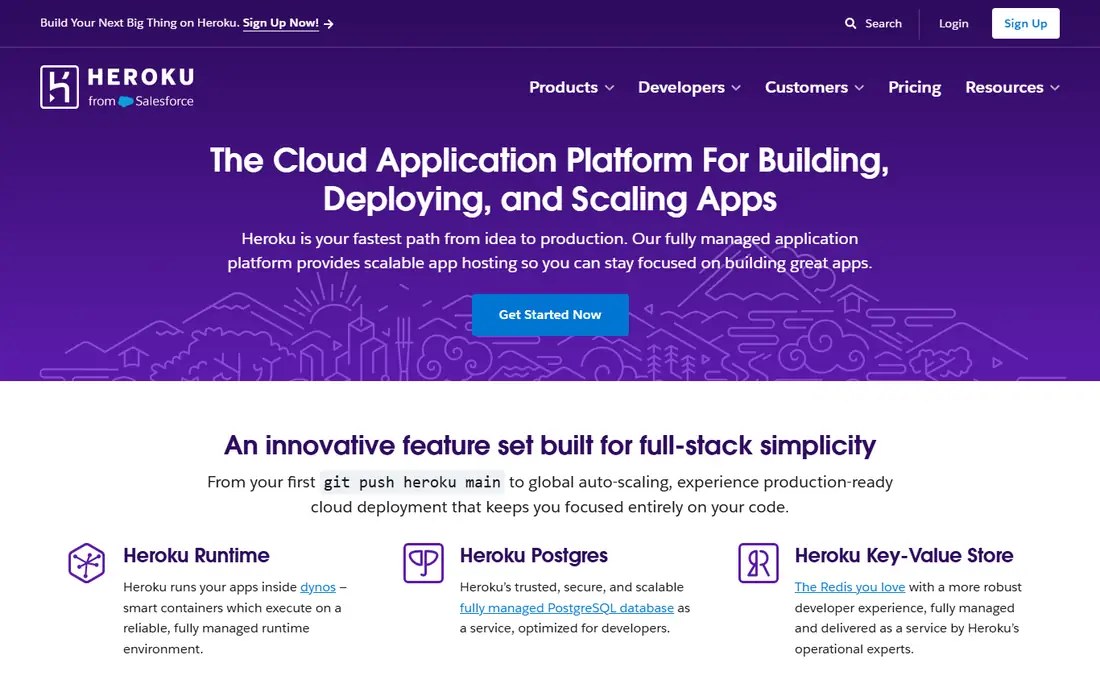
Heroku defined the platform-as-a-service model: push code, and the platform handles servers, routing and scaling basics. Buildpacks support common languages, and the add-on marketplace covers databases, caching, logging and monitoring without separate vendor contracts. Teams inside the Salesforce ecosystem get extra integration value.
Heroku removed free dynos in 2022, so even a hobby app now starts at $5 per month for an Eco dyno, and higher tiers climb fast. For a startup that values zero ops work and a proven platform, Heroku still earns its price. For a cost-sensitive side project, Render or Railway usually cost less.
What we like- Longest track record in managed PaaS
- Buildpacks remove server setup
- Large add-on marketplace
Watch out for- No free dyno tier since 2022
- Costs scale steeply at higher tiers
- Newer rivals offer more for less
#4Render
Best for: Heroku-style apps with managed databases4.7/5 on
G2 (84 reviews, checked Oct 2026)
Visit render.com
Starting priceSee website
Free planYes
Render is the closest modern Heroku alternative, with web services, workers, cron jobs and managed PostgreSQL in one dashboard. Free compute plans let you experiment at no cost, though free services sleep after inactivity and wake slowly. Paid plans add always-on compute, autoscaling and private networking between services.
Pricing combines a workspace plan with per-service compute, so a small app with a database costs more than the headline plan alone. Check the pricing page for your exact service mix before committing. For full-stack apps that want Heroku ease with current tooling, Render is a strong default.
What we like- Managed PostgreSQL in the same dashboard
- Free compute plans for experiments
- Autoscaling and private networking
Watch out for- Free services sleep when idle
- Workspace and compute pricing needs care
- Smaller add-on ecosystem than Heroku
#5Railway
Best for: Indie teams and rapid prototypes4.7/5 on
G2 (66 reviews, checked Oct 2026)
Visit railway.com
Starting price$5 per month
Free planTrial
Railway appeals to indie hackers and small teams because a full project, app plus Postgres, MySQL or Redis, comes up in minutes from a template. The dashboard shows usage, logs and variables in one place, and pull request environments let teams test changes before merging. Hobby starts at $5 per month with $5 of included usage, and Pro starts at $20 per month.
Billing is usage-based, so a busy database or a runaway worker can lift costs. Set usage alerts early and review the metrics tab weekly during growth. For prototypes and small products that need a backend fast, Railway is one of the quickest options available.
What we like- Fast project setup from templates
- Databases included in the project
- PR environments for testing
Watch out for- Usage-based billing needs monitoring
- Free access is a trial, not a permanent tier
- Smaller ecosystem than Heroku
#6
Fly.io
Best for: Global container apps near users
Visit fly.io
Starting priceSee website
Free planTrial
Fly.io runs your app as containers, called Machines, in regions around the world, so users connect to a nearby instance. That suits real-time apps, APIs with global users and multi-region deployments. Private networking links apps and databases, and managed Postgres removes one ops burden.
There is no permanent free compute tier for new organisations, only a short trial, and billing is pay-as-you-go for machines, storage and networking. A small always-on app costs only a few dollars per month, but costs grow with regions and replicas. For Docker-savvy teams with global users, Fly.io offers control that simpler platforms do not.
What we like- Runs containers in many regions worldwide
- Private networking between apps
- Managed Postgres option
Watch out for- No ongoing free compute tier for new organisations
- Docker knowledge helps
- Pricing is usage-based
#7DigitalOcean App Platform
Best for: Predictable platform pricing4.6/5 on
G2 (757 reviews, checked Oct 2026)
Visit digitalocean.com
Starting price$5 per month
Free planYes
DigitalOcean App Platform brings platform ease to a provider known for simple virtual servers. Static sites start free, and paid apps start at $5 per month for a basic container, with managed databases and autoscaling available. Pricing is per service rather than per seat, which suits small teams that dislike seat-based bills.
It lacks some of Vercel's framework depth and Netlify's marketing-site add-ons, and its ecosystem is smaller than the big hyperscalers. For a team that already uses DigitalOcean, or one that wants predictable costs without hyperscaler complexity, App Platform is a sensible middle path.
What we like- Clear per-service pricing
- Static sites free
- Autoscaling and managed databases available
Watch out for- Fewer framework-specific features than Vercel
- Ecosystem is smaller than AWS
- Support tiers cost extra
Starting price$5 per month
Free planYes
Cloudflare Workers runs code at the network edge, close to users, with a free tier of 100,000 requests per day and a paid plan from $5 per month. Because Workers run on Cloudflare's network, there are no egress fees, which is a real saving for APIs that move a lot of data. Latency is low worldwide without managing regions yourself.
The edge runtime is not a general server. Long-running processes, heavy computation and traditional stateful apps fit better on Render, Railway or Fly.io. Workers suit APIs, middleware, authentication checks and automation. For an API-first product with global users, it is hard to beat on price and latency.
What we like- Free tier with 100,000 requests per day
- No egress fees
- Runs in hundreds of cities
Watch out for- Edge runtime limits suit APIs more than heavy backends
- Persistent storage needs separate products
- Learning curve for stateful apps
How we chose
We compared platforms on deployment ease, database and worker support, free tier terms, and pricing transparency, using vendor pricing pages and current comparisons. Prices change often in this market, so where a figure could not be pinned to a current vendor page we wrote See website. We treated free tiers carefully, since some sleep when idle, some cap credits, and some cover personal use only. We did not claim hands-on testing, and we weighted real buyer concerns, such as overage rates, seat pricing and egress fees, alongside raw feature lists.
Matching a provider to your app
Start from the app, not the brand. A marketing site or docs site fits Vercel or Netlify, where previews and edge delivery matter most. A full-stack product with a database, workers and cron jobs fits Heroku, Render or Railway, where everything lives in one dashboard. A global API or real-time service fits Fly.io or Cloudflare Workers, where location and latency matter.
Then model the bill at three traffic levels, not one. Free tiers look generous until a launch spike or a search crawler burns credits. Check sleep behaviour, egress rates and seat pricing, and set billing alerts on day one. Finally, check the exit: can you export your database, move your code elsewhere, and keep your domain and DNS setup? A provider that makes leaving hard should earn its lock-in with a clear price or feature advantage.
Frequently asked questions
What is the cheapest cloud app deployment provider for a side project?
Netlify, Vercel Hobby, Render free plans and Cloudflare Workers free tier all host small projects at no cost, with different limits. Render free services sleep when idle, Vercel Hobby is personal-use only, and Cloudflare Workers caps free requests at 100,000 per day. Pick based on which limit your project will hit last.
Is Heroku still worth using in 2026?
Yes, for teams that value zero ops work and a proven platform, especially in the Salesforce ecosystem. It is no longer the cheapest option, since free dynos ended in 2022 and higher tiers scale steeply. Cost-sensitive teams often pick Render or Railway instead.
What is the difference between Vercel and Netlify?
Both deploy from Git with previews and edge delivery, but Vercel is strongest for Next.js and React apps, while Netlify suits marketing sites, agencies and teams that want forms, identity and database add-ons. Pricing differs too: Netlify has a $9 Personal plan, while Vercel Pro starts at $20 per user per month.
Do I need Docker to use Fly.io?
Fly.io works best with Docker, since it deploys containers, but it can also build from common language buildpacks. Docker knowledge helps with multi-region setup, custom images and debugging. Teams that want no Docker at all usually prefer Render, Railway or Heroku.
Can Cloudflare Workers replace a normal backend?
For APIs, middleware and automation, yes, and often at lower cost with no egress fees. For heavy computation, long-running jobs or traditional stateful servers, a container platform such as Render, Railway or Fly.io fits better. Many teams use both: Workers at the edge, and a container backend behind them.
How do I avoid surprise bills on usage-based platforms?
Set billing alerts, cap or monitor egress and function usage, and test with a staging environment before launch. Review usage weekly during growth, and move static assets to object storage or a CDN when bandwidth becomes the main cost driver.
Sources we checked (10)
- https://vercel.com
- https://www.netlify.com
- https://www.heroku.com
- https://render.com
- https://railway.com
- https://fly.io
- https://www.digitalocean.com
- https://workers.cloudflare.com
- https://northflank.com/blog/best-cloud-app-deployment-platforms
- https://dev.to/atmeszaros/state-of-paas-and-web-hosting-2026-market-benchmark-and-cost-analysis-2omn
Is your product missing or out of date?
We review this list regularly. Vendors can request a listing, send updated pricing or ask about featured placement.

Shihab Mia · Founder, Rankite
Shihab has 5+ years in B2B and SaaS SEO. He writes Rankite's software buying guides from pricing pages, documentation and public user reviews. More about Shihab.