How we make this list: we compare pricing pages, product documentation and public user reviews. Ratings come from G2, Capterra or Trustpilot, with the date we checked them.
Key takeaways
- Agentic software differs from a chatbot: it takes actions in your systems, such as issuing refunds, editing orders, and updating accounts, not just answering questions.
- The act-versus-assist test is the right filter: if a tool still needs a human to push the final button, it is an assistant, not an agent.
- Intercom Fin is the most accessible agentic option at 0.99 dollars per outcome, while Sierra and Decagon serve large enterprises at six-figure annual contracts.
- Outcome-based pricing sounds fair, but read the contract definition of a successful outcome carefully, since some vendors bill even when an agent hands off to a human.
- Start with the tool that integrates natively with your existing help desk, rather than adding a third-party agent on top of a stack it does not know.
Quick comparison
| Tool | Best for | Starting price | Free plan |
|---|
 Intercom Fin | Most accessible agentic resolution | $0.99 per outcome | No |
 Sierra | Enterprise outcome-priced agents | See website | No |
 Decagon | Plain-language agent workflows | See website | No |
 Zendesk AI | Teams already running Zendesk | $55 per agent per month | No |
 Ada | Enterprise multilingual automation | See website | No |
 Salesforce Agentforce | Salesforce-native agent actions | $25 per user per month | No |
 Gorgias | Shopify action-taking agents | $40 per month | No |
 Freshdesk Freddy | Budget agentic actions | $19 per agent per month | No |
Is your product missing or out of date?
We review this list regularly. Vendors can request a listing, send updated pricing or ask about featured placement.
The best agentic customer service software
#1Intercom Fin
Best for: Most accessible agentic resolution4.5/5 on
G2 (2,900 reviews, checked Oct 2026)
Visit intercom.com
Starting price$0.99 per outcome
Free planNo
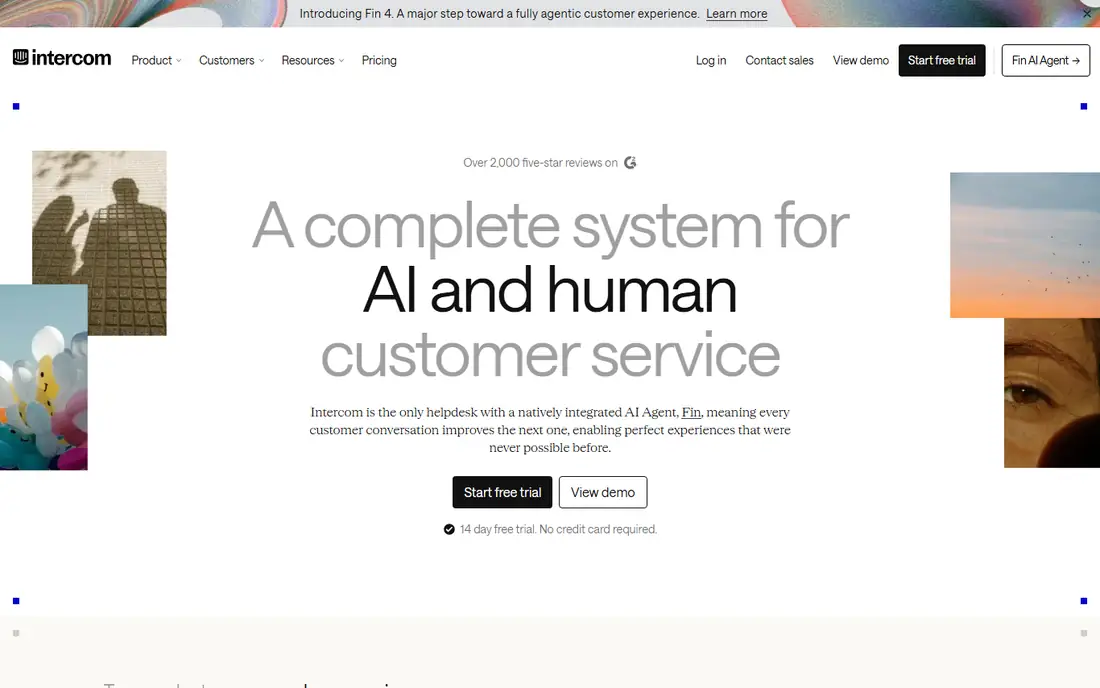
Intercom Fin is the most accessible agentic option, because it works on Intercom or alongside another help desk, charges 0.99 dollars per resolved outcome, and deploys in days for existing Intercom customers. Fin goes beyond answering: through Procedures and connectors, it can execute actions such as processing refunds, updating orders, and booking slots, following rules you define. Fin Voice extends the same agent to phone calls, which matters for teams where voice volume is high.
The limits are billing and setup depth. Seats cost from 29 dollars per month on top of outcome charges, complex multi-step actions need careful procedure design, and Salesforce completed its acquisition of Fin on September 10, 2026, so the roadmap may shift. Fin suits SaaS and digital-first teams that want agentic resolution without an enterprise contract.
What we like- 0.99 dollars per outcome
- Procedures and connectors execute actions
- Fin Voice covers phone
- Works on Intercom or other help desks
Watch out for- Two meters, seats plus outcomes
- Parent company now Fin after Salesforce acquisition
- Complex actions need setup
#2Sierra
Best for: Enterprise outcome-priced agents4.5/5 on
G2 (131 reviews, checked Oct 2026)
Visit sierra.ai
Starting priceSee website
Free planNo
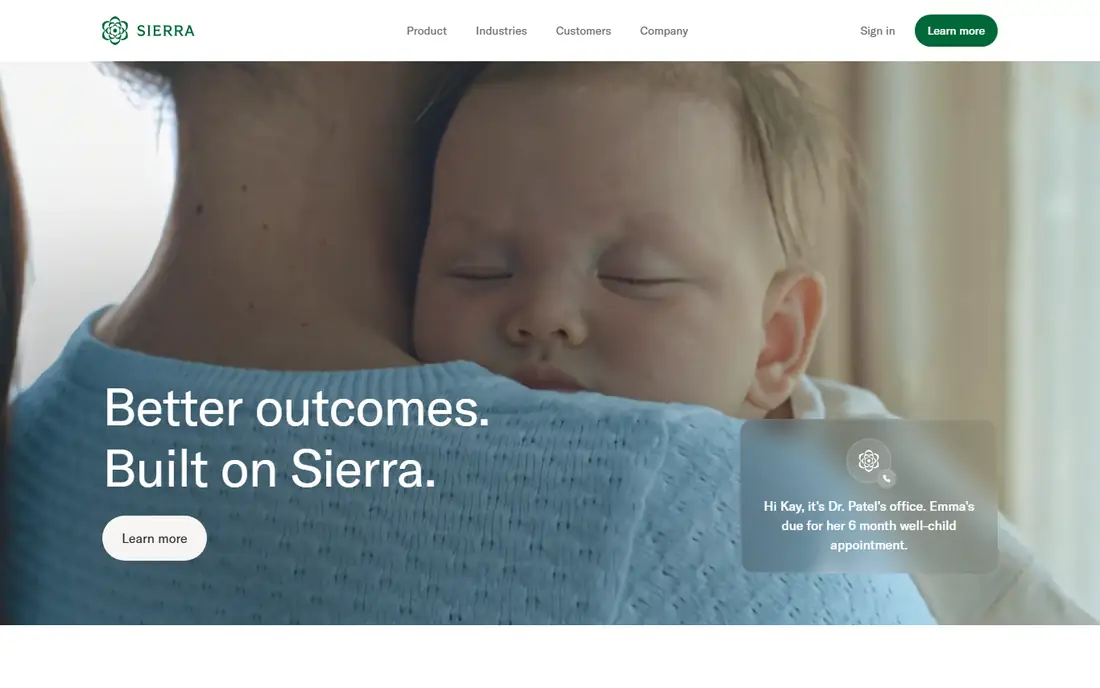
Sierra is the premium enterprise agentic platform, co-founded by Bret Taylor and Clay Bavor, and it bills largely on outcomes: you pay when the agent resolves an interaction, saves a cancellation, or completes an upsell, with typically no charge when a conversation escalates to a human. Customer-reported resolution rates reach 70 to 90 percent at large-brand scale, and the agent covers chat, SMS, WhatsApp, email, voice, and ChatGPT under one intelligence layer. Its Ghostwriter tool, released in March 2026, compresses configuration work that previously needed professional services.
The drawbacks are cost and access. Third-party estimates put entry contracts around 150,000 dollars per year, with year-one budgets of 200,000 to 350,000 dollars including setup, and every deployment goes through enterprise sales with no self-serve trial. Sierra suits Fortune 500 and large consumer brands where the agent must reflect brand voice across the full customer lifecycle.
What we like- Outcome-based pricing with no charge on most human escalations
- True omnichannel including voice
- High reported resolution rates
Watch out for- No public rate card or self-serve trial
- Year-one costs around 200,000 to 350,000 dollars
- Deployment takes months
#3Decagon
Best for: Plain-language agent workflows4.8/5 on
G2 (29 reviews, checked Oct 2026)
Visit decagon.ai
Starting priceSee website
Free planNo
Decagon is the strongest platform for CX teams that want to write agent logic in plain language and measure it obsessively. Its Agent Operating Procedures system compiles natural-language workflows into executable agent logic, and Watchtower provides round-the-clock quality checks, simulations, and A/B tests before new behavior goes live. Decagon runs chat, voice, email, and SMS under one intelligence layer with cross-channel memory, and its customers include Notion, Rippling, Duolingo, Chime, Hertz, and Eventbrite. Reported outcomes include 70 percent chat and voice resolution at Chime and 80 percent deflection at Duolingo.
The limits are enterprise pricing and rollout effort. Third-party estimates cite a base near 50,000 dollars per year plus about 0.99 dollars per conversation or 0.50 dollars per successful resolution, with contracts roughly 95,000 to 590,000 dollars per year, and implementation typically takes 4 to 12 weeks with dedicated engineers on the customer side. Decagon suits large consumer brands that want forecastable outcome pricing and deep workflow control.
What we like- Agent Operating Procedures let teams define workflows in plain language
- Chat, voice, email, and SMS under one layer
- Watchtower QA and simulations
Watch out for- No public pricing or self-serve trial
- Implementation takes 4 to 12 weeks
- Contracts roughly 95,000 to 590,000 dollars per year
Starting price$55 per agent per month
Free planNo
Zendesk AI brings agentic actions to teams already running Zendesk, with action flows that let the AI perform tasks in connected systems, plus triage and prioritization depth from the Forethought acquisition. Suite Team costs 55 dollars per agent per month billed annually, and automated resolutions cost 1.50 dollars committed or 2.00 dollars pay-as-you-go. Because the agent works inside the existing ticket queue, agents keep full context when a conversation hands off, and reporting covers AI and human work together.
The drawbacks are stacked costs and weight. Seats plus resolutions plus the optional Copilot add-on at 50 dollars per agent push the total well above the base price, and Zendesk is more system than small teams need. Zendesk AI suits large teams that already run Zendesk and want agentic actions without adding a separate platform.
What we like- Native to Zendesk ticketing
- Action flows execute tasks
- Forethought acquisition adds triage depth
Watch out for- Resolutions cost 1.50 to 2.00 dollars
- Copilot add-on costs 50 dollars per agent
- More system than small teams need
#5Ada
Best for: Enterprise multilingual automation4.6/5 on
G2 (173 reviews, checked Oct 2026)
Visit ada.cx
Starting priceSee website
Free planNo
Ada is an enterprise automation platform with structured playbooks that guide agents through multi-step resolutions across voice, chat, and messaging, with strong multilingual support for global brands. Its proactive messaging and personalization features help large consumer brands deflect volume before customers even ask, and its compliance certifications suit regulated industries. Ada works well for ecommerce and large consumer brands with high volumes across languages and regions.
The limits are price and scale fit. Pricing is sales-led, typically 100,000 to 400,000 dollars per year, implementation takes weeks, and the platform is overkill for teams under 50 agents. Ada suits large enterprises that need structured, multilingual automation at scale.
What we like- Omnichannel automation across voice and chat
- Structured playbooks
- Strong multilingual support
Watch out for- Sales-led pricing, typically 100,000 to 400,000 dollars per year
- Implementation takes weeks
- Overkill for small teams
#6Salesforce Agentforce
Best for: Salesforce-native agent actions4.3/5 on
G2 (1,464 reviews, checked Oct 2026)
Visit salesforce.com
Starting price$25 per user per month
Free planNo
Salesforce Agentforce builds agentic service on the Salesforce CRM, so agents act on live customer data: they check order status, update accounts, and trigger workflows without leaving the CRM record. Entry pricing starts around 25 dollars per user per month, with conversations costing roughly 2 dollars each, and the platform covers case management, automation, and knowledge in one suite. For enterprises already running Salesforce, that native context removes the integration work that standalone agents require.
The drawbacks are per-conversation cost and ecosystem fit. At about 2 dollars per conversation, high-volume agentic use adds up fast, and teams outside Salesforce gain less. Setup is also complex, often needing admin or consultant time. Agentforce suits Salesforce-native enterprises that want agents grounded in CRM data.
What we like- Agents act on live CRM data
- Case and order context built in
- Strong enterprise compliance
Watch out for- Conversations cost around 2 dollars each
- Best value only inside Salesforce
- Setup complexity high
#7Gorgias
Best for: Shopify action-taking agents4.6/5 on
G2 (569 reviews, checked Oct 2026)
Visit gorgias.com
Starting price$40 per month
Free planNo
Gorgias brings agentic actions to Shopify stores, with AI that performs order edits, cancellations, refunds, and subscription changes directly in Shopify, rather than just explaining how to do them. Plans start at 40 dollars per month, with AI interactions costing 0.90 to 1.00 dollars each, and go-live is fast for stores already on Gorgias. That action depth is exactly what ecommerce support needs, since most tickets are order actions, not general questions.
The limits are pricing model and voice. Ticket-based pricing penalizes high-volume stores, and phone calls are answered by your team rather than the AI, so voice-heavy teams need another solution. Gorgias suits Shopify stores that want action-taking agents for order work at a low entry price.
What we like- Shopify actions for refunds, cancellations, and order edits
- Fast go-live
- AI interactions at 0.90 to 1.00 dollars
Watch out for- Ticket-based pricing
- Phone answered by your team, not the AI
- Less suited outside ecommerce
Starting price$19 per agent per month
Free planNo
Freshdesk Freddy AI gives budget teams a taste of agentic actions, performing tasks such as refunds and order updates inside Freshdesk, with the Growth plan at 19 dollars per agent per month billed annually. The Freddy AI Agent includes 500 sessions once per account, then costs 49 dollars per 100 sessions, which keeps early use affordable. For small teams that already run Freshdesk, Freddy adds action-taking without a new platform or an enterprise contract.
The limits are session metering and depth. Phone support sits in Freshdesk Omni rather than the base Freddy plan, and action depth is thinner than Sierra, Decagon, or Ada, especially for multi-step cases spanning several systems. Freddy suits budget teams that want agentic actions for common order tasks inside Freshdesk.
What we like- Growth plan at 19 dollars
- Freddy AI performs refunds and order updates
- 500 free sessions per account
Watch out for- Extra sessions cost 49 dollars per 100
- Phone sits in Freshdesk Omni
- Action depth thinner than enterprise agents
How we chose
We graded tools on the act-versus-assist test: whether the agent completes actions in business systems or only drafts answers for humans. We compared action depth, channel coverage including voice, pricing model, and deployment effort, using 2026 vendor and comparison pricing. We favored tools with clear outcome definitions and native integration with the buyer existing help desk, and we flagged enterprise contracts where pricing is not public, since total cost depends on negotiated terms.
How to choose the best agentic customer service software
Start by listing the five most common ticket types and checking whether each tool can complete them end to end, not just answer questions about them. Next, define escalation paths before launch, since messy cases involving refund exceptions or billing dependencies are where weak agents fail. Then model total cost on real volume, including outcome or session charges, base platform fees, and setup costs, and read the outcome definition in any enterprise contract carefully. Finally, pilot on one channel and one ticket type, measure resolution rate and customer satisfaction, and expand only when the pilot proves the agent truly resolves work.
Frequently asked questions
What makes software agentic rather than just a chatbot?
An agentic system takes actions in your business systems, such as issuing a refund or updating an order, while a chatbot follows scripts and points customers to answers. The test is whether the ticket closes without a human pushing the final button.
How is agentic software priced?
Pricing varies widely: per outcome (Intercom Fin at 0.99 dollars), per session (Freshdesk at 49 dollars per 100), per conversation (Agentforce around 2 dollars), or outcome-based enterprise contracts (Sierra and Decagon at six figures per year). Model your real volume before choosing.
Do agentic agents work on voice calls too?
Some do. Sierra, Decagon, Ada, and Intercom Fin Voice cover phone calls, while Gorgias and Freshdesk Freddy focus on chat and email, with phone handled by your team or a separate plan.
What happens when an agent cannot resolve a case?
A good agent hands off to a human with full context, including what it already tried and what data it gathered, so the customer does not repeat their story. Define escalation paths before launch, not after the first failure.
How long does it take to deploy an agentic agent?
Self-serve tools such as Fin and Freddy deploy in days, while enterprise platforms such as Sierra and Decagon take weeks to months, including workflow design, integration work, and testing.
Should I pick a native agent or a standalone platform?
Start with the agent native to your existing help desk, since it already knows your tickets, customers, and workflows. Standalone platforms suit greenfield deployments or teams whose help desk lacks agentic depth.
Sources we checked (0)
Is your product missing or out of date?
We review this list regularly. Vendors can request a listing, send updated pricing or ask about featured placement.

Shihab Mia · Founder, Rankite
Shihab has 5+ years in B2B and SaaS SEO. He writes Rankite's software buying guides from pricing pages, documentation and public user reviews. More about Shihab.