How we make this list: we compare pricing pages, product documentation and public user reviews. Ratings come from G2, Capterra or Trustpilot, with the date we checked them.
Key takeaways
- Microsoft Intune is the natural pick for organizations already running Microsoft 365 and Entra ID.
- Jamf is the strongest choice for Apple only fleets, with same day support for new Apple OS releases.
- ManageEngine Endpoint Central gives the broadest feature set per dollar, including patching and security in one console.
- SOTI MobiControl leads for rugged and frontline devices in warehouses, retail, and transport.
- Hexnode and Scalefusion suit smaller teams that want cross platform control without enterprise complexity.
Quick comparison
Is your product missing or out of date?
We review this list regularly. Vendors can request a listing, send updated pricing or ask about featured placement.
The best VMware Workspace ONE alternatives

#1Microsoft Intune
Best for: Microsoft 365 shops4.5/5 on
G2 (272 reviews, checked Oct 2026)
Visit microsoft.com
Starting priceSee website
Free planFree trial
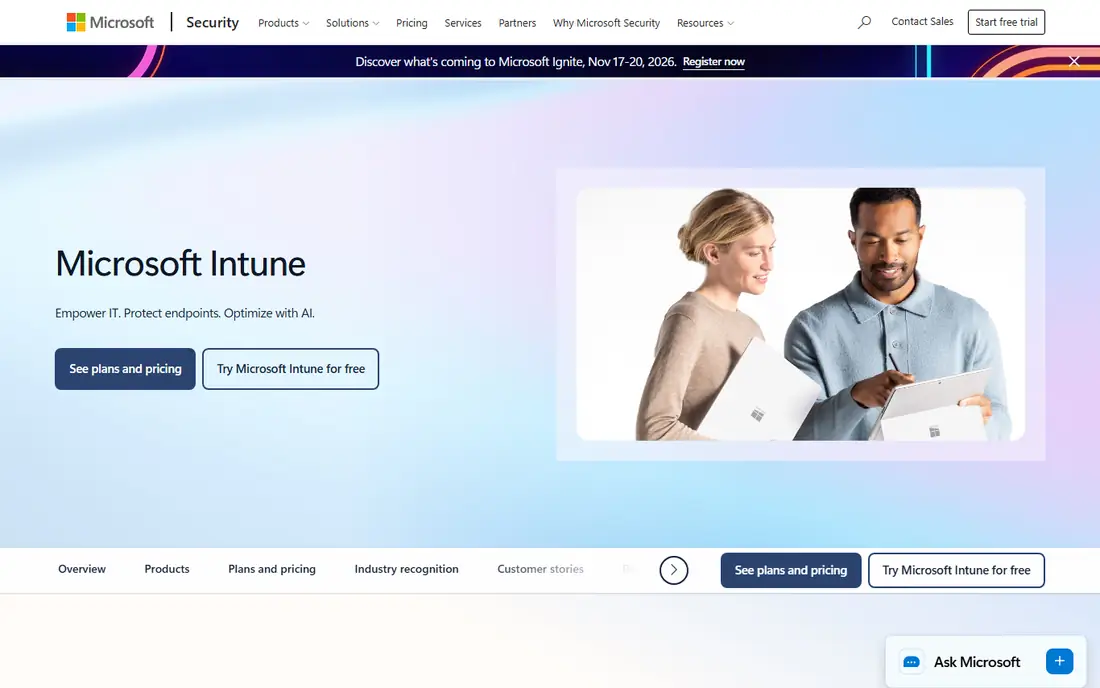
Microsoft Intune is a cloud based unified endpoint management solution that manages and protects devices, apps, and access from one place. Its homepage stresses reduced device risk, verified compliance, and unified management with Microsoft security and productivity tools. Windows Autopilot supports zero touch provisioning, and co-management with Configuration Manager lets large shops move workloads gradually rather than all at once.
The strength is also the limit. Intune shines inside Microsoft environments, with Entra ID as the identity backbone and Defender for Endpoint for security. Teams with large Mac, Linux, or rugged Android fleets may find dedicated tools stronger on those platforms. Licensing adds another layer: Plan 1 is the base, with Plan 2 and Intune Suite add ons for advanced features. Intune fits organizations standardized on Microsoft 365 that want one vendor for identity, productivity, and endpoint management.
What we like- Deep Microsoft 365 and Entra ID integration
- Windows Autopilot zero touch provisioning
- Conditional access tied to device compliance
Watch out for- Weaker for non Microsoft platforms than dedicated UEM tools
- Licensing tiers can confuse buyers

#2Jamf Pro
Best for: Apple fleets4.7/5 on
G2 (2,333 reviews, checked Oct 2026)
Visit jamf.com
Starting priceSee website
Free planFree trial
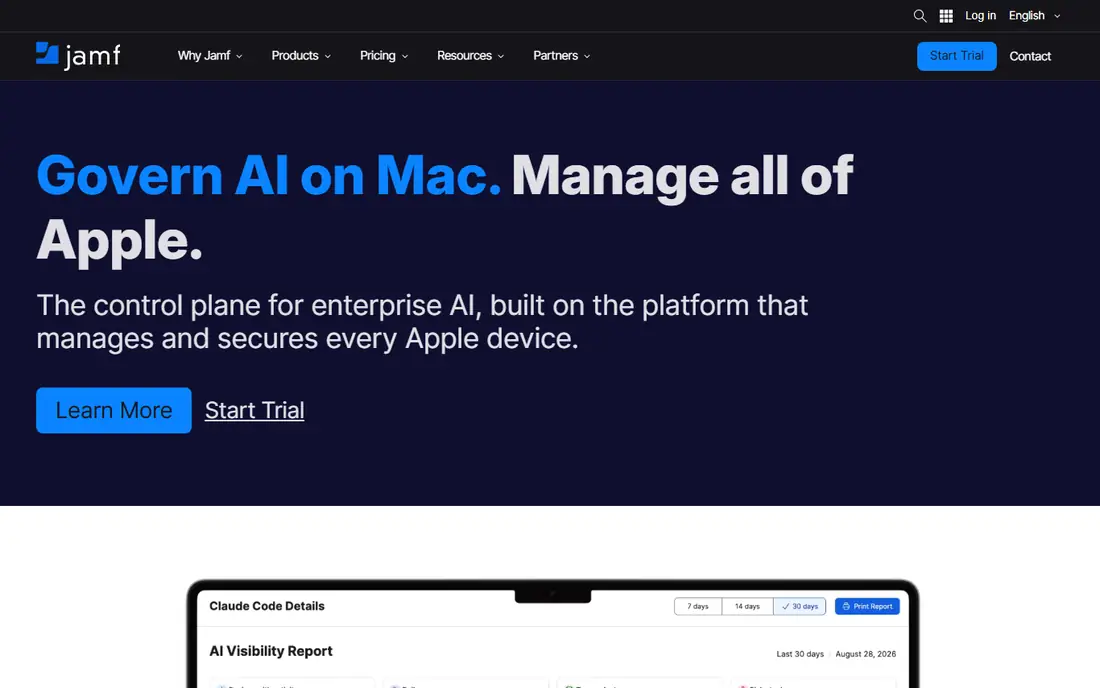
Jamf describes itself as the control plane for enterprise Apple management, covering Mac, iPhone, iPad, Apple Watch, Vision Pro, and Apple TV. Its homepage cites more than 20 years of experience and same day support for Apple OS releases, plus a large peer community in Jamf Nation and hundreds of marketplace integrations. Jamf was positioned as a Leader in the 2026 Gartner Magic Quadrant for Endpoint Management Tools and in IDC MarketScape for Apple device UEM.
The catch is scope. Jamf manages Apple devices brilliantly and other platforms barely at all, so Windows heavy shops need Intune or another UEM alongside it. That two tool reality is common in Apple heavy companies, and Jamf integrates well with identity providers and security tools to make it workable. Pick Jamf when Apple devices dominate your fleet and you want the deepest macOS and iOS controls available.
What we like- Deepest Apple management and security
- Same day Apple OS support
- Large Apple IT community
Watch out for- Apple only, so mixed fleets need a second tool
- Pricing is quote based for larger fleets
Starting priceSee website
Free planFree trial
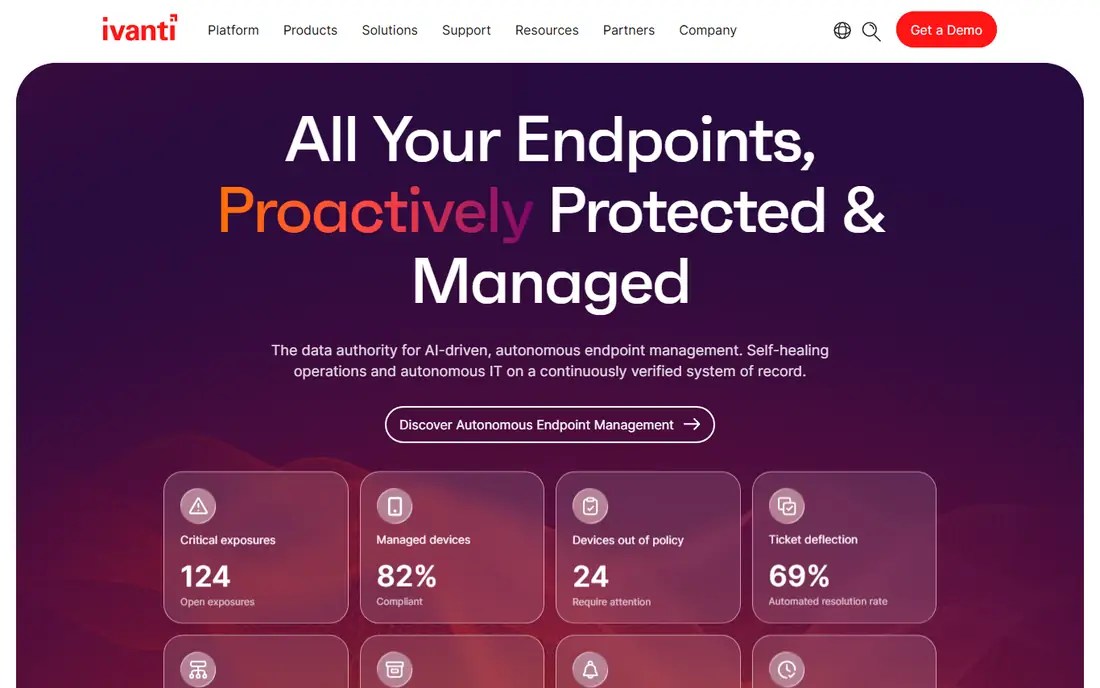
Ivanti positions its Neurons platform as the foundation for AI driven, autonomous endpoint management, with self healing operations on a continuously verified system of record. Its homepage reports device compliance, automated resolution rates, and ticket deflection figures, and cites Leader recognition in IDC MarketScape UEM reports and the Omdia Universe for UEM. Coverage spans Windows, Mac, Linux, mobile, and even VR and XR headsets, which is wider than most rivals.
The trade-off is complexity. A platform that covers patching, asset management, service management, and security in one place takes time to configure well. Smaller teams may find the breadth more than they need. Ivanti fits mid size and large IT teams that want automation to carry routine work: patching, compliance checks, and policy enforcement running in the background with little manual effort.
What we like- Autonomous patching and self healing workflows
- Broad OS coverage including VR and XR headsets
- Strong analyst recognition
Watch out for- Platform breadth can feel complex
- Pricing is quote based

#4ManageEngine Endpoint Central
Best for: Value and breadth4.5/5 on
G2 (1,149 reviews, checked Oct 2026)
Visit manageengine.com
Starting price$795 per year for 50 endpoints
Free planFree trial
ManageEngine Endpoint Central is the value pick on this list. Its homepage covers automated patching for Windows, Mac, Linux, and third party apps, threat detection with CIS and NIST benchmark compliance, ransomware protection, data loss prevention, OS imaging, and remote troubleshooting from a single console. Pricing is published clearly: the Professional edition starts at $795 per year for 50 endpoints, with Enterprise, UEM, and Security editions stepping up from there, and a 30 day free trial with no credit card required.
The weak spot is polish. The interface feels more traditional than Jamf or Intune, and the richest security features sit in the higher priced Security edition. Even so, the breadth per dollar is hard to match, and on premises deployment suits organizations that cannot use cloud only tools. Endpoint Central fits IT teams that want one console for patching, assets, and security without enterprise pricing.
What we like- Patching, asset management, remote troubleshooting, and security in one console
- On premises or cloud
- Clear published pricing
Watch out for- Interface feels dated in places
- Advanced security features need higher editions

#5Hexnode UEM
Best for: Cross platform control4.6/5 on
G2 (283 reviews, checked Oct 2026)
Visit hexnode.com
Starting priceSee website
Free planFree trial
Hexnode is a cross platform UEM that manages phones, tablets, laptops, desktops, and more from one console, with policy enforcement, remote management, and compliance controls. Reviewers praise its value for Windows endpoints, automated deployment of tools, and reliable policy enforcement once configured. A 14 day free trial with no credit card required makes testing low risk.
Hexnode is a smaller vendor than the enterprise names on this list, so buyers should check roadmap and support coverage for their region. Edge case issues with APIs and portal responsiveness have been reported by some reviewers. For small and mid size teams that want multi OS control at a fair price, Hexnode is a practical Workspace ONE replacement.
What we like- Strong cross platform device support
- Policy enforcement and scripting
- 14 day free trial with no credit card
Watch out for- Smaller vendor than Microsoft or IBM
- Some advanced features need higher tiers

#6SOTI MobiControl
Best for: Rugged and frontline devices4.3/5 on
G2 (32 reviews, checked Oct 2026)
Visit soti.net
Starting priceSee website
Free planFree trial
SOTI MobiControl is the pick when your fleet lives in the field, not the office. The SOTI ONE platform gives control and visibility across smartphones, tablets, computers, rugged devices, and industrial printers, with partners including Zebra, Honeywell, Samsung, and Panasonic. Companion tools cover diagnostics, remote support, rapid app development, and IoT device management, which matters for warehouses, delivery fleets, and retail stores.
The trade-off is focus. SOTI is less centered on office Windows and Mac fleets than Intune or Jamf, and its platform pricing requires a quote. For frontline and rugged deployments, though, that focus is a strength: device models, printer management, and field support workflows are first class. Pick SOTI when your devices scan barcodes, print labels, or ride in trucks.
What we like- Deep rugged device and printer support
- SOTI ONE platform adds diagnostics and app building
- Strong in retail, transport, and logistics
Watch out for- Less focused on office laptop fleets
- Platform pricing is quote based
Starting priceSee website
Free planFree trial
Scalefusion unifies endpoint management with access management, which sets it apart. Its homepage highlights single sign on to cloud apps, endpoint authentication that lets users log in with Google Workspace, Okta, or Entra credentials, and conditional access tied to UEM compliance. Devices run Android, iOS, macOS, Windows, and Linux from one dashboard, with zero touch deployment, remote support, and automated software updates.
The catch is scale of vendor. Scalefusion is smaller than Microsoft, IBM, or Jamf, and its fullest security features sit in the Scalefusion 360 Enterprise suite. For teams that want device trust to gate app access, not just device configuration, that combination is compelling. Scalefusion fits organizations that care as much about who can sign in as about what is installed.
What we like- UEM plus single sign on and device login with identity providers
- Manages Android, iOS, macOS, Windows, and Linux
- Zero touch deployment
Watch out for- Newer and smaller than the largest vendors
- Advanced security suite needs the enterprise tier
Starting priceSee website
Free planFree trial
IBM MaaS360 is an easy to use UEM platform that pairs device management with built in threat protection. Its homepage stresses AI driven security, automated compliance, and a Zero Trust approach, with protection against malware, man in the middle, and phishing attacks. Use cases cover distribution, healthcare with HIPAA aware workflows, and retail device fleets, and a Fast Start edition targets small and mid size businesses that need phones and tablets secured quickly.
The trade-off is pricing transparency. Most editions are quote based, though IBM runs periodic discounts on its site. MaaS360 fits organizations that want security led endpoint management from a large vendor, especially where compliance reporting and threat detection matter as much as app deployment.
What we like- AI driven security with built in threat detection
- Multi OS management from one console
- Fast Start edition for smaller businesses
Watch out for- Pricing is quote based for most editions
- IBM ecosystem suits larger buyers
How we chose
We compared tools that replace Workspace ONE for unified endpoint management: enrolling, configuring, securing, and supporting devices across operating systems. Each homepage was opened to confirm the product exists today and matches its category, and pricing was taken from vendor pages where published. Where pricing is quote based, we wrote See website. We kept a mix of Microsoft centric, Apple centric, value led, rugged focused, and security led tools, since no single vendor fits every fleet shape. Note that Workspace ONE itself now sits with Omnissa after VMware's end user computing business was sold, so buyers comparing incumbents should check current ownership and roadmap.
Moving from Workspace ONE without breaking enrollments
Start with an inventory: device counts by OS, enrollment method, profiles, apps, and certificates. That inventory decides the replacement, since an Apple heavy fleet and a rugged Android fleet need different tools. Run a pilot on one device group before migrating the whole fleet, and test enrollment, app deployment, VPN and Wi-Fi profiles, and certificate renewal in the pilot.
Plan identity carefully. Most UEM tools tie into Entra ID, Google Workspace, or Okta, and conditional access rules should be rebuilt and tested before cutover. Keep the old console live until the new one proves itself on real devices, and schedule migration in waves by team or site. Finally, confirm patching and compliance reporting in the new tool before decommissioning the old one, since gaps in reporting are the most common post migration surprise.
Frequently asked questions
Is Workspace ONE still available?
Yes, but ownership changed. VMware's end user computing business, including Workspace ONE, moved to Omnissa. Existing customers should check Omnissa roadmaps and support terms when planning renewals or migrations.
Which Workspace ONE alternative is best for small businesses?
Hexnode, Scalefusion, and ManageEngine Endpoint Central suit smaller teams well, with trials and clearer entry pricing. IBM MaaS360 Fast Start also targets smaller businesses. Microsoft Intune makes sense if the business already pays for Microsoft 365.
Do I need a separate tool for Apple devices?
Not always, but many teams use one. Intune, Ivanti, and ManageEngine all manage Apple devices, yet Jamf offers deeper macOS and iOS controls and same day OS support. Apple heavy fleets often pair Jamf with a general UEM for Windows.
What is the difference between MDM and UEM?
MDM focuses on enrolling, configuring, and protecting mobile devices. UEM extends that to all endpoints, including laptops, desktops, and sometimes IoT devices, with app management, patching, and security in one platform. Most modern tools are UEM platforms even when they still use the MDM label.
Can UEM tools manage rugged devices and printers?
Some can. SOTI MobiControl is strongest here, with rugged device and printer support built in. Scalefusion and Hexnode also manage rugged Android devices. Check your exact device models before committing, since rugged support varies by vendor.
How long does a UEM migration take?
Small fleets can migrate in weeks, while large fleets with many profiles, apps, and certificates may take months. Pilot one device group first, migrate in waves, and keep the old console live until reporting and compliance checks pass in the new tool.
Sources we checked (8)
- https://www.microsoft.com/en-us/security/business/microsoft-intune
- https://www.jamf.com
- https://www.ivanti.com
- https://www.manageengine.com/endpoint-central/
- https://www.hexnode.com
- https://www.soti.net
- https://www.scalefusion.com
- https://www.ibm.com/products/maas360
Is your product missing or out of date?
We review this list regularly. Vendors can request a listing, send updated pricing or ask about featured placement.

Shihab Mia · Founder, Rankite
Shihab has 5+ years in B2B and SaaS SEO. He writes Rankite's software buying guides from pricing pages, documentation and public user reviews. More about Shihab.
 Ivanti Neurons
 Scalefusion
 IBM MaaS360