How we make this list: we compare pricing pages, product documentation and public user reviews. Ratings come from G2, Capterra or Trustpilot, with the date we checked them.
Key takeaways
- VMware's move to subscription bundles under Broadcom pushed many teams to evaluate alternatives, though most migrate in phases rather than all at once.
- Proxmox VE is the most common free replacement, with KVM virtual machines, Linux containers, and a built-in ESXi import wizard.
- XCP-ng is the closest match to the vSphere and vCenter experience, with Xen Orchestra management.
- Nutanix AHV suits enterprises that want a turnkey hyperconverged platform with one-click management.
- Hyper-V fits Windows-first organizations already standardized on Microsoft, while Harvester and OpenShift suit container-led teams.
Quick comparison
Is your product missing or out of date?
We review this list regularly. Vendors can request a listing, send updated pricing or ask about featured placement.
The best VMware ESXi alternatives

#1Proxmox VE
Best for: Free open source virtualization4.6/5 on
G2 (37 reviews, checked Oct 2026)
Visit proxmox.com
Starting price$0
Free planYes
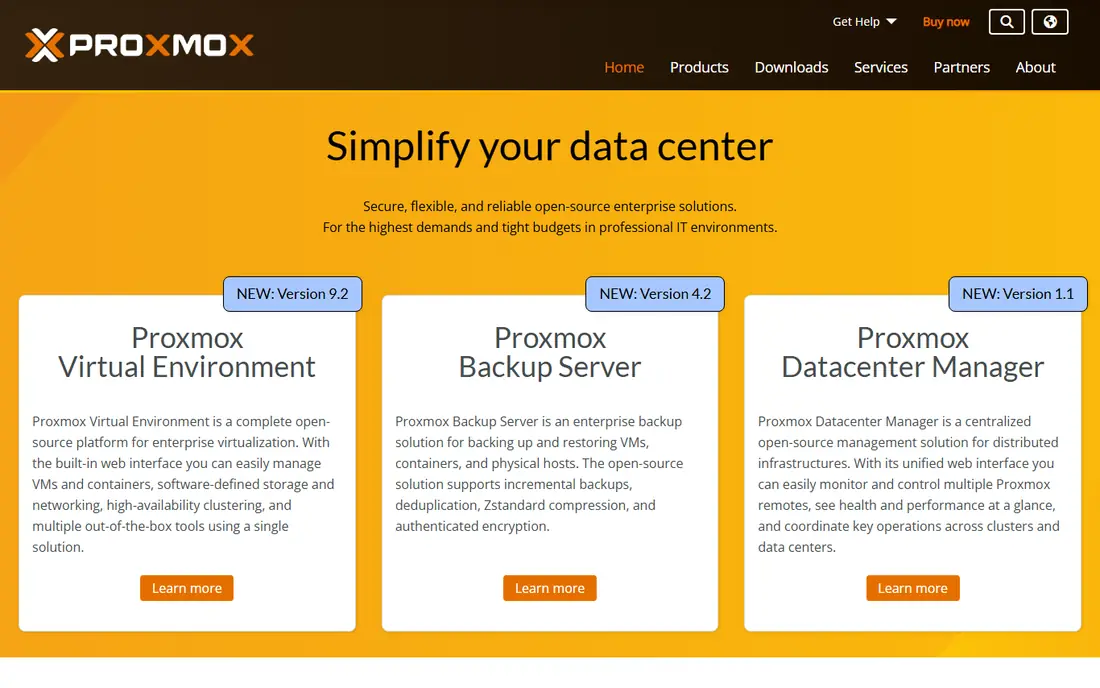
Proxmox Virtual Environment is the most widely adopted VMware alternative, and for good reason. It is a Debian-based platform that runs KVM virtual machines and Linux containers side by side, managed through a built-in web interface. The software is free under AGPL-3.0, with optional enterprise support subscriptions at relatively low cost. Storage options include ZFS, LVM, and Ceph, and live migration, high availability, and GPU passthrough are all supported.
Migration is eased by a built-in import wizard that brings ESXi virtual machines directly into Proxmox, though Windows guests still need VirtIO drivers installed. The trade-offs are operational: high availability, networking, and storage need more manual configuration than vSphere, and automation workflows are fewer. For small and mid-sized businesses, service providers, and technical teams, Proxmox offers the best balance of cost, freedom, and capability.
What we like- Free AGPL-3.0 software
- KVM VMs plus LXC containers
- Built-in ESXi import wizard
Watch out for- High availability and storage need manual setup
- Fewer automation workflows than vSphere
- Support is a paid subscription
Starting price$0
Free planYes
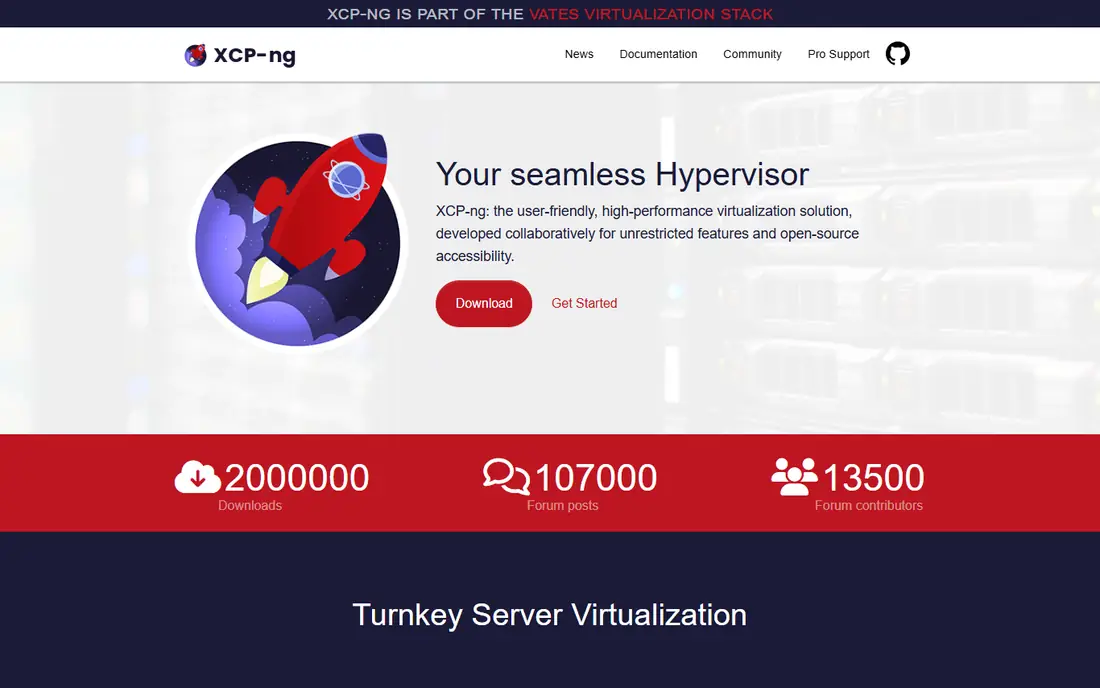
XCP-ng is the enterprise-ready Xen fork that most closely matches the vSphere and vCenter experience. It pairs the Xen hypervisor with Xen Orchestra, a web-based management platform that handles pools, live migration, backups, and updates. GPU and PCIe passthrough support is strong, which suits graphics and accelerator workloads.
The software is free, with paid support from Vates for teams that want guaranteed response times and enterprise features. Migration from VMware is supported through Xen Orchestra tooling. The Xen stack differs from the KVM world, so Linux teams may find Proxmox more familiar. For teams that want vSphere-like operations without Broadcom pricing, XCP-ng is the closest free match.
What we like- Closest to vSphere and vCenter workflows
- Xen Orchestra management
- Strong GPU support
Watch out for- Xen-based stack differs from KVM
- Enterprise features need paid support
- Smaller community than Proxmox
Starting priceIncluded with Windows Server
Free planYes
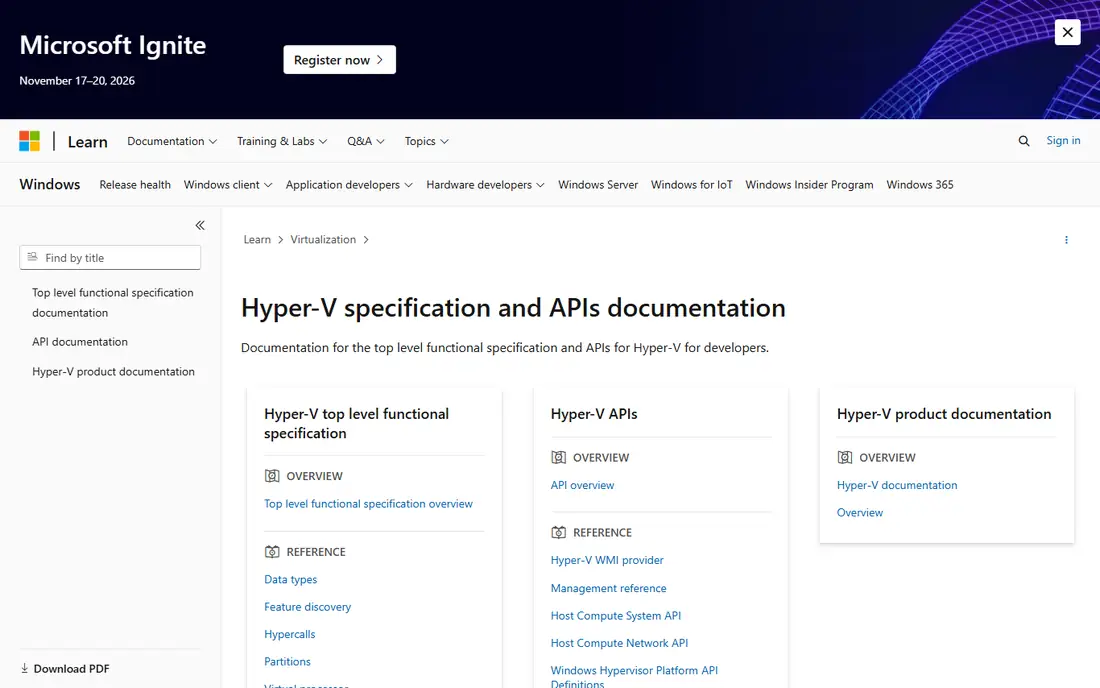
Hyper-V is the natural VMware alternative for organizations already standardized on Microsoft. It is included with Windows Server, managed through Hyper-V Manager or Windows Admin Center, and integrates deeply with Azure, PowerShell, and Active Directory. Live migration, high availability through failover clustering, and GPU passthrough via discrete device assignment are all supported.
Advanced management at scale benefits from System Center Virtual Machine Manager, which adds cost and complexity. Linux guest tooling is thinner than KVM-native platforms, though Linux guests run well. Windows licensing still applies, so Hyper-V is not free in the same sense as Proxmox. For Windows-first enterprises with Microsoft agreements, it offers the lowest migration friction of any option here.
What we like- Included with Windows Server
- Deep Azure and PowerShell integration
- Familiar to Windows admins
Watch out for- Linux guest tooling is thinner
- Advanced management needs System Center
- Windows licensing still applies

#4Nutanix AHV
Best for: Turnkey hyperconverged platform4.5/5 on
G2 (2 reviews, checked Oct 2026)
Visit nutanix.com
Starting priceBundled with Nutanix
Free planFree trial
Nutanix AHV is the most operationally similar commercial replacement for VMware. It is a KVM-based hypervisor bundled with the Nutanix Acropolis platform, managed through the Prism interface, which many administrators rate as cleaner than vSphere. Storage, networking, and virtualization come integrated, with live migration, high availability, and one-click upgrades built in.
Migration is eased by Nutanix Move, which replicates virtual machines from ESXi to AHV. Pricing is bundled and sold through channel partners rather than published retail, so budget through a quote. A free Community Edition supports testing on up to four nodes. For mid-sized to large enterprises that want a turnkey platform and can accept Nutanix hardware and platform ties, AHV is the premium VMware replacement.
What we like- Fully integrated HCI with one-click management
- Clean Prism interface
- Nutanix Move migration tool
Watch out for- Bundled pricing through channel partners
- Hardware and platform lock-in
- Community Edition limited to four nodes

#5
KVM with oVirt
Best for: Linux-first enterprise virtualization
Visit ovirt.org
Starting price$0
Free planYes
KVM is the Linux kernel's built-in hypervisor, and oVirt adds enterprise management on top: a web interface, live migration, high availability through clustering tools, templates, and storage management. Together they form a free, open source virtualization platform that runs Linux, Windows, and BSD guests with VFIO GPU passthrough.
Setup is more involved than Proxmox, since KVM plus oVirt is a stack to assemble rather than a single installer. The interface is functional but less polished than Prism or Proxmox. Linux expertise is essential. For Linux-first enterprises and public sector teams that want full control without licence fees, KVM with oVirt is a proven and flexible path.
What we like- Free KVM virtualization
- Enterprise management through oVirt
- Strong Linux integration
Watch out for- Setup is more involved
- Interface is less polished
- Needs Linux expertise
Starting price$0
Free planYes
Harvester is SUSE's open source hyperconverged infrastructure platform, built on Kubernetes with KVM virtualization underneath. It combines compute, storage, and networking in one system with a web interface, aiming at the same HCI space as Nutanix but with an open source licence. The Apache-2.0 licence and Kubernetes-native design appeal to teams already moving toward container platforms.
Harvester is newer than Proxmox or XCP-ng, with a smaller community and fewer enterprise features. It suits edge deployments, smaller HCI clusters, and teams that want Kubernetes and VMs managed together. For organizations evaluating HCI without Nutanix pricing, Harvester is the open source option to pilot.
What we like- Free Apache-2.0 hyperconverged platform
- Kubernetes-native design
- Simple HCI setup
Watch out for- Newer platform with smaller community
- Fewer enterprise features
- Edge and HCI focus

#7
Red Hat OpenShift Virtualization
Best for: VMs inside Kubernetes
Visit redhat.com
Starting priceSee website
Free planFree trial
Red Hat OpenShift Virtualization, formerly Container-Native Virtualization, runs virtual machines inside Kubernetes alongside containers. That design suits enterprises adopting Kubernetes as their standard platform, since VMs and container workloads share networking, storage, and operations tooling. Red Hat's Migration Toolkit for Virtualization moves virtual machines from vCenter into OpenShift.
Pricing is subscription-based, and Kubernetes expertise is required to run the platform well. VM-only estates gain little from the Kubernetes layer and may find Proxmox or XCP-ng simpler. For enterprises standardizing on OpenShift, virtualization inside Kubernetes is a strategic fit rather than a simple hypervisor swap.
What we like- VMs and containers under one platform
- Red Hat support
- Migration toolkit from vCenter
Watch out for- Subscription pricing
- Kubernetes expertise required
- Overkill for VM-only estates
Starting price$0
Free planYes
Citrix Hypervisor, formerly XenServer, is the Xen-based hypervisor behind Citrix virtual desktop infrastructure. It offers strong GPU acceleration and high user density for VDI workloads, with a free base edition and paid enterprise tiers for advanced features. Organizations running Citrix desktops often keep hypervisor and VDI tooling aligned.
For general server virtualization, Citrix Hypervisor is less broadly adopted than Proxmox or XCP-ng, and its ecosystem is smaller. It earns its place here for graphics-heavy and VDI workloads where density and GPU performance matter most. For general VMware replacement, start with Proxmox, XCP-ng, or Nutanix instead.
What we like- Strong VDI and GPU acceleration
- High user density
- Free base edition
Watch out for- Enterprise features are paid
- VDI focus limits general appeal
- Smaller ecosystem than leaders
How we chose
We compared published licence terms, feature tables, and migration tooling for each platform, plus 2026 VMware alternative surveys that track adoption. A tool made this list only if it runs production virtual machines as a Type-1 hypervisor or HCI platform with live migration and high availability options. Prices marked "See website" are subscription or bundled, so confirm through a quote. Open source does not mean free in total cost: Linux expertise, support subscriptions, and lifecycle management belong in the total cost model before deciding.
What to check before you switch
Start with a workload inventory, not a licence comparison. Survey data from early 2026 found most IT leaders reducing VMware footprint in phases, with only a small share fully migrated, so a phased plan is normal and sensible. Identify which workloads move first, usually stateless or test systems, and which stay on VMware longest, often tightly coupled or licensed applications. Next, test migration tooling on real virtual machines, including Windows guests that need driver changes, before planning any bulk migration work at scale today, carefully.
Also check hardware compatibility, backup tooling, and monitoring before committing. Each platform has different storage, networking, and backup integrations, and a hypervisor swap that breaks backups is worse than a higher licence bill. Test restores on the new platform, not just migrations. Finally, budget support. Free software still needs someone on call, and paid support subscriptions for Proxmox or XCP-ng are far cheaper than enterprise VMware bundles while covering that gap reliably.
Frequently asked questions
What is the best free VMware alternative?
Proxmox VE is the most common free choice, with full features, KVM and containers, and an ESXi import wizard. XCP-ng is the closest vSphere-like free option. Both offer paid support for production use.
Is there a free version of ESXi anymore?
No. VMware eliminated the free ESXi tier in 2024, and current versions are sold only inside Broadcom subscription bundles. That change is a major driver of migration planning.
How hard is it to migrate VMs off VMware?
It depends on the target. Proxmox offers an import wizard, Xen Orchestra offers VMware migration tooling for XCP-ng, Nutanix Move replicates to AHV, and Red Hat offers a migration toolkit to OpenShift. Windows guests usually need driver changes, so test before bulk migration.
Does Proxmox support high availability?
Yes, with clustering and shared storage. High availability needs manual configuration of fencing, quorum, and storage, unlike vSphere's more guided setup. Plan that configuration work into the migration timeline.
Which alternative is best for enterprises?
Nutanix AHV is the most turnkey enterprise replacement, with integrated HCI and Prism management. Red Hat OpenShift Virtualization suits Kubernetes-standard enterprises, while XCP-ng and Proxmox with paid support suit cost-conscious enterprises with in-house Linux skills.
Can I run containers and VMs on the same platform?
Yes, on Proxmox with LXC containers, on Harvester and OpenShift with Kubernetes, and on KVM hosts with Docker inside VMs. Pure hypervisors like Hyper-V and XCP-ng focus on VMs, with containers running inside guests.
Sources we checked (8)
- https://www.proxmox.com
- https://xcp-ng.org
- https://learn.microsoft.com/en-us/virtualization/hyper-v-on-windows
- https://www.nutanix.com/products/ahv
- https://www.ovirt.org
- https://harvesterhci.io
- https://www.redhat.com/en/technologies/cloud-computing/openshift/openshift-virtualization
- https://www.citrix.com/products/citrix-hypervisor
Is your product missing or out of date?
We review this list regularly. Vendors can request a listing, send updated pricing or ask about featured placement.

Shihab Mia · Founder, Rankite
Shihab has 5+ years in B2B and SaaS SEO. He writes Rankite's software buying guides from pricing pages, documentation and public user reviews. More about Shihab.
 XCP-ng
 Microsoft Hyper-V
 Harvester
 Citrix Hypervisor