How we make this list: we compare pricing pages, product documentation and public user reviews. Ratings come from G2, Capterra or Trustpilot, with the date we checked them.
Key takeaways
- Two kinds of tools exist here. Pure trackers (Peec AI, Otterly.AI) are cheap and quick to set up, while suites (Semrush, Ahrefs, Writesonic) add AI visibility to SEO or content work you may already pay for.
- Prompt limits decide the real cost. Entry plans often cover only 5 to 25 prompts, and extra AI engines are sometimes paid add-ons, so a headline price rarely matches full coverage.
- Profound is aimed at large brands. Third-party reports say its self-serve plans have been pulled and enterprise pricing is quote-only, which puts it out of reach for most small teams.
- Finding opportunities (prompts where competitors are cited and you are not) matters more than a mention count. AthenaHQ and Scrunch put recommendations and content actions near the front, while the simpler trackers mostly report.
- Check dates on any pricing you read, including this page. Several vendors changed plans during 2026, so confirm numbers on the vendor site before you sign.
Quick comparison
| Tool | Best for | Starting price | Free plan |
|---|
 Semrush AI Visibility Toolkit | Teams already using Semrush for SEO | See website | No |
 Ahrefs Brand Radar | SEO teams that want AI data next to backlinks and keywords | See website | No |
 Peec AI | Marketing teams that want clean, simple tracking | See website | Free trial |
 Otterly.AI | Small businesses starting with a low budget | $29 per month (Lite, 15 prompts) | See website |
 Profound | Large brands with enterprise budgets | See website | Free trial |
 Scrunch AI | B2B teams that want persona-based tracking | See website | Free trial (7 days) |
 AthenaHQ | Teams that want action-oriented recommendations | See website | No |
 Writesonic | Content teams that want tracking and writing in one tool | See website | See website |
Is your product missing or out of date?
We review this list regularly. Vendors can request a listing, send updated pricing or ask about featured placement.
The best AI visibility software for finding opportunities
#1
Semrush AI Visibility Toolkit
Best for: Teams already using Semrush for SEO
Visit semrush.com
Starting priceSee website
Free planNo
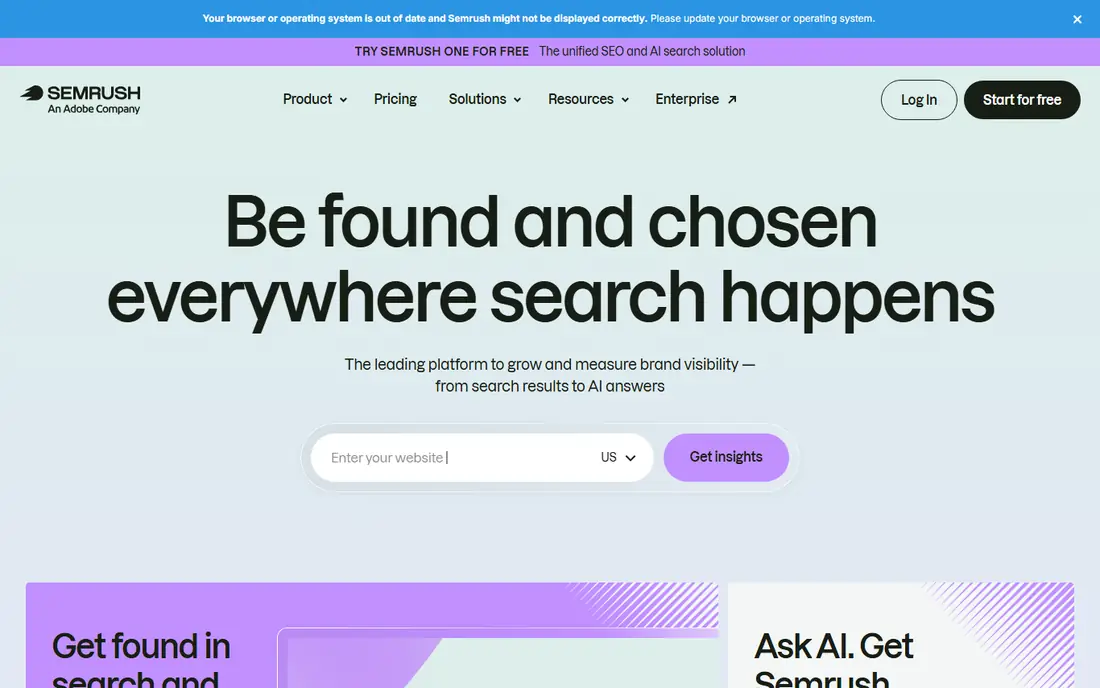
If your team already lives inside Semrush, this is the shortest path to a first AI visibility report. You add your domain, and the toolkit shows how often your brand appears in answers from engines such as ChatGPT, Google AI Mode and Gemini. Public reviews describe it as an add-on priced separately from the main SEO plans, and one review notes there is no free trial.
The standout feature is research. Semrush says its database holds more than 317 million AI prompts and answers, so you can see which questions already trigger brand mentions in your category before you pick prompts to track. That is useful for spotting gaps where competitors show up and you do not.
The catch is tracking depth. Reviews report that the standalone toolkit tracks only about 25 of your own prompts daily, with more sold as paid extras. Treat it as a research tool with a small tracker attached, and check the current plan details on the Semrush site.
What we like- Huge prompt database for research
- Fits into an existing Semrush workflow
- Familiar reporting and project structure
Watch out for- Low number of custom tracked prompts on the entry plan
- Claude and Copilot coverage is limited
#2
Ahrefs Brand Radar
Best for: SEO teams that want AI data next to backlinks and keywords
Visit ahrefs.com
Starting priceSee website
Free planNo
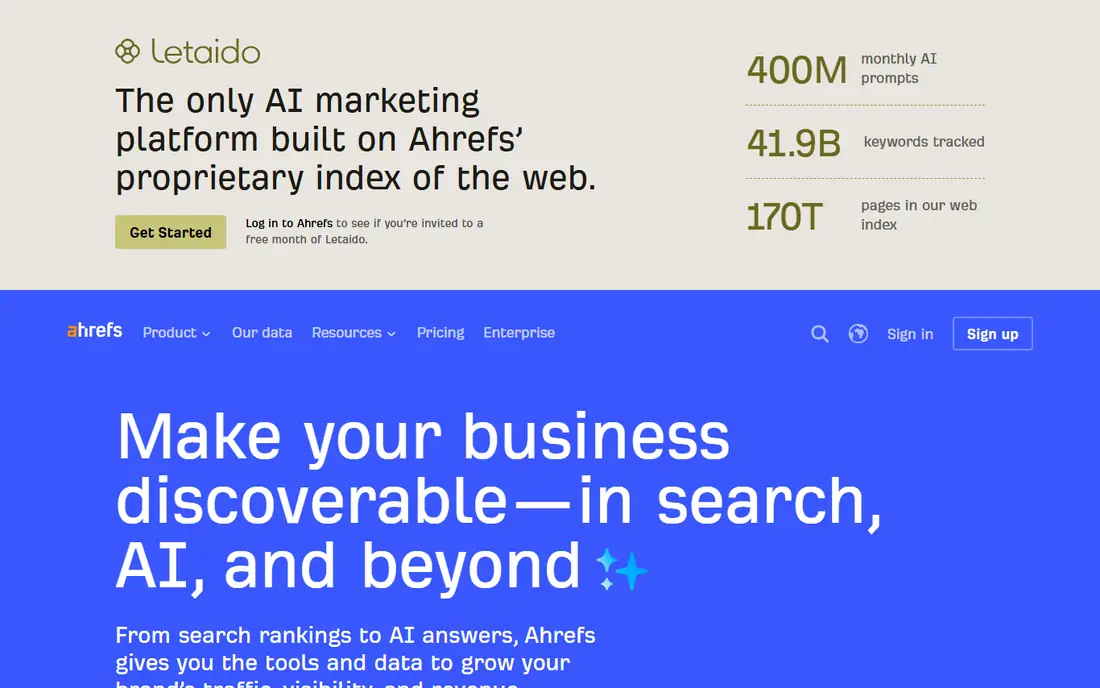
Brand Radar suits SEO specialists who already trust Ahrefs data. Instead of asking you to set up everything from scratch, it connects brand mentions and citations in AI answers to the keyword and backlink research you already use. That makes it easier to judge whether a visibility gap is a content problem or an authority problem.
Pricing is the confusing part. Reviews report that Brand Radar comes bundled with the main Ahrefs plans with small prompt allowances, and also sells as a standalone product. One review says the product page and the pricing page show different starting figures, so read both before budgeting. Reviewers also note the Ahrefs Free account does not include it.
Buy it if you want AI visibility as an extension of SEO work. Skip it if you only want a standalone dashboard for a marketing team that never opens a backlink report.
What we like- Included in main Ahrefs plans
- Large index of AI responses
- Pairs with Ahrefs keyword and link data
Watch out for- Bundled plans include very few tracked prompts
- Pricing is spread across more than one page
#3Peec AI
Best for: Marketing teams that want clean, simple tracking4.7/5 on
G2 (21 reviews, checked Oct 2026)
Visit peec.ai
Starting priceSee website
Free planFree trial
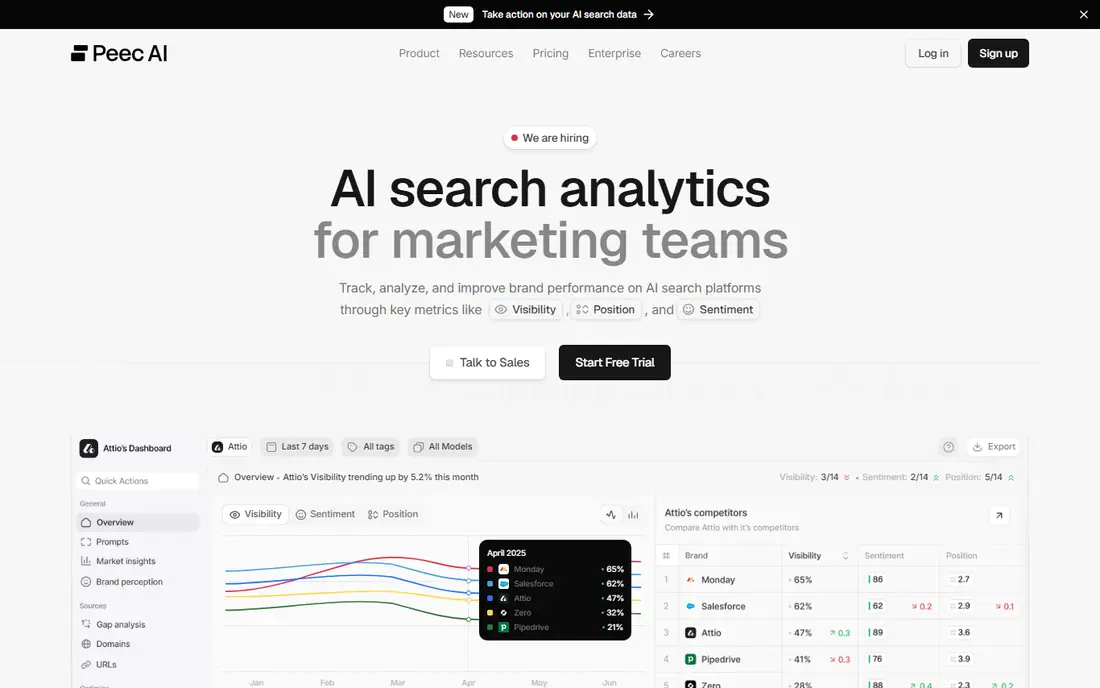
Peec AI is a tracker that gets praised for being easy to read. You enter prompts, pick the countries you care about, and the dashboard shows visibility, position, sentiment and the sources AI engines cite. For a marketing manager who needs to show a weekly number to a boss, that clarity counts.
Third-party reviews describe tiered plans that scale by the number of prompts and AI answers analyzed, and say seats are unlimited. They also say some engines beyond the base set are paid add-ons, which can raise the bill. One comparison reports a 7-day free trial, so confirm that on the Peec site.
The honest limit is depth of advice. Peec shows you where you are weak and which domains get cited, but it leaves the content and outreach work to you. It also begins tracking from signup, so you cannot backfill past trends.
What we like- Clean interface
- Unlimited seats and countries on plans per reviews
- Daily prompt runs across engines
Watch out for- Extra AI engines can cost more
- History starts only when you sign up
#4Otterly.AI
Best for: Small businesses starting with a low budget4.7/5 on
G2 (54 reviews, checked Oct 2026)
Visit otterly.ai
Starting price$29 per month (Lite, 15 prompts)
Free planSee website
Otterly.AI is the easiest place to start if you have a small budget and need proof that AI search matters to your business. Its own pricing comparison pages list a Lite plan at $29 a month for 15 prompts, a Standard plan at $189 for 100 prompts and a Premium plan at $489 for 400 prompts, with Enterprise on quote. Annual billing takes roughly 15 percent off, according to a review that checked the live page.
Besides tracking, Otterly runs GEO audits on your pages and shows which of your URLs get cited. That gives a small team something to fix, not just a chart to look at. Unlimited team members also mean an agency or a small marketing team will not pay per seat.
Watch the add-ons. A review of its pricing found that some engines cost extra on each tier, so full coverage costs more than $29 or $189. Price your real engine list before choosing a plan.
What we like- Low entry price
- Unlimited team members
- GEO audit of page-level issues
Watch out for- Lite tracks only 15 prompts
- Claude, Gemini and Google AI Mode are paid add-ons
#5Profound
Best for: Large brands with enterprise budgets4.6/5 on
G2 (640 reviews, checked Oct 2026)
Visit tryprofound.com
Starting priceSee website
Free planFree trial
Profound is the name most often mentioned for enterprise AI visibility, and it targets big brands and agencies with complex needs. Reviews say it can track up to nine answer engines, including ChatGPT, Perplexity, Gemini, Claude, Copilot and Google AI Mode.
The pricing story has changed. One article reports that Profound earlier listed two self-serve plans, then removed them from the brand pricing page by mid-September 2026, leaving a limited trial and an enterprise tier with no published price. Another source says its pricing page routes visitors to a demo. Many older reviews still quote the earlier plans, so be careful with dates.
For a small business, this is probably too much product and too much sales process. For a company with several brands and a compliance team, it is the tool to put on the shortlist and request a quote for.
What we like- Tracks many answer engines
- Built for enterprise reporting
- Strong brand recognition in the category
Watch out for- No public price list
- Small teams are poorly served
Starting priceSee website
Free planFree trial (7 days)
Scrunch AI is the pick for B2B marketers who think in buyer personas. Instead of tracking one flat list of prompts, you can group them by persona, which helps when a CFO and an IT lead ask AI engines very different questions about the same product. A competitor's comparison page lists a 7-day trial without a card, so check that on the Scrunch site.
The same comparison lists Starter and Growth plans with several hundred custom prompts plus industry prompts, a custom Enterprise tier, and per-seat fees beyond the included seats. That page is written by a rival vendor, so treat the numbers as a hint and verify them with Scrunch.
The weakness is entry cost. By that comparison there is no plan near the price of the cheapest trackers, and page audits are limited on the lower plans. It makes the most sense for a B2B team with real budget and a clear persona map.
What we like- Persona-based prompt tracking
- Large industry prompt sets
- Enterprise security options
Watch out for- No very cheap entry plan
- Page audits are capped on lower plans
#7
AthenaHQ
Best for: Teams that want action-oriented recommendations
Visit athenahq.ai
Starting priceSee website
Free planNo
AthenaHQ aims to tell you what to do next, not only where you stand. Reviews describe a product that tracks multiple AI platforms and suggests content and citation actions, and an enterprise tier that adds multi-region tracking, API access and BI integrations. That focus fits teams hunting for opportunities rather than reports.
Usage runs on credits. One pricing review says the self-serve plan includes a set credit allowance, three seats and one country, and that the real monthly bill depends on how many credits you burn. The same review reports no free-forever tier, only a discounted first month.
Credits make budgeting harder than a flat prompt count. Ask the vendor how many credits a typical weekly prompt set uses before you commit, and whether unused credits roll over.
What we like- Recommendations built into the product
- Many platforms covered
- Enterprise tier adds API and BI integrations
Watch out for- Credit-based pricing is hard to predict
- No permanent free tier
#8Writesonic
Best for: Content teams that want tracking and writing in one tool4.7/5 on
G2 (2,133 reviews, checked Oct 2026)
Visit writesonic.com
Starting priceSee website
Free planSee website
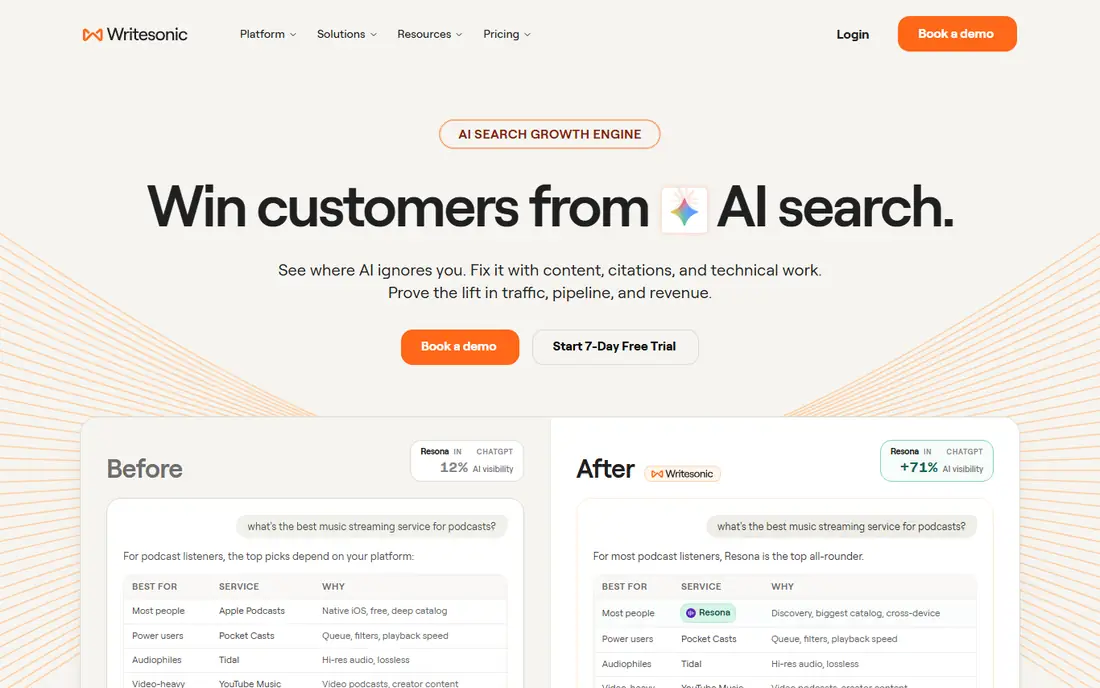
Writesonic began as an AI writing platform and later added AI search tracking. That origin shapes it. If your main problem is that you cannot publish content quickly enough to fill visibility gaps, one tool that tracks and drafts can save a subscription.
A rival's comparison page says the lower writing-only plans do not include tracking, and that GEO tracking starts on the Professional plan. That page is written by a competitor, so verify the plan structure on the Writesonic site.
The tradeoff is focus. A specialist tracker typically offers more prompts and engines for the money, while Writesonic gives you a smaller tracker and a writing tool. It suits content-led teams more than analysts.
What we like- Tracking and AI writing in one subscription
- Recommendations tied to content creation
- Higher plans add sentiment and prompt research
Watch out for- Tracking is not on the cheapest plans
- Prompt limits are modest
How we chose
We did not run hands-on trials. We built this list from vendor pricing and product pages where search results made them available, documentation, public reviews on sites such as G2 and Capterra, and third-party pricing breakdowns. We checked features, engines covered, prompt limits, integrations, seat rules and company-size fit.
Prices are the weak point of this category, because plans change often and several vendors show different numbers on different pages. Where we could not confirm a current number on the vendor's own site, we wrote See website instead of guessing. Where a figure comes from a competitor's comparison page, the write-up says so.
How to turn visibility data into opportunities
Software only measures. The opportunity comes from what you do with the report, so use a simple process.
Start with prompts that buyers actually use
Write 15 to 30 prompts that match how customers describe a problem, not how your marketing team names a product. Include comparison prompts ("X vs Y"), recommendation prompts ("best tool for...") and problem prompts. A small, well-chosen set beats a long list of branded queries where you already win.
Look for gaps, not totals
A visibility percentage on its own tells you little. The valuable view is the list of prompts where competitors are named and you are missing, and the sources the AI cites for those answers. If the same three review sites or industry blogs appear again and again, that is your outreach and content target list.
Match the tool to the job
If you only need to report a trend, a low-cost tracker is enough. If you need research across a huge prompt set, a suite such as Semrush or Ahrefs makes sense. If your team needs a to-do list, look at AthenaHQ, Scrunch or Writesonic. Pick one job first, then the tool.
Check these items before paying
- Which engines are included and which cost extra.
- How many prompts you get and how often they run.
- Whether pricing is per seat, per prompt, or credit-based.
- Contract length, and whether you can cancel monthly.
- Whether you can export your data in a usable format.
- Whether the vendor tracks by country if you sell outside the US.
Be realistic about AI answers
AI answers vary from one run to the next, and a mention today does not guarantee one tomorrow. Treat any score as a directional signal, review it over weeks, and combine it with referral traffic in your analytics. No tool can promise a ranking, because the engines do not publish how they pick sources.
Frequently asked questions
What is AI visibility software?
It tracks whether and how your brand appears in answers from AI engines such as ChatGPT, Perplexity, Gemini and Google AI Overviews. Most tools run a set of prompts on a schedule and report mentions, citations, sentiment and competitor comparisons. The better ones also point to pages or sources you could target.
How much does AI visibility software cost?
It varies widely. Entry plans from low-cost trackers start around $29 a month for 15 prompts, mid-tier plans run into the low hundreds, and enterprise tools like Profound use quote-only pricing. Watch for add-on fees for extra engines and for credit-based models.
Do I need a separate tool if I already use Semrush or Ahrefs?
Not always. Both now offer AI visibility features, and for a first look they may be enough. A separate tracker makes sense when you need more custom prompts, more engines or a simpler dashboard for non-SEO colleagues.
How many prompts should I track?
Start with 15 to 30 that reflect real buying questions, then expand once you see which ones produce useful gaps. Tracking hundreds of prompts early mostly adds noise and cost. Most small businesses do fine on a Standard-sized plan.
Can these tools guarantee that AI will recommend my brand?
No. They measure visibility and suggest actions, but the engines make their own choices and results change between runs. Improving your content, reviews and third-party mentions is what moves the numbers over time.
Sources we checked (13)
- https://www.aeolabs.ai/blog/otterly-ai-pricing
- https://otterly.ai/alternatives/pricing/otterly-vs-scrunchai-pricing/
- https://otterly.ai/alternatives/pricing/otterly-vs-writesonic-pricing/
- https://www.workduo.ai/blog/peec-ai-pricing
- https://discoveredlabs.com/blog/peec-ai-review-best-for-ai-visibility-monitoring-use-cases-limits-alternatives
- https://www.eclincher.com/articles/profound-alternatives-8-ai-visibility-tools-after-profounds-pricing-change
- https://arobis.ai/blog/profound-pricing
- https://backlinko.com/llm-tracking-tools
- https://airanked.ai/guides/semrush-ai-visibility-toolkit-review
- https://www.honeyb.ai/blog/semrush-ai-visibility-toolkit
- https://digijaws.com/reviews/ahrefs-brand-radar-review/
- https://www.get-ryze.ai/blog/ahrefs-brand-radar-pricing-2026
- https://trakkr.ai/reviews/athenahq-review/pricing
Is your product missing or out of date?
We review this list regularly. Vendors can request a listing, send updated pricing or ask about featured placement.

Shihab Mia · Founder, Rankite
Shihab has 5+ years in B2B and SaaS SEO. He writes Rankite's software buying guides from pricing pages, documentation and public user reviews. More about Shihab.