How we make this list: we compare pricing pages, product documentation and public user reviews. Rankite is independent; if a vendor ever pays for a featured spot, that listing is clearly labeled Partner.
Key takeaways
- Best overall: Cituna, ideal for price-sensitive teams that need core AI metrics: low starting price for the category.
- On price transparency, Cituna stands out at $39 per month, which makes budgeting straightforward.
- ZipTie suits teams that need occasional AI visibility checks, while Profound fits enterprises that want a dedicated AI search analytics platform.
- Shortlist two or three tools and trial each with real work before signing anything longer than monthly.
- AthenaHQ is worth a look as a specialist alternative if the mainstream picks do not fit your workflow.
Quick comparison
| Tool | Best for | Starting price | Free plan |
|---|
 Cituna Cituna | Price-sensitive teams that need core AI metrics | $39 per month | No |
 ZipTie ZipTie | Teams that need occasional AI visibility checks | About $0.01 per check | No |
 Profound Profound | Enterprises that want a dedicated AI search analytics platform | See website | No |
 OtterlyAI OtterlyAI | Small teams that want affordable AI search monitoring | $29 per month | No |
 Peec AI Peec AI | Marketers who want readable AI visibility reports | See website | No |
 Scrunch Scrunch | Content teams that want monitoring plus publishing guidance | See website | No |
 Ahrefs Ahrefs | SEO teams that want AI metrics inside their existing toolkit | Brand Radar custom prompts from $50 per month; AI Visibility Index from $199 per month | No |
 Semrush Semrush | Agencies that want AI data next to PPC and SEO reports | See website | No |
 Writesonic Writesonic | Content teams that want tracking next to writing tools | See website | No |
 AthenaHQ AthenaHQ | Teams evaluating newer dedicated AI trackers | See website | No |
Is your product missing or out of date?
We review this list regularly. Vendors can request a listing, send updated pricing or ask about featured placement.
The Best AI Visibility Checking Software
#1
Cituna
Best for: Price-sensitive teams that need core AI metrics
Visit cituna.com
Starting price$39 per month
Free planNo
Cituna offers AI visibility tracking at a price small businesses can actually approve. At $39 a month with a 3-day trial, it undercuts most of the category while covering the core metrics: brand mentions across AI engines, trended over time. The dashboards stay simple and readable.
That affordability is the whole argument. Teams that cannot justify $200-plus subscriptions still get a credible monthly read on AI visibility, which beats having no data at all.
Coverage and depth trail the leaders. Fewer engines, less analysis, fewer integrations. But Cituna is honest about what it is: the essential AI visibility metrics at a small-business price. For many buyers, that is exactly right.
What we like- Low starting price for the category
- 3-day trial to evaluate
- Simple, readable dashboards
Watch out for- Smaller platform coverage than leaders
- Fewer advanced analytical features
#2
ZipTie
Best for: Teams that need occasional AI visibility checks
Visit ziptie.ai
Starting priceAbout $0.01 per check
Free planNo
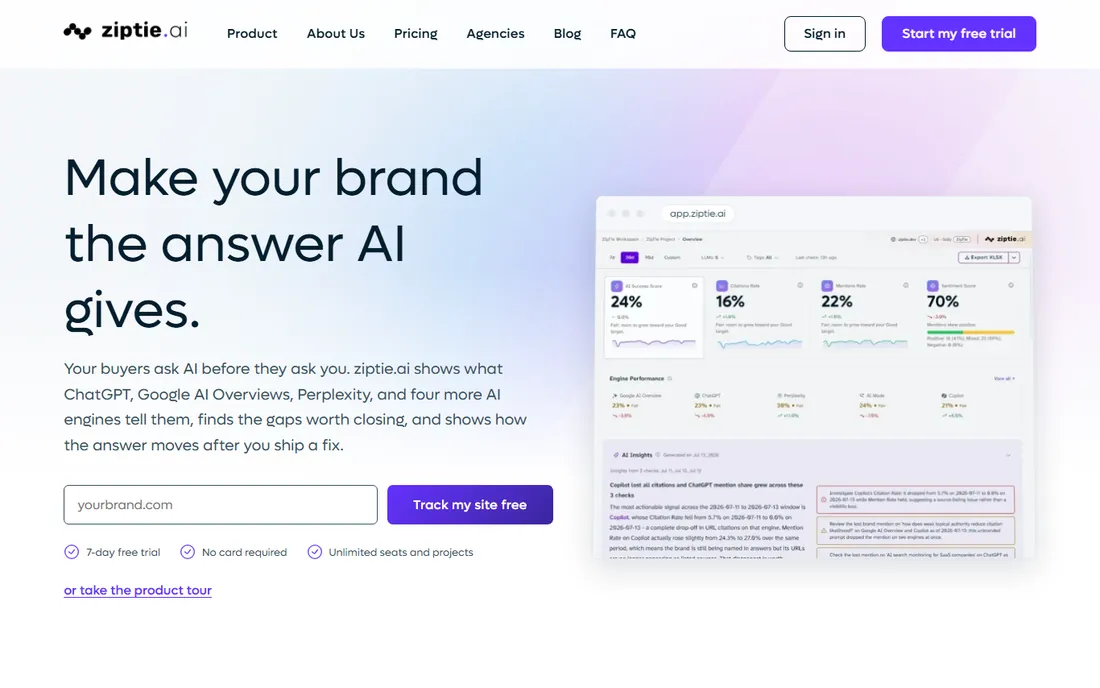
If you only need occasional AI visibility snapshots, ZipTie's pay-per-check model beats a monthly plan. About $0.01 per check means a thorough one-time audit costs less than a coffee, and the 7-day trial lets you test first. No subscription to cancel later.
Use cases are clear: baseline measurements, campaign bookends, or verifying a specific prompt after publishing new content. For infrequent needs, subscriptions are overkill and ZipTie knows it.
Continuous monitoring this is not. Teams that want weekly trends and alerts should buy a subscription tool instead. But for spot checks, the per-check pricing is the most economical option in this roundup.
What we like- Pay-per-check model suits occasional use
- 7-day trial available
- Cheapest way to spot-check AI visibility
Watch out for- Not a full continuous monitoring suite
- Costs scale with check volume
#3
Profound
Best for: Enterprises that want a dedicated AI search analytics platform
Visit tryprofound.com
Starting priceSee website
Free planNo
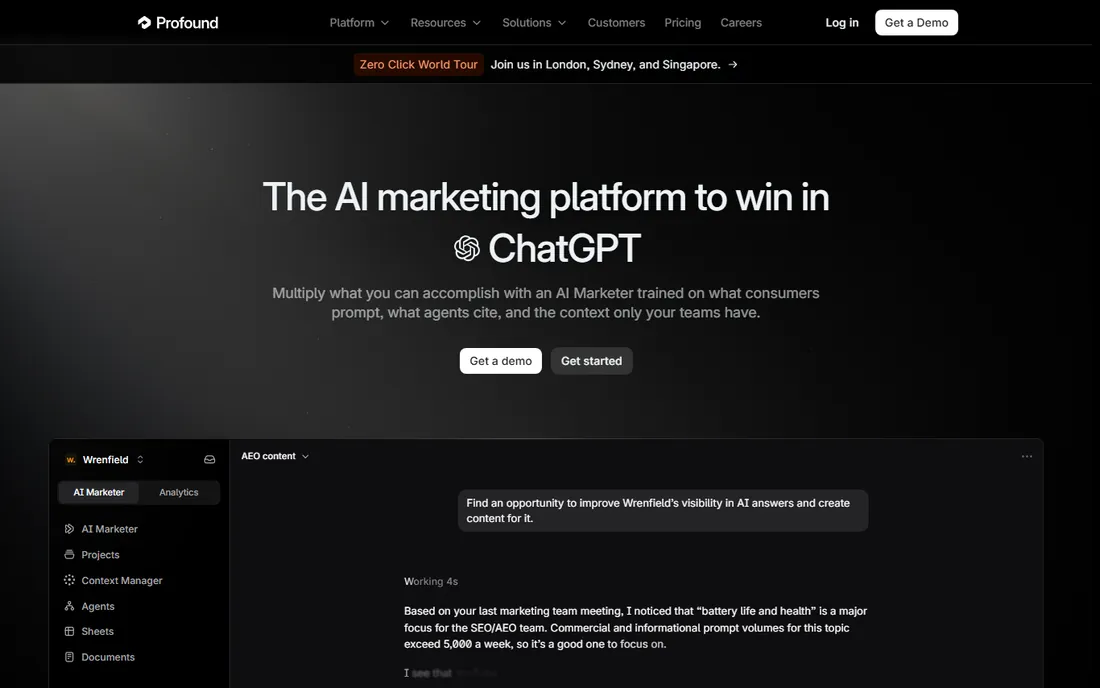
Large brands that need a defensible read on AI visibility tend to land on Profound. The platform was built for this single job, and it shows in details like prompt-level tracking, citation analysis and side-by-side competitor views. Reports are structured for stakeholders who do not live in SEO tools.
Setup revolves around your prompt list. You bring the questions your buyers ask, Profound monitors them across engines, and trends build over weeks. The longer you run it, the more useful the comparisons become.
The honest downside is cost and commitment. Quote-based pricing means you will talk to sales before you see a number, and the product assumes a team that will act on the data weekly. If that describes you, few tools go deeper on pure AI visibility.
What we like- Built specifically for tracking brand visibility inside AI answers
- Covers ChatGPT, Perplexity, Gemini and Copilot in one dashboard
- Sentiment and competitor comparison reports
Watch out for- Pricing is quote-based, which rules out smaller budgets
- Historical benchmarking is still thin in this new category
#4
OtterlyAI
Best for: Small teams that want affordable AI search monitoring
Visit otterly.ai
Starting price$29 per month
Free planNo
OtterlyAI takes the simplest possible approach to a confusing new channel. It watches what AI engines say about your brand and shows you the trend, without burying you in configuration. At $29 a month, it is priced for teams that are curious about AI visibility but not ready for an enterprise contract.
Coverage includes Google AI Overviews alongside the chatbots, which matters because AI Overviews sit directly in the search results your buyers already see. Tracking both in one place gives a fuller picture than chatbot-only tools.
You will not get the deep citation forensics or custom research of pricier platforms. But as a first AI visibility tool, OtterlyAI covers the essentials: are we mentioned, is it trending up, and how do we compare. For many small teams, that is enough.
What we like- Low entry price for the category
- Covers Google AI Overviews alongside chatbots
- Straightforward dashboards that need little training
Watch out for- Less analytical depth than enterprise platforms
- Smaller integration set for reporting pipelines
#5
Peec AI
Best for: Marketers who want readable AI visibility reports
Visit peec.ai
Starting priceSee website
Free planNo
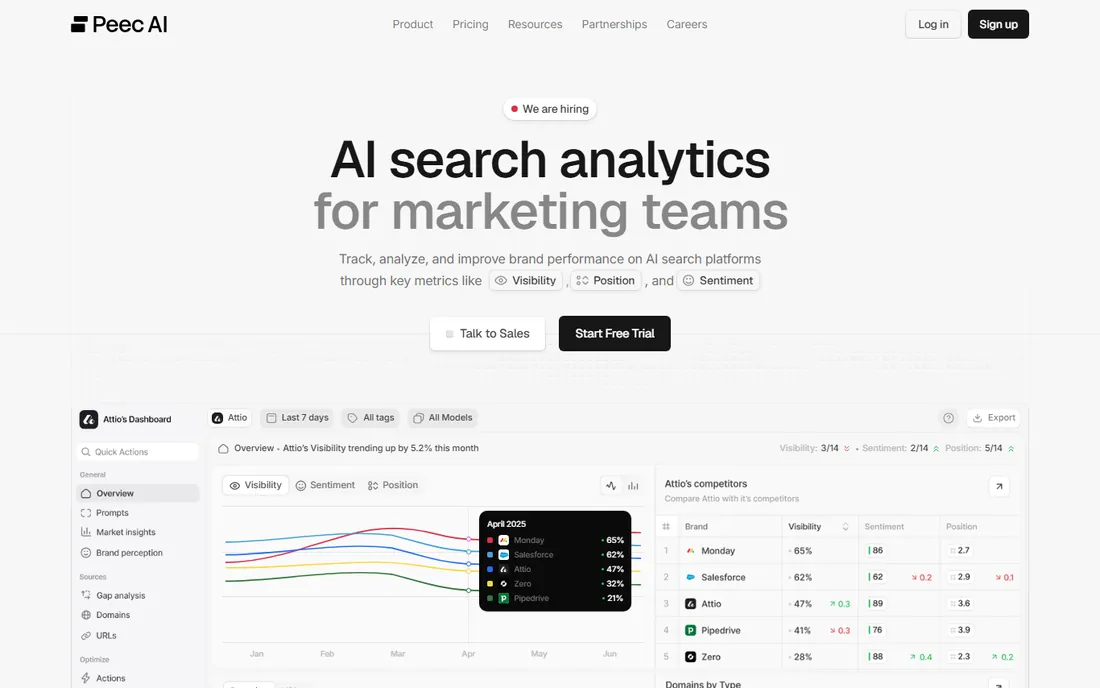
Marketing teams that want AI visibility data without a week of onboarding usually shortlist Peec AI. The product is deliberately narrow: track brand mentions across AI platforms, show how they trend, and flag changes worth attention. There is little to configure and little to misinterpret.
That simplicity helps when the report goes to people outside SEO. Founders, product marketers and PR teams can all read the same dashboard and understand whether AI visibility is improving.
The trade-off is scope. Peec does not try to be an SEO suite, so teams that want one tool for everything will need something broader. Pricing is quote-based, which adds friction for small buyers. Within its lane, though, it does the job well.
What we like- Multi-engine brand mention tracking
- Reports written for marketers, not analysts
- Quick setup with minimal configuration
Watch out for- Pricing is not published
- Fewer legacy SEO features than full suites
#6
Scrunch
Best for: Content teams that want monitoring plus publishing guidance
Visit scrunch.com
Starting priceSee website
Free planNo
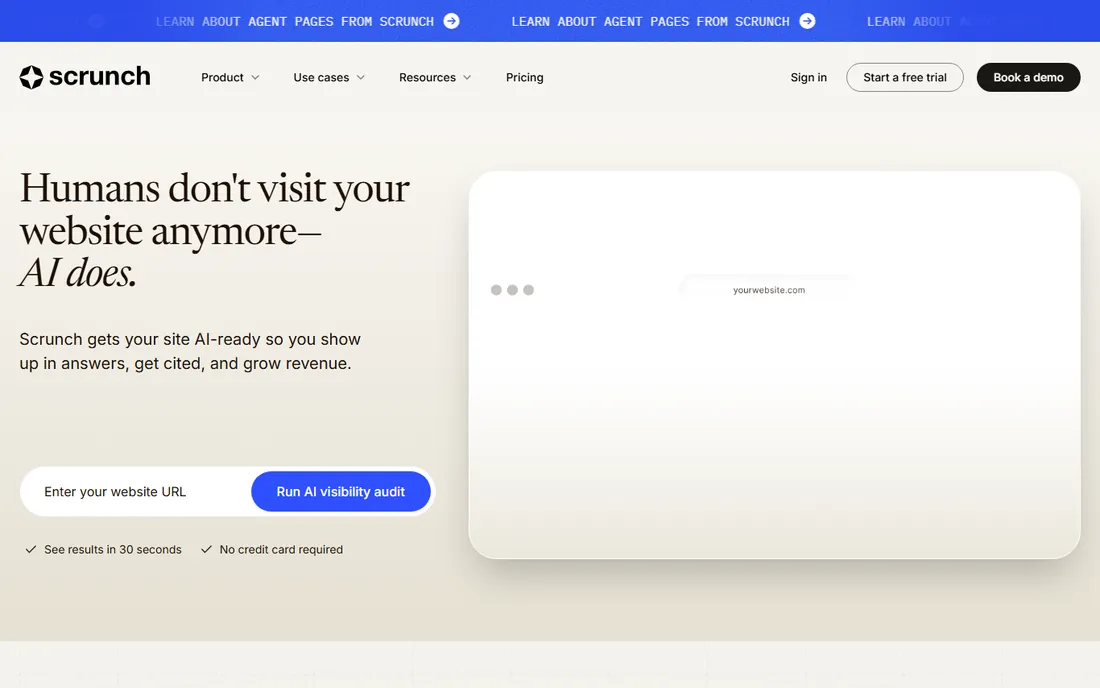
Scrunch sits between pure analytics tools and content platforms, which is a useful middle ground for editorial teams. You get AI visibility tracking across the major engines, plus recommendations that tie mentions back to your content. Few tools connect those two sides.
The reporting favors topics and pages over technical detail, so content strategists can use it directly. Trend views make it easy to show whether the publishing plan is moving AI visibility.
Pricing is not published, so expect a sales conversation. Simpler monitoring tools will be cheaper if you do not need the content guidance. For teams whose AI search play is editorial, though, Scrunch is one of the most practical options. Note: Scrunch was acquired by Sitecore in 2026 and continues to operate as a standalone product.
What we like- Combines visibility monitoring with content recommendations
- Multi-platform AI search tracking
- Useful for editorial and content-led teams
Watch out for- Pricing is not published
- Can be more than small teams need
#7
Ahrefs
Best for: SEO teams that want AI metrics inside their existing toolkit
Visit ahrefs.com
Starting priceBrand Radar custom prompts from $50 per month; AI Visibility Index from $199 per month
Free planNo
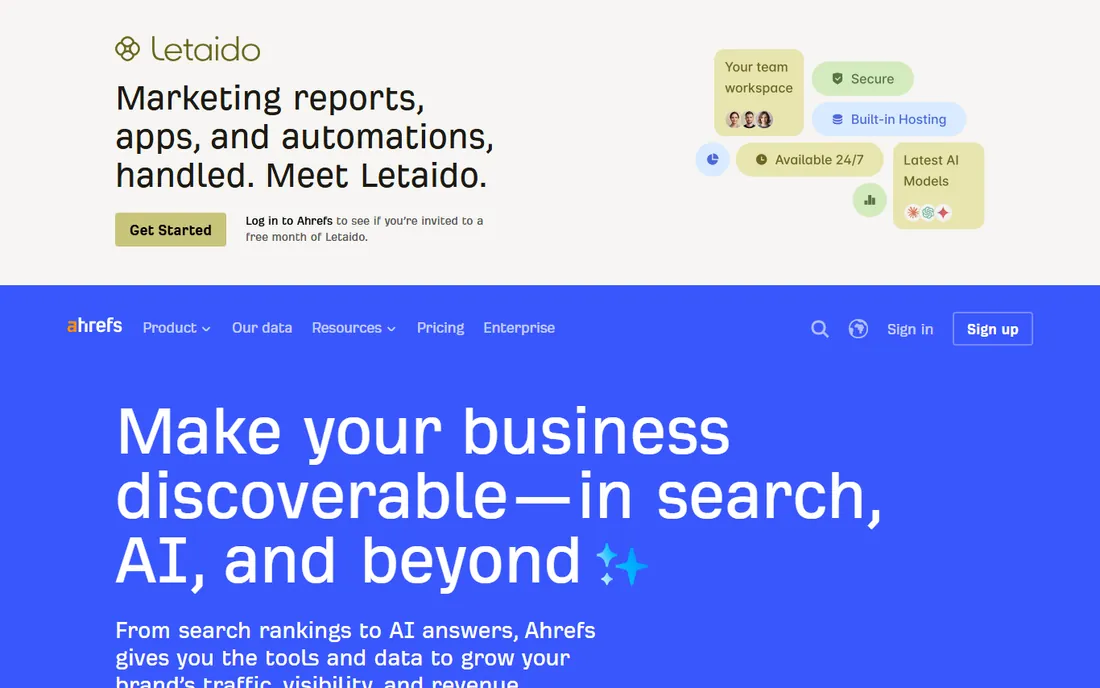
Ahrefs needs no introduction to SEOs, and its Brand Radar brings AI visibility into a dashboard teams already open daily. Instead of adding another standalone tool, you get AI mention tracking next to keywords, backlinks and content data. That consolidation is the whole pitch.
Brand Radar custom prompts start at $50 a month, while the fuller AI Visibility Index starts at $199. Both sit on top of a regular Ahrefs subscription, so this is a play for existing customers rather than a cheap entry point.
The advantage is context. Seeing AI mentions alongside the keyword and link data that likely drive them helps you diagnose changes faster. The downside is cost stacking. If you already pay for Ahrefs, the add-on is an easy yes. If not, a dedicated tracker may be cheaper.
What we like- Deep backlink and keyword data to pair with AI metrics
- Huge keyword database for context
- A dashboard SEO teams already open daily
Watch out for- AI features are add-ons on top of paid plans
- Total cost climbs quickly with add-ons
#8
Semrush
Best for: Agencies that want AI data next to PPC and SEO reports
Visit semrush.com
Starting priceSee website
Free planNo
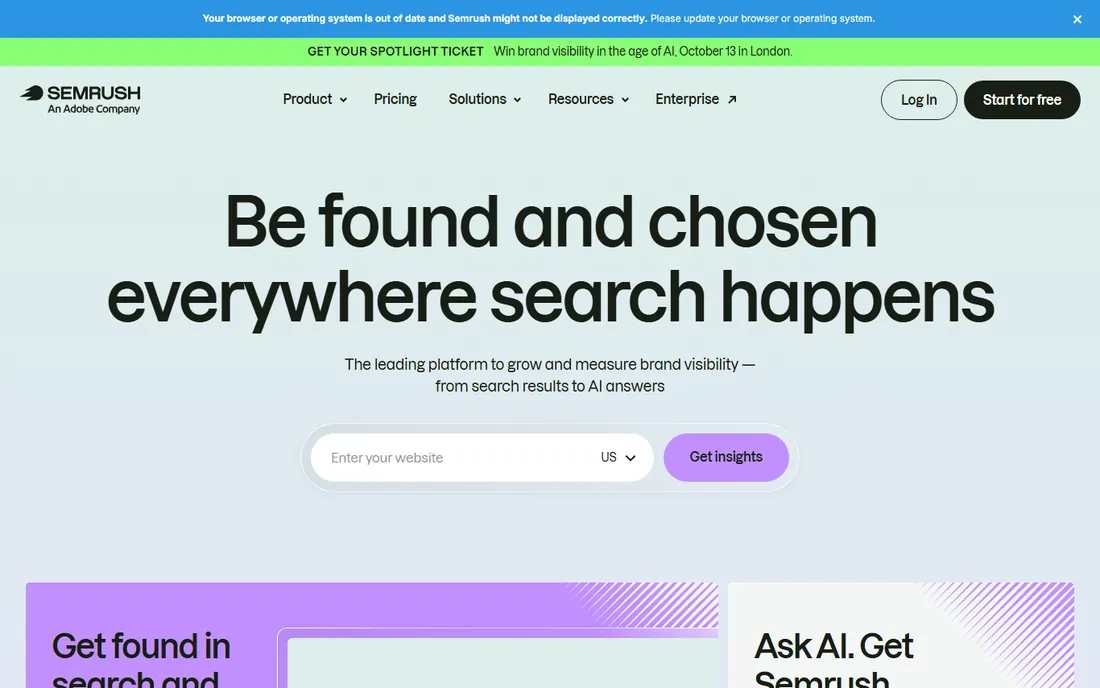
If your agency runs client SEO inside Semrush, adding its AI toolkit keeps reporting in one place. AI Overviews tracking and chatbot visibility sit next to position tracking and site audits, so monthly reports tell one story. That matters when clients ask what AI search means for them.
The suite advantage compounds. Keyword research, content optimization and now AI visibility share the same data, which makes recommendations more grounded. You are not guessing which pages drive AI mentions.
Newcomers should know the learning curve is real, and the price reflects the breadth. Teams that only need AI tracking can spend less elsewhere. But for Semrush shops, the AI toolkit is the obvious next step. Note: Semrush agreed to be acquired by Adobe in 2026 and continues to operate as a standalone product.
What we like- All-in-one suite covering SEO, PPC and content
- AI Overviews tracking included in the toolkit
- Large keyword and ad databases for context
Watch out for- Pricing climbs with add-ons and higher tiers
- Dashboard can overwhelm newcomers
Starting priceSee website
Free planNo
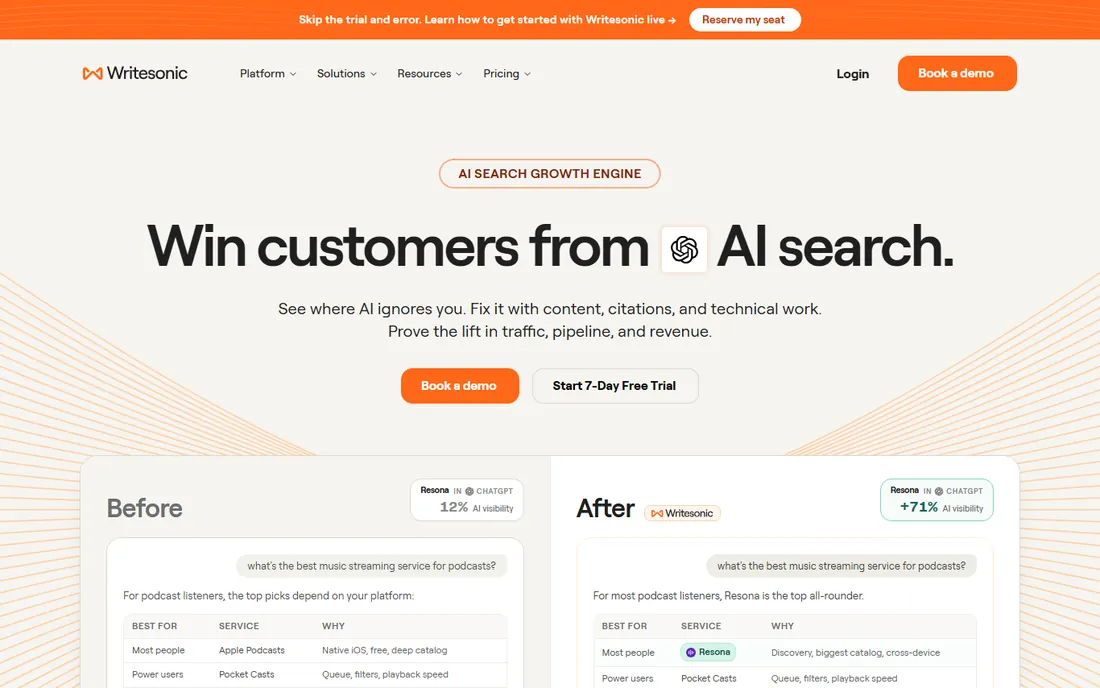
Writesonic is the content marketer's route into AI search data, since tracking sits next to the writing tools. The platform monitors AI visibility as part of a broader AI marketing suite, which suits teams that think in content campaigns rather than SEO metrics.
That framing helps adoption. Writers and content strategists engage with visibility data when it lives beside their drafts, not in a separate analytics tool they never open.
Depth and pricing clarity are the caveats. Dedicated trackers analyze more, and Writesonic's plans reward close reading. But as a content-first path to AI visibility, it makes sense for its audience.
What we like- Pairs visibility tracking with AI content generation
- Familiar to content marketers
- Wide set of AI marketing features
Watch out for- Less analytical depth than pure tracking platforms
- Pricing tiers can be confusing
Starting priceSee website
Free planNo
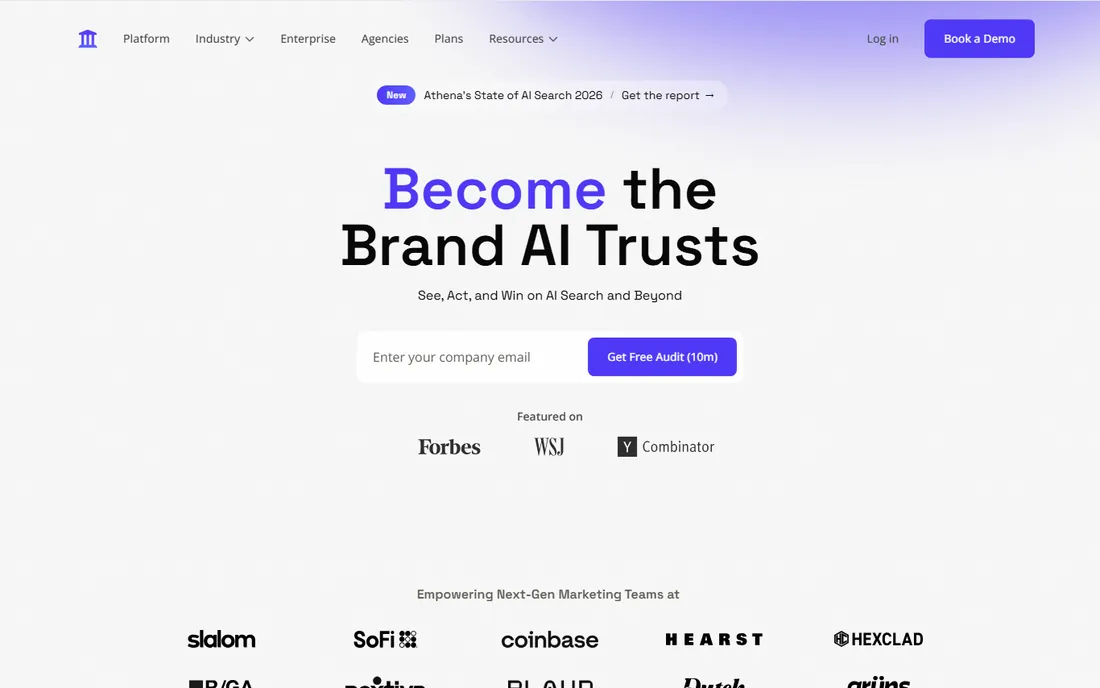
AthenaHQ is a dedicated AI search visibility platform with a clean, marketer-friendly dashboard. The product tracks brand mentions across AI engines and presents them without the clutter of a full SEO suite. Setup is fast, which suits teams that need data quickly.
The interface favors readability over raw data. Trend lines and mention summaries dominate, so weekly checks take minutes and monthly reports practically write themselves.
As a newer product, AthenaHQ has less social proof than established players, and third-party reviews are thin. Pricing is not prominently published either. Buyers should trial it hands-on, but the core tracking experience is solid.
What we like- Dedicated AI search visibility tracking
- Clean, marketer-friendly dashboard
- Fast setup
Watch out for- Newer product with limited track record
- Few third-party reviews to validate claims
How we chose
Our method was straightforward: read the pricing pages, study the documentation, and compare what users report on G2, Capterra, and Reddit. We looked for tools that genuinely serve the category, mixed established names with strong specialists, and noted where pricing or features fell short. No sponsored placements and no invented test results.
Common mistakes teams make with AI search data
The first mistake is tracking too few prompts. Ten generic prompts produce noise; a hundred specific buyer questions produce signal. Build your prompt list from sales calls, support tickets, and keyword research, not from guesswork.
The second is skipping the baseline. Without a starting measurement, you cannot tell whether a change is a trend or a blip. Run at least a month of tracking before drawing conclusions.
The third is ignoring sentiment and context. Appearing in an answer that criticizes you is not a win. Read the actual mentions, not just the counts, and pair visibility data with the content work that drives it.
AI visibility buying checklist
Use this checklist on every demo. One, engine coverage: which AI platforms are monitored and how frequently. Two, prompt control: can you add your own prompts or only use presets. Three, history and trends: how far back does data go, and can you export it.
Four, analysis depth: sentiment scoring, citation tracking, and competitor comparison, not just mention counts. Five, alerting: will it tell you when visibility drops. Six, integrations and API access for your reporting stack.
Seven, pricing transparency: flat published pricing versus quote-based deals, and what drives the cost up. Eight, contract terms: monthly options beat annual lock-in for a category this new. Score each vendor and the winner usually becomes obvious.
Frequently asked questions
Which AI engines do these tools track?
Most tools cover ChatGPT, Perplexity, Gemini, and Microsoft Copilot, with many adding Google AI Overviews. Coverage varies, so check the specific list before buying. If your buyers use a particular engine heavily, confirm it is monitored.
How much does AI visibility software cost?
Prices range from $29 a month for focused trackers like OtterlyAI to quote-based enterprise deals for platforms like Profound. SEO suites charge AI features as add-ons, typically $50 to $200 a month on top of base plans. Expect to pay more for deeper analysis and competitor tracking.
Can I track AI visibility for free?
Free options are limited. Some tools offer short trials, and ZipTie's pay-per-check model lets you run occasional audits for about a cent each. For continuous monitoring, though, expect a paid subscription. The category is too new for mature free tiers.
How long before I see useful trend data?
Plan for at least a month of tracking before drawing conclusions. AI answers fluctuate, so early readings are noisy. After four to eight weeks of consistent prompts, trends become meaningful and you can start correlating changes with your content and PR activity.
Do these tools work for local businesses?
They can, but prompt design matters more. Local visibility depends on location-specific prompts, such as best dentist in Austin, rather than generic category questions. Check that the tool supports location-based prompting before buying for local use.
Sources we checked (10)
- https://cituna.com/
- https://ziptie.ai/
- https://tryprofound.com/
- https://otterly.ai/
- https://peec.ai/
- https://scrunch.com/
- https://www.ahrefs.com/
- https://www.semrush.com/
- https://writesonic.com/
- https://athenahq.ai/
Is your product missing or out of date?
We review this list regularly. Vendors can request a listing, send updated pricing or ask about featured placement.

Shihab Mia · Founder, Rankite
Shihab has spent more than a decade helping SaaS and e-commerce brands grow through search. He writes Rankite's software buying guides from pricing pages, documentation and public user reviews. More about Shihab.