How we make this list: we compare pricing pages, product documentation and public user reviews. Rankite is independent; if a vendor ever pays for a featured spot, that listing is clearly labeled Partner.
Key takeaways
- Semrush and Ahrefs are the all-in-one platforms for automated SEO workflows.
- Surfer, Clearscope, Frase, and MarketMuse automate content optimization.
- Screaming Frog automates technical audits at any scale.
- Rank Math automates on-page SEO inside WordPress.
- Free tiers exist; start there before buying the suite.
What SEO automation can and cannot do
SEO automation tools handle the repetitive work: crawling sites for technical issues, tracking rankings daily, monitoring backlinks, generating content briefs, and producing client reports on schedule. They do not replace strategy, judgment, or the relationships behind link building.
The category splits into suites that do everything adequately and specialists that do one thing excellently. Most SEO teams end up with one suite plus two or three specialists. The comparisons below cover both, with honest notes on where automation stops and human work begins.
Pricing ranges from free to several hundred per month. Trials and free tiers are common.
Starting priceSee website
Free planTrial available
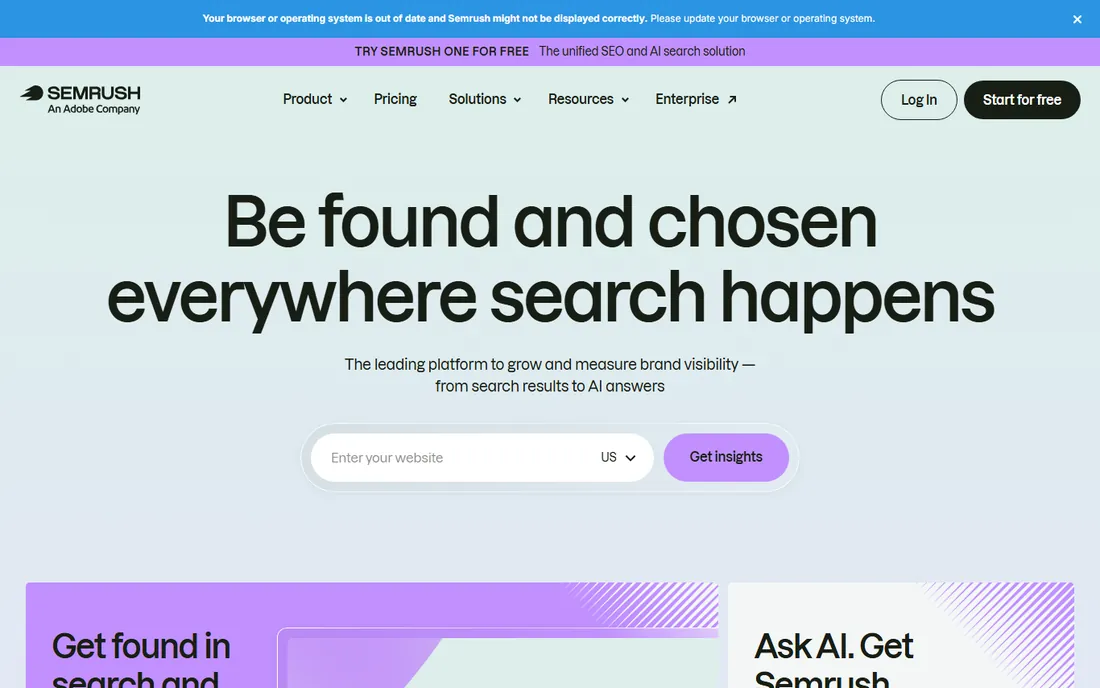
Semrush automates the full SEO workflow: scheduled site audits with prioritized fixes, daily rank tracking, backlink monitoring with toxic link alerts, and content tools that score drafts against top-ranking pages. The automation breadth is the selling point.
Agencies like the white-label reporting and client management features. The keyword database is among the largest, which improves research quality.
Costs climb quickly with usage limits, and beginners drown in features. For teams wanting one automated platform, it is the most complete.
What we like- Huge feature set
- Automated site audits
- Good keyword and content tools
- Regular new features
Watch out for- Expensive at higher tiers
- Interface overwhelming
- Data limits frustrate heavy users

#2
Ahrefs
Best for: Backlink and content automation with great data
Visit ahrefs.com
Starting priceSee website
Free planTrial available
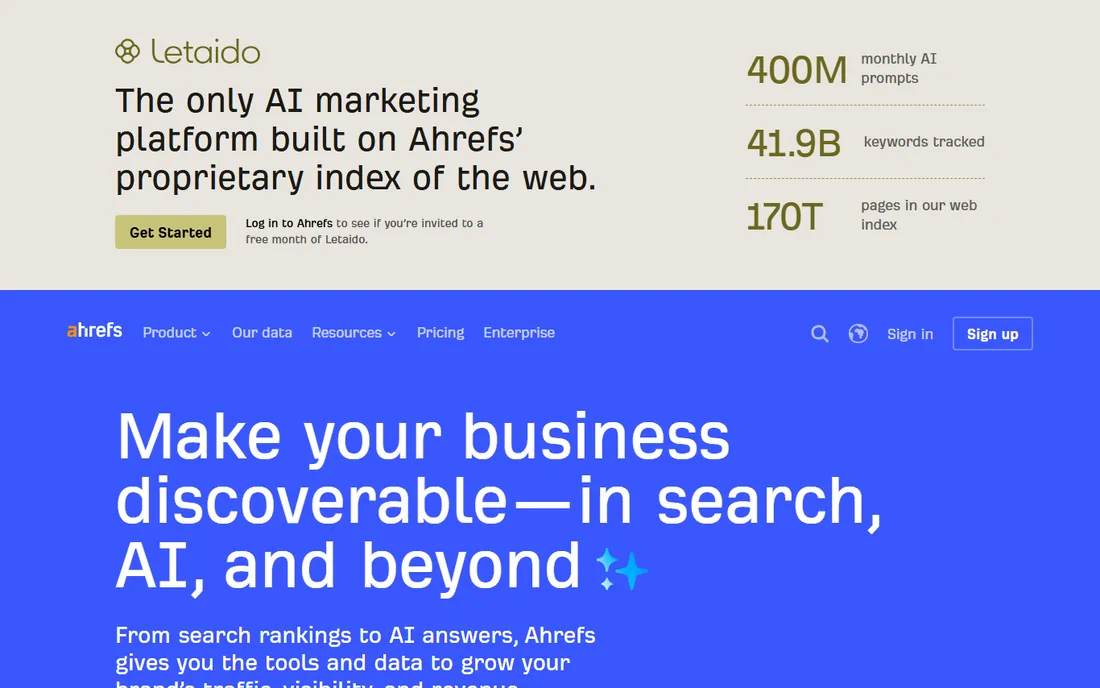
Ahrefs built its reputation on backlink data, and its automation covers the essentials: scheduled crawls with health scores, new and lost backlink alerts, content gap analysis, and rank tracking. The data quality keeps professionals loyal.
Site Audit is genuinely good at prioritizing technical issues by impact. The interface stays usable despite the depth, which matters for daily work.
Pricing is premium and the credit system needs watching. For link-focused SEO with automation, Ahrefs is the professional standard.
What we like- Best backlink index
- Excellent Site Audit
- Clean interface
- Reliable rank tracking
Watch out for- Expensive
- No proper free tier historically
- Credit-based pricing confuses some
Starting priceSee website
Free planTrial available
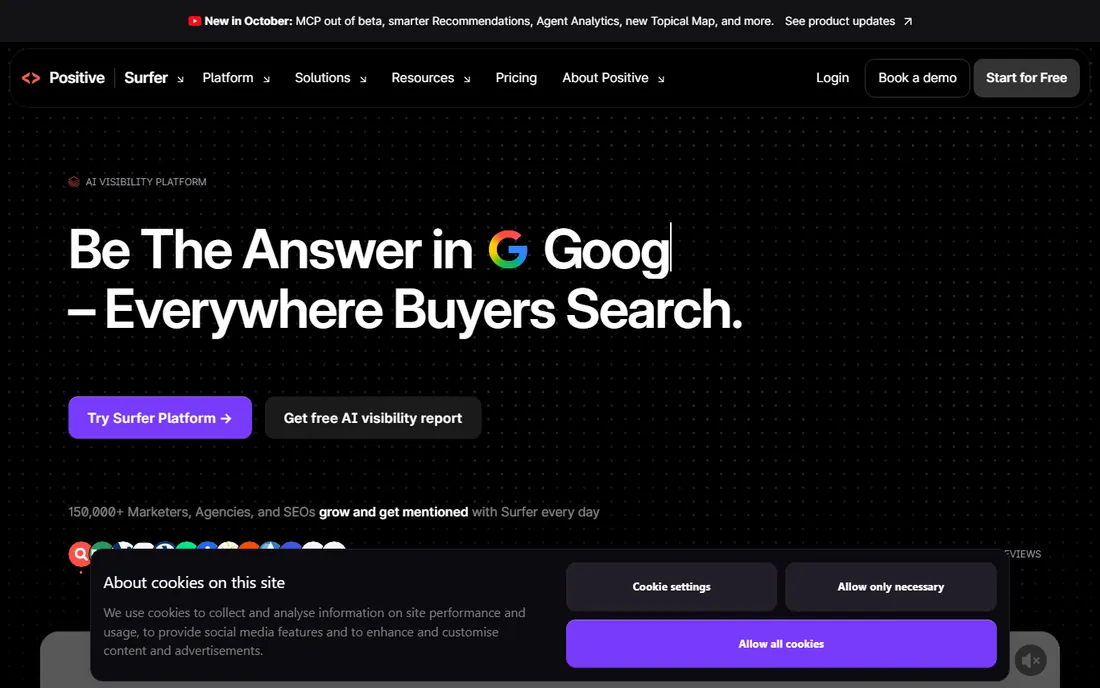
Surfer automates on-page optimization: analyze the top-ranking pages for a keyword, get a target score with term suggestions, and write in an editor that scores your draft live. Writers produce better-optimized content without SEO training.
The audit feature scores existing pages and suggests fixes. Integrations with WordPress, Jasper, and Google Docs fit real workflows.
It does one thing, so pair it with a suite or crawler. For content teams, the automation of briefs and optimization is excellent value.
What we like- Excellent content editor
- Clear optimization scores
- Good SERP analysis
- Easy for writers
Watch out for- Narrow focus
- Credit costs add up
- Needs a broader toolkit alongside
Starting priceSee website
Free planNo, demo available
Clearscope serves enterprise content teams with research-grade content optimization: term recommendations derived from serious NLP analysis, presented in reports writers understand. Large publishers standardize on it.
The quality of recommendations exceeds cheaper rivals, which matters when content budgets are large. Integrations with common CMS and docs tools keep workflows smooth.
Per-credit pricing makes heavy use expensive. For enterprise content at scale, the quality justifies it; smaller teams should compare Surfer and Frase.
What we like- High-quality recommendations
- Trusted by enterprise content teams
- Clean reports
- Good integrations
Watch out for- Expensive per-credit pricing
- Narrow focus
- Overkill for small blogs
Starting priceSee website
Free planYes, free for up to 500 URLs
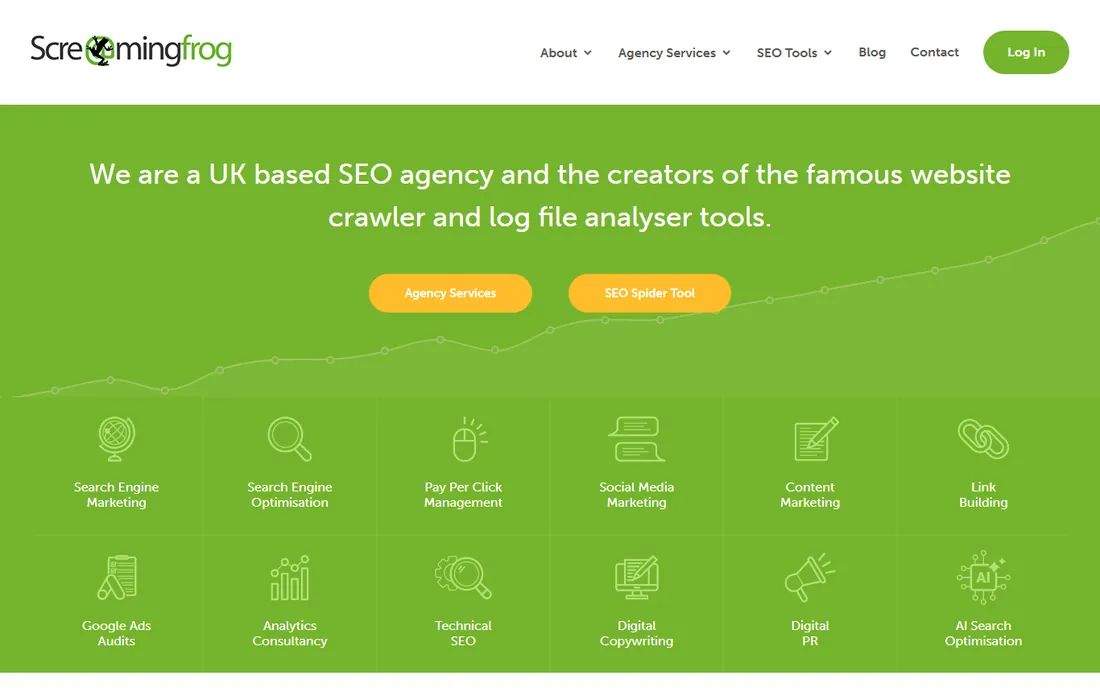
Screaming Frog is the technical SEO's crawler: point it at a site and get every URL, status code, redirect chain, and on-page element in a sortable table. The free version crawls 500 URLs, enough for small sites.
The paid license removes crawl limits and adds scheduling plus integrations with PageSpeed and analytics APIs. It finds the technical issues that suites summarize but rarely explain.
It is a tool, not a platform: you interpret the data. For technical audits, nothing automates discovery better.
What we like- Deepest crawl data
- One-time license option
- Fast and reliable
- Trusted by technical SEOs
Watch out for- Desktop software, not cloud
- Interface intimidating
- Reporting needs export
#6
Frase
Best for: Affordable AI-assisted content workflows
Visit frase.io
Starting priceSee website
Free planTrial available
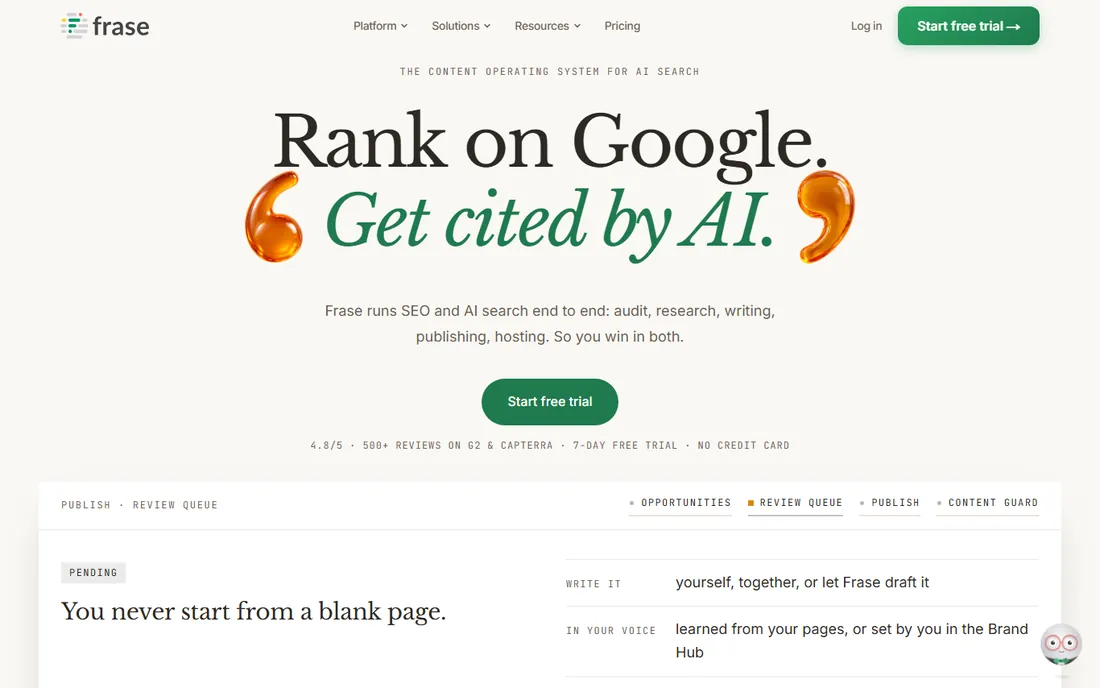
Frase automates content research and drafting assistance at prices small teams afford: generate briefs from SERP analysis, get optimization guidance, and draft with AI help. Bloggers and small agencies get enterprise-style workflows cheaply.
The brief quality punches above the price, and the interface stays approachable. It is the value pick in content optimization.
Heavy users may miss Surfer's or Clearscope's depth. For affordable content automation, Frase is the smart buy.
What we like- Affordable
- Good content briefs
- AI writing assistance
- Easy for small teams
Watch out for- Data depth trails leaders
- AI quality varies
- Smaller company
Starting priceSee website
Free planTrial available
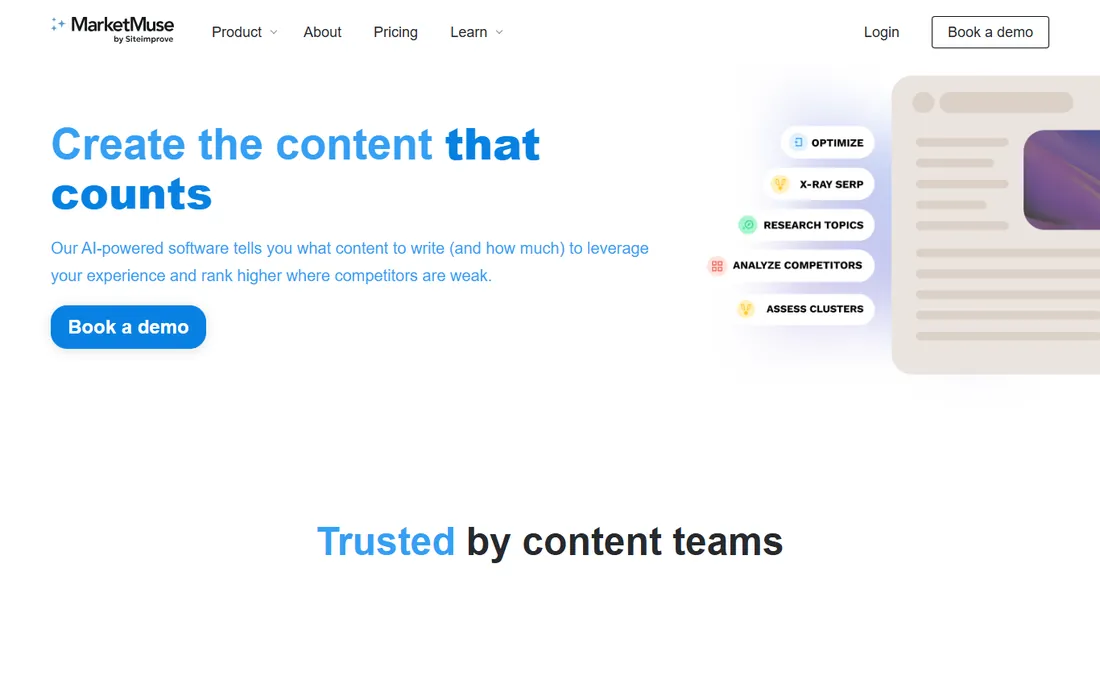
MarketMuse automates content strategy: inventory your existing content, find topical gaps against competitors, and prioritize what to write for authority. Large publishers use it to plan coverage systematically.
The topic models go deeper than keyword tools, measuring authority rather than just terms. Content briefs and optimization follow from the strategy.
Pricing and complexity suit serious publishers. Small blogs should start with Surfer or Frase and graduate when strategy becomes the bottleneck.
What we like- Strong topic modeling
- Content inventory analysis
- Good for strategy
- Trusted by large publishers
Watch out for- Expensive
- Learning curve
- Overkill for small sites
Starting priceFree
Free planYes, free plan available
Rank Math automates WordPress on-page SEO: meta titles, schema markup, XML sitemaps, redirections, and instant indexing, much of it free. The setup wizard configures best practices in minutes.
The free version covers what most sites need, with pro adding rank tracking and advanced schema. For WordPress sites, it replaces several plugins at once.
It is WordPress-only, and the upsells are persistent. But on value, the free tier is the best deal in SEO software.
What we like- Generous free version
- Automates meta, schema, and sitemaps
- Easy setup
- Active development
Watch out for- WordPress only
- Upsell pressure
- Can conflict with other plugins
Quick comparison
| Tool | Best for | Starting price | Free plan |
|---|
 Semrush Semrush | All-in-one automated SEO workflows | See website | Trial available |
| Ahrefs | Backlink and content automation with great data | See website | Trial available |
 Surfer Surfer | Automating content optimization | See website | Trial available |
 Clearscope Clearscope | Enterprise content optimization workflows | See website | No, demo available |
 Screaming Frog Screaming Frog | Technical SEO audits at any scale | See website | Yes, free for up to 500 URLs |
| Frase | Affordable AI-assisted content workflows | See website | Trial available |
 MarketMuse MarketMuse | Content strategy automation for serious publishers | See website | Trial available |
 Rank Math Rank Math | Automating on-page SEO in WordPress | Free | Yes, free plan available |
Is your product missing or out of date?
We review this list regularly. Vendors can request a listing, send updated pricing or ask about featured placement.
How we chose
We selected tools with real automation products and SEO professionals using them daily. We looked for genuine time savings: scheduled audits, automated reporting, and content workflows that reduce manual work.
We covered suites and specialists because real stacks combine both. We weighed data quality, since automation on bad data misleads, and checked trial availability. Vendor claims were checked against documentation and pricing pages.
Building your SEO automation stack
Start with the foundation: a suite like Semrush or Ahrefs for audits, tracking, and research, plus Screaming Frog for deep technical crawls. Add a content optimizer, Surfer, Frase, or Clearscope, when content becomes the bottleneck.
Automate reporting early; scheduled client reports save hours monthly. But keep humans on strategy, link outreach, and final content judgment. Automation handles the repetitive 80 percent; the valuable 20 percent stays human.
SEO automation mistakes
The most common mistake is automating reporting nobody reads. Teams build elaborate dashboards that nobody opens, then keep paying for the data. Before automating any report, confirm who reads it and what decision it informs. Kill the rest.
Second, trusting audit scores blindly. Automated audits flag hundreds of issues ranked by generic severity, but not every warning matters for your site. Learn which issues actually affect rankings and traffic, fix those first, and ignore the noise. An audit is a starting list, not a work plan.
Third, automating content without quality control. AI briefs and optimization scores produce competent, forgettable content at scale. The sites that win combine automation for research with human judgment for angle, depth, and originality. Publish less, better.
Fourth, rank tracking without context. Daily rank fluctuations cause panic over noise. Track weekly trends, segment by intent and page type, and always pair rankings with traffic and conversions. Rankings are a means; revenue is the end.
Finally, setting and forgetting monitors. Backlink alerts, uptime checks, and content decay reports only help when someone acts on them. Assign owners to every alert type and review the queue weekly. Automation surfaces opportunities; humans capture them.
Frequently asked questions
Can SEO be fully automated?
No. Audits, tracking, and reporting automate well, but strategy, content quality judgment, and relationship-based link building need humans. Use automation for scale, and keep humans on judgment.
Which tool is best for beginners?
Semrush for the all-in-one path, or Rank Math plus Screaming Frog free for the budget path. Both teach the fundamentals while automating the busywork.
How much should we spend on SEO tools?
Freelancers can start free to $100 monthly. Agencies typically spend several hundred monthly across a stack. Enterprise teams spend thousands. Match spend to revenue the SEO work supports.
Do these tools work for local SEO?
Semrush, Ahrefs, and BrightLocal-style tools cover local tracking. The general automation here applies, with local rank tracking and listing management as additions.
Will AI content tools hurt our rankings?
AI-assisted content that is genuinely helpful performs fine; mass-produced thin content does not. Use tools like Surfer and Frase for optimization, and keep humans responsible for quality.
How long until SEO automation shows results?
Automation shows efficiency results immediately: audits run faster, reports write themselves, content briefs take minutes. Ranking and traffic results follow the normal SEO timeline of three to six months, because automation accelerates execution, not Google's evaluation. Set expectations accordingly: measure the tool on hours saved in month one and on organic growth from quarter two onward. Teams that expect rankings in weeks blame the tool for a timeline problem.
Should agencies white-label SEO tool reports for clients?
Usually yes, with judgment. White-labeled reports present your agency professionally and keep clients focused on insights rather than tool brands. But do not hide the methodology entirely; sophisticated clients respect transparency about data sources. Most suites above support white labeling on appropriate tiers. The best practice: branded reports, honest methodology notes, and your own analysis on top. The tool provides data; the agency provides the thinking clients pay for.
The best setups pair automation for data collection with human judgment for strategy, and that balance rarely needs changing.
Revisit your automation setup quarterly, retire what nobody uses, and keep the workflows that genuinely save time and improve quality.
Sources we checked (0)
Is your product missing or out of date?
We review this list regularly. Vendors can request a listing, send updated pricing or ask about featured placement.

Shihab Mia · Founder, Rankite
Shihab has spent more than a decade helping SaaS and e-commerce brands grow through search. He writes Rankite's software buying guides from pricing pages, documentation and public user reviews. More about Shihab.