How we make this list: we compare pricing pages, product documentation and public user reviews. Rankite is independent; if a vendor ever pays for a featured spot, that listing is clearly labeled Partner.
Key takeaways
- Most RCM platforms are sold on custom quotes, so the table says "See website" for pricing across the board; the one exception is Availity, whose Essentials provider portal is free.
- The list splits into two camps: pure software platforms (Waystar, FinThrive, Experian Health, Availity) and vendors that pair software with their own people (R1, Conifer, AGS Health, TruBridge, Optum). Decide which camp you are buying before comparing features.
- Small and mid-size practices should start with athenahealth (bundled with the EHR) or Availity (free claims and eligibility connectivity); the enterprise platforms only make sense at hospital scale.
- Rural and community hospitals get a dedicated option in TruBridge, built for their staffing and budget reality.
Quick comparison
| Tool | Best for | Starting price | Free plan |
|---|
 Waystar Waystar | Hospitals and health systems wanting one end-to-end cloud RCM platform | See website (custom quote) | No |
 R1 RCM R1 RCM | Large health systems wanting a full operating partnership, not just software | See website (custom quote) | No |
 Experian Health Experian Health | Hospitals and practices wanting data-first denial and contract tools | See website (custom quote) | No |
 athenahealth athenahealth | Ambulatory practices wanting EHR and RCM from one vendor | See website (custom quote) | No |
 FinThrive FinThrive | Health systems wanting modular RCM tech on their existing stack | See website (custom quote) | No |
 Optum Optum | Large systems wanting AI-driven RCM plus advisory services | See website (custom quote) | No |
 Conifer Health Solutions Conifer Health Solutions | Hospitals and health systems open to outsourcing the revenue cycle | See website (custom quote) | No |
 Availity Availity | Providers and billing teams needing payer connectivity and claims flow | See website (Essentials portal free for providers) | Yes (Essentials portal free for providers) |
 AGS Health AGS Health | Health systems and large practices wanting tech-enabled RCM services | See website (custom quote) | No |
 TruBridge TruBridge | Rural and community hospitals needing RCM plus EHR | See website (custom quote) | No |
Is your product missing or out of date?
We review this list regularly. Vendors can request a listing, send updated pricing or ask about featured placement.
The top RCM software
Walk into any hospital billing office and you will find the same scene: a team of smart people losing hours to claim status checks, denial rework and eligibility calls that software should have handled. Revenue cycle management software exists to take that work off their plates, from the first insurance check to the last collected dollar.
The market divides cleanly. Some vendors sell cloud platforms you license and run with your own staff. Others bring their own people, either fully outsourcing your billing or working beside your team. Both call themselves RCM software, and the price difference is enormous, so the first decision is structural, not technical.
These ten vendors cover the real market, from the national platforms used by thousands of hospitals to the specialist that serves rural facilities. Every price below is either published on the vendor's own page or marked "See website" where the vendor quotes custom.
#1
Waystar
Best for: Hospitals and health systems wanting one end-to-end cloud RCM platform
Visit waystar.com
Starting priceSee website (custom quote)
Free planNo
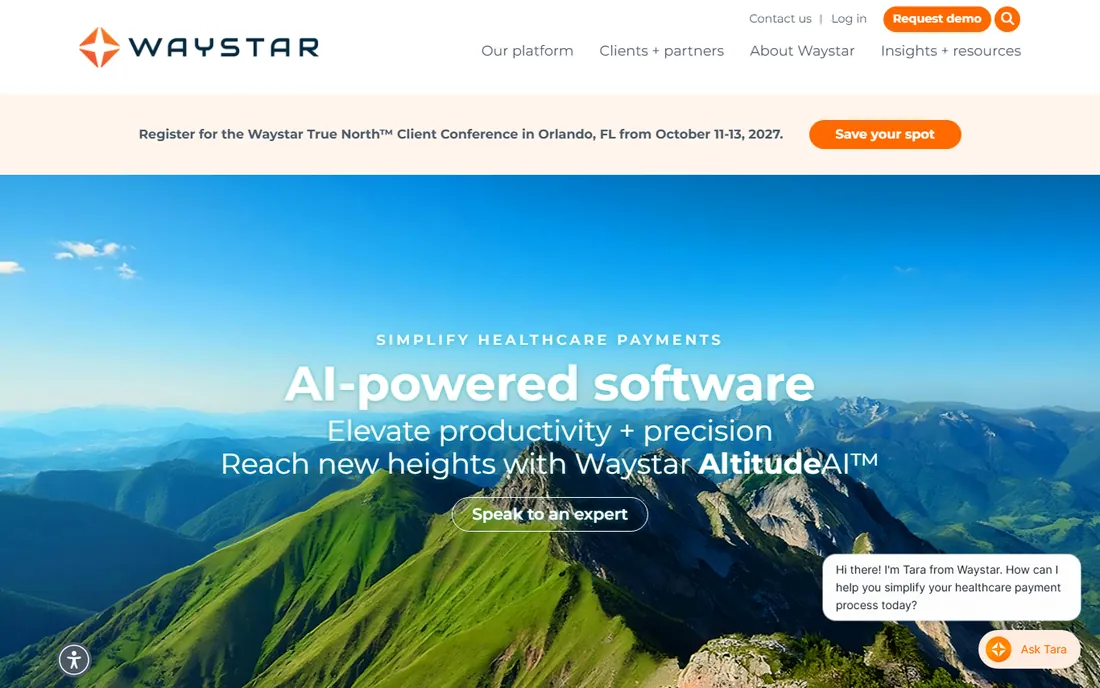
Waystar is the closest thing RCM has to a default platform. Formed from the Navicure and ZirMed merger and listed on NASDAQ in 2024, it now serves about 30,000 clients representing more than a million providers. Its pitch is consolidation: eligibility, prior authorization, claims, denials, patient payments and analytics in one login instead of five point tools stitched together.
The tradeoffs are the ones that come with scale. Nothing is published on price, and a ten-physician practice will find the sales process heavier than it needs. Where Waystar earns its place is the middle market and up: hospitals that want one vendor for the whole revenue cycle, with AI features like predictive denials baked into daily workflows.
What we like- A single cloud platform covering patient access, claims, denials, patient payments and analytics
- Public company with steady investment in AI (AltitudeAI) and automation
- Strong payer connectivity and a large installed base
Watch out for- Enterprise pricing with no public numbers, so budgeting starts with a sales conversation
- Breadth means smaller practices may pay for modules they never open
- Implementation timelines run long at health-system scale
#2
R1 RCM
Best for: Large health systems wanting a full operating partnership, not just software
Visit r1rcm.com
Starting priceSee website (custom quote)
Free planNo
R1 sells outcomes more than software. Taken private in 2024 in an $8.9 billion deal, the company positions itself as the operator of your revenue cycle: its people, automation and AI agents run patient access, coding, billing and collections, and it gets paid on performance. For a health system CFO, that shifts the conversation from license fees to net revenue yield.
That model only fits one buyer profile. R1 works with about 1,000 providers, including 95 of the top 100 US health systems. A community hospital or a large physician group is the floor; anything smaller should look elsewhere. The upside at scale is real: automation trained on hundreds of millions of transactions, an AI lab building coding agents, and denials worked by specialists instead of your short-staffed billing office.
What we like- Operates the revenue cycle for you with a performance-based commercial model
- Enormous scale (1,000 providers, 270M+ payer transactions a year) feeds its automation
- Repeated Best in KLAS recognition across RCM categories
Watch out for- Built for large systems, not small practices
- Partnerships are deep and long, which makes switching vendors painful
- Pricing reflects a premium managed-services model
#3
Experian Health
Best for: Hospitals and practices wanting data-first denial and contract tools
Visit experian.com
Starting priceSee website (custom quote)
Free planNo
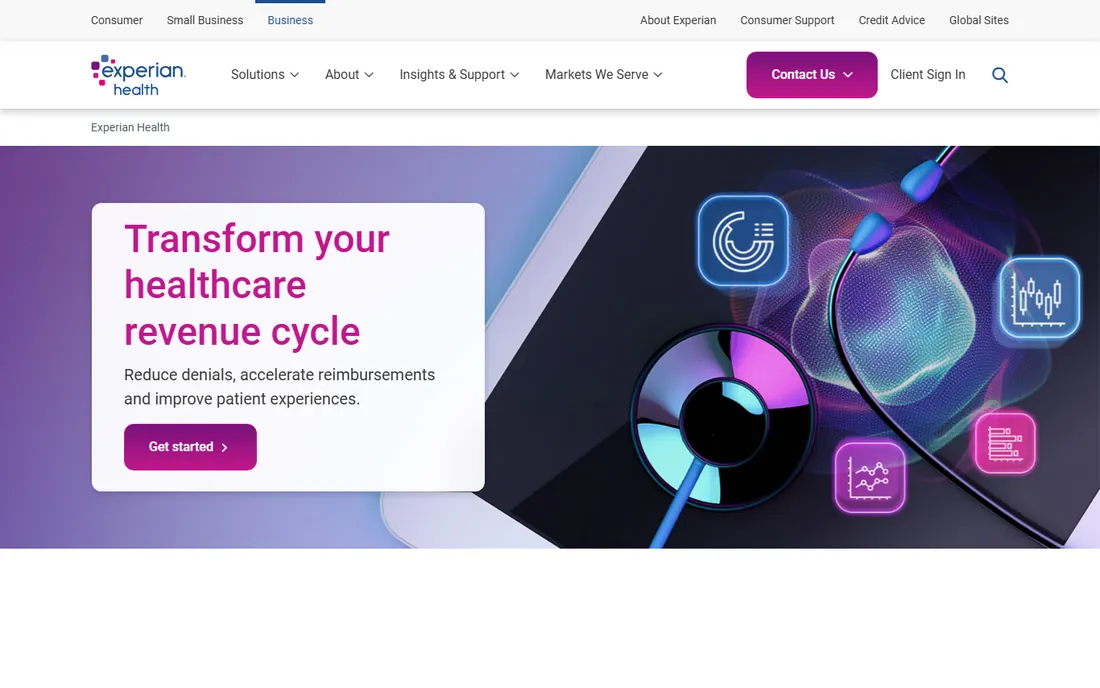
Experian Health comes at the revenue cycle sideways, through data. Where competitors start with claims workflows, Experian starts with knowing who the patient is, what coverage they actually have and what the payer contract allows. That shows up in coverage discovery that finds insurance the patient forgot to mention, prior authorization automation, and contract modeling that prices a payer deal before you sign it.
The company says it serves more than 60 percent of US hospitals plus thousands of practices, labs and pharmacies, and its claims management and clearinghouse products have taken Best in KLAS honors. The honest limitation is overlap: if you already run a clearinghouse and an eligibility vendor, you will duplicate some spend before you consolidate. Buy Experian for the data layer and the denial prevention, and make the vendor map exactly which existing tools each module replaces.
What we like- Data assets from the broader Experian business strengthen eligibility, coverage discovery and patient estimates
- AI Advantage modules target denials with measurable results
- Strong contract management for payer negotiations
Watch out for- Pricing is custom and the product catalog is wide, which complicates scoping
- Some modules overlap with clearinghouse functions you may already pay for
- Implementation needs IT involvement to connect data feeds
Starting priceSee website (custom quote)
Free planNo
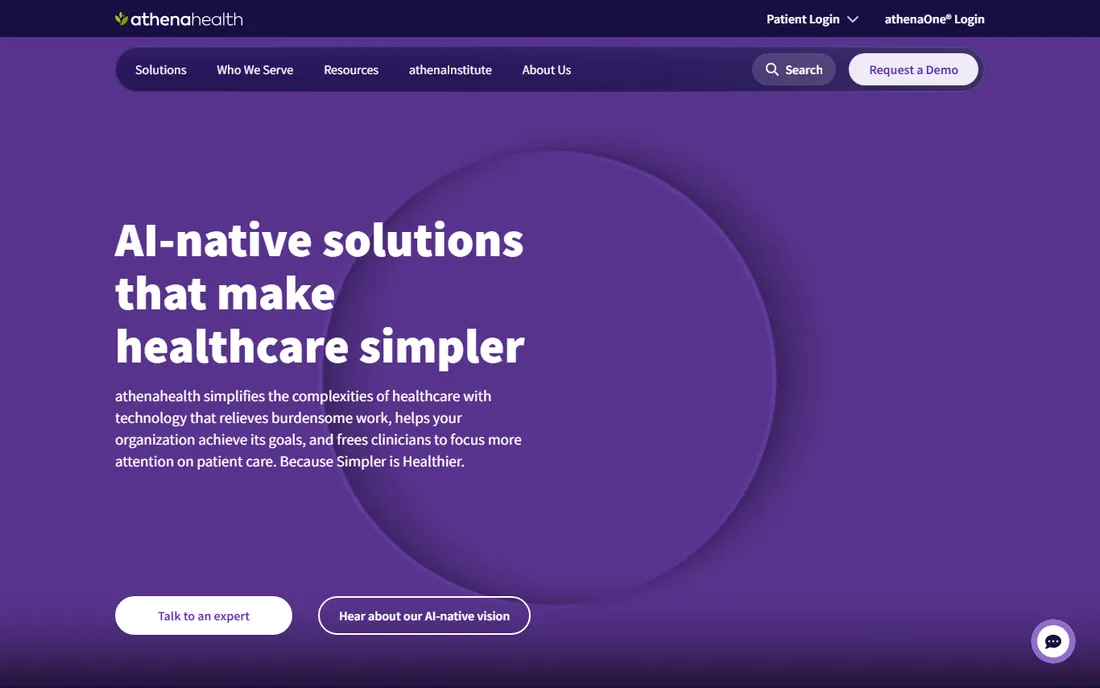
athenahealth is the only name here that starts with the clinical chart. Its athenaOne platform combines the EHR, patient engagement and revenue cycle into one cloud service, and the RCM half benefits directly: coders work from the same documentation the physician just wrote, denials get worked with clinical context attached, and the company backs the whole thing with its own billing staff on higher service tiers.
That integration is also the lock-in. athenahealth does not sell standalone RCM to hospitals on other EHRs; you adopt the platform or you do not. Pricing runs as a percentage of collections, which is simple to understand and painful at scale. For independent practices and mid-size groups that want one vendor, it remains the most complete package in ambulatory care.
What we like- AthenaOne bundles EHR, practice management and RCM, so billing and clinical data share one record
- The company reports 2-6 percent collection increases for practices that switch
- Best in KLAS for the independent physician practice suite three years running
Watch out for- Only fits ambulatory practices, not hospitals
- You buy the whole platform, not RCM alone
- Pricing is a percentage of collections, which gets expensive as you grow
#5
FinThrive
Best for: Health systems wanting modular RCM tech on their existing stack
Visit finthrive.com
Starting priceSee website (custom quote)
Free planNo
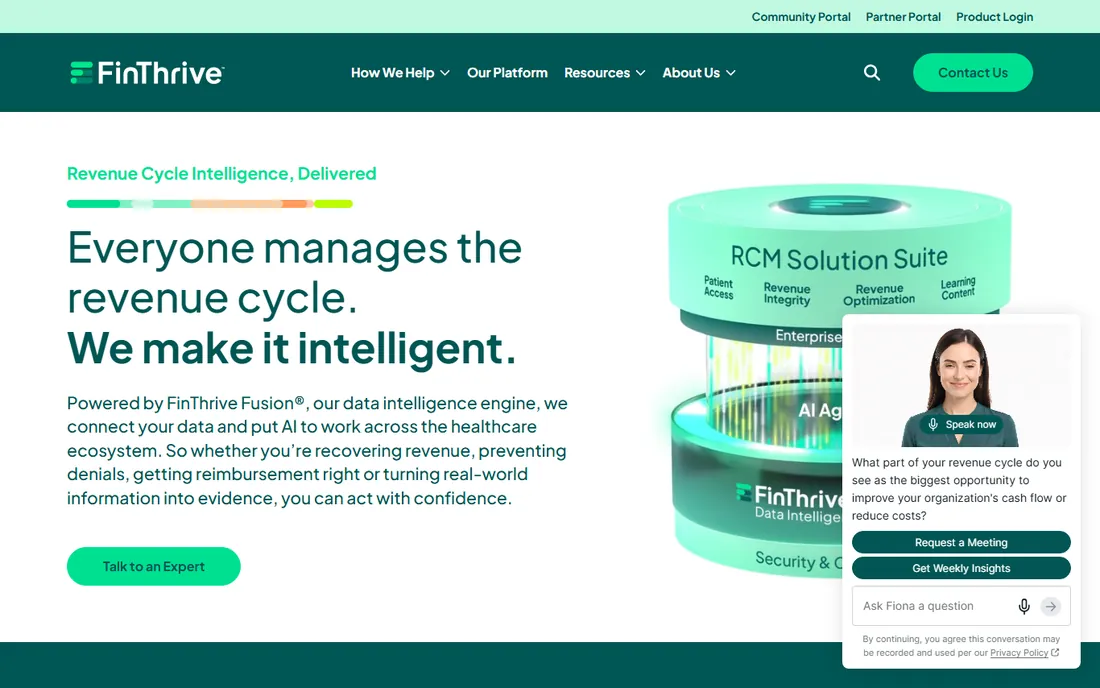
FinThrive's pitch is that your systems hold the answers but cannot talk to each other. Its Fusion data engine connects eligibility, claims, contract and payment data into one view, then aims AI at the gaps: missed coverage, underpaid claims, repeat denials. The company says three in five US hospitals and health systems use at least one of its products.
The buy-it-in-pieces model is both the appeal and the trap. A hospital can start with one module and expand later, which keeps the first check small. But a full deployment lands in the same budget territory as the enterprise platforms. FinThrive suits systems that want to keep their EHR and billing staff and add intelligence on top.
What we like- Buy individual modules (patient access, claims, contract management, analytics) instead of a rip-and-replace
- Large data footprint with 200M+ claims a year training its models
- Strong in insurance discovery and underpayment recovery
Watch out for- Modular pricing adds up fast when you buy the full set
- The company has been through financial restructuring, so ask about product investment
- Best value requires your team to run it, so it is not an outsourcing play
#6
Optum
Best for: Large systems wanting AI-driven RCM plus advisory services
Visit optum.com
Starting priceSee website (custom quote)
Free planNo
Optum is the heavyweight option, and it prices like one. As part of UnitedHealth Group, Optum brings something no independent vendor can: payer-side data and scale across the US healthcare economy. Its RCM business, built partly from the Change Healthcare acquisition, sells both technology and people to large health systems.
The numbers Optum publishes tell the story of its target buyer: about $75 billion in net patient revenue managed and millions in average denial-prevention savings per client per year. Those are health-system numbers. Smaller organizations will find the minimum deal size exclusionary. The strategic question is concentration: one vendor for analytics, operations and advisory is convenient until it is not, so negotiate exit terms and data rights before you sign.
What we like- The scale of UnitedHealth Group behind it, with deep payer data and analytics
- Integrity One platform uses AI across coding, documentation and denials
- Advisory services pair with the technology for transformation projects
Watch out for- Enterprise-only in practice, with pricing to match
- Buying from the largest player concentrates risk
- Some providers are uneasy about sharing data with a payer-owned company
#7
Conifer Health Solutions
Best for: Hospitals and health systems open to outsourcing the revenue cycle
Visit coniferhealth.com
Starting priceSee website (custom quote)
Free planNo
Conifer grew out of hospital operations, and it shows. The company started inside Tenet Healthcare and still operates as its subsidiary: patient access, documentation, coding, billing and collections run as one managed operation rather than software you staff yourself. It manages tens of billions in net patient revenue a year.
Outsourcing is a people decision before it is a technology decision. Conifer's case studies, including cutting A/R days from 60 to 47 at Dartmouth Health, show what a focused operator can do. The price is dependence: multi-year agreements, your billing knowledge migrating to the vendor, and a painful unwind if the relationship sours. For hospitals struggling to hire billers, that trade is often worth it. For systems keeping the function in-house, Conifer's point solutions can be bought without the full outsourcing deal.
What we like- Born inside hospital operations (a Tenet Healthcare subsidiary), so it understands the work
- Full outsourcing from patient access to collections
- Published case results, like cutting A/R days from 60 to 47 at Dartmouth Health
Watch out for- Outsourcing means your billing knowledge leaves the building
- Long contracts with real switching costs
- The service model fits hospitals far better than physician practices
#8
Availity
Best for: Providers and billing teams needing payer connectivity and claims flow
Visit availity.com
Starting priceSee website (Essentials portal free for providers)
Free planYes (Essentials portal free for providers)
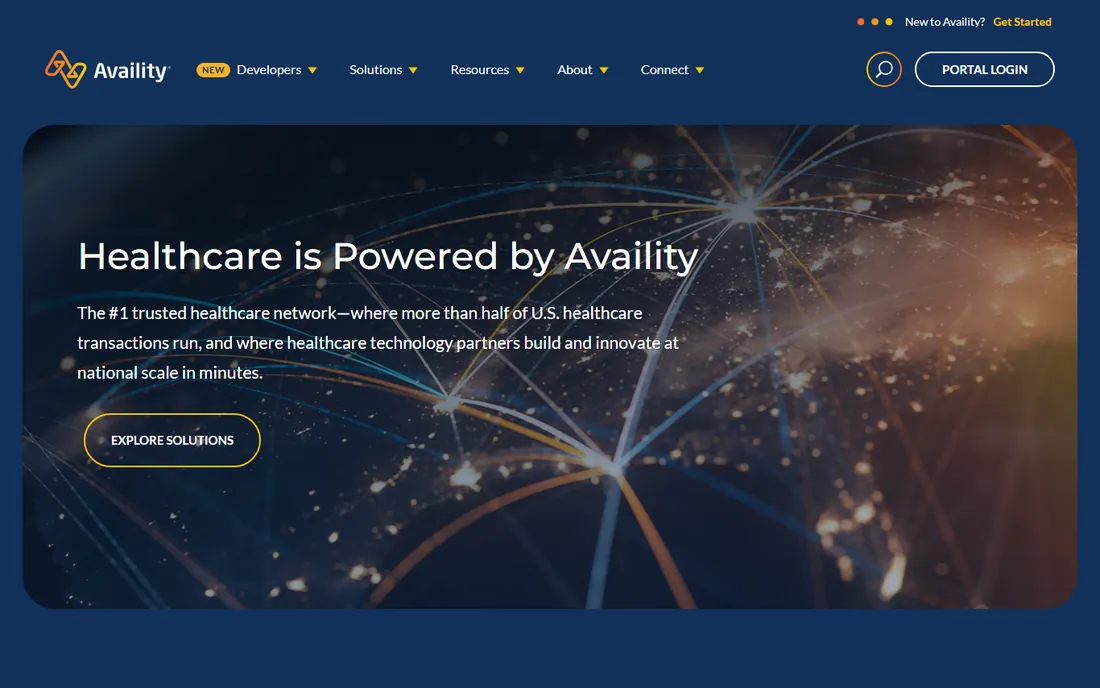
Availity is the odd one out: a network first, a vendor second. More than half of US healthcare transactions run across its network, connecting millions of providers to nearly every payer. For a billing team, the practical product is Availity Essentials, a multi-payer portal where you check eligibility, submit claims, track claim status, view remittances and request authorizations. Health plans sponsor it, so providers use it free.
That makes Availity the rare RCM name with a genuine free tier, and every practice should register before buying anything else. What it does not do is run your revenue cycle: no denial management operation, no coding staff, no patient collections in the free portal. Think of it as infrastructure. Pair it with a denial tool for the back end, and a small practice can cover most RCM needs without an enterprise contract.
What we like- The Essentials portal is free for providers, covering eligibility, claims, remittances and authorizations
- Connectivity to the vast majority of US payers through one login
- 13B+ transactions a year prove the network scale
Watch out for- The free portal is a connectivity tool, not a full RCM platform
- Advanced analytics and workflow products cost extra
- Payer-by-payer enrollment inside the portal takes days to activate
#9
AGS Health
Best for: Health systems and large practices wanting tech-enabled RCM services
Visit agshealth.com
Starting priceSee website (custom quote)
Free planNo
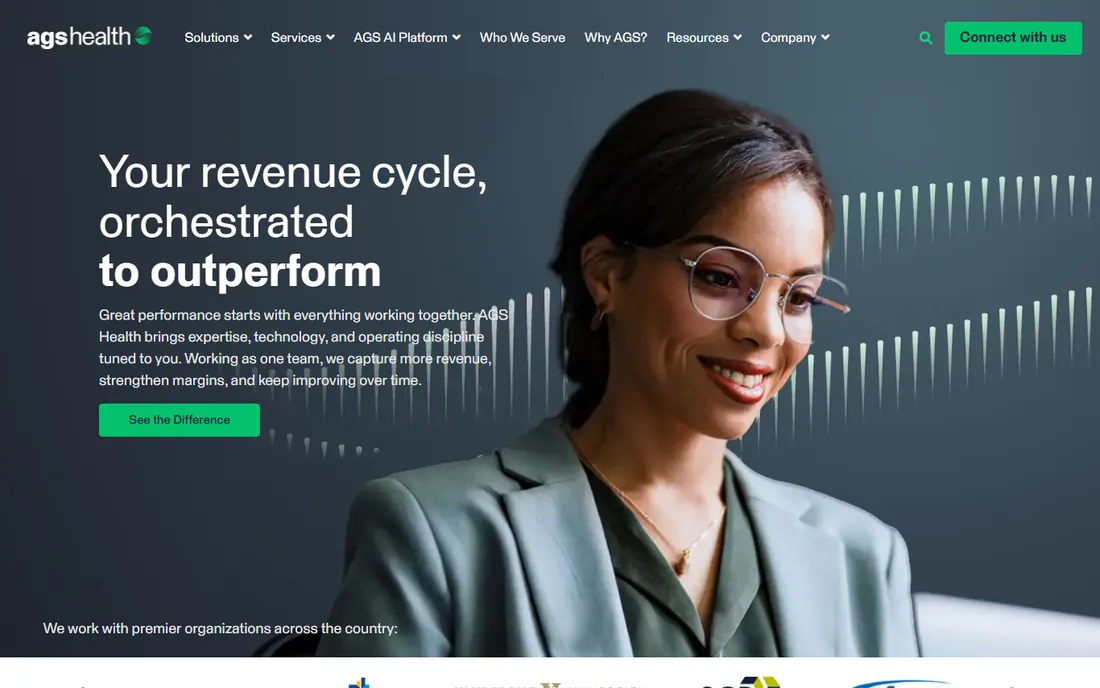
AGS Health pairs people with automation instead of replacing them. The Washington, DC-based company employs roughly 16,000 RCM specialists, coders and analysts, many in India and the Philippines, and wraps them in AI tooling: autonomous coding, computer-assisted coding, clinical documentation improvement and agentic workflow automation. The model is cost arbitrage plus technology: work your coding backlog and A/R with trained teams at a fraction of US labor cost, with automation handling the repetitive slices.
The diligence questions are the ones that come with any offshore services vendor. Ask about HITRUST or SOC 2 certification, data access controls and how your PHI is segmented. Ask for references in your specialty, because coding quality lives and dies at the team level. For large systems drowning in coding backlogs and aged A/R, AGS is a credible alternative to hiring domestically. For smaller practices, the engagement minimums usually do not pencil out.
What we like- Large trained workforce (about 16,000 people) for coding, billing and collections at lower cost than US-only staff
- AI and automation layered over the services, including autonomous coding
- Serves large health systems and academic medical centers
Watch out for- The offshore delivery model raises data security questions you must diligence
- Service quality varies by team, so references matter
- Pricing is custom and engagement minimums suit larger organizations
Starting priceSee website (custom quote)
Free planNo
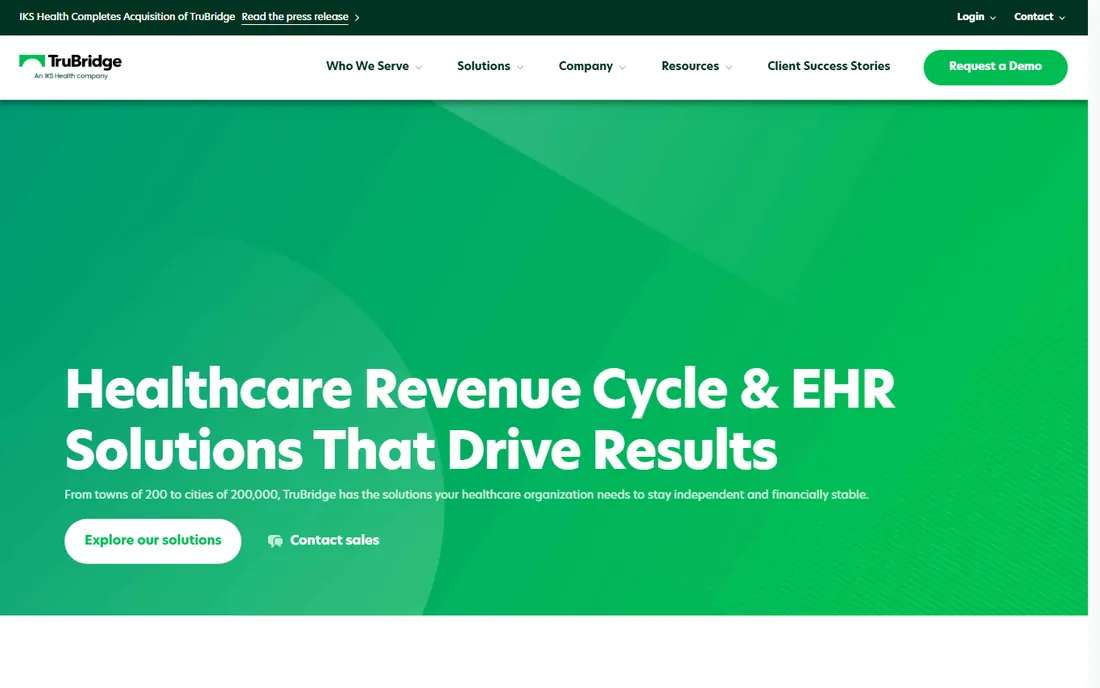
TruBridge is the specialist pick for rural and community hospitals. The company, rebranded from CPSI in 2024, serves more than 1,500 healthcare organizations, most of them small and rural. Its proposition is straightforward: RCM technology and services plus EHR, priced and packaged for facilities that cannot staff a full billing department or absorb an Epic-sized implementation.
That focus is the whole point. Rural hospitals face the same denials and staffing shortages as urban systems, with a fraction of the resources. TruBridge's percentage-of-collections options align its pay with the hospital's cash. If you run a 25-bed critical access hospital, this belongs on your shortlist ahead of the enterprise platforms. If you run a 500-bed urban system, keep walking.
What we like- Purpose-built for rural and community hospitals, a segment the big vendors underserve
- Bundles RCM services with EHR technology (the former CPSI/Evident)
- Flexible commercial models, including percentage-of-collections options
Watch out for- The rural focus means fewer features for large academic systems
- Smaller vendor with fewer integration partnerships than the giants
- EHR is part of the pitch, which complicates buying RCM alone
How we chose
We started with the categories buyers search: RCM software, revenue cycle management software and medical billing software. For each candidate we opened the vendor's own site, checked whether pricing was published (it almost never is in this category), reviewed feature lists and documentation, and read public reviews on G2 and Capterra plus practitioner discussion on Reddit. Where a price could not be verified on the vendor's page we wrote "See website" rather than guessing. We excluded vendors that were acquired into a parent brand, and we split the list between software platforms and service-led vendors so buyers can see which model each name represents.
What to ask on the demo call
RCM demos all look good. The differences show up in the questions vendors hope you will not ask.
Who does the work, exactly?
Ask what your team still has to do after go-live. Some platforms automate eligibility and claim scrubbing but leave denials to your staff. Get the division of labor in writing before you talk price.
How are you paid, and on what?
Software vendors charge licenses, per-provider fees or a percentage of collections. Service vendors charge a percentage of what they collect or a flat fee. A percentage of collections aligns incentives but gets expensive as revenue grows, so model it at current collections and at 20 percent growth. Ask what happens to the fee when claims are denied and never paid.
What does the EHR integration actually cover?
"Integrates with Epic" can mean a real-time bidirectional feed or a nightly file drop. Ask which transactions flow automatically (eligibility, charge capture, claim status, remittance posting, denial write-backs) and which still need manual handling. Ask for three live customers on your exact EHR version.
Software or outsourced service: know which one you are buying
The most expensive mistake in RCM buying is comparing a software license to an outsourcing contract as if they were the same thing. This list contains both.
Pure software platforms (Waystar, FinThrive, Experian Health, Availity) give you tools and leave the staffing to you. Your total cost is the license plus the billing team you already employ. This works when you have a stable revenue cycle staff and want better tools. It fails when your real problem is that you cannot hire billers, because better software does not staff itself.
Service-led vendors (R1, Conifer, AGS Health, TruBridge, and much of Optum's business) bring the people. Your total cost is their fee, and your internal team shrinks or refocuses. This works when staffing is the constraint and leadership will genuinely let go of the function. It fails when executives outsource the work but keep second-guessing every denial decision, paying for the service while duplicating its management overhead.
athenahealth sits in between: software plus the vendor's own billing staff, but only if you adopt its EHR. Before you shortlist, write down which problem you are solving: tooling or staffing. Then filter this list to the half that matches, and ignore the rest.
Frequently asked questions
How much does RCM software cost?
Almost every enterprise RCM vendor quotes custom, and six-figure annual contracts are normal at hospital scale. Percentage-of-collections pricing typically runs in the low to mid single digits. Availity's Essentials portal is genuinely free for providers, making it the starting point for small practices.
What is the difference between RCM software and RCM outsourcing?
RCM software is a tool your staff operates: you keep the billing team and buy better technology. RCM outsourcing hands the work to the vendor's staff, who run some or all of your revenue cycle for a fee. Software suits stable billing teams; outsourcing suits teams that cannot hire or want the function off their plate.
Which RCM software is best for a small practice?
Start with Availity Essentials (free) for eligibility, claims and remittances. If you want billing and clinical in one system, athenahealth's athenaOne is built for independent practices. The enterprise platforms here will be overkill below roughly 20 providers.
How long does RCM implementation take?
A cloud platform deployment for a mid-size hospital typically takes three to six months, including EHR integration, payer enrollment and staff training. Full outsourcing transitions run six to twelve months. Payer credentialing and enrollment are usually the longest phase, not the software.
Can RCM software work with our existing EHR?
Yes. Every vendor here integrates with the major EHRs, but depth varies enormously. Ask which transactions are real-time and bidirectional versus batch file transfers, and get reference customers on your exact EHR and version before signing.
Sources we checked (12)
- https://waystar.com/
- https://www.r1rcm.com/
- https://www.experian.com/healthcare
- https://athenahealth.com/
- https://finthrive.com/
- https://www.optum.com
- https://coniferhealth.com/
- https://www.availity.com
- https://www.agshealth.com/
- https://trubridge.com/
- https://www.g2.com/categories/revenue-cycle-management
- https://www.capterra.com/revenue-cycle-management-software/
Is your product missing or out of date?
We review this list regularly. Vendors can request a listing, send updated pricing or ask about featured placement.

Shihab Mia · Founder, Rankite
Shihab has spent more than a decade helping SaaS and e-commerce brands grow through search. He writes Rankite's software buying guides from pricing pages, documentation and public user reviews. More about Shihab.