How we make this list: we compare pricing pages, product documentation and public user reviews. Ratings come from G2, Capterra or Trustpilot, with the date we checked them.
Key takeaways
- Epic and Oracle Health suit large hospitals and health systems, while athenahealth, Elation, and AdvancedMD suit independent practices and small groups.
- Most enterprise medical software is quote based, so implementation, training, and interfaces often cost as much as the license itself.
- Specialty templates matter more than feature counts, especially for dermatology, orthopedics, cardiology, and ophthalmology.
- Interoperability through FHIR based exchange and patient portals affects referrals, records sharing, and patient access.
- Cloud hosted systems reduce local IT burden, but data migration, workflow redesign, and staff training still take months.
Quick comparison
| Tool | Best for | Starting price | Free plan |
|---|
 Epic | Large hospitals and integrated health systems | See website | No |
 Oracle Health | Hospitals and systems standardizing on Oracle | See website | No |
 athenahealth | Ambulatory practices that want billing included | See website | No |
 eClinicalWorks | Mid market and multi site practices | See website | No |
 MEDITECH | Community hospitals and mid size facilities | See website | No |
 NextGen Healthcare | Specialty practices with deep templates | See website | No |
 AdvancedMD | Independent clinics that want an integrated suite | See website | No |
 Elation Health | Primary care practices that value fast charting | See website | No |
Is your product missing or out of date?
We review this list regularly. Vendors can request a listing, send updated pricing or ask about featured placement.
The best medical software companies
#1Epic
Best for: Large hospitals and integrated health systems4.2/5 on
G2 (940 reviews, checked Oct 2026)
Visit epic.com
Starting priceSee website
Free planNo
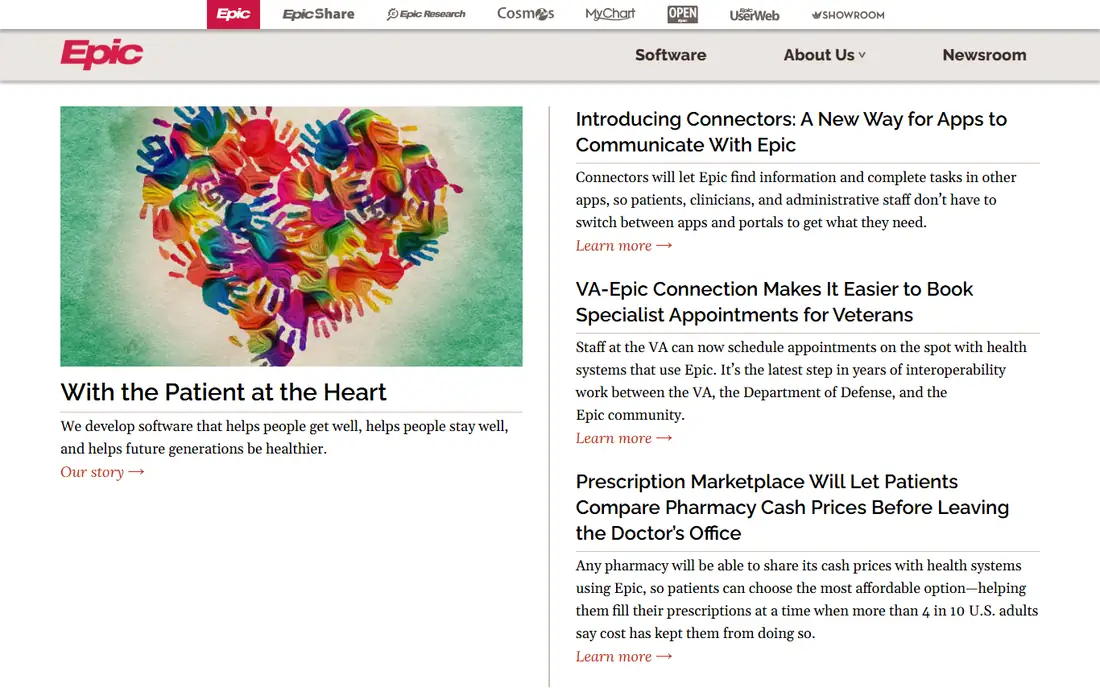
Epic is the default choice for large health systems for a reason: it covers inpatient, ambulatory, emergency, laboratory, pharmacy, and revenue cycle work in one platform, with a patient portal that many patients already know. That breadth helps when a system runs multiple hospitals, clinics, and specialty services, because records, orders, and billing stay in one record rather than across interfaces. Epic also supports a large app ecosystem, so health systems can add specialty tools without replacing the core record.
The cost and effort are enterprise scale. Pricing is negotiated per organization, implementation involves workflow redesign, data migration, and extensive clinician training, and ongoing updates require dedicated internal Epic staff. A small practice will find Epic disproportionate, and Epic offers a community connect route for smaller groups through a host system, which is a different buying path. For a large system that can staff and fund it, Epic remains the benchmark.
What we like- Broadest hospital market share in the US
- MyChart patient portal
- Strong interoperability and app ecosystem
Watch out for- Quote only enterprise pricing
- Implementation commonly takes 12 to 36 months for large systems
- Needs dedicated internal staff
#2Oracle Health
Best for: Hospitals and systems standardizing on Oracle3.5/5 on
G2 (239 reviews, checked Oct 2026)
Visit oracle.com
Starting priceSee website
Free planNo
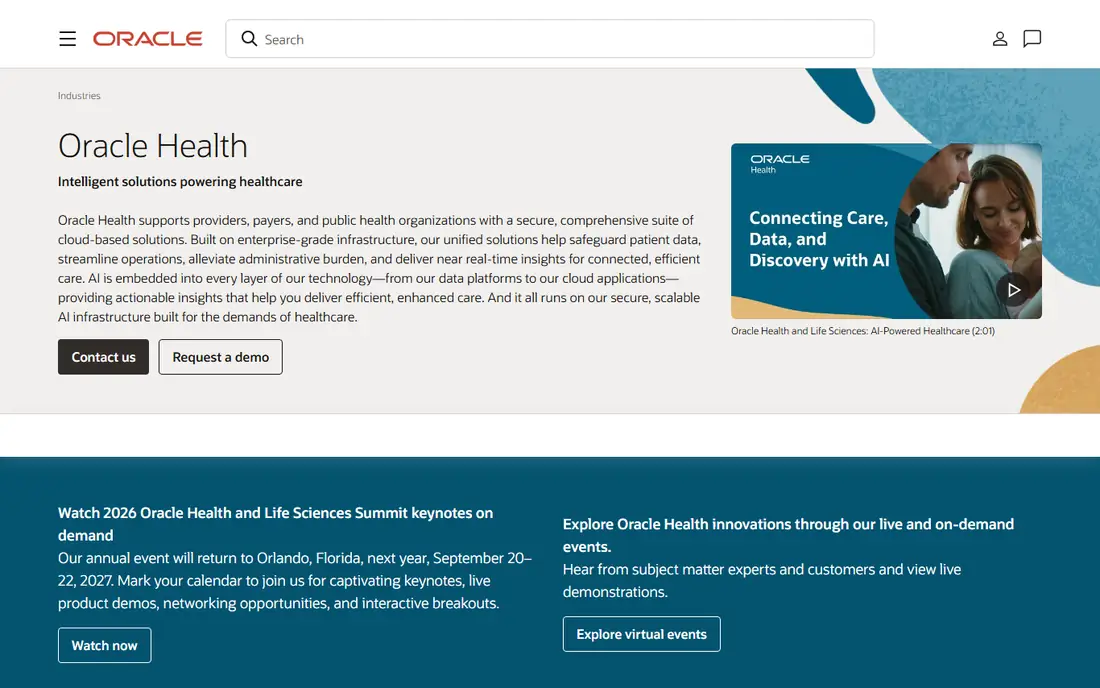
Oracle Health, formerly Cerner, serves hospitals and health systems that need a full clinical and financial platform, and it appeals to organizations already using Oracle databases, cloud, or enterprise applications. The platform covers inpatient care, ambulatory clinics, laboratory, pharmacy, and revenue cycle, with cloud hosting options that reduce local data center work. For a system standardizing on Oracle technology, that alignment can simplify procurement and support.
Buyers should ask direct questions about product roadmap, support continuity, and migration plans, because the Cerner to Oracle transition has raised those questions in the market. Implementation timelines for mid size hospitals commonly run many months, with workflow redesign and interface work included. If your organization already runs Oracle systems and needs a hospital grade record, Oracle Health is a serious Epic alternative. If you are a small practice, look further down this list.
What we like- Former Cerner hospital installed base
- Oracle cloud and data platform integration
- Inpatient and ambulatory coverage
Watch out for- Transition and roadmap questions after the Oracle acquisition
- Implementation still a major project
Starting priceSee website
Free planNo
athenahealth suits independent practices and small to mid size groups that want clinical charting, scheduling, and billing in one cloud service, with a vendor team handling much of the revenue cycle work. The athenaOne platform includes a patient portal, telehealth, and payer connectivity, and its billing service can reduce denials and follow up work for a practice without a large billing department. That service model is the main reason practices choose athenahealth over a software only vendor.
The pricing model needs careful reading. Many athenahealth contracts charge a percentage of collections, so your cost grows as your practice grows, and you should model that cost at your current and target revenue levels. Customization is also more constrained than in an enterprise system, which can frustrate specialty practices with unusual workflows. For a general ambulatory practice that values billing help and cloud simplicity, athenahealth is a strong fit.
What we like- Cloud based athenaOne platform
- Integrated revenue cycle services
- Large payer and network connectivity
Watch out for- Pricing is tied to collections in many contracts, so costs rise with revenue
- Customization is more limited than enterprise systems
#4eClinicalWorks
Best for: Mid market and multi site practices3.7/5 on
G2 (158 reviews, checked Oct 2026)
Visit eclinicalworks.com
Starting priceSee website
Free planNo
eClinicalWorks serves mid market practices and multi site groups that need a full ambulatory record, practice management, and patient engagement in one system. It includes scheduling, charting, e prescribing, telehealth, and a patient portal, with specialty content for common ambulatory fields. Multi site groups benefit from a single system across locations, which simplifies reporting, scheduling, and billing.
Public reviews note that the interface can feel dense, and that training quality varies by implementation team, so ask for a live demo with your own specialty workflow, not a generic script. Pricing is quote based and depends on providers, locations, and modules, so get a total that includes implementation and interfaces. For a mid size practice that wants breadth without enterprise cost, eClinicalWorks is a practical comparison point.
What we like- Broad ambulatory feature set
- Built in telehealth
- Patient engagement tools
Watch out for- Interface and usability complaints appear in public reviews
- Implementation and training still take months
#5MEDITECH
Best for: Community hospitals and mid size facilities3.1/5 on
G2 (116 reviews, checked Oct 2026)
Visit ehr.meditech.com
Starting priceSee website
Free planNo
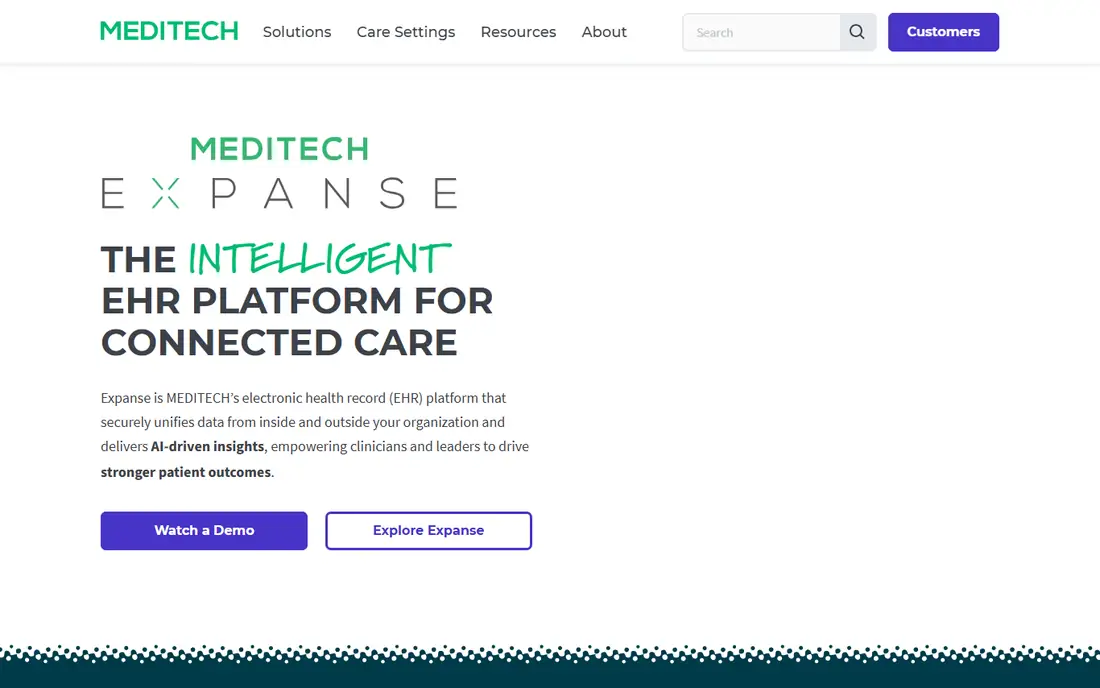
MEDITECH has served community hospitals for decades, and its Expanse platform brings a web based interface to inpatient, emergency, ambulatory, and revenue cycle work. Community hospitals often choose MEDITECH because it is designed for their scale: large enough for hospital complexity, but with an implementation and support model that fits a mid size facility better than a very large enterprise program. The platform also includes patient portal and interoperability tools for referrals and records exchange.
The trade off is focus. MEDITECH is a hospital system first, so a small independent practice will find it oversized and overpriced for its needs. Hospital buyers should still ask about interface costs, third party app support, and upgrade cadence, because those items shape total cost over five years. For a community hospital that needs a proven, hospital grade record, MEDITECH belongs on the shortlist.
What we like- Hospital focused platform with a long installed base
- Expanse web based interface
- Inpatient and ambulatory coverage
Watch out for- Less suited to small independent practices
- Implementation is a hospital scale project
#6NextGen Healthcare
Best for: Specialty practices with deep templates3.7/5 on
G2 (175 reviews, checked Oct 2026)
Visit nextgen.com
Starting priceSee website
Free planNo
NextGen Healthcare appeals to specialty practices because its templates go deeper than a generic ambulatory record. Orthopedics, ophthalmology, cardiology, and other specialties get content, coding support, and reporting that match their workflows, which can save clinicians time at the point of care. The platform also offers practice management and revenue cycle tools, with billing workflows that specialty groups can tailor to their payer mix.
Depth brings complexity. Building specialty templates, interfaces, and reports takes implementation time, and practices should budget for training that covers their specific workflows, not just the general system. Pricing depends on providers, specialties, and modules, so a quote for a single specialty practice will differ from a multi specialty group. If specialty depth is your priority, NextGen Healthcare is one of the strongest ambulatory options here.
What we like- Strong specialty templates, including orthopedics, ophthalmology, and cardiology
- Customizable billing workflows
- Ambulatory focus
Watch out for- Customization adds implementation time
- Pricing is quote based and varies by specialty content
#7AdvancedMD
Best for: Independent clinics that want an integrated suite3.6/5 on
G2 (63 reviews, checked Oct 2026)
Visit advancedmd.com
Starting priceSee website
Free planNo
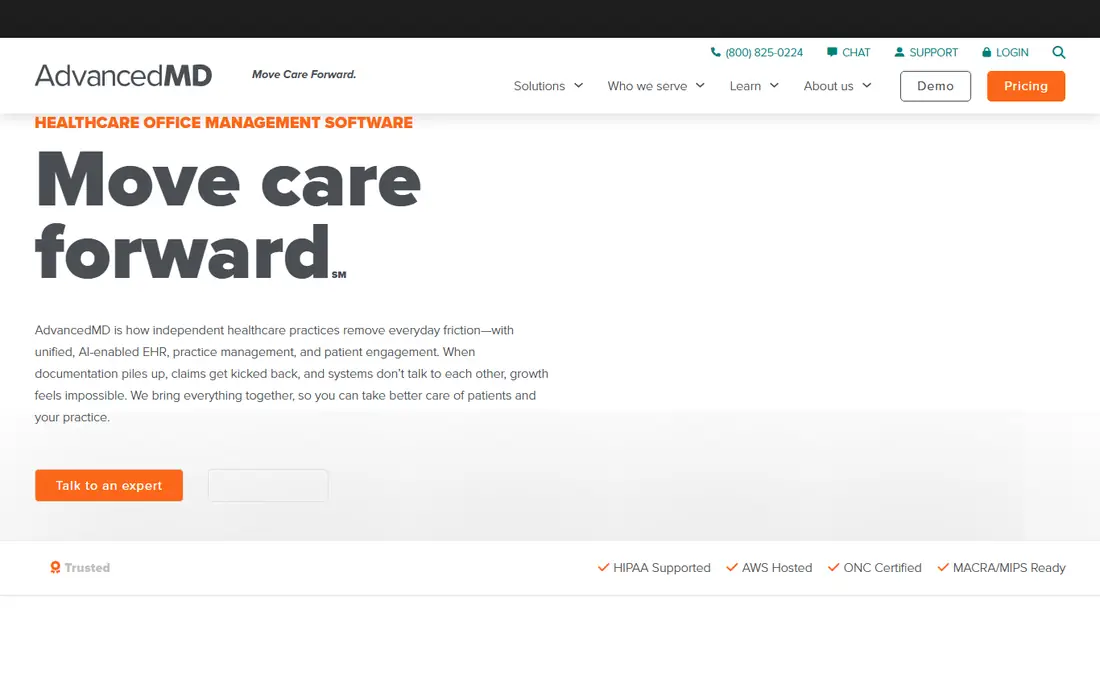
AdvancedMD serves independent clinics and small groups with an integrated suite covering scheduling, charting, billing, and patient engagement. The patient journey tools, including automated reminders, intake, and messaging, help a small front desk team handle a busy schedule without adding staff. Dashboard reporting gives practice owners a clear view of appointments, claims, and collections, which is useful when the owner is also a clinician.
The suite model means you pay for breadth, and some advanced reporting and automation features require higher tiers, so check which tier includes the tools you actually need. Implementation is lighter than a hospital system, but data migration and staff training still take weeks. For an independent clinic that wants one vendor for clinical, scheduling, and billing work, AdvancedMD is a balanced choice.
What we like- Integrated EHR, practice management, and billing
- Automated patient journey tools
- Dashboard reporting
Watch out for- Advanced features sit on higher tiers
- Smaller practices may pay for breadth they do not use
#8Elation Health
Best for: Primary care practices that value fast charting4.4/5 on
G2 (16 reviews, checked Oct 2026)
Visit elationhealth.com
Starting priceSee website
Free planNo
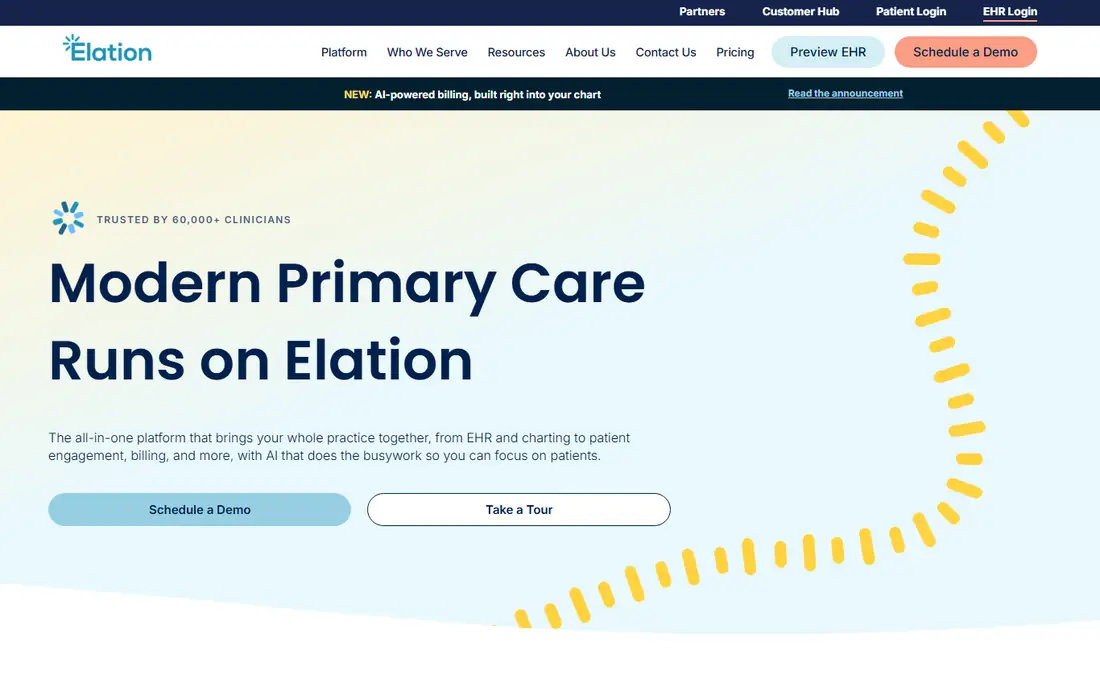
Elation Health is built for primary care, and its design reflects that focus. Charting is fast, the interface is clean, and onboarding is quicker than for a hospital or specialty system, which suits a small practice that cannot spare months for implementation. Clinicians who dislike dense, click heavy records often prefer Elation, because the system prioritizes the clinical note and the patient story over administrative fields.
The limit is scope. Highly specialized practices, such as orthopedics or ophthalmology, may find the specialty content thinner than NextGen, and advanced billing work may need a separate partner. Pricing is subscription based and quote driven, so confirm what is included for your provider count. For a primary care practice that wants a usable record without enterprise overhead, Elation Health is an excellent fit.
What we like- Clinical first design with fewer clicks
- Fast onboarding for small practices
- Clean interface
Watch out for- Limited for highly specialized needs
- Advanced billing features may need a third party partner
How we chose
We compared vendor product pages, documentation, specialty coverage, interoperability standards, implementation models, and public reviews on G2, Capterra, and KLAS related sources, alongside hospital market share reporting. We favored vendors with current ONC certified products, FHIR based exchange, and a clear fit for a stated organization size, and we marked pricing as See website where vendors publish no list price.
Buying medical software without regret
Start with organization size and specialty, not feature lists. A hospital, a multi specialty group, and a solo primary care practice need different systems, and a vendor demo that looks impressive for one will mislead the other. List your must have workflows: referral handling, lab interfaces, e prescribing, telehealth, patient portal use, and billing model, then ask each vendor to demo those workflows with your data types, not a rehearsed script.
Next, price the whole project. Ask for license or subscription cost, implementation, data migration, interfaces, training, and annual support, over a five year horizon. Ask about contract length, price increases, data export format if you leave, and downtime or update windows. Finally, speak to two reference customers of similar size and specialty, and ask about go live problems, support response times, and what they would change about the purchase.
Questions to ask every vendor
- Is the product ONC certified, and what FHIR exchange is supported.
- What does implementation include, and how long does it take for a practice like mine.
- What is the total five year cost, including interfaces and support.
- How do I export my patient data if I leave, and in what format.
- What training and support hours are included, and what costs extra.
Frequently asked questions
What is the difference between an EHR and practice management software?
An EHR holds the clinical record, including notes, orders, labs, and medications, while practice management software handles scheduling, registration, and billing. Many vendors bundle both, but some practices buy them separately and connect them with interfaces, so confirm which parts are included in any quote.
Why do most medical software vendors not publish prices?
Prices depend on provider count, locations, specialties, modules, interfaces, and implementation effort, so vendors quote per organization. That makes a written, itemized quote essential, because two practices can pay very different totals for the same product name.
How long does implementation take?
Small cloud practices can go live in weeks to a few months, while mid size groups often need three to nine months, and large hospital systems commonly need 12 to 36 months. Data migration, workflow redesign, and clinician training, not software installation, drive most of that time.
What is FHIR and why does it matter?
FHIR is a standard for exchanging health information between systems, including patient records, appointments, and observations. Strong FHIR support makes referrals, lab results, and patient portal access work more reliably, and it affects how easily you can add third party apps later.
Can a small practice use Epic or Oracle Health?
Directly, usually not, because those systems are built and priced for hospitals and large systems. Small practices can sometimes access Epic through a community connect arrangement with a host health system, but the terms, costs, and control differ from a direct purchase, so review that route carefully.
How do I compare revenue cycle options?
Compare denial rates, days in accounts receivable, patient statement handling, and whether billing is software only or a managed service. athenahealth and similar vendors include managed billing help, while other vendors sell software and leave staffing to you, which changes both cost and workload.
Sources we checked (8)
- https://www.epic.com
- https://www.oracle.com/health/
- https://www.athenahealth.com
- https://www.eclinicalworks.com
- https://ehr.meditech.com
- https://www.nextgen.com
- https://www.advancedmd.com
- https://elationhealth.com
Is your product missing or out of date?
We review this list regularly. Vendors can request a listing, send updated pricing or ask about featured placement.

Shihab Mia · Founder, Rankite
Shihab has 5+ years in B2B and SaaS SEO. He writes Rankite's software buying guides from pricing pages, documentation and public user reviews. More about Shihab.