How we make this list: we compare pricing pages, product documentation and public user reviews. Ratings come from G2, Capterra or Trustpilot, with the date we checked them.
Key takeaways
- In this category, the number of prompts you track sets the price, not the number of seats. OtterlyAI, for example, charges $29/month for 15 tracked prompts and $189/month for 100, with unlimited team members on every plan.
- Some AI engines come with the base plan and others cost extra. Check whether Gemini, Claude and Google AI Mode are included before you compare prices.
- Profound changed its pricing twice in September 2026. It dropped its $99 and $399 self-serve tiers and now offers a free Trial plan plus enterprise contracts that you buy through its sales team.
- If you already pay for Semrush, Ahrefs or SE Ranking, their AI visibility products are the simplest way to test prompt tracking without adding a new vendor.
- Credit-based tools like Rankscale suit occasional monitoring. Plans with a fixed number of prompts are easier to budget for weekly reporting.
Quick comparison
| Tool | Best for | Starting price | Free plan |
|---|
 OtterlyAI | Small teams that want clear prompt-based pricing | $29/month (15 prompts; 15% off with annual billing) | Free trial |
 Profound | Enterprise brands with a large AI search budget | Free Trial plan; enterprise pricing See website | Yes (Trial plan) |
 Peec AI | In-house marketing teams tracking competitors | See website | See website |
 Semrush AI Visibility Toolkit | Existing Semrush customers | See website | See website |
 SE Visible (by SE Ranking) | Agencies and SEO teams on SE Ranking | See website | See website |
 Ahrefs Brand Radar | Market-wide brand mention research | See website | See website |
 LLMrefs | Keyword-first tracking across many sites | See website | See website |
 Rankscale | Flexible, credit-based monitoring | See website | See website |
Is your product missing or out of date?
We review this list regularly. Vendors can request a listing, send updated pricing or ask about featured placement.
The best LLM prompt tracking software
#1
OtterlyAI
Best for: Small teams that want clear prompt-based pricing
Visit otterly.ai
Starting price$29/month (15 prompts; 15% off with annual billing)
Free planFree trial
OtterlyAI is the easiest tool on this list to budget for. The Lite plan costs $29 a month for 15 search prompts, Standard is $189 for 100 prompts, and Premium is $489 for 400. Enterprise starts at 1,000 prompts with custom terms, SSO and a dedicated success manager. You can pay monthly or annually, and annual billing takes 15% off.
Every plan tracks four engines daily: ChatGPT, Google AI Overviews, Perplexity and Microsoft Copilot. Each tier includes brand visibility and sentiment scores, citation source tracking, share of voice and exportable reports, plus unlimited team members. That last point matters for small companies, since nobody has to share a login.
The catch is that several engines are add-ons. Claude, Gemini and Google AI Mode are sold as extras, so a team that needs all seven engines will pay more than the headline price. Lite also limits you to one workspace and three recommendations a week, and API access only starts at Standard. Extra prompts cost $99 per block of 100 on the higher plans.
What we like- Published pricing with low entry point
- Unlimited team members and brands on every plan
- API, MCP access and a Looker Studio connector from the Standard plan
Watch out for- Claude, Gemini and Google AI Mode cost extra
- The Lite plan's 15 prompts run out quickly
#2Profound
Best for: Enterprise brands with a large AI search budget4.6/5 on
G2 (640 reviews, checked Oct 2026)
Visit tryprofound.com
Starting priceFree Trial plan; enterprise pricing See website
Free planYes (Trial plan)
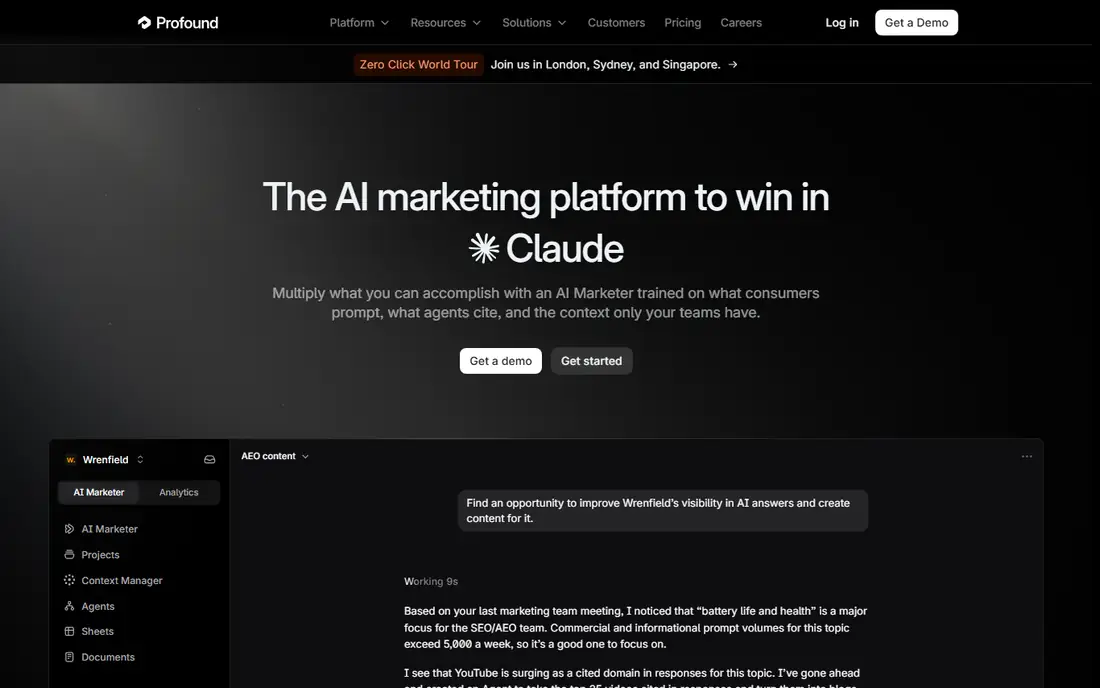
Profound is the name most large marketing teams bring up first, and it is built for that buyer. The product does more than count mentions. Its AI Marketer feature turns tracking data into content suggestions. Paid plans now go through the sales team, so expect a demo and a custom quote rather than a credit card checkout.
Its pricing has moved fast this year. Pricing tracker PricingSaaS recorded Profound removing its $99 and $399 self-serve tiers in September 2026 and replacing them with a single free Trial plan. A week later the Trial grew to 50 prompts and added Gemini and Google AI Overviews, and in October shared Projects were added to it as well.
For a small business, that free Trial is now a reasonable way to see where you stand. The honest weakness is that there is no longer a mid-priced paid step between free and enterprise, so a company that outgrows 50 prompts goes straight to a custom quote.
What we like- Built for large brands, with paid plans sold through a sales team
- Free Trial plan now covers 50 prompts with Gemini and Google AI Overviews
- Shared Projects included in the Trial plan
Watch out for- No self-serve paid tier after September 2026
- Pricing changes often, so quotes can shift
#3Peec AI
Best for: In-house marketing teams tracking competitors4.7/5 on
G2 (21 reviews, checked Oct 2026)
Visit peec.ai
Starting priceSee website
Free planSee website
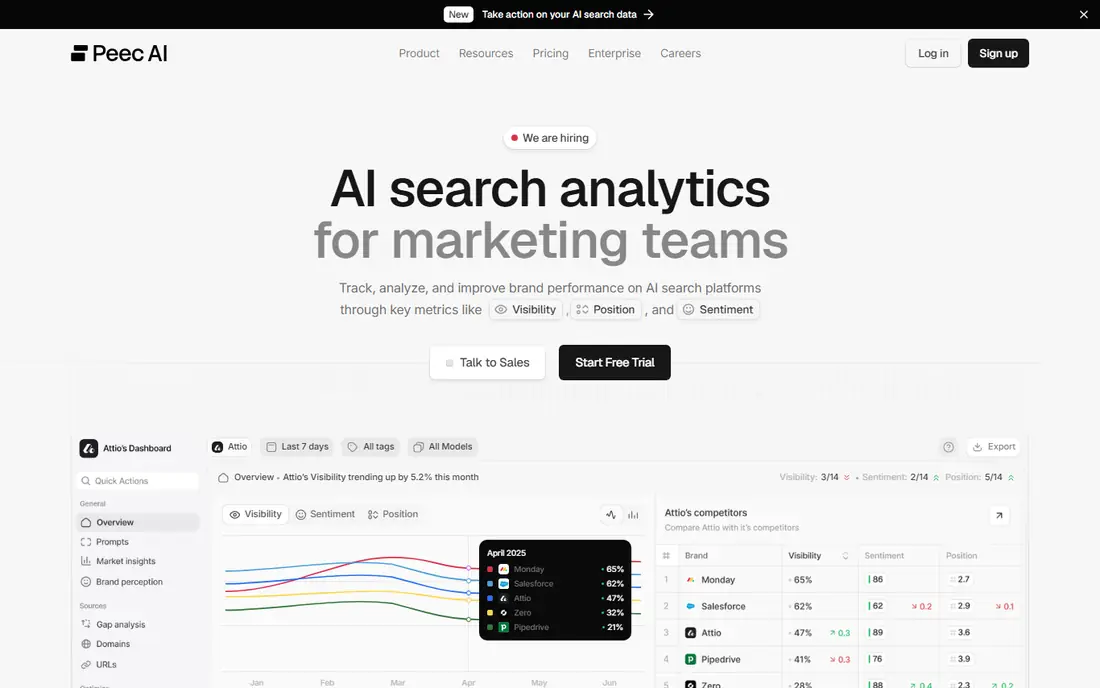
Peec AI is a Berlin-based startup that has grown quickly by keeping the product narrow. You add the prompts your buyers are likely to ask, name your competitors, and Peec reports how often each brand appears, where it ranks in the answer and which sources the AI engines cite. For a marketing manager who needs a weekly chart for leadership, the output is easy to read.
The source analysis is the most useful part. Seeing which review sites, listicles and forums feed the answers gives a content team a concrete outreach list. That is more useful than a visibility score alone.
Plan limits are where buyers should slow down. Lower tiers cap prompts and include a limited set of engines, and adding models or prompts raises the bill. Confirm current euro pricing and the exchange rate before signing an annual plan.
What we like- Clean dashboard focused on visibility, position and sentiment
- Strong competitor comparisons
- Source analysis shows which sites feed AI answers
Watch out for- Pricing is listed in euros, which complicates US budgeting
- Extra engines and prompts push costs up on lower tiers
#4
Semrush AI Visibility Toolkit
Best for: Existing Semrush customers
Visit semrush.com
Starting priceSee website
Free planSee website
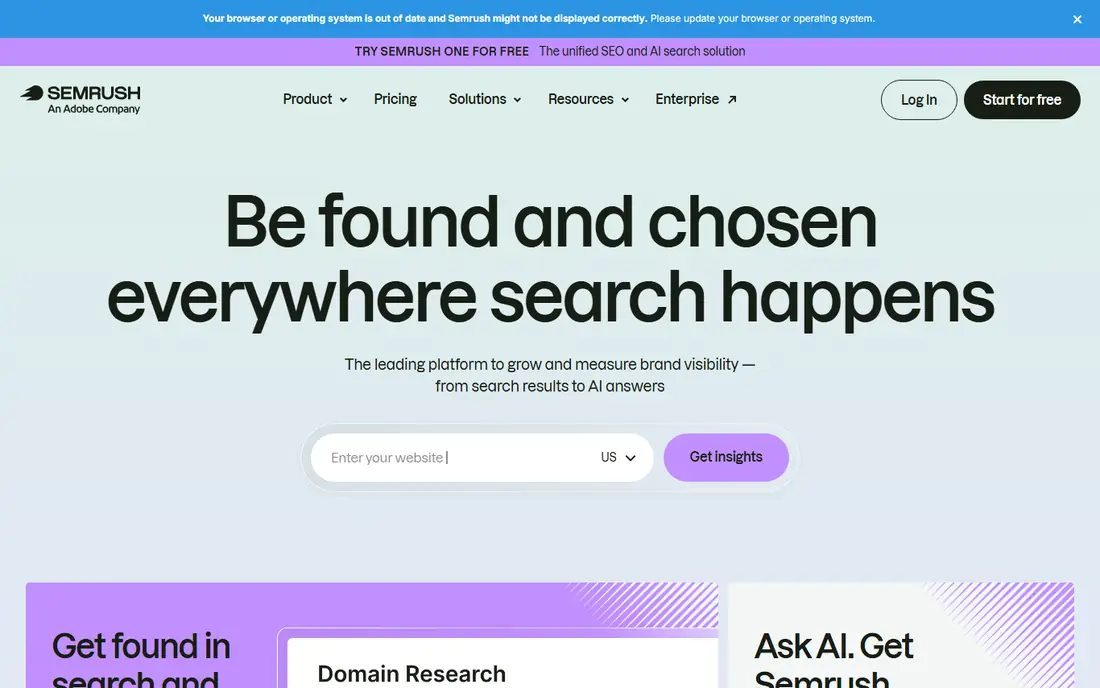
For teams that live in Semrush, this toolkit removes the need for another login. It tracks how your brand shows up in AI answers from engines such as ChatGPT, Google AI Mode, Gemini and Perplexity, and puts that next to the organic search data you already report on.
The practical advantage is context. When AI visibility drops, you can check whether rankings for the matching keywords fell too, which helps separate an AI problem from a plain SEO problem. Semrush also sells bundles that combine its SEO and AI visibility tools, which can cost less than buying both separately.
The downside is depth. Specialist tools tend to ship new engines and features faster, and Semrush's toolkits are priced per toolkit, so costs stack if you need several. Check whether the prompt limit on your plan matches the number of topics you want to watch.
What we like- Lives inside a tool many SEO teams already use
- Combines prompt tracking with keyword and traffic data
- Familiar reporting and user management
Watch out for- Sold as a separate toolkit, so it adds to an existing Semrush bill
- Less specialized than dedicated AI visibility startups
Starting priceSee website
Free planSee website
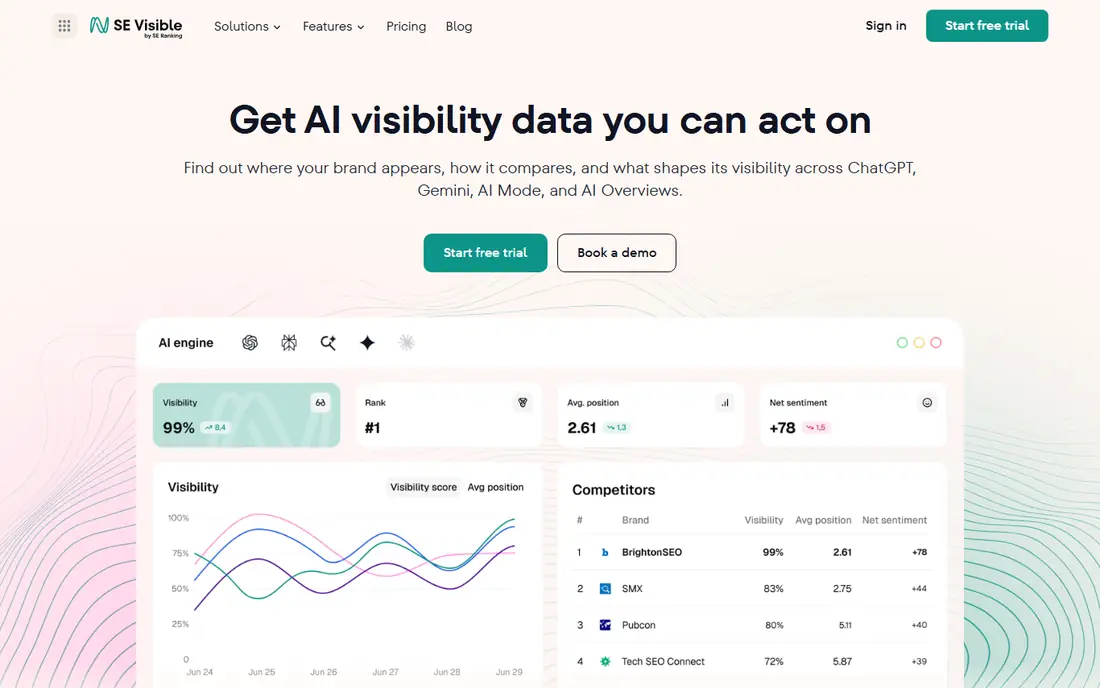
SE Ranking built SE Visible as a separate AI visibility product rather than burying it in its SEO suite. That makes it a good fit for agencies that want to sell AI visibility reports to clients without moving every client onto a new SEO platform.
The tool covers brand mentions, links and sentiment in AI answers, with competitor benchmarks that work well in client decks. SE Ranking has long been known for lower pricing than the bigger SEO suites, and SE Visible follows that approach, though you should confirm current tiers on the vendor site.
The weakness is maturity. SE Visible is newer than Profound or Peec AI, so expect some features to still be filling in. Run a trial or demo with your real prompt list before you commit to an annual plan.
What we like- Standalone product, so you do not need a full SE Ranking subscription
- Agency-friendly reporting
- Usually priced below enterprise AI visibility tools
Watch out for- Younger product with a shorter track record
- Engine coverage and prompt counts vary by plan
#6
Ahrefs Brand Radar
Best for: Market-wide brand mention research
Visit ahrefs.com
Starting priceSee website
Free planSee website
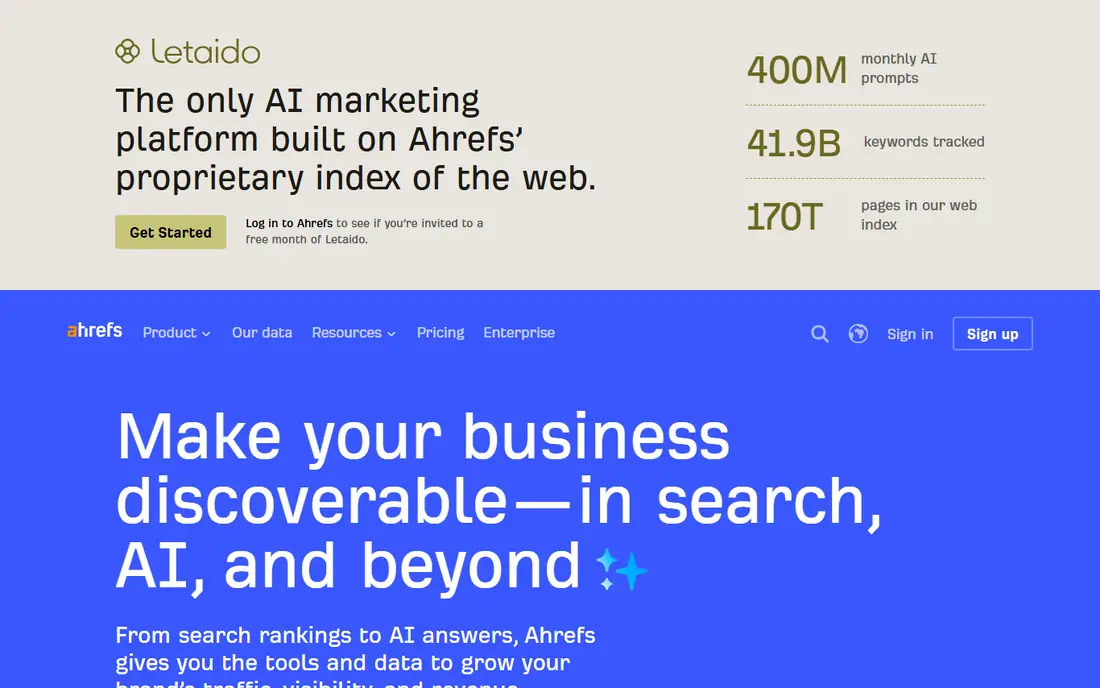
Ahrefs approaches the problem from the data side. Brand Radar does not rely only on a short list of prompts you type in. It draws on a large index of AI answers built from search demand, so you can see how a whole category talks about you and your rivals. That is useful for a first audit when you do not yet know which prompts matter.
It works best for research and benchmarking. A marketer can compare share of voice across competitors, find the pages AI engines cite, and spot topics where the brand never appears.
The catch is cost and packaging. Brand Radar is an add-on to Ahrefs, and reviewers point out that the same product can appear at different prices depending on plan and engines chosen. If you only need to watch 30 prompts each week, a dedicated tracker will likely be cheaper.
What we like- Draws on a very large prebuilt prompt dataset rather than only the prompts you enter
- Strong for category and competitor research
- Fits into existing Ahrefs workflows
Watch out for- Sold as an add-on on top of an Ahrefs plan
- Pricing structure confuses some buyers
Starting priceSee website
Free planSee website
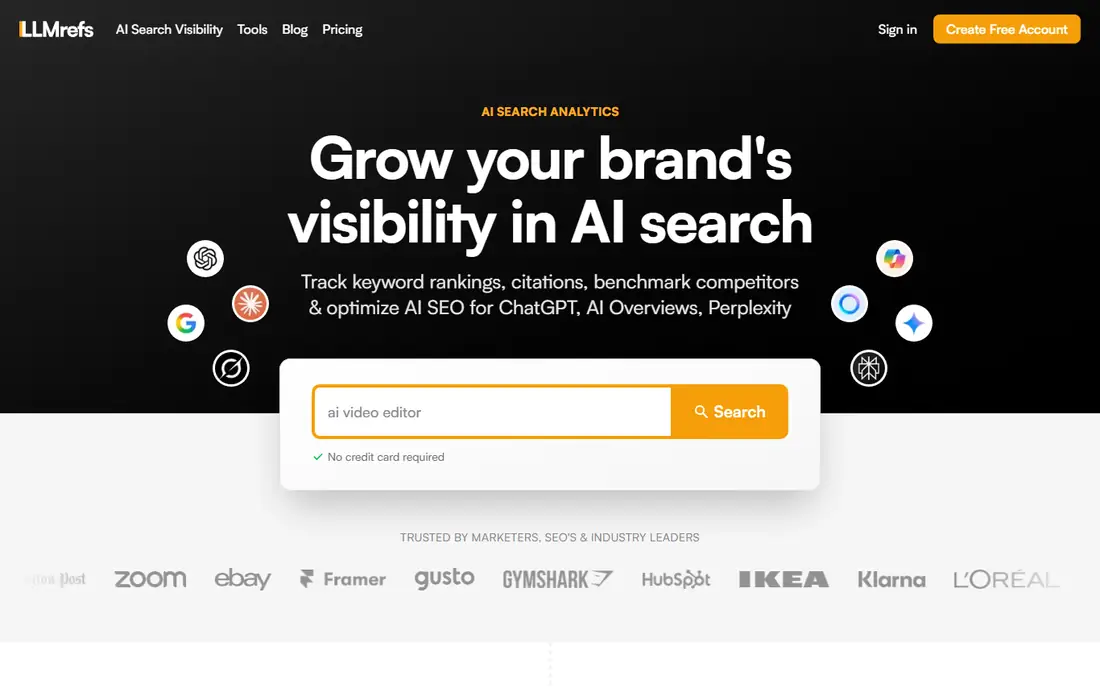
LLMrefs suits SEO-minded marketers who think in keywords rather than prompts. You enter target keywords, and the tool generates realistic conversational prompts and tracks how your brand appears across a long list of AI engines. That cuts setup time for a team that does not want to write hundreds of prompts by hand.
Its pricing is simple, with a single main paid tier that covers multiple sites. That works for a consultant or small agency watching several brands on one budget.
The trade-off, noted in independent reviews, is that all those sites draw from the same pool of tracked prompts. If one client needs heavy coverage, the others get less. Larger teams that need SSO or detailed user permissions may also find the product too basic.
What we like- Starts from keywords and generates prompts for you
- One plan covers many sites
- Wide engine coverage for the price
Watch out for- Sites share one prompt budget, so heavy users hit limits
- Fewer enterprise controls than larger vendors
Starting priceSee website
Free planSee website
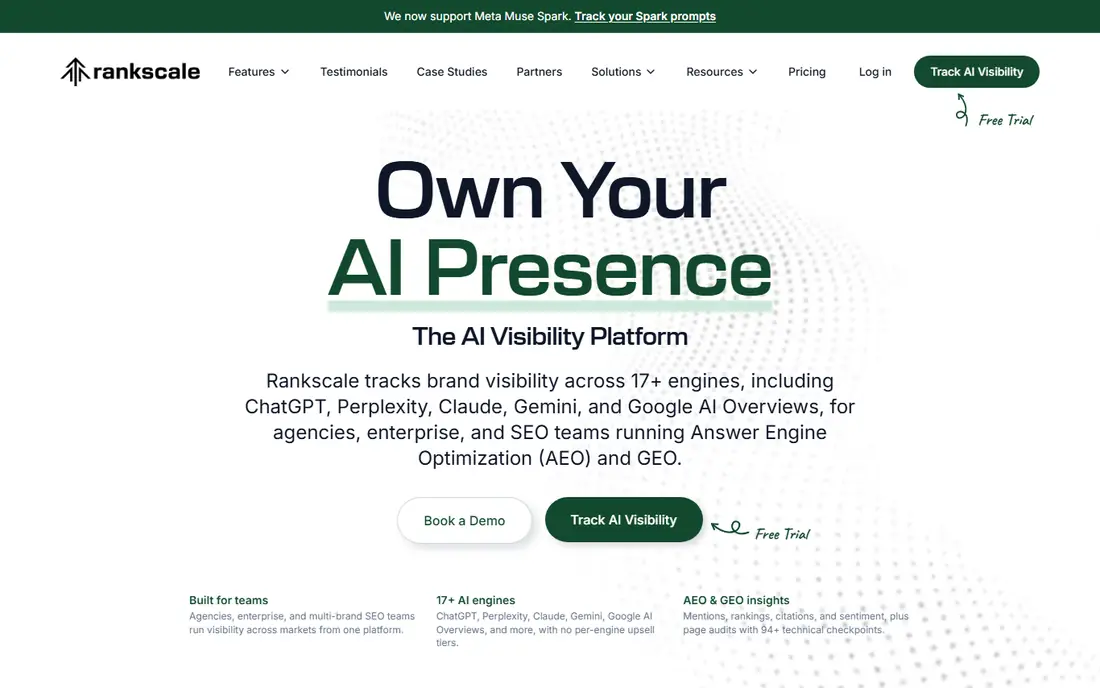
Rankscale is a good match for buyers who do not need daily tracking on a fixed prompt list. Its credit model lets you run checks when you need them, such as before and after a content refresh or a product launch, instead of paying for a monthly prompt quota that sits idle.
Coverage is a strength. Rankscale tracks a wide range of AI engines and adds audits that flag pages that may be hard for AI systems to read or cite, so a small team can find problems and monitor results in one tool.
The weakness is predictability. Credits burn faster when you add engines, prompts or frequency, and a finance team that wants a fixed monthly number may prefer a flat-priced tool like OtterlyAI. It is also a smaller company, so check support response times during the trial.
What we like- Credit-based model fits irregular or project-based tracking
- Broad AI engine coverage
- Includes site audits that check whether pages are easy for AI engines to read
Watch out for- Credits make monthly spend harder to predict
- Smaller vendor with fewer independent reviews
How we chose
We started with the AI visibility tools that come up most often in buyer discussions, independent reviews and comparison roundups. We kept only products whose main job is tracking how brands appear in answers from ChatGPT, Google AI Overviews, Perplexity, Gemini and similar engines. We left out tools that only monitor how developers' LLM apps perform, since they answer a different question.
For each tool we checked the vendor's own pricing page where we could access it, public records of pricing page changes, and independent reviews and comparisons. We compared prompt limits, engine coverage, seat rules and reporting options where vendors publish them, and weighed how well each one fits a small or mid-size US company. Where we could not confirm a current price from the vendor, we wrote See website rather than guess. We did not run our own hands-on tests.
What to check before you buy a prompt tracker
Count your prompts before you compare plans
Write down the questions a buyer would ask an AI assistant about your category, your product and your competitors. Most small companies end up with 30 to 100 useful prompts. That number decides your tier far more than team size does, and it shows quickly whether a 15-prompt starter plan is a real option.
Match engines to where your customers search
Everyone needs ChatGPT and Google AI Overviews. Beyond that, B2B buyers may lean on Perplexity, Copilot or Claude, while consumer brands care more about Gemini and Google AI Mode. Price the engines you need, not the ones in the headline plan.
Look at frequency and history
AI answers change from run to run. Daily tracking smooths out that noise, and longer data history lets you prove that a content change moved the numbers. Ask how long history is kept on each plan and whether you can export it.
Plan for reporting
If leadership already reads a Looker Studio dashboard, an API or connector saves hours each month. Agencies should check white-label options and how many workspaces each plan allows.
Keep the first contract short
This category is young and pricing moves quickly, as Profound's 2026 changes show. Start on monthly billing or a trial, confirm the data matches what you see when you run the prompts yourself, and only then lock in an annual discount.
Frequently asked questions
What is LLM prompt tracking software?
It is software that runs a set of questions (prompts) through AI assistants such as ChatGPT, Perplexity and Google AI Overviews on a schedule. It then records whether your brand is mentioned, how it is described and which sources are cited. Marketers use it to measure visibility in AI answers the way rank trackers measure visibility in search results.
How many prompts does a small business need to track?
Most small and mid-size companies can start with 30 to 100 prompts covering their core category, main products and top competitors. Starting small keeps costs down while you learn which prompts actually move. You can add more once you see which topics matter.
Is there free LLM prompt tracking software?
Profound now offers a free Trial plan with up to 50 prompts, and OtterlyAI offers a free trial on its paid plans. Several other vendors offer trials or limited free tiers, but terms change often, so check each vendor's pricing page.
Should I use my SEO suite or a dedicated tool?
If you already pay for Semrush, Ahrefs or SE Ranking, start with their AI visibility product because the data sits next to your keyword reports. Dedicated tools such as OtterlyAI, Peec AI and Profound tend to offer more engines, more frequent tracking and deeper source analysis. Many teams start in their SEO suite and move to a specialist once AI traffic becomes a reporting priority.
How accurate are these tools?
AI answers vary by run, location and account history, so no tracker sees exactly what each user sees. Good tools reduce the noise by running prompts frequently and reporting trends over time. Treat the numbers as directional, and spot-check a few prompts by hand each month.
Sources we checked (7)
- https://otterly.ai/pricing
- https://pricingsaas.com/companies/tryprofound/diffs/2026W39
- https://pricingsaas.com/companies/tryprofound/diffs/2026W43
- https://crawlraven.com/blog/llmrefs-review
- https://www.get-ryze.ai/blog/ahrefs-brand-radar-pricing-2026
- https://otterly.ai/alternatives/pricing/otterly-vs-rankscale-pricing/
- https://visible.seranking.com/blog/peec-ai-review/
Is your product missing or out of date?
We review this list regularly. Vendors can request a listing, send updated pricing or ask about featured placement.

Shihab Mia · Founder, Rankite
Shihab has 5+ years in B2B and SaaS SEO. He writes Rankite's software buying guides from pricing pages, documentation and public user reviews. More about Shihab.