How we make this list: we compare pricing pages, product documentation and public user reviews. Ratings come from G2, Capterra or Trustpilot, with the date we checked them.
Key takeaways
- "LLM optimization" in practice means measuring your AI app, then improving quality, cost and speed. The tools below do that through tracing, evaluations, prompt management and monitoring.
- Open-source options (Langfuse, Arize Phoenix, Comet Opik) let you self-host for free. That matters if customer data cannot leave your own cloud.
- Pricing models differ a lot. LangSmith and Maxim charge per seat, Braintrust and PromptLayer charge a flat platform fee plus usage, and Langfuse bills by usage units.
- Entry paid plans are cheap: Comet Opik Pro Cloud lists $19 per month, PromptLayer Pro $49 per month, and Weights & Biases Pro $60 per month. Costs climb mainly with trace volume and data retention.
- If your team already builds on LangChain, LangSmith is the shortest path. If you want framework-neutral evals with a polished interface, Braintrust and Maxim are strong picks.
Quick comparison
| Tool | Best for | Starting price | Free plan |
|---|
 LangSmith | Teams building agents with LangChain or LangGraph | $39 per seat/month (Plus plan), then pay as you go | Yes |
 Langfuse | Open-source tracing, prompt management and datasets | See website | Yes (free Hobby cloud plan and free self-hosting) |
 Braintrust | Eval-driven development with unlimited users | $249 per month (Pro), free Starter plan available | Yes |
 Arize (AX and Phoenix) | OpenTelemetry-based tracing and teams with classic ML plus LLMs | See website | Yes (open-source Phoenix, plus a free AX tier) |
 Weights & Biases (Weave) | Teams that already track ML experiments and fine-tuning | $60 per month, billed monthly (Pro) | Free trial (30 days on Pro); a free tier also exists |
 PromptLayer | Product teams editing and versioning prompts without engineers | $49 per month (Pro) | Yes |
 Comet Opik | Budget-conscious teams that want an open-source option | $19 per month (Pro Cloud) | Yes |
 Maxim AI | Agent simulation and pre-release testing | $29 per seat/month (Professional, billed monthly) | Yes (Developer plan, free forever) |
Is your product missing or out of date?
We review this list regularly. Vendors can request a listing, send updated pricing or ask about featured placement.
The best LLM optimization software for AI teams
Starting price$39 per seat/month (Plus plan), then pay as you go
Free planYes
LangSmith is the observability and evaluation product from the makers of LangChain. It fits engineering teams that ship agents and want to see every step a run took, then score those runs against test datasets. If your code already uses LangChain or LangGraph, tracing takes a few lines of configuration.
The pricing page lists a free Developer plan with one seat and up to 5,000 base traces per month. The Plus plan is $39 per seat per month with 10,000 base traces, and it adds deployment features. Beyond the included traces you pay as you go, and the current page also describes a usage unit billed at $1.00 per unit for agent workloads.
The catch is predictability. Trace volume, retention and agent runs all affect the bill, so a busy production app can cost more than the sticker price suggests. Run a one-week estimate with real traffic before you commit.
What we like- Deep tie-in with LangChain and LangGraph
- Tracing, evaluation and deployment in one product
- Unlimited seats on Plus
Watch out for- Usage-based billing is harder to forecast
- Most useful if you already use the LangChain stack
#2
Langfuse
Best for: Open-source tracing, prompt management and datasets
Visit langfuse.com
Starting priceSee website
Free planYes (free Hobby cloud plan and free self-hosting)
Langfuse is the pick for teams that want control over where their LLM data lives. It covers tracing, prompt versioning, datasets and evaluations, and you can run it on your own servers or use the hosted cloud. Developers often compare it directly with LangSmith because it is not tied to one framework.
Third-party pricing guides describe a free Hobby tier and paid Core and Pro plans that charge a monthly platform fee plus usage units, with no per-seat fee on paid plans. Because I could not confirm those numbers on the vendor's own pricing page, check the current figures on the website before budgeting.
The honest weakness is operational. Self-hosting is free in license terms but needs someone to maintain databases, upgrades and backups. For a small team without DevOps time, the hosted plan is the realistic route.
What we like- Open source and self-hostable
- Works with many frameworks and model providers
- Paid cloud plans reportedly have no per-seat charge
Watch out for- Billing by usage units takes some getting used to
- Self-hosting means you run the infrastructure
#3Braintrust
Best for: Eval-driven development with unlimited users4.3/5 on
G2 (58 reviews, checked Oct 2026)
Visit braintrust.dev
Starting price$249 per month (Pro), free Starter plan available
Free planYes
Braintrust is built around a simple loop: write evals, run experiments, compare scores, and ship the winner. It suits product and engineering teams that want non-engineers to join the review process, since users are unlimited at every tier. Tracing, a prompt playground and production monitoring sit alongside the evals.
The free Starter plan includes 1 GB of processed data, 10,000 scores and 14-day retention. Pro costs $249 per month with 5 GB of data, 50,000 scores and 30-day retention, plus extras such as custom charts and role-based access. The page also notes that qualifying startups can get 6 to 12 months of Pro free.
Watch the usage meters. Scores from LLM-as-a-judge evaluators are billed per thousand, so teams that score a high share of production traffic can pass the included amount quickly. The $249 base is also a real jump from free for a two-person team.
What we like- Unlimited users, projects and experiments on every plan
- Strong scoring and playground tools
- Flat platform fee instead of per-seat pricing
Watch out for- Starter retention is only 14 days
- Scoring and data overages add up at volume
#4
Arize (AX and Phoenix)
Best for: OpenTelemetry-based tracing and teams with classic ML plus LLMs
Visit arize.com
Starting priceSee website
Free planYes (open-source Phoenix, plus a free AX tier)
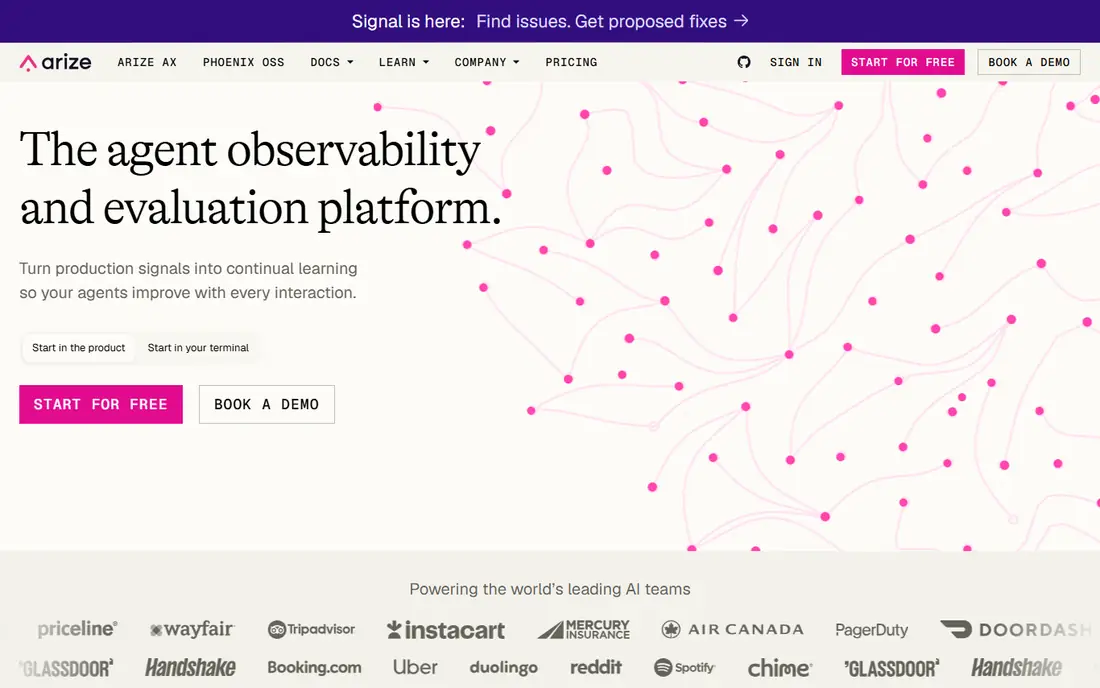
Arize sells two things under one name. Phoenix is the open-source project for tracing, evaluation, prompt management and experiments. AX is the hosted commercial platform, aimed at teams that need production monitoring at scale and, in many cases, tracking for older machine learning models too.
Third-party write-ups list an AX Free tier with 25,000 spans per month and a $50 per month Pro tier, with Enterprise on custom quotes. I could not verify these on Arize's own pricing page, so treat them as a guide and confirm on the website.
Phoenix is a good way to start because you lose nothing by trying it locally. The limit is that moving from the open-source tool to a managed platform is a separate buying decision, and Enterprise quotes are where costs tend to jump.
What we like- Phoenix is open source with no usage caps when self-hosted
- Built on OpenTelemetry standards
- Covers both traditional ML and LLM monitoring
Watch out for- Enterprise pricing is custom and reportedly high
- Two products (Phoenix and AX) can confuse first-time buyers
#5
Weights & Biases (Weave)
Best for: Teams that already track ML experiments and fine-tuning
Visit wandb.ai
Starting price$60 per month, billed monthly (Pro)
Free planFree trial (30 days on Pro); a free tier also exists
Weights & Biases started as an experiment tracker for machine learning, and its Weave product extends that to LLM applications. It makes the most sense for teams that fine-tune models, compare training runs and also want production tracing in one place. Data scientists usually pick it up fast because the interface is familiar.
The pricing page shows a free tier with 5 GB of storage and 1 GB of Weave data ingestion per month. The Pro plan is $60 per month billed monthly, with a 30-day free trial. Extra ingestion is billed per megabyte, so check your expected trace size.
W&B is more than many prompt-focused teams need. If you only call hosted models through an API and never train anything, a lighter tool will feel simpler. Sign-up now goes through CoreWeave, which owns the company, so confirm account and billing terms during evaluation.
What we like- Weave covers tracing and evaluation for LLM apps
- Familiar to ML researchers
- Strong experiment tracking for fine-tuning work
Watch out for- Account and signup flow now runs through CoreWeave
- Heavier than needed for a simple prompt-tuning project
#6
PromptLayer
Best for: Product teams editing and versioning prompts without engineers
Visit promptlayer.com
Starting price$49 per month (Pro)
Free planYes
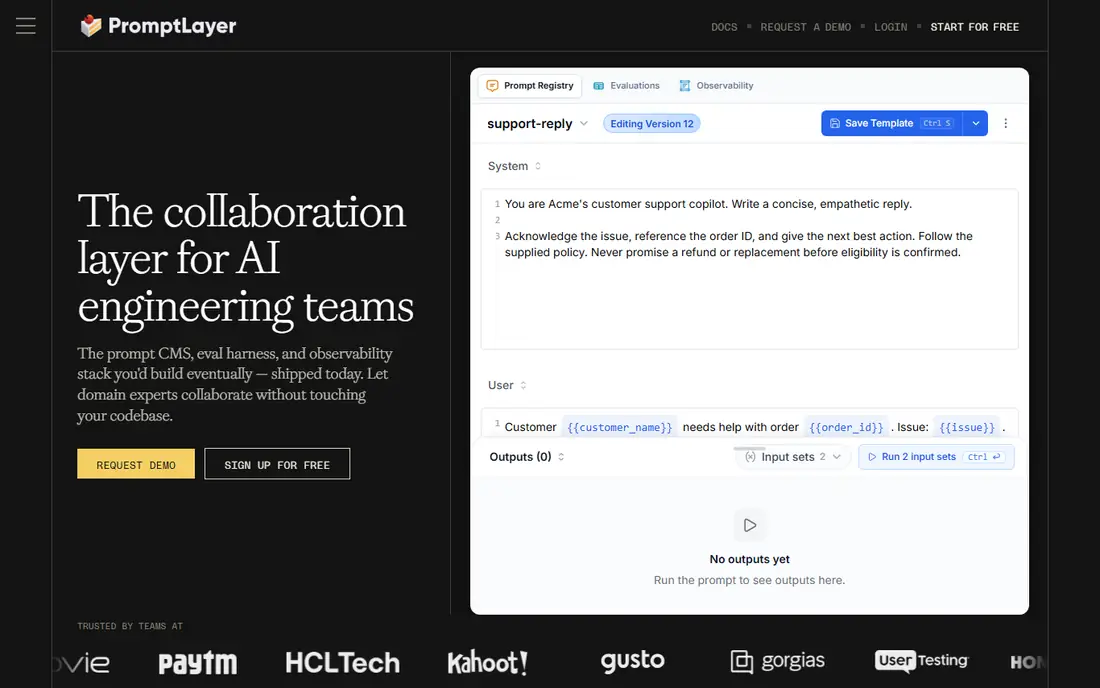
PromptLayer puts prompt management first. Domain experts, product managers or support leads can edit and version prompts, run evaluations, and review logs without touching code. That is its real edge when the people who know the right answer are not the people writing the Python.
The free plan allows 5 users, 2,500 requests and 250 eval cell executions per month. Pro is $49 per month with unlimited playgrounds and workspaces and pay-as-you-go usage at $0.003 per transaction. Team is $500 per month for 25 users and 100,000 or more requests. Enterprise adds role-based access, HIPAA with a BAA and flexible hosting.
The weakness is scale. Request limits on lower plans are modest, and the jump from Pro to Team is steep. If you need deep agent tracing across many services, a dedicated observability platform will go further.
What we like- Prompt registry and visual editing suit non-technical staff
- Flat monthly plans with 5 users free
- HIPAA and self-hosting on Enterprise
Watch out for- Free tier is small at 2,500 requests per month
- Team plan jumps to $500 per month
#7
Comet Opik
Best for: Budget-conscious teams that want an open-source option
Visit comet.com
Starting price$19 per month (Pro Cloud)
Free planYes
Opik is the LLM observability and evaluation product from Comet, a company with a long history in ML experiment management. It covers agent tracing, test suites with assertions, and an agent playground. The vendor states that the open-source edition shares the same codebase as its hosted versions.
On the cloud side, the free plan includes up to 10 team members, 25,000 spans per month and 60-day retention. Pro Cloud lists $19 per month, with up to 50 team members and 100,000 spans per month, and it offers a free trial. Enterprise adds single sign-on, flexible deployment and compliance coverage such as SOC 2 and HIPAA.
The trade-off is ecosystem size. Fewer tutorials and third-party integrations exist compared with the market leaders, though Opik lists dozens of framework and provider integrations including LangChain and OpenAI. For small teams watching spend, it is among the cheapest paths to proper tracing.
What we like- Full feature set is available in the free open-source version
- Low-priced hosted plans
- Free cloud plan allows up to 10 team members
Watch out for- Free cloud plan keeps only 60 days of data and 25,000 spans per month
- Smaller community than LangSmith or Langfuse
Starting price$29 per seat/month (Professional, billed monthly)
Free planYes (Developer plan, free forever)
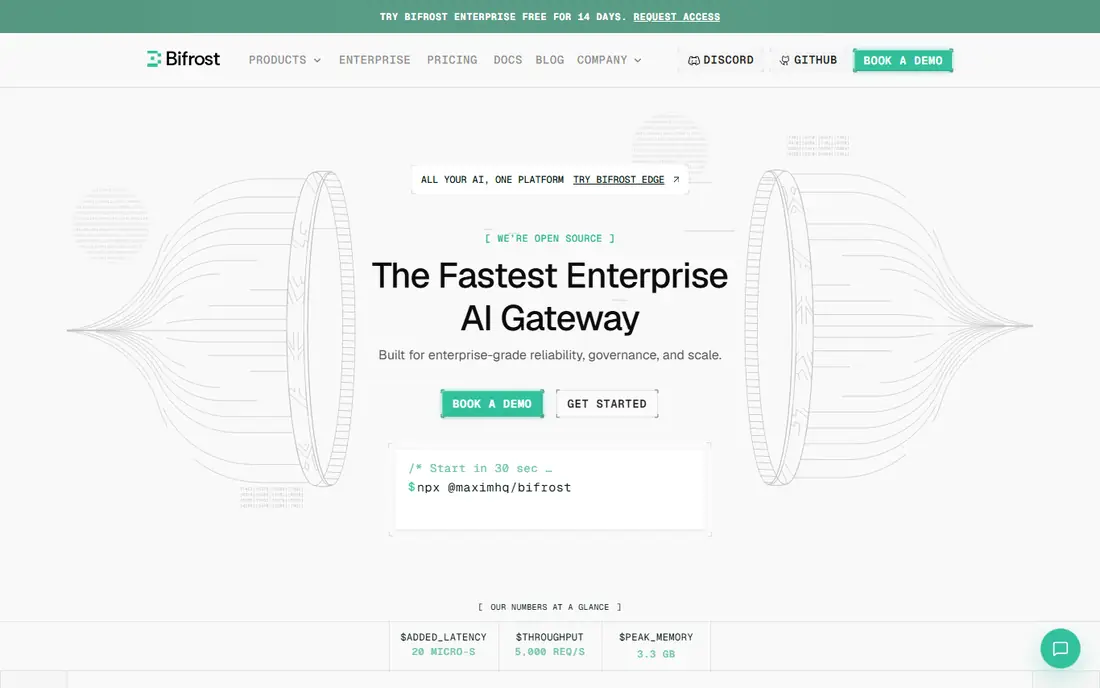
Maxim AI focuses on testing agents before and after release. It combines prompt experimentation, simulated conversations with different user personas, online evaluations and production observability. Teams building customer-facing chat or voice agents get the most from the simulation feature.
The Developer plan is free forever for up to 3 seats, 10,000 logs per month and 3-day retention. Professional costs $29 per seat per month with up to 100,000 logs, 7-day retention, simulation runs and online evals, and it includes a 14-day trial. Business is $49 per seat per month with up to 500,000 logs, 30-day retention, role-based access and PII management.
The catch is retention. Seven days on Professional is short if you need to investigate an issue from last month, and you must reach Business for 30 days. Per-seat pricing also makes it pricier than flat-fee tools for larger review teams.
What we like- Simulation runs test agents across scenarios before launch
- Unlimited seats on Professional
- Also offers an LLM gateway called Bifrost
Watch out for- Per-seat pricing grows with headcount
- Free plan keeps data for only 3 days
How we chose
We built this list from public information, not hands-on lab work. For each product we read the vendor's pricing page where it was accessible, checked documentation for tracing, evaluation and prompt features, and compared what reviewers say on G2, Capterra and Reddit. We also looked at integrations, deployment options (cloud or self-hosted), data retention and how pricing scales.
We kept tools that clearly help teams measure and improve LLM applications, and we left out general-purpose analytics and model hosting products. Where we could not confirm a price on the vendor's own page (Langfuse and Arize), we say so and point you to the website. Plans change often in this market, so verify before buying.
Start with what you are optimizing
Teams usually want one of three things: higher answer quality, lower token spend, or faster responses. Quality work needs evals and datasets. Cost and speed work needs traces that show tokens, latency and model choice for each step. Pick the tool whose strongest feature matches your biggest problem, not the one with the longest feature list.
Match the pricing model to your team
Per-seat tools (LangSmith Plus, Maxim) get expensive when many reviewers need access. Flat or usage-based tools (Braintrust, Langfuse, PromptLayer) favor larger groups but charge for volume. Estimate your monthly traces, scored outputs and retention needs, then price each option using that number.
Check data control and compliance
If prompts contain customer or health data, look at self-hosting and compliance. Langfuse, Phoenix and Opik can run on your own infrastructure. PromptLayer lists HIPAA with a BAA on Enterprise, and Maxim lists SOC 2 Type II, ISO 27001 and HIPAA at the Enterprise level.
Plan a small pilot
Instrument one real workflow, run it for a week, and compare tools on setup time, trace clarity and the cost at real volume. Check that you can export your data and prompts, so switching later is not painful. A tool that takes an afternoon to wire up and shows a clear failure case in the first day is usually the right fit.
Frequently asked questions
What does LLM optimization software actually do?
It records what your AI application does (prompts, responses, tokens, latency), lets you score outputs against test sets, and helps you version and compare prompts. You use that evidence to raise quality and cut cost. Most tools here do not train models for you.
Is there a free LLM optimization tool?
Yes. Langfuse, Arize Phoenix and Comet Opik are open source and can be self-hosted at no license cost. LangSmith, Braintrust, PromptLayer and Maxim also have free plans, though with low volume and short retention limits.
Do I need an open-source tool?
Not always. Open source helps when you need data to stay in your own environment or want to avoid vendor lock-in. If you have no one to maintain servers, a hosted plan is usually less work.
How much should a small team expect to pay?
Several tools list entry paid plans between $19 and $60 per month, including Comet Opik, PromptLayer and Weights & Biases. Platforms like Braintrust start at $249 per month on Pro. Your real bill depends on trace volume, scored outputs and retention.
Which tool works best with LangChain?
LangSmith, since it comes from the LangChain team and is designed to trace LangChain and LangGraph apps. The other tools here also accept traces from LangChain through integrations, so you are not locked in.
Sources we checked (10)
- https://www.langchain.com/pricing
- https://www.braintrust.dev/pricing
- https://wandb.ai/site/pricing/
- https://www.promptlayer.com/pricing/
- https://www.comet.com/site/pricing/
- https://www.getmaxim.ai/evals/pricing
- https://www.zenml.io/blog/langfuse-pricing
- https://checkthat.ai/brands/langfuse/pricing
- https://www.voiceflow.com/blog/what-is-arize-ai
- https://www.cekura.ai/blogs/arize-ai-pricing
Is your product missing or out of date?
We review this list regularly. Vendors can request a listing, send updated pricing or ask about featured placement.

Shihab Mia · Founder, Rankite
Shihab has 5+ years in B2B and SaaS SEO. He writes Rankite's software buying guides from pricing pages, documentation and public user reviews. More about Shihab.