How we make this list: we compare pricing pages, product documentation and public user reviews. Rankite is independent; if a vendor ever pays for a featured spot, that listing is clearly labeled Partner.
Key takeaways
- GRIN is the strongest fit for Shopify and WooCommerce brands that run product seeding and gifting at scale.
- Modash is the best value for discovery and vetting, with monthly plans starting at $199 and no annual lock-in.
- CreatorIQ and Traackr are built for enterprise teams that need multi-region programs, strict brand safety and deep analytics.
- Most serious platforms hide pricing behind a demo, so budget for an annual contract before you shortlist the enterprise names.
Quick comparison
| Tool | Best for | Starting price | Free plan |
|---|
 GRIN GRIN | DTC brands managing creators like a CRM | See website | Free trial |
 Aspire Aspire | Ambassador programs and creator communities | See website | No |
 Upfluence Upfluence | Finding influencers among your own customers | See website | Free trial |
 CreatorIQ CreatorIQ | Enterprise global programs | See website | No |
 Modash Modash | Affordable discovery and vetting | $199/month (billed annually) | Free trial |
 Traackr Traackr | Data-led measurement and benchmarking | See website | No |
 HypeAuditor HypeAuditor | Audience quality and fraud detection | $299/month (billed annually) | Free trial |
 Later Influence Later Influence | Brands consolidating social and influencer | See website | Free trial |
 Influencer Hero Influencer Hero | Full-stack outreach without enterprise cost | $649/month | Free trial |
Is your product missing or out of date?
We review this list regularly. Vendors can request a listing, send updated pricing or ask about featured placement.
The top influencer marketing software
#1
GRIN
Best for: DTC brands managing creators like a CRM
Visit grin.co
Starting priceSee website
Free planFree trial
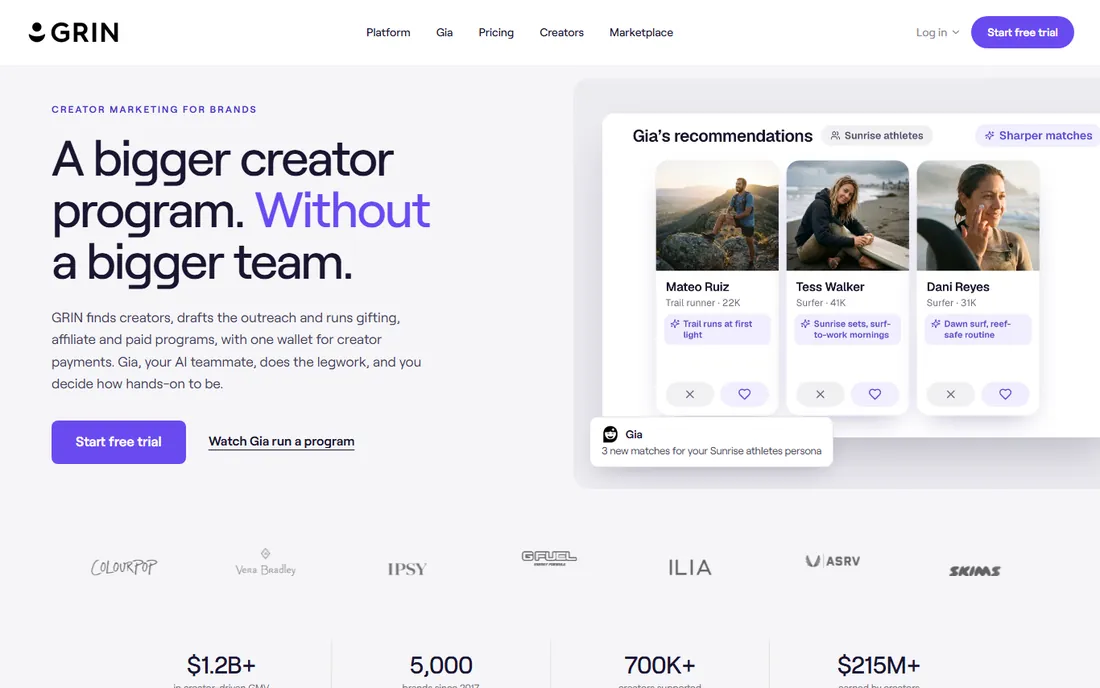
GRIN treats creators the way a CRM treats contacts. Every influencer gets a profile with conversation history, shipped products, published content and sales attributed to their links and codes. For a DTC brand running dozens of partnerships at once, that record is the difference between a program and a mess. The product seeding workflow is the standout: you can send products, track delivery and follow up on content without leaving the platform.
The trade-off is discovery. GRIN's creator search exists, but teams that need to find hundreds of new profiles a month usually pair it with a discovery-first tool. Pricing is quote-based and aimed at brands with real volume, though the company does offer month-to-month terms, which is rare in this category. If you sell physical products through Shopify and want to run gifting and affiliate deals from one place, GRIN is the natural first demo.
What we like- Deep Shopify, WooCommerce and Magento integrations
- Revenue attribution per creator
- Month-to-month plans available
Watch out for- Discovery is weaker than dedicated databases
- Best suited to e-commerce, less so to services
#2
Aspire
Best for: Ambassador programs and creator communities
Visit aspire.io
Starting priceSee website
Free planNo
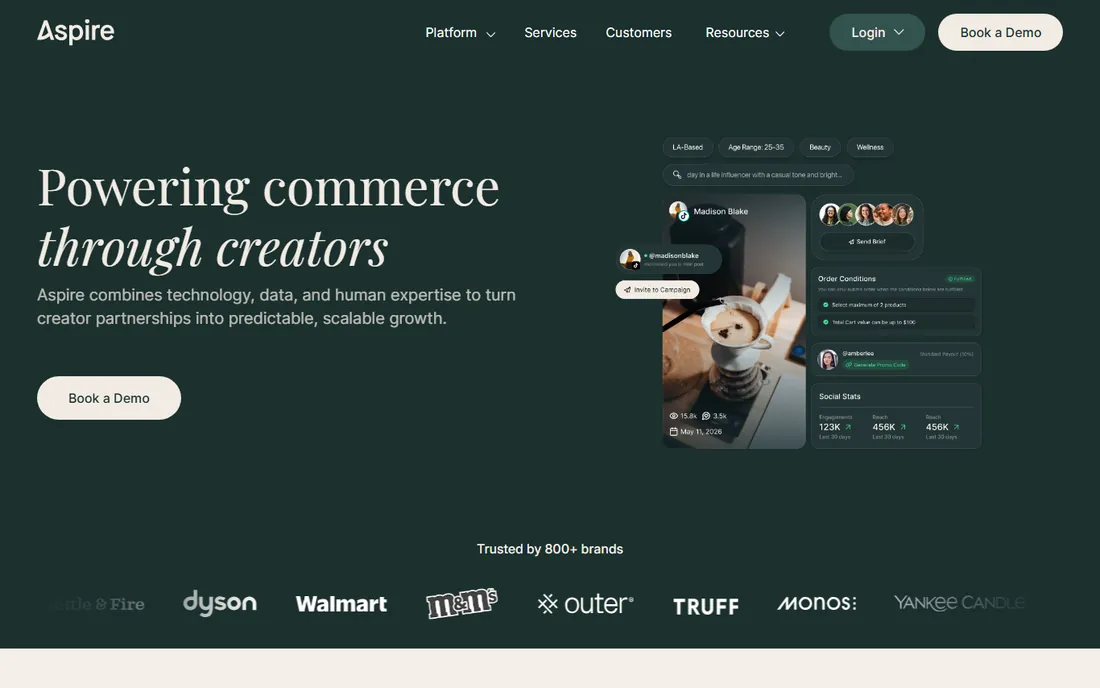
Aspire built its reputation on the creator marketplace, where influencers apply to work with your brand instead of you chasing them. That inbound flow suits ambassador programs, where you want a steady bench of creators who already like the product. Once they join, the CRM side handles outreach, contracts, content approvals and payments in one workflow.
It is a serious platform with serious pricing. Plans are annual and quote-based, and published estimates put first-year costs in the tens of thousands, which puts Aspire out of reach for small teams. The Shopify integration is genuinely useful, syncing products and discount codes so creators can promote without manual setup. Choose Aspire when the goal is a community of repeat creators rather than a single campaign burst.
What we like- Creator marketplace feeds inbound applications
- Strong Shopify integration
- Built for long-term relationships
Watch out for- Quote-based annual pricing
- Overkill for one-off campaigns
Starting priceSee website
Free planFree trial
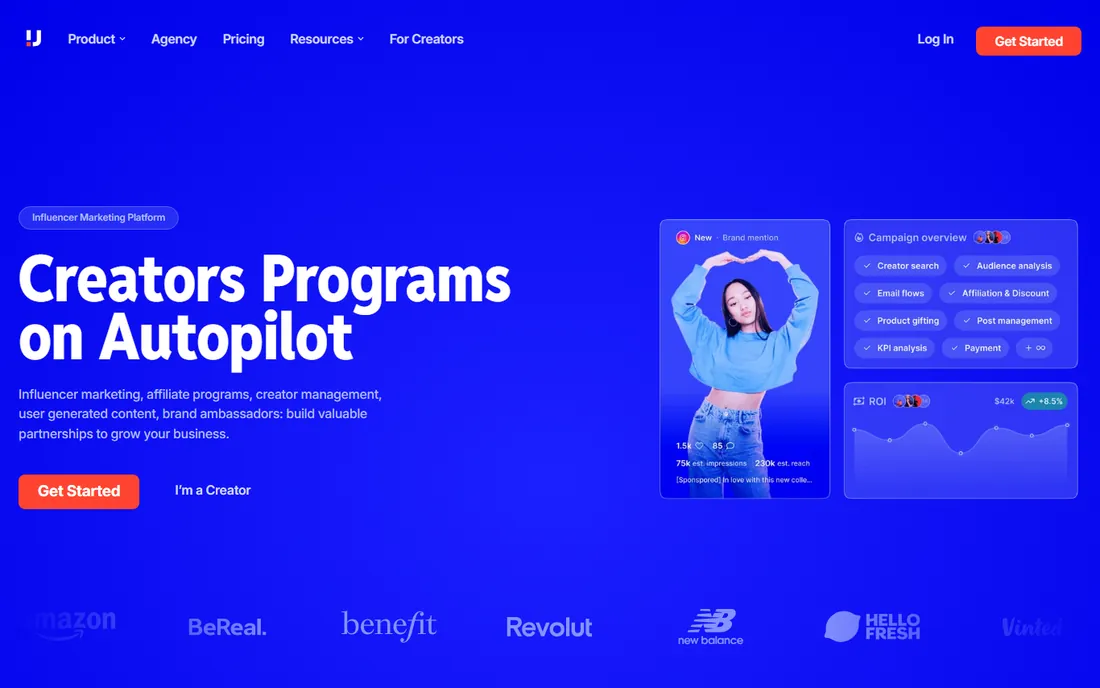
Upfluence's signature feature is Live Capture, which scans your existing customer base and social followers to find people who already post about your category. Creators who bought from you convert better and negotiate less, so this is a practical edge rather than a gimmick. Around that core sit the standard campaign tools: outreach sequences, affiliate tracking, content approval and reporting.
The platform covers Instagram, TikTok, YouTube and more, with integrations for Shopify, WooCommerce and Klaviyo. Pricing is modular and contract-based, with a 12-month minimum on full plans, so it suits brands ready to commit. Upfluence fits teams that believe their best creators are hiding in their customer list and want software to surface them.
What we like- Live Capture finds creators already buying from you
- Broad e-commerce integrations
- All-in-one campaign tools
Watch out for- Annual contracts
- Discovery database smaller than pure-play competitors
Starting priceSee website
Free planNo
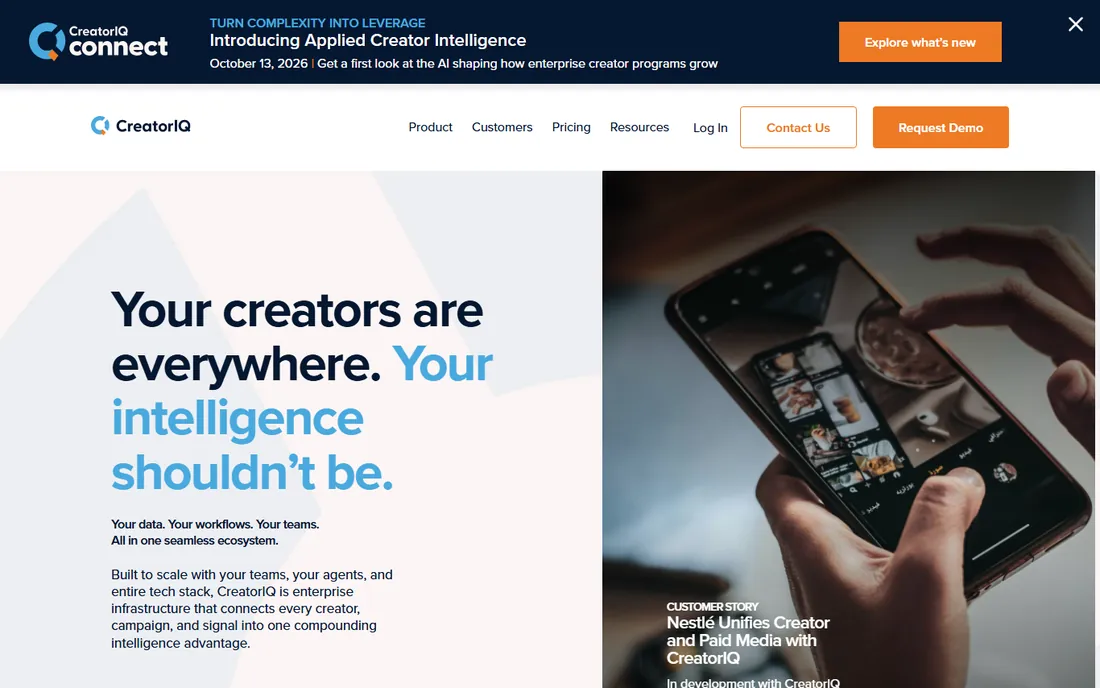
CreatorIQ is the platform large brands pick when influencer marketing is a always-on channel with regional teams, legal review and compliance requirements. It handles multi-brand portfolios, complex approval chains and paid media amplification of creator content. The data layer is unusually deep, with API access for teams that pipe creator data into their own warehouses and dashboards.
That power comes with enterprise friction. Contracts are annual only, pricing is quote-based at the high end of the market, and onboarding takes real work. Small and mid-size brands will find it oversized. For a global consumer brand running hundreds of creators across markets, CreatorIQ is one of the few platforms built to hold that complexity.
What we like- Enterprise-grade governance and approvals
- Deep API and data access
- Strong analytics for large programs
Watch out for- Annual-only contracts at enterprise prices
- Long implementation
Starting price$199/month (billed annually)
Free planFree trial
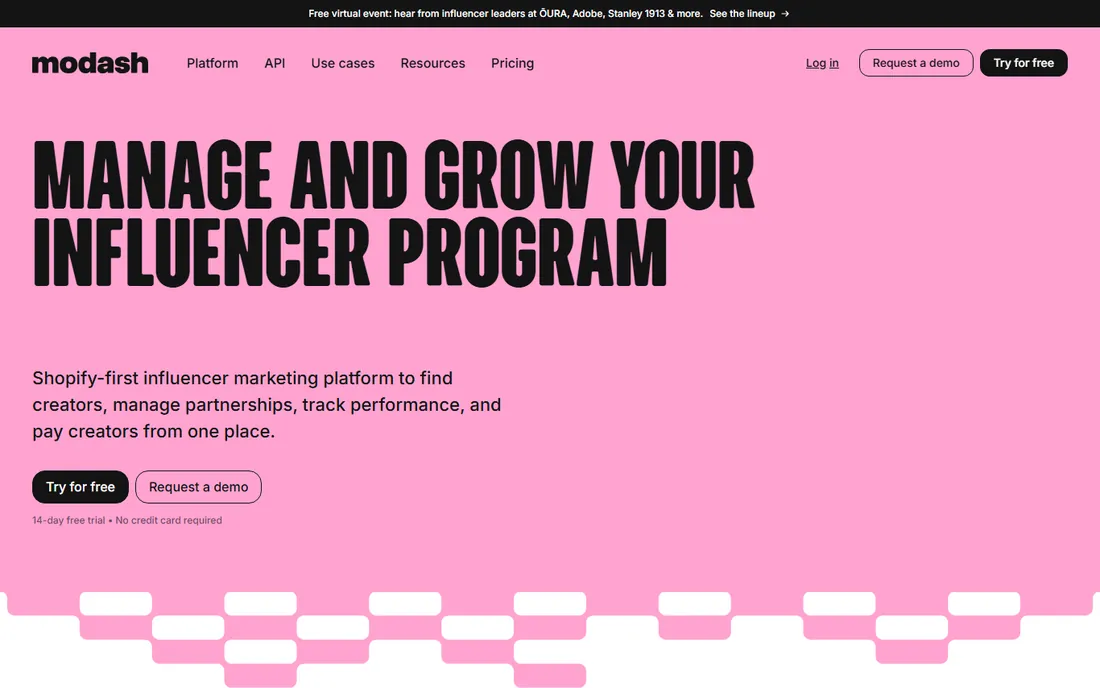
Modash does one job extremely well: finding and vetting creators. Its database spans Instagram, TikTok and YouTube with filters for audience demographics, engagement authenticity and brand affinities. The fake-follower analysis is a genuine help during shortlisting, flagging suspicious growth patterns before you reach out. For teams that already have a workflow for outreach and management, Modash slots in as the research layer.
Pricing is the other reason it stands out. Plans start at $199 per month on annual billing or $299 month-to-month, with a 14-day free trial, which makes it the most accessible serious discovery tool in the category. The limitation is scope: campaign management features are thin, so expect to run outreach and tracking elsewhere. If discovery is your bottleneck, start here.
What we like- 250M+ creator profiles indexed
- Monthly billing with no annual lock-in
- Transparent published pricing
Watch out for- Campaign management is basic
- No payments or contract tools
Starting priceSee website
Free planNo
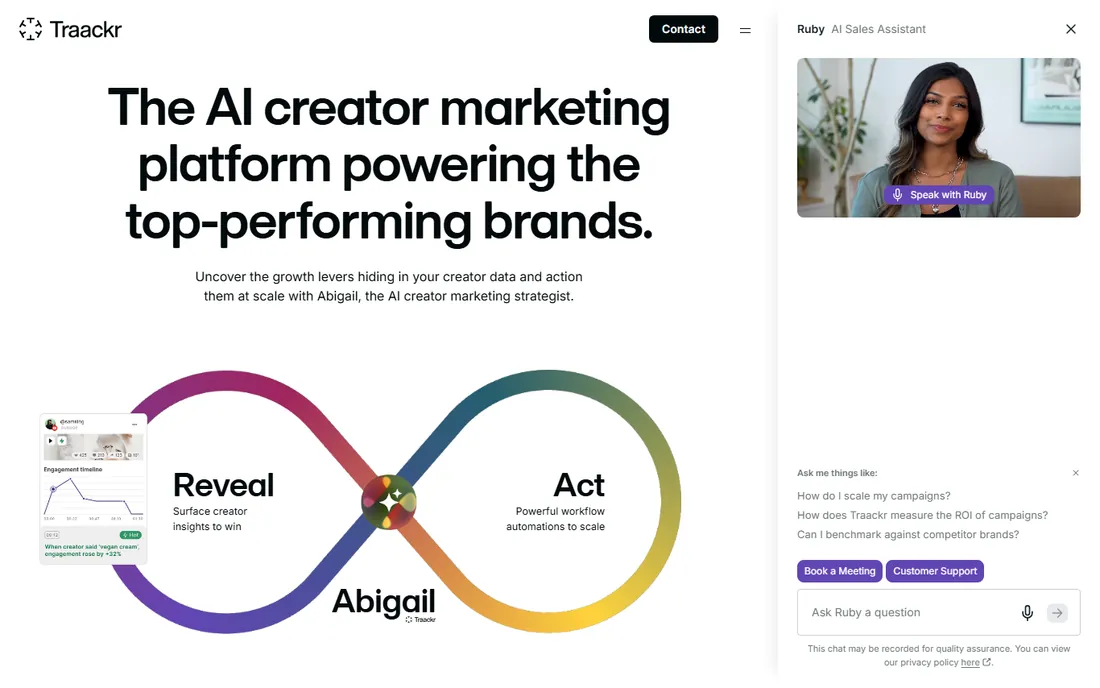
Traackr positions itself as the measurement platform for influencer marketing, and the positioning holds. Its benchmarking data lets you compare your program against competitors on spend, reach and engagement, which is exactly what a CMO asks for at budget time. The creator database and campaign tools are solid, but analytics is the reason teams buy it.
Entry pricing is reported from around $25,000 per year with annual contracts, so this is a mid-market and enterprise buy. Implementation and onboarding are part of the package, and the team is known for consultative support. Pick Traackr when the program already exists and the question is how to prove it works and where to spend next.
What we like- Best-in-class benchmarking and share-of-voice data
- Strong for global programs
- Credible measurement framework
Watch out for- Expensive annual contracts
- Not a fit for small teams
Starting price$299/month (billed annually)
Free planFree trial
HypeAuditor started as an analytics tool for spotting fake followers, and that DNA still defines it. Before you pay a creator, you can check audience quality scores, engagement authenticity, follower growth anomalies and demographic breakdowns. For brands burned by inflated accounts, this vetting layer pays for itself quickly.
The platform has grown into campaign discovery and tracking, but it is still analytics-first rather than a full IRM suite. Pricing starts at $299 per month on annual billing. Use HypeAuditor as your verification step, either standalone or alongside a management platform, whenever creator authenticity is a real business risk.
What we like- Deep audience authenticity analysis
- Fraud and fake-follower detection
- Useful for vetting before spend
Watch out for- Not a full campaign management suite
- Annual billing on entry plans
#8
Later Influence
Best for: Brands consolidating social and influencer
Visit later.com
Starting priceSee website
Free planFree trial
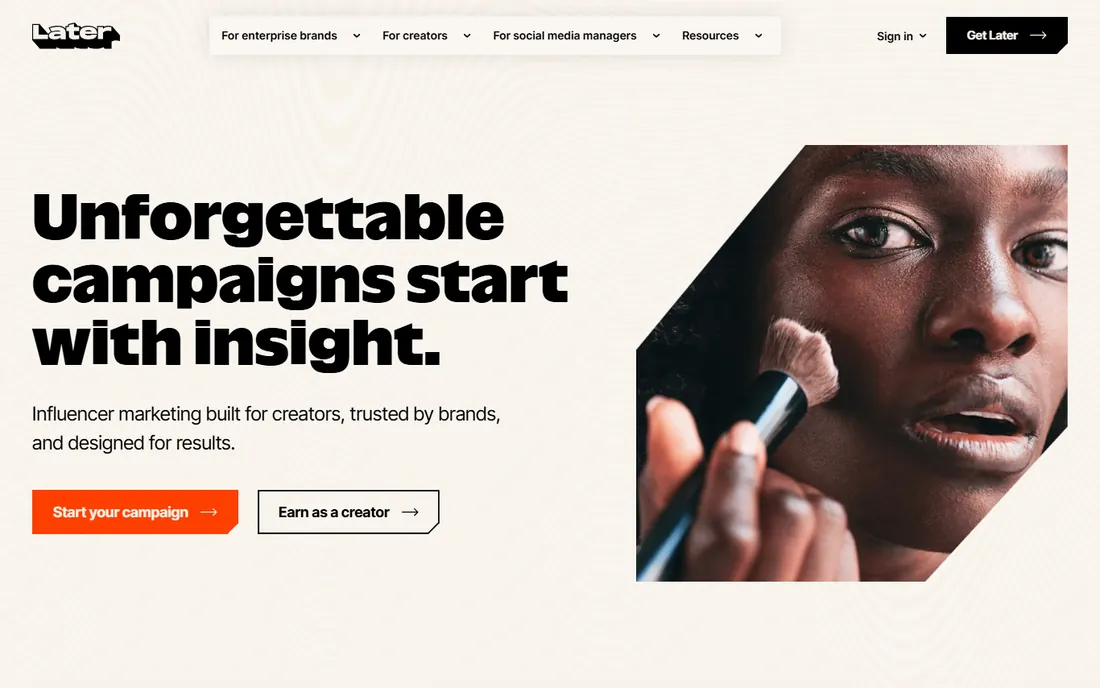
Later Influence (formerly Mavrck) comes bundled with Later's social media management tools, which makes it attractive for teams that want one vendor for organic social and creator programs. Discovery, outreach, payments and reporting are all present, and the shared calendar view keeps influencer content aligned with the broader content plan.
The compromise is depth. Against GRIN or CreatorIQ, the influencer feature set is lighter, particularly on attribution and enterprise governance. Pricing is custom on the Influence side. Later Influence fits social-first teams where influencer marketing is one channel among several and consolidation matters more than specialization.
What we like- Pairs with Later's social media management suite
- Creator discovery built in
- Good for social-first teams
Watch out for- Influencer features are thinner than pure-play platforms
- Enterprise pricing on the Influence side
Starting price$649/month
Free planFree trial
Influencer Hero is a newer entrant aiming at the gap between self-serve tools and enterprise suites. The pitch is a full platform, discovery, CRM, AI-written outreach sequences, gifting logistics and reporting, at $649 per month (or $454 per month on annual billing). The AI outreach is the differentiator, generating personalized first messages at volumes a small team could never write by hand.
The 3-month minimum keeps the commitment modest by category standards. The obvious caveat is youth: fewer public case studies and a smaller review footprint than the established names. For a growing DTC brand that wants automation without a $30,000 annual contract, Influencer Hero deserves a trial.
What we like- AI-personalized outreach sequences
- CRM updates on replies and shipments
- Lower cost than enterprise rivals
Watch out for- 3-month minimum commitment
- Newer brand with a smaller track record
How we chose
We started from the platforms that appear most often in buyer shortlists on G2, Capterra and agency recommendation lists, then checked each one for current availability and a live product. Pricing details came from vendor pricing pages where published and are marked as quote-based where the vendor keeps them behind a demo. We weighted discovery depth, campaign management completeness, e-commerce integrations, contract flexibility and fit for US small and mid-size teams. We did not run hands-on trials; the assessments rest on documentation, pricing pages and aggregated public reviews.
What to check before you sign
Annual contracts are the norm here, and they are the biggest risk. Most enterprise platforms require 12 months upfront, which means a bad pick costs a full year of budget. Ask for a paid pilot or a quarterly term before committing, and get the renewal price in writing, because first-year discounts often vanish at renewal.
Discovery database size matters less than filter quality. A platform claiming hundreds of millions of profiles is only useful if you can narrow by audience location, engagement rate, brand affinity and past sponsored content. During the demo, run a real search for your niche and count how many results are actually relevant.
Clarify who owns creator relationships. Some platforms push you toward their marketplace; others let you bring your own creators into a private CRM. If you already work with creators directly, make sure the platform supports that instead of forcing everything through its network.
Finally, pin down payments and usage rights. Check whether the platform handles creator payouts (and what fee it takes), and whether content usage rights for ads are tracked in the contract workflow. Sorting this out in a spreadsheet later is painful.
Pricing, explained
Expect three tiers. Self-serve discovery tools run $199 to $649 per month with monthly or short-term options; Modash and Influencer Hero live here. Mid-market suites like GRIN, Upfluence and Aspire are quote-based, typically landing in the low thousands per month on annual contracts. Enterprise platforms (CreatorIQ, Traackr) start around $25,000 to $30,000 per year and climb with users and regions.
Watch for the extras: some vendors charge platform fees on creator payments, charge per seat for team members, or price discovery and management as separate modules. Ask for the all-in number for your team size before comparing quotes.
Frequently asked questions
What is the best influencer marketing software for small businesses?
Modash is the most practical starting point, with monthly plans from $199 and a large discovery database. Shopify brands should also trial GRIN, which handles product seeding and affiliate tracking from one dashboard. Avoid the enterprise suites until the program justifies an annual contract.
How much does influencer marketing software cost?
Self-serve tools cost $199 to $649 per month. Mid-market platforms typically run $1,000 to $3,000 per month on annual contracts. Enterprise suites start around $25,000 per year. Almost every serious platform beyond the self-serve tier requires a demo for exact pricing.
Do these platforms find influencers for you?
Most include a discovery database you can search by niche, audience size, location and engagement metrics. Some, like Upfluence, can also surface creators from your existing customers. None of them replace outreach; you still need someone to pitch and negotiate.
Can I manage creator payments through the software?
Many platforms handle payouts, contracts and tax forms, but fee structures differ. GRIN, Aspire, CreatorIQ and Later Influence all include payment workflows. Confirm whether the vendor takes a percentage of payouts or charges a flat platform fee before you commit.
What is the difference between an influencer marketplace and an IRM platform?
A marketplace connects you with creators who apply to campaigns; an IRM (influencer relationship management) platform manages creators you source yourself, like a CRM. Aspire leans marketplace, GRIN leans IRM, and several tools do both.
How do I avoid fake followers when choosing creators?
Use a vetting tool like HypeAuditor or Modash to check audience authenticity, engagement anomalies and follower growth patterns before outreach. Look for steady organic growth and comments that read like real conversation, not emoji strings.
Sources we checked (12)
- https://grin.co/pricing
- https://www.aspire.io/pricing
- https://www.upfluence.com/pricing
- https://creatoriq.com/
- https://www.modash.io/pricing
- https://traackr.com/pricing
- https://hypeauditor.com/pricing
- https://later.com/pricing
- https://www.influencerhero.com/pricing
- https://toolradar.com/guides/best-influencer-marketing-platforms
- https://influencerfee.com/blog/influencer-marketing-platforms-comparison/
- https://hypefy.ai/blog/best-influencer-marketing-platform-for-us-brands
Is your product missing or out of date?
We review this list regularly. Vendors can request a listing, send updated pricing or ask about featured placement.

Shihab Mia · Founder, Rankite
Shihab has spent more than a decade helping SaaS and e-commerce brands grow through search. He writes Rankite's software buying guides from pricing pages, documentation and public user reviews. More about Shihab.