How we make this list: we compare pricing pages, product documentation and public user reviews. Ratings come from G2, Capterra or Trustpilot, with the date we checked them.
Key takeaways
- PredictHQ is the default choice for teams that want a single API feeding event data into forecasts, pricing and staffing models.
- Hotels that live on group business get more from Knowland and Lighthouse than from a generic event feed.
- AirDNA and Placer.ai are the practical picks for short-term rental operators and US retailers who need demand signals without an enterprise contract.
- Most vendors in this category do not publish prices, so budget for a sales conversation and ask about API call limits and contract length before you sign.
Quick comparison
| Tool | Best for | Starting price | Free plan |
|---|
 PredictHQ PredictHQ | API-first event data for forecasts | See website | Free trial |
 Lighthouse Lighthouse | Hotel rate and market benchmarking | See website | No |
 Knowland Knowland | Winning group and meetings business | See website | No |
 AirDNA AirDNA | Short-term rental demand and pricing | $34/month (billed annually) | Yes |
 Mabrian Mabrian | Destination-level tourism intelligence | See website | No |
 Zartico Zartico | Measuring event impact for destinations | See website | No |
 Placer.ai Placer.ai | Foot traffic and event impact analysis | See website | Yes (freemium) |
 RateGain RateGain | Hotel distribution plus demand forecasting | See website | No |
 Explorium Explorium | Enriching AI models with event signals | See website | Free trial |
Is your product missing or out of date?
We review this list regularly. Vendors can request a listing, send updated pricing or ask about featured placement.
The best event intelligence software
Starting priceSee website
Free planFree trial
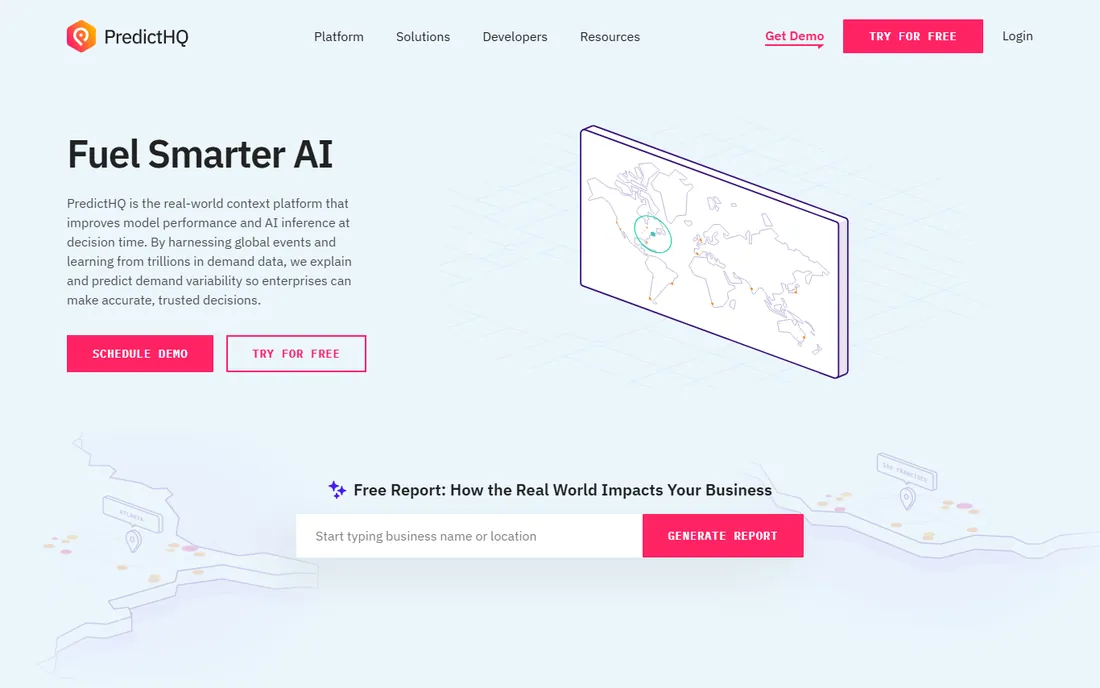
PredictHQ is the name that comes up first whenever demand forecasting teams talk about event data, and the product earns the reputation. The company describes itself as a real-world context platform for AI and forecasting, with a feed of more than 100 million events across 19 categories. What separates it from a raw event calendar is the Beam relevancy engine, which scores how much each event is likely to move demand, flags demand surges when several events converge, and suggests the radius around your locations worth watching.
The delivery model is built for technical buyers. You get an Events API, a Features API with prebuilt variables for machine learning models, a Forecasts API, and warehouse delivery through Snowflake or AWS Data Exchange. Customers named on the site include Uber, Domino's, Walgreens, Instacart and IHG, which tells you the target buyer is a large operator with a forecasting team. Pricing is not published; the pricing page groups plans around Events, Features and Forecasts, with a free trial that requires no credit card. If you do not have engineers or data scientists in-house, expect a longer road to value.
What we like- 100M+ events across 19 categories
- Beam relevancy engine scores event impact
- Documented APIs plus Snowflake and AWS delivery
Watch out for- No public pricing
- Built for data teams, not casual users
Starting priceSee website
Free planNo
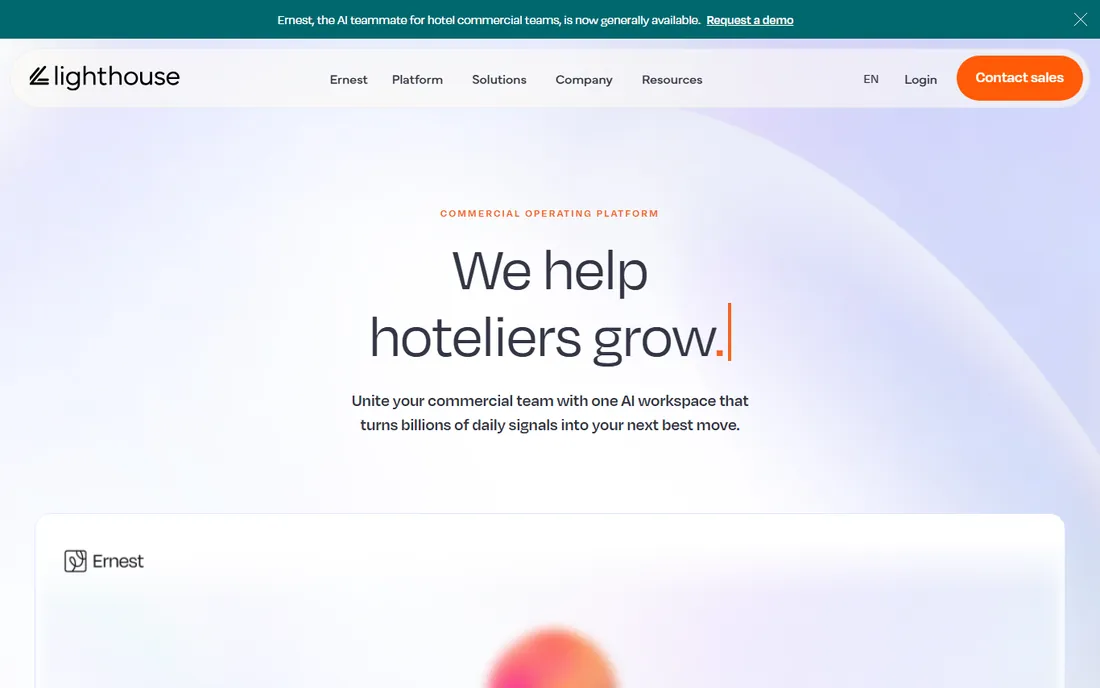
Lighthouse is the current name of OTA Insight, which rebranded in late 2023. The platform covers rate shopping, market intelligence, benchmarking, parity monitoring, business intelligence and a pricing assistant, with a Destination Insight module that tracks events and their effect on hotel demand. For a revenue manager, the appeal is seeing event-driven demand shifts on the same screen as competitor rates and pickup pace.
The company reports 65,000 hotel customers in 185 countries and has grown by acquisition, including Transparent in 2022. In June 2026 it launched "Ernest", an AI teammate for commercial teams. The catch is that Lighthouse is a full commercial platform sold like enterprise software, so pricing is quote-based and smaller independents may find the commitment heavy. If your main question is what to charge this weekend, this is the most direct answer in the category.
What we like- Full commercial platform beyond events
- 65,000 hotels across 185 countries
- AI teammate "Ernest" launched in 2026
Watch out for- Pricing only on request
- Event data is one input among many
Starting priceSee website
Free planNo
Knowland, now branded as Knowland by Cendyn, plays a different game from the forecasting APIs. It tracks meetings and events themselves: who booked what, where groups went instead of your property, and which organizations are planning events in your market. The homepage cites more than 21 million events, 8,603 hotels, 964,098 organizations and 330,580 contacts. For a hotel sales team, that is prospecting fuel.
The honest limitation is scope. Knowland is built for group and corporate business at hotels, not for retailers or attractions trying to forecast foot traffic. Pricing is not published. If your revenue problem is transient leisure demand, one of the API-first tools above will serve you better. If it is filling meeting space, Knowland is the specialist.
What we like- Deep meetings and events database for hospitality
- Tracks lost business and competitor wins
- Now part of Cendyn
Watch out for- Narrow focus on group business
- No public pricing
Starting price$34/month (billed annually)
Free planYes
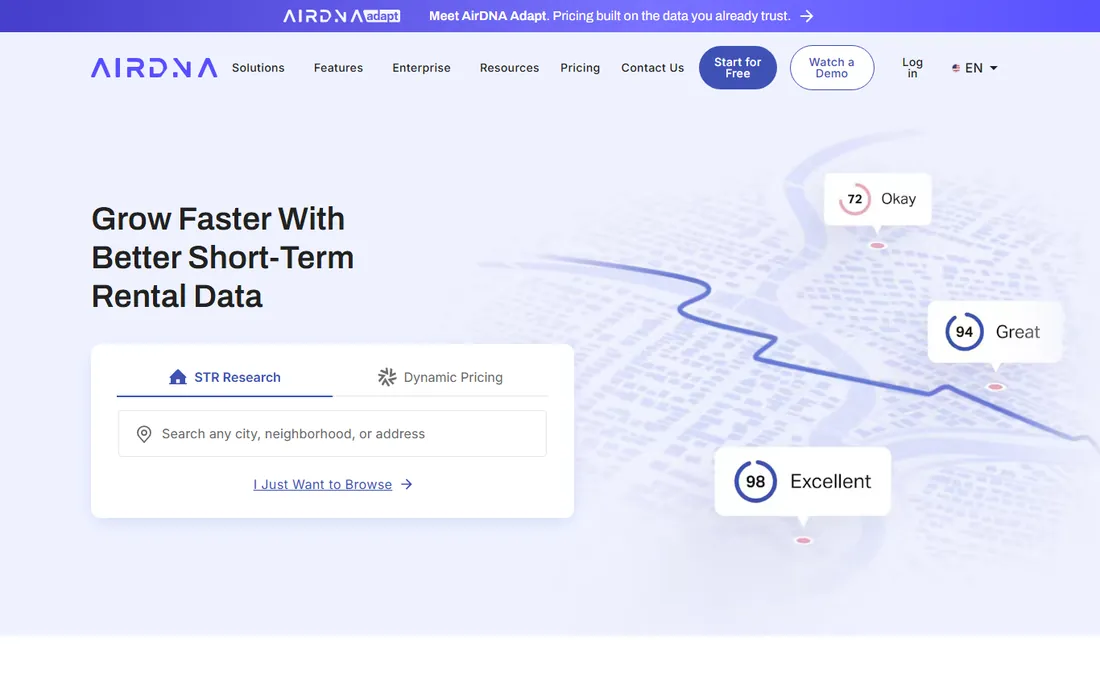
AirDNA tracks the short-term rental market: occupancy, rates, revenue and supply across more than 15 million listings in 120,000 markets and 150 countries, with history back to 2014. For demand spikes specifically, its local event detection flags concerts, festivals and sports events that move STR bookings, which helps hosts and managers set rates and minimum stays ahead of the surge instead of reacting to it.
Pricing is refreshingly public in a category where almost nothing is. Market Research starts at $34 per month on annual billing, there is a free plan, and the Adapt product for property managers runs $20 per listing per month with a 30-day free trial. The limitation is the audience. This is a tool for STR operators and investors, and a hotel or retailer will get cleaner signals elsewhere.
What we like- 15M+ listings across 120K+ markets with history to 2014
- Published pricing with a free tier
- Local event detection for rental demand
Watch out for- Built for STR investors and managers, not hotels or retail
Starting priceSee website
Free planNo
Mabrian is a travel intelligence company from Spain, founded in 2013 and part of The Data Appeal Company (Almawave) since 2023. It sells to destinations rather than individual hotels: tourism boards use it to monitor air capacity, hotel pricing, visitor sentiment, spending and sustainability indicators. Modules cover smart destinations, accommodation, sustainability, investment and marketing, and named clients include Corsica, Ibiza, Costa Rica and Qatar.
For event intelligence, the value is context. A destination can see how a festival or sports event shifts arrivals, hotel rates and sentiment in one view. The catch is access. This is an institutional product with quote-based pricing, and a single hotel or retailer cannot buy a slice of it. If you run a destination marketing organization, it belongs on the shortlist.
What we like- Combines air capacity, hotel, sentiment and spending data
- Modules for sustainability and investment
- Used by destinations including Ibiza and Costa Rica
Watch out for- Built for tourism boards and DMOs, not individual businesses
Starting priceSee website
Free planNo
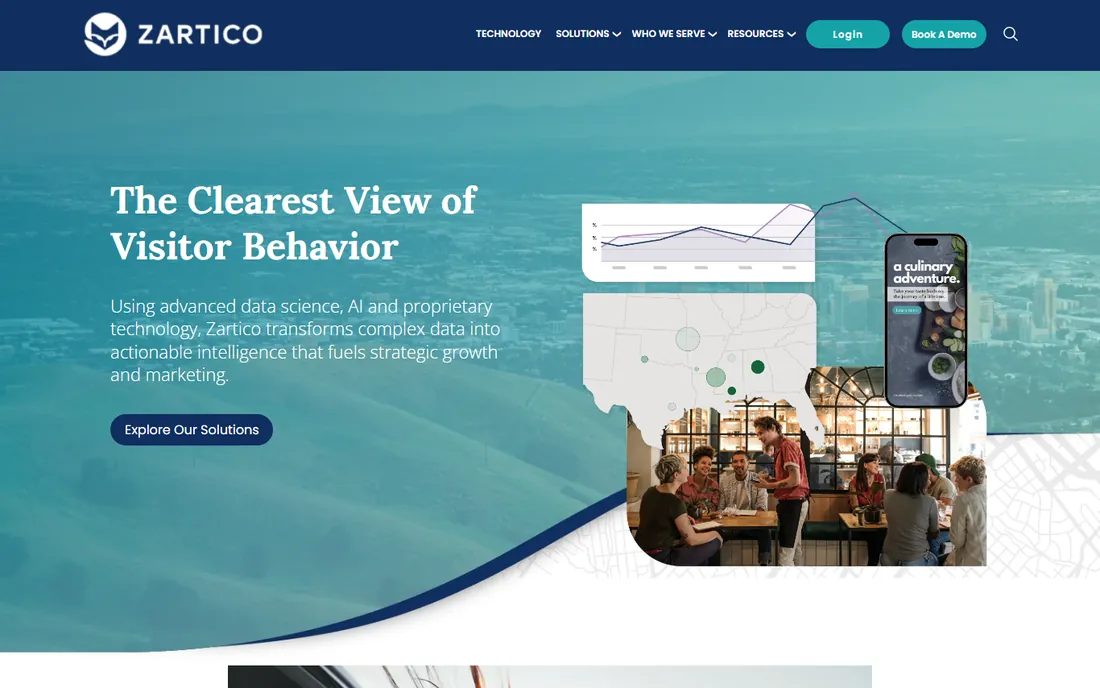
Zartico calls itself a destination operating system, and its pitch is measurement. The platform combines geolocation data, visitor spending and event calendars to show what an event actually did for a destination. The company works with more than 400 destination organizations and holds data back to 2021, and in 2026 it partnered with the U.S. Travel Association. That makes it useful both for justifying event investments and for planning staffing, marketing and infrastructure around the next one.
Like Mabrian, Zartico is built for destination organizations rather than individual operators, and pricing is not published. If you are a DMO choosing between the two, Zartico leans harder into event impact measurement while Mabrian leans into broader tourism intelligence.
What we like- Geolocation plus spending plus event data in one platform
- 400+ destination clients
- Data history back to 2021
Watch out for- DMO-focused
- No public pricing
#7
Placer.ai
Best for: Foot traffic and event impact analysis
Visit placer.ai
Starting priceSee website
Free planYes (freemium)
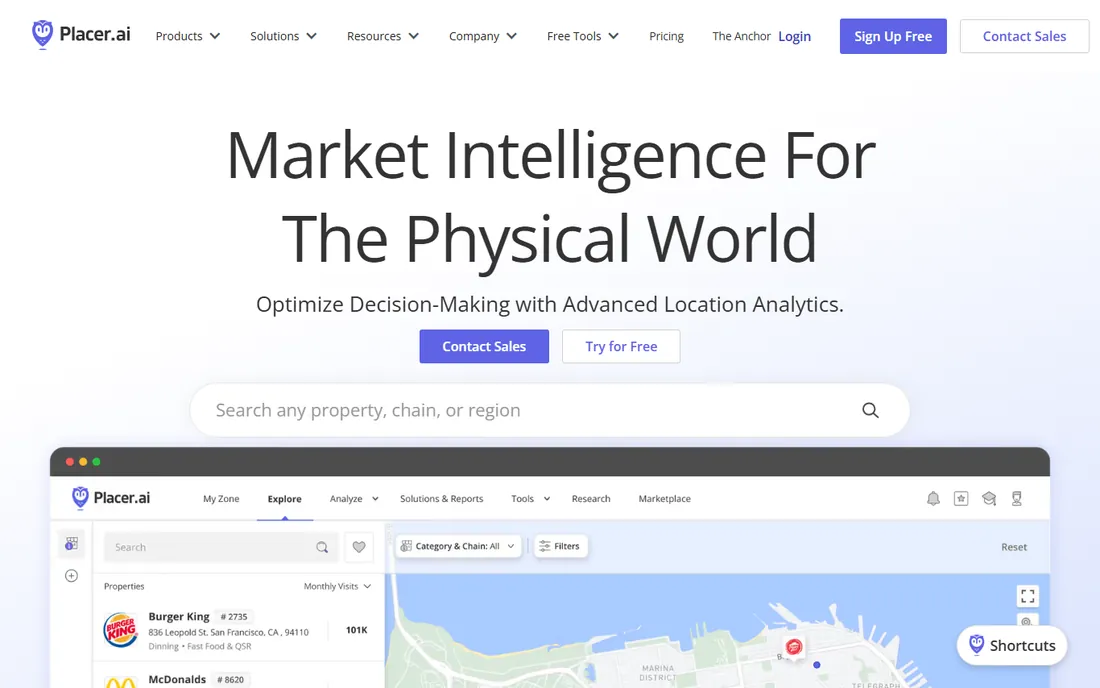
Placer.ai tracks foot traffic from mobile location data, which makes it one of the few tools here that shows what an event did after the fact, not just what it might do. Retailers, restaurants and venue operators use it to measure event-driven visits, compare trade areas, and check whether a new location would cannibalize an existing one. The platform offers free dashboard access, so a curious operator can explore before talking to sales.
The data skews toward the United States, which limits its use for international demand planning. Full platform and API pricing is quote-based. For a US retailer or restaurant group asking whether that festival actually brought customers through the door, this is the most direct evidence available.
What we like- Measures how events move real-world foot traffic
- Free dashboard access
- Trade area and cannibalization analysis
Watch out for- US-centric data
- Full platform pricing not published
Starting priceSee website
Free planNo
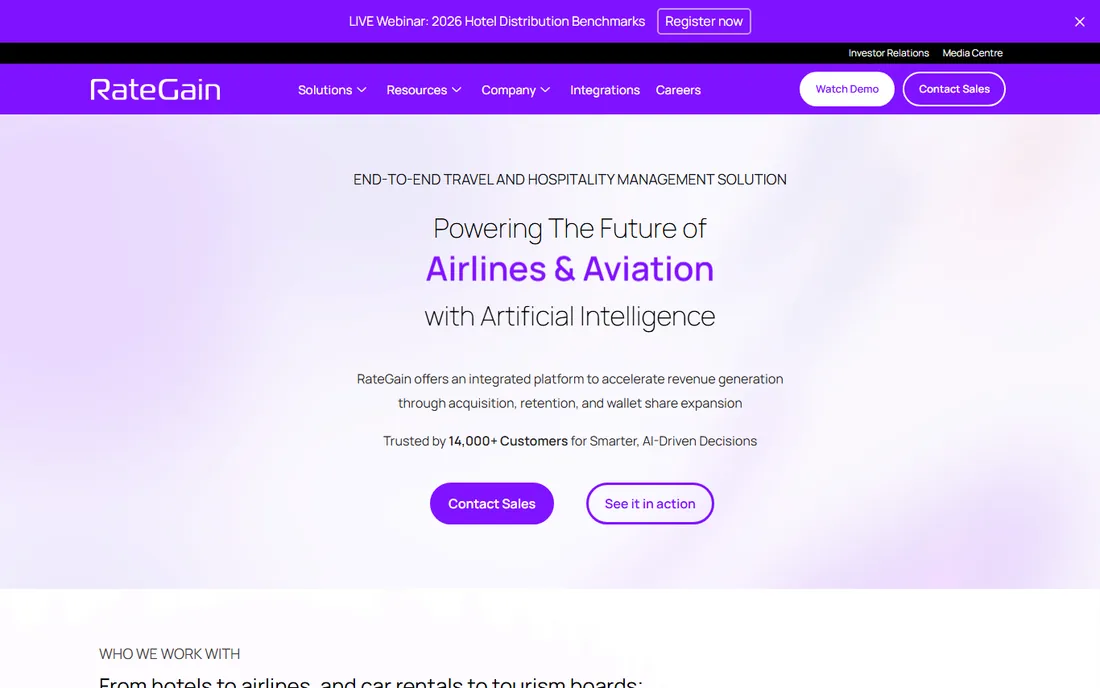
RateGain is a travel technology company founded in 2004 in Noida, India. It sells rate shopping, distribution, marketing and business intelligence tools to hotels, airlines and online travel agencies. Its Demand AI product forecasts demand with event signals baked in, and in April 2026 the company released a FIFA World Cup 2026 Market Pulse Dashboard, a good example of how it packages event intelligence for revenue teams.
The tradeoff of a broad suite is focus. Onboarding a multi-product vendor takes longer than plugging in a single API, and pricing is not published. One transparency note: the RateGain homepage was bot-blocked when we checked it in October 2026, so treat the URL above as our best evidence from the company's own press materials rather than a live-verified homepage.
What we like- Broad travel SaaS suite with a Demand AI product
- Event-driven market dashboards
- Serves hotels, airlines and OTAs
Watch out for- Suite breadth can mean slower onboarding
- No public pricing
Starting priceSee website
Free planFree trial
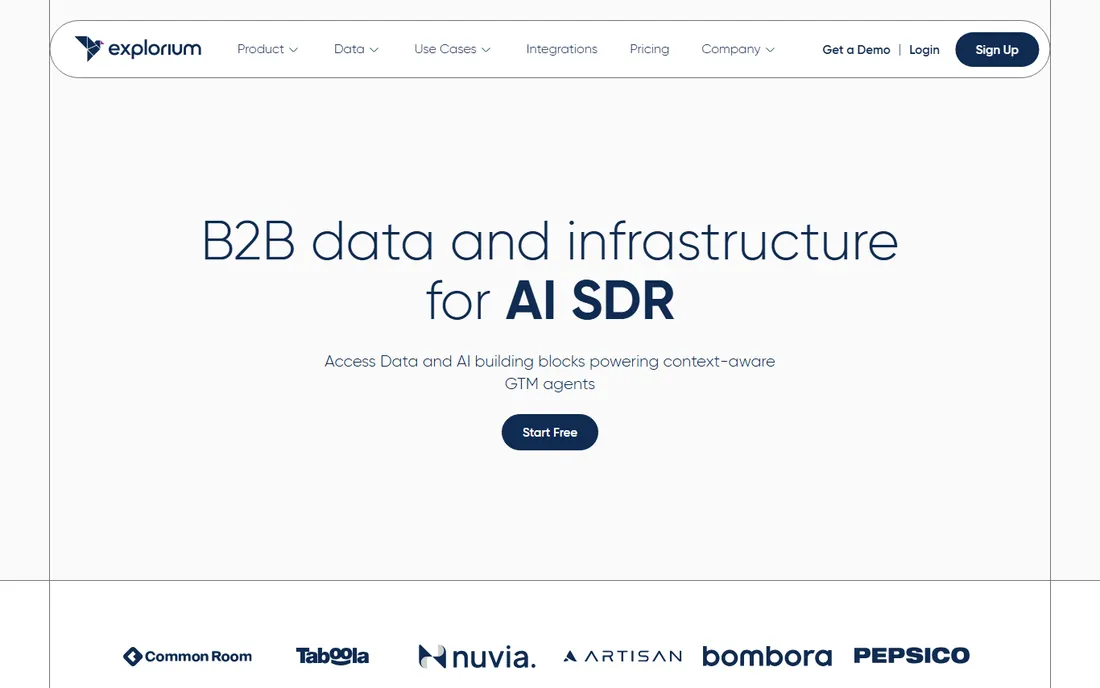
Explorium is a B2B data platform now positioned as a data foundation for AI agents and go-to-market teams. It aggregates thousands of external signals, including events, across 146 million companies and 767 million professional profiles, and delivers them through an API and an MCP server that AI agents can query directly. For a team building demand models or sales prioritization on top of large language models, event signals arrive as one feed among many.
That breadth is also the weakness for this buying guide. Explorium is not an event intelligence specialist, and you will do integration work to turn its signals into demand forecasts. Pricing is quote-based, with a free trial available. Choose it when events are one input to a larger data strategy, not when you need event intelligence out of the box.
What we like- 4,000+ external signals including events
- API and MCP server for AI agents
- 146M+ companies and 767M+ profiles
Watch out for- General data platform, not event-specific
- Pricing not published
How we chose
We started from vendor pricing pages, product documentation and feature lists, then checked how each product is actually used through public reviews on G2 and Capterra and discussions on Reddit. We favored tools with a clear event-intelligence use case for demand spikes: forecasting, pricing, staffing or marketing decisions tied to real events. We weighted fit for small and mid-size US businesses, which is why API-first platforms sit next to products with published pricing and free tiers. We did not test the products hands-on.
What to check before you buy event intelligence
Event data is only useful if it reaches the decision in time and in a form your team can act on. Five checks separate the tools worth paying for from expensive noise.
Coverage that matches your market
Ask which event categories a vendor tracks, which geographies are covered, and how far ahead the calendar runs. A tool strong on US concerts can be thin on European trade shows or local civic events. If your demand comes from one metro area, a national feed with weak local coverage will miss the events that matter most to you.
Impact scoring, not just event counts
Raw event lists are not intelligence. Look for attendance predictions, impact scores, demand-surge detection or relevancy ranking. Ask the vendor to show how it scored a past event in your market and compare that against what actually happened to your bookings or traffic.
Delivery that fits your team
Data can arrive as an API, a warehouse feed, a dashboard, or email alerts. Match this to who will use it. A revenue manager needs the signal inside the pricing tool. A data science team needs clean API access. A dashboard nobody opens is wasted money regardless of data quality.
Pricing model and contract terms
Vendors charge per API call, per location, per seat, or as a flat platform fee. Ask about overage charges, data refresh frequency, how cancellations and postponements are handled, and the contract length. Most vendors here sell annual contracts, so negotiate a pilot or a quarterly out before committing.
How hotels and retailers turn event data into pricing decisions
The workflow that works looks the same across industries. First, event signals flow into the forecasting or revenue management system automatically, not through someone checking a calendar. Second, each event gets an impact score tied to a specific location, so a downtown arena concert moves downtown rates more than airport ones. Third, rates, staffing and inventory adjust on a schedule, daily or weekly, rather than in a panic the week of the event. Fourth, the team measures what actually happened and feeds the error back into the model.
The common mistakes are predictable. Teams treat every event as equal and overprice for a minor convention while underpricing for a sold-out stadium show. They react too late because the data arrived as a report instead of an alert. Or they buy an enterprise feed, never connect it to the pricing tool, and let the subscription renew out of habit. The cheapest tool that is actually connected to your decisions beats the best feed that nobody uses.
Frequently asked questions
What is event intelligence software?
It is software that collects information about upcoming events (concerts, sports, conferences, festivals, civic events) and turns it into demand signals. Businesses use those signals to set prices, schedule staff, plan inventory and target marketing around demand spikes.
How is it different from a ticketing or event calendar feed?
A calendar feed tells you an event exists. Event intelligence software adds impact scoring, attendance predictions, historical comparisons and delivery into forecasting or pricing systems. The difference is whether you get raw listings or an answer to "how much will this move my demand".
How much does event intelligence software cost?
It varies widely. AirDNA publishes pricing from $34 per month, and Qwilr-style transparency is rare in this category. Most vendors (PredictHQ, Knowland, Lighthouse, Mabrian, Zartico, RateGain, Placer.ai, Explorium) keep pricing behind a sales conversation, and enterprise contracts often run into five figures annually. Always ask whether pricing is per API call, per location or per seat.
Can small businesses use these tools, or are they enterprise-only?
Both. AirDNA and Placer.ai offer free or freemium access that a single-location business can use today. The API-first platforms like PredictHQ and Explorium are priced for companies with technical teams. Mid-size hotels often get the best return from Lighthouse or Knowland, which are built for hospitality workflows rather than data science teams.
How far in advance do these tools see events?
Major concerts, sports seasons and conferences are typically visible months ahead. Smaller local events may appear only weeks out. Ask vendors about their lead time for your specific market and event types, and how they handle postponements and cancellations, since stale event data is worse than none.
Sources we checked (10)
- https://predicthq.com/pricing
- https://predicthq.com/
- https://knowland.com/
- https://www.mylighthouse.com/
- https://www.airdna.co/
- https://mabrian.com/
- https://www.zartico.com/
- https://www.placer.ai/
- https://www.rategain.com/
- https://explorium.ai/
Is your product missing or out of date?
We review this list regularly. Vendors can request a listing, send updated pricing or ask about featured placement.

Shihab Mia · Founder, Rankite
Shihab has 5+ years in B2B and SaaS SEO. He writes Rankite's software buying guides from pricing pages, documentation and public user reviews. More about Shihab.