How we make this list: we compare pricing pages, product documentation and public user reviews. Ratings come from G2, Capterra or Trustpilot, with the date we checked them.
Key takeaways
- Only a few of the biggest enterprise vendors publish list prices. Salesforce starts at $25 per user/month for Starter Suite and Microsoft Dynamics 365 Sales starts at $65 per user/month paid yearly. SAP, Oracle NetSuite, Workday, ServiceNow and Adobe quote every deal.
- The subscription is rarely the biggest cost. Mid-market ERP and HR projects often spend as much on implementation partners as on the first year of licenses.
- Atlassian and HubSpot are the only brands on this list with a permanent free plan, which makes them the easiest to trial with a real team before signing anything.
- Zoho One is the strongest budget option for a company that wants one vendor for CRM, finance, HR and support, though its depth in each area is thinner than the category leaders.
- Annual contracts are the norm. Salesforce says most of its products use annual contracts, and Microsoft's published Dynamics 365 prices assume yearly payment.
Quick comparison
| Tool | Best for | Starting price | Free plan |
|---|
 Microsoft Dynamics 365 | Companies already on Microsoft 365 | $65 per user/month (Sales Professional, paid yearly) | Free trial |
 Salesforce | CRM that grows from 5 to 5,000 sellers | $25 per user/month (Starter Suite) | Free trial |
 SAP | Manufacturers and complex supply chains | See website | No |
 Oracle NetSuite | Mid-size companies outgrowing QuickBooks | See website | No |
 Workday | HR and finance for 500+ employees | See website | No |
 ServiceNow | IT and employee service workflows | See website | No |
 Adobe Experience Cloud | Large marketing and content teams | See website | No |
 Atlassian | Software, IT and project teams | See website | Yes |
 HubSpot | Marketing-led SMB and mid-market firms | See website | Yes |
 Zoho One | All-in-one suite on a tight budget | See website | Free trial |
Is your product missing or out of date?
We review this list regularly. Vendors can request a listing, send updated pricing or ask about featured placement.
The best enterprise software brands
Starting price$65 per user/month (Sales Professional, paid yearly)
Free planFree trial
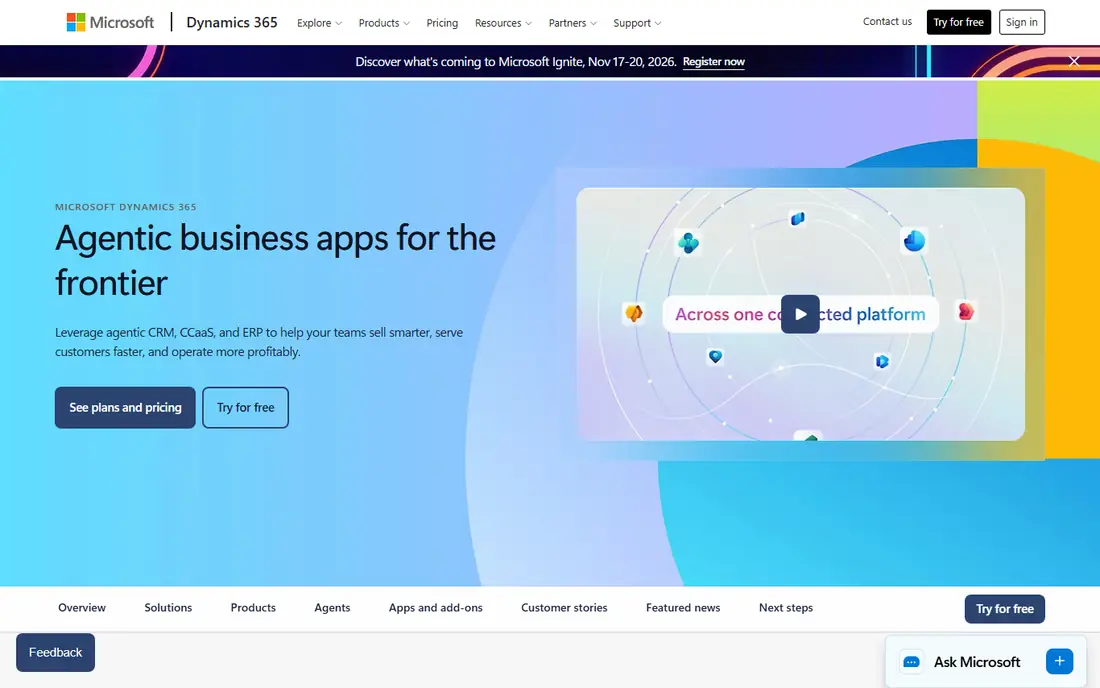
Microsoft is the safest first call for a business that already lives in Outlook, Teams and Excel. Dynamics 365 is a family of apps rather than one product: Sales, Customer Service, Field Service, Business Central for small and mid-size ERP, and Finance and Supply Chain Management for larger operations. That lets a company start with one department and add the rest later without changing vendors.
Pricing is more transparent than most rivals at this level. Dynamics 365 Sales Professional is listed at $65 per user/month, Sales Enterprise at $105 and Sales Premium at $150, all paid yearly. Microsoft also runs a free trial of the Sales app, so a team can test pipeline views and Outlook integration before talking to anyone in sales.
The catch is everything around the license. Combining apps, Copilot features and Power Platform capacity creates a licensing puzzle that many buyers hand to a partner, and partners bill for configuration and training. Budget for that work up front rather than discovering it in month two.
What we like- Native ties to Outlook, Teams and Excel
- Published per-user prices for core apps
- Covers CRM, ERP, service and field operations under one brand
Watch out for- Licensing gets confusing once you mix apps and add-ons
- Most real deployments need a certified partner
#2Salesforce
Best for: CRM that grows from 5 to 5,000 sellers4.4/5 on
G2 (27,566 reviews, checked Oct 2026)
Visit salesforce.com
Starting price$25 per user/month (Starter Suite)
Free planFree trial
Salesforce is still the reference point for CRM, and its small-business pricing makes it easier to start than its reputation suggests. Starter Suite costs $25 per user/month, billed monthly or annually, with no user maximum. Pro Suite, which adds more customization and automation, starts at $100 per user/month billed annually.
The real strength is the ecosystem. Thousands of add-ons in AppExchange, a large pool of certified admins and consultants in the US, and integrations with almost every sales and marketing tool mean you will rarely hit a wall. Service Cloud also starts at $25 per user/month, so sales and support can share customer records from day one.
The honest weakness is what happens after year one. Advanced features such as forecasting, sandboxes, AI and marketing automation sit in higher editions or paid add-ons, and Salesforce says most of its products use annual contracts. Account Engagement (its B2B marketing automation), for example, starts at $1,250 per month for up to 10,000 contacts billed annually. Model your three-year cost, not just the entry price.
What we like- Low published entry price
- Huge AppExchange ecosystem and admin talent pool
- Scales from small teams to global sales orgs
Watch out for- Costs climb steeply in higher editions and add-ons
- Serious customization needs a trained admin
#3
SAP
Best for: Manufacturers and complex supply chains
Visit sap.com
Starting priceSee website
Free planNo
SAP is the brand large manufacturers, distributors and multinational groups pick when their operations are too complex for lighter ERP. S/4HANA handles production planning, warehousing, multi-currency accounting and compliance at a level few vendors match. For smaller companies, SAP sells Business One, which is usually bought and implemented through a local reseller.
What stands out is depth. If your business runs bills of materials, batch tracking, multiple plants or intercompany transactions, SAP has a module and an industry template for it.
The catch is the road to running. SAP projects tend to be measured in months, and Business One pricing in the US is typically quoted by partners rather than shown on a public price list. A 20-person services firm will usually find SAP more system than it needs.
What we like- Deepest ERP for manufacturing, inventory and multi-entity finance
- A dedicated small-business product (Business One)
- Global partner network
Watch out for- Long implementations
- Pricing set by quote and often by partner
#4Oracle NetSuite
Best for: Mid-size companies outgrowing QuickBooks4.1/5 on
G2 (4,969 reviews, checked Oct 2026)
Visit netsuite.com
Starting priceSee website
Free planNo
NetSuite is the default upgrade path for companies that have outgrown QuickBooks or Xero and need real ERP without running servers. Finance, order management, inventory, basic CRM and ecommerce share one database, which is why finance teams like it for consolidated reporting across several entities.
Oracle does not publish a price list. Independent pricing guides describe the model as an annual base platform license plus per-user fees and paid modules, and implementation is a separate line item that can range from tens of thousands of dollars upward depending on complexity.
Read the renewal terms closely. A recurring theme on Reddit and review sites is price increases at renewal, so negotiate a renewal cap into the first contract. NetSuite also needs a capable admin; many mid-size firms end up with a part-time consultant on retainer.
What we like- True cloud ERP with finance, inventory, CRM and ecommerce in one database
- Strong multi-subsidiary accounting
- Large partner and consultant market
Watch out for- Quote-only pricing with a base license plus per-user fees
- Renewal increases are a common complaint in public reviews
#5Workday
Best for: HR and finance for 500+ employees4.2/5 on
G2 (2,449 reviews, checked Oct 2026)
Visit workday.com
Starting priceSee website
Free planNo
Workday fits companies with several hundred employees or more that want HR, payroll and finance on one data model. Its core strength is the employee record. Hiring, compensation, performance reviews and org charts all draw from the same source, so HR reports do not depend on spreadsheets stitched together each quarter.
Employees tend to find it easy to use, which matters for adoption. Self-service for time off, benefits and pay stubs cuts tickets to HR.
The catch is fit. Workday quotes every deal, typically per employee per year, and independent buyer data shows contracts ranging from tens of thousands to hundreds of thousands of dollars annually. A 60-person company will usually be better served by a mid-market HR platform.
What we like- Single system for HR, payroll, talent and financials
- Clean employee self-service
- Predictable twice-yearly release cycle
Watch out for- Priced and sized for larger organizations
- Implementations usually run months with outside consultants
Starting priceSee website
Free planNo
ServiceNow is the brand big IT departments standardize on. Its IT service management suite covers incidents, requests, changes, assets and a service portal, and the same platform extends to HR service delivery, customer service and custom workflow apps.
The appeal is consistency. Once IT runs on ServiceNow, other departments can build their request forms and approvals on the same system instead of buying separate tools. Independent guides describe its packages in Foundation, Advanced and Prime tiers, priced per fulfiller (the staff who work tickets, not the employees who submit them).
The weakness for a mid-size company is cost and staffing. ServiceNow does not list prices publicly, and getting value from it usually means a certified admin or an implementation partner. Teams under about 50 IT agents often find lighter service desks easier to run.
What we like- Strong IT service management, asset and change processes
- One platform for IT, HR and customer service workflows
- Free developer instances for learning the platform
Watch out for- No public pricing
- Needs dedicated platform admins or a partner to configure
Starting priceSee website
Free planNo
Adobe Experience Cloud is the marketing stack for organizations with large content operations. It bundles Adobe Experience Manager for websites and digital assets, Adobe Analytics, Target for testing and personalization, Marketo Engage for B2B automation, and Real-Time CDP for customer profiles.
Its strongest point is content at scale. A company running dozens of regional sites or thousands of product pages can manage them from one system, with assets flowing in from designers already using Creative Cloud.
The honest catch is that Experience Cloud is overkill for most small and mid-size companies. Adobe does not publish prices, pricing depends on modules and traffic, and Experience Manager projects usually need developers with specific AEM skills. Buy it when your content volume demands it, not for the logo.
What we like- Market-leading web content management, analytics and personalization
- Strong fit with Creative Cloud workflows
- Built for many brands, sites and languages
Watch out for- Quote-only and expensive
- Requires specialist developers and long rollouts
Starting priceSee website
Free planYes
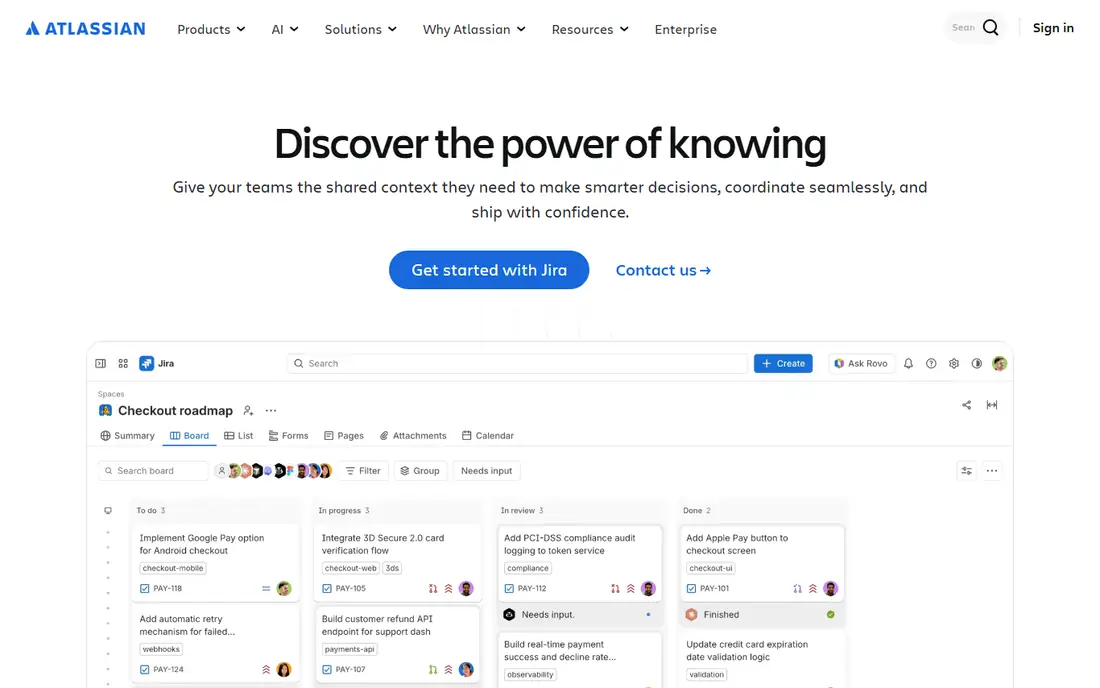
Atlassian is the rare enterprise brand you can start using today for nothing. Jira, Confluence and Jira Service Management all have free plans for small teams (Jira's covers up to 10 users), and paid tiers are priced per user with lower per-seat rates at volume.
Jira is the standard for software teams tracking sprints and bugs, and Jira Service Management gives IT teams a help desk that sits next to the engineering backlog. Confluence handles documentation.
The catch shows up as you grow. Without someone owning workflows and permissions, Jira instances get cluttered fast. Buyers in regulated industries should also check which plan includes the identity and data controls they need, since features like enforced SSO are not in every tier.
What we like- Free plan for small teams
- Jira and Confluence are standards for engineering and IT
- Big marketplace of apps and integrations
Watch out for- Admin overhead grows with the number of projects
- Advanced security and SSO controls cost extra or sit in higher plans
Starting priceSee website
Free planYes
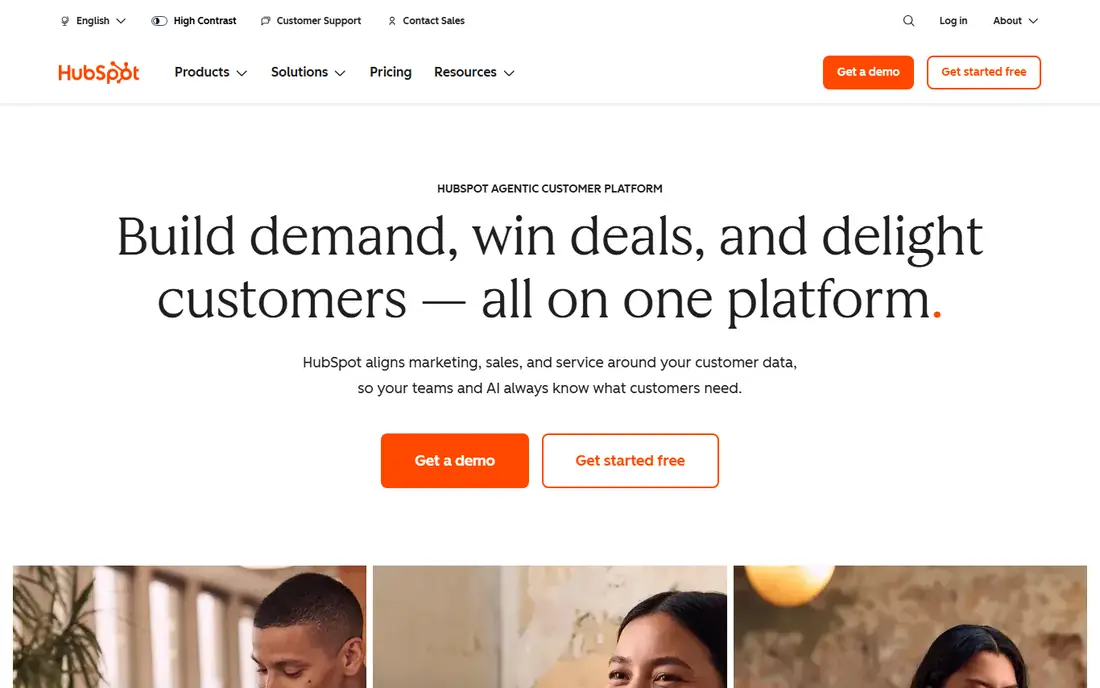
HubSpot is the strongest choice here for companies where marketing drives the pipeline. The free CRM lets a team log contacts, deals and emails indefinitely, and paid Hubs for marketing, sales, service, content and operations sit on the same customer record.
Its standout trait is how fast teams get running. Many small businesses set up HubSpot without consultants, and the interface is friendly to sales reps who resist heavier CRMs.
The trade-off is cost at the Professional tier. Key automation features sit behind Professional and Enterprise, which are priced per seat and usually carry a one-time onboarding fee. Marketing Hub pricing also grows with your contact database, so check the current pricing page before your list size doubles.
What we like- Free CRM with no time limit
- Marketing, sales, service and content tools on one record
- Easy for non-technical staff to run
Watch out for- Big price jump from Starter to Professional
- Onboarding fees and contact-based marketing pricing add up
#10Zoho One
Best for: All-in-one suite on a tight budget4.1/5 on
Capterra (134 reviews, checked Oct 2026)
Visit zoho.com
Starting priceSee website
Free planFree trial
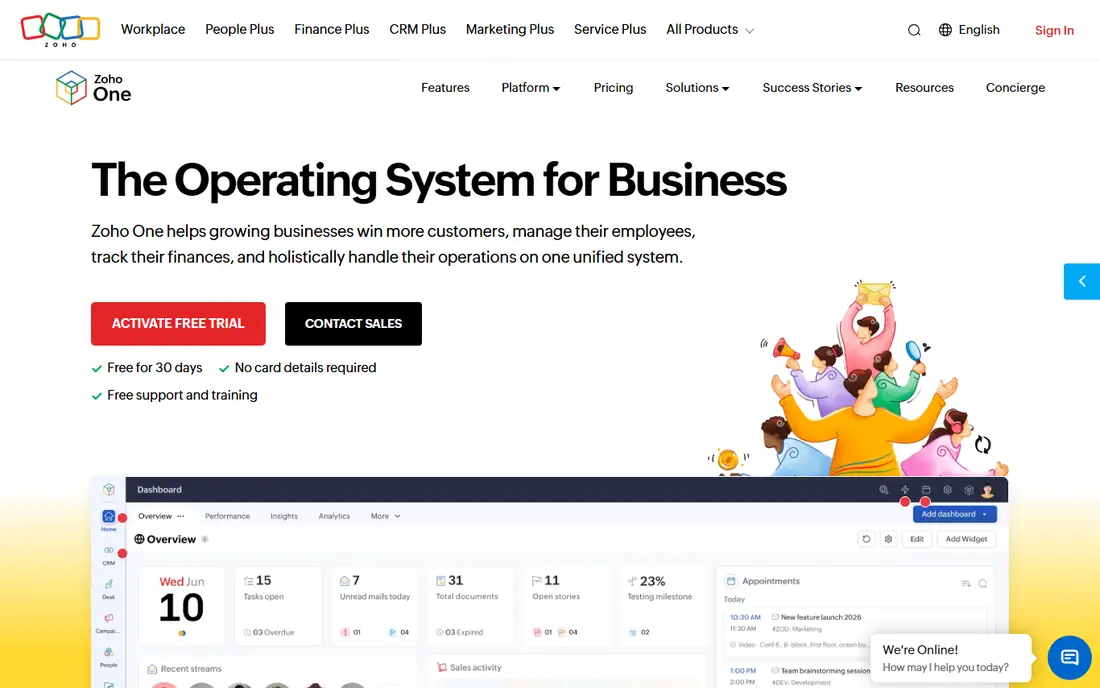
Zoho One is the value pick. One subscription covers dozens of Zoho apps, including CRM, Books for accounting, People for HR, Desk for support, Projects and analytics. For a 30 to 300-person company that wants a single vendor and single sign-on across departments, the math is hard to beat.
Zoho offers two models. All-Employee pricing licenses every person on payroll at a lower rate, while Flexible User pricing costs more per seat but lets you license only the people who need access. Pick based on how many of your staff actually log in.
The catch is depth and polish. Each Zoho app is capable, but power users of Salesforce, NetSuite or Workday will find fewer advanced options. Integrations between Zoho apps are strong; integrations with outside systems sometimes need Zoho Flow or custom work.
What we like- Dozens of apps (CRM, books, HR, desk, projects) under one license
- Two pricing models to fit different staffing
- Low cost per user versus buying apps separately
Watch out for- Individual apps are less deep than category leaders
- The All-Employee model requires licensing every employee
How we chose
We started with brands that business buyers in the US actually shortlist when they replace spreadsheets or outgrow starter tools, then checked each one against its own website for current products, plans and published prices. Where a vendor does not publish prices, we say so rather than repeat estimates as fact. We also read product documentation, independent pricing guides, and public reviews on G2, Capterra and Reddit to find recurring complaints about contracts, renewals and implementation.
Each brand was then scored on fit for small and mid-size companies: how fast a team can get started, whether a free plan or trial exists, per-seat versus quote-based pricing, the size of its integration ecosystem, and how much outside help a typical rollout needs. We mixed the long-standing leaders with two value-focused vendors (HubSpot and Zoho) that more mid-size companies now pick instead.
What to check before you sign with a big vendor
A famous brand lowers some risks, such as the vendor disappearing, but it raises others. Large vendors have standard contracts, firm renewal processes and partner networks that cost money. These checks save the most pain.
Price the full three years
Ask for a three-year cost that includes licenses, add-ons you will need in year two, sandbox or test environments, premium support and implementation. A $65 per-seat CRM can cost far more once a partner configures it. For quote-only vendors, request pricing for your actual headcount plus 25 percent growth.
Negotiate renewal terms in the first contract
Annual contracts are standard, and multi-year deals often bring discounts. The bargaining power you have before signing disappears at renewal, so ask for a cap on renewal increases in writing. Also confirm whether you can reduce seats at renewal or only add them.
Pick the implementation partner as carefully as the software
For SAP, NetSuite, Workday, ServiceNow and Adobe, the partner often decides whether the project works. Ask for two references from companies of your size in your industry, a fixed-scope statement of work, and the names of the consultants who will do the work.
Confirm you can get your data out
Check export formats, API limits on lower plans, and what happens to your data if you leave. Some vendors cap API calls by edition, which can break integrations as you grow.
Match the product to your size today
Enterprise features you will not use for three years still cost money now. A 40-person company is usually better off with Business Central, Salesforce Pro Suite, HubSpot or Zoho One than with S/4HANA or Workday, and can move up later.
Frequently asked questions
Which enterprise software brand is best for a small business?
For most small businesses, HubSpot, Zoho One and Salesforce's Starter Suite are the most practical starting points because they publish prices, offer free plans or trials, and can be set up without a consultant. Microsoft Dynamics 365 Business Central is the stronger pick when accounting and inventory matter more than sales.
Why do SAP, Workday and ServiceNow not publish prices?
Their pricing depends on headcount, modules, deployment and contract length, so they quote each deal. That also gives their sales teams room to discount. Ask for an itemized quote and compare it against at least one competitor.
How long does enterprise software take to implement?
A CRM like HubSpot or Salesforce Starter can be live in days or weeks. ERP and HR systems such as NetSuite, SAP or Workday usually take several months, and larger rollouts can take a year. The scope of data migration and integrations drives most of the timeline.
Are annual contracts required?
For most of these vendors, yes. Salesforce says most of its products use annual contracts, and Microsoft's published Dynamics 365 prices are based on yearly payment. Atlassian, HubSpot and Zoho offer monthly billing on some plans, usually at a higher rate.
Is it better to buy one suite or best-of-breed tools?
One suite (Zoho One, Microsoft, or NetSuite) reduces integration work and gives you a single bill and support line. Best-of-breed (for example Salesforce plus Workday plus ServiceNow) gives each department the deepest tool but needs more integration effort and admin staff. Mid-size companies with small IT teams usually do better with fewer vendors.
Sources we checked (18)
- https://www.salesforce.com/small-business/pricing/
- https://www.microsoft.com/en-us/dynamics-365/products/sales/pricing
- https://www.microsoft.com/en-us/dynamics-365
- https://www.erpresearch.com/pricing/oracle-netsuite
- https://www.business.com/reviews/oracle-netsuite/
- https://www.anchorgroup.tech/netsuite-pricing
- https://costbench.com/software/hr/workday/
- https://www.erpresearch.com/pricing/workday
- https://www.featurebase.app/blog/servicenow-pricing
- https://www.desk365.io/blog/servicenow-pricing/
- https://www.seidor.com/en-us/blog/sap-business-one-pricing
- https://www.cleardigital.com/faq/how-much-does-adobe-experience-manager-aem-cost
- https://ones.com/blog/ones-solutions/atlassian-jira-cloud-pricing-official-plans-and-costs/
- https://saascrmreview.com/jira-pricing/
- https://www.docket.io/resources/research/hubspot-sales-hub-pricing
- https://www.emailvendorselection.com/hubspot-pricing/
- https://www.expertmarket.com/crm/zoho-one-pricing
- https://www.cloudwards.net/zoho-one-pricing/
Is your product missing or out of date?
We review this list regularly. Vendors can request a listing, send updated pricing or ask about featured placement.

Shihab Mia · Founder, Rankite
Shihab has 5+ years in B2B and SaaS SEO. He writes Rankite's software buying guides from pricing pages, documentation and public user reviews. More about Shihab.