How we make this list: we compare pricing pages, product documentation and public user reviews. Ratings come from G2, Capterra or Trustpilot, with the date we checked them.
Key takeaways
- Google Analytics 4 is free and remains the default for small businesses that run Google Ads or need deep website and app reporting.
- Mixpanel and PostHog give the most generous free product analytics, with around one million free events per month for early-stage products.
- Plausible at $9 per month and Fathom at $15 per month are the simplest privacy-first options, with no cookies and no consent banner in most cases.
- Matomo suits businesses that want full data ownership, with a free self-hosted version and a paid cloud version for teams without server skills.
- Amplitude and Heap focus on user behavior inside a product, which matters once you care about funnels and retention, not just pageviews.
Quick comparison
| Tool | Best for | Starting price | Free plan |
|---|
 Google Analytics 4 | Small businesses that want free, deep website and app reporting | Free | Yes |
 Mixpanel | Product teams that need funnels, retention, and user journeys | Free | Yes |
 Plausible | Content sites and small businesses that want simple, private traffic stats | $9 per month | No |
 Fathom | Owners of many small sites who want simple, private analytics | $15 per month | No |
 Matomo | Businesses that want to own their analytics data outright | See website | Yes |
 PostHog | Startups that want product analytics, replay, and experiments in one tool | Free | Yes |
 Amplitude | Growing product teams that need deep behavioral analysis | Free | Yes |
 Heap | Teams that want behavior data without planning every event in advance | See website | Yes |
Is your product missing or out of date?
We review this list regularly. Vendors can request a listing, send updated pricing or ask about featured placement.
The best analytics software for small businesses
Starting priceFree
Free planYes
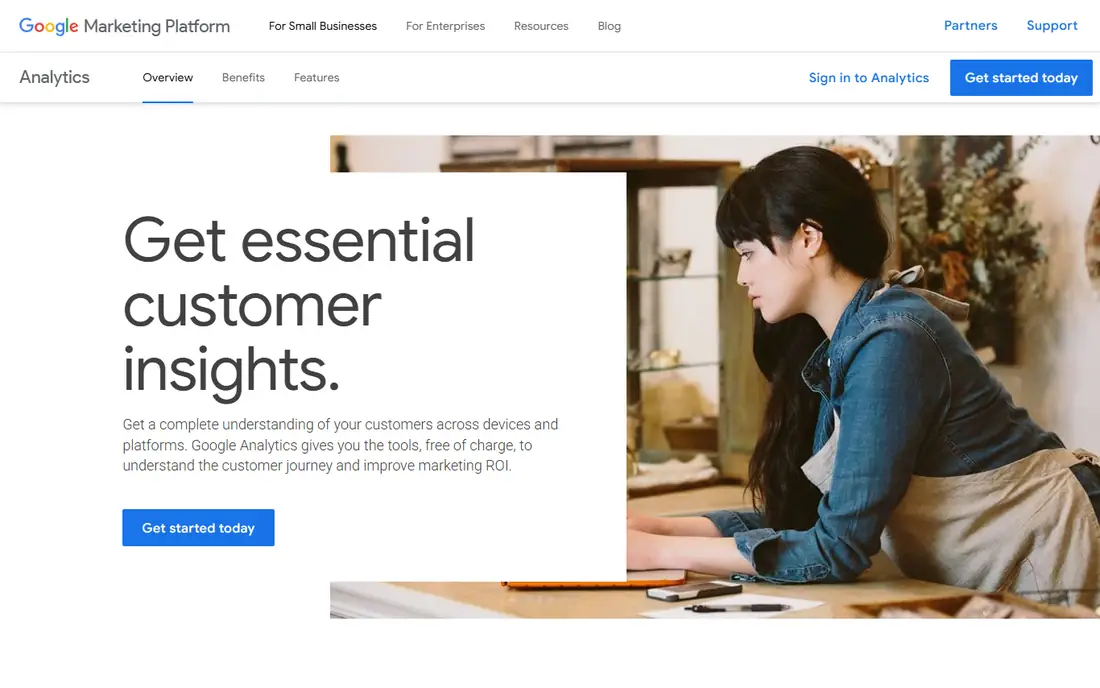
Google Analytics 4, or GA4, is the default analytics tool for a reason: it costs nothing, measures websites and apps together, and connects directly to Google Ads, Search Console, and Looker Studio. A small business can track where visitors come from, which pages they read, and which actions lead to sign-ups or sales, all in one free account. For a business that already advertises on Google, that integration alone justifies starting here.
The learning curve is real. GA4 replaced the older Universal Analytics model with an event-based system, so building custom reports and funnels takes practice, and the interface can overwhelm a one-person team. Privacy handling also needs attention, since GA4 uses cookies and device identifiers. Start with GA4 if your budget is zero and your audience is mainly in the US, and add a privacy-first tool later if EU traffic grows.
What we like- Free at any traffic level for the standard version
- Strong Google Ads and Search Console links
- Cross-platform web and app measurement
Watch out for- Event-based model takes time to learn
- Uses cookies, so consent handling matters
- Reports can feel complex for a tiny team
#2Mixpanel
Best for: Product teams that need funnels, retention, and user journeys4.5/5 on
G2 (1,375 reviews, checked Oct 2026)
Visit mixpanel.com
Starting priceFree
Free planYes
Mixpanel answers a different question from GA4: not how many people visited, but what did they do next. Its funnels show where users drop off between sign-up and purchase, retention reports show who returns after a week or a month, and cohorts let you compare users by sign-up date or plan. For a SaaS or app business, those answers drive product decisions in a way pageview counts cannot.
The free tier, around one million events per month in recent comparisons, covers many early-stage products. The catch is event design: if you track everything without a plan, reports become noisy and usage climbs. Define ten to twenty core events before you install Mixpanel, name them clearly, and review them monthly. Used that way, Mixpanel is the best free product analytics tool for a growing small business.
What we like- Fast queries on user behavior
- Free tier around one million events per month
- Strong funnel, retention, and cohort reports
Watch out for- Website traffic reporting is thinner than GA4
- Event planning needs care
- Paid pricing is usage-based and can rise with growth
#3Plausible
Best for: Content sites and small businesses that want simple, private traffic stats4.8/5 on
G2 (3 reviews, checked Oct 2026)
Visit plausible.io
Starting price$9 per month
Free planNo
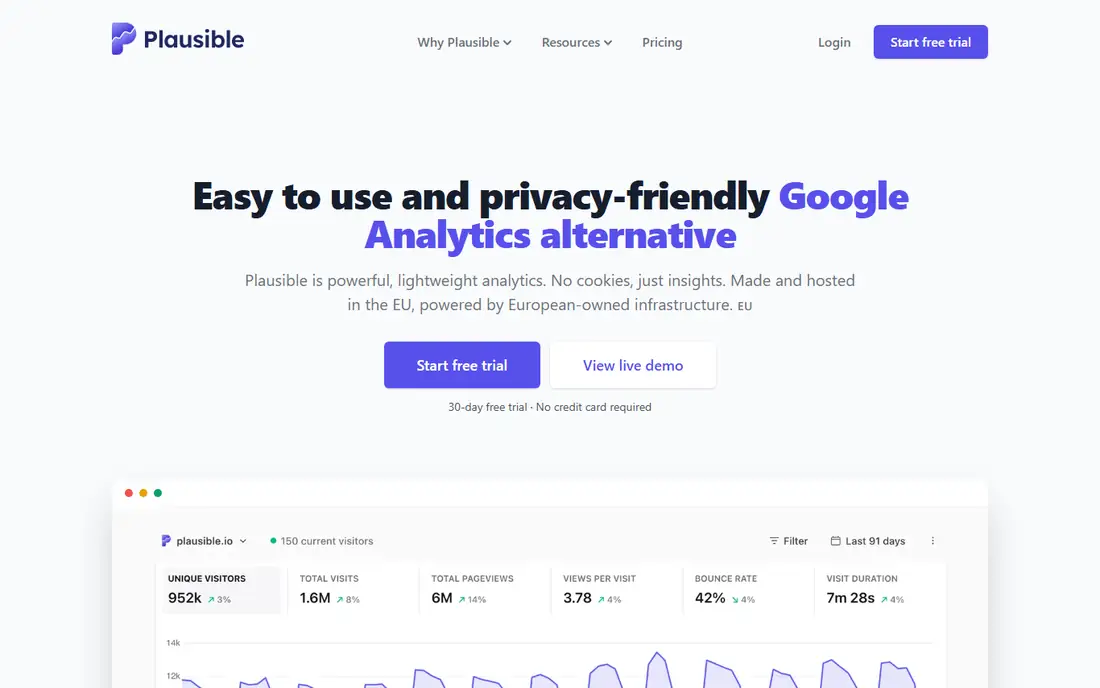
Plausible is the antidote to analytics overload. Its dashboard fits on one page: visitors, top pages, referrers, devices, and conversions, with no layers of menus and no custom report building. Because it collects no personal data and sets no cookies, most sites need no consent banner, which also means ad blockers miss less traffic than with GA4. The script is far smaller than Google Analytics, so pages load faster.
The price starts at $9 per month for 10,000 pageviews, and higher traffic costs more. Plausible also lacks the deep funnel and retention analysis of Mixpanel or Amplitude, so it suits marketing sites and content businesses better than complex apps. If your main question is which content and campaigns bring visitors, Plausible gives the clearest answer for the least effort.
What we like- One-page dashboard that anyone can read
- No cookies and no personal data collection
- Lightweight script that keeps pages fast
Watch out for- No free plan, only a trial
- Lacks deep product funnels
- Pageview limits rise with price
#4Fathom
Best for: Owners of many small sites who want simple, private analytics5.0/5 on
G2 (7,076 reviews, checked Oct 2026)
Visit usefathom.com
Starting price$15 per month
Free planNo
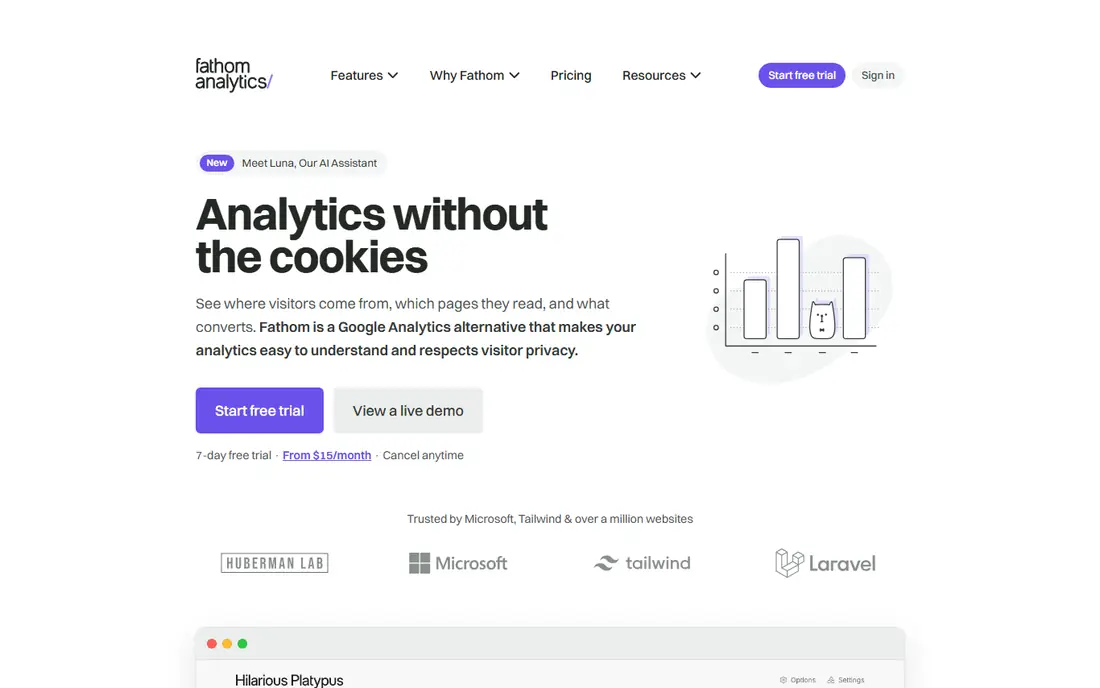
Fathom shares Plausible philosophy but packages it differently. Its base plan at $15 per month covers 100,000 pageviews and up to 50 sites, which makes it cheaper per site for an agency, a publisher, or a founder running several small projects. The all-sites view shows every property on one screen, with email reports for teams that do not want to log in daily. Like Plausible, it stores no personal data and needs no cookie notice in most cases.
The trade-off is the same as Plausible: simplicity over depth. Fathom covers traffic, campaigns through UTMs, custom events with values, and basic conversions, but it will not replace Mixpanel for product funnels. Choose Fathom over Plausible when you manage many sites or expect more than 10,000 pageviews soon. Choose Plausible when you run one site and want the lowest entry price.
What we like- Simple dashboard with an all-sites view
- 100,000 pageviews on the base plan
- No cookies and no personal data stored
Watch out for- No free plan, only a 7-day trial
- Less product analytics depth
- Base price is higher than Plausible
#5Matomo
Best for: Businesses that want to own their analytics data outright4.2/5 on
G2 (96 reviews, checked Oct 2026)
Visit matomo.org
Starting priceSee website
Free planYes
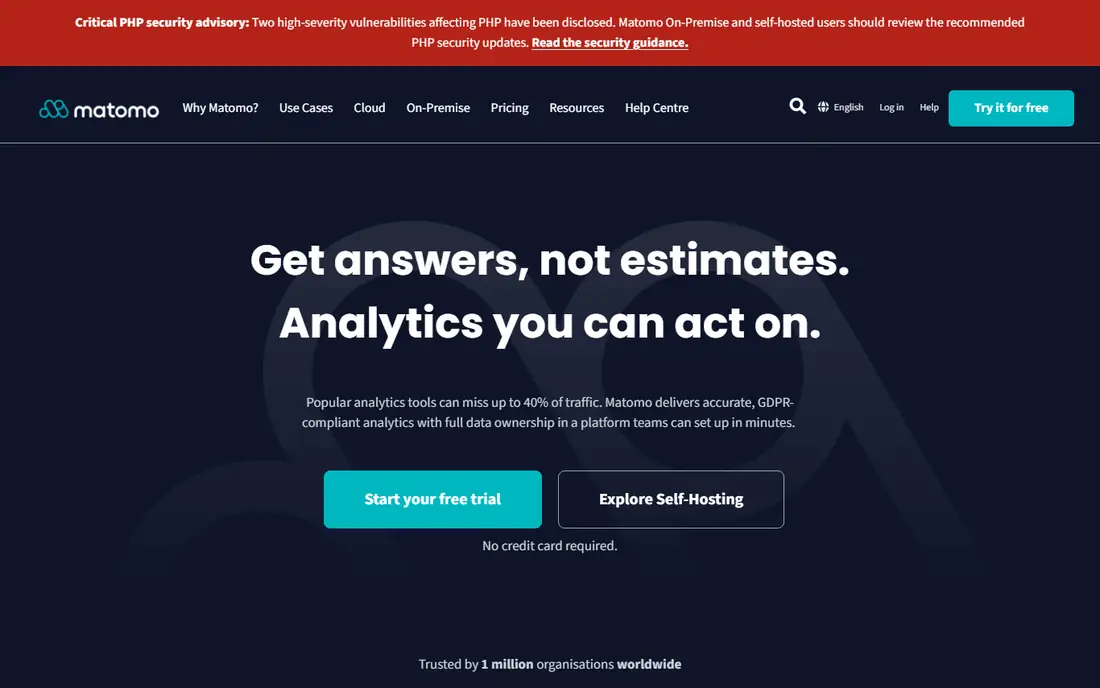
Matomo is the closest free alternative to GA4 in depth, with a difference that matters for privacy-conscious businesses: you own the data. The self-hosted version is free and includes features that other tools charge for, including heatmaps, session recordings, funnels, and A/B testing. The cloud version removes the server work for a monthly fee that varies by traffic, so check the current pricing page before budgeting.
Self-hosting is not free in effort. You need a server, updates, backups, and security patches, which suits a business with technical help but not a solo founder without it. Matomo also offers cookieless tracking and GDPR-friendly settings, which help with EU compliance. Pick Matomo when data ownership and depth both matter, and pick Plausible or Fathom when simplicity matters more.
What we like- Free self-hosted version with full features
- Cloud version for teams without servers
- Heatmaps, recordings, funnels, and A/B testing included
Watch out for- Self-hosting needs server skills and maintenance
- Cloud pricing varies by traffic and currency
- Interface is fuller than Plausible or Fathom
#6PostHog
Best for: Startups that want product analytics, replay, and experiments in one tool4.5/5 on
G2 (1,053 reviews, checked Oct 2026)
Visit posthog.com
Starting priceFree
Free planYes
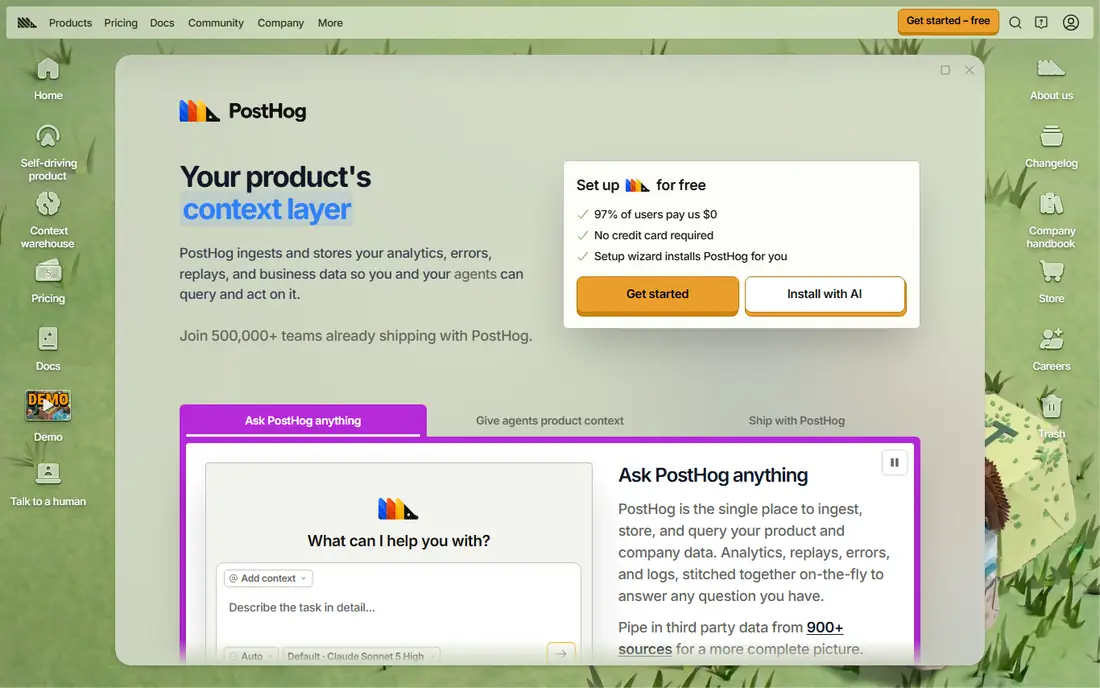
PostHog tries to replace several tools at once: product analytics, web analytics, session replay, feature flags, surveys, and experiments, all feeding one data store. Its free tiers are generous, with around one million events per month for analytics in recent comparisons, and its homepage notes that most users pay nothing. For a startup, that breadth means one install can answer traffic questions, product questions, and why-users-struggle questions together.
Breadth is also the risk. A small team can spend weeks configuring products it does not need, and usage-based pricing across several products needs watching as traffic grows. Start with product analytics and replay only, and add feature flags or experiments when a real need appears. PostHog suits technical startups that want an all-in-one stack and are comfortable managing it.
What we like- Generous free tiers across products
- Session replay, feature flags, and experiments included
- Self-hosting option available
Watch out for- Breadth can overwhelm a tiny team
- Usage-based pricing needs monitoring
- Interface favors technical users
#7Amplitude
Best for: Growing product teams that need deep behavioral analysis4.5/5 on
G2 (2,997 reviews, checked Oct 2026)
Visit amplitude.com
Starting priceFree
Free planYes
Amplitude is the most established product analytics platform in this list, and its free plan is generous, with up to two million events per month on its homepage. Its strength is behavioral depth: funnels, retention curves, user journeys, and predictive features help a product team find where users get stuck and what to build next. AI-assisted features now surface those insights faster, though a human should still verify any recommendation.
The cost curve is the warning. Amplitude paid plans start higher than Mixpanel or PostHog in many comparisons, and a growing event volume can push a small business into enterprise pricing. Amplitude suits a product team that already has product-market fit and needs rigorous analysis to grow. A pre-launch startup will usually get more value from Mixpanel or PostHog free tiers first.
What we like- Free plan with up to two million events per month
- Strong funnel, retention, and journey analysis
- AI-assisted insight features
Watch out for- Paid plans are expensive at scale
- Setup and event taxonomy need discipline
- Overkill for a simple marketing site
#8Heap
Best for: Teams that want behavior data without planning every event in advance4.4/5 on
G2 (1,097 reviews, checked Oct 2026)
Visit heap.io
Starting priceSee website
Free planYes
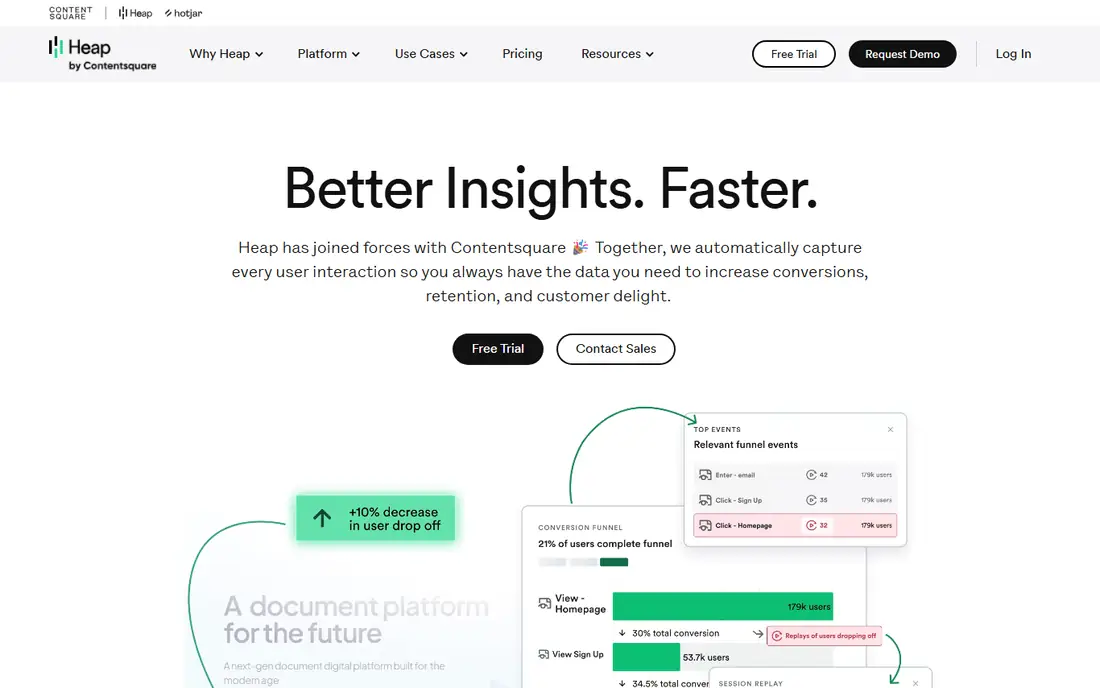
Heap takes the opposite approach to Mixpanel: instead of planning events first, one snippet automatically captures every user interaction, and you define events later from that history. That retroactive analysis is powerful when a question appears after launch, such as why a new checkout step lost conversions. Session replay adds context, showing the exact moment a user struggled, and data science features highlight paths that correlate with conversion or churn.
The homepage now notes that Heap has joined forces with Contentsquare, so buyers should confirm the roadmap and support terms for small teams. Public pricing is not listed, which makes budgeting harder than with Plausible or Mixpanel. Heap suits a team that values complete data and retroactive answers over a predictable price list, and it suits a cost-sensitive startup less well.
What we like- Automatic capture of clicks, taps, and pageviews
- Session replay for context
- Data science features that surface friction points
Watch out for- Public pricing is not available, so budgeting needs a sales conversation
- Now part of Contentsquare, so product direction may shift
- Autocapture data needs governance
How we chose
We compared pricing pages, product documentation, and public reviews on G2 and Capterra, and we checked each vendor homepage to confirm the product still exists and fits small business analytics. We favored tools with a usable free tier or a low entry price, a clear privacy posture, and a defined job, whether traffic, product behavior, or both. Where pricing sources disagreed, we listed the price as "See website" rather than publishing a figure we could not verify.
We also separated two jobs that buyers often mix up: website traffic analytics and product analytics. GA4, Plausible, Fathom, and Matomo answer traffic questions. Mixpanel, Amplitude, PostHog, and Heap answer product behavior questions. Many small businesses need one of each, and no single tool in this list leads both jobs for every team.
Setting up analytics that actually get used
Define three questions before you install anything
Write down the three decisions analytics must inform, such as which blog topics bring sign-ups, where trial users drop off, or which ad channel brings paying customers. Then pick the tool that answers those questions directly. A dashboard nobody opens is worse than no dashboard, because it creates a false sense of measurement while decisions still run on guesswork.
Keep the event list short
Track pageviews automatically, then add events only for actions that change a decision: sign-up, trial start, purchase, key feature use, and support contact. Name events in plain language, document them in one shared page, and review the list each quarter. A short, clean event list beats a long, messy one, and it keeps usage-based pricing under control.
Review on a schedule, not on a whim
Set a weekly 30-minute review: traffic, top pages, conversion rate, and one funnel. Share one finding with the team each week, even if it is small, such as a page with high traffic and low conversion. That habit turns analytics from a reporting chore into a product habit, and it will reveal which tool you actually need before renewal time.
Frequently asked questions
What is the best analytics tool for a small business website?
Google Analytics 4 is the best free starting point, because it costs nothing and covers traffic, conversions, and Google Ads reporting. If you want a simpler, privacy-first dashboard and can pay, Plausible at $9 per month or Fathom at $15 per month will be easier to read every week. Many small businesses run GA4 plus one privacy tool during a transition.
Do I need product analytics if I already have GA4?
It depends on what you sell. A marketing website that collects leads usually does fine with GA4 alone. A SaaS product or app needs product analytics, because GA4 will not show funnels, retention, or per-user journeys as clearly as Mixpanel, PostHog, or Amplitude. Add a product tool when you start asking why users leave, not just how many arrived.
Are privacy-first tools really cookieless?
Plausible, Fathom, and Matomo in cookieless mode do not set cookies or collect personal data by default, which removes the consent banner need in most regions. Whether you need a banner still depends on your jurisdiction and what else your site collects, such as embedded videos or chat tools. Check with whoever handles your privacy compliance before removing banners entirely.
How much traffic can free plans handle?
It varies by billing unit, so compare carefully. Mixpanel and PostHog offer around one million free events per month, Amplitude offers up to two million, and GA4 is free at standard traffic levels. Plausible and Fathom charge by pageviews, not events. Estimate your monthly pageviews and events before choosing, and watch usage after launch.
Can I self-host analytics for free?
Yes. Matomo offers a free self-hosted version with full features, and PostHog offers a self-hosting option, though setup and maintenance need technical skills. Self-hosting gives you full data ownership and avoids monthly fees, but you take on server costs, updates, and backups. For most non-technical small businesses, a paid cloud plan is cheaper in time.
Should I run two analytics tools at once?
Running two tools for a short transition is sensible, especially when moving from GA4 to a privacy tool, because it lets you compare numbers before switching. Running two tools forever doubles maintenance and creates conflicting numbers that confuse decisions. Pick a primary tool after a month of overlap, and keep the second only if it answers a different question.
Sources we checked (9)
- https://marketingplatform.google.com/about/analytics/
- https://mixpanel.com
- https://plausible.io
- https://usefathom.com
- https://matomo.org
- https://posthog.com
- https://amplitude.com
- https://www.heap.io
- https://rankite.com/blog/best-web-analytics-platform
Is your product missing or out of date?
We review this list regularly. Vendors can request a listing, send updated pricing or ask about featured placement.

Shihab Mia · Founder, Rankite
Shihab has 5+ years in B2B and SaaS SEO. He writes Rankite's software buying guides from pricing pages, documentation and public user reviews. More about Shihab.