How we make this list: we compare pricing pages, product documentation and public user reviews. Ratings come from G2, Capterra or Trustpilot, with the date we checked them.
Key takeaways
- Databricks is the leading lakehouse platform unifying data engineering, analytics, and AI.
- Snowflake excels as a cloud data warehouse with effortless scaling and data sharing.
- Google BigQuery suits teams wanting serverless analytics within Google Cloud.
- Palantir Foundry serves organizations needing operational decision platforms.
- Starburst and Dremio bring fast SQL analytics to distributed data without moving it.
Quick comparison
| Tool | Best for | Starting price | Free plan |
|---|
 Databricks Databricks | lakehouse analytics and AI | See website | See website |
 Snowflake Snowflake | cloud data warehousing | See website | See website |
 Cloudera Cloudera | hybrid enterprise data platform | See website | See website |
 Palantir Foundry Palantir Foundry | operational decision platform | See website | See website |
 Starburst Starburst | distributed SQL analytics | See website | See website |
 Google BigQuery Google BigQuery | serverless GCP analytics | See website | See website |
 Dremio Dremio | self-service data lakehouse | See website | See website |
Is your product missing or out of date?
We review this list regularly. Vendors can request a listing, send updated pricing or ask about featured placement.
The best big data analytics software
Starting priceSee website
Free planSee website
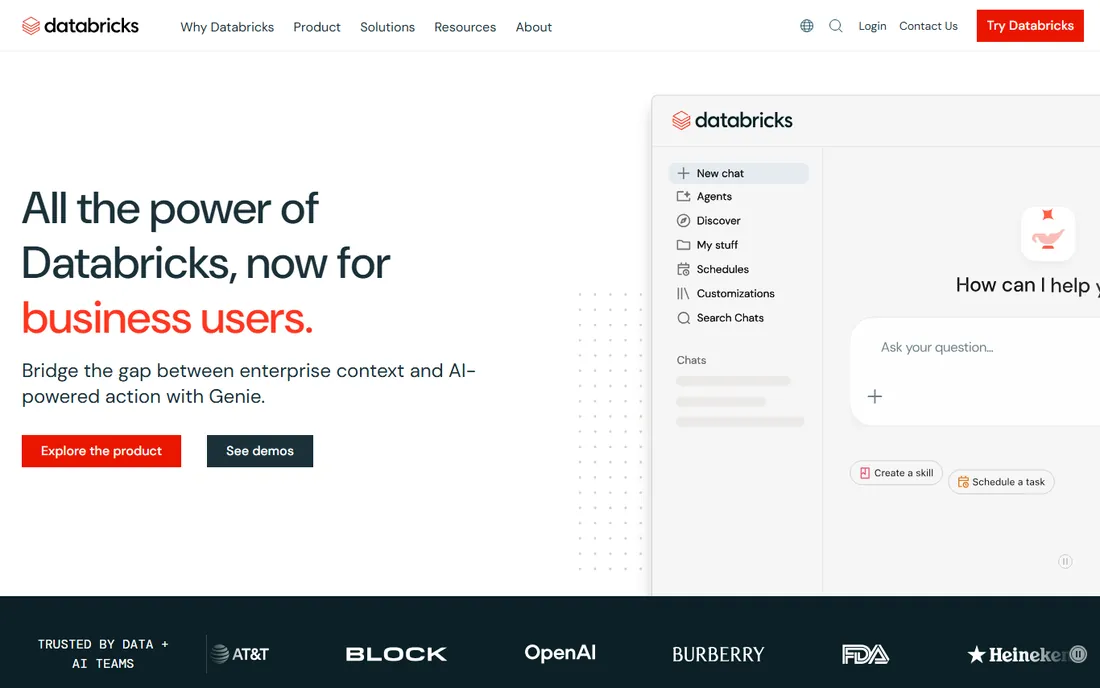
Databricks pioneered the lakehouse: unifying data warehousing and data lakes on open formats with Apache Spark at the core, plus machine learning and AI workloads on the same platform. Data engineers, analysts, and data scientists collaborate in one environment. The ecosystem is vast, spanning ingestion to BI.
Complexity is real and costs require active management. But for organizations unifying analytics and AI on open standards, Databricks is the leader. Its Unity Catalog provides governance across data and AI assets, addressing enterprise requirements for security and compliance. Unified governance becomes increasingly important as data estates grow and regulations tighten. Starting with governance in place is easier than retrofitting it later.
What we like- Unified analytics and AI
- Spark heritage
- Strong ecosystem
Watch out for- Complexity
- Costs need management
Starting priceSee website
Free planSee website
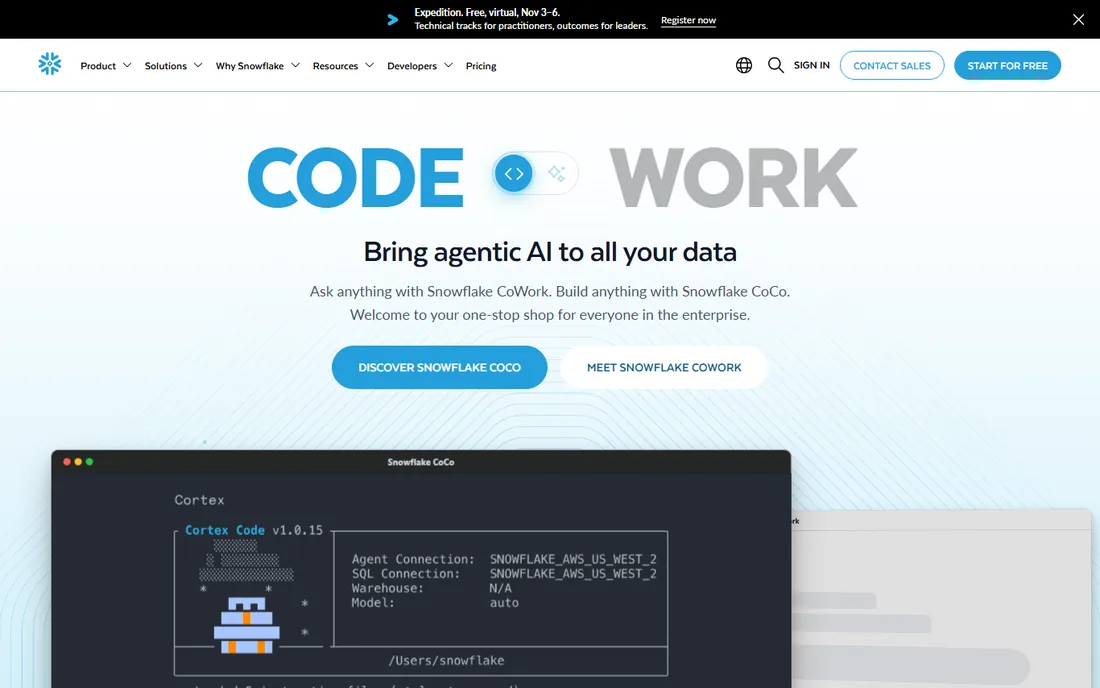
Snowflake reinvented the data warehouse for cloud: separation of storage and compute, instant scaling, and data sharing that makes collaboration effortless. Analysts write SQL; the platform handles infrastructure. The marketplace extends data possibilities with third-party datasets.
Costs can surprise without governance. Streaming and ML are less central than Databricks. But for cloud data warehousing that just works, Snowflake's simplicity wins. Data sharing between organizations, without copying data, is a genuinely differentiated capability. Secure data collaboration opens business models that were impractical when sharing meant duplicating datasets. Data marketplaces and clean rooms depend on this capability.
What we like- Effortless scaling
- Data sharing
- SQL simplicity
Watch out for- Costs can surprise
- Less for streaming ML
Starting priceSee website
Free planSee website
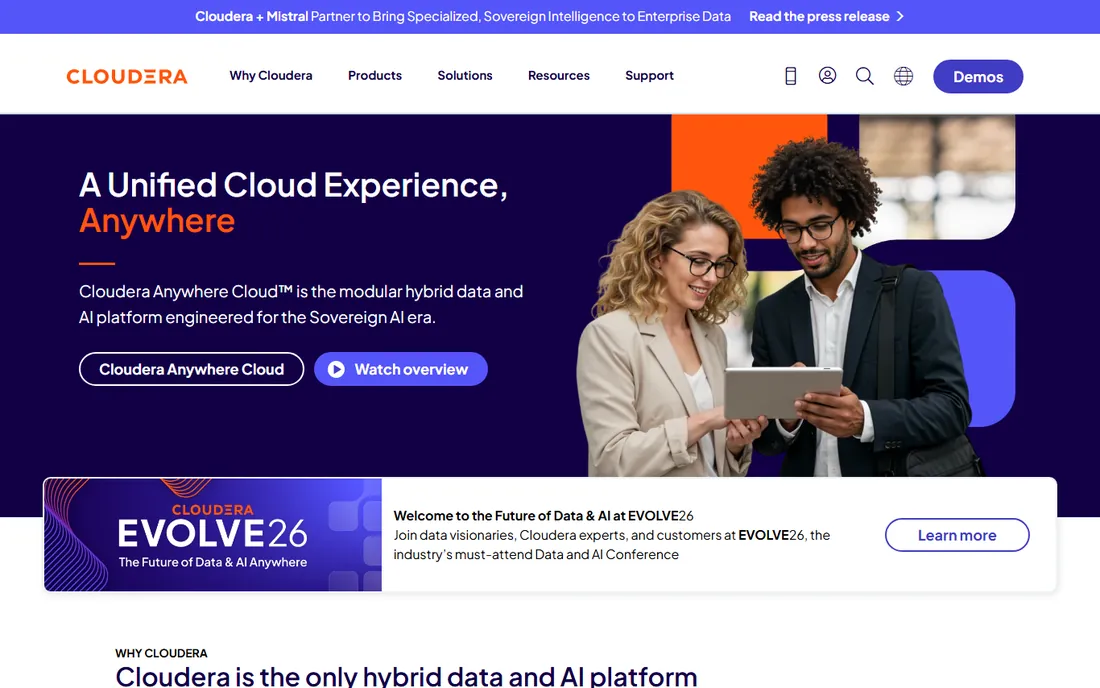
Cloudera offers a hybrid data platform spanning on-premises and cloud: data engineering, warehousing, machine learning, and governance in one suite. Regulated enterprises needing hybrid deployment find strong fit. The platform covers the full data lifecycle from ingestion to AI.
Complexity is significant; the Hadoop legacy lingers in perception. But for hybrid enterprise data platforms with strong governance, Cloudera delivers. Organizations that cannot move everything to public cloud find its hybrid capabilities essential. Data sovereignty requirements and existing infrastructure investments make hybrid a long-term reality, not a transition phase. Plan accordingly rather than assuming eventual full cloud migration.
What we like- Hybrid cloud
- Comprehensive suite
- Enterprise governance
Watch out for- Complexity
- Legacy perception
Starting priceSee website
Free planSee website
Palantir Foundry builds operational digital twins: an ontology layer connecting data to real-world operations, enabling complex organizations to make data-driven decisions. Government and large enterprises run critical operations on it. The approach is uniquely powerful for messy, real-world complexity.
Pricing is premium and implementations are heavy. But for operational decision-making at institutional scale, Foundry's capabilities are distinctive. The ontology approach means business users interact with meaningful concepts rather than raw tables. This abstraction is what makes Foundry accessible to operational decision-makers who are not data engineers. Usability for non-technical users is a key differentiator in operational contexts.
What we like- Ontology-driven
- Operational focus
- Powerful for complex orgs
Watch out for- Expensive
- Implementation heavy
Starting priceSee website
Free planSee website
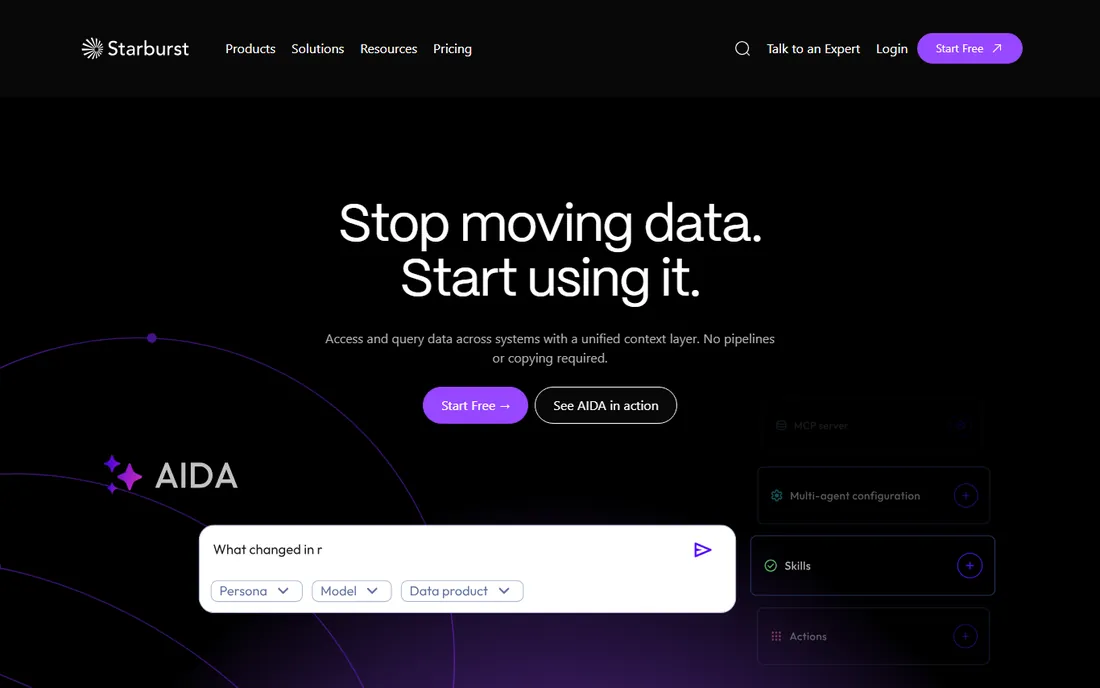
Starburst (built on open-source Trino) lets analysts run fast SQL queries across distributed data sources without moving data: data lakes, warehouses, and operational systems queried together. The federated approach avoids costly migrations and keeps data under existing governance.
It is narrower than full lakehouse platforms. Pricing is enterprise. But for federated SQL analytics across distributed data, Starburst excels. Avoiding data migration saves not just money but months of project time. Migration projects frequently run over schedule; federated querying sidesteps the problem entirely. For organizations with data spread across many systems, this alone justifies evaluation.
What we like- Query data anywhere
- Trino-based
- No data movement
Watch out for- Narrower than full platforms
- Pricing
Starting priceSee website
Free planSee website
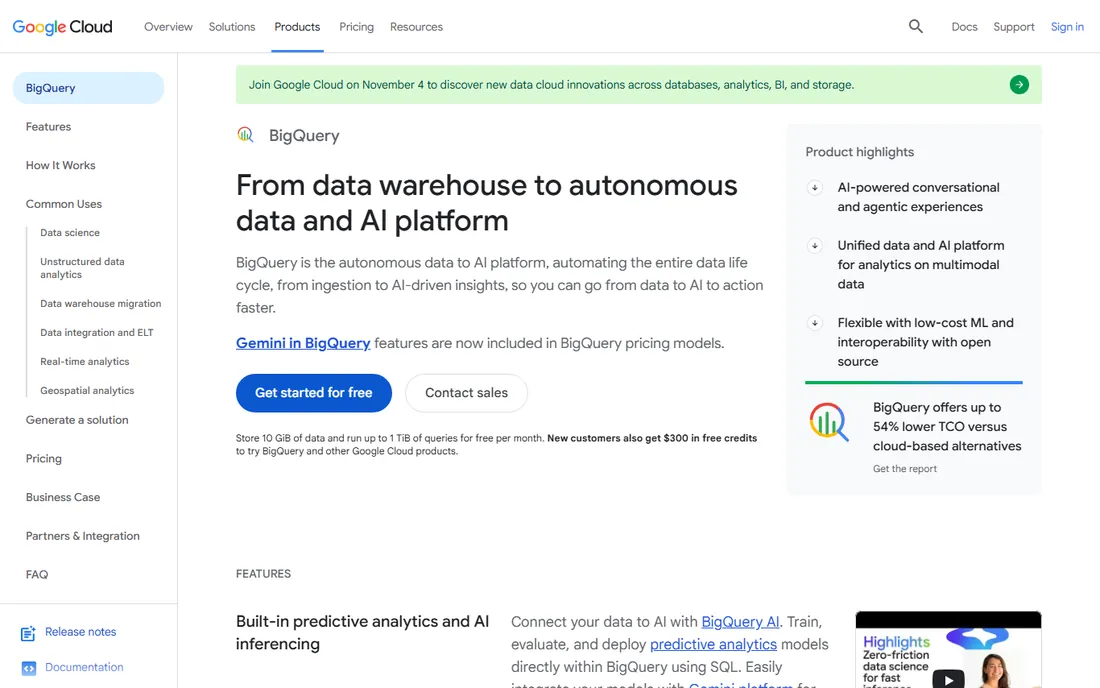
Google BigQuery is serverless data warehousing: petabyte-scale SQL analytics with no infrastructure to manage, deeply integrated with Google Cloud. The free tier is generous for getting started. Scaling is automatic, handling query spikes without provisioning.
It is GCP-centric; multi-cloud strategies complicate. Query costs need monitoring to avoid surprises. But for serverless analytics in Google Cloud, BigQuery is superb. The integration with Google's AI and ML services adds value for teams building intelligent applications. Vertex AI and BigQuery ML bring machine learning to SQL users without requiring separate infrastructure. This democratization matters for organizations without dedicated ML teams.
What we like- Serverless scaling
- GCP integration
- Generous free tier
Watch out for- GCP-centric
- Query costs need monitoring
Starting priceSee website
Free planSee website
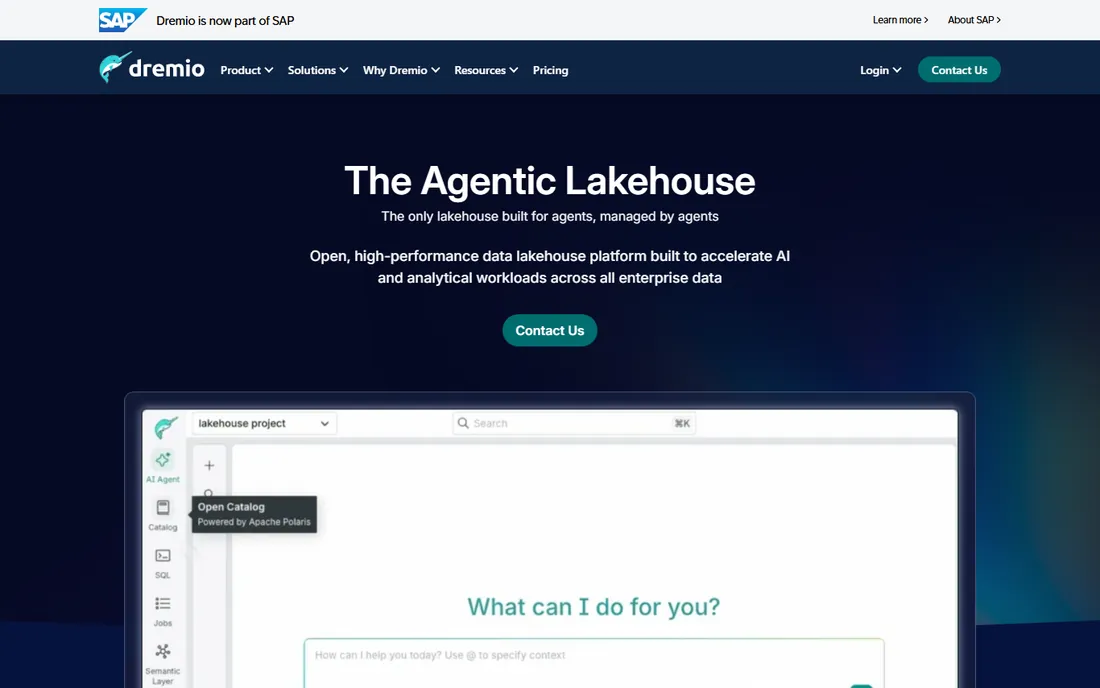
Dremio provides self-service analytics on data lakes: fast SQL queries directly on open formats (Iceberg) with a semantic layer for governance. Analysts get warehouse-like performance without ETL pipelines. The lakehouse approach reduces data movement and duplication.
The ecosystem is smaller than Databricks or Snowflake. The space is competitive. But for self-service lakehouse analytics on open formats, Dremio is compelling. Teams committed to Apache Iceberg find its native support particularly valuable. As Iceberg becomes the standard open table format, native support matters more than generic compatibility claims. Evaluate depth of support, not just marketing checkboxes.
What we like- Self-service SQL
- Data lakehouse
- Open formats
Watch out for- Smaller ecosystem
- Competitive space
Lakehouse vs warehouse vs federated
Three architectures compete: lakehouses (Databricks, Dremio) unify lakes and warehouses on open formats; cloud warehouses (Snowflake, BigQuery) optimize SQL analytics on managed infrastructure; federated engines (Starburst) query data where it lives. Cloudera spans hybrid; Palantir focuses on operational decisions.
The choice depends on your data reality. Centralized data with heavy SQL: Snowflake or BigQuery. Mixed workloads including ML: Databricks. Distributed data you cannot move: Starburst. Hybrid regulatory requirements: Cloudera. Open-format lakehouse with self-service: Dremio. Be honest about which description matches; aspirational architecture choices lead to shelfware. The architecture should serve your data reality, not the other way around.
What to check before you buy
Start with your workloads. SQL analytics, data engineering, machine learning, streaming: different platforms optimize differently. List your actual workloads and their relative importance before evaluating. A platform excellent at warehousing may disappoint for ML, and vice versa. Weight the evaluation toward what you do daily, not aspirational use cases. Vendors demo impressive capabilities you may never use; focus scoring on your actual workload mix.
Then model total cost realistically. Cloud data platforms price on compute and storage consumption; costs scale with usage in ways that surprise. Ask for cost estimation tools, set up budgets and alerts from day one, and understand what drives spend. The cheapest platform for light usage may be expensive at scale. Run a proof of concept with representative workloads and measure actual consumption before committing. Vendor estimates are optimistic; your data reveals the truth about costs.
Finally, assess your team's skills. Databricks rewards Spark and Python expertise; Snowflake and BigQuery favor SQL analysts; Palantir needs dedicated implementation. Match the platform to who will actually use it daily. The best architecture with the wrong team produces worse results than a simpler platform the team masters. Technology choices should amplify team strengths, not fight them.
Frequently asked questions
What is big data analytics software?
Platforms for storing, processing, and analyzing large datasets: data warehouses, lakehouses, and distributed query engines that handle volumes beyond traditional databases. They power business intelligence, data science, and AI at scale. The category has evolved from on-premises Hadoop clusters to cloud-native platforms. That evolution continues: the current frontier is unifying batch, streaming, and AI workloads on shared infrastructure.
Databricks vs Snowflake: which should I choose?
Choose Databricks for unified analytics plus machine learning and AI on open formats, especially with Spark expertise in-house. Choose Snowflake for pure SQL data warehousing with maximum simplicity. Many organizations use both for different workloads. The two are increasingly overlapping as each expands into the other's territory. Databricks adds warehouse features; Snowflake adds AI and ML capabilities. The convergence means the choice increasingly comes down to team skills and existing investments.
What does big data analytics software cost?
Consumption-based pricing is standard: you pay for compute and storage used. Costs range from hundreds to hundreds of thousands monthly depending on scale. All major platforms offer free tiers or trials. Implement cost monitoring from the start; unmonitored usage is the top budget risk. FinOps practices for data platforms are now a discipline in their own right. Dedicated cost monitoring, chargeback models, and optimization reviews prevent the bill shock that derails data initiatives.
Do I need to move my data to use these tools?
Not always. Starburst and Dremio query data where it lives. Databricks, Snowflake, and BigQuery generally work best with data in their storage, though all support external tables. Federated approaches avoid migration but may sacrifice some performance. Consider data gravity: moving petabytes is expensive and slow. The cost and time of migration often exceed expectations, which is why federated approaches that avoid movement are gaining traction.
What is a data lakehouse?
An architecture combining data lake flexibility (open formats, cheap storage, diverse workloads) with data warehouse features (ACID transactions, governance, performance). Databricks pioneered the term; Dremio and others implement similar ideas. The goal is one platform for all data workloads. Open table formats like Delta Lake and Iceberg make it possible. These formats bring warehouse reliability to data lakes, which is the technical foundation the entire lakehouse concept rests on.
How long does implementation take?
Cloud-native platforms (Snowflake, BigQuery) deliver value in days to weeks. Databricks and Dremio take weeks for production deployments. Cloudera and Palantir implementations typically span months given their enterprise scope. Start with a focused use case and expand. Quick wins build organizational support for broader rollout. Demonstrate value on one use case before asking for enterprise-wide commitment; success creates its own momentum.
How we chose
We selected big data analytics platforms that appear consistently in data platform comparisons, analyst evaluations, and enterprise adoption. Each vendor's site was checked to confirm the product is current in 2026. Pricing details come from vendor pages where published; most pricing is consumption-based. No hands-on data processing was conducted for this guide; assessments reflect documented capabilities and industry standing.
Sources we checked (9)
- https://www.databricks.com
- https://www.snowflake.com
- https://www.cloudera.com
- https://www.palantir.com
- https://www.starburst.io
- https://www.cloud.google.com/bigquery
- https://www.dremio.com
- https://slashdot.org/software/comparison/Cloudera-vs-Databricks-vs-Snowflake/
- https://slashdot.org/software/comparison/BigQuery-vs-Dremio/
Is your product missing or out of date?
We review this list regularly. Vendors can request a listing, send updated pricing or ask about featured placement.

Shihab Mia · Founder, Rankite
Shihab has 5+ years in B2B and SaaS SEO. He writes Rankite's software buying guides from pricing pages, documentation and public user reviews. More about Shihab.