How we make this list: we compare pricing pages, product documentation and public user reviews. Ratings come from G2, Capterra or Trustpilot, with the date we checked them.
Key takeaways
- PayPal and Square are the easiest Stripe replacements for small businesses, with no monthly fee and fast setup.
- Adyen and Checkout style enterprise processors only make sense at high volume, where custom pricing and global coverage justify a sales process.
- Helcim suits growing businesses that want interchange-plus pricing without negotiating, and with no monthly fee.
- Paddle and Lemon Squeezy suit software and digital sellers because they act as merchant of record and handle tax compliance.
- Compare fees on your real card mix and average order value, not on headline rates alone, because fixed per transaction fees matter more on small orders.
Quick comparison
| Tool | Best for | Starting price | Free plan |
|---|
 PayPal | Checkout trust and global reach | 2.99% + $0.49 per transaction | No |
 Square | In person and online selling together | 2.9% + $0.30 per online transaction | Yes |
 Adyen | Enterprise and global commerce | See website | No |
 Braintree | PayPal and Venmo in checkout | See website | No |
 Authorize.net | Classic gateway with a merchant account | $25 per month (all-in-one, plus 2.9% + $0.30 per transaction) | No |
 Helcim | Transparent interchange-plus pricing | Interchange-plus, no monthly fee | No |
 Paddle | SaaS tax compliance worldwide | 5% + $0.50 per transaction | No |
 Lemon Squeezy | Digital products and subscriptions | 5% + $0.50 per transaction | No |
Is your product missing or out of date?
We review this list regularly. Vendors can request a listing, send updated pricing or ask about featured placement.
The best stripe alternatives
#1PayPal
Best for: Checkout trust and global reach4.4/5 on
G2 (2,751 reviews, checked Oct 2026)
Visit paypal.com
Starting price2.99% + $0.49 per transaction
Free planNo
PayPal is the most recognisable alternative to Stripe, and that recognition can lift checkout completion, especially for first time buyers. Setup is fast, there is no monthly fee for standard accounts, and PayPal supports a wide range of countries, currencies and payment methods, including PayPal balance and Venmo in the US. For small stores and service businesses, that combination is hard to beat.
The cost is the trade-off. Published card fees are higher than Stripe for many transactions, and the fixed fee matters on low value orders. Account reviews and holds are also a known frustration, particularly for new sellers with sudden volume spikes. Use PayPal for conversion and reach, but run the numbers on your average order before making it your only processor.
What we like- Buyers recognise and trust the brand
- Wide global coverage
- Fast setup with no monthly fee
Watch out for- Card fees run higher than Stripe for many sellers
- Account holds can disrupt cash flow
#2Square
Best for: In person and online selling together4.6/5 on
G2 (1,208 reviews, checked Oct 2026)
Visit squareup.com
Starting price2.9% + $0.30 per online transaction
Free planYes

Square fits businesses that sell in person and online, such as shops, cafes, salons and market stall sellers who also take web orders. The point of sale system, card readers and online store tools share one dashboard, inventory and customer records, which removes the need to stitch separate systems together. Standard processing has no monthly fee, and payouts are generally fast.
For purely online, developer led businesses, Square is less flexible than Stripe. Its APIs and checkout customisation are solid but narrower, and international coverage is more limited. Choose Square when physical selling matters as much as online selling, and choose a developer processor when online customisation is the priority.
What we like- Strong point of sale hardware and software
- No monthly fee for standard processing
- Fast payouts
Watch out for- Online tools are less developer focused than Stripe
- Limited international coverage
#3Adyen
Best for: Enterprise and global commerce4.0/5 on
G2 (44 reviews, checked Oct 2026)
Visit adyen.com
Starting priceSee website
Free planNo
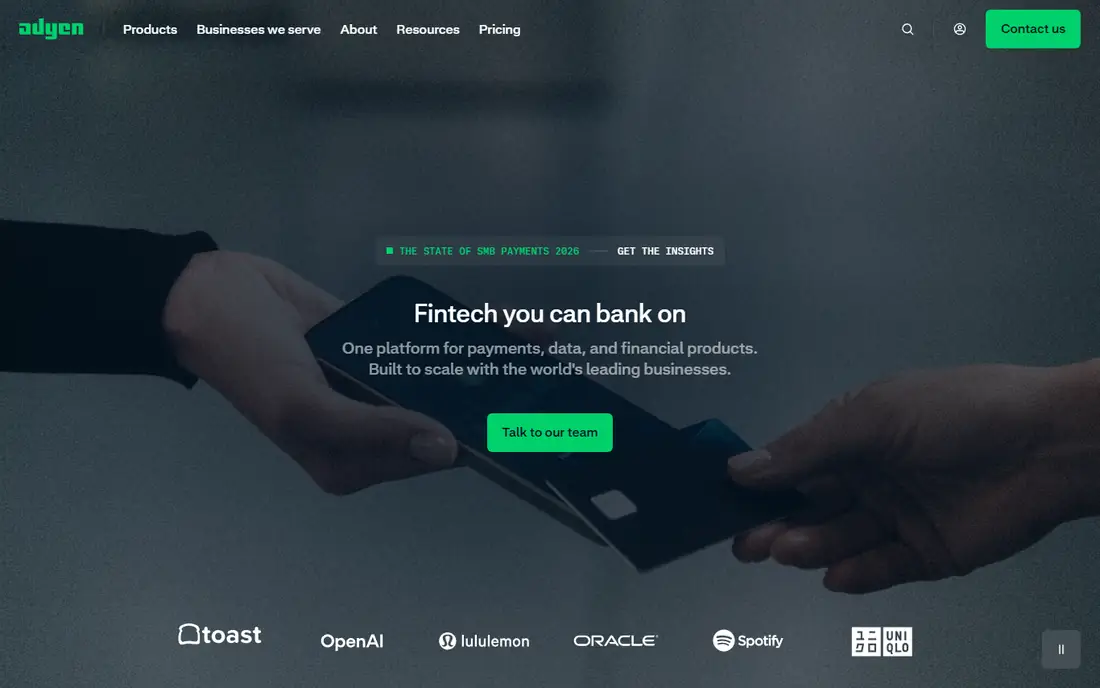
Adyen suits larger businesses that sell across countries and channels and want one processor for cards, local payment methods, in store terminals and mobile. Its interchange-plus pricing, global acquiring and risk tools are built for scale, and large brands use it to unify payments that would otherwise sit across several providers. Reporting and optimisation tools also help finance teams manage authorisation rates.
Small businesses should not start here. Pricing is custom, minimum invoice levels can apply, and the sales and integration process is heavier than a self serve signup. Adyen makes sense once volume, international sales or omnichannel complexity justify that effort.
What we like- Single platform for online, in store and mobile
- Wide global payment methods
- Strong fraud and risk tools
Watch out for- Custom pricing with minimums
- Needs a technical team to get full value
Starting priceSee website
Free planNo
Braintree, owned by PayPal, fits developers who want cards, PayPal and Venmo together without managing three integrations. It supports subscriptions, vaulted cards and marketplace payouts, and its SDKs cover web and mobile well. Businesses that already see PayPal demand from customers often find Braintree the cleanest way to add it alongside cards.
The ownership point matters for some buyers. If the goal is to move fully away from PayPal, Braintree does not achieve that, since it sits inside the same group. Pricing also needs confirmation at signup, because published rates have changed over time and depend on volume and product mix.
What we like- PayPal, Venmo and cards in one integration
- Strong subscription and marketplace tools
- Developer friendly
Watch out for- Owned by PayPal, so not a fully independent alternative
- Pricing varies and needs confirmation
#5Authorize.net
Best for: Classic gateway with a merchant account4.2/5 on
G2 (221 reviews, checked Oct 2026)
Visit authorize.net
Starting price$25 per month (all-in-one, plus 2.9% + $0.30 per transaction)
Free planNo
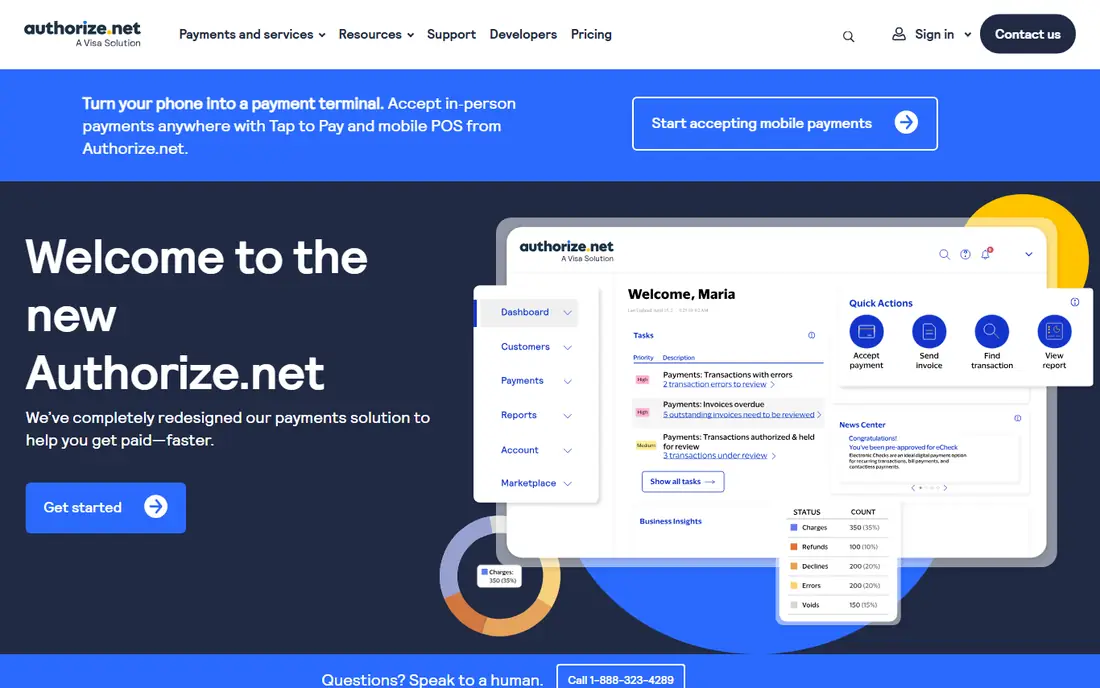
Authorize.net is a classic payment gateway that suits established businesses with an existing merchant account, or businesses that want the all-in-one option with a predictable monthly fee. It handles cards, recurring billing, invoicing and fraud filters, and it integrates with a wide range of carts and platforms. That stability appeals to businesses that value a known system over the newest checkout design.
The monthly fee and older interface are the drawbacks. At low volume, $25 per month plus per transaction fees can cost more than a no monthly fee processor, and setup often involves a merchant account application. Authorize.net starts to win once monthly volume passes roughly $2,500 to $3,000, where its per transaction costs can offset the fee.
What we like- Long established gateway
- Works with many merchant accounts
- Solid fraud filters and recurring billing
Watch out for- Monthly fee
- Interface feels dated
- Setup can be slower than self serve rivals
#6Helcim
Best for: Transparent interchange-plus pricing3.9/5 on
G2 (19 reviews, checked Oct 2026)
Visit helcim.com
Starting priceInterchange-plus, no monthly fee
Free planNo
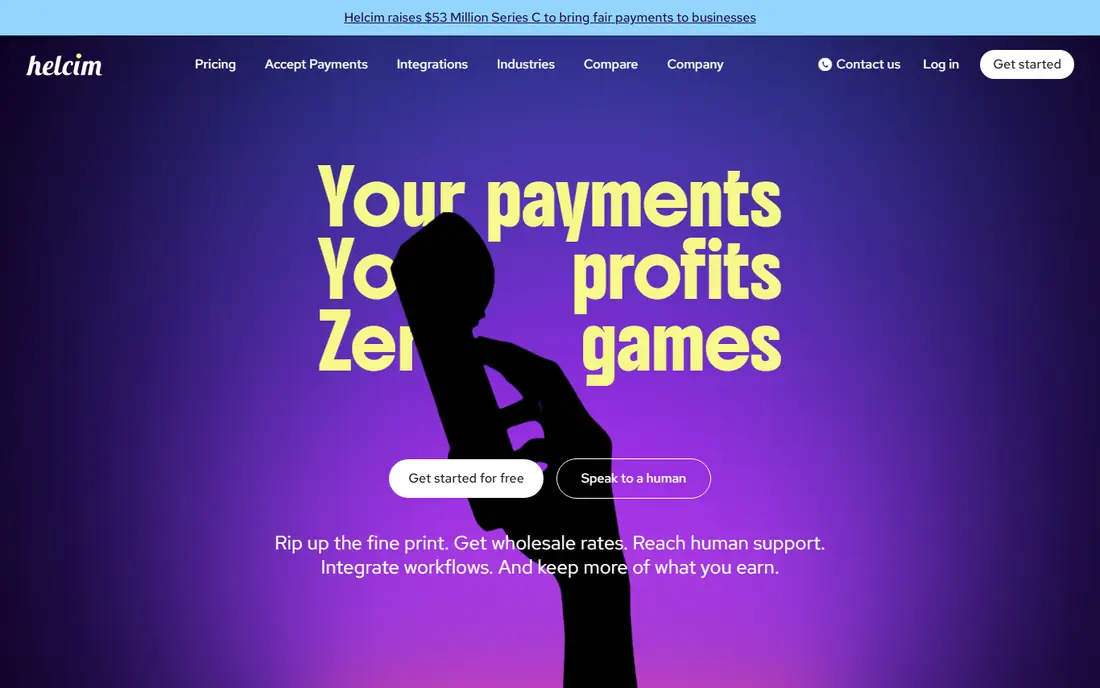
Helcim suits growing businesses that want transparent pricing without negotiating a custom deal. Interchange-plus passes card network costs through and adds a clear margin, which often beats flat rate pricing as volume grows, and Helcim lowers its margin automatically at higher volumes. There is no monthly fee, and the platform includes a virtual terminal, invoicing and recurring billing.
The limits are geography and billing clarity. Helcim serves the US and Canada, so international sellers need another processor. Interchange-plus statements also show more line items than a flat rate bill, which can confuse owners who prefer one simple rate. If you process over $25,000 a month and sell mainly in North America, Helcim deserves a quote.
What we like- Interchange-plus pricing with no monthly fee
- Volume discounts apply automatically
- Free virtual terminal
Watch out for- US and Canada only
- Interchange-plus bills are harder to read than flat rate bills
#7Paddle
Best for: SaaS tax compliance worldwide4.5/5 on
G2 (240 reviews, checked Oct 2026)
Visit paddle.com
Starting price5% + $0.50 per transaction
Free planNo
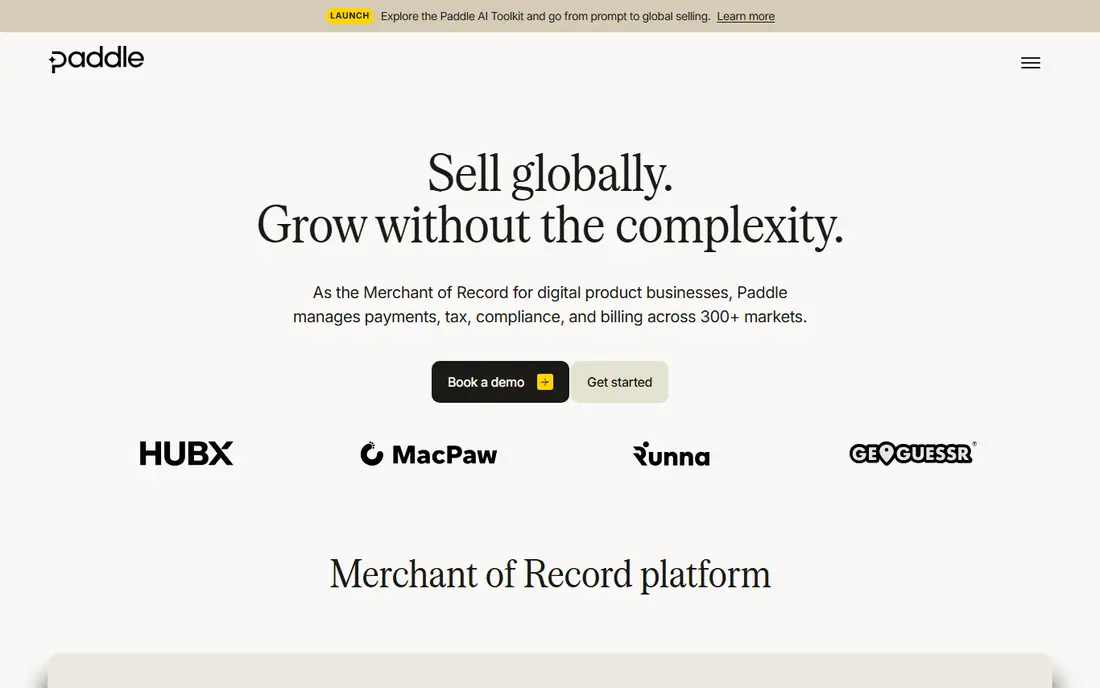
Paddle fits software companies selling worldwide, because it acts as merchant of record. That means Paddle is the legal seller, calculates and remits sales tax, VAT and GST, and handles compliance across many territories. Subscription billing, trials, dunning and fraud prevention are built in, which saves a SaaS team from stitching tax, billing and payment tools together.
The headline fee of 5% plus $0.50 is higher than Stripe card processing alone, but it includes tax handling that would otherwise cost time or a separate service. Paddle is less suited to physical goods or businesses that want full control over tax registration and checkout branding. For global SaaS, the time saved often outweighs the higher rate.
What we like- Merchant of record handling sales tax and VAT
- Subscription billing and dunning built in
- Global checkout
Watch out for- Higher headline fee than a plain processor
- Less control over tax and checkout branding for some sellers
Starting price5% + $0.50 per transaction
Free planNo
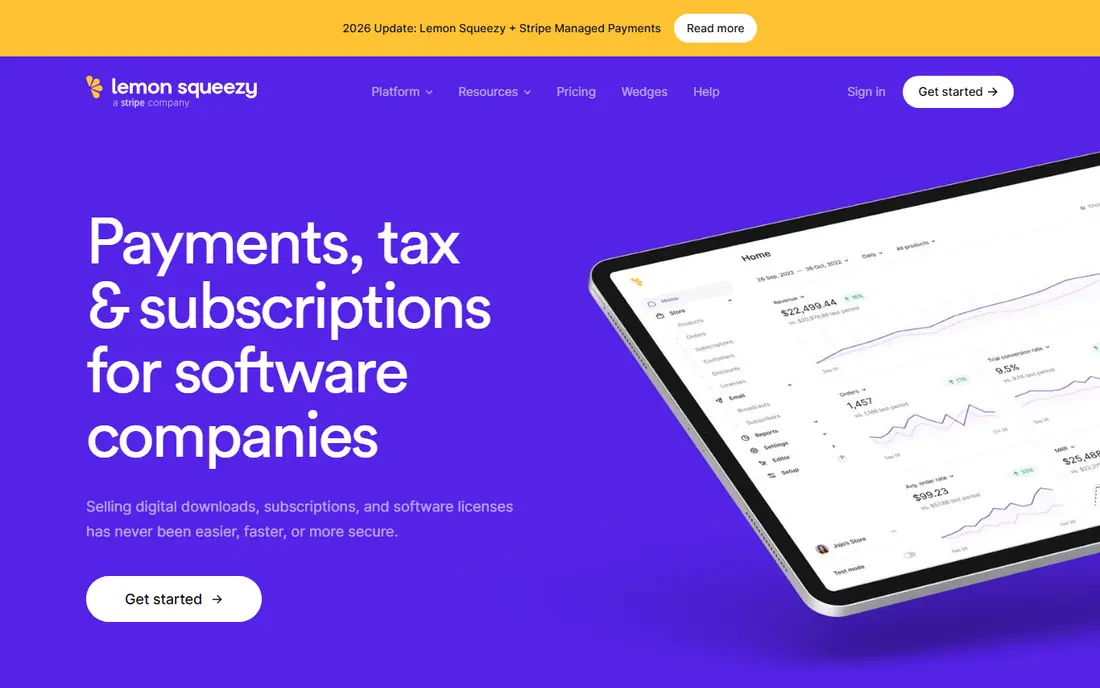
Lemon Squeezy suits creators and small software teams selling digital products, courses, licences and subscriptions. Like Paddle, it acts as merchant of record, handling tax, fraud and compliance, and it includes checkout, licence keys and subscription management in one place. Setup is faster than building a Stripe plus tax plus licence stack from scratch.
The fee structure mirrors Paddle at 5% plus $0.50, which is expensive for high volume physical sales or very low price items. For digital sellers who value simplicity and tax coverage over the lowest possible card rate, Lemon Squeezy is a practical Stripe replacement.
What we like- Merchant of record for digital sellers
- Simple checkout and licence handling
- Subscription tools included
Watch out for- Higher fee than plain card processing
- Best for digital goods, not physical retail
How we chose
We compared vendor pricing pages, documentation and public reviews, and kept only processors that are still operating, accept new US businesses, and offer a clear alternative to Stripe core card processing or merchant of record services. Fees were taken from vendor pages where published, and marked as See website where pricing is custom, volume dependent or has changed recently. A processor stayed on the list only if its fit, such as in person selling, enterprise scale or tax handling, was distinct from the others.
How to switch without losing sales
Start by pulling last month card mix, average order value and refund rate, because those numbers decide whether flat rate or interchange-plus wins. Run a small test with the new processor on a slice of traffic or a single product, and check authorisation rates, payout timing and dispute handling before moving everything. Keep Stripe running during the test so a problem does not stop all sales.
Plan saved card migration early. Card data can only move to a PCI compliant processor, and some wallet payment methods may not transfer, so customers may need to re-enter details. Tell customers about any checkout change, update refund and subscription emails, and confirm tax handling if you move to a merchant of record service. A clean switch takes planning, but it avoids the common mistake of choosing on headline rate alone.
Frequently asked questions
Is PayPal cheaper than Stripe?
Not usually for card payments, because PayPal published card fees are higher than Stripe for many transactions. PayPal can still be worth it for conversion, because buyers trust it and checkout completion can rise, but compare the effective rate on your average order value before switching fully.
What is the cheapest Stripe alternative?
For high volume North American sellers, Helcim interchange-plus pricing often beats flat rates, while Square and PayPal are cheapest to start because they have no monthly fee. There is no single cheapest option, because card mix, order size and international share change the result.
Do I need a merchant of record service?
You need one if you sell software or digital goods worldwide and do not want to register for sales tax and VAT in many territories yourself. Paddle and Lemon Squeezy handle that work for a higher fee. If you sell mainly in one country, a plain processor plus local tax advice is usually cheaper.
Can I use more than one payment processor?
Yes, and many businesses do. A common setup is Stripe or a replacement for cards, plus PayPal for wallet buyers, plus a point of sale processor for in person sales. Multiple processors add reconciliation work, so keep the setup as simple as your sales channels allow.
How long does it take to switch from Stripe?
A simple switch can take a few days for signup and checkout integration, while saved card migration, subscription transfer and testing can take weeks. Start with a small test, confirm payouts and disputes work, and only then move subscriptions and stored cards.
Sources we checked (8)
- https://www.paypal.com
- https://squareup.com
- https://www.adyen.com
- https://www.braintreepayments.com
- https://www.authorize.net
- https://www.helcim.com
- https://www.paddle.com
- https://www.lemonsqueezy.com
Is your product missing or out of date?
We review this list regularly. Vendors can request a listing, send updated pricing or ask about featured placement.

Shihab Mia · Founder, Rankite
Shihab has 5+ years in B2B and SaaS SEO. He writes Rankite's software buying guides from pricing pages, documentation and public user reviews. More about Shihab.