How we make this list: we compare pricing pages, product documentation and public user reviews. Ratings come from G2, Capterra or Trustpilot, with the date we checked them.
Key takeaways
- Playwright is the strongest default for most code-first teams because it covers Chromium, Firefox, and WebKit with auto-waiting and parallel runs at no licence cost.
- Cypress fits JavaScript front-end teams best, with a live runner and time-travel debugging, while paid Cypress Cloud adds scale for larger suites.
- Puppeteer, TestCafe, WebdriverIO, and Nightwatch keep costs at zero for teams that want a framework rather than a platform.
- Katalon suits mixed-skill QA teams that need record-and-playback, test management, and cloud runs in one place.
- Robot Framework works well when readable, keyword-driven tests matter more than raw speed.
Quick comparison
| Tool | Best for | Starting price | Free plan |
|---|
 Playwright | Cross-browser code-first testing | Free | Yes |
 Cypress | JavaScript front-end testing | $67 per user/month (billed annually) | Yes |
 Puppeteer | Chrome and Firefox automation | Free | Yes |
 TestCafe | Simple setup without WebDriver | Free | Yes |
 WebdriverIO | Web, mobile, and desktop testing | Free | Yes |
 Katalon | Mixed-skill QA teams | See website | Yes |
 Nightwatch | Node.js teams keeping WebDriver | Free | Yes |
 Robot Framework | Readable keyword-driven tests | Free | Yes |
Is your product missing or out of date?
We review this list regularly. Vendors can request a listing, send updated pricing or ask about featured placement.
The best selenium alternatives
#1Playwright
Best for: Cross-browser code-first testing4.8/5 on
G2 (14 reviews, checked Oct 2026)
Visit playwright.dev
Starting priceFree
Free planYes
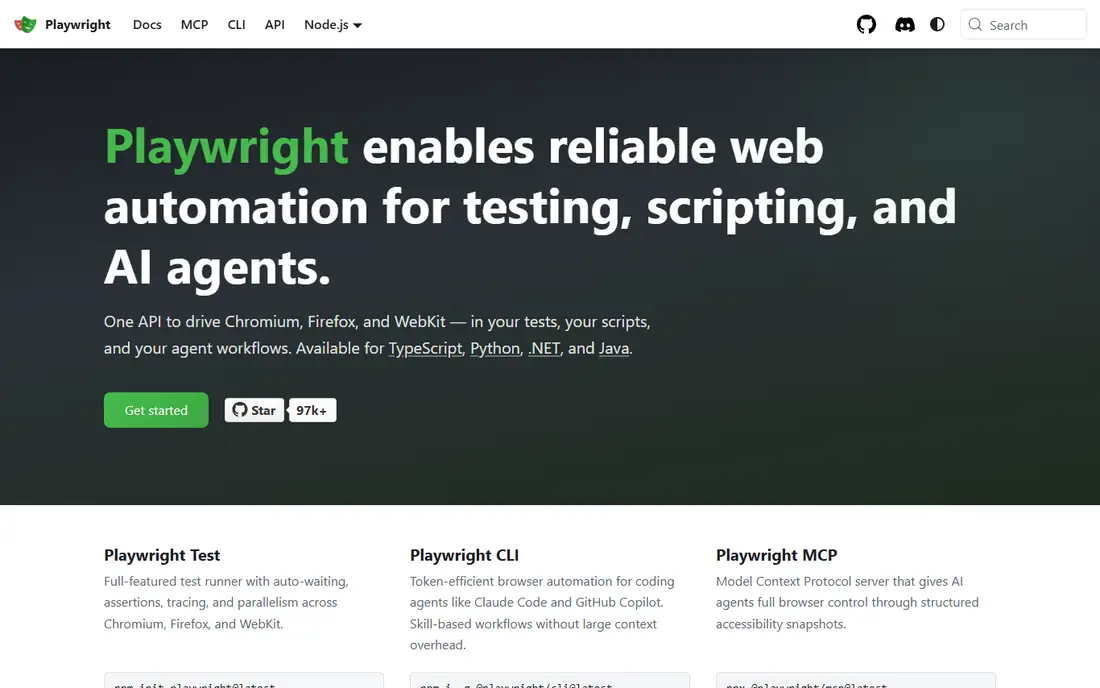
Microsoft built Playwright for teams that want one API across the major browser engines. Tests get a fresh browser context each time, which keeps state from leaking between cases. The trace viewer is the part testers mention most when a run fails in CI, because it shows DOM snapshots, network activity, and screenshots along a timeline.
The catch is honest and simple. Playwright is a framework, not a managed dashboard, so your team owns CI setup, reporting, and any extra tooling. For most engineering teams that trade is worth it, since the framework itself costs nothing and scales by adding machines rather than licences.
What we like- Covers Chromium, Firefox, and WebKit from one API
- Auto-waiting and web-first assertions reduce flaky tests
- Parallel runs, tracing, and code generation are included
Watch out for- Requires coding skill
- Teams used to a visual recorder may need time to adjust
#2Cypress
Best for: JavaScript front-end testing4.7/5 on
G2 (107 reviews, checked Oct 2026)
Visit cypress.io
Starting price$67 per user/month (billed annually)
Free planYes
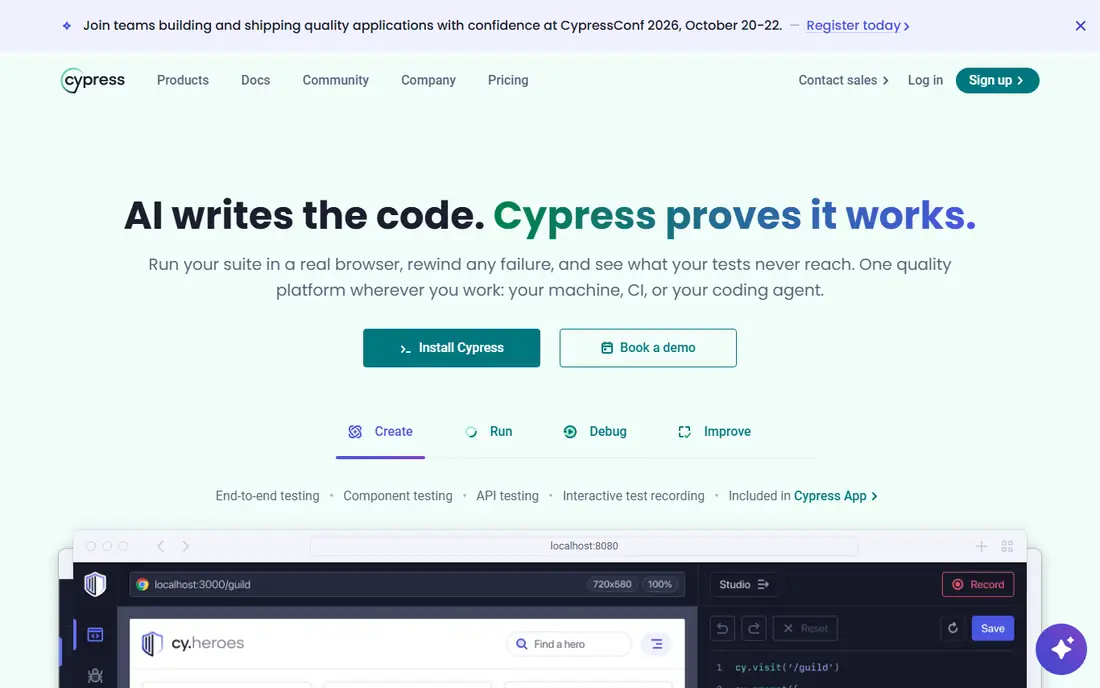
Cypress feels different from Selenium from the first run. You watch the app execute in a real browser, hover over a command, and see exactly what the page looked like at that moment. That short feedback loop helps front-end developers write and fix tests without leaving the browser.
Local use is free, and the paid Cloud tier starts at $67 per month billed annually for teams that need more recorded results, parallel runs, and collaboration features. If your stack is mainly JavaScript and TypeScript, and your tests target the web, Cypress remains one of the easiest tools to adopt.
What we like- Runs tests inside the browser with live reloading
- Time-travel debugging shows the app at each step
- Strong documentation and a large community
Watch out for- Paid Cloud is needed for high-volume recorded runs
- Native mobile app testing is not its focus
Starting priceFree
Free planYes
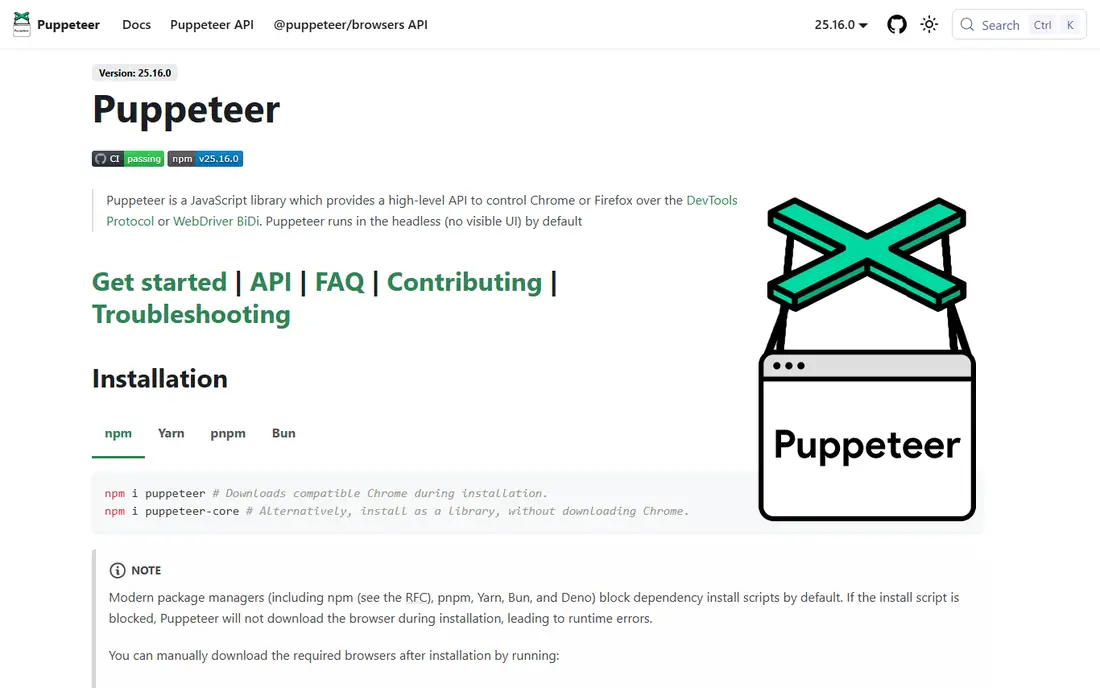
Google maintains Puppeteer as a high-level library for controlling Chrome or Firefox through the DevTools protocol or WebDriver BiDi. It runs headless by default, which makes it a natural fit for automation jobs, monitoring checks, and content extraction. Many teams pair it with a test runner rather than using it alone.
That pairing is also its limit. Puppeteer gives you browser control, not test organisation, reporting, and parallel execution out of the box. Choose it when the job is automation first and formal test management second.
What we like- Direct control over Chrome and Firefox
- Strong for scraping, screenshots, and PDF generation
- A large Node.js ecosystem
Watch out for- Not a full test runner on its own
- Multi-browser coverage is narrower than Playwright
Starting priceFree
Free planYes
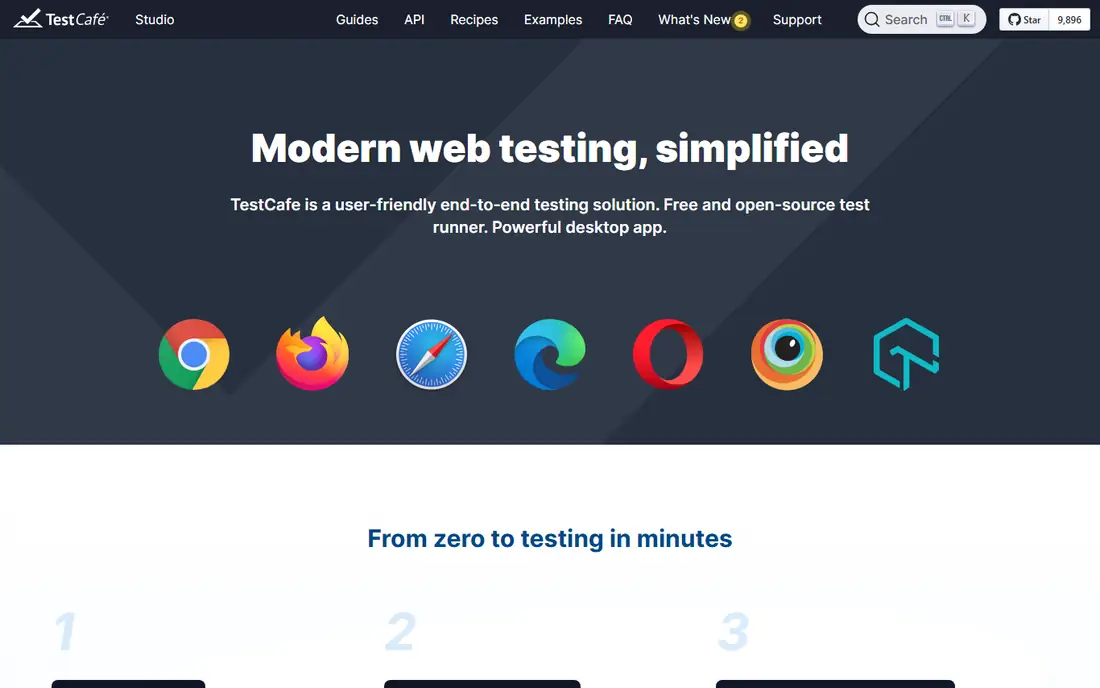
TestCafe removes the step that trips up many Selenium newcomers: installing and matching a driver for each browser. A single package installs, you point it at a browser, and tests run. Its syntax reads clearly, which helps testers who write JavaScript or TypeScript but do not want to manage infrastructure.
Concurrency is built in, so several tests can run at once without extra configuration. The trade-off is ecosystem size. You will find fewer ready-made integrations than with the biggest frameworks, and very large or unusual setups may need more custom work.
What we like- No WebDriver or browser plugin setup
- One npm package gets you started
- Built-in concurrency for faster runs
Watch out for- Smaller community than Playwright or Cypress
- Advanced use cases may need extra plugins
Starting priceFree
Free planYes
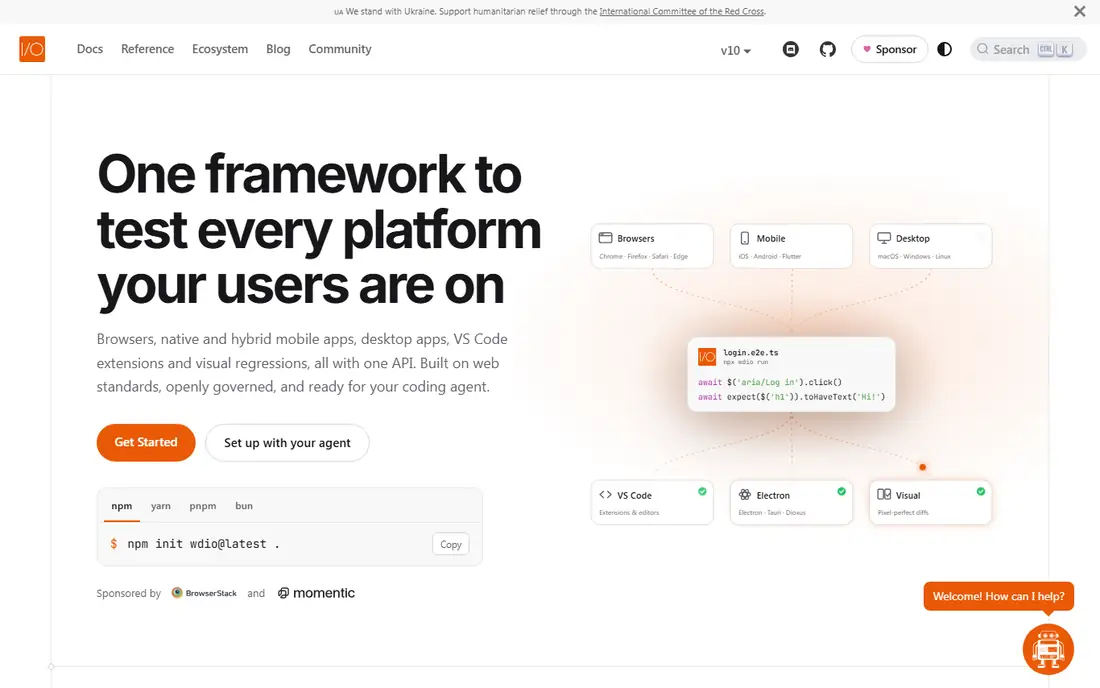
WebdriverIO is the closest option on this list to a Selenium replacement that keeps the WebDriver model. It speaks to real browsers and, through Appium, to native and hybrid mobile apps. Component testing for React, Vue, Svelte, and other frameworks sits in the same project, which helps teams that test at more than one level.
Breadth brings a learning curve. The configuration file covers many options, and a team that only needs web tests may prefer a narrower tool. For teams that already run WebDriver infrastructure, or need one framework across web and mobile, that breadth is the point.
What we like- One API for browsers, native mobile apps, and desktop apps
- Works with WebDriver and WebDriver BiDi
- Supports component testing for popular frameworks
Watch out for- Configuration can feel broad for simple web-only projects
- Mobile testing still needs device setup
#6Katalon
Best for: Mixed-skill QA teams4.4/5 on
G2 (226 reviews, checked Oct 2026)
Visit katalon.com
Starting priceSee website
Free planYes
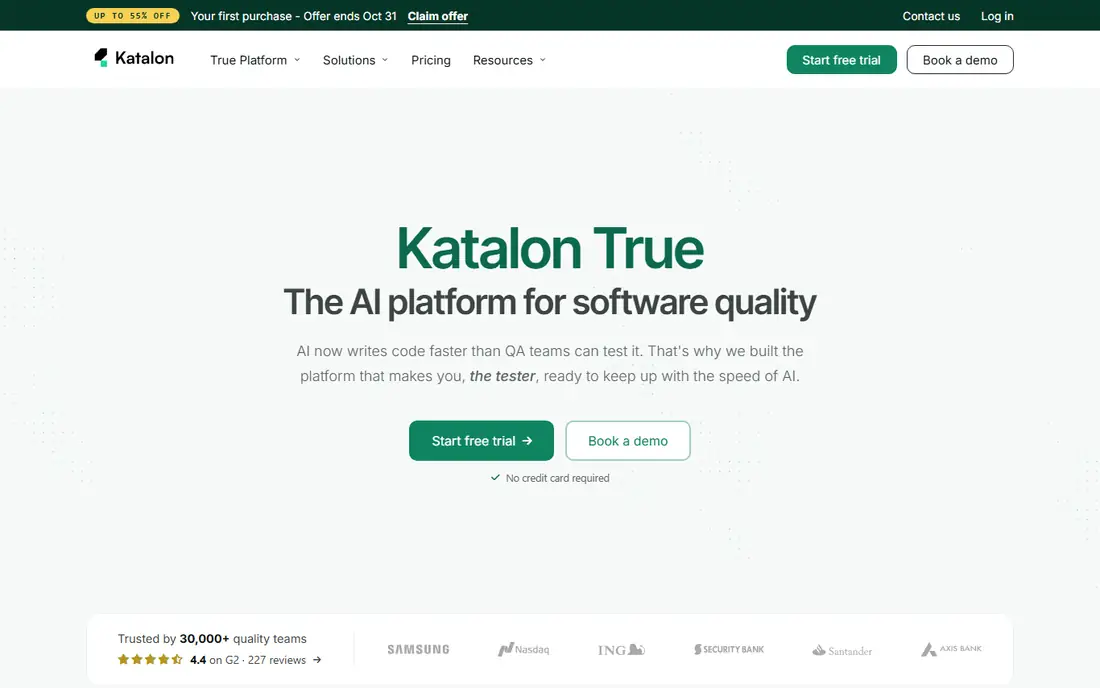
Katalon Studio targets the team where not everyone codes. Testers can record a flow, edit it in a visual editor, or drop into Groovy or Java when a case needs code. TestOps adds test management and reporting, and TestCloud runs tests on browsers and real devices without maintaining a grid.
That completeness has a cost in weight and price. A small engineering team may find a free framework faster to set up. A QA department that needs shared cases, audit trails, and managed execution often finds the bundle cheaper than assembling separate tools.
What we like- Record-and-playback plus full-code authoring in one studio
- Test management and cloud execution are built in
- Can import Selenium IDE projects
Watch out for- Paid plans are needed for larger team features
- Heavier than a code-only framework
Starting priceFree
Free planYes
Nightwatch gives Node.js teams a clean way to write WebDriver tests without a large framework on top. Tests read as a series of commands, and parallel execution is available from the start. It also covers native iOS and Android testing, which keeps mobile work in the same codebase.
The main risk is momentum. Playwright and Cypress dominate hiring, tutorials, and new integrations, so a team picking Nightwatch should be comfortable with a smaller community. If your team already knows WebDriver and wants a light Node.js framework, it remains a solid, free choice.
What we like- Simple syntax for Node.js teams
- Parallel runs by default
- Supports real browsers and native mobile apps
Watch out for- Less momentum than Playwright
- Documentation and community are smaller
Starting priceFree
Free planYes
Robot Framework approaches testing from readability first. A test is a set of keywords, such as opening a browser, clicking a button, and checking a result. Non-developers can read and often write cases, while developers extend the framework with libraries when a keyword does not exist.
Browser work usually runs through SeleniumLibrary or Browser Library, so Robot Framework is less a break from Selenium than a different way to organise it. That makes it a good fit for acceptance testing and for teams where product owners and testers share ownership of test cases.
What we like- Tests read almost like plain language
- A large library ecosystem covers web, API, and desktop
- Works with Python and Java
Watch out for- Keyword style can hide complexity in very large suites
- Browser automation still relies on underlying libraries
How we chose
We compared vendor pricing pages, documentation, and public reviews on G2, Capterra, and Reddit, and checked what each tool actually covers: browsers, mobile, languages, parallel execution, and reporting. We favoured tools with a clear, current release and a real user base over new names with thin documentation. Price notes come from vendor pages or are marked as See website where a vendor prices by quote or by product bundle. We did not claim hands-on testing for this comparison, and any plan that depends on a specific price should be checked on the vendor pricing page before purchase.
What to weigh before you switch
Match the tool to the author
A framework that developers love can stall if testers cannot read or maintain its tests. Code-first teams do well with Playwright or WebdriverIO. Mixed teams do better with Katalon or Robot Framework, where visual or keyword authoring lowers the barrier.
Count the whole cost
Free frameworks still cost engineering time for CI, reporting, and grid maintenance. Paid platforms charge for recorded runs, parallel sessions, or seats. Model your suite size and run frequency, not just headcount, before comparing prices.
Plan the migration in slices
Move one high-value flow first, such as login and checkout, and run old and new suites side by side for a few weeks. Keep page objects or helper functions close to the product, so a redesign changes one place rather than hundreds of tests.
Check browser and device coverage early
WebKit and Safari coverage, real mobile devices, and desktop apps are the features that most often force a second tool later. Confirm them against your product before committing, especially if your users are split across iOS, Android, and desktop.
Keep a shortlist, not a longlist
Pick two tools that fit your team and run the same suite in both for two weeks. That side-by-side test will show you more than a feature table, because it exposes setup time, flaky tests, and debugging effort on your real code. A tool that looks strong in a demo can still slow a team down if its reporting or CI integration needs constant attention.
Score the trial on concrete points: how long setup took, how many tests flaked, how long failures took to explain, and how easy it was for a new tester to add a case. If the scores are close, choose the tool your team already understands best, since familiarity reduces maintenance cost over the life of the suite.
Frequently asked questions
Is Playwright really free for commercial use?
Yes, Playwright is open source and free to use, including for commercial projects. You pay only for your own CI machines and any extra services you add around it.
Can I migrate Selenium tests automatically to a new tool?
Some tools offer importers or recorders, and Katalon can import Selenium IDE projects, but most migrations need manual rewriting. Treat migration as a chance to remove brittle locators and dead tests rather than a straight copy.
Which Selenium alternative is best for beginners?
TestCafe and Cypress are the easiest starting points for most beginners, because setup is short and feedback is fast. Playwright is also approachable for developers, thanks to its code generator and clear documentation.
Do I still need Selenium Grid if I switch?
Not necessarily. Playwright and TestCafe run tests in parallel on your own machines, and Katalon TestCloud provides managed execution. You may still want a grid or device cloud if you need many browser and OS combinations at once.
Is Cypress only for JavaScript teams?
Cypress is built for JavaScript and TypeScript, so teams in other languages usually pick Playwright, WebdriverIO, or Robot Framework instead. Those tools support Python, Java, and other languages more directly.
What if my team tests mobile apps as well as the web?
WebdriverIO and Katalon cover native mobile apps alongside web testing, while Playwright and Cypress focus on the web. For native-only mobile work, a dedicated mobile framework may still be the better companion.
Sources we checked (8)
- https://playwright.dev
- https://www.cypress.io
- https://pptr.dev
- https://testcafe.io
- https://webdriver.io
- https://katalon.com
- https://nightwatchjs.org
- https://robotframework.org
Is your product missing or out of date?
We review this list regularly. Vendors can request a listing, send updated pricing or ask about featured placement.

Shihab Mia · Founder, Rankite
Shihab has 5+ years in B2B and SaaS SEO. He writes Rankite's software buying guides from pricing pages, documentation and public user reviews. More about Shihab.