How we make this list: we compare pricing pages, product documentation and public user reviews. Ratings come from G2, Capterra or Trustpilot, with the date we checked them.
Key takeaways
- SecOps platforms now split into two bets: workflow automation you design yourself, and agentic AI that investigates alerts on its own.
- Cortex XSOAR is the best enterprise SOAR pick, with end-to-end incident response, a large content marketplace, and Palo Alto ecosystem depth.
- Splunk SOAR is the best SIEM-native pick, with 300 plus integrations, 2,800 plus actions, and deep logic and scripting control.
- Swimlane is the best low-code pick, with Hero AI agents, low-code playbooks, and scale to 25 million daily actions.
- Tines is the best workflow pick, with a secure environment for AI agents, apps, and automation, and vendor-agnostic integrations.
- Torq is the best AI SOC pick, with agentic AI that investigates and remediates, and a 4.8 rating from 150 reviews.
- Rapid7 InsightConnect is the best integration pick, with 300 plus plugins, many open source, for quick cross-tool automation.
- ServiceNow Security Operations is the best enterprise workflow pick, with ITSM-aligned response, tasks, and approvals.
- Google SecOps is the best cloud pick, with planetary-scale ingestion, 4,000 plus curated detections, and Gemini-powered investigation.
Quick comparison
Is your product missing or out of date?
We review this list regularly. Vendors can request a listing, send updated pricing or ask about featured placement.
The best SecOps alternatives
Starting priceSee website
Free planFree trial
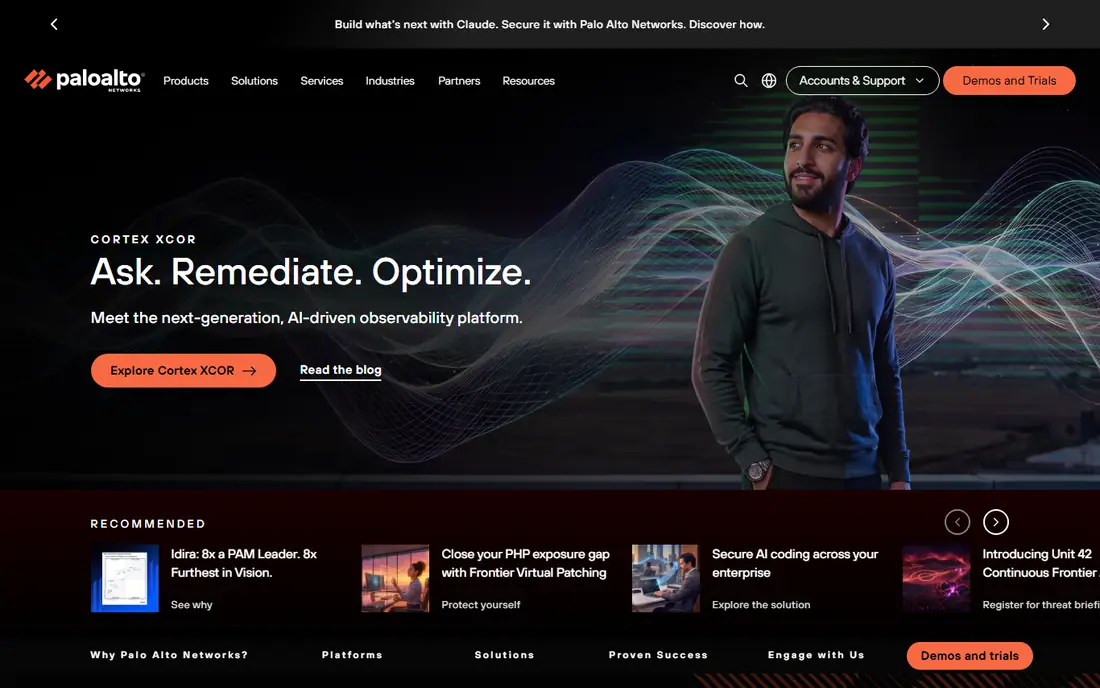
Cortex XSOAR is the best enterprise SOAR pick. Palo Alto Networks describes an AI-driven SecOps platform with unified data, artificial intelligence, and automation, with 700 plus partner integrations and 480 billion endpoints scanned daily, and a 90 percent reduction in MTTR claimed. Comparison sources rate Cortex XSOAR as the best overall SOC operations platform, with end-to-end incident response, playbook-driven analyst-in-loop automation, and tens of thousands of incidents per day at scale, suited to large and mature SOCs.
The catch is maintenance. Comparison sources call XSOAR maintenance heavy and note Cortex AgentiX as the named successor, so buyers should confirm the migration path during evaluation. For Palo Alto-committed shops, Cortex XSOAR is the best pick.
What we like- End-to-end incident response with case management, threat intelligence, and a large content marketplace
- 700 plus partner integrations across Palo Alto platforms
- AI-driven SecOps platform with unified data and automation
- 90 percent reduction in MTTR claimed
Watch out for- Vendor homepage is generic Palo Alto platform content, so XSOAR details rest on comparison sources
- Maintenance heavy per comparison sources
- Comparison sources note Cortex AgentiX as the named XSOAR successor, so buyers should confirm migration path
#2Splunk SOAR
Best for: SIEM-native4.4/5 on
G2 (40 reviews, checked Oct 2026)
Visit splunk.com
Starting priceSee website
Free planFree trial
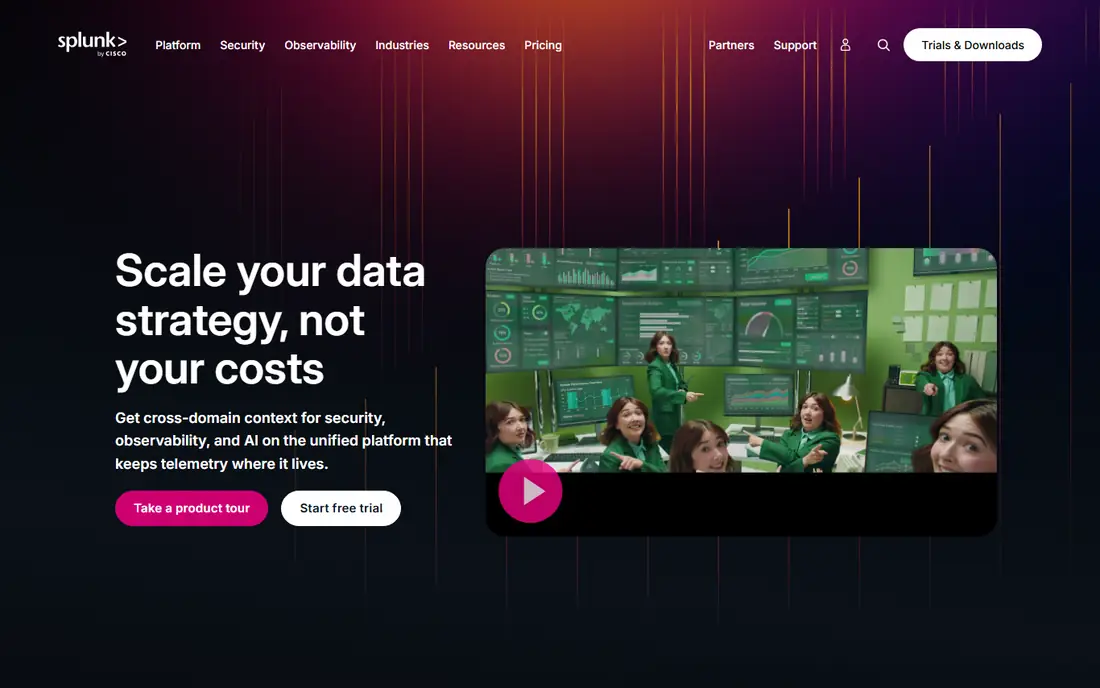
Splunk SOAR is the best SIEM-native pick. Splunk describes a data platform for security, observability, and AI, with unified data, advanced threat detection, investigation, and response, and AI agents that enable experts to mitigate threats across any attack surface. Comparison sources rate Splunk SOAR as the best advanced automation platform, with deep logic and scripting control, highly customizable workflows, 300 plus integrations, and 2,800 plus actions, suited to engineering-heavy SOCs. Splunk SOAR was formerly Splunk Phantom, and anchors many SIEM SOAR programs with strong case management and tight Splunk SIEM integration.
The trade-off is ramp time. Comparison sources report long ramps and uncertain product direction after the Cisco acquisition. For Splunk-anchored SOCs, Splunk SOAR is the best pick.
What we like- Deep logic and scripting control
- 300 plus integrations with 2,800 plus actions
- Tight integration with Splunk SIEM and Enterprise Security
- Unified data platform for security, observability, and AI
Watch out for- Vendor homepage is generic Splunk platform content, so SOAR details rest on comparison sources
- Legacy architecture per comparison sources
- Playbook authoring is a permanent line item with long ramps
Starting priceSee website
Free planFree trial
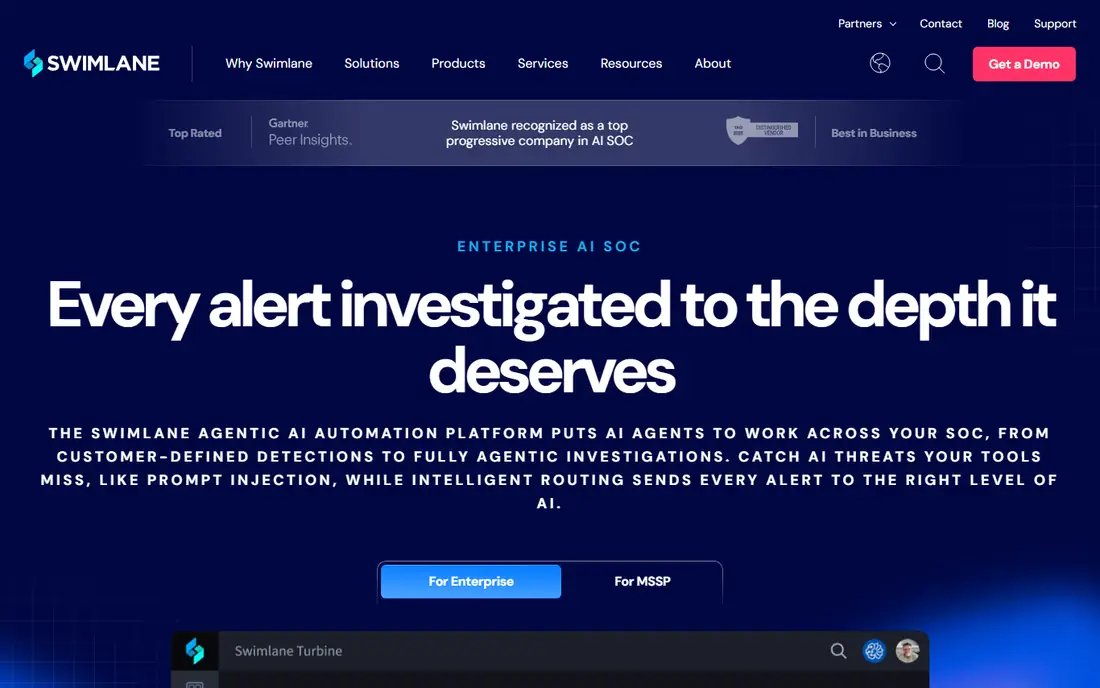
Swimlane is the best low-code pick. Its homepage describes agentic AI security automation, hyperautomation, and SOC automation, with Hero AI powering instant execution, playbook generation at enterprise scale, and expert agents across the SOC. Features include Hero AI executing ad-hoc playbook actions across customer environments, generating and modifying active playbooks with clarifying questions and real-time progress, deploying expert agents to manage dynamic reasoning with full context and guardrails, intelligent routing sending every alert to deterministic, AI-assisted, or fully agentic investigation, infinite integrations with a marketplace of connectors built on demand at no cost, Turbine Canvas for no, low, or full code automation, dashboards and AI-augmented reporting, and cloud-native architecture executing 25 million daily actions for a single customer at 75,000 actions per minute. Swimlane claims MTTR reduction of 75 percent, 20x analyst capacity, and cost cuts up to 90 percent through intelligent routing.
The catch is pricing model. Comparison sources note pricing on automated actions rather than seats, which can rise with volume. For mid-market SOCs that want low-code ergonomics, Swimlane is the best pick.
What we like- Hero AI agents for instant execution and playbook generation
- Low-code Turbine Canvas with no, low, or full code
- Intelligent routing to deterministic, AI-assisted, or fully agentic investigation
- 25 million daily actions at 75,000 actions per minute for a single customer
- MTTR reduction of 75 percent claimed
Watch out for- Pricing by quote on the homepage
- Comparison sources note pricing on automated actions rather than seats, which can rise with volume
- Still playbook-bound for deterministic paths

#4Tines
Best for: Workflows4.7/5 on
G2 (410 reviews, checked Oct 2026)
Visit tines.com
Starting priceSee website
Free planFree trial
Tines is the best workflow pick. Its homepage describes the secure environment for AI agents, apps, and automation, with freedom to build, complete security, and no compromises. Features include visibility across AI-created work, control without bottlenecks so teams can self-serve, autonomous fixes controlled by the user with workflows improving the longer they run, AI on your terms with freedom to choose where, when, and how LLMs are used, MCP and AI client management with an AI gateway to govern deployments, governance, guardrails, and monitoring across every surface, vendor-agnostic work across the entire tech stack and within your infrastructure, and unmatched time to value with speed, power, and ease of use. Comparison sources rate Tines at 4.7 out of 5 from 400 reviews, with intuitive no-code and low-code automation and flexible API integrations.
The trade-off is scope. Tines is a workflow builder, not a full SIEM or SOAR suite, so teams that need case management should pair it with a detection platform. For security and IT teams that want modern workflow authoring, Tines is the best pick.
What we like- Secure environment for AI agents, apps, and automation
- Vendor-agnostic across the entire tech stack
- Governance, guardrails, and monitoring across every surface
- MCP and AI client management with an AI gateway
- 4.7 rating from 400 reviews
Watch out for- Homepage extract is high-level, so workflow details rest on comparison sources
- Pricing by quote on the homepage
- Workflow builder, not a full SIEM or SOAR suite

#5Torq
Best for: AI SOC4.8/5 on
G2 (166 reviews, checked Oct 2026)
Visit torq.io
Starting priceSee website
Free planFree trial
Torq is the best AI SOC pick. Its homepage describes the AI SOC platform with AI agents and agentic SecOps, trusted by the world best security teams including Blackstone, Carvana, Chipotle, FICO, Lowes, and T-Mobile. Features include AI agents identifying actual risk by analyzing, correlating, and enriching unprocessed events at machine speed, investigating cases faster with agentic AI chasing answers on complex, prioritized cases using tools you specify and always showing its work, and reducing response time with Socrates, the natural language-driven agentic AI that autonomously remediates critical threats. Torq reports KuppingerCole naming it a Leader across all four categories in the 2026 Emerging AI SOC Leadership Compass, and Gartner naming it the company to beat in AI SOC Agents for Threat Investigation in August 2026.
The catch is maturity. Torq is a newer category, so buyers should validate agent guardrails and audit trails during trial. For teams moving from workflow automation toward an AI SOC, Torq is the best pick.
What we like- AI agents that find threat needles in the alert haystack at machine speed
- Socrates natural language agentic AI that autonomously remediates critical threats
- 4.8 rating from 150 reviews
- KuppingerCole Leader in the 2026 Emerging AI SOC Leadership Compass
- Gartner company to beat in AI SOC Agents for Threat Investigation
Watch out for- Pricing by quote on the homepage
- Comparison sources note Torq still playbook-bound for some paths
- Newer category means buyers should validate agent guardrails

#6Rapid7 InsightConnect
Best for: Integrations4.0/5 on
G2 (5 reviews, checked Oct 2026)
Visit rapid7.com
Starting priceSee website
Free planFree trial
Rapid7 InsightConnect is the best integration pick. Rapid7 describes a managed cybersecurity platform to outpace attackers, with an open platform, AI-powered detection, and human-led response, MDR with unlimited incident response, 24x7 XDR monitoring, remediation, and DFIR, and 11,000 plus global companies taking command of their attack surface. Comparison sources rate Rapid7 InsightConnect as the best integration platform, with quick cross-tool automation, modular workflows, and 300 plus plugins, many open source, suited to mixed-stack SOCs.
The trade-off is depth. InsightConnect automation depth sits below Cortex XSOAR and Splunk SOAR. For mixed-stack SOCs that need quick integrations, Rapid7 InsightConnect is the best pick.
What we like- 300 plus plugins, many open source, for quick cross-tool automation
- Modular workflows
- Part of the Rapid7 command platform with MDR, exposure management, and detection
- 11,000 plus global companies
Watch out for- Vendor homepage is generic Rapid7 platform content, so InsightConnect details rest on comparison sources
- Pricing by quote on the homepage
- Automation depth below Cortex XSOAR and Splunk SOAR

#7ServiceNow Security Operations
Best for: Enterprise workflows4.3/5 on
G2 (84 reviews, checked Oct 2026)
Visit servicenow.com
Starting priceSee website
Free planFree trial
ServiceNow Security Operations is the best enterprise workflow pick. ServiceNow describes an AI platform to put AI to work, with workflows across IT, CRM, employee experience, risk, and security, and security built to act, not just alert, with one platform that sees every asset, identity, and vulnerability. Comparison sources rate ServiceNow Security Operations as the best enterprise workflow platform, with ITSM-aligned response, task and approval driven workflows, and hundreds of IntegrationHub spokes, suited to large enterprises. ServiceNow reports 85 percent of the Fortune 500 as customers, a 98 percent renewal rate, and 95 billion workflows.
The catch is price. ServiceNow is enterprise-focused, so small teams may prefer Tines or Swimlane. For large enterprises that already run ServiceNow ITSM, ServiceNow Security Operations is the best pick.
What we like- ITSM-aligned response with tasks and approvals
- Hundreds of IntegrationHub spokes
- 85 percent of the Fortune 500 as customers
- 98 percent renewal rate
- AI platform with workflows across IT, CRM, employee experience, risk, and security
Watch out for- Vendor homepage is generic ServiceNow platform content, so SecOps details rest on comparison sources
- Pricing by quote on the homepage
- Enterprise focus means higher cost for small teams
Starting priceSee website
Free planFree trial
Google SecOps is the best cloud pick. Google Cloud Security describes cybersecurity solutions for SecOps, intelligence, AI, and cloud security, with frontline experts, intel-driven security operations, and cloud security supercharged by AI. Features include Google Security Operations ingesting and analyzing data on a planetary scale, applying Google threat intelligence and 4,000 plus curated detections, AI-powered capabilities from Gemini surfacing critical context, generating detections and playbooks, and reducing operational toil, Google Unified Security delivering integrated, intelligence-driven, AI-infused workflows, Agentic SOC combining AI-driven automation with human expertise to triage alerts, investigate threats, and manage repetitive tasks, and Mandiant experts with more than 500,000 hours investigating security incidents last year. Google reports Leader status in the IDC MarketScape Worldwide SIEM 2026 and the Gartner Magic Quadrant for SIEM 2025.
The trade-off is cloud focus. Google SecOps is cloud-first, so on-premises teams should confirm data residency. For teams centralizing data and detection on Google Cloud, Google SecOps is the best pick.
What we like- Planetary-scale ingestion and analysis
- 4,000 plus curated detections
- Gemini-powered investigation with detection and playbook generation
- Agentic SOC with AI agents triaging alerts
- Mandiant expertise with 500,000 plus hours investigating incidents
- Leader in IDC MarketScape Worldwide SIEM 2026 and Gartner Magic Quadrant for SIEM 2025
Watch out for- Vendor homepage is generic Google Cloud security content, so SecOps SOAR details rest on comparison sources
- Pricing by quote on the homepage
- Cloud-first design means on-premises teams should confirm data residency
How we chose
We compared tools that replace a generic SecOps solution across its core jobs: detection, investigation, orchestration, automation, and response. Each vendor homepage was opened to confirm the vendor exists today and matches its category, with Swimlane, Tines, and Torq product-specific, and Palo Alto, Splunk, Rapid7, ServiceNow, and Google homepages generic platform content, flagged as such. We kept a mix of enterprise SOAR, SIEM-native, low-code, workflow, AI SOC, integration, enterprise workflow, and cloud picks, since SecOps teams range from lean SOCs to large enterprises. Pricing is taken from comparison sources where vendor pricing pages were not shown on the homepage, and written as See website where vendors price by quote or on usage. The market split matters: workflow builders require you to map logic yourself, while agentic AI platforms investigate on their own, so we flagged which model each tool follows.
Your detections do not migrate automatically, so inventory playbooks, integrations, and case workflows, export what you can through supported tools, and plan re-creation before cancelling. Budget time for rebuilding approval workflows, enrichment logic, and audit integrations, which rarely transfer between vendors. Ask each vendor to show the auditor view during the demo, since good SecOps tools have it ready.
Test with a small alert class first. Run the new platform alongside your current tool for one incident cycle, compare triage time, enrichment quality, and remediation success, and fix gaps before migrating the whole SOC. Finally, check pricing models carefully: per action, per seat, and per ingested event pricing can change total cost dramatically as your alert volume grows.
Frequently asked questions
What is the best SecOps alternative?
Cortex XSOAR is the best enterprise SOAR alternative, Swimlane is the best low-code alternative, and Torq is the best AI SOC alternative. The right pick depends on whether you want workflow control or agentic investigation.
Which SecOps alternative is best for small teams?
Tines is the best workflow pick for small teams with fast time to value, Swimlane is the best low-code pick for lean SOCs, and Rapid7 InsightConnect is the best integration pick for mixed stacks.
What is the difference between SOAR and AI SOC?
SOAR requires you to design playbooks: if this indicator is malicious, then take this action. AI SOC platforms use agents that reason through investigations like an analyst, pulling EDR data, checking identity logs, and correlating evidence, with a replayable audit trail.
Which alternative is best for Google Cloud teams?
Google SecOps is the best cloud pick, with planetary-scale ingestion, 4,000 plus curated detections, and Gemini-powered investigation, plus Mandiant expertise.
Which alternative is best for Palo Alto shops?
Cortex XSOAR is the best Palo Alto pick, with end-to-end incident response and 700 plus partner integrations, though buyers should confirm the Cortex AgentiX migration path.
How long does SecOps migration take?
Playbook migration takes a few weeks to a few months, integration rebuilds take one to two months, and full SOC validation takes three to six months. Agentic AI platforms can shorten triage time faster, but guardrail validation still takes time.
Sources we checked (8)
- https://www.paloaltonetworks.com
- https://www.splunk.com
- https://swimlane.com
- https://www.tines.com
- https://torq.io
- https://www.rapid7.com
- https://www.servicenow.com
- https://cloud.google.com/security
Is your product missing or out of date?
We review this list regularly. Vendors can request a listing, send updated pricing or ask about featured placement.

Shihab Mia · Founder, Rankite
Shihab has 5+ years in B2B and SaaS SEO. He writes Rankite's software buying guides from pricing pages, documentation and public user reviews. More about Shihab.
 Cortex XSOAR
 Swimlane
 Google SecOps