How we make this list: we compare pricing pages, product documentation and public user reviews. Ratings come from G2, Capterra or Trustpilot, with the date we checked them.
Key takeaways
- The best Oracle Database alternatives in 2026 split between free open source relational engines, enterprise Microsoft tooling, and cloud analytics platforms.
- PostgreSQL leads as the general-purpose free alternative with the widest extension support, while MySQL leads for widely deployed web apps.
- Microsoft SQL Server leads for enterprises standardized on Microsoft, Azure, and .NET, while MariaDB leads for a MySQL-compatible open source path.
- MongoDB leads for flexible document data, Snowflake leads for cloud analytics, and CockroachDB and TiDB lead for distributed scale.
- This guide lists alternatives only. Oracle Database itself is not listed, since the question is what to use instead of it.
Quick comparison
| Tool | Best for | Starting price | Free plan |
|---|
 PostgreSQL | General-purpose advanced SQL | Free | Yes |
 MySQL | Widely deployed web apps | Free | Yes |
 Microsoft SQL Server | Microsoft and Azure shops | See website | Yes |
 MariaDB | MySQL-compatible open source | Free | Yes |
 MongoDB | Flexible document data | See website | Yes |
 Snowflake | Cloud analytics | See website | Free trial |
 CockroachDB | Distributed SQL across regions | Free | Yes |
 TiDB | MySQL-compatible horizontal scale | Free | Yes |
Is your product missing or out of date?
We review this list regularly. Vendors can request a listing, send updated pricing or ask about featured placement.
The best Oracle Database alternatives
#1PostgreSQL
Best for: General-purpose advanced SQL4.4/5 on
G2 (682 reviews, checked Oct 2026)
Visit postgresql.org
Starting priceFree
Free planYes
PostgreSQL is the strongest general alternative for teams that want advanced SQL features in one free engine. It offers advanced indexing, JSON support, full-text search, window functions, and common table expressions with a maturity that rivals reached later. Extensions add PostGIS for spatial data, pgvector for embeddings, and dozens of other capabilities without switching databases.
The trade is migration effort. Replication setup takes more care than simpler engines, and tuning habits differ from Oracle, so teams should budget for retraining. Managed options from every cloud and dedicated providers start near 5 to 25 dollars per month depending on provider. For a team that wants one database for relational, document, search, and analytical work, PostgreSQL is the most capable alternative.
What we like- Advanced indexing and extensibility
- Strong JSON and full-text search
- ACID compliance
Watch out for- Replication setup takes care
- Tuning differs from Oracle habits
- Managed costs rise with size
#2MySQL
Best for: Widely deployed web apps4.4/5 on
G2 (1,685 reviews, checked Oct 2026)
Visit mysql.com
Starting priceFree
Free planYes
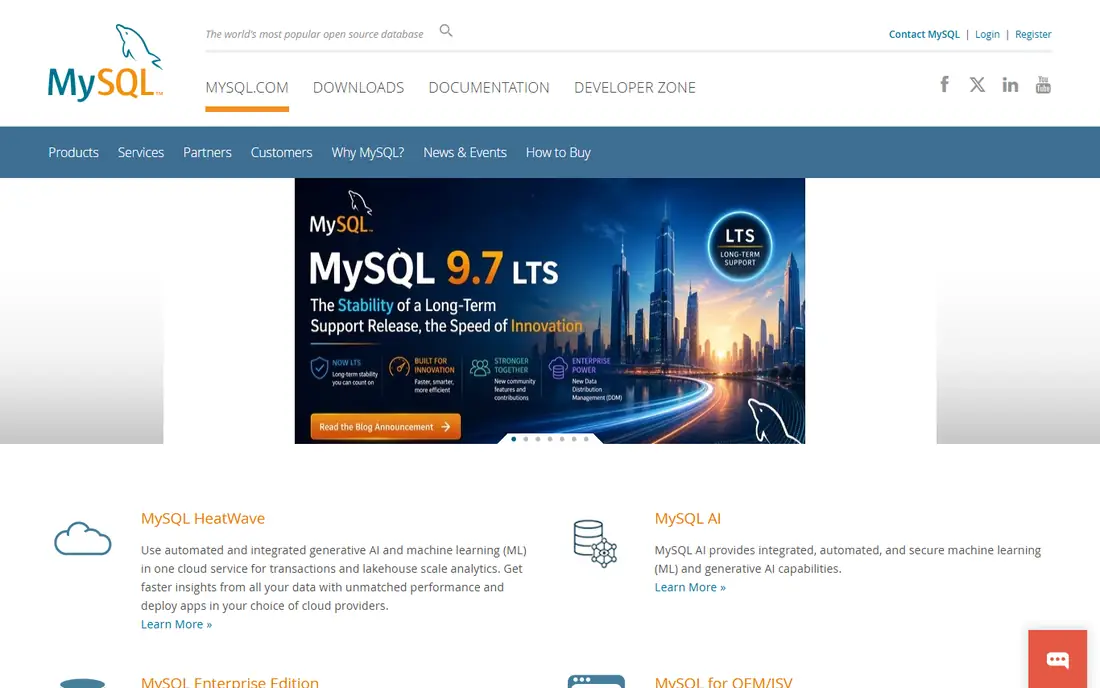
MySQL suits web apps and agencies that want the most widely deployed open source SQL engine. It runs high-throughput simple transactions and reads well, powers countless content systems and e-commerce sites, and enjoys hosting support everywhere. The free Community Edition covers most web workloads.
The limits are stewardship and depth. Oracle ownership concerns some users, which is why MariaDB exists as a fork, and advanced analytics are weaker than PostgreSQL. Enterprise features are also paid. For a web app that needs proven scale and simple deployment, MySQL leads.
What we like- Most widely deployed open source SQL engine
- Fast for web reads
- Huge hosting support
Watch out for- Oracle stewardship concerns some users
- Advanced analytics are weaker than PostgreSQL
- Enterprise features are paid
#3Microsoft SQL Server
Best for: Microsoft and Azure shops4.4/5 on
G2 (2,288 reviews, checked Oct 2026)
Visit microsoft.com
Starting priceSee website
Free planYes
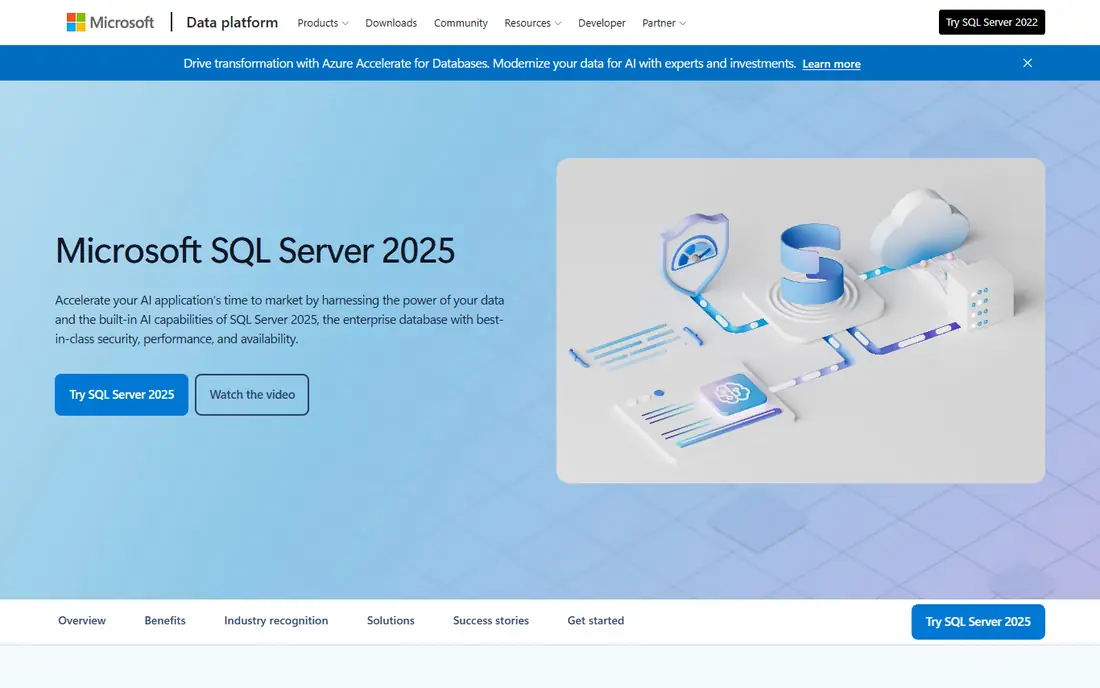
Microsoft SQL Server suits enterprises standardized on Microsoft, Azure, and .NET. Its tooling integrates deeply with Visual Studio, Azure services, and Microsoft analytics, and Express and Developer editions are free for learning and small workloads. Hybrid cloud deployments remain a strength.
The trade is licensing. Like Oracle, SQL Server needs careful license planning, and full pricing is quote-based rather than published, so the starting price here is written as See website. For a Microsoft shop, SQL Server is the natural enterprise alternative.
What we like- Deep .NET and Azure integration
- Strong enterprise tooling
- Express and Developer editions free
Watch out for- License planning needs care
- Windows-centric history, though Linux support exists
- Full pricing is quote-based
#4MariaDB
Best for: MySQL-compatible open source4.4/5 on
G2 (226 reviews, checked Oct 2026)
Visit mariadb.org
Starting priceFree
Free planYes
MariaDB suits teams that want a MySQL-compatible path without Oracle stewardship. As a community-driven fork of MySQL, it runs most MySQL workloads as a drop-in, keeps development open, and stays free and open source. Agencies with MySQL codebases migrate with the least friction here.
The limits are ecosystem and analytics depth. MariaDB has a smaller extension ecosystem than PostgreSQL, and enterprise support is paid. For a team that wants to leave Oracle while keeping MySQL compatibility, MariaDB is the cleanest path.
What we like- MySQL-compatible drop-in
- Community-driven development
- Free and open source
Watch out for- Smaller ecosystem than PostgreSQL
- Enterprise support is paid
- Analytics depth is limited
#5MongoDB
Best for: Flexible document data4.5/5 on
G2 (554 reviews, checked Oct 2026)
Visit mongodb.com
Starting priceSee website
Free planYes
MongoDB suits product teams shipping document-based apps with flexible schemas. Its document model handles variable data structures without migrations, the aggregation pipeline covers complex queries, and the Atlas cloud free tier covers evaluation. Content platforms and mobile backends benefit most.
The trade is modeling difference. Joins and multi-document transactions need care compared with relational engines, and usage pricing needs monitoring as data grows. For a team whose data changes shape often, MongoDB leads.
What we like- Flexible schemas for fast development
- Powerful aggregation pipeline
- Atlas free tier
Watch out for- Joins and transactions need care
- Usage pricing needs monitoring
- Data modeling differs from SQL
Starting priceSee website
Free planFree trial
Snowflake suits analytics teams consolidating warehouses and sharing data across clouds. Its design separates compute from storage, so resources scale on demand, and data sharing across organizations is a standout strength. Petabyte-scale queries run fast, and business intelligence tools connect broadly.
The limits are billing and workload fit. Snowflake bills by usage, so costs need monitoring and warehouse sizing discipline, and it is not a transactional database for application writes. For an analytics team that needs a cloud warehouse, Snowflake leads.
What we like- Elastic compute separate from storage
- Strong data sharing across clouds
- Fast petabyte queries
Watch out for- Usage billing needs monitoring
- Not a transactional database
- Trial limits apply
#7CockroachDB
Best for: Distributed SQL across regions4.3/5 on
G2 (29 reviews, checked Oct 2026)
Visit cockroachdb.com
Starting priceFree
Free planYes
CockroachDB suits applications that must stay up across regions. Its distributed SQL design keeps data consistent across data centers and survives region failures without manual failover, while PostgreSQL compatibility eases migration for many workloads. Financial and global services benefit most.
The trade is operational complexity. Running a distributed cluster takes more care than a single-node database, and the ecosystem is smaller than PostgreSQL. For a global app that needs strong consistency and survival across regions, CockroachDB leads.
What we like- Distributed SQL with strong consistency
- Survives region failures
- PostgreSQL-compatible
Watch out for- Operational complexity at scale
- Smaller ecosystem than PostgreSQL
- Tuning differs from single-node databases
#8TiDB
Best for: MySQL-compatible horizontal scale4.6/5 on
G2 (67 reviews, checked Oct 2026)
Visit pingcap.com
Starting priceFree
Free planYes
TiDB suits teams that want MySQL compatibility with horizontal scale. It scales out without application-level sharding, handles both transactional and analytical queries, and keeps MySQL protocol compatibility so existing tools and drivers work. High-growth apps that outgrow single-node MySQL benefit most.
The limits are complexity and ecosystem. Running TiDB takes more care than single-node MySQL, and the ecosystem is smaller. For a MySQL shop that needs to scale horizontally without rewriting the app, TiDB is the sharpest pick.
What we like- MySQL-compatible
- Horizontal scale without sharding
- Strong analytical queries
Watch out for- Operational complexity
- Smaller ecosystem than MySQL
- Managed costs rise with size
How we chose
We ranked databases by SQL capability, scalability, ecosystem, licensing clarity, and fit for transactional or analytical workloads. We favored free open source engines for general use, since they remove the license complexity that drives many Oracle migrations, and we gave extra weight to PostgreSQL for extension depth and to MySQL and MariaDB for deployment breadth. We gave analytics platforms their own lane, since Snowflake serves a different workload from transactional engines.
We also weighed pricing honesty. Where pricing is quote-based or usage-based, such as SQL Server, MongoDB, and Snowflake, we wrote See website, so readers check the vendor pricing page and model usage before committing. Managed open source costs rise with size, so budget for growth rather than entry pricing alone.
Distributed engines deserve a separate note. CockroachDB and TiDB solve a problem single-node databases cannot, which is staying consistent and available across regions or scaling writes horizontally without sharding. That power comes with operational cost, since distributed clusters need more monitoring, more nodes, and more careful tuning. Teams should choose distributed engines only when single-node scale or regional survival is a real requirement, not a future hope.
Buying guide
Start by naming your workload. Transactional apps suit PostgreSQL, MySQL, MariaDB, SQL Server, CockroachDB, or TiDB, while flexible document apps suit MongoDB and analytics workloads suit Snowflake. Mixing workloads in one engine costs performance, so split transactional and analytical needs early.
Next, model licensing and usage costs. Open source engines remove license fees but add managed hosting costs, while SQL Server and Snowflake need careful planning for licenses or usage. Run a month of realistic queries against a trial or free tier, measure the bill, and project it at double volume before committing.
Finally, plan the migration. Inventory stored procedures, triggers, and proprietary features, since Oracle-specific code is the hardest part to move. Migrate in stages, starting with read replicas or reporting workloads, and keep the old system running until the new one proves itself under real load.
Also test performance with your own queries, not vendor benchmarks. Load a realistic dataset, run your slowest reports and busiest transactions, and compare latency and throughput against your current system. A database that wins a benchmark but slows your worst query is the wrong choice, and this test costs far less than a failed migration.
Frequently asked questions
What is the best Oracle Database alternative?
PostgreSQL leads for general-purpose free use, MySQL leads for web apps, and SQL Server leads for Microsoft shops. The best pick follows workload, cloud strategy, and licensing needs.
Is Oracle Database itself listed here?
No. This guide lists alternatives only, so Oracle Database is not listed as its own alternative. The comparison covers what to use instead of it.
Which alternative is free?
PostgreSQL, MySQL Community Edition, MariaDB, CockroachDB, and TiDB are free and open source. SQL Server offers free Express and Developer editions, and MongoDB offers an Atlas free tier.
Which alternative suits analytics?
Snowflake leads for cloud analytics with elastic compute and data sharing, while TiDB and PostgreSQL cover mixed transactional and analytical workloads in one engine.
Why do teams leave Oracle Database?
Common reasons are licensing cost and complexity, missing flexibility, and better cloud or open source options. Exploring alternatives ensures the database fits current workload and budget.
Sources we checked (0)
Is your product missing or out of date?
We review this list regularly. Vendors can request a listing, send updated pricing or ask about featured placement.

Shihab Mia · Founder, Rankite
Shihab has 5+ years in B2B and SaaS SEO. He writes Rankite's software buying guides from pricing pages, documentation and public user reviews. More about Shihab.