How we make this list: we compare pricing pages, product documentation and public user reviews. Ratings come from G2, Capterra or Trustpilot, with the date we checked them.
Key takeaways
- LangSmith is the easiest switch for teams already building on LangChain or LangGraph, but its per-seat pricing adds up as teams grow.
- Arize Phoenix gives the strongest free self-hosted option, with open source tracing and a mature evaluation library at no license cost.
- Helicone is the fastest to deploy, since it works as a proxy with no code changes, but reports in 2026 put it in maintenance mode under Mintlify.
- Braintrust leads for evaluation-heavy teams, though its $249 per month entry price makes it a poor fit for small projects.
Quick comparison
| Tool | Best for | Starting price | Free plan |
|---|
 LangSmith | LangChain and LangGraph teams | $39 per seat per month | Yes |
 Helicone | Fast proxy-based cost logging | $79 per month | Yes |
 Arize Phoenix | Free self-hosted tracing | Free | Yes |
 Braintrust | Evaluation-first workflows | $249 per month | Yes |
 Opik | Open source tracing and evals | $19 per month | Yes |
 W and B Weave | Teams already on Weights and Biases | $60 per month | Yes |
 LangWatch | Guardrails plus observability | See website | Yes |
 Portkey | AI gateway with observability | $49 per month | Yes |
Is your product missing or out of date?
We review this list regularly. Vendors can request a listing, send updated pricing or ask about featured placement.
The best Langfuse alternatives
Starting price$39 per seat per month
Free planYes
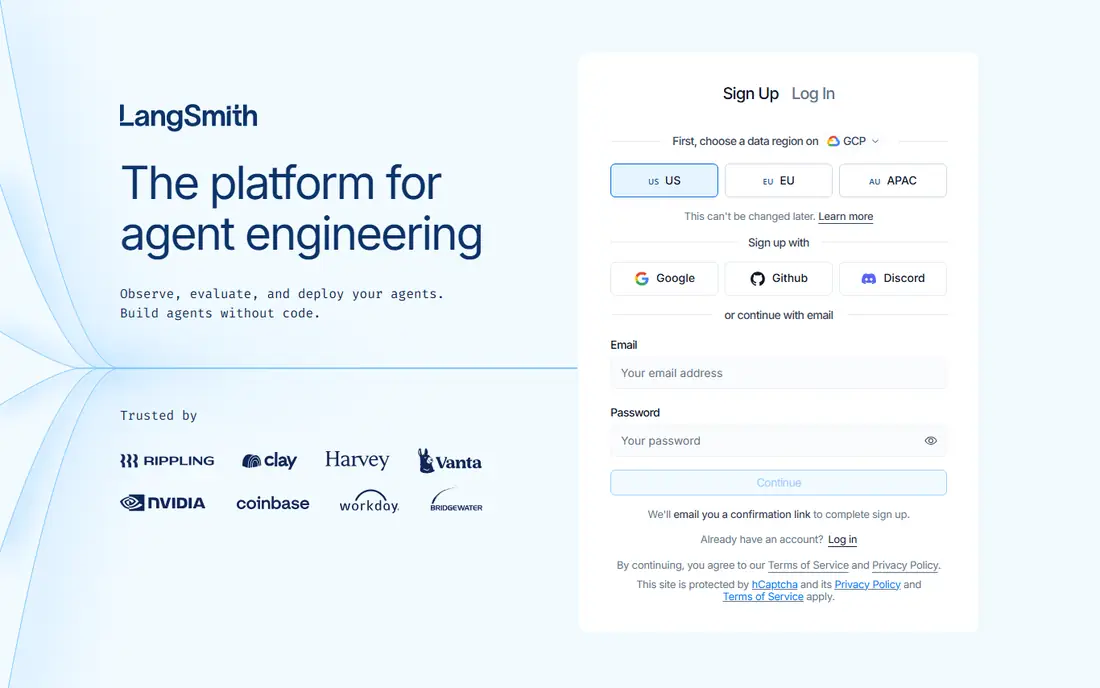
LangSmith is the natural alternative for teams whose agents already run on LangChain or LangGraph. Tracing, datasets, and evaluations share one workspace, and instrumentation needs the least setup on that stack, since the framework emits traces natively. The free Developer tier covers 5,000 traces per month with 14-day retention, which suits a single developer proving out an agent.
Paid plans start at $39 per seat per month, with overage charges reported at $2.50 per 1,000 traces, so costs scale with headcount as well as volume. Retention on paid plans stretches to 180 days. Teams outside the LangChain ecosystem get less of the native advantage, and should weigh Phoenix or Opik first.
What we like- Deep LangChain integration
- Strong agent tracing
- Prompt hub included
Watch out for- Per-seat pricing grows with team size
- Short 14-day retention on free tier
Starting price$79 per month
Free planYes
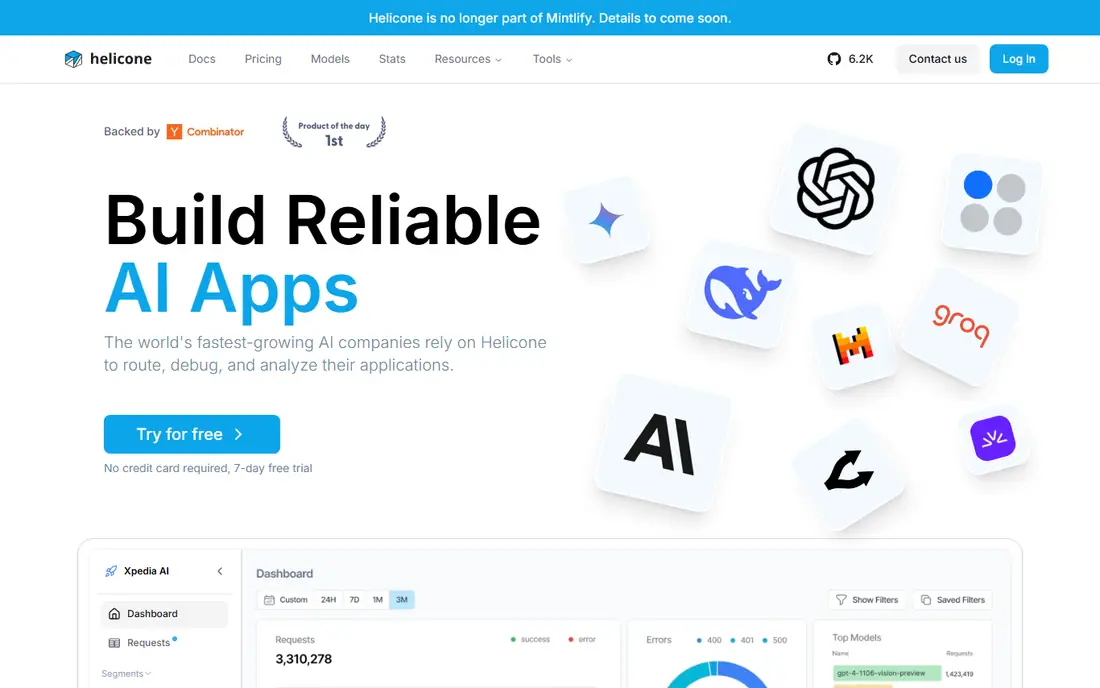
Helicone works differently from SDK tools. It sits as an HTTP proxy in front of your model providers, so you change a base URL and every call gets logged automatically, with no instrumentation code and no decorators. That makes it the fastest route to cost visibility across providers, and the free tier covers 10,000 requests per month.
The trade-off is depth. Because Helicone sees traffic at the HTTP layer, it has less native context on agent reasoning chains than SDK-instrumented tools. Comparison guides in 2026 also describe it as in maintenance mode under Mintlify, which is a risk for teams planning a long-term dependency. Use it for fast cost logging, not as your primary agent debugger.
What we like- No code changes needed
- Instant cost visibility per provider
- Simple setup
Watch out for- Shallower agent-step tracing
- Maintenance mode reports in 2026
Starting priceFree
Free planYes
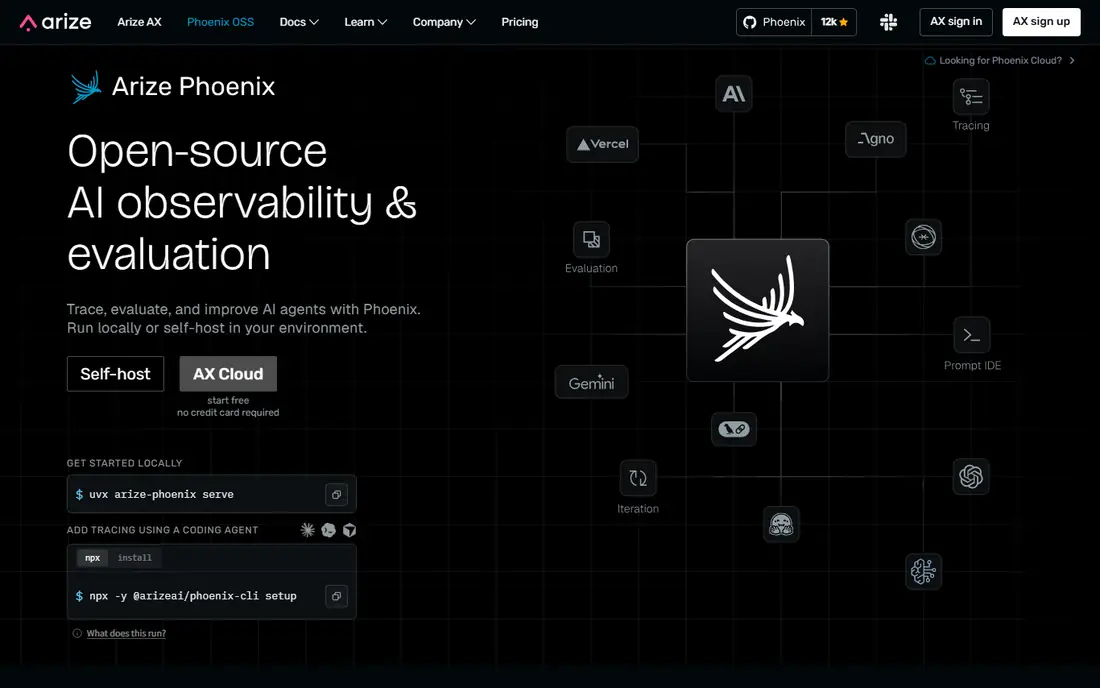
Arize Phoenix is the open source tier of the Arize platform, and it is the strongest free option in this list. It is Apache 2.0 licensed, built on the OpenInference schema for OpenTelemetry compatibility, and supports agent tracing graphs plus trajectory mapping that catches recursive loops. Self-hosting carries no feature gates and no commercial license.
The hosted step up is Arize AX, with a free tier of 25,000 spans per month and AX Pro at $50 per month for 50,000 spans. That cap is tight for agent workloads, since a coding agent making 20 tool calls per task can exhaust it in roughly 2,500 runs. Teams that self-host avoid the cap entirely and keep data inside their own infrastructure.
What we like- Fully self-hostable open source
- OpenTelemetry native
- Mature eval library
Watch out for- Hosted AX tier caps spans tightly
- Setup effort falls on your team
#4Braintrust
Best for: Evaluation-first workflows4.3/5 on
G2 (58 reviews, checked Oct 2026)
Visit braintrust.dev
Starting price$249 per month
Free planYes
Braintrust is built for teams whose main question is whether the agent is improving, not just what it did. Its scoring, experiment, and dataset workflows are the most complete in this list, and its free tier covers 1 GB of data with 10,000 scores. Paid plans start at $249 per month, with retention up to 180 days on paid tiers.
That entry price rules it out for hobby projects and small startups. Self-hosting is also enterprise only, so data residency teams should confirm terms before committing. For funded teams running evals as a daily practice, Braintrust is the tool most likely to change how they ship.
What we like- Strongest scoring and experiment workflow
- Prompt playground
- Dataset versioning
Watch out for- Highest entry price here
- Self-hosting only on enterprise plans
Starting price$19 per month
Free planYes
Opik, from Comet, pairs open source LLM tracing with evaluation workflows at a low entry price. Comparison guides list paid plans from $19 per month, making it the cheapest hosted option here after the free tiers. It covers tracing, evaluations, prompt management, and agent tracing, and it can be self-hosted.
The community is smaller than Phoenix, so public guides and third-party integrations are thinner. Hosted plan limits are also less widely documented than rivals, so confirm retention and volume caps on the pricing page before relying on them. For teams that want open source with a cheap hosted path, Opik deserves a trial.
What we like- Open source core
- Low $19 entry price
- Tracing plus evals in one tool
Watch out for- Smaller community than Phoenix
- Hosted limits less documented
#6
W and B Weave
Best for: Teams already on Weights and Biases
Visit wandb.ai
Starting price$60 per month
Free planYes
Weights and Biases Weave extends the familiar W and B platform into LLM tracing, evaluations, and prompt management. Teams already tracking model experiments in W and B get one workspace for both traditional ML and LLM work, which simplifies reporting and access control. Guides list paid plans from $60 per month.
Weave is newer to LLM observability than its experiment tracking core, so its eval library is less deep than Braintrust or Phoenix. The $60 entry price also sits above the cheapest rivals. Existing W and B customers get the most value, while new teams should compare it against Phoenix on eval depth.
What we like- Shares the W and B workspace
- Strong experiment tracking heritage
- Hosted and self-hosted options
Watch out for- Paid entry higher than Opik or Phoenix
- LLM features are newer than core tracking
Starting priceSee website
Free planYes
LangWatch combines LLM observability with guardrails, so teams can trace calls and block risky outputs in the same tool. It covers tracing, evaluations, prompt management, and agent tracing, and guides list pricing around 29 euros per seat per month. A European vendor base also appeals to teams with data residency preferences.
Pricing is less clearly published than rivals, so confirm the current plan on the vendor pricing page before budgeting. LangWatch is also a smaller vendor than LangSmith or Arize, which matters for support expectations. Teams that need guardrails and tracing together should trial it against a pure tracing tool.
What we like- Guardrails alongside tracing
- Evaluation metrics included
- European hosting option
Watch out for- Pricing less clearly published
- Smaller vendor than LangSmith or Arize
Starting price$49 per month
Free planYes
Portkey is an AI gateway first and an observability tool second, which makes it a good fit for teams that also need provider routing, fallbacks, and load balancing. Tracing, cost tracking, and prompt management come built in, and paid plans start at $49 per month with a free tier. Gateway setup is quick, much like Helicone.
Two flags matter. Portkey was acquired by Palo Alto Networks in May 2026, so its roadmap now sits inside a large security vendor, and budget caps are enterprise only on current guides. Teams that only need observability may prefer a dedicated tool, while teams that need gateway features get both jobs done in one product.
What we like- Gateway routing plus fallbacks
- Observability built in
- Fast setup
Watch out for- Acquired by Palo Alto in May 2026
- Budget caps only on enterprise plans
How we chose
We compared October 2026 comparison guides and vendor pricing pages for each tool, checking tracing depth, evaluation features, free tiers, starting prices, retention, and self-hosting. We favored tools with a distinct architecture or strength, and we kept ownership changes visible rather than hiding them, since an acquisition or maintenance mode changes the risk of a long-term choice. Where guides disagreed on a price, we used the most recent figure and flagged conflicts in our notes. We did not claim hands-on testing.
Picking the right replacement
Start from your stack, not from feature lists. LangChain teams should trial LangSmith first, since native instrumentation saves weeks of wiring, while OpenTelemetry shops should trial Phoenix for portability. Teams that need evals as a daily habit should budget for Braintrust, and teams that only need cost visibility can start with Helicone or Portkey in an afternoon.
Cost and data control
Watch three numbers before signing: the free tier volume, the retention window, and the overage rate. A free tier of 5,000 traces with 14-day retention is a trial, not a production plan, and per-seat pricing punishes growing teams. Self-hosting solves data residency and volume caps at once, but it moves setup and maintenance onto your team, so weigh engineering time against subscription cost.
Evals matter more than dashboards
Tracing shows what happened, but evaluations show whether the agent is getting better. If your team ships prompts weekly, prioritize dataset versioning, scoring, and experiment comparison over dashboard polish. Phoenix Evals and Braintrust score highest here, while proxy tools like Helicone are weaker, since they see requests rather than agent reasoning steps.
Frequently asked questions
Is Langfuse itself still a good choice?
Yes, for many teams. Langfuse remains active and open source, with a free tier of 50,000 units per month and paid plans from $29 per month. The tools here matter when you need deeper LangChain integration, a different pricing model, gateway features, or an evaluation-first workflow.
What is the cheapest Langfuse alternative?
Arize Phoenix is free when self-hosted, with no license cost and no feature gates. Among hosted options, Opik starts around $19 per month, while Langfuse itself starts at $29 per month and LangSmith at $39 per seat per month.
Do I need an SDK tool or a proxy tool?
SDK tools give deeper agent tracing, since they instrument each reasoning step, tool call, and retrieval. Proxy tools like Helicone are faster to deploy and give immediate cost visibility, but they see requests and responses rather than full agent chains. Most production teams end up with an SDK tool for debugging and a proxy or gateway for cost control.
Can I self-host a Langfuse alternative?
Yes. Arize Phoenix and Opik are open source and self-hostable, and Langfuse itself offers free self-hosting. LangSmith and Braintrust limit self-hosting to enterprise plans, so confirm terms if data residency matters to you.
How do I handle the Helicone maintenance mode reports?
Treat Helicone as a short-term cost logging tool rather than a long-term platform bet until its roadmap is clearer. If you already use it, keep an export path for your logs, and trial Phoenix or Portkey in parallel so a migration is not urgent.
Sources we checked (10)
- https://smith.langchain.com
- https://www.helicone.ai
- https://phoenix.arize.com
- https://www.braintrust.dev
- https://www.comet.com
- https://wandb.ai
- https://langwatch.ai
- https://portkey.ai
- https://scored.tools/blog/best-ai-llm-observability-tools-2026/
- https://ctaio.dev/en/labs/agentic-orchestration/compare/langsmith-vs-helicone-vs-phoenix-vs-langfuse/
Is your product missing or out of date?
We review this list regularly. Vendors can request a listing, send updated pricing or ask about featured placement.

Shihab Mia · Founder, Rankite
Shihab has 5+ years in B2B and SaaS SEO. He writes Rankite's software buying guides from pricing pages, documentation and public user reviews. More about Shihab.