How we make this list: we compare pricing pages, product documentation and public user reviews. Ratings come from G2, Capterra or Trustpilot, with the date we checked them.
Key takeaways
- BigQuery is a serverless warehouse with per-query pricing, but teams leave it for cost control, ecosystem fit, or workload-specific speed.
- Snowflake and Databricks are the broadest replacements, covering warehousing, lakehouse workloads, and governance at enterprise scale.
- ClickHouse and DuckDB win on raw analytical speed, with ClickHouse for real-time dashboards and DuckDB for local analysis.
- Pricing models differ sharply: credits, compute units, and serverless query billing all behave differently as data and queries grow.
Quick comparison
| Tool | Best for | Starting price | Free plan |
|---|
 Snowflake | Enterprise cloud warehouse | See website | Free trial |
 Databricks | Lakehouse analytics and AI | See website | Free trial |
 Amazon Redshift | AWS-native warehousing | See website | Free trial |
 ClickHouse | Real-time analytical queries | See website | Free trial |
 DuckDB | Local analytical processing | Free | Yes |
 Trino | Federated queries across sources | Free | Yes |
 MotherDuck | DuckDB in the cloud | Free | Yes |
 Firebolt | High-speed cloud analytics | See website | Free trial |
Is your product missing or out of date?
We review this list regularly. Vendors can request a listing, send updated pricing or ask about featured placement.
The best BigQuery alternatives
#1Snowflake
Best for: Enterprise cloud warehouse4.6/5 on
G2 (762 reviews, checked Oct 2026)
Visit snowflake.com
Starting priceSee website
Free planFree trial
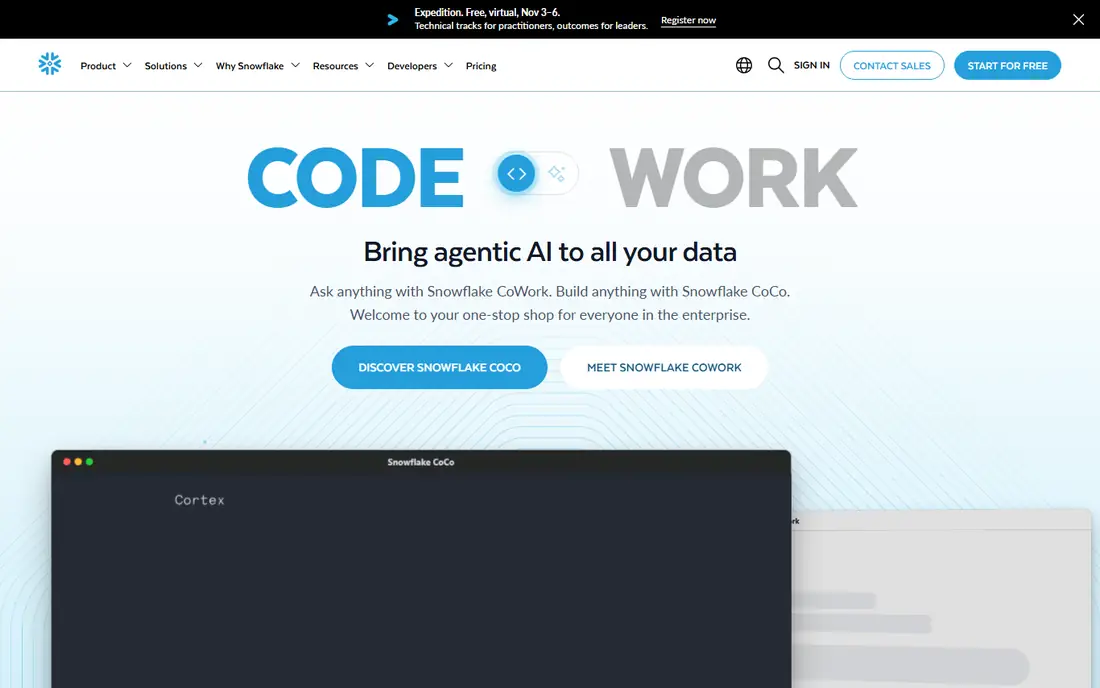
Snowflake is the most common enterprise alternative to BigQuery. Storage and compute scale separately, so a team can keep data in place while sizing warehouses per workload, and data sharing lets partners query shared datasets without copying files. It runs on AWS, Azure, and Google Cloud, which suits multi-cloud companies that do not want to standardize on Google.
Credit pricing is the watch item. Warehouses left running, or queries that scan more than needed, burn credits fast, so cost monitoring is part of the job. Migration from BigQuery also takes planning around SQL dialect differences and scheduled jobs. For enterprises that want a mature warehouse with strong governance, Snowflake is the safest broad pick.
What we like- Separation of storage and compute
- Strong governance and sharing
- Works across AWS, Azure, and Google Cloud
Watch out for- Credit-based pricing needs cost management
- Compute costs rise with concurrent queries
- Migration takes planning
#2Databricks
Best for: Lakehouse analytics and AI4.6/5 on
G2 (1,383 reviews, checked Oct 2026)
Visit databricks.com
Starting priceSee website
Free planFree trial
Databricks blends warehousing with data engineering and AI on a lakehouse architecture, so the same platform that runs SQL dashboards also trains models and processes streaming data. Delta Lake adds transactions and versioning to open data lake storage, which fixes the reliability gaps that made old data lakes hard to trust. Teams already on Spark find the transition natural.
Pricing in Databricks Units varies by workload, instance type, and tier, which makes bills harder to predict than BigQuery's per-query model. The platform is broad, and small teams may use only a slice of it. For organizations that want analytics and AI on one platform, Databricks is the strongest lakehouse choice.
What we like- Lakehouse unifies warehouse and AI workloads
- Delta Lake adds reliability to data lakes
- Strong Spark ecosystem
Watch out for- Databricks Units pricing is complex
- Platform breadth needs skilled teams
- Costs vary by workload type
#3Amazon Redshift
Best for: AWS-native warehousing4.3/5 on
G2 (404 reviews, checked Oct 2026)
Visit aws.amazon.com
Starting priceSee website
Free planFree trial
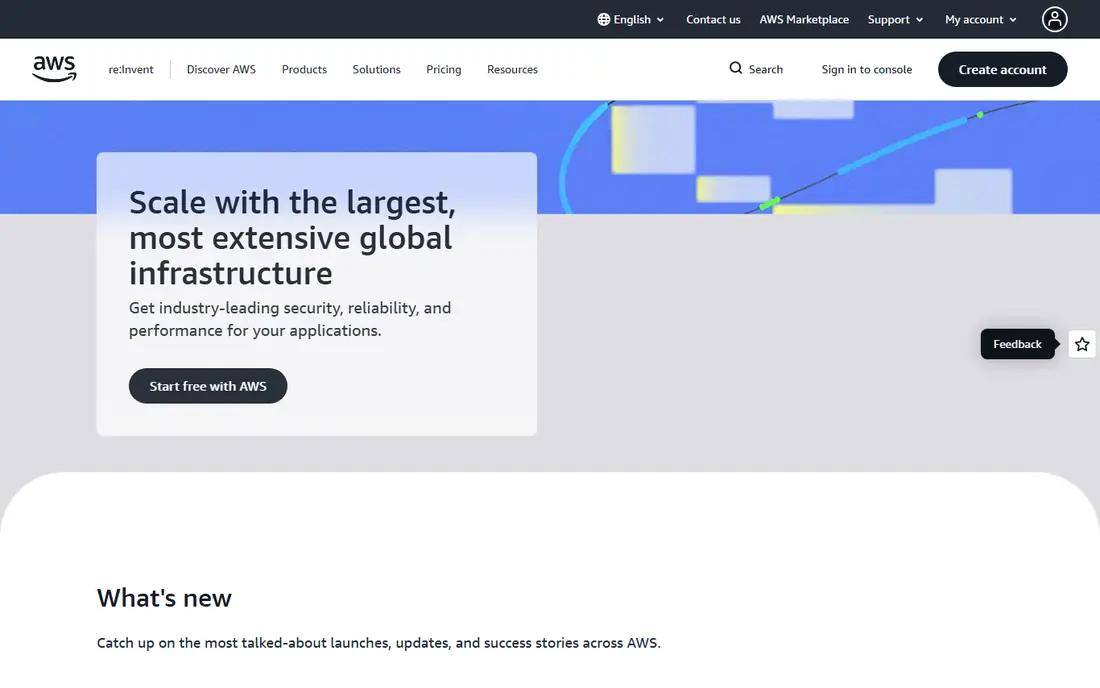
Amazon Redshift is the natural BigQuery alternative for AWS shops. It integrates with S3, Glue, and the wider AWS analytics stack, and the serverless option removes cluster management for variable workloads. Teams that already store data in S3 and run AWS services get the shortest path to a working warehouse.
Redshift rewards AWS commitment and punishes mixed estates: value drops outside AWS, and provisioned clusters need tuning for concurrency and vacuuming. Pricing depends on whether you choose provisioned nodes or serverless capacity. For AWS-first companies, Redshift is the obvious warehouse.
What we like- Deep AWS integration
- Serverless option available
- Mature tooling for AWS shops
Watch out for- Best inside AWS estates
- Concurrency and maintenance need tuning
- Pricing depends on node and serverless mix
#4ClickHouse
Best for: Real-time analytical queries4.3/5 on
G2 (55 reviews, checked Oct 2026)
Visit clickhouse.com
Starting priceSee website
Free planFree trial
ClickHouse is built for speed on analytical queries, especially aggregations over billions of rows for real-time dashboards. Its columnar engine and compression let it answer dashboard queries in milliseconds where row-based systems crawl. Observability, ad tech, and product analytics teams use it for sub-second reporting.
Self-hosting ClickHouse needs operational skill around sharding, replication, and merges, while the managed cloud option charges by usage. Joins across large tables are weaker than in Snowflake or BigQuery. For real-time analytics where query speed is the product, ClickHouse is hard to beat.
What we like- Extremely fast analytical queries
- Columnar design for aggregations
- Strong for real-time dashboards
Watch out for- Operational skill needed for self-hosting
- Joins are weaker than traditional warehouses
- Cloud pricing is usage-based
Starting priceFree
Free planYes
DuckDB is an analytical database that runs inside your process, like SQLite for analytics. Analysts use it in notebooks and scripts to query Parquet and CSV files at remarkable speed, without standing up any server. It is free, open source, and easy to embed in data tools and pipelines.
DuckDB is single-node, so it is not a shared warehouse for a whole company. Teams that outgrow local analysis move to MotherDuck or a full warehouse. For individual analysts, data scientists, and small pipelines, DuckDB is the most useful free tool in this guide.
What we like- Free and open source
- Runs inside apps and notebooks
- Fast on local files like Parquet and CSV
Watch out for- Single-node by design
- Not a shared warehouse
- Large multi-user workloads need another tool
Starting priceFree
Free planYes
Trino, formerly PrestoSQL, is a distributed SQL engine that queries data where it lives: S3, databases, Hive, Iceberg, and more, without copying everything into one warehouse first. Data teams with many sources use it as a federation layer, running one SQL query across systems that were never designed to work together.
Trino stores nothing itself, so you operate a cluster and its performance depends on the sources underneath. It suits teams with data engineering skill and a real federation problem. For a single warehouse workload, Snowflake or BigQuery is simpler; for many sources, Trino is the federation standard.
What we like- Free and open source
- Queries many sources without moving data
- Strong SQL engine
Watch out for- Needs cluster operation skill
- No storage of its own
- Performance depends on source systems
Starting priceFree
Free planYes
MotherDuck takes DuckDB to the cloud, adding sharing, collaboration, and cloud storage while keeping the same fast analytical engine. A free tier covers small use, and hybrid queries can join local files with cloud tables in one statement. Analysts who love DuckDB but need to share results with a team get the missing piece here.
The platform is newer, so enterprise features, governance, and third-party integrations trail Snowflake and Databricks. Pricing scales with use beyond the free tier. For DuckDB fans and small data teams that want cloud collaboration without a warehouse project, MotherDuck is an appealing middle path.
What we like- DuckDB power with cloud sharing
- Free tier for small use
- Hybrid queries across local and cloud data
Watch out for- Newer platform with smaller ecosystem
- Large enterprise features trail Snowflake
- Pricing scales with use
#8Firebolt
Best for: High-speed cloud analytics4.5/5 on
G2 (14 reviews, checked Oct 2026)
Visit firebolt.io
Starting priceSee website
Free planFree trial
Firebolt is engineered for low-latency analytics on large cloud datasets, with storage and compute separated for efficiency. Dashboard and customer-facing analytics teams use it where query speed directly affects user experience, such as embedded analytics in a SaaS product.
The ecosystem is smaller than the giants, so native integrations and community resources are thinner. Pricing is usage-based, which needs monitoring as query volume grows, and teams should set spend alerts before production traffic arrives. For speed-critical analytics where BigQuery or Snowflake feels slow or costly, Firebolt deserves a benchmark test against your own workload with your own data and query patterns at realistic concurrency levels and full production data volumes today, not later in the project cycle.
What we like- Very fast queries on large datasets
- Efficient storage and compute separation
- Built for low-latency dashboards
Watch out for- Smaller ecosystem than Snowflake or Databricks
- Pricing is usage-based
- Fewer native integrations
How we chose
We compared cloud and local analytical platforms that replace BigQuery's core job: running SQL analytics over large datasets for dashboards, reporting, and data products. We weighed query speed, workload fit, ecosystem, and pricing model from vendor pages and 2026 warehouse comparisons, and we left out pure BI tools and transactional databases. Where pricing is credit or unit based, we list See website rather than quoting a figure that depends on workload.
How to pick a BigQuery replacement
Start with where your data and team already live. AWS shops should shortlist Redshift, Google Cloud shops that want to stay should reconsider BigQuery itself, and multi-cloud teams should shortlist Snowflake and Databricks. If your workload is real-time dashboards, benchmark ClickHouse and Firebolt. If your analysts work locally, start with DuckDB and grow into MotherDuck.
Benchmark with your queries, not vendor demos
Warehouse vendors all look fast on their own demo data. Run your ten most expensive real queries, on your real data size, and measure time and cost for each candidate. Include concurrency: a warehouse that is fast for one user can slow badly with fifty. Record cost per query alongside speed, since a fast warehouse that costs five times more per query is not a win.
Model cost at three sizes
Credit, unit, and serverless pricing all behave differently as data and users grow. Model your bill at current size, at three times current size, and at ten times, including storage, compute, and data transfer. Set up cost alerts and query timeouts from day one, because an unmonitored warehouse is how teams get surprise bills.
Frequently asked questions
Why do teams leave BigQuery?
Common reasons are cost control, since per-query billing can surprise teams with heavy or unoptimized queries, ecosystem fit for AWS or multi-cloud shops, and workload-specific needs like real-time dashboards where ClickHouse is faster. Some teams also leave for governance or data residency reasons. BigQuery remains strong for serverless analytics, so leaving should follow a real gap, not fashion.
Is Snowflake cheaper than BigQuery?
It depends on workload. Snowflake's credit model can be cheaper for steady, well-managed workloads with auto-suspend, and more expensive for spiky or poorly optimized queries. BigQuery's per-query model suits bursty analytics with no idle cost. Benchmark your own queries and model both bills before deciding.
Can DuckDB replace a warehouse?
For individual analysts and small teams, often yes. DuckDB handles local analytical work on files with remarkable speed at no cost. For shared, multi-user warehouses with governance, scheduled jobs, and large concurrent loads, you need Snowflake, Databricks, Redshift, or a similar platform, possibly with DuckDB for local work alongside it.
What is a lakehouse, and do I need one?
A lakehouse combines data lake storage with warehouse features like transactions and governance, letting one platform serve analytics and AI workloads. Databricks is the leading example. You need one if your team runs both SQL analytics and machine learning on the same data; if you only run dashboards, a warehouse is simpler.
How hard is migration from BigQuery?
Migration effort depends on SQL dialect differences, scheduled jobs, and downstream tools. Standard SQL transfers well, but BigQuery-specific functions, partitioning, and pricing logic need rework. Plan a phased migration: move one dataset and its dashboards first, validate results row by row, then move the rest.
Sources we checked (8)
- https://www.snowflake.com
- https://www.databricks.com
- https://aws.amazon.com
- https://clickhouse.com
- https://duckdb.org
- https://trino.io
- https://motherduck.com
- https://www.firebolt.io
Is your product missing or out of date?
We review this list regularly. Vendors can request a listing, send updated pricing or ask about featured placement.

Shihab Mia · Founder, Rankite
Shihab has 5+ years in B2B and SaaS SEO. He writes Rankite's software buying guides from pricing pages, documentation and public user reviews. More about Shihab.