How we make this list: we compare pricing pages, product documentation and public user reviews. Rankite is independent; if a vendor ever pays for a featured spot, that listing is clearly labeled Partner.
Key takeaways
- Databricks and Snowflake dominate the category (Databricks holds a 4.6 out of 5 across 1,377 G2 reviews), but they solve different problems.
- BigQuery's first terabyte of queries each month is free, making it the cheapest way to start serious analytics.
- Almost everything here bills on usage, not seats, so the real skill is cost control, not license negotiation.
- Apache Spark remains free and open source, and several paid platforms on this list run on it under the hood.
Quick comparison
| Tool | Best for | Starting price | Free plan |
|---|
 Databricks Databricks | Unified analytics, engineering and ML at scale | See website | Free trial |
 Snowflake Snowflake | Governed cloud data warehousing and sharing | See website | Free trial |
 Google BigQuery Google BigQuery | Serverless analytics for Google Cloud teams | $6.25 per TiB (on-demand queries) | Yes |
 Confluent Confluent | Real-time event streaming on managed Kafka | $385 per month (Standard, approximate) | Free trial |
 Amazon EMR Amazon EMR | Big data processing for AWS-native teams | See website | No |
 ClickHouse Cloud ClickHouse Cloud | Blazing-fast real-time analytics | See website | Free trial |
 MongoDB Atlas MongoDB Atlas | Operational data at scale with flexible schemas | $0.011 per hour (Flex tier) | Yes |
 Cloudera Cloudera | Hybrid and on-premises data platforms | See website | Free trial |
 Apache Spark Apache Spark | Free open-source processing engine | Free (open source) | Yes |
Is your product missing or out of date?
We review this list regularly. Vendors can request a listing, send updated pricing or ask about featured placement.
The best big data software
Starting priceSee website
Free planFree trial
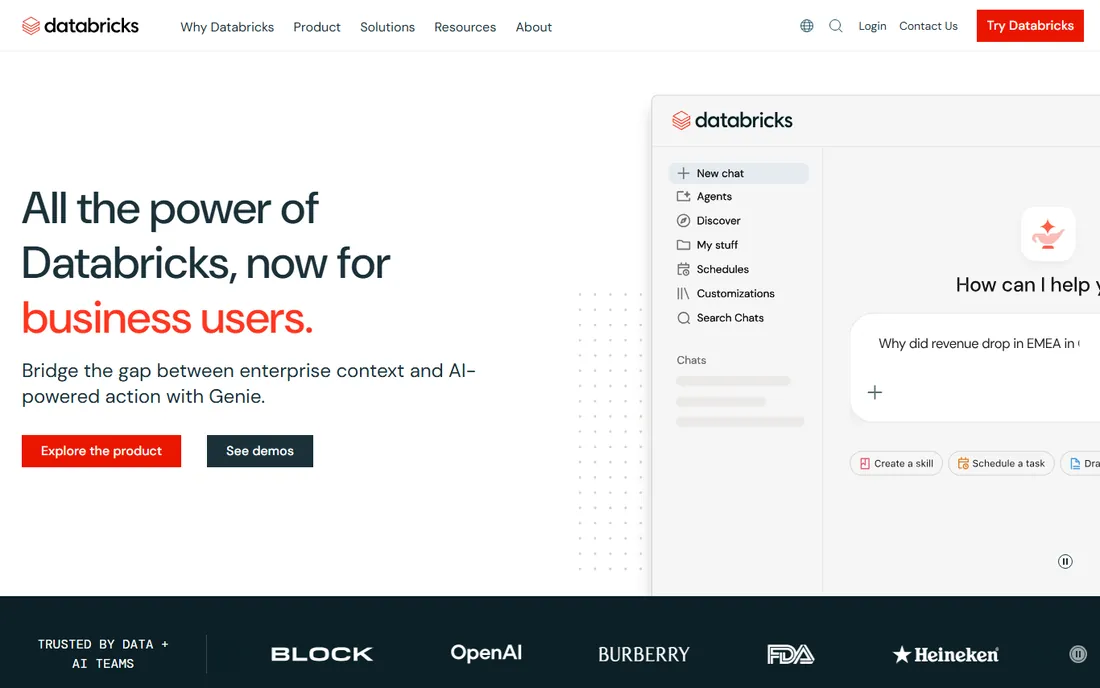
Databricks is the company most associated with the modern lakehouse, and its G2 rating of 4.6 across 1,377 reviews reflects genuine adoption. The pitch is unification: the same platform that runs your ETL pipelines also serves your BI dashboards and trains your models, on open formats instead of proprietary storage. Teams building complex ML and data engineering pipelines get the most from it.
The honest catch is the bill. Databricks charges in Databricks Units for processing, and you pay your cloud provider separately for the underlying virtual machines and storage. Two meters running at once gives you optimization levers and surprise invoices in equal measure. It also assumes real engineering bandwidth; without Spark and JVM tuning skills, you will pay for power you cannot steer. Databricks is for teams with serious data engineering needs and the staff to match.
What we like- One platform for data engineering, SQL analytics and machine learning
- Built on open standards like Delta Lake
- Strong AI and ML workload support
Watch out for- Usage-based DBU pricing plus separate cloud VM bills make costs hard to forecast
- Operational overhead is real without Spark expertise
- Entry costs trend high for small teams
Starting priceSee website
Free planFree trial
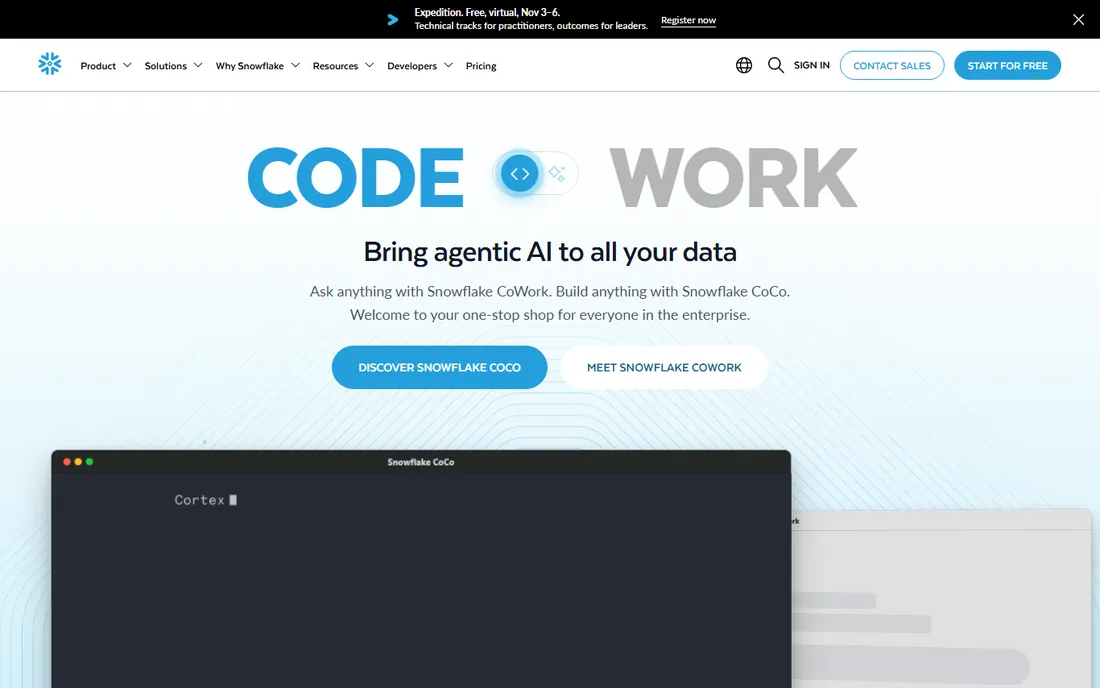
Snowflake made the cloud data warehouse boring in the best way. Compute and storage scale independently, concurrency just works, and sharing a dataset with a partner does not involve copying terabytes around. Thousands of companies run their analytics on it, and the 30-day free trial lets you prove value before committing. For governed, cross-department analytics with strong access controls, it is the default choice.
The billing model deserves respect. Credits cost roughly $2 to $4 each depending on edition, warehouses consume them by size while running, and storage adds about $23 per terabyte per month. That is easy to forecast and easy to overspend: every ad-hoc query by every analyst burns credits. Snowflake rewards governance. Put it in front of a disciplined analytics team and it is superb; hand it to five hundred casual users with no guardrails and finance will notice.
What we like- Near-zero administration with separate compute and storage
- Excellent data sharing between organizations
- Predictable credit-based billing on one invoice
Watch out for- Costs scale with every query, so undisciplined usage gets expensive
- Less suited to heavy custom ML engineering than Databricks
- Credits vary $2 to $4 by edition
Starting price$6.25 per TiB (on-demand queries)
Free planYes
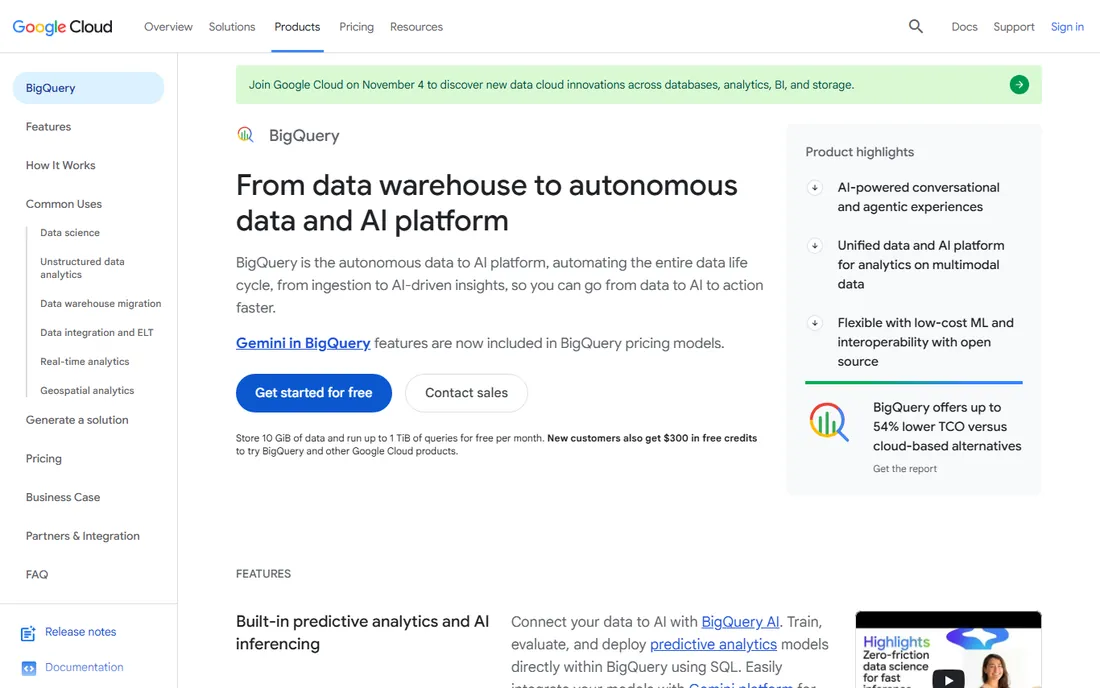
BigQuery's free tier is the most generous on-ramp in analytics: the first terabyte of query data processed each month costs nothing, every month. Above that, on-demand queries run $6.25 per terabyte scanned, with capacity-based slot pricing for steadier workloads. There is nothing to provision and nothing to tune; you point SQL at petabytes and get answers.
The catch is scan discipline. Because on-demand billing charges by bytes processed, a careless SELECT * across a huge table costs real money every time it runs. Teams that standardize on partitioned tables and cost controls do fine; teams that do not learn this the expensive way. For Google Cloud shops and anyone starting analytics from zero, BigQuery is the rational first pick.
What we like- First 1 TiB of queries per month is free
- Truly serverless with no clusters to manage
- Deep integration with the Google Cloud and AI ecosystem
Watch out for- On-demand costs surprise teams with heavy scanning
- Capacity pricing requires commitment planning
- Leaving the Google ecosystem later is work
Starting price$385 per month (Standard, approximate)
Free planFree trial
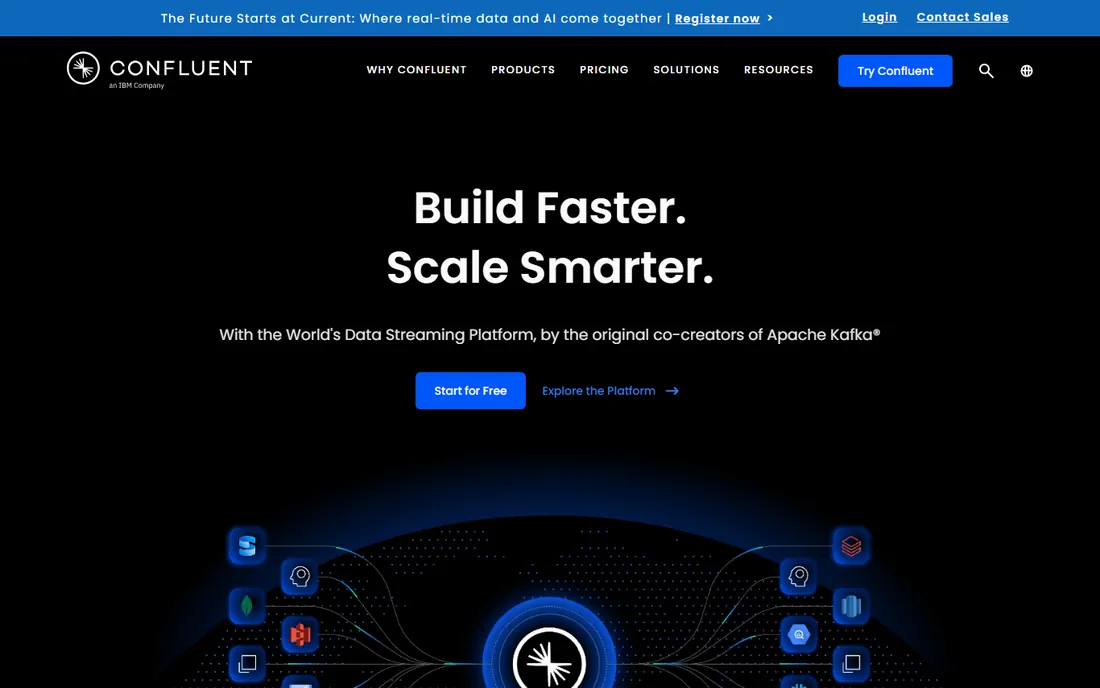
Running Kafka yourself is a rite of passage nobody wants twice, which is Confluent's entire business case. Confluent Cloud gives you managed Kafka with high availability, infinite storage options, audit logs and dozens of connectors, plus stream processing on top. The free tier gets you started, and Standard starts at approximately $385 a month for production-ready use.
The honest trade is that managed does not mean simple. Partitions, consumer groups and schema evolution still require someone who understands streaming concepts, and throughput-based pricing means a busy event pipeline costs accordingly. But for real-time use cases like fraud detection, live personalization or operational dashboards, Confluent is the serious managed answer.
What we like- Fully managed Kafka without the operational nightmare
- 80-plus managed connectors
- Strong exactly-once and schema governance features
Watch out for- Standard tier starts around $385 a month, which prices out experiments
- Kafka concepts still leak through the managed abstraction
- Costs scale with throughput
Starting priceSee website
Free planNo
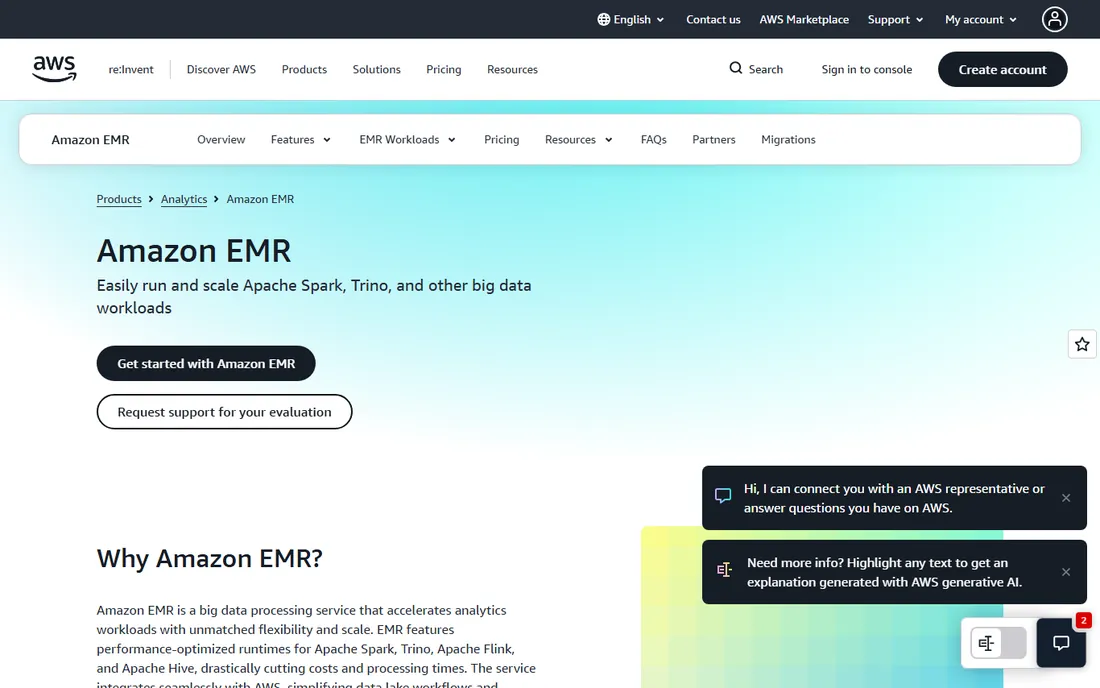
Amazon EMR is the workhorse for teams already living in AWS. It runs open-source frameworks like Spark, Hadoop, Hive and Flink on EC2 with tight integration to S3, and pricing follows the familiar AWS model down to fractions of a cent per instance-hour, with Spot pricing for fault-tolerant batch work. If your data lake is S3 and your team knows AWS, EMR keeps everything in one bill and one IAM model.
It is also the least managed-feeling managed service here. Cluster sizing, Spark tuning and version upgrades remain your job, and the pricing matrix rewards careful architecture while punishing carelessness. EMR suits data engineering teams with AWS skills who want framework choice and cost control, not teams looking for a warehouse that runs itself.
What we like- Runs Spark, Hadoop, Flink and more on AWS with deep service integration
- Flexible pricing including Spot instances
- Scales from experiment to production
Watch out for- You still manage clusters and tuning
- Pricing is a matrix of instance types and add-ons
- Easiest to overspend of the managed options without discipline
Starting priceSee website
Free planFree trial
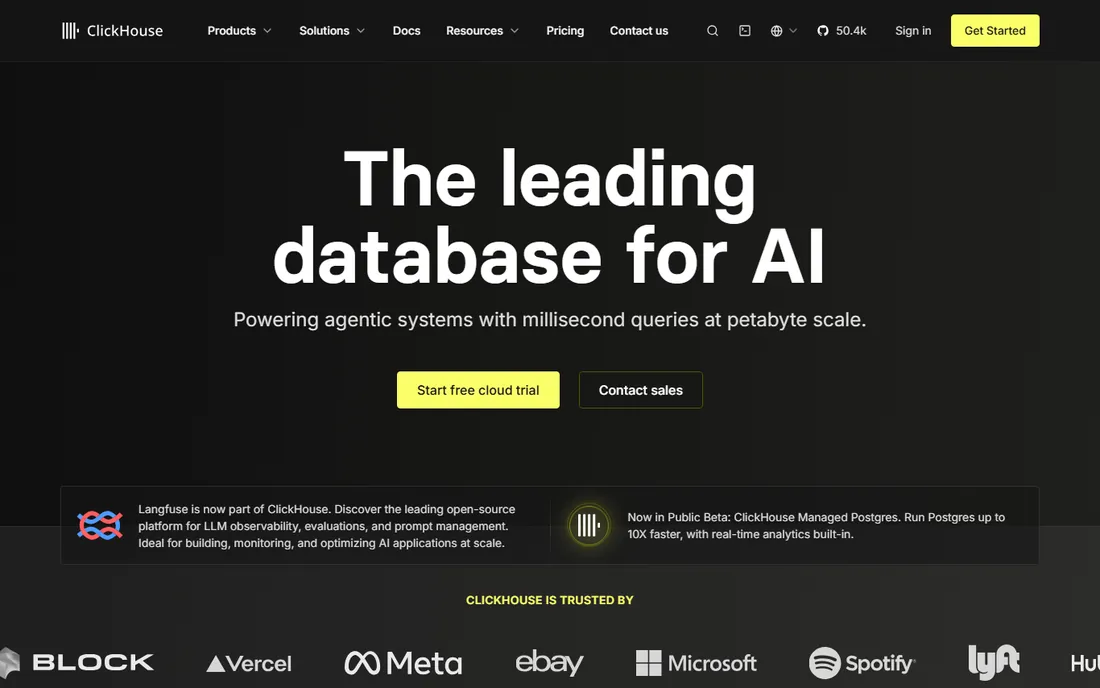
ClickHouse earned its reputation on raw speed: analytical queries that take seconds elsewhere return in milliseconds. ClickHouse Cloud packages that engine as a managed service with usage-based pricing, and the 30-day trial with $300 in credits is enough to run a genuine evaluation on your own data. It shines for real-time analytics, observability and high-throughput event ingestion.
The trade-offs are focus and ecosystem. ClickHouse is an analytical database, not a full data platform, so you will pair it with other tools for orchestration and ML. Self-hosting demands real tuning expertise around its MergeTree engine. For the specific job of fast analytics over massive event data, though, little touches it at the price.
What we like- Exceptional query speed on analytical workloads
- Usage-based cloud pricing
- 30-day trial with $300 in credits to evaluate properly
Watch out for- Operational tuning is demanding for self-hosted setups
- Narrower ecosystem than the giants
- Real-time focus means it is not a general warehouse
#7
MongoDB Atlas
Best for: Operational data at scale with flexible schemas
Visit mongodb.com
Starting price$0.011 per hour (Flex tier)
Free planYes
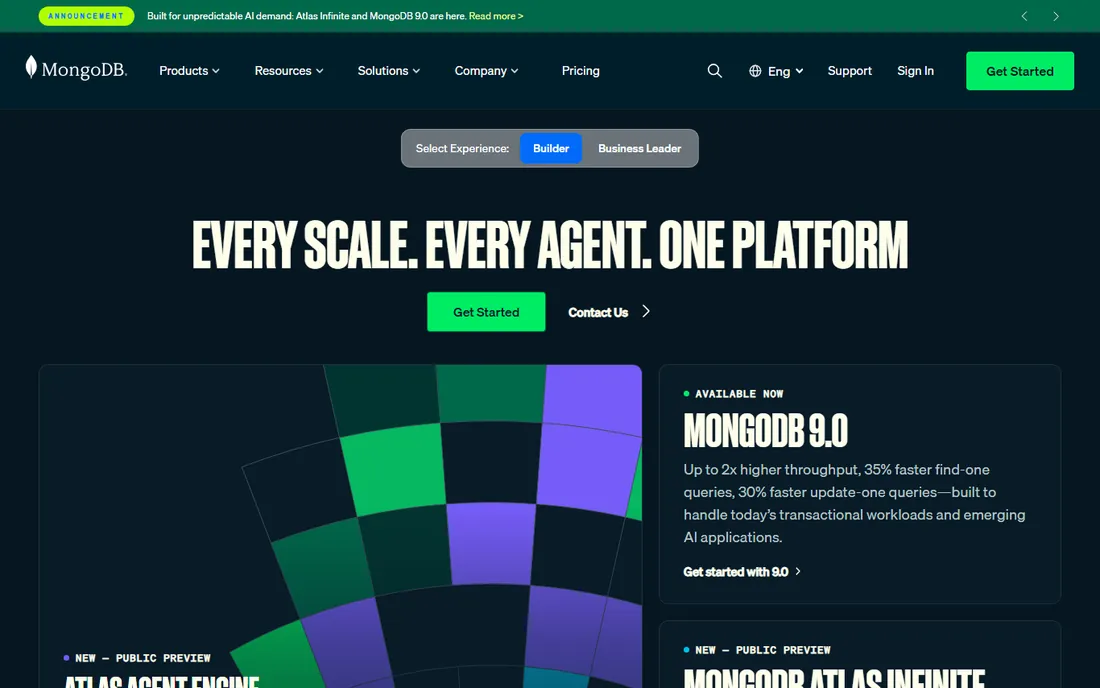
MongoDB Atlas is the operational database on this list, included because big data starts with somewhere to put it. The pricing ladder is clear: a free-forever tier with 512MB for learning, Flex at $0.011 an hour (capped around $30 a month) for prototypes, and Dedicated clusters from $0.08 an hour for production. The document model handles evolving, nested data that would fight a relational schema.
Be honest about the workload split. MongoDB is superb for operational data serving applications, and mediocre as an analytical warehouse; pair it with one of the analytics platforms above for BI. And the famous schema flexibility becomes a governance job at scale. For application data at serious volume, Atlas is the proven managed choice.
What we like- Free-forever tier for learning and small projects
- Flexible document model that evolves with your app
- Global clusters with strong availability story
Watch out for- Analytics workloads are not its strength
- Costs climb steeply at dedicated production tiers
- Schema flexibility needs discipline at scale
Starting priceSee website
Free planFree trial
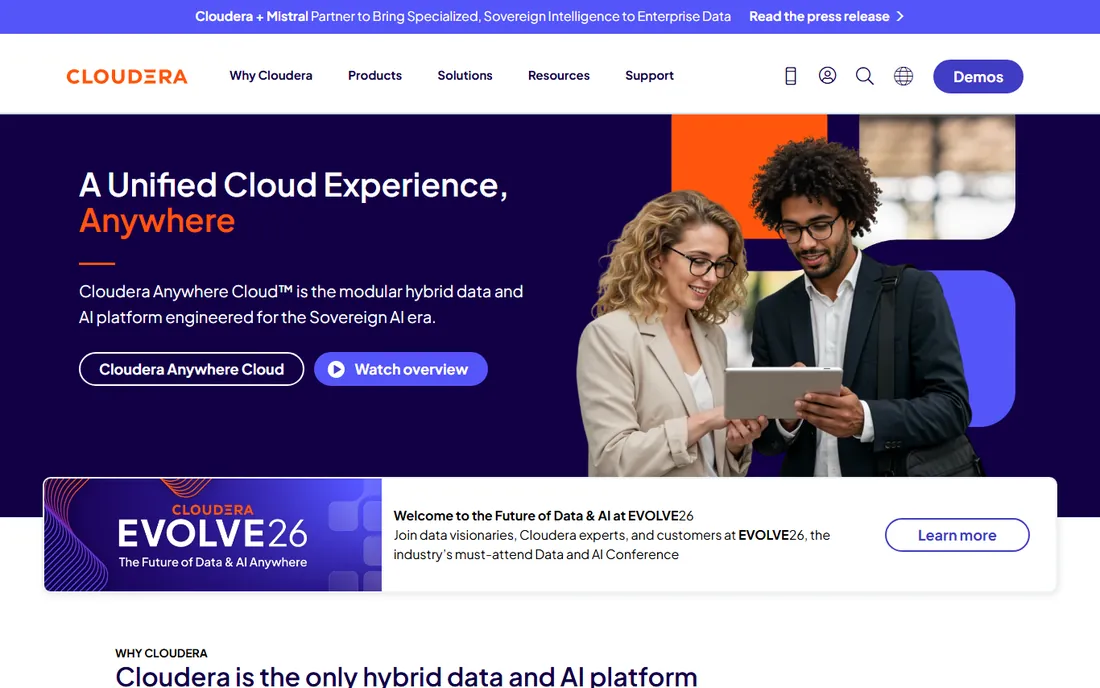
Cloudera is the answer for organizations that cannot put everything in one public cloud. Regulated industries, governments and companies with big on-premises investments get a consistent platform across data centers and clouds, with the governance, lineage and security controls auditors demand. It covers the full lifecycle from ingestion through analytics to machine learning.
Everything about the buying experience is enterprise: quote-only pricing, sales-led evaluation, and real operational weight. If you are a cloud-native startup, Cloudera is the wrong century. If you are a bank with three data centers and a cloud migration measured in years, it is one of the few platforms built for your reality.
What we like- True hybrid story across on-premises and multiple clouds
- Strong governance and security for regulated industries
- Full platform from ingestion to ML
Watch out for- Quote-only pricing with enterprise sales cycles
- Heavier to operate than cloud-native alternatives
- Overkill if you are all-in on one public cloud
Starting priceFree (open source)
Free planYes
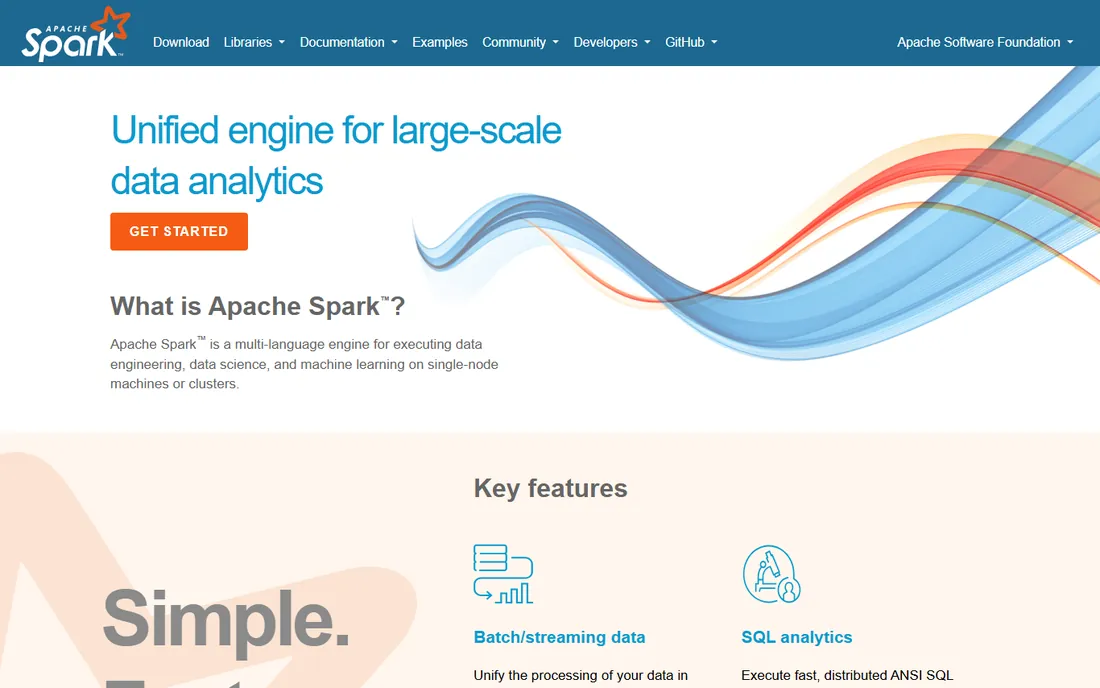
Apache Spark is the engine room of big data: free, open source, and running inside half the paid products on this list. Batch processing, streaming, SQL and machine learning libraries in one framework, with a community large enough that any problem you hit has been solved publicly. If you have the engineers, Spark on your own infrastructure costs nothing but servers.
That "if" carries the whole paragraph. There is no support line, no managed console, no one to call at 2am. Cluster tuning, version upgrades and performance debugging are your team's job, and Spark expertise is expensive to hire. Spark is the right choice for capable engineering teams that want maximum control at minimum license cost, and the wrong choice for everyone else.
What we like- Completely free and open source under Apache license
- The engine underneath Databricks, EMR and others
- Massive community and library ecosystem
Watch out for- You provide the infrastructure and the expertise
- Cluster tuning is genuinely hard
- No vendor support without a commercial distribution
How we chose
We started with the products data teams actually evaluate in 2026, cross-checked against G2's big data category and current engineering discussions, and verified each product exists today as a purchasable or deployable offering. Pricing in this category is overwhelmingly usage-based, so we used only the vendors' own pricing pages, captured in October 2026, and marked quote-based enterprise pricing honestly rather than repeating third-party estimates. We favored platforms with real production adoption over promising newcomers, and we included one open-source foundation because buyers constantly ask whether they can skip the vendors entirely.
Lakehouse, warehouse, or streaming: pick the right architecture
Buyers waste the most money buying the wrong shape of platform. A data warehouse (Snowflake, BigQuery) is for governed SQL analytics and BI: clean tables, concurrent users, predictable queries. A lakehouse (Databricks) adds engineering and ML on open file formats: pipelines, feature engineering, model training. Streaming (Confluent) is for events as they happen: fraud, personalization, operational dashboards. These overlap at the edges but optimize for different centers.
Map your workloads before shortlisting. If eighty percent of the job is dashboards and ad-hoc SQL, a warehouse wins on simplicity. If the team builds ML features and complex pipelines, the lakehouse earns its complexity. If decisions must happen in seconds on fresh events, nothing substitutes for streaming. Most mid-size companies end up with two of the three; buying all three on day one is how the bill doubles before the value arrives.
The billing models, translated
Every vendor here bills differently, and the translation matters more than the headline rate. Snowflake sells credits consumed per warehouse per second, plus storage. Databricks sells DBUs for processing while your cloud provider bills the VMs underneath. BigQuery charges per terabyte scanned on-demand, or per slot-hour on capacity. Confluent prices on throughput and connectors. EMR prices per instance-hour like the rest of AWS.
Three rules keep the bills sane. First, run the free tier or trial on your real workload, not the demo dataset, and watch the meter daily. Second, assign one person cost ownership with alerts, because usage-based pricing without an owner always drifts up. Third, compare at your steady-state scale: the cheapest platform for a prototype is rarely the cheapest at ten terabytes. Ask each vendor for a written estimate against your workload before signing.
Frequently asked questions
What is the difference between a data lake and a data warehouse?
A data warehouse stores structured, cleaned data optimized for SQL analytics and BI. A data lake stores raw data of any type cheaply in object storage. The lakehouse pattern, popularized by Databricks, adds warehouse-like reliability and performance on top of lake storage so one system serves both engineering and analytics.
How much does big data software cost?
There is no single answer because nearly everything bills on usage. Independent estimates put a mid-size Snowflake deployment around $36,000 a year and Databricks around $28,000, though your workload decides. BigQuery can start free and scale into thousands monthly. Always model your own query and storage patterns rather than trusting averages.
Do I need a data engineer to use these tools?
For Snowflake, BigQuery or ClickHouse Cloud, a strong analytics engineer can go far without a dedicated data engineer. Databricks, EMR and self-hosted Spark genuinely need data engineering skills for tuning and pipeline work. Match the platform's operational demands to the team you actually have.
Can small companies use big data platforms?
Yes, and the free tiers make it cheap to start: BigQuery's monthly free terabyte, MongoDB's free Atlas tier, Confluent's free tier and ClickHouse's trial credits all let small teams run real workloads. The danger is growing into usage-based bills without cost monitoring, so set alerts from day one.
Should we build on open source or buy managed?
Open source (Spark, and the engines under several managed services) minimizes license cost and maximizes control, but you pay in engineering time and operational risk. Managed platforms trade money for speed and reliability. Teams with strong engineers and unusual needs lean open source; teams that need results this quarter buy managed.
How do we keep cloud data costs under control?
Partition large tables and avoid full scans, set billing alerts and per-project budgets, right-size warehouses and shut them down when idle, and review the bill monthly with the team that generated it. Cost discipline is a process, not a feature, on every platform here.
Sources we checked (10)
- https://www.databricks.com/pricing
- https://www.snowflake.com/en/pricing/
- https://cloud.google.com/bigquery/pricing
- https://aws.amazon.com/emr/pricing
- https://www.confluent.io/pricing
- https://www.cloudera.com/
- https://www.mongodb.com/pricing
- https://clickhouse.com/pricing
- https://spark.apache.org/
- https://www.g2.com/categories/big-data
Is your product missing or out of date?
We review this list regularly. Vendors can request a listing, send updated pricing or ask about featured placement.

Shihab Mia · Founder, Rankite
Shihab has spent more than a decade helping SaaS and e-commerce brands grow through search. He writes Rankite's software buying guides from pricing pages, documentation and public user reviews. More about Shihab.