How we make this list: we compare pricing pages, product documentation and public user reviews. Ratings come from G2, Capterra or Trustpilot, with the date we checked them.
Key takeaways
- Qualtrics XM and Medallia lead enterprise VoC with omnichannel collection and AI text analysis, priced accordingly.
- Birdeye and Podium dominate review-driven VoC for multi-location businesses where Google reviews shape revenue.
- AskNicely and GetFeedback serve teams that want NPS measurement tied to frontline action, not just dashboards.
- Chattermill specializes in turning unstructured feedback from reviews, tickets and surveys into quantified themes.
Quick comparison
| Tool | Best for | Starting price | Free plan |
|---|
 Qualtrics XM Qualtrics XM | Enterprise experience management | See website | No |
 Medallia Medallia | Omnichannel CX intelligence | See website | No |
 InMoment InMoment | Journey analytics and prediction | See website | No |
 Birdeye Birdeye | Multi-location review management | See website | No |
 Podium Podium | Local business customer interaction | See website | No |
 Chattermill Chattermill | AI analysis of unstructured feedback | See website | No |
 AskNicely AskNicely | NPS with frontline coaching | See website | No |
 GetFeedback GetFeedback | Salesforce-native feedback | See website | No |
Is your product missing or out of date?
We review this list regularly. Vendors can request a listing, send updated pricing or ask about featured placement.
The best voice of customer software
Voice of customer software collects what customers say across surveys, reviews, support tickets and social, then analyzes it so teams can act. The market splits between enterprise experience platforms and focused tools for reviews and NPS. Eight options.
Starting priceSee website
Free planNo
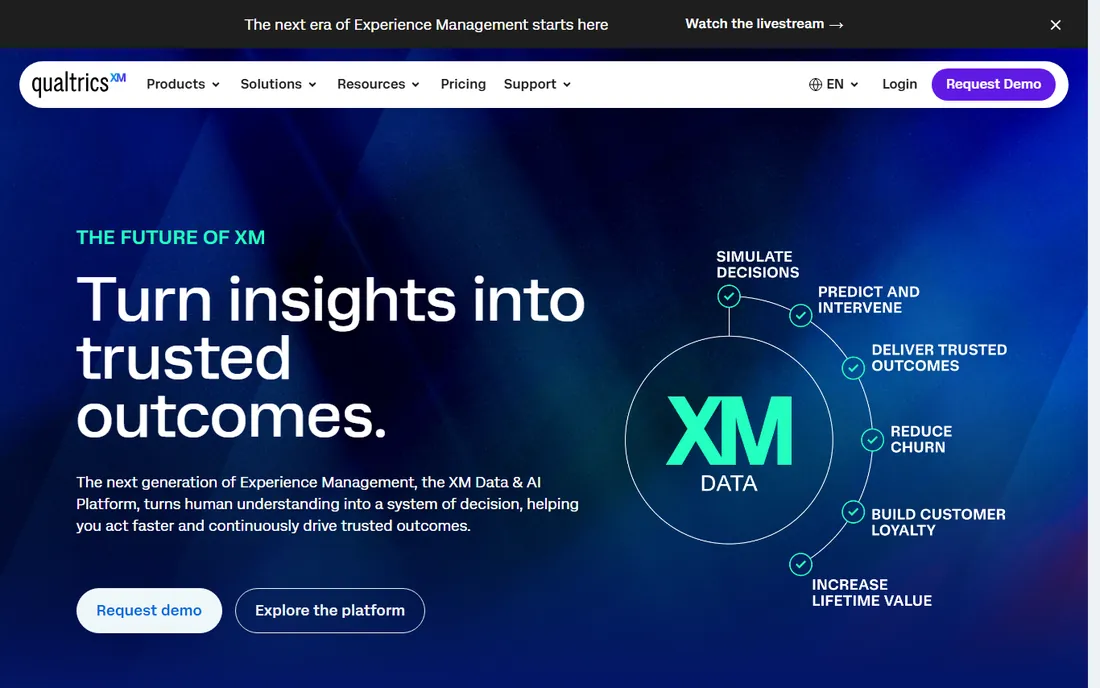
Qualtrics XM remains the reference platform for customer experience: surveys, digital feedback, social listening and review data unified with AI-driven text analysis. The methodology behind its survey design is a real differentiator for research-grade programs.
Cost and complexity assume enterprise resources. Qualtrics fits large organizations running serious, multi-channel VoC programs with dedicated CX teams.
What we like- The deepest experience management platform
- AI text and sentiment analysis across every channel
- Strong research methodology tooling
Watch out for- Enterprise pricing and implementation effort
- Overkill for simple survey needs
Starting priceSee website
Free planNo
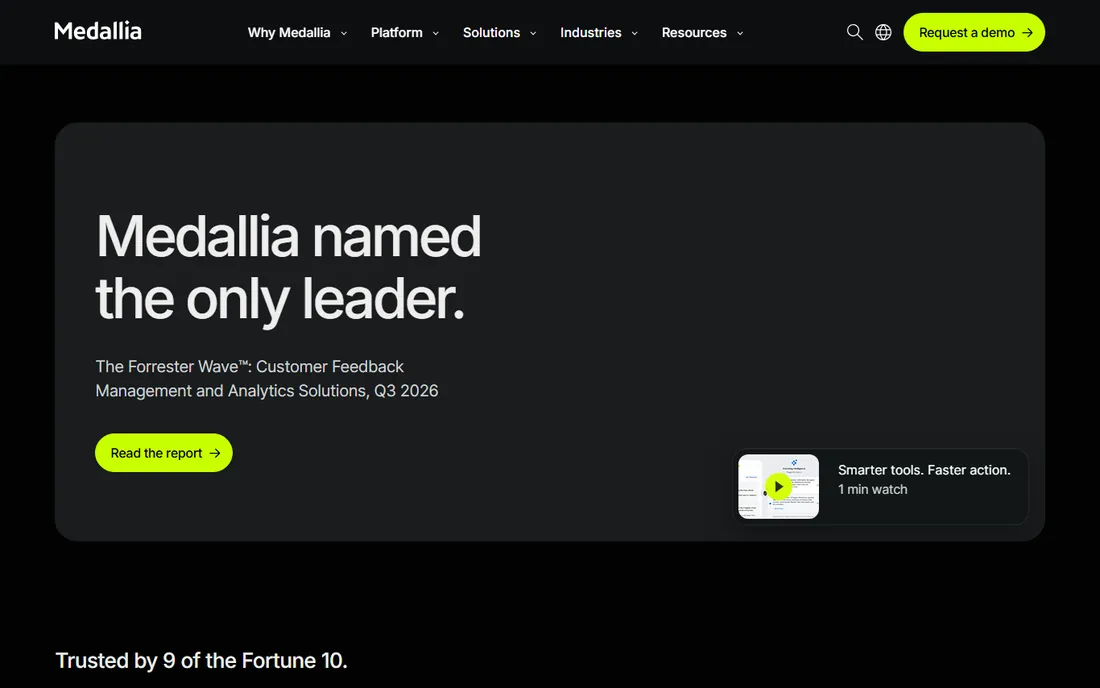
Medallia listens across touchpoints: survey data, review sites, social media and operational signals feed sentiment analysis and role-based dashboards, with workflows that push detractor alerts to the right owners.
The investment is enterprise-grade. Medallia fits CX-mature organizations that need always-on listening across dozens of touchpoints.
What we like- Captures feedback from surveys, reviews, social and operational data
- Strong text analytics
- Real-time alerting and closed-loop workflows
Watch out for- Premium pricing
- Implementation is a project, not a signup
Starting priceSee website
Free planNo
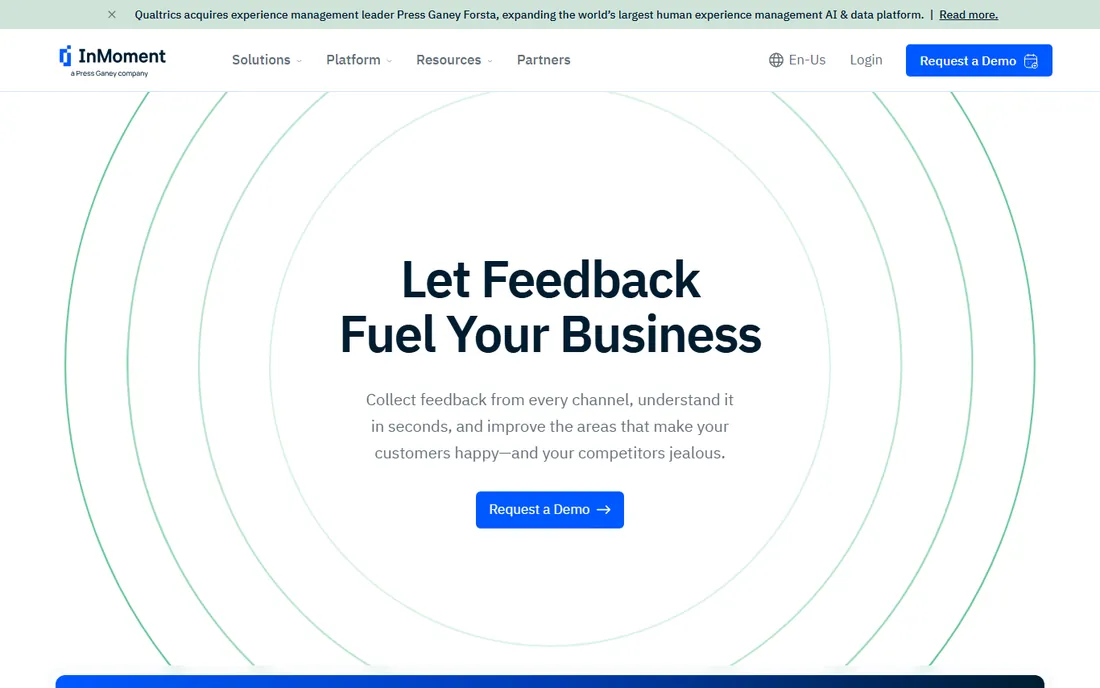
InMoment focuses on the journey: connecting feedback across touchpoints into journey maps with predictive analytics that anticipate churn and dissatisfaction before they surface.
The platform rewards companies with complex journeys to analyze. InMoment fits enterprises in travel, retail and financial services mapping long customer lifecycles.
What we like- Strong customer journey analytics
- Predictive models flag at-risk customers
- Good for complex, multi-touch journeys
Watch out for- Quote-based enterprise pricing
- Smaller ecosystem than Qualtrics or Medallia
Starting priceSee website
Free planNo
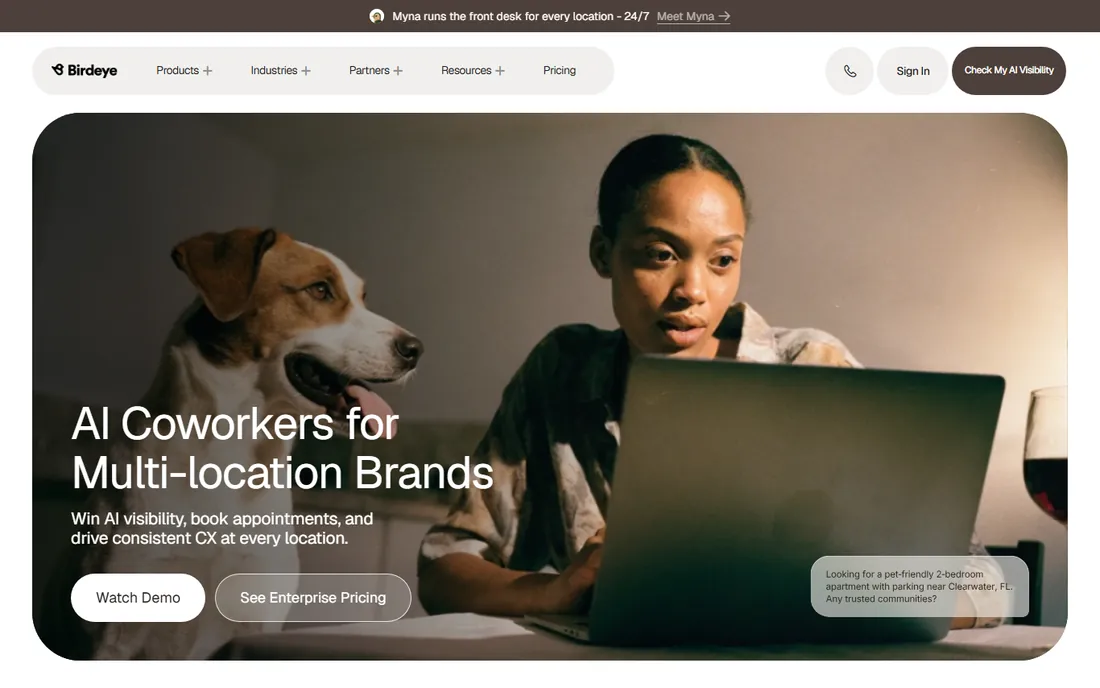
Birdeye automates the review flywheel for location businesses: automated review requests after visits, AI-assisted responses across Google and 200-plus sites, and sentiment insights from the review stream. Local SEO benefits compound.
It is reputation-first, not survey-first. Birdeye fits multi-location brands where reviews drive discovery and revenue.
What we like- Review generation across 200-plus sites
- AI responses at scale
- Unified inbox for reviews, messages and social
- Built for multi-location
Watch out for- Review-centric rather than full VoC
- Pricing adds up across many locations
Starting priceSee website
Free planNo
Podium centers on text messaging: businesses collect reviews, answer questions and even take payments through conversational channels customers actually use. The review generation engine is proven with local services.
Deep analytics are thinner than enterprise VoC suites. Podium fits local businesses that want customer interaction and reviews in one messaging-led tool.
What we like- Messaging-led customer interaction
- Review requests via text
- Payments and marketing tools alongside
- Popular with local services
Watch out for- More interaction platform than analytics platform
- Pricing is sales-led
Starting priceSee website
Free planNo
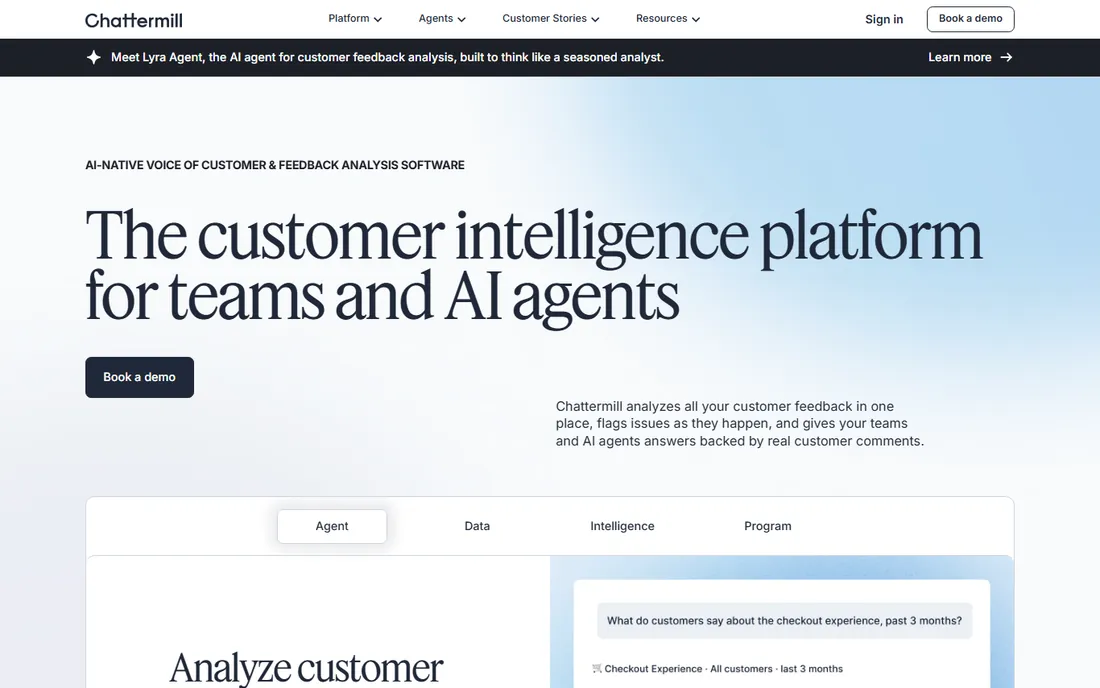
Chattermill applies machine learning to the feedback you already have: support tickets, app reviews, survey verbatims and social mentions become measured themes and sentiment trends.
It complements rather than replaces survey tools. Chattermill fits companies drowning in unstructured feedback that need to quantify what customers are really saying.
What we like- Unifies feedback from reviews, tickets, surveys and social into quantified themes
- Strong NLP
- Purpose-built for insight, not just collection
Watch out for- Analysis-focused, so you still need collection tools
- Pricing is custom
Starting priceSee website
Free planNo
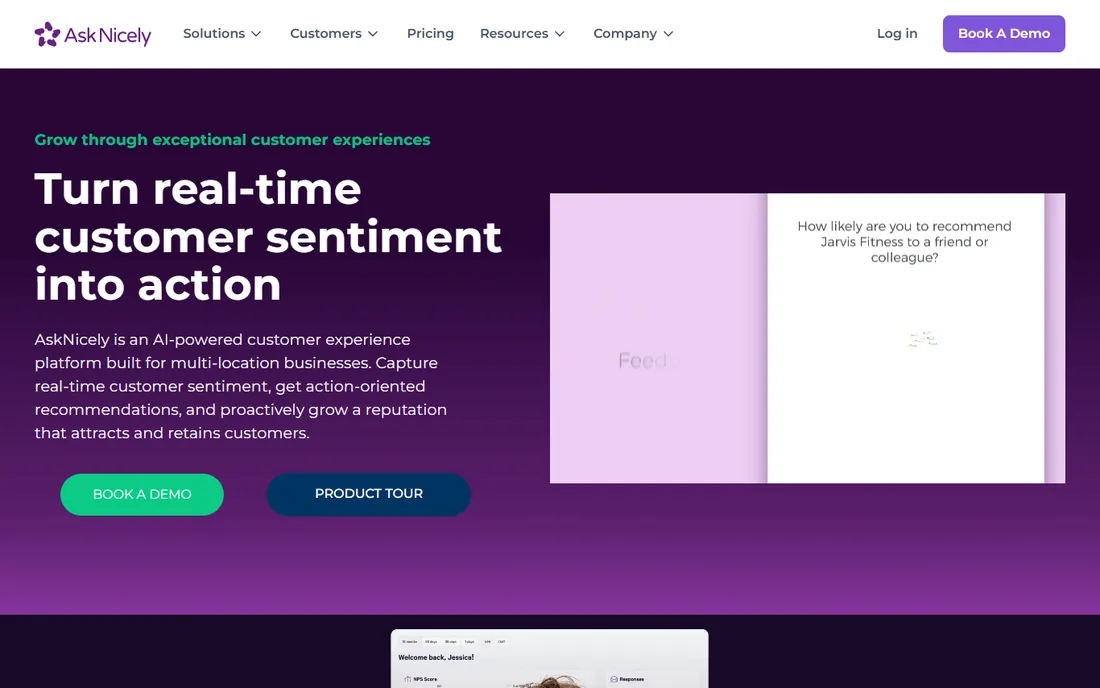
AskNicely makes NPS operational: frontline staff see their scores daily, get coaching tips from feedback patterns, and workflows route detractors for fast recovery. Integrations with Salesforce, HubSpot and Zendesk embed it in existing routines.
Research-grade survey design is not the point. AskNicely fits service businesses where frontline behavior drives the customer experience.
What we like- Daily NPS and CSAT tracking for frontline teams
- Coaching workflows tied to feedback
- Strong CRM and helpdesk integrations
Watch out for- Response-volume-based pricing can surprise
- Focused on transactional NPS rather than deep research
Starting priceSee website
Free planNo
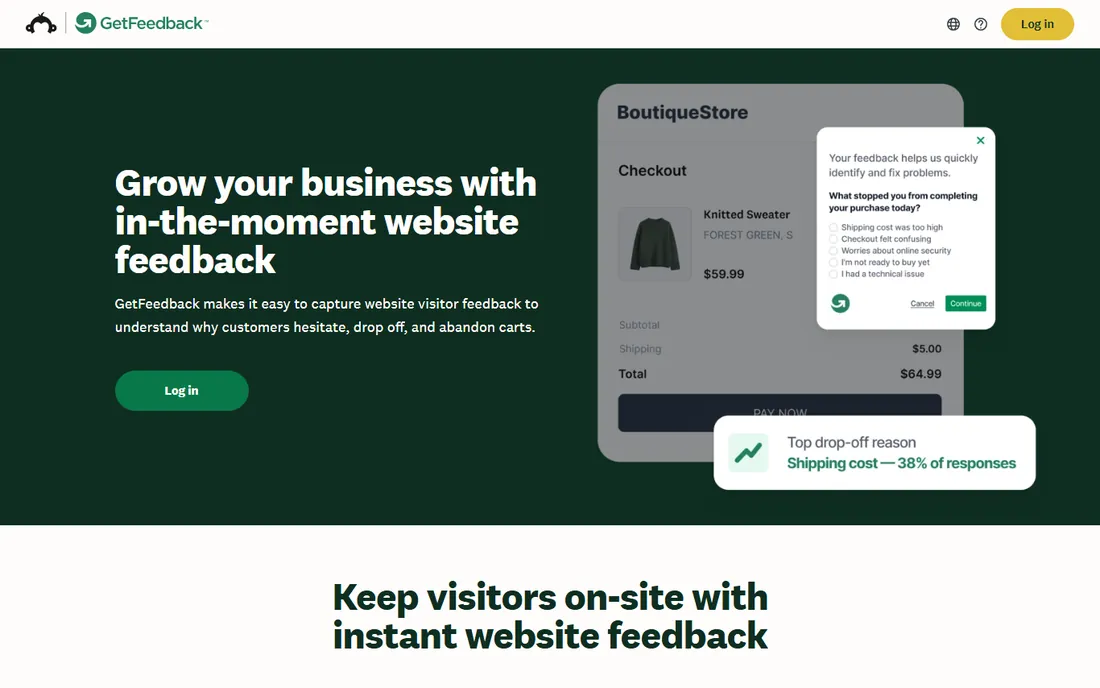
GetFeedback (SurveyMonkey) puts feedback inside Salesforce: surveys deploy fast, responses land on customer records, and teams act without leaving the CRM. The SurveyMonkey backing adds survey-design credibility.
Non-Salesforce shops get less of the magic. GetFeedback fits Salesforce-heavy organizations wanting feedback embedded in customer records.
What we like- Native Salesforce integration
- Agile survey deployment
- Part of the SurveyMonkey family with solid methodology
Watch out for- Best value is Salesforce-centric
- Standalone analytics trail the leaders
What to check before you buy
Start with your feedback sources. If reviews and local listings drive your business, a reputation tool like Birdeye beats a survey suite. If you need journey-level insight across channels, enterprise platforms earn their keep.
Verify the closed-loop workflow: collecting feedback without routing detractors to owners is theater. Check text analytics quality on your actual data, not the demo dataset. Confirm integration with your CRM and support stack. Finally, evaluate the action layer: the best VoC tools drive coaching, process changes and product fixes, not just prettier dashboards.
Closing the loop: from feedback to fix
Collecting feedback is the easy half. The programs that earn loyalty are the ones where customers see their input change something. Closing the loop has two levels, and most companies only do one.
The inner loop is the individual follow-up. A customer leaves a scathing review or a low score; someone with authority contacts them within 24 to 48 hours, acknowledges the specific issue, and fixes it or explains honestly why it cannot be fixed. This single practice recovers more detractors than any other. The keys are speed (the window closes fast), ownership (a named person, not a generic team) and follow-through (check back after the fix). Track inner-loop metrics separately: contact rate, time to contact, and the percentage of contacted detractors whose score improves.
The outer loop is the systemic fix. Ten customers complain about the same checkout step; the product team redesigns it. This is where VoC programs justify their budgets, because one fix prevents hundreds of future complaints. The machinery matters: feedback needs themes, themes need owners, owners need deadlines, and the loop needs a report back to customers ("you told us checkout was confusing; here is what changed"). Companies that close the outer loop visibly turn complainants into advocates.
Most programs fail between the loops. Feedback gets analyzed beautifully and presented quarterly, but no individual customer ever hears back and no systemic fix ever ships. The dashboard becomes theater. The antidote is operational discipline: every theme gets an owner and a date, and the VoC team has the standing to hold owners accountable.
Budget for the loop, not just the listening. A good rule: for every dollar spent collecting and analyzing feedback, expect to spend as much again acting on it. Programs funded only for surveys produce surveys, not improvements.
How we chose
We selected VoC platforms with live products and real customer bases, spanning enterprise experience management, reputation tools and NPS specialists, using vendor sites, documentation and public reviews. Pricing in this category is largely quote-based, so all prices are See website. We did not run surveys.
Choosing metrics: NPS, CSAT, CES and when each lies
Every VoC program needs a headline metric, and each of the standard ones has a blind spot. Pick the metric that matches the question you are actually asking.
NPS (Net Promoter Score) measures loyalty: "how likely are you to recommend us." It is the best of the three for predicting growth and the worst for diagnosing problems, because a score of 6 tells you nothing about what to fix. Use NPS for relationship tracking (quarterly or annual) and always pair it with the open-ended follow-up question, which is where the value lives.
CSAT (customer satisfaction) measures a specific interaction: "how satisfied were you with this support call." It is excellent for operational quality control and terrible as a company-wide health metric, because it says nothing about customers who never contact you. Use CSAT at the transaction level, benchmarked per channel, and watch the trend rather than the absolute number.
CES (customer effort score) measures friction: "how easy was it to resolve your issue." Research suggests effort predicts loyalty better than delight does. CES is the right metric for process improvement work: every point of effort reduction maps to real behavior change. Its weakness is narrowness; it does not capture emotional attachment or value perception.
The honest approach uses all three at different altitudes: CES for process fixes, CSAT for service quality, NPS for relationship health. And none of them replaces reading the verbatims. The score tells you where to look; the customer's words tell you what is wrong.
One more caution: benchmark against yourself, not the industry. Methodology differences (survey timing, channel, incentives) make cross-company comparisons noisy. A rising trend on a consistent methodology beats a flattering number on a shaky one.
Frequently asked questions
What is voice of the customer software?
Software that collects customer feedback across surveys, reviews, support interactions and social channels, analyzes it (often with AI text analysis), and routes insights to teams that can act.
What is the difference between VoC and NPS software?
NPS software measures one loyalty metric; VoC software is broader, capturing feedback across channels and analyzing why scores move. Many VoC platforms include NPS measurement.
How do Birdeye and Podium differ from Qualtrics?
Birdeye and Podium focus on review generation and messaging for local and multi-location businesses. Qualtrics is an enterprise research platform for surveys, journeys and experience analytics across channels.
What is closed-loop feedback?
The practice of following up with customers who report problems: acknowledging their feedback, resolving the issue and telling them what changed. VoC tools automate routing these cases to owners.
How long does VoC implementation take?
Focused tools like AskNicely or Chattermill can go live in days to weeks. Enterprise platforms like Qualtrics or Medallia typically take weeks to months depending on channels and integrations.
Can small businesses use VoC software?
Yes. AskNicely, GetFeedback and Podium serve SMBs and mid-market companies. Enterprise suites only make sense at scale.
How quickly should you follow up on negative feedback?
Within twenty-four to forty-eight hours for individual outreach. The recovery window closes fast: customers contacted quickly are far more likely to revise their view than those contacted a week later. Systemic fixes take longer, but acknowledging the issue promptly while the fix is in progress still earns goodwill.
Sources we checked (8)
- https://www.qualtrics.com
- https://www.medallia.com
- https://inmoment.com
- https://birdeye.com/
- https://www.podium.com
- https://chattermill.com
- https://www.asknicely.com
- https://www.getfeedback.com
Is your product missing or out of date?
We review this list regularly. Vendors can request a listing, send updated pricing or ask about featured placement.

Shihab Mia · Founder, Rankite
Shihab has 5+ years in B2B and SaaS SEO. He writes Rankite's software buying guides from pricing pages, documentation and public user reviews. More about Shihab.