How we make this list: we compare pricing pages, product documentation and public user reviews. Rankite is independent; if a vendor ever pays for a featured spot, that listing is clearly labeled Partner.
Key takeaways
- Customer communication management is two industries wearing one trench coat: enterprise document platforms (Quadient, OpenText, Smart Communications) that generate bills and statements, and modern messaging platforms (Intercom, Zendesk, Front) that handle live conversations.
- Figure out which one you are buying before comparing anything, because the two sides barely compete with each other.
- On the messaging side, published prices are clear: Front from $19 per user per month, Intercom from $29 per seat per month, Zendesk Suite from $55 per agent per month (all billed annually).
- On the document CCM side, every vendor sells by quote; budget for implementation services, not just licenses.
Quick comparison
| Tool | Best for | Starting price | Free plan |
|---|
 Quadient Inspire Quadient Inspire | Enterprise omnichannel document communications | See website | No |
 OpenText Exstream OpenText Exstream | High-volume transactional documents | See website | No |
 Smart Communications Smart Communications | Cloud CCM for regulated industries | See website | No |
 Messagepoint Messagepoint | AI-driven content control for CCM | See website | No |
 Intercom Intercom | In-app messaging and AI support | $29/seat/month (Essential, billed annually) | Free trial (14 days) |
 Zendesk Zendesk | Omnichannel support ticketing | $55/agent/month (Suite Team, billed annually) | Free trial (14 days) |
 Front Front | Collaborative shared inboxes | $19/user/month (Starter, billed annually) | Free trial |
 Twilio Twilio | Programmable messaging APIs | See website (usage-based) | Free trial |
 Braze Braze | Cross-channel customer engagement | See website | No |
Is your product missing or out of date?
We review this list regularly. Vendors can request a listing, send updated pricing or ask about featured placement.
The best customer communication management software
The best customer communication platform depends entirely on which "communication" you mean. Classic CCM software composes and delivers regulated documents, bills, statements, policy letters, notices, across print, email, SMS and web portals, with approval workflows and audit trails. Modern customer communication software runs the live conversations: chat, email, messaging apps and support tickets. This guide covers both, because buyers searching for customer communication software land on both. Nine tools.
#1
Quadient Inspire
Best for: Enterprise omnichannel document communications
Visit quadient.com
Starting priceSee website
Free planNo
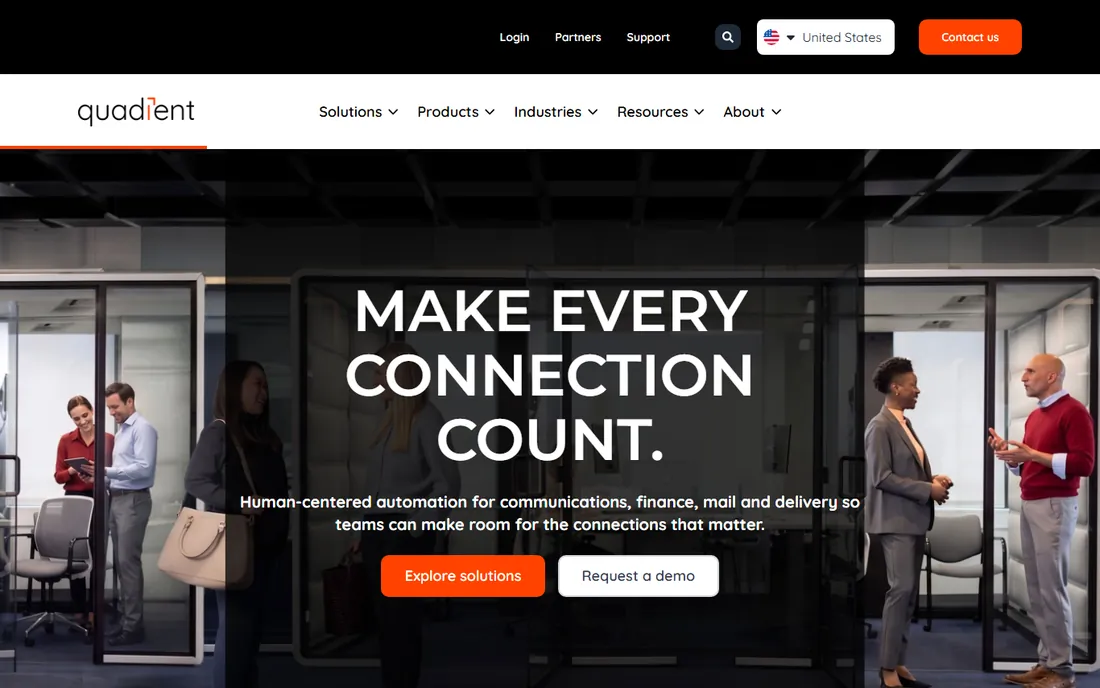
Quadient Inspire is what enterprises mean by customer communication management: a platform for designing document templates once and delivering them as printed mail, email, SMS, web portal content or mobile push, with version control, approval workflows and compliance tracking. Banks, insurers and utilities use it to generate statements, bills, policy documents and regulatory notices at massive scale.
The commercial reality is enterprise through and through: custom quotes, professional services for implementation, and deployment measured in months. There is no trial or self-serve path. If your requirement is regulated, high-volume document output across channels, Inspire is a default shortlist entry. If you need team messaging or support chat, it is the wrong category entirely.
What we like- One of the most complete CCM platforms for designing and delivering documents across print and digital
- Strong in financial services and insurance
- Scalable to millions of communications
Watch out for- Quote-only enterprise pricing with significant implementation costs
- The platform's breadth means long deployment timelines
Starting priceSee website
Free planNo
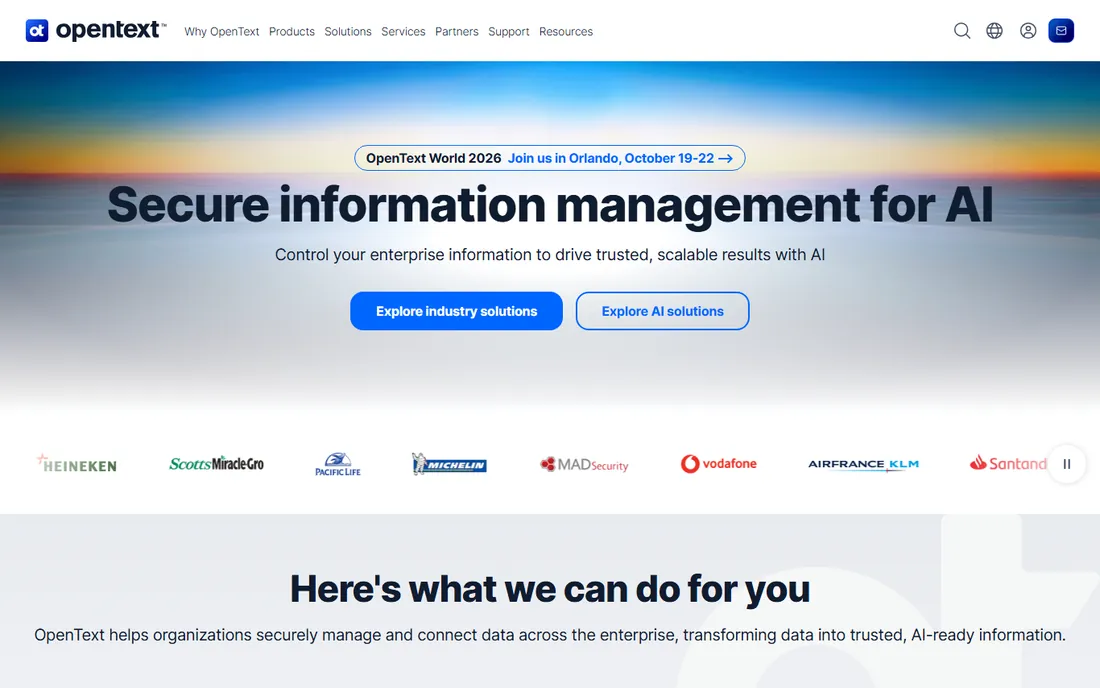
OpenText Exstream (formerly HP Exstream) is the veteran of high-volume transactional CCM: monthly statements, bills and correspondence produced in the millions, with precise layout control and integration into enterprise content management. Organizations with decades of document operations run on it, and OpenText's broader portfolio covers the archiving, records and compliance layers around it.
The platform carries its history: powerful but complex, with implementations that demand specialized expertise. Pricing is quote-based and deployments are projects, not signups. For enterprises with enormous existing document volumes and OpenText infrastructure, Exstream remains a workhorse. New buyers prioritizing cloud-native agility usually look at Smart Communications or Messagepoint first.
What we like- Proven at extreme volumes of transactional documents
- Deep integration with enterprise content and records systems
- Strong compliance and archival story
Watch out for- Legacy architecture that shows its age
- Quote-based pricing
- Implementations are heavyweight projects
Starting priceSee website
Free planNo
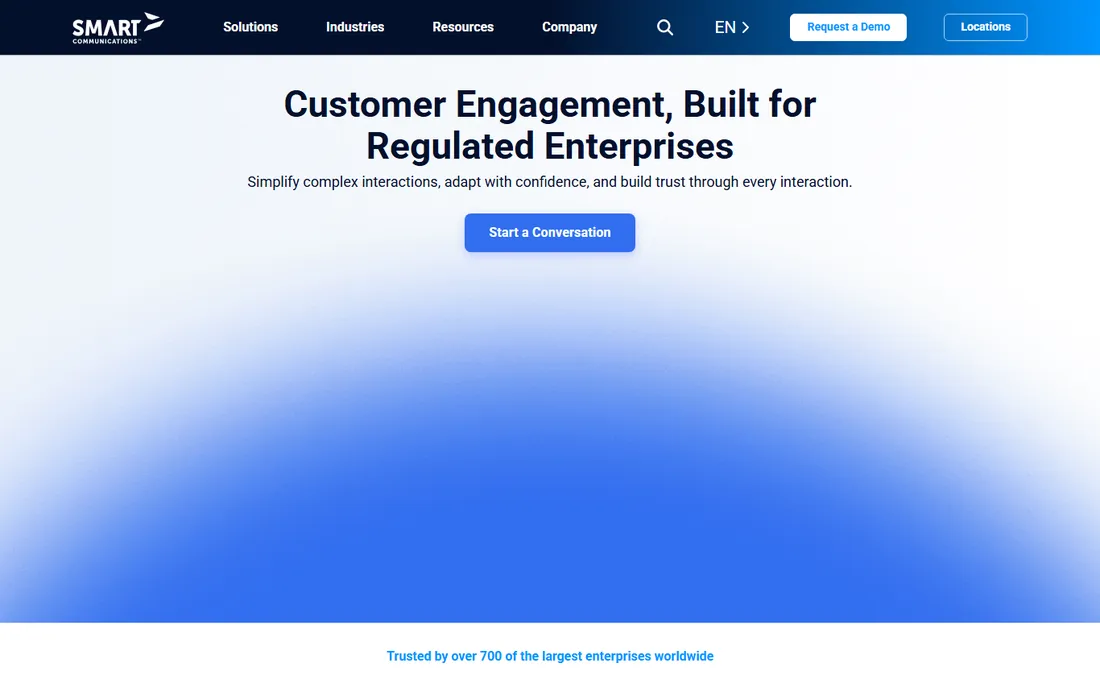
Smart Communications (SmartCOMM) represents the cloud generation of CCM: browser-based template design, correspondence management and forms automation aimed squarely at regulated industries. Business teams can update letter content and logic without waiting on IT, which is the bottleneck the product was built to remove. Insurance carriers are its strongest vertical.
Pricing follows the enterprise pattern: custom quotes, annual contracts, implementation services. There is no public pricing or trial. For insurers, banks and healthcare organizations that need compliant customer correspondence without on-premise infrastructure, Smart Communications is the modern default. Lighter or non-regulated use cases will find it more platform than they need.
What we like- Cloud-native CCM built for insurance, healthcare and financial services
- Business users can edit templates without IT
- Strong forms and correspondence workflows
Watch out for- Enterprise quote-based pricing
- Narrower beyond its core regulated-industry verticals
Starting priceSee website
Free planNo
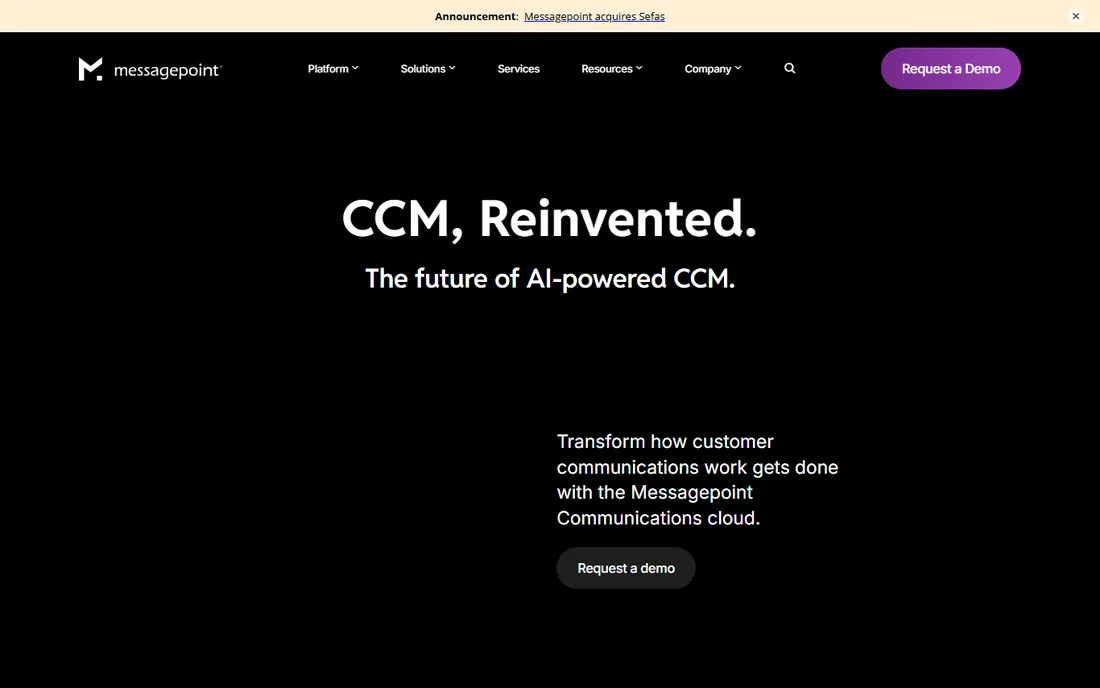
Messagepoint takes a different angle on CCM: instead of just composing documents, it applies AI to the content itself, analyzing template libraries to find inconsistent language, outdated disclosures and readability problems across thousands of documents. Enterprises use it to rationalize sprawling template estates and to give business users controlled editing with guardrails.
It often deploys alongside a composition platform rather than replacing one, which complicates the buying decision. Pricing is quote-based. For organizations drowning in inconsistent legacy documents, or under regulatory pressure to prove content accuracy, Messagepoint's content intelligence is distinctive. As a pure composition engine, the bigger platforms offer more.
What we like- AI-assisted content management that finds and fixes inconsistencies across document libraries
- Strong for rationalizing messy legacy templates
- Good analytics on communication effectiveness
Watch out for- Positioned as a complement to CCM platforms as much as a standalone
- Quote-based pricing
- Smaller vendor than Quadient or OpenText
Starting price$29/seat/month (Essential, billed annually)
Free planFree trial (14 days)
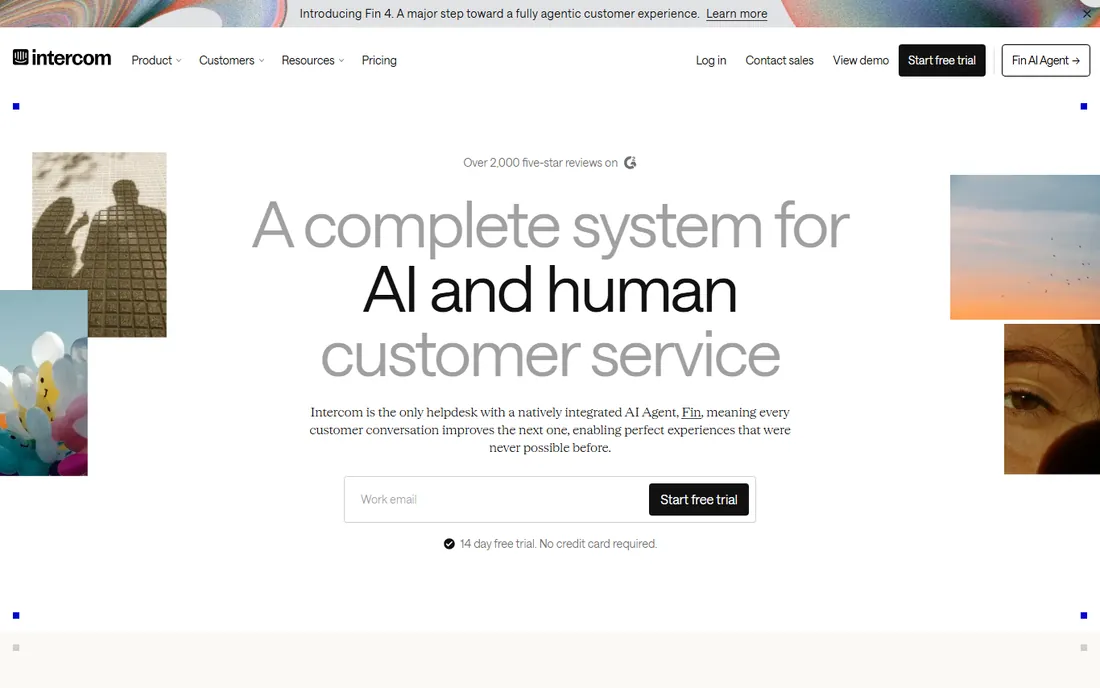
Intercom is the customer communication platform that product-led companies default to: an in-app messenger, shared inbox, help center, automation workflows and the Fin AI agent that resolves customer questions autonomously. Essential at $29 per seat per month billed annually covers the core; Advanced at $85 and Expert at $132 add automation depth, security and SLAs.
Budget carefully: Fin costs $0.99 per resolved conversation on top of seats, and real-world bills for busy teams run far above the seat math. There is no permanent free tier, just a 14-day trial. For SaaS companies whose customers live inside the product, Intercom's in-app experience is unmatched. For cost-sensitive support teams, the metered AI pricing deserves scrutiny.
What we like- The most polished messenger and AI agent combination in support software
- Fin AI agent resolves conversations at $0.99 per outcome
- Strong for product-led SaaS
Watch out for- The two-part pricing (seats plus per-outcome AI fees) makes bills hard to forecast
- Costs escalate fast with volume
- No free tier
Starting price$55/agent/month (Suite Team, billed annually)
Free planFree trial (14 days)
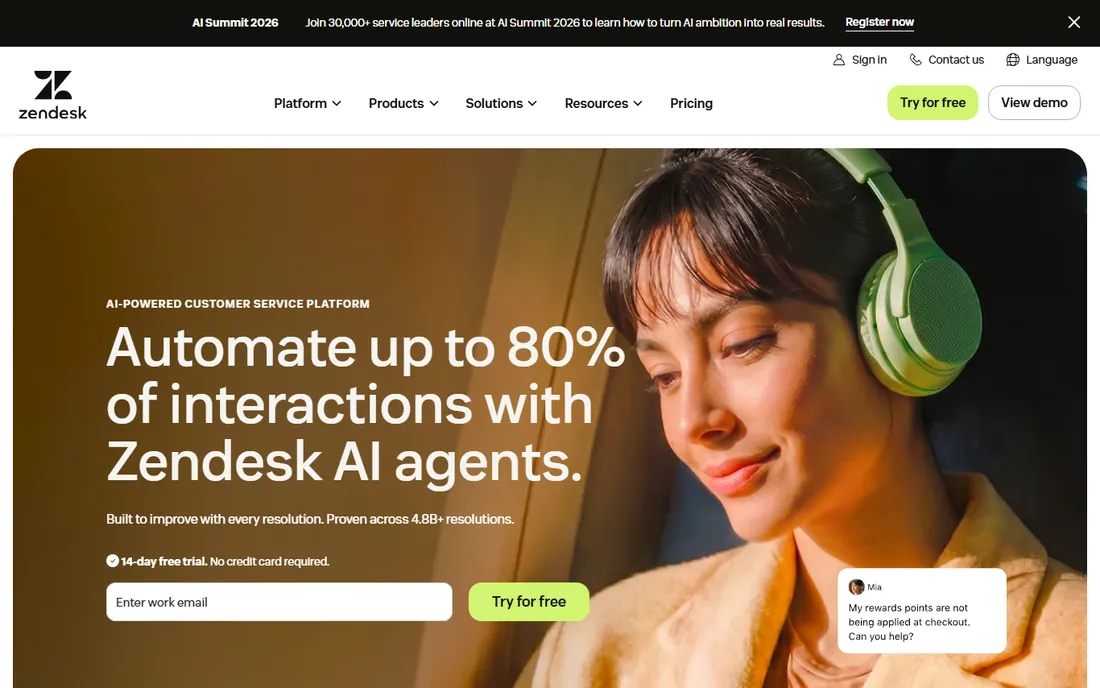
Zendesk is the standard-bearer for support ticketing: email, chat, voice, social and messaging unified in an agent workspace, with help centers, automation and a vast integration marketplace. Suite Team at $55 per agent per month billed annually is the entry point; Growth at $89 and Professional at $115 add SLAs, multilingual support, advanced analytics and HIPAA compliance.
The pricing ladder is the complaint: meaningful features sit a tier or two above entry, and AI capabilities (Copilot at $50 per agent per month, per-resolution AI agent fees) stack on top. For mid-market and enterprise support operations with complex routing and compliance needs, Zendesk's depth justifies the cost. Small teams should price the tier they will actually need in year two, not the entry tier.
What we like- The most complete ticketing and omnichannel suite
- 1,800+ app marketplace
- Proven at enterprise scale with compliance options
Watch out for- Tier jumps are steep ($55 to $89 to $115 per agent)
- AI features add separate per-resolution and Copilot fees
- Smaller teams often find it heavy
Starting price$19/user/month (Starter, billed annually)
Free planFree trial
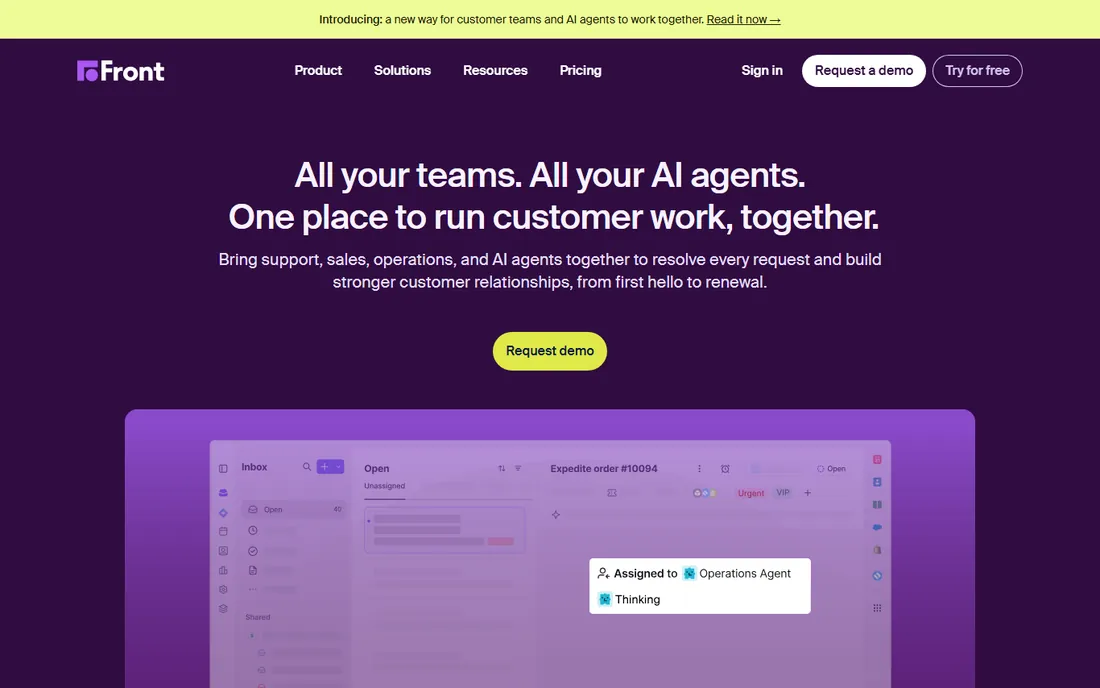
Front reimagines the support inbox as a collaboration tool: shared inboxes for email, chat, SMS and social where teammates assign, comment internally, draft together and never double-reply. Starter at $19 per user per month billed annually covers up to 10 seats; Growth at $49 and Scale at $99 expand channels, automation and controls.
Watch the seat caps: growing from 10 to 11 seats forces a jump from Starter to Growth, nearly tripling the per-seat cost overnight. AI add-ons (Copilot, Smart QA) cost extra on lower tiers. For operations teams, account management and anyone whose work is fundamentally collaborative email, Front's model beats traditional ticketing. For classic support queues, Zendesk's automation runs deeper.
What we like- The best shared-inbox collaboration model, with assignments, internal comments and collision detection
- Transparent per-seat pricing from $19
- Omnichannel on higher tiers
Watch out for- Starter caps at 10 seats and one channel type, forcing upgrades as you grow
- AI features are paid add-ons on lower tiers
- Analytics depth trails Zendesk
Starting priceSee website (usage-based)
Free planFree trial
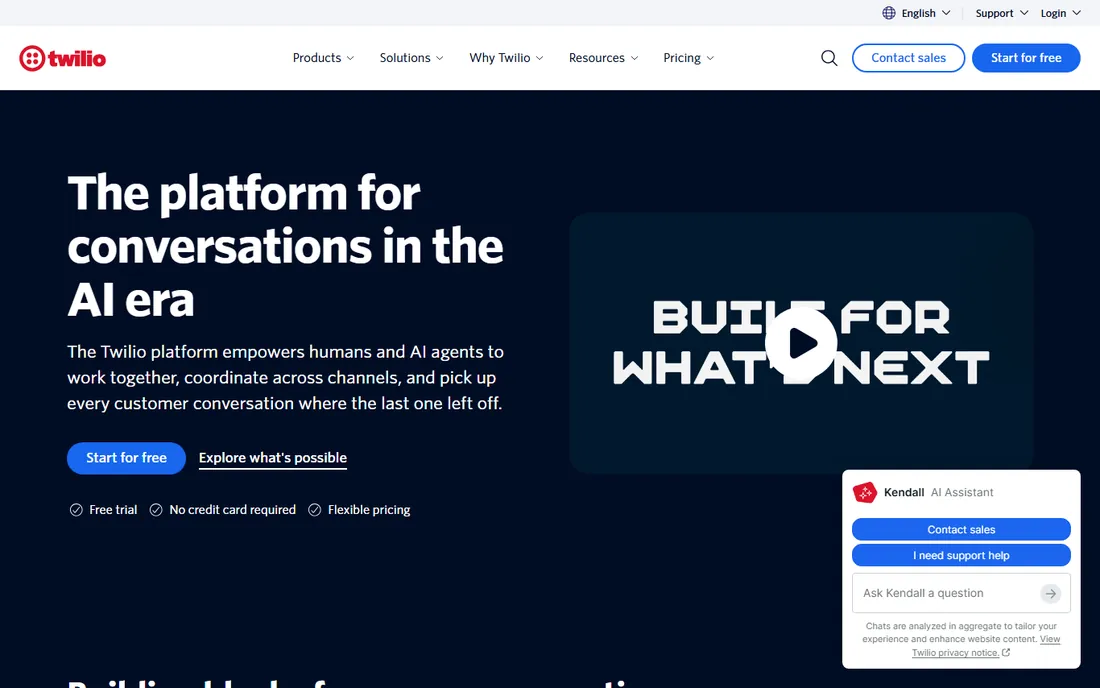
Twilio is the odd one out here: not an application but the programmable infrastructure beneath thousands of customer communication products. Its APIs send SMS, make voice calls, deliver WhatsApp messages and send email (via SendGrid), billed per unit with published usage rates and a trial credit to start.
"See website" reflects the pricing model, not secrecy: there is no plan price, only per-message and per-minute rates that vary by country and channel. If you have developers and need communications embedded in your product or custom workflows, Twilio is the foundation. If you want a tool your support team logs into tomorrow, buy Intercom, Zendesk or Front instead, several of which run on Twilio under the hood.
What we like- The definitive API platform for SMS, voice, WhatsApp and email
- Usage-based pricing means you pay per message, not per seat
- Unmatched deliverability tooling
Watch out for- It is infrastructure, not software: you or your developers build the experience
- Costs are entirely volume-driven and need modeling
- Support is developer-grade
Starting priceSee website
Free planNo
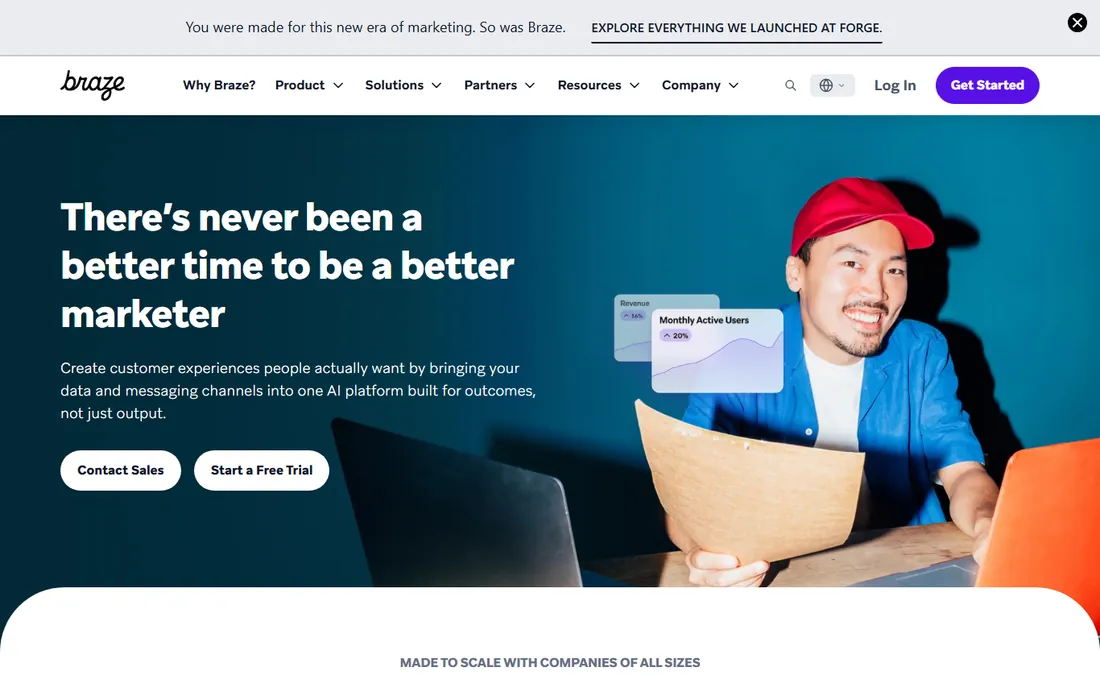
Braze sits between the two CCM worlds: a customer engagement platform that orchestrates personalized messaging across email, mobile push, SMS, in-app and web, driven by real-time customer behavior. Consumer brands use it for onboarding flows, abandoned-cart recovery, win-back campaigns and lifecycle marketing that reacts to what users actually do.
Pricing is quote-based and enterprise-leaning, with no self-serve tier. It is marketing software, not a support inbox: there is no ticketing, no agent workspace. For lifecycle and promotional messaging at scale, Braze leads. For conversational support, the messaging platforms above fit better, and the two often coexist in the same company.
What we like- The leading cross-channel engagement platform for lifecycle messaging across email, push, SMS and in-app
- Real-time personalization at scale
- Strong for consumer brands
Watch out for- Quote-based enterprise pricing
- Built for marketing engagement, not support conversations
- Implementation needs dedicated resources
How we chose
We verified Intercom, Zendesk and Front prices against 2026 pricing analyses of their published pricing pages, and marked the enterprise CCM vendors, Twilio and Braze as "See website" where pricing is quote-based or purely usage-driven. We split the field deliberately into document CCM and conversational platforms, because conflating them is the category's most common buyer error. We read vendor documentation and public reviews on G2, Capterra and Reddit for the recurring themes: pricing predictability, implementation effort, AI add-on costs and the seats-vs-volume billing question. We included both enterprise and SMB-accessible tools because the keyword attracts both buyers.
Write down every communication type you send customers before talking to any vendor: transactional documents (bills, statements, notices), marketing messages (campaigns, lifecycle), and conversational support (chat, email, tickets). Most companies need tools from at least two of the three buckets, and no single product here covers all three well.
Then map volume and regulation. High-volume regulated documents point to Quadient, OpenText or Smart Communications, and the evaluation is really about implementation partners and migration. Conversational support points to Intercom, Zendesk or Front, and the evaluation is about pricing models: per-seat (Front), per-agent-plus-AI (Zendesk), or seats-plus-outcomes (Intercom). Model a realistic month of your volume through each model before choosing.
Finally, inventory what you already pay for. Many teams discover their CRM, marketing automation or phone system already includes messaging features that cover half the requirement. The most expensive mistake in this category is buying a platform for a job an existing tool already does.
Documents vs conversations: pick your side first
The practical test is simple: does the communication need legal-grade version control, approval workflows and archival? That is document CCM, and your shortlist is Quadient, OpenText, Smart Communications and Messagepoint. Does it need a human (or AI) responding in minutes across chat, email and messaging apps? That is conversational, and your shortlist is Intercom, Zendesk and Front. Is it automated lifecycle messaging driven by user behavior? That is engagement, and Braze leads.
Companies above a certain size need all three, integrated: documents from the CCM platform, conversations in the support tool, lifecycle messages from the engagement platform, with the CRM as the shared customer record. Twilio-style APIs often glue them together. Buying one product to do all three jobs is how companies end up with shelfware. Name the job, buy the tool, integrate at the data layer.
Frequently asked questions
What is customer communication management (CCM) software?
Traditionally, CCM software designs, personalizes and delivers customer documents, bills, statements, policy letters, notices, across print and digital channels with approval workflows and compliance controls. The term has broadened to include conversational messaging and engagement platforms, which is why buyers should clarify which meaning they need.
How is CCM different from a helpdesk like Zendesk?
Classic CCM produces outbound documents at scale with legal-grade controls; helpdesks manage inbound conversations and support tickets. They solve different problems. Large organizations typically run both: CCM for statements and notices, a helpdesk for support interactions.
How much does customer communication software cost?
Conversational platforms publish prices: Front from $19 per user per month, Intercom from $29 per seat per month, Zendesk Suite from $55 per agent per month (billed annually), plus AI usage fees. Enterprise CCM (Quadient, OpenText, Smart Communications) and engagement platforms (Braze) sell by quote, with implementation services often exceeding first-year license costs.
Should we build on Twilio or buy a finished product?
Buy the finished product unless communications are core to your product or you have developers dedicated to it. Twilio gives maximum control at the cost of building and maintaining everything: message templates, delivery logic, compliance and analytics. Finished platforms cost more per unit but ship tomorrow.
What are the hidden costs in messaging platform pricing?
AI fees are the big one: per-outcome charges (Intercom's Fin at $0.99, Zendesk's AI resolutions) scale with volume, not seats, and can exceed the seat bill. Also watch seat minimums and caps (Front's 10-seat Starter limit), messaging channel add-ons (WhatsApp fees), and the tier jumps needed for SLAs, SSO or HIPAA.
Can one platform handle documents, marketing messages and support chat?
Not well. Each category has leaders that do one job excellently and the others poorly. The workable architecture is best-of-breed per job with the CRM as the shared customer record: a CCM platform for documents, a messaging platform for conversations, an engagement platform for lifecycle marketing.
Sources we checked (18)
- https://www.intercom.com/learning-center/intercom-vs-front
- https://www.getmacha.com/blog/intercom-pricing-explained
- https://www.voiceflow.com/blog/intercom-pricing
- https://www.eesel.ai/blog/zendesk-suite-pricing
- https://chatsy.app/blog/zendesk-pricing-breakdown-2026
- https://assembly.com/blog/zendesk-pricing
- https://clonepartner.com/blog/intercom-alternatives-2026-costs-features-migration-paths
- https://www.saasworthy.com/product/front/pricing
- https://Slashdot.org/software/comparison/Front-vs-Staffly/
- https://www.quadient.com
- https://www.opentext.com
- https://www.smartcommunications.com
- https://www.messagepoint.com
- https://www.intercom.com
- https://www.zendesk.com
- https://www.front.com
- https://www.twilio.com
- https://www.braze.com
Is your product missing or out of date?
We review this list regularly. Vendors can request a listing, send updated pricing or ask about featured placement.

Shihab Mia · Founder, Rankite
Shihab has spent more than a decade helping SaaS and e-commerce brands grow through search. He writes Rankite's software buying guides from pricing pages, documentation and public user reviews. More about Shihab.