How we make this list: we compare pricing pages, product documentation and public user reviews. Rankite is independent; if a vendor ever pays for a featured spot, that listing is clearly labeled Partner.
Key takeaways
- PostgreSQL and MySQL remain the unbeatable value picks for teams that can run their own infrastructure, at zero license cost and with the largest hiring pool of any database.
- If you want managed Postgres without babysitting servers, Neon and Supabase start at zero and scale on usage, while Supabase adds auth and storage in one plan.
- MongoDB Atlas is the cheapest way to run document data in the cloud, with a genuinely free tier for prototypes and shared clusters from about $9 a month.
- SQLite costs nothing and runs inside your app, which makes it the best value database ever built for mobile, desktop and edge workloads.
- PlanetScale dropped its free tier, so its value case now starts at $5 a month for Postgres and $39 a month for Vitess-backed MySQL.
Quick comparison
| Tool | Best for | Starting price | Free plan |
|---|
 PostgreSQL PostgreSQL | teams that want maximum capability at zero license cost | Free (open source) | Yes |
 MySQL MySQL | web applications and teams already fluent in MySQL | Free (Community Edition) | Yes |
 MariaDB MariaDB | MySQL-compatible workloads that want fully open-source licensing | Free (Community Server) | Yes |
 SQLite SQLite | embedded databases in mobile, desktop and edge apps | Free (public domain) | Yes |
 MongoDB Atlas MongoDB Atlas | document data with zero database administration | Free (M0 shared tier); paid shared clusters from about $9/month | Yes |
 Supabase Supabase | teams that want database, auth, storage and APIs in one platform | Free tier; Pro $25/month per organization | Yes |
 Neon Neon | serverless Postgres with branch-per-PR workflows | Free tier; usage-based from $0.106 per compute-hour on Launch | Yes |
 PlanetScale PlanetScale | MySQL teams that need branching and horizontal scale | From $5/month (Postgres single node) | No |
 CockroachDB CockroachDB | multi-region transactional apps that cannot tolerate downtime | See website | Yes (free trial credits; self-hosted options available) |
 Firebase Firebase | mobile and web apps built on Google infrastructure | See website | Yes (Spark plan) |
Is your product missing or out of date?
We review this list regularly. Vendors can request a listing, send updated pricing or ask about featured placement.
The best value for money database software
Starting priceFree (open source)
Free planYes
Nothing else gives you this much database for zero dollars. PostgreSQL handles transactions, analytics, JSON documents, full-text search and geospatial data in one engine. The extension ecosystem (PostGIS, pgvector, TimescaleDB and hundreds more) means most teams never need a second database for a different workload.
The real cost of Postgres is operational, not licensing. Somebody has to manage backups, monitor replication, apply security patches and tune configuration for your workload. On a small VPS that is an hour of work a month. On a multi-terabyte production cluster it can become a part-time job. Hiring is the hidden advantage: more developers know Postgres than any other open-source database, so finding help is cheap.
What we like- No license fees ever
- Enormous extension ecosystem
- Proven reliability at every scale
Watch out for- You handle backups, patching and tuning yourself
- Managed hosting adds real cost
#2
MySQL
Best for: web applications and teams already fluent in MySQL
Visit mysql.com
Starting priceFree (Community Edition)
Free planYes
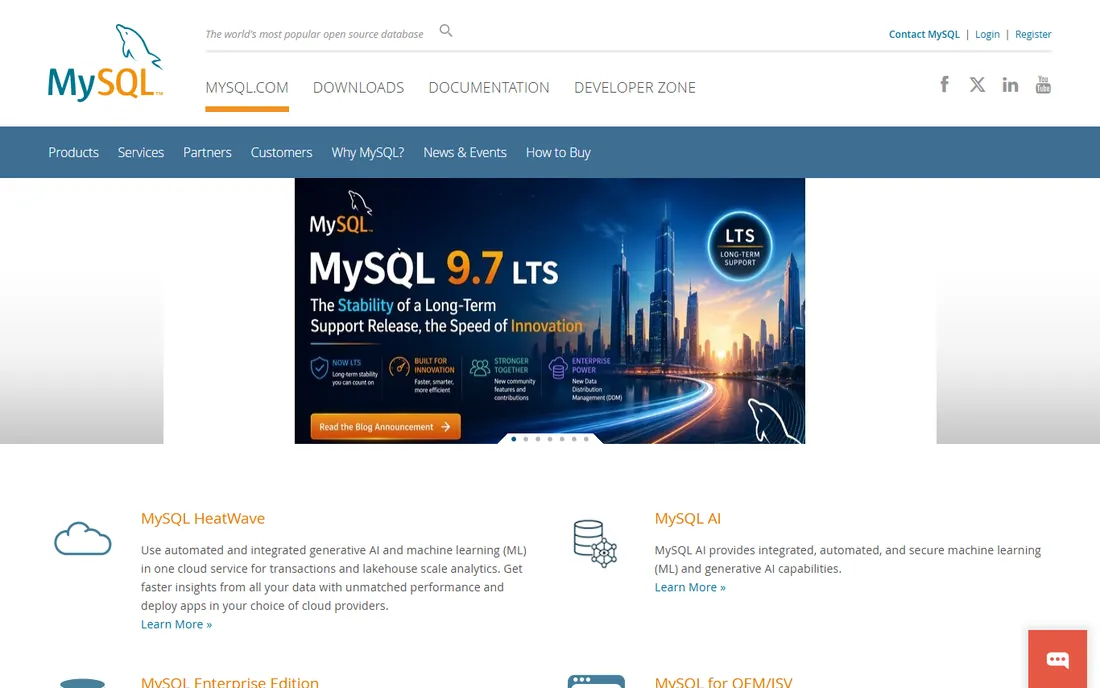
MySQL is still the default database of the web, and the Community Edition costs nothing under the GPL. If your team already knows MySQL, switching to anything else has a training cost that no pricing page shows.
Oracle's ownership is the long-running debate. For value shoppers the practical question is simpler: MySQL does relational workloads fast, the tooling is everywhere, and managed MySQL on any cloud starts cheap. It loses points against Postgres only when you need advanced features like rich JSON handling or complex analytics in the same engine.
What we like- Free Community Edition under GPL
- Simplest learning curve in the category
- Every host supports it
Watch out for- Oracle owns it, which makes some teams nervous
- Advanced features lag PostgreSQL
#3
MariaDB
Best for: MySQL-compatible workloads that want fully open-source licensing
Visit mariadb.com
Starting priceFree (Community Server)
Free planYes
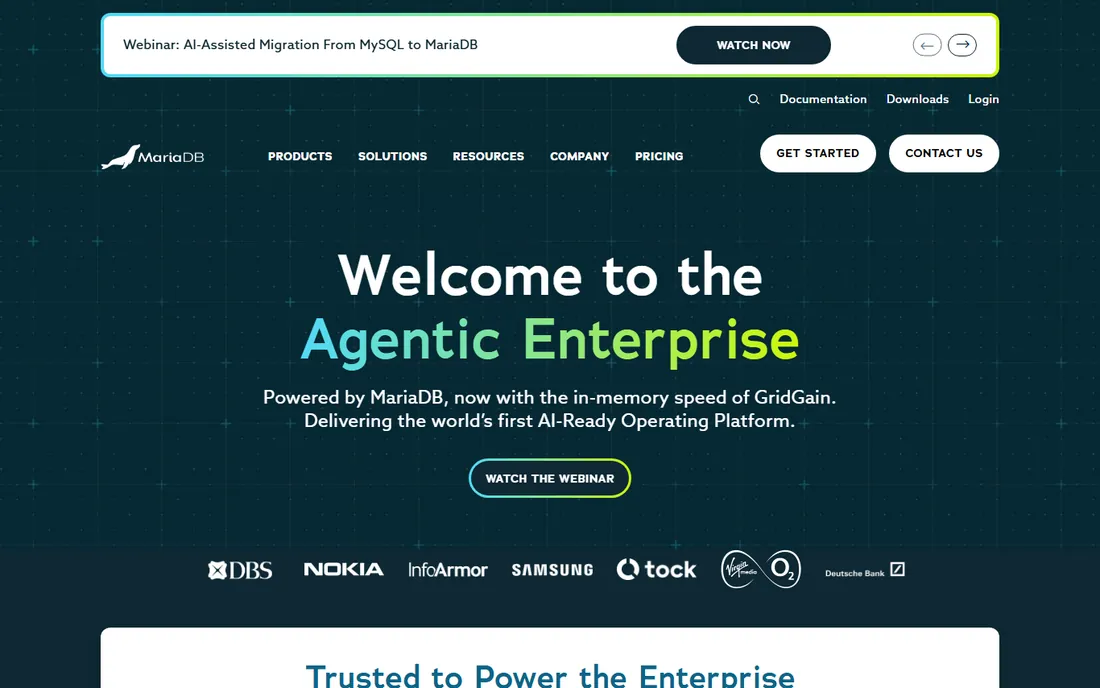
MariaDB started as a fork of MySQL and remains the safe pick for MySQL compatibility without Oracle. Migration from MySQL is usually a matter of hours, not weeks, because the wire protocol and SQL dialect match. The Community Server is free and open source under the GPL.
The managed side is where the value story gets interesting. MariaDB's own cloud starts with a free Foundation tier, and paid Power tiers begin at $0.16 per hour, which undercuts most hyperscaler managed databases for equivalent compute. Enterprise features like advanced auditing and the MaxScale proxy sit in paid tiers, but small and mid-size teams rarely need them.
What we like- Drop-in MySQL replacement
- Free Community Server
- Managed cloud from $0.16 per hour
Watch out for- Smaller community than MySQL or Postgres
- Enterprise features sit behind paid tiers
#4
SQLite
Best for: embedded databases in mobile, desktop and edge apps
Visit sqlite.org
Starting priceFree (public domain)
Free planYes
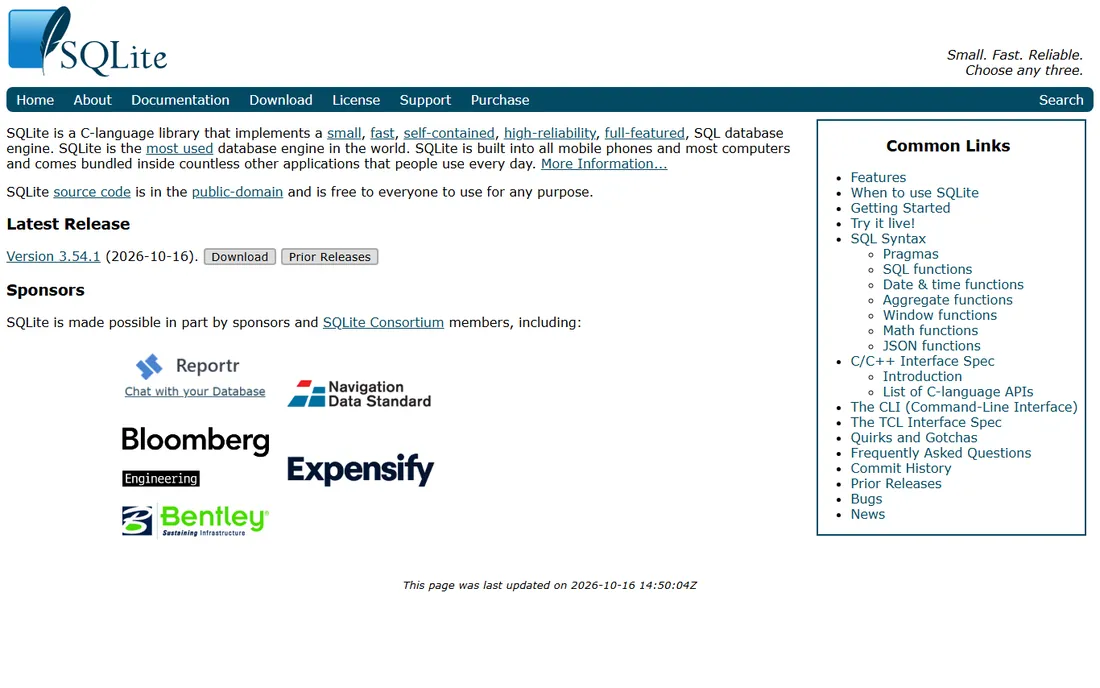
SQLite is the most used database engine in the world, and it is completely free: the source code is in the public domain, with no license to comply with and no vendor to pay. It is a library, not a server, so there is nothing to install, configure or patch. Your database is a single file on disk, which makes backups trivial.
It fits anywhere a traditional database is overkill: mobile apps, desktop software, IoT devices, test suites, and small web apps with modest traffic. The catch is concurrency. SQLite handles many readers well but serializes writers, so a write-heavy web app with hundreds of concurrent users will outgrow it.
What we like- Zero cost, zero configuration, zero server
- Most widely deployed database engine on earth
- Single-file backups
Watch out for- Not a client-server database
- Limited write concurrency
#5
MongoDB Atlas
Best for: document data with zero database administration
Visit mongodb.com
Starting priceFree (M0 shared tier); paid shared clusters from about $9/month
Free planYes
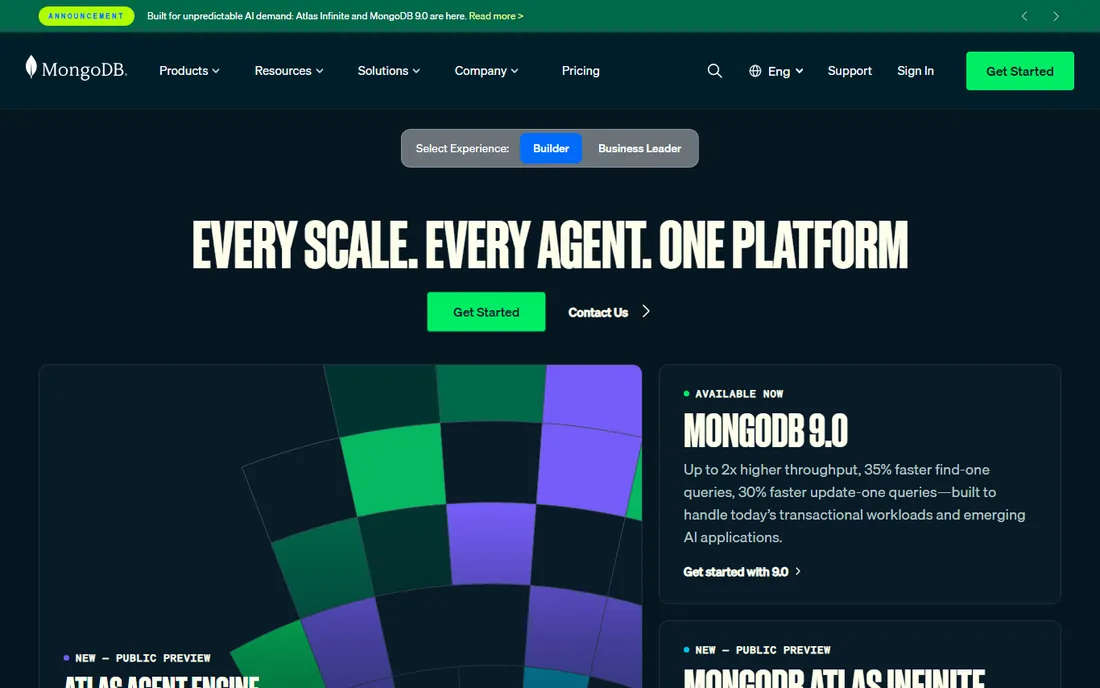
MongoDB Atlas is the official managed service for MongoDB, and its free M0 tier (512 MB of storage on a shared cluster) is enough to build and demo a real application. When you outgrow it, shared M2 clusters start around $9 a month.
The document model is the reason teams choose it: nested JSON-like data maps directly to application objects, so there is no object-relational mapping friction. Atlas adds managed backups, monitoring and multi-cloud deployment on top. MongoDB moved to the SSPL license in 2018, which the Open Source Initiative does not recognize as open source. For most buyers that changes nothing, but regulated organizations sometimes care.
What we like- Free M0 tier for learning and prototypes
- Managed backups and patching included
- Flexible document model
Watch out for- SSPL license, not OSI open source
- Dedicated clusters jump to about $57 a month
#6
Supabase
Best for: teams that want database, auth, storage and APIs in one platform
Visit supabase.com
Starting priceFree tier; Pro $25/month per organization
Free planYes
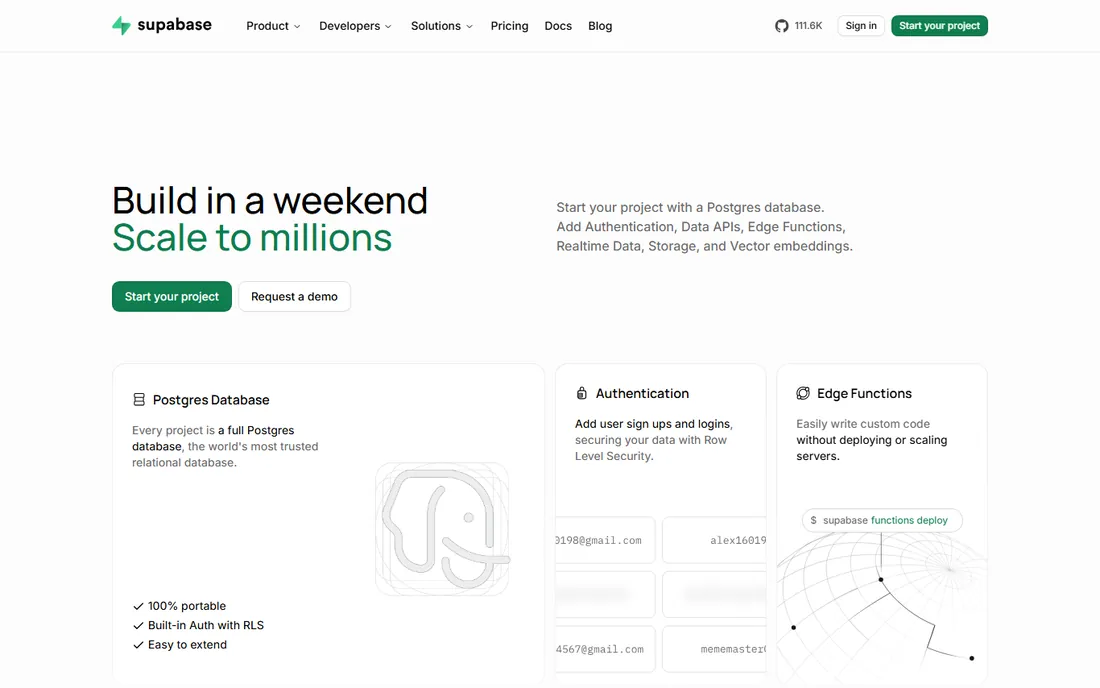
Supabase is open-source Postgres wrapped in a developer platform: authentication, file storage, edge functions and auto-generated REST APIs come bundled with the database. The free tier gives you two projects with a 500 MB database each. Pro costs $25 a month per organization and raises the database to 8 GB with 100 GB of file storage.
The value calculation depends on what you would otherwise buy separately. An auth provider, object storage and a managed database can easily run $60 to $100 a month combined. Supabase collapses that into one bill. The catches: free-tier projects pause after a week of inactivity, and on paid plans compute is billed per project, so two production projects cost more than twice one. High-egress apps should also watch the $0.09 per GB bandwidth overage.
What we like- Real Postgres under the hood
- Generous free tier
- Auth and storage included at no extra cost
Watch out for- Free projects pause after 7 days idle
- Per-project compute costs add up
#7
Neon
Best for: serverless Postgres with branch-per-PR workflows
Visit neon.tech
Starting priceFree tier; usage-based from $0.106 per compute-hour on Launch
Free planYes
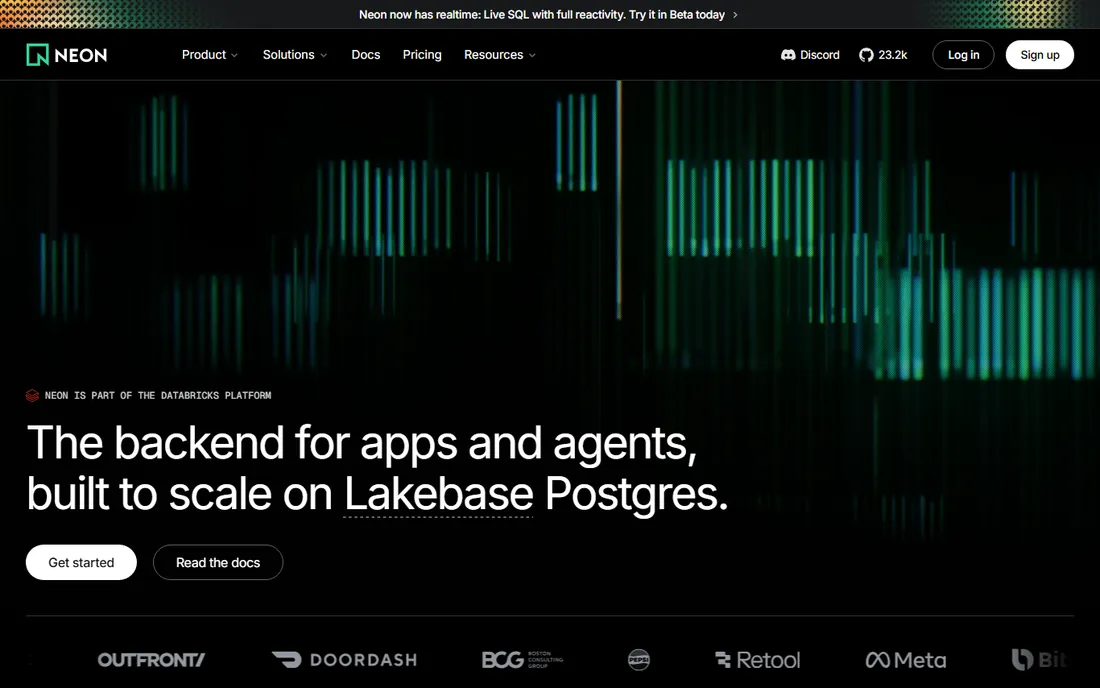
Neon rebuilt Postgres for serverless workloads: storage and compute are separated, so your database scales to zero when idle and you pay only for what you use. The free tier includes 100 compute-hours and 0.5 GB of storage per project. In December 2025 Neon removed monthly minimums, so Launch now bills purely on usage at $0.106 per compute-hour plus $0.35 per GB-month of storage.
The standout feature is database branching. Every pull request can get its own copy of the database in seconds, with copy-on-write storage so branches cost almost nothing. Note that Neon is Postgres only. If you need built-in auth or file storage, Supabase or Firebase bundle more for the money.
What we like- Scales to zero so idle databases cost nothing
- Copy-on-write database branching
- No monthly minimums since late 2025
Watch out for- Cold starts after idle periods
- Postgres only, no bundled auth or storage
Starting priceFrom $5/month (Postgres single node)
Free planNo
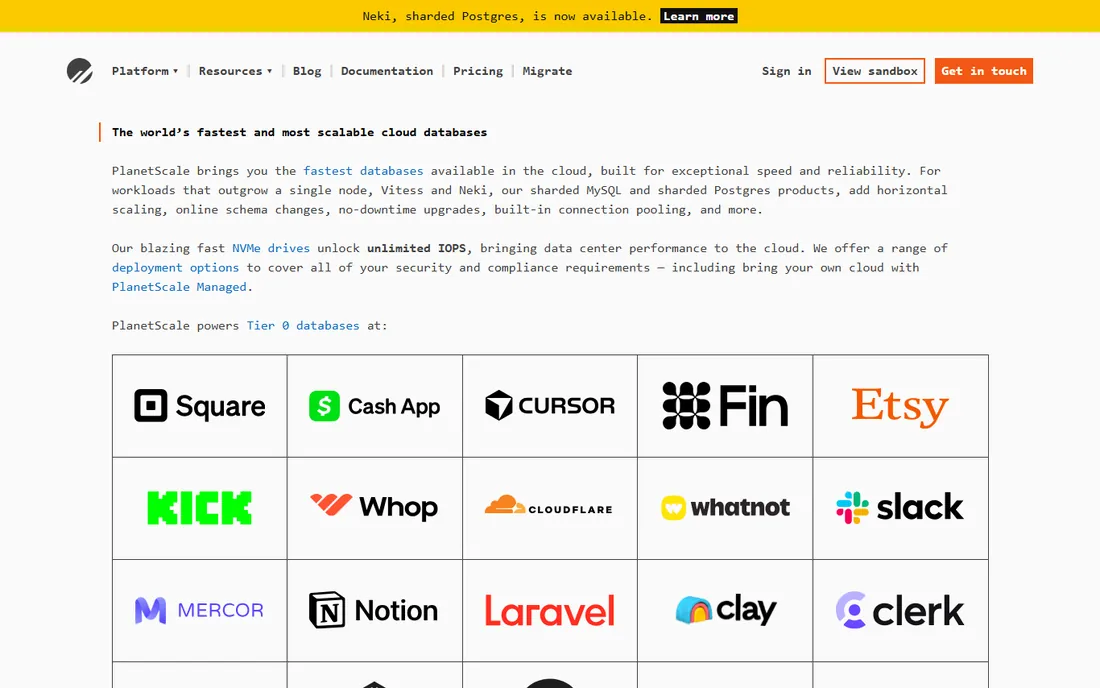
PlanetScale is the serverless MySQL platform built on Vitess, the sharding system YouTube created to scale its own MySQL. Its signature features are database branching (test schema changes safely, like a Git workflow) and deploy requests that apply schema changes with zero downtime. It now also offers managed Postgres.
Entry today is $5 a month for a Postgres single node, or $39 a month for Scaler Pro on the MySQL side with row-based metering. For MySQL shops that want serverless behavior without migrating to Postgres, it is still the most polished option. Just model your read and write volume first: row-based pricing rewards efficient queries and punishes chatty ones.
What we like- Non-blocking schema changes
- Built-in connection pooling
- Vitess heritage from YouTube-scale workloads
Watch out for- No free tier since 2024
- Row-based pricing can surprise on the Vitess plans
Starting priceSee website
Free planYes (free trial credits; self-hosted options available)
CockroachDB is a distributed SQL database that spreads your data across regions while keeping ACID guarantees. It is one of very few databases that survive a full region outage without application-level sharding. It speaks the Postgres wire protocol, so most Postgres drivers and ORMs work unchanged.
For value shoppers the honest assessment is narrower: distributed consensus has a real cost in latency and complexity, so a single-region app gets better value from plain Postgres. CockroachDB also reworked its cloud pricing in September 2026, moving to Standard and Mission Critical editions, so check the current pricing page rather than any older comparison. New accounts get trial credits, which is enough to prove the architecture before spending.
What we like- Survives region failures with strong consistency
- Postgres wire compatibility
- Generous free usage for small apps
Watch out for- Pricing tiers changed in 2026, verify current rates
- Overkill for single-region workloads
Starting priceSee website
Free planYes (Spark plan)
Firebase bundles a NoSQL document database (Cloud Firestore), authentication, hosting, and analytics behind one console and one free Spark plan. For mobile developers the value is the integration: realtime data sync, push notifications and crash reporting work out of the box with minimal backend code.
The pricing model deserves a careful look before you scale. Firestore bills per document read, write and delete rather than per server, so a chatty app with unoptimized queries can generate surprising bills. The Blaze plan is pay-as-you-go with no monthly fee, which is great for spiky traffic and dangerous for runaway queries. Set budget alerts on day one.
What we like- Generous free Spark plan
- Realtime sync built in
- Deep integration with Google Cloud services
Watch out for- Firestore pricing is operation-based and can spike
- Vendor lock-in to Google
How we chose
We started with the databases small and mid-size teams actually run, then filtered for value: license cost, managed pricing, free tier generosity, and operational burden. We checked vendor pricing pages where reachable and current third-party research for the rest, cross-checking at least two sources per price.
We did not run performance benchmarks or claim hands-on testing. The numbers that matter are the ones on your invoice. We excluded enterprise-only platforms with no published entry pricing and databases that were shut down or merged out of existence.
What to compare before you commit
License cost vs. operating cost
A free database is not free to run. Open-source engines like PostgreSQL and MySQL cost nothing in licenses, but somebody pays for the server, the backups and the 2 AM pages. Managed services flip that: you pay per hour or per operation, and the vendor handles the operations. Add up both sides for your team size before deciding. A $6 VPS running Postgres beats a $50 managed instance for a side project, until the first 2 AM incident flips the math.
Pricing model fit
Databases bill in at least four different ways: per server, per compute-hour, per operation, and per row read or written. Your workload pattern decides which is cheapest. Steady 24/7 traffic favors fixed-size instances. Spiky or idle-heavy workloads favor scale-to-zero services like Neon. Chatty applications with millions of small queries should avoid per-operation pricing unless queries are batched.
The free tier trap
Free tiers are marketing designed to get you building. Check three things: what happens when you exceed the limits (hard stop, throttling, or a surprise bill), whether idle projects get paused or deleted, and how much the first paid step costs. Supabase pauses idle free projects after 7 days. PlanetScale has no free tier at all anymore. The cheapest first paid step in this guide is PlanetScale's $5 Postgres node and MongoDB's roughly $9 shared cluster.
Exit options
Before you commit, check how you get your data out. Postgres-based services (Supabase, Neon) let you pg_dump your way to any other Postgres, keeping you portable. Proprietary APIs and operation-based pricing (Firestore) create more lock-in.
The hidden costs that wreck database budgets
Egress fees are the classic surprise. Moving data out of a cloud database to your app servers or analytics tools is billed per gigabyte on most platforms, and a reporting query that scans large tables daily can cost more than the database itself. Keep heavy analytics reads on replicas or exports, not on the primary.
Backups and point-in-time recovery are the second surprise. Basic daily backups are usually included, but longer retention windows and continuous point-in-time restore are paid add-ons on several platforms here. Price the retention tier you actually need, not the headline tier.
The third is idle infrastructure. A provisioned database running 24/7 for a staging environment that gets used 10 hours a week is pure waste. This is the strongest argument for scale-to-zero platforms: Neon's free tier and usage-based Launch plan mean your staging database costs nearly nothing when nobody is using it.
Frequently asked questions
Is PostgreSQL really free for commercial use?
Yes. PostgreSQL is released under the permissive PostgreSQL License, which allows commercial use, modification and distribution with no fees. The only costs are your own infrastructure and operations.
What is the cheapest managed database for a small production app?
For relational data, MongoDB Atlas shared clusters from about $9 a month and PlanetScale's $5 Postgres node are the cheapest entry points in this guide. For Postgres specifically, Supabase Pro at $25 a month or Neon on usage-based billing usually costs $5 to $30 a month for small apps. Self-hosting on a small VPS remains cheapest at roughly $5 to $12 a month all-in.
Should I use SQLite for a web application?
It depends on traffic. SQLite handles read-heavy sites and internal tools beautifully, and many production sites run on it. It struggles with high concurrent write loads because writers serialize. If your app has fewer than a few hundred concurrent users and modest write volume, SQLite is fine and nearly free to operate. Beyond that, move to Postgres or MySQL.
Why did PlanetScale remove its free tier?
PlanetScale retired the free Hobby plan in 2024 as it repositioned toward production workloads and added Postgres alongside its Vitess-based MySQL product. The current entry point is $5 a month for a Postgres single node. Teams that built on the old free tier had to migrate to paid plans or alternatives like Neon and Supabase.
Is MongoDB still open source?
The MongoDB server is licensed under the Server Side Public License (SSPL), which the Open Source Initiative does not recognize as an open-source license. Practically, you can still download and run it for free, including in commercial products. The SSPL mainly restricts offering MongoDB itself as a managed service.
How much does it cost to run PostgreSQL myself?
The software costs nothing. A small VPS with 2 GB of RAM runs $5 to $12 a month depending on the provider, and managed backups through the provider add a few dollars more. The real cost is your time: expect a few hours of setup and roughly an hour a month of maintenance for a simple deployment.
Sources we checked (16)
- https://mariadb.com/pricing/
- https://www.postgresql.org/?src=zhou
- https://supabase.com
- https://neon.tech/
- https://planetscale.com
- https://www.mongodb.com
- https://mysql.com/
- https://sqlite.org/
- https://www.cockroachlabs.com/
- https://firebase.google.com
- https://dev.to/kubeden/neon-vs-supabase-vs-planetscale-vs-aws-what-postgres-costs-in-2026-59o5
- https://www.prisma.io/blog/app-hosting-platforms-with-managed-postgres-2026
- https://selfhost.dev/blog/neon-pricing-cost-of-serverless-postgres/
- https://toolradar.com/blog/supabase-pricing-2026
- https://staxly.dev/platforms/mongodb-atlas
- https://devtoolpicks.com/blog/best-cockroachdb-alternatives-indie-hackers-2026
Is your product missing or out of date?
We review this list regularly. Vendors can request a listing, send updated pricing or ask about featured placement.

Shihab Mia · Founder, Rankite
Shihab has spent more than a decade helping SaaS and e-commerce brands grow through search. He writes Rankite's software buying guides from pricing pages, documentation and public user reviews. More about Shihab.