How we make this list: we compare pricing pages, product documentation and public user reviews. Rankite is independent; if a vendor ever pays for a featured spot, that listing is clearly labeled Partner.
Key takeaways
- Every platform here is free for creators to join. The money question is not the signup cost, it is payout speed, fee structure, and gig volume.
- Collabstr and JoinBrands offer the most open marketplaces, which means the most gigs and the most competition.
- Grin and Cohley are the interesting 2026 plays: Grin takes no commission on affiliate programs, while Cohley vets creators to keep competition thin.
- Aspire is the best route to large, long-term brand deals once you have a track record.
- Read the usage rights on every brief. Perpetual rights for a one-time fee is the most common way creators leave money on the table.
Quick comparison
| Tool | Best for | Starting price | Free plan |
|---|
 Collabstr Collabstr | Open marketplace with escrow-protected pay | Free for creators | Yes |
 Billo Billo | Steady product-video work for DTC brands | Free for creators | Yes |
 Insense Insense | TikTok and Meta ad campaign briefs | Free for creators | Yes |
 JoinBrands JoinBrands | High gig volume on TikTok and Amazon | Free for creators | Yes |
 Creator.co Creator.co | Micro-influencers wanting community plus gigs | Free for creators | Yes |
 Aspire Aspire | Bigger, long-term deals with large brands | Free for creators | Yes |
 Grin Grin | Affiliate income with zero platform cut | Free for creators | Yes |
 Cohley Cohley | Managed briefs from mid-market and enterprise brands | Free for creators | Yes |
 Influee Influee | Quick pay-per-video jobs | Free for creators | Yes |
Is your product missing or out of date?
We review this list regularly. Vendors can request a listing, send updated pricing or ask about featured placement.
Starting priceFree for creators
Free planYes
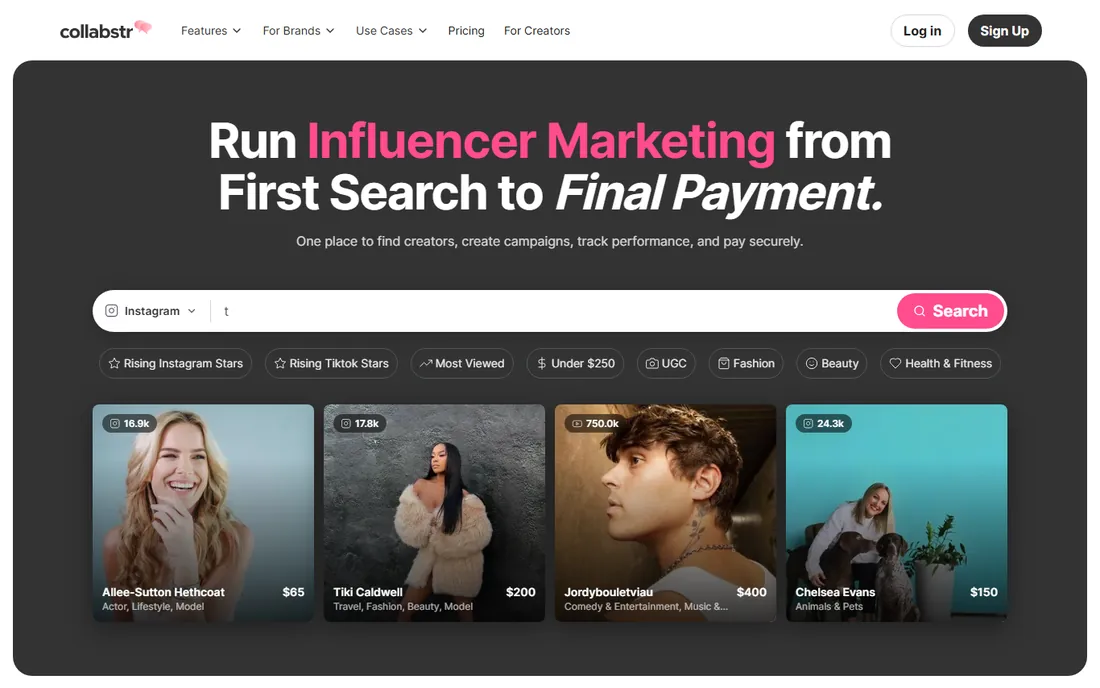
Collabstr is the closest thing UGC has to a public marketplace, and that scale is its pitch. Brands search vetted creators by niche, audience, and budget, or post briefs and let creators come to them. For you as a creator, the listing, the negotiation, the delivery, and the payment all happen in one place, which beats juggling DMs, invoices, and follow-up emails across five apps.
The feature that matters most is escrow. The brand's money is committed before you film, and it releases when they approve the work. That single mechanism eliminates the most common creator complaint in the industry: late or missing payment. The trade-off for all this openness is competition. Popular categories like beauty and fitness have thousands of creators bidding, so a strong portfolio and fast response times separate earners from browsers.
What we like- 1.3 million creators and huge brand volume mean constant gig flow
- Funds stay in escrow until the brand approves your content
- Payouts run to 150 countries with tax docs handled
Watch out for- Open marketplace means heavy competition on popular briefs
- Your reviews carry enormous weight, so one bad rating stings
- Brand-side fees can squeeze the budgets on offer
Starting priceFree for creators
Free planYes
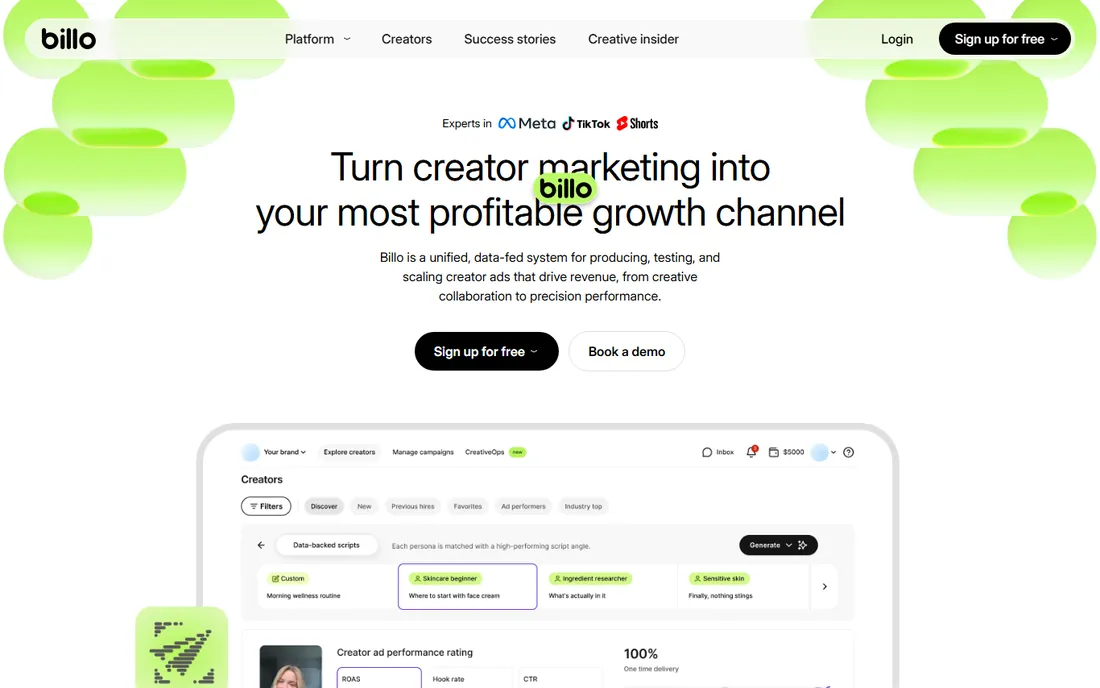
If your strength is filming convincing product videos rather than growing a personal following, Billo deserves your attention. The platform has built its name on UGC made for paid social: short, hook-driven videos that brands run as ads. Its homepage cites more than 200,000 videos created for 22,000 brands, which translates into steady demand for creators who can deliver clean footage on deadline.
The workflow favors reliability over fame. Brands pick creators from performance rankings, send data-informed briefs, and reorder from creators whose videos convert. That is good news if you are consistent and professional, and less good if you were hoping a viral personality alone would carry you. Billo also runs partnership ads from creator handles, so read each brief carefully to know whether you are filming content only or lending your face to paid distribution.
What we like- Deep bench of direct-to-consumer brands ordering video constantly
- Creators are matched and ranked on performance data
- Briefs are structured so you know exactly what to film
Watch out for- Work skews toward ads rather than organic posting
- Rates are largely set by brand budgets
- Smaller creator pool means fewer niche categories
Starting priceFree for creators
Free planYes
Insense sits between a pure marketplace and a managed service, and that middle position shapes the creator experience. Brands either hire from the creator marketplace or run managed campaigns, and much of the demand centers on TikTok and Meta advertising. If you are comfortable filming ad-style content with hooks, CTAs, and multiple variations, this is familiar territory.
One honest note: the Insense homepage would not load when we checked it, so treat the details here as a starting point and verify current terms on their site before investing time. What is well documented across review sites is the model itself: creators join free, apply to briefs or get matched, and get paid per project. It suits creators who already understand paid-social creative and want brand budgets rather than small one-off gigs.
What we like- Strong demand from brands running paid social campaigns
- Briefs come from real advertisers with real budgets
- Supports both UGC and whitelisted influencer posts
Watch out for- We could not load the homepage during research, so confirm current terms yourself
- Competition is stiff in beauty and lifestyle
- Managed options favor experienced creators
Starting priceFree for creators
Free planYes
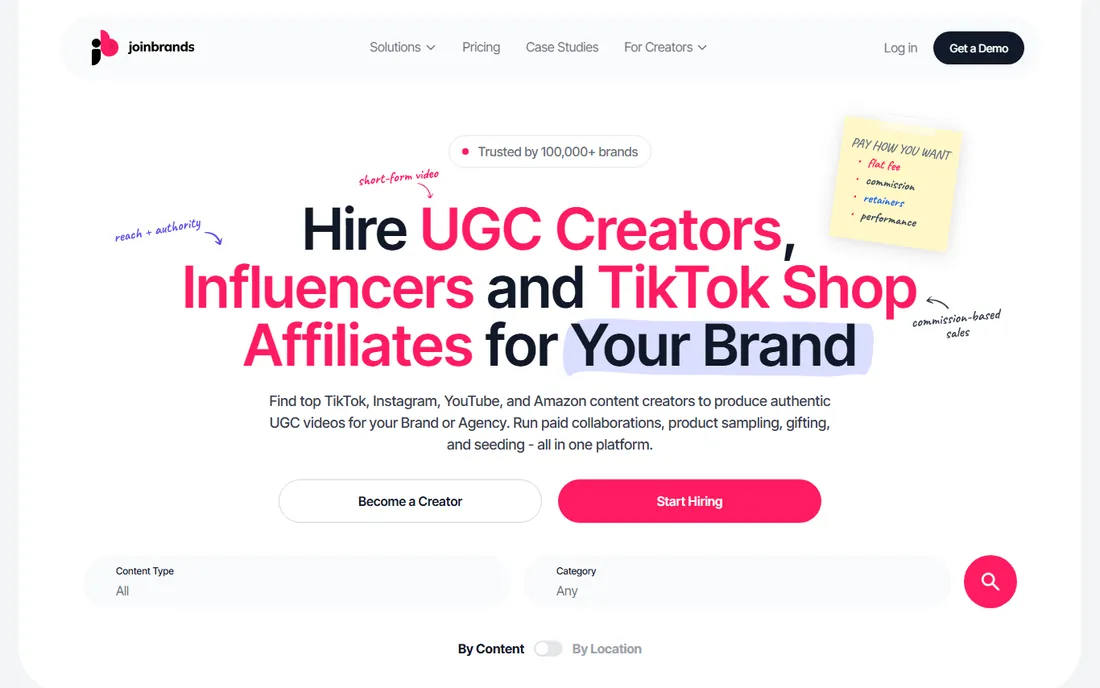
Volume is the JoinBrands pitch, and the numbers back it up: the platform claims more than 100,000 brands on board. For creators, that means a constant feed of briefs, especially in TikTok Shop and Amazon shoppable video, where sellers need a never-ending supply of product demonstrations. If you can film quickly and reliably, you can stack jobs here in a way that slower platforms do not allow.
The flip side of volume is price pressure. Plenty of briefs sit at the budget end, and the creators who earn well learn to filter ruthlessly and build repeat relationships with good brands. The platform handles contracts, invoices, and escrow, which removes the admin headache, and the certification program gives newcomers a way to signal quality before they have reviews. Treat it as a volume game and it works. Treat every brief as precious and you will burn out.
What we like- Enormous gig volume across TikTok, Amazon, Instagram, and YouTube
- Escrow protection with contracts and invoices handled
- Certified creator program helps new creators stand out
Watch out for- A lot of briefs are low-budget, so filtering matters
- Rating pressure is real when jobs complete in the hundreds
- Many gigs expect fast turnaround
#5
Creator.co
Best for: Micro-influencers wanting community plus gigs
Visit creator.co
Starting priceFree for creators
Free planYes
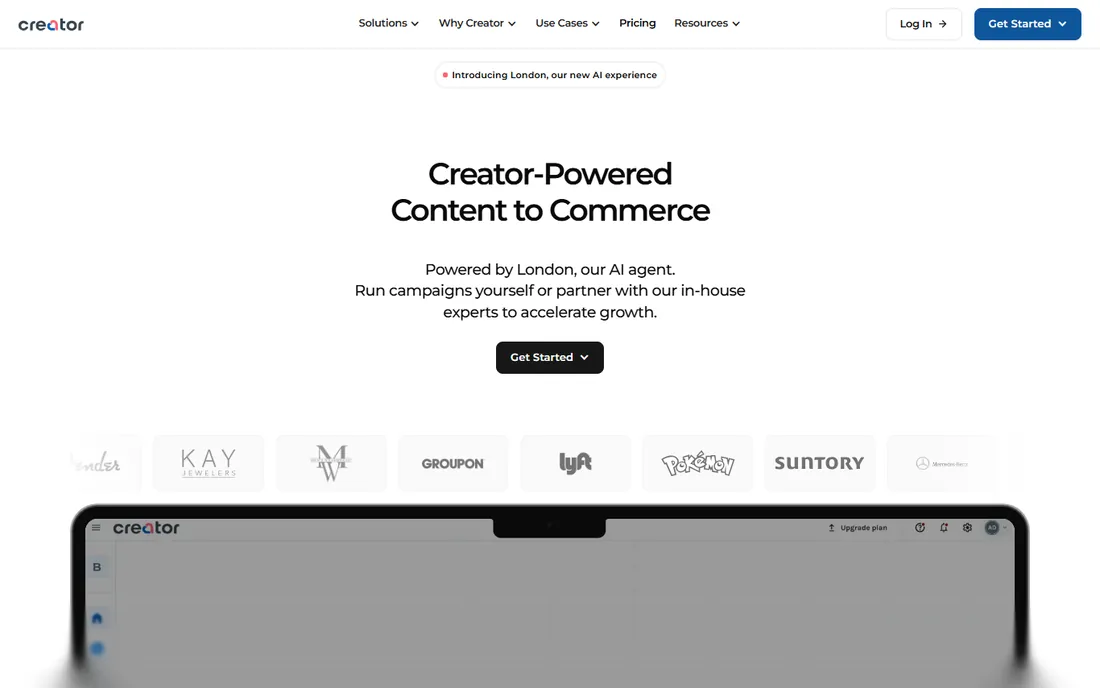
Creator.co blends two things most platforms keep separate: a creator community and a campaign marketplace. That combination matters if you are early in your UGC career. The community side gives newer creators a place to learn pricing, read briefs critically, and see what working creators actually earn, while the marketplace side provides the campaigns to apply for.
A second honest note: the Creator.co homepage would not load during our research, so confirm the current offering on their site. What review coverage consistently describes is a platform friendly to micro-influencers and smaller creators, with both pure UGC briefs and posting campaigns. If you have a modest following and want guidance alongside gigs, it is a reasonable starting point. If you want maximum deal flow today, the bigger marketplaces above will keep you busier.
What we like- Community features help smaller creators learn the business
- Campaign variety spans UGC and influencer posts
- Lower follower counts are genuinely welcome
Watch out for- We could not load the homepage during research, so verify terms directly
- Smaller deal flow than the biggest marketplaces
- Campaign quality varies
#6
Aspire
Best for: Bigger, long-term deals with large brands
Visit aspire.io
Starting priceFree for creators
Free planYes
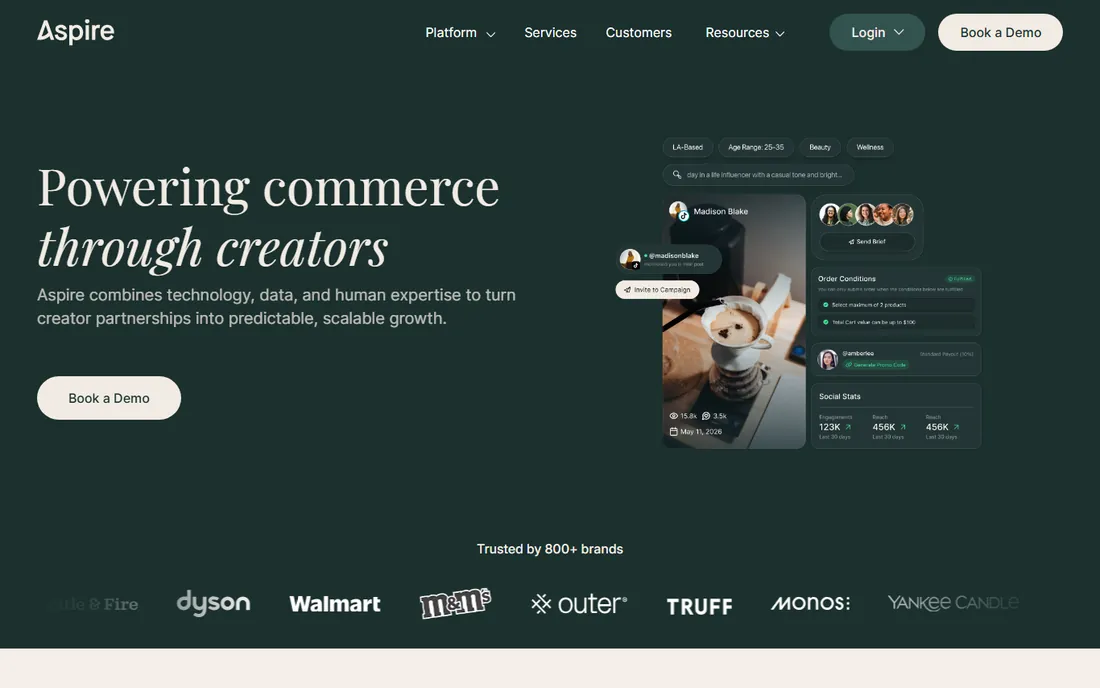
Aspire is where you go when per-video gigs start feeling small. It is an enterprise-grade influencer platform where brands run ambassador programs, affiliate partnerships, and long-term creator relationships, and its homepage cites more than $100 million in influencer payouts. For creators, that means fewer one-off $100 videos and more ongoing arrangements with commissions, product seeding, and content retainers.
The catch is access. Aspire's marketplace brings creators to brands, but brands choose, and they tend to choose creators with portfolios, consistent output, and real audiences. This is not the platform for your first UGC gig. It is the platform for your fiftieth, when you have the work samples to compete for programs that pay monthly instead of per deliverable. Creators who treat it as a step up rather than a starting line get the most from it.
What we like- 800-plus brands include names with serious budgets
- Ambassador and affiliate programs create recurring income
- $100 million-plus in creator payouts signals real money moving
Watch out for- Built for brands first, so creators compete for attention
- Landing the first deal takes longer
- Best suited to creators with proven content and an audience
#7
Grin
Best for: Affiliate income with zero platform cut
Visit grin.co
Starting priceFree for creators
Free planYes
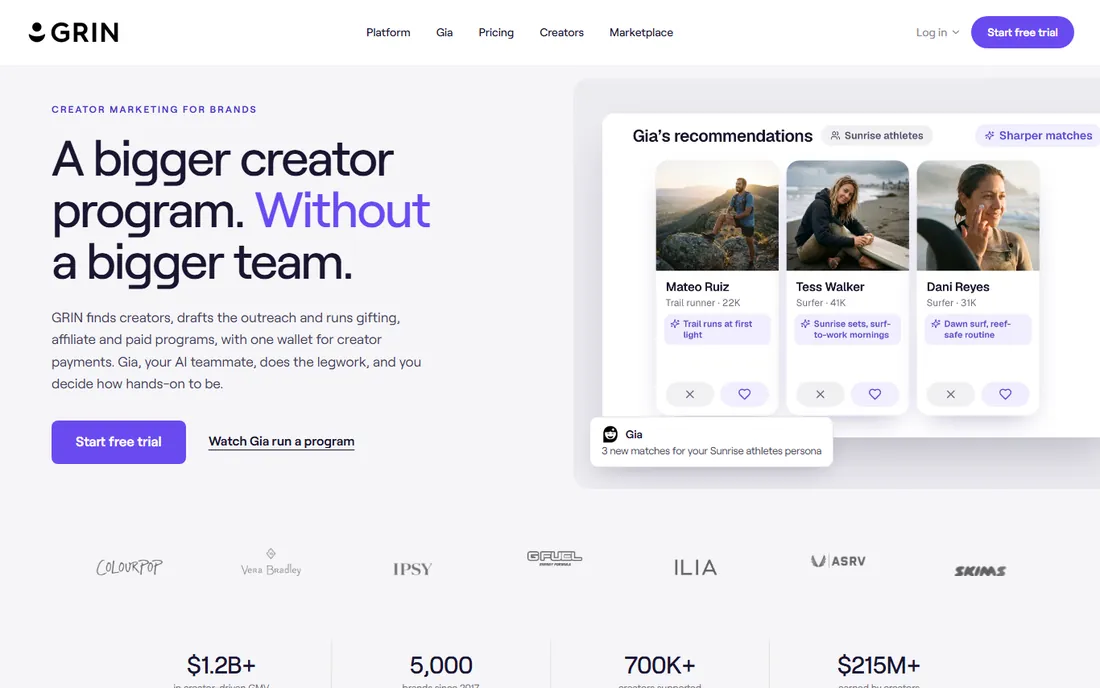
Grin rebuilt itself in 2026 around an AI agent and an open creator marketplace, and the creator-side terms are unusually generous. The homepage states there are no commissions on simple affiliate programs, with unlimited creators, links, and codes free. For creators who earn through affiliate links and codes, a zero-cut platform is rare enough to notice, and the company cites more than $215 million earned by creators across its network.
The realistic view: Grin spent a decade as brand-side software, so its creator marketplace is younger than its marketing suggests. Discovery runs through brand campaigns and AI matching, which rewards creators with strong vertical fit and clean track records. If affiliate income is part of your strategy, join and list yourself. If you need per-video UGC gigs this week, the pure marketplaces above will fill your calendar faster.
What we like- No commissions on simple affiliate programs, stated plainly on the homepage
- 700,000-plus creator network with $215 million-plus earned by creators
- Free creator app to manage partnerships
Watch out for- The marketplace model is newer than the legacy CRM business
- Brand-invite dynamics favor established creators
- The 2026 AI overhaul is still rolling out
#8
Cohley
Best for: Managed briefs from mid-market and enterprise brands
Visit cohley.com
Starting priceFree for creators
Free planYes
Cohley does not want everyone, and creators who get accepted benefit from that selectivity. Brands brief a vetted creator network for UGC, influencer activations, product seeding, and reviews, with an AI agent handling the operational work. Because brands here are mid-market and enterprise companies buying content at scale, the budgets per brief tend to run higher than open-marketplace gigs.
The trade is volume for quality. You will see fewer briefs than on Collabstr or JoinBrands, but each one comes from a serious buyer, and the platform's FAQ stresses that perpetual content rights are included in every agreement, which at least makes the rights conversation explicit. New creators without a portfolio will find the door harder to open. Established creators tired of competing with thousands of applicants on every brief will find the air refreshing.
What we like- Vetted network of 200,000-plus creators keeps competition thinner
- Briefs come from larger brands with larger budgets
- Content rights in perpetuity are handled in the contract, not left vague
Watch out for- Application-based, so not everyone gets in
- Built for mid-market and enterprise, not small-budget gigs
- Fewer total briefs than open marketplaces
Starting priceFree for creators
Free planYes
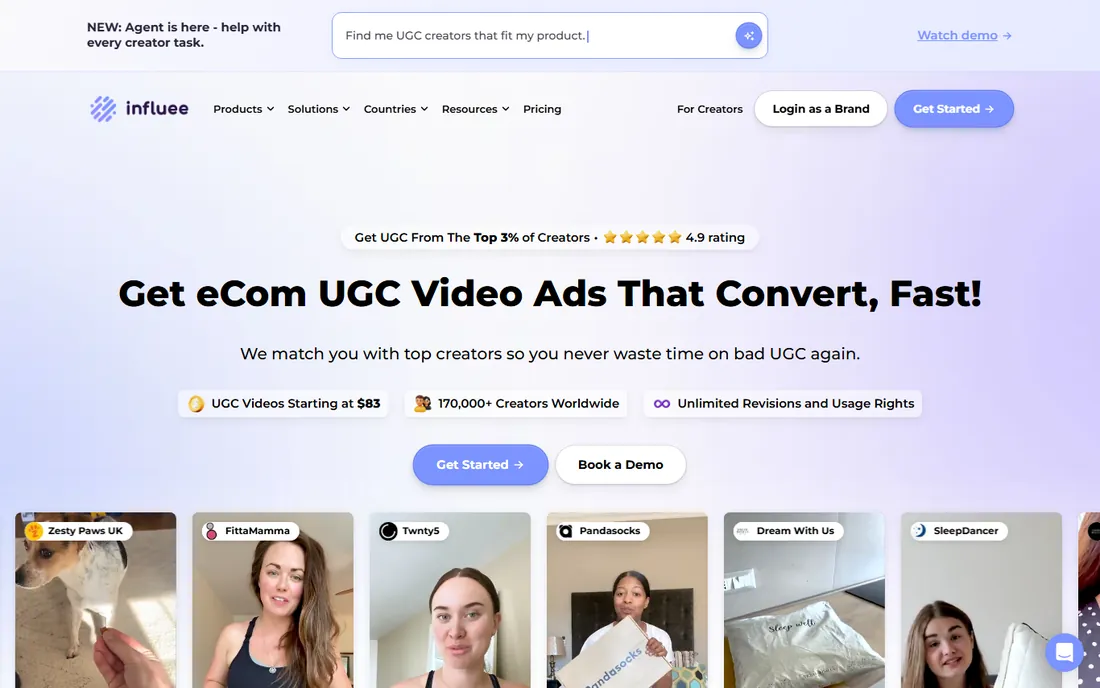
Influee keeps the model deliberately simple: brands order videos, creators film them, nobody pays a subscription. For creators, that simplicity is the appeal. There is no tier to climb and no complex campaign structure to learn. You pick up briefs, deliver, and get paid per video, which suits creators who treat UGC as straightforward production work.
Set expectations accordingly. Influee is smaller than the marketplace giants, so the brief feed is thinner and rates swing with the market. It works best as one of several platforms in your rotation rather than your only source of gigs. Pair it with a high-volume marketplace and use Influee for the quick-turn jobs that fit between larger briefs.
What we like- Simple pay-per-video model with no subscriptions on either side
- Fast job turnaround suits creators who film quickly
- International brand demand beyond the US market
Watch out for- Smaller network means thinner brief flow
- Per-video rates vary widely by market
- Less brand-side tooling than the category leaders
The headline rate on a brief is only part of your earnings. First, check who holds the money: escrow systems like those on Collabstr and JoinBrands commit brand funds before you film, while looser arrangements leave you chasing invoices. Second, check payout timing and minimums, since some platforms batch payouts weekly and others hold funds until you cross a threshold. Third, confirm the fee direction. On every platform here, creators join free and brands pay the platform, but marketplace service fees can still shrink the budget a brand is willing to offer you.
Then read the rights clause, because it is where the real money hides. A brief that buys perpetual, multi-channel usage rights for a single $150 fee is a very different deal from one that licenses one ad platform for 90 days. Price your work accordingly, and negotiate usage extensions as separate line items when a brand wants more. Finally, keep records. Platforms handle tax documents in many countries now, but you still need your own ledger of what you earned, from whom, and under what rights.
How we chose
We researched this list from the creator's side of the table: how creators join, how briefs flow, how payment is protected, and what the platforms themselves publish about creator numbers and payouts. We used vendor homepages, platform documentation, and public reviews from working creators. Every platform listed accepts creators today and charges them nothing to join. Two homepages would not load during research, Insense and Creator.co, and we say so in their write-ups rather than guessing at their current terms.
Red flags to watch before you accept a gig
Unpaid test videos are the oldest trick in the book. A legitimate brand evaluates your portfolio, not a free custom sample. Walk away from any brief that asks for free work as an audition. Watch exclusivity clauses too: agreeing not to work with competing brands for six months should come with exclusivity pay, not a standard video rate.
Off-platform payment requests are another warning sign. They strip away escrow protection and usually violate the platform's terms, which means no recourse when the money never arrives. Vague usage rights deserve the same skepticism. If a brief does not spell out where the content runs, for how long, and in what media, assume the broadest interpretation and price it that way. And be wary of revision demands beyond what the brief states. One or two reasonable revision rounds are normal. Endless re-shoots without extra pay are not, and the platforms with the clearest brief structures tend to have the fewest disputes.
Frequently asked questions
Do I need a big following to do UGC?
No. Most UGC briefs are content-only, meaning the brand runs your video as an ad and never asks you to post it. Brands hire for filming skill, on-camera presence, and reliability, not follower counts. A phone, good lighting, and a clean portfolio matter far more than your audience size.
How much can creators earn per video?
Beginner UGC videos typically go for $50 to $150, experienced creators charge $150 to $500, and complex concepts with usage rights can reach four figures. Rates depend on the niche, the deliverables, the usage rights, and how fast you deliver. Creators who negotiate rights separately from production consistently earn more.
Do UGC platforms take a cut of my pay?
On the platforms in this guide, creators join free and the platform fees sit on the brand side. That does not mean fees never affect you: a brand paying a 10 to 20 percent marketplace fee has less room in its budget for your rate. Factor that in when you price, and prefer platforms with escrow so the agreed amount actually arrives.
Who owns the content I create?
It depends on the brief. Many platforms default to the brand owning full rights, sometimes in perpetuity. That can be fine if the price reflects it. Read every brief's rights clause before accepting, and charge more for broader usage, longer terms, and paid-media rights than for organic-only use.
Can I work on multiple UGC platforms at once?
Yes, and most working creators do. Nothing here requires exclusivity. A common setup is one high-volume marketplace for steady gigs, one affiliate-friendly platform for recurring income, and one selective platform for premium briefs. Just track your commitments so deadlines never collide.
Sources we checked (9)
- https://collabstr.com/
- https://billo.app/
- https://www.insense.com
- https://joinbrands.com/
- https://creator.co
- https://aspire.io/
- https://grin.co
- https://cohley.com/
- https://influee.co
Is your product missing or out of date?
We review this list regularly. Vendors can request a listing, send updated pricing or ask about featured placement.

Shihab Mia · Founder, Rankite
Shihab has spent more than a decade helping SaaS and e-commerce brands grow through search. He writes Rankite's software buying guides from pricing pages, documentation and public user reviews. More about Shihab.