How we make this list: we compare pricing pages, product documentation and public user reviews. Rankite is independent; if a vendor ever pays for a featured spot, that listing is clearly labeled Partner.
Key takeaways
- Collabstr is the easiest starting point for a first campaign: free to search 1.3M+ creators, with escrow payments so you only pay when content is approved.
- Billo and Trend are built for performance marketers who want UGC video ads with data behind the creative, not just a creator directory.
- Insense and #paid suit brands ready to spend more, with managed services, partnership ads, and campaign strategy included.
- Cohley is the compliance-first choice for mid-market brands that need brand safety, usage rights in perpetuity, and FTC disclosure handled properly.
- JoinBrands and SARAL work well for small teams: JoinBrands for affordable TikTok and UGC content with escrow protection, SARAL for seeding and affiliate relationships.
Quick comparison
| Tool | Best for | Starting price | Free plan |
|---|
 Collabstr Collabstr | Running your first creator campaign | See website | Yes (free to search) |
 Billo Billo | UGC video ads backed by performance data | See website | No |
 Insense Insense | Brands ready to scale UGC into paid social | See website | No |
 Trend Trend | Brands that care about creator quality over quantity | See website | No |
 #paid #paid | Creator partnerships with strategic support | See website | No |
 Cohley Cohley | Mid-market brands that need compliance handled | See website | No |
 JoinBrands JoinBrands | Affordable UGC with payment protection | See website | Yes (free to join; pay per campaign) |
 SARAL SARAL | Seeding products and building affiliate relationships | See website | No |
Is your product missing or out of date?
We review this list regularly. Vendors can request a listing, send updated pricing or ask about featured placement.
You sell a $40 serum on Shopify. Your static ads stopped working months ago, and every marketing blog keeps telling you that creator videos are the answer. So you DM a few influencers, one ghosts you, one sends a shaky vertical video with your competitor's product visible in the background, and one quotes $2,000 for a single post. This is the exact mess UGC platforms exist to fix. They give you vetted creators, structured briefs, escrow payments, and usage rights, so your first creator campaign runs like a process instead of a gamble. The eight below are the most beginner-friendly ways in.
Starting priceSee website
Free planYes (free to search)
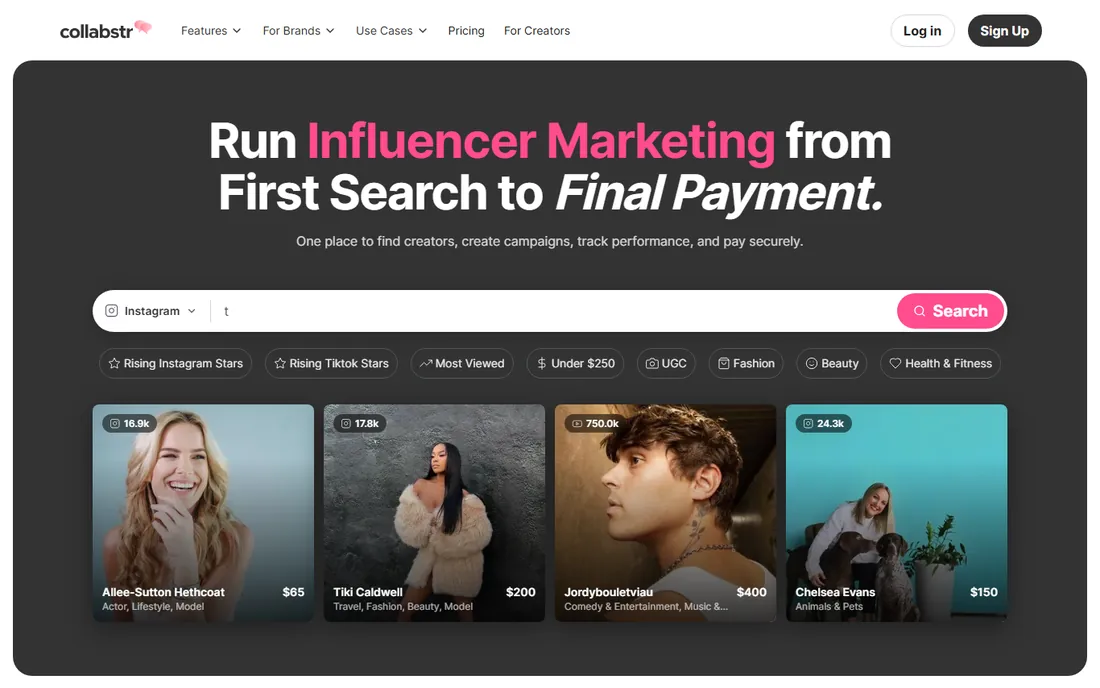
Collabstr is the closest thing this category has to a self-serve starting line. Searching the marketplace costs nothing: you filter 1.3M-plus creators by platform, niche, audience, and budget, see verified engagement rates and demographics, and read reviews from other brands before spending a dollar. When you hire someone, your payment sits in escrow until you approve the delivered content, which removes the biggest fear first-time buyers have.
The platform also handles the paperwork beginners forget about: contracts, usage rights negotiation, payouts, and tax forms across 150 countries. The honest tradeoff is that a marketplace this large includes every quality level. You need to read reviews, check portfolios, and write a clear brief, because Collabstr connects you with creators rather than managing them for you. For a first campaign under a few hundred dollars, that is the right level of hand-holding.
What we like- Free to search 1.3M+ vetted creators
- Escrow holds funds until you approve content
- Transparent creator rates before you commit
Watch out for- Quality varies because the marketplace is huge
- You manage the brief and relationship yourself
Starting priceSee website
Free planNo
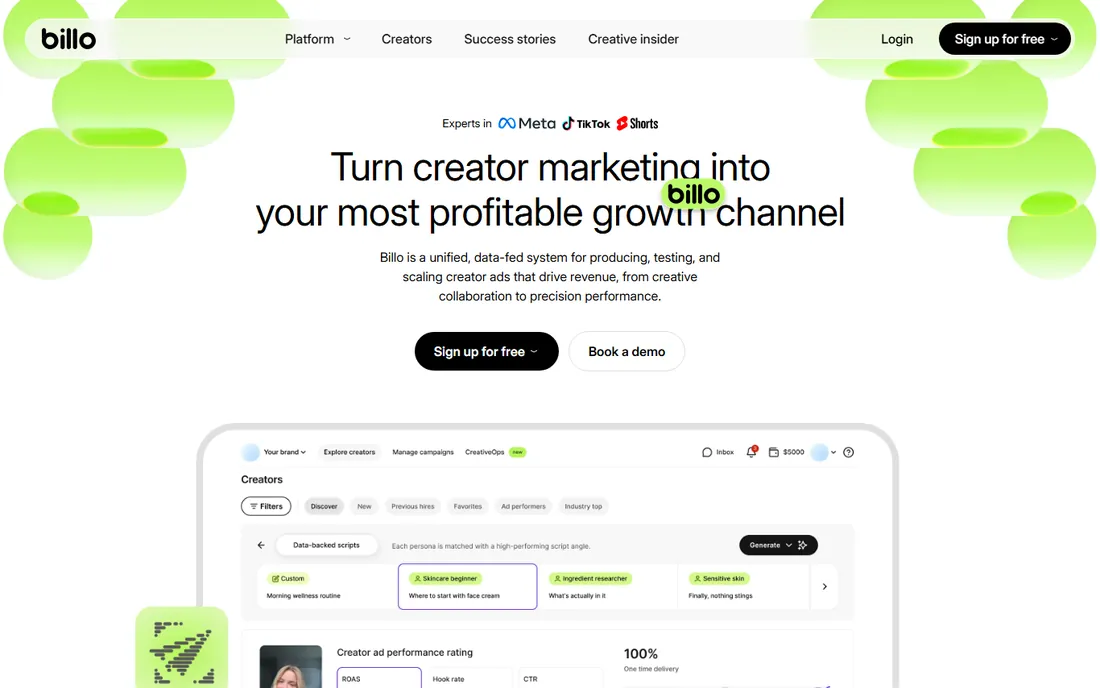
Billo positions itself less as a marketplace and more as a creator marketing stack. The differentiator is the data layer: briefs and creator matching are informed by analysis of over a million Meta ads, so the guidance on hooks, structure, and creative angles comes from what actually converted rather than guesswork. You get script generation, ad-ready edited videos, and creative analytics that show which variations perform.
For a beginner running paid social, that structure is valuable. Instead of wondering what to ask a creator for, you start from a proven brief template. The platform supports partnership ads run from creator handles, which consistently outperform brand-handle ads for many advertisers. The limitation is focus: Billo is built for advertisers who will put spend behind the content. If you want organic influencer posts or long-term ambassador relationships, other platforms on this list fit better.
What we like- Data-led briefs built on 1.41M analyzed ads
- Vetted creator network across niches
- Partnership ads from creator handles
Watch out for- Geared toward paid social advertisers, less useful for organic-only strategies
- Pricing is per project, not a flat subscription
Starting priceSee website
Free planNo
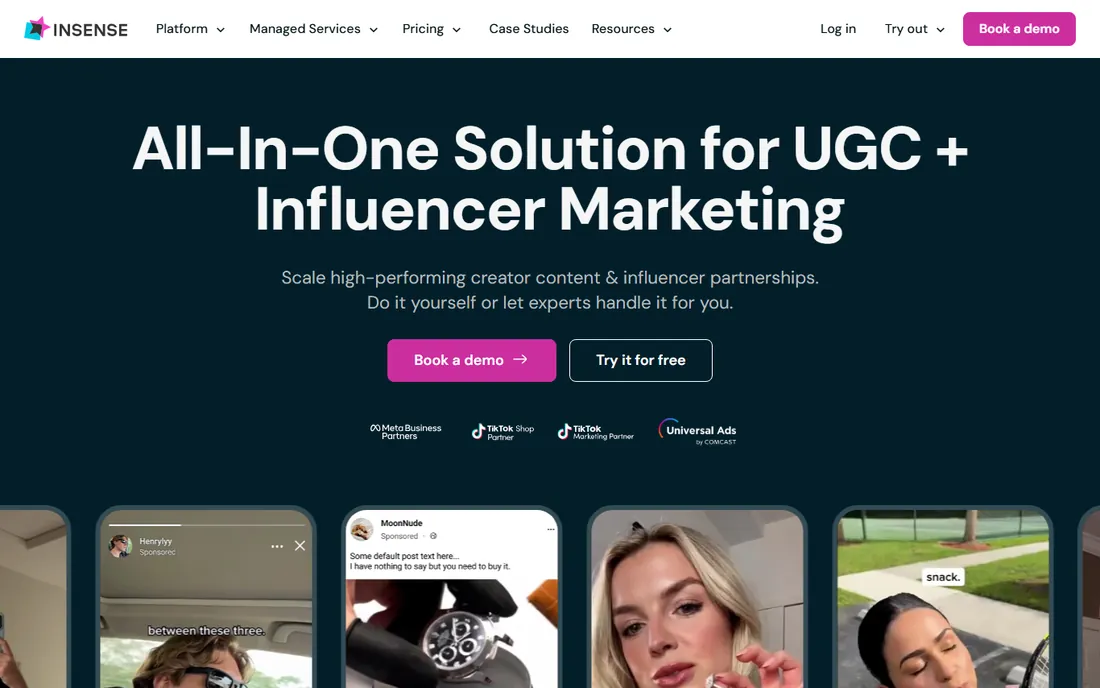
Insense covers the full journey from a brand's first UGC test to a scaled creator program. The self-service marketplace lets you brief creators and receive content within about two weeks, with contracts, payments, and usage rights handled automatically. When you are ready to spend more, the managed service team takes over strategy, sourcing, and execution, and the platform supports TikTok Spark Ads and Meta partnership ads for amplifying what works.
That range is the selling point and the caveat. Beginners can absolutely start self-serve, but Insense's pricing and feature set clearly target DTC brands and agencies that will run creator content as an ongoing channel rather than a one-off experiment. If you know UGC will be a core acquisition channel within six months, starting here saves you a platform migration later. If you just want ten videos to test, start cheaper.
What we like- Self-service marketplace plus fully managed services
- Covers UGC, TikTok Shop, and Meta partnership ads
- Usage rights handled in the workflow
Watch out for- Better suited to brands with real budgets
- Managed services add cost over self-serve
#4
Trend
Best for: Brands that care about creator quality over quantity
Visit trend.io
Starting priceSee website
Free planNo
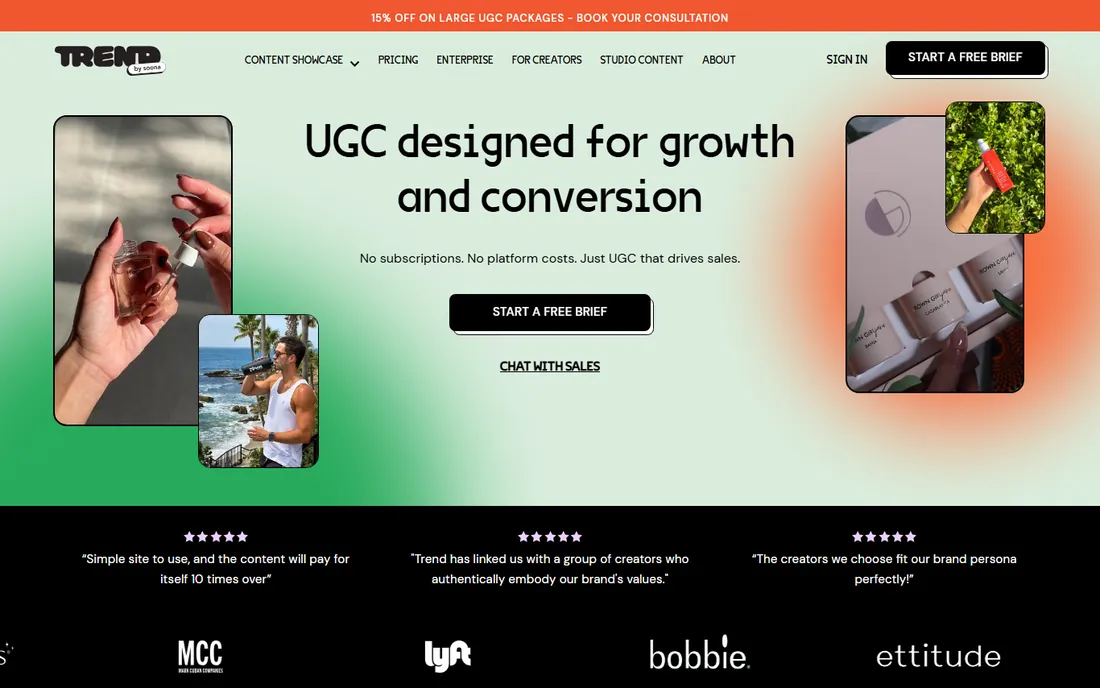
Trend takes the curated-network approach: instead of a million creators, it maintains a vetted community of a few thousand, and every creator is reviewed before being listed. For a beginner, that curation does real work. You spend less time filtering out low-quality applicants and more time choosing between creators who are all plausibly good, which shortens the learning curve considerably.
The workflow is simple: post your project, get matched with creators who fit your brand, receive content. The platform reports 18,500-plus videos and 21,000-plus photos created through it, with particular strength in lifestyle, food, beverage, and DTC categories. The tradeoff of curation is coverage. Unusual niches and very specific demographics are harder to fill here than on Collabstr or JoinBrands. If your product fits mainstream consumer categories, the quality floor is higher here than anywhere else on this list.
What we like- Every creator is vetted before joining
- Strong fit for lifestyle and DTC brands
- Simple post-a-project workflow
Watch out for- Smaller network (3,700+ creators) means fewer niche options
- Less self-serve tooling than bigger marketplaces
Starting priceSee website
Free planNo
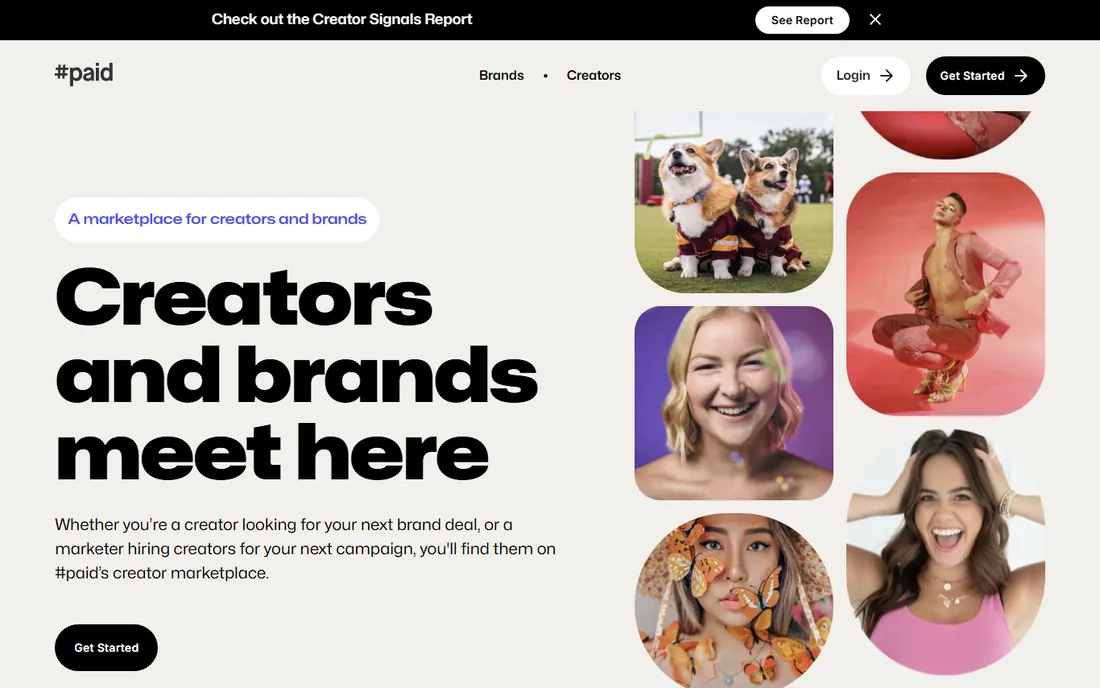
paid sits at the premium end of this list. It combines a creator marketplace with a dedicated strategy team that helps brands plan campaigns, backed by first-party data and industry benchmarks. The matching philosophy emphasizes brand-creator fit over raw reach, and the platform includes live reporting and post-campaign insights so each campaign informs the next. Its client roster leans toward large consumer brands.
For a beginner, #paid is worth knowing about rather than starting with. The strategic support is genuinely useful once you are spending enough on creators to need it, but a brand running its first $1,000 test will not get value from this tier of service. Consider it the platform you graduate to when creator content becomes a serious budget line and you need measurement rigor, not the one you learn on.
What we like- Matching based on fit, not just follower counts
- In-house creative strategy team
- Measurement and reporting built in
Watch out for- Enterprise-leaning client base
- Likely overkill and over-budget for a first small test
#6
Cohley
Best for: Mid-market brands that need compliance handled
Visit cohley.com
Starting priceSee website
Free planNo
Cohley is the platform you pick when getting UGC wrong would be expensive. Every asset includes full perpetual usage rights, creators are trained on FTC disclosure requirements before they enter a brief, and AI scoring checks submissions against your brief before they reach your queue. For regulated categories or brands where an off-brand asset could cause real damage, that compliance layer is the product.
The platform runs UGC, influencer, product seeding, and review briefs through one workflow, with an AI agent handling the operational work of briefing and managing creators. The honest assessment for beginners: Cohley is built for mid-market and enterprise brands with ongoing content needs, and its pricing and sales process reflect that. If you are a small brand, start with Collabstr or JoinBrands and revisit Cohley when volume and compliance requirements grow.
What we like- 200,000+ vetted creators
- Brand safety and FTC compliance built into the workflow
- Full usage rights in perpetuity on every asset
Watch out for- Built for mid-market and enterprise, not solo founders
- Pricing reflects that positioning
Starting priceSee website
Free planYes (free to join; pay per campaign)
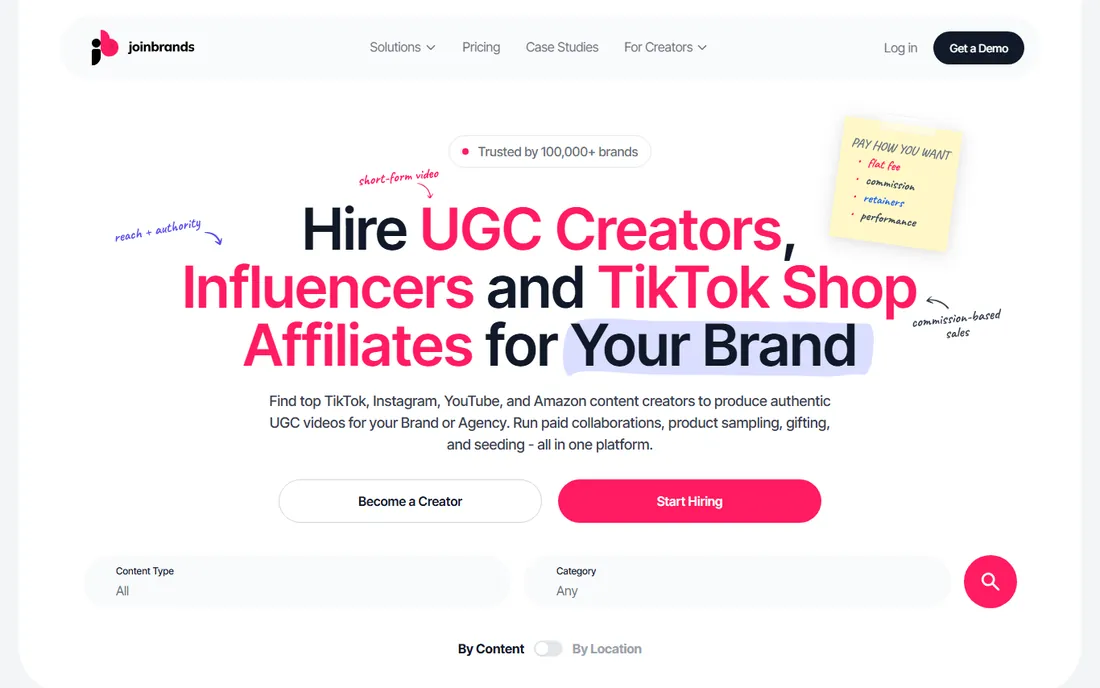
JoinBrands is the budget-friendly workhorse of this list. Joining is free and you pay per campaign, with your money held in escrow until you approve the delivered content. Creators can produce content-only assets for your ads or post to their own accounts, and the platform supports TikTok Shop affiliate campaigns for brands selling on TikTok. Content arrives within days of the creator receiving your product, with enforced deadlines.
The reviews from small brands consistently mention reasonable pricing compared to larger platforms, which is exactly the beginner value proposition. The tradeoff is polish: the interface and creator vetting are functional rather than exceptional, so you should still review portfolios and write tight briefs. For a first UGC test on a tight budget, the escrow protection alone makes it one of the safest places to start.
What we like- Escrow protects your payment until content is approved
- Content-only or posting options
- TikTok Shop affiliate support
Watch out for- Creator quality varies
- Interface is functional rather than polished
#8
SARAL
Best for: Seeding products and building affiliate relationships
Visit getsaral.com
Starting priceSee website
Free planNo
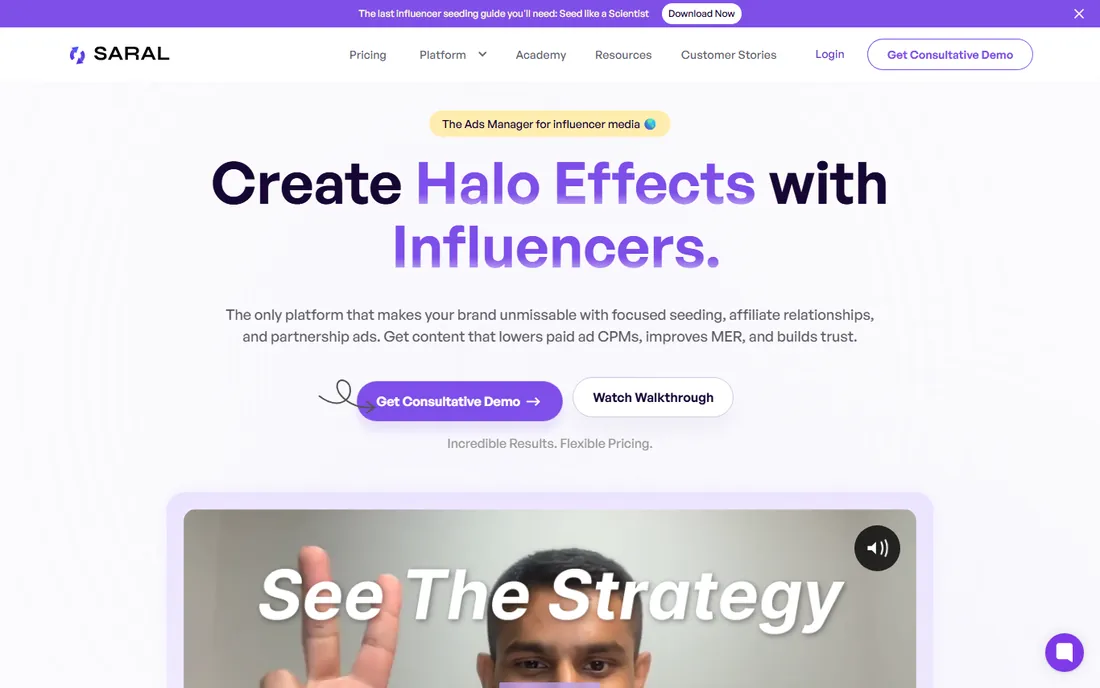
SARAL solves a different problem from the marketplaces above. Instead of hiring creators per video, it helps you run seeding programs: find influencers in bulk, automate personalized outreach, ship products, track who posts, and pay commissions through built-in affiliate tracking. The creator relationship management system keeps conversation history and follow-ups in one place, which matters because seeding is a volume game where organization beats inspiration.
This makes SARAL a strong pick for beginners with physical products and small budgets, since seeding trades product cost for content instead of cash. The limitation is that it is primarily an outreach and management tool rather than a creator marketplace. You do more of the finding and relationship work yourself. Pair it with a marketplace like Collabstr for paid content and use SARAL for the seeding and affiliate layer, and you cover both acquisition paths.
What we like- Purpose-built for influencer seeding at scale
- Built-in affiliate tracking with no extra app needed
- Creator relationship management included
Watch out for- Less of a content marketplace, more of an outreach tool
- You supply the creator list or build it yourself
Start with the outcome, not the platform. If you need ten ad creatives to test on Meta next month, you want a marketplace with escrow and fast turnaround: Collabstr, JoinBrands, or Billo. If you want ongoing influencer relationships and affiliate revenue, you want a seeding and relationship tool: SARAL. If you need guaranteed quality and have budget, look at Trend or Insense. Most beginners should start with one marketplace campaign before buying any subscription.
Read the usage rights terms before you pay anyone. The whole point of UGC for most beginners is running the content as ads, which requires explicit usage rights. Collabstr, Cohley, and Insense build rights into their workflows; on any platform, confirm in writing that your payment includes the right to use the content in paid advertising, and for how long. Perpetual rights (Cohley includes them standard) are worth more than they sound.
Set your first budget as a test, not a commitment. A reasonable first test is 5 to 10 videos from different creators, which typically costs a few hundred to a couple thousand dollars depending on the platform and creator tier. Run them as ad variations, keep the winners, and only then decide whether to scale, hire a managed service, or bring the process in-house. The platforms make their money when you scale; your job is to make sure the unit economics work before you do.
What good UGC actually costs
Beginners consistently underestimate UGC costs in both directions. On marketplaces like Collabstr and JoinBrands, a single UGC video from a smaller creator often runs $50 to $200, while established creators with strong portfolios charge several hundred. These are market rates set by creators, not platform prices, which is why every platform on this list says "see website" for pricing: the platform takes a fee or subscription, but the creator sets the content price.
Managed services and premium platforms cost more because they add labor: strategy, sourcing, quality control, and reporting. That labor is worth it once you are spending five figures a month on creator content and your own time becomes the bottleneck. It is not worth it for your first test. Start self-serve, learn what good briefs and good creators look like, and buy management only when the volume justifies it.
One more cost beginners miss: product and shipping. Seeding programs through SARAL or product sampling on JoinBrands require sending physical products to every creator, which adds up in product cost and logistics time. Factor it into the test budget alongside creator fees.
How we chose
We did not run campaigns on these platforms. Our method was document-based: we read each vendor's homepage, pricing, and feature documentation, checked what it costs to start (free search, free join, or paid from day one), and cross-referenced public reviews on G2, Capterra, and Reddit for patterns in beginner complaints. We favored platforms with escrow or payment protection, clear usage rights terms, and low minimums, because those are the features that protect a first-time buyer. Prices are not listed because nearly all of these platforms price per creator or per campaign rather than publishing flat rates; where a vendor publishes plan pricing, we would have listed it.
Frequently asked questions
What is a UGC platform?
A UGC platform connects brands with creators who make user-generated content, usually short videos and photos for ads and social media. The platform typically handles creator discovery, briefs, contracts, payments, and usage rights, so you do not have to manage creators over DMs and spreadsheets.
How much does UGC cost for a beginner?
A single UGC video from a smaller creator typically costs $50 to $200 on marketplaces like Collabstr or JoinBrands, with established creators charging several hundred. A reasonable first test of 5 to 10 videos usually runs a few hundred to a couple thousand dollars, plus product and shipping costs for seeding.
Do I own the content creators make for me?
Only if the agreement says so. Always confirm usage rights before paying, especially the right to use content in paid advertising and the duration of those rights. Platforms like Cohley include perpetual rights standard; on marketplaces, negotiate rights as part of the brief.
What is the difference between UGC and influencer marketing?
UGC is content you pay for and usually run as ads yourself; the creator's follower count does not matter much. Influencer marketing pays for access to the creator's audience through posts on their accounts. Many platforms on this list handle both, but beginners usually get better returns starting with UGC for ads.
Can I use UGC platforms if I have a tiny budget?
Yes. Collabstr lets you search creators for free and hire per video, JoinBrands is free to join with pay-per-campaign pricing, and SARAL-style seeding trades product for content instead of cash. Start with a small test of 5 to 10 videos before committing to any subscription.
How long does it take to get UGC content?
Typically one to three weeks from briefing to delivery, depending on product shipping time. JoinBrands enforces deadlines of about 5 days for images and 10 days for videos after the creator receives your product; Insense quotes around 14 days for UGC assets. Plan your campaign calendar around shipping, not just creation.
Sources we checked (8)
- https://collabstr.com/
- https://billo.app/
- https://insense.pro
- https://trend.io/
- https://hashtagpaid.com/
- https://cohley.com/
- https://joinbrands.com/
- https://getsaral.com/
Is your product missing or out of date?
We review this list regularly. Vendors can request a listing, send updated pricing or ask about featured placement.

Shihab Mia · Founder, Rankite
Shihab has spent more than a decade helping SaaS and e-commerce brands grow through search. He writes Rankite's software buying guides from pricing pages, documentation and public user reviews. More about Shihab.