How we make this list: we compare pricing pages, product documentation and public user reviews. Rankite is independent; if a vendor ever pays for a featured spot, that listing is clearly labeled Partner.
Key takeaways
- Enterprise transaction monitoring is quote-based across the board: third-party analyses put entry points from roughly $15,000/year (Flagright, ComplyAdvantage starter tiers) to $100,000/year (NICE Actimize).
- Fintechs and neobanks should shortlist Flagright, Unit21, ComplyAdvantage and AMLYZE, which are built for API-first teams with no-code rule builders.
- Tier-1 banks and payment processors lean on NICE Actimize and Feedzai for high-volume, AI-driven monitoring with regulatory reporting depth.
- False positive reduction is the metric that matters: vendors report 70 to 93% reductions, which decides how many analysts you need to hire.
Quick comparison
| Tool | Best for | Starting price | Free plan |
|---|
 NICE Actimize NICE Actimize | Tier-1 banks and large financial institutions | See website (custom quote) | No |
 Feedzai Feedzai | Payment processors and retail banks fighting fraud and AML together | See website (custom quote) | No |
 Unit21 Unit21 | Fintechs that want no-code control over detection and cases | See website (custom quote) | Free trial (14-day developer sandbox) |
 ComplyAdvantage ComplyAdvantage | Organizations that prioritize screening data quality and speed | See website (custom quote; Starter from $319/month reported) | Free trial (14 days) |
 Flagright Flagright | API-first fintechs that need to launch monitoring fast | See website (custom quote; from $999/month reported) | Free trial (14 days) |
 AMLYZE AMLYZE | EMIs, payment institutions and neobanks in Europe | See website (custom quote; from 500 EUR/month reported) | Free trial (14 days) |
 Hawk AI Hawk AI | Banks and payment companies that need explainable AI | See website (custom quote) | No |
 Napier AI Napier AI | Institutions drowning in false positives | See website (custom quote) | No |
 Sumsub Sumsub | Fintechs that want onboarding, KYC and monitoring from one vendor | See website (custom quote) | No |
Is your product missing or out of date?
We review this list regularly. Vendors can request a listing, send updated pricing or ask about featured placement.
The best transaction monitoring software
Transaction monitoring software watches payment flows for money laundering and fraud: screening transactions against sanctions lists, scoring risk in real time, and filing suspicious activity reports when rules trigger. It is a regulated purchase, which means every vendor here sells through demos and quotes, not self-serve signup. These nine platforms cover the 2026 market from startup-friendly APIs to bank-grade suites.
Starting priceSee website (custom quote)
Free planNo

NICE Actimize is the enterprise standard for financial crime compliance. Its transaction monitoring combines AI-driven detection with decades of typology research, and the case management and regulatory reporting modules handle the full lifecycle from alert to SAR filing. For tier-1 banks processing massive volumes, it is the reference platform competitors get compared against.
The cost and complexity are proportional: custom enterprise contracts, implementation as a project, and no self-serve option. Smaller institutions and fintechs should look at the API-first tools below. If your regulator expects a specific level of reporting maturity, Actimize is often the safest answer.
What we like- The deepest enterprise AML stack: monitoring, case management and regulatory reporting in one suite
- Proven at the largest transaction volumes in banking
- Extensive typology and scenario libraries
Watch out for- Enterprise-only pricing (third-party analyses estimate around $100,000/year entry)
- Long implementation measured in months
- Overkill for fintechs under significant scale
#2
Feedzai
Best for: Payment processors and retail banks fighting fraud and AML together
Visit feedzai.com
Starting priceSee website (custom quote)
Free planNo
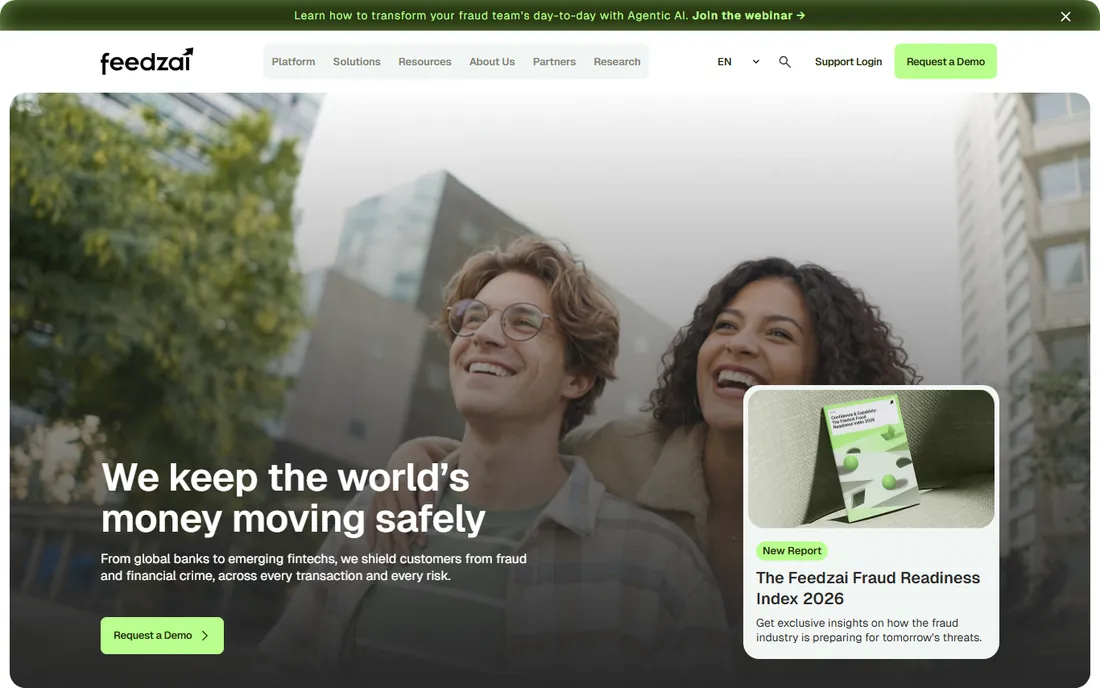
Feedzai's pitch is unified risk: one AI engine that scores transactions for both fraud and money laundering, rather than two separate systems that never share signals. Payment processors and retail banks with high volumes get real-time scoring with machine learning models trained on large transaction datasets.
Like Actimize, it sells through enterprise contracts with custom pricing and proof-of-concept sandboxes rather than trials. The platform fits organizations where fraud and AML teams need to work from the same data. Smaller fintechs will find the API-first vendors below faster to deploy.
What we like- AI-powered RiskOps platform covering fraud and AML on one engine
- Built for very high transaction volumes
- Strong in payment fraud typologies
Watch out for- Custom enterprise pricing (third-party analyses estimate around $50,000/year entry)
- Sales-led evaluation
- Best suited to high-volume environments
#3
Unit21
Best for: Fintechs that want no-code control over detection and cases
Visit unit21.ai
Starting priceSee website (custom quote)
Free planFree trial (14-day developer sandbox)
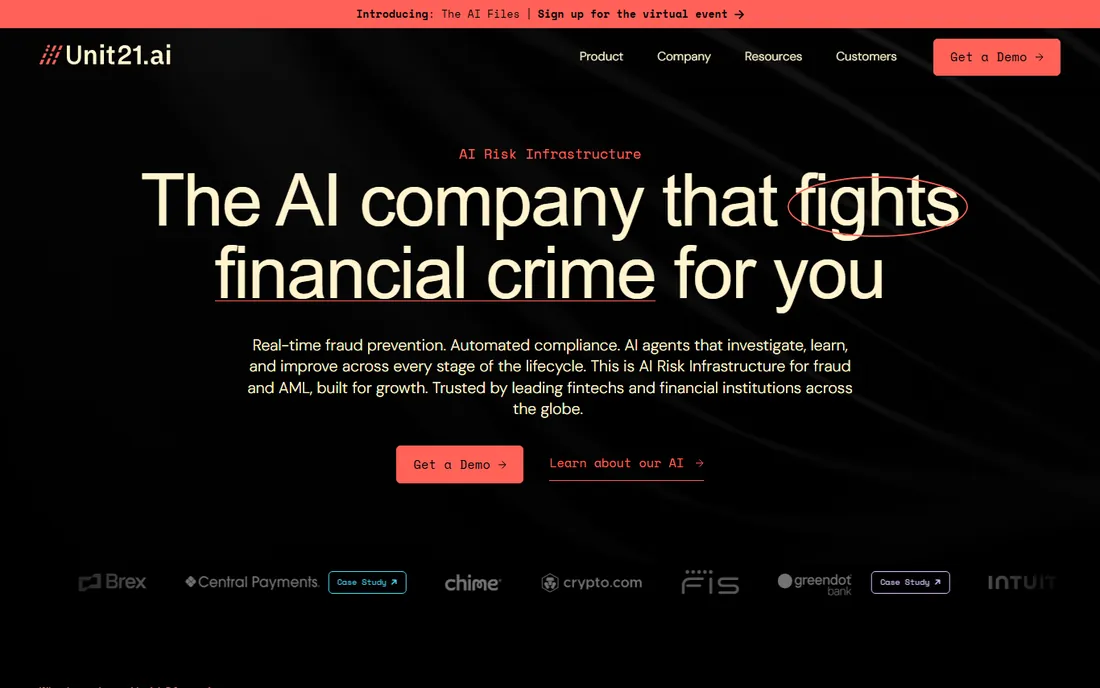
Unit21 gives compliance teams the controls directly: a no-code rule builder for transaction monitoring, risk scoring, and a workflow engine that automates SAR filing. The 14-day developer sandbox lets engineering teams test the API before any sales conversation, which is rare in this category and a genuine advantage for technical buyers.
Pricing is tiered by API volume with custom quotes; third-party analyses place entry points in the tens of thousands per year. It fits fintechs and mid-market financial institutions that want to own their detection logic without building the infrastructure themselves.
What we like- No-code rule engine lets compliance teams build detection without engineers
- Automated SAR and CTR filing workflows
- Customizable investigator workflows
Watch out for- Quote-based pricing aimed at funded fintechs and mid-market
- Advanced AI features add complexity
- Smaller data-network effects than the biggest vendors
Starting priceSee website (custom quote; Starter from $319/month reported)
Free planFree trial (14 days)
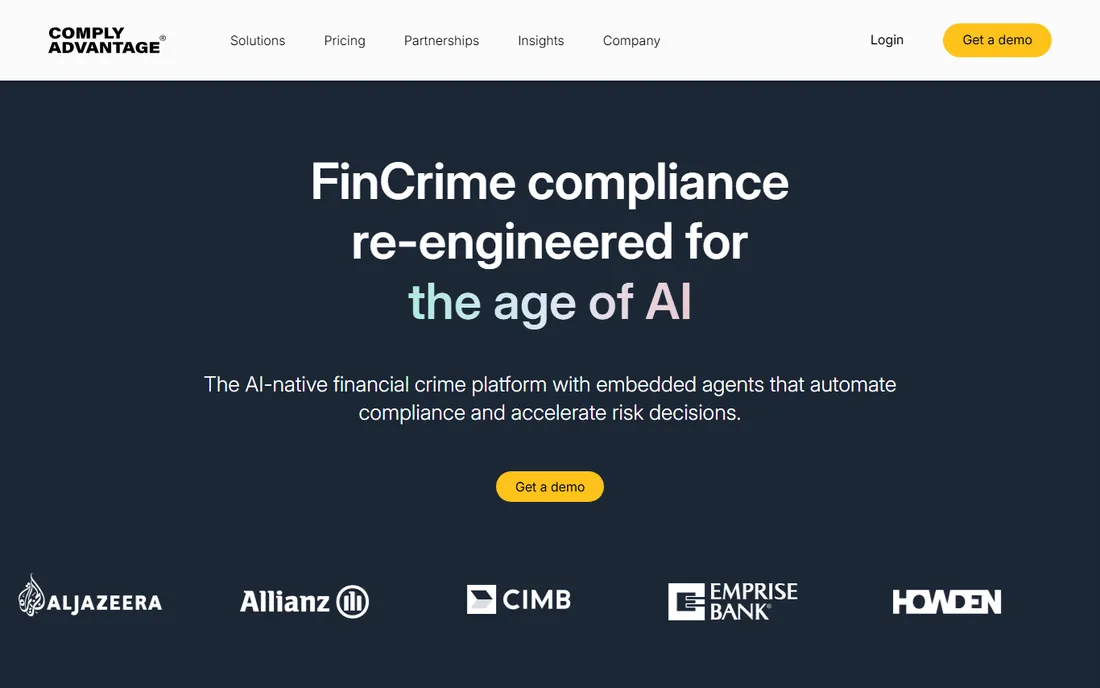
ComplyAdvantage built its name on data: a continuously updated database of sanctions, PEPs and adverse media that screens in real time. The transaction monitoring product layers payment screening and customer monitoring on top, with a no-code rule builder and agentic AI workflows added in 2026. Third-party reviews report a Starter plan from $319/month (billed annually) for smaller monitored-entity counts, with a 14-day trial.
The monitoring configurability trails purpose-built platforms like Unit21 or Flagright for high-velocity scenarios. But for organizations where screening data freshness is the top risk, for example businesses exposed to fast-changing sanctions designations, the data quality is the differentiator.
What we like- Proprietary global risk database with real-time adverse media in 90+ languages
- Demonstrated false positive reductions up to 82%
- Transparent starter tier for smaller teams
Watch out for- Transaction monitoring is less configurable than dedicated monitoring platforms
- Enterprise tier pricing lacks transparency
- Advanced features need onboarding time
#5
Flagright
Best for: API-first fintechs that need to launch monitoring fast
Visit flagright.com
Starting priceSee website (custom quote; from $999/month reported)
Free planFree trial (14 days)
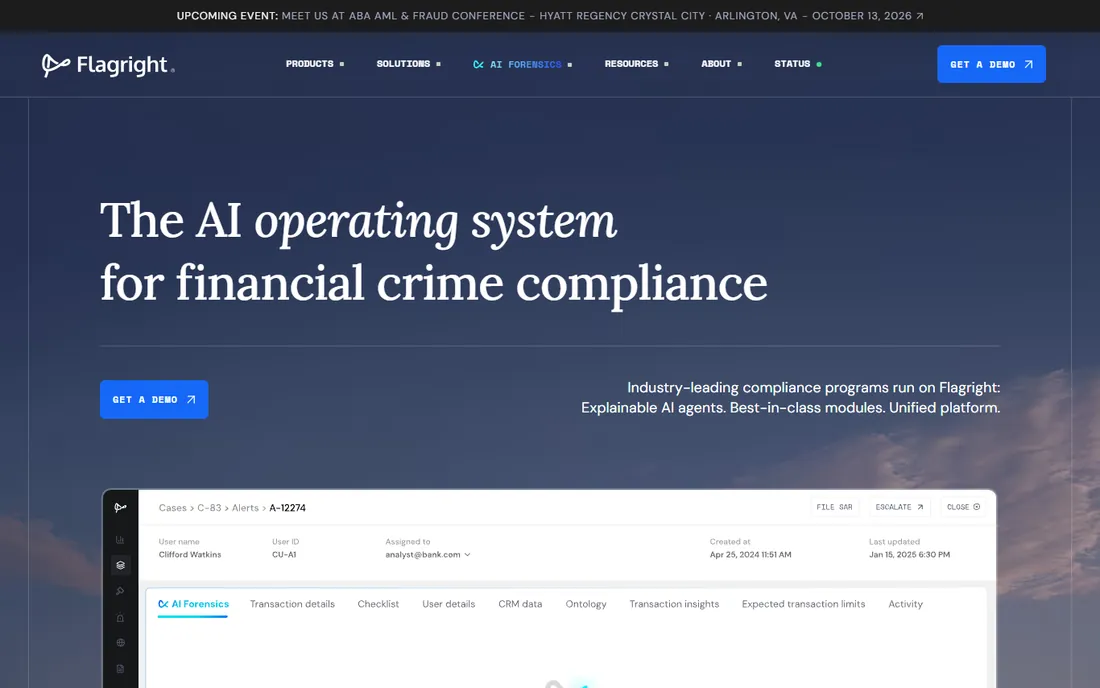
Flagright is the modern fintech answer: an API-first, no-code transaction monitoring and AML platform that deploys in weeks rather than months. It centralizes detection, investigation and reporting, and the vendor reports 93% false positive reduction and 80% lower compliance costs for customers. A startup program gives eligible early-stage fintechs 12 months free.
Third-party analyses report starter pricing around $999/month. The trade against incumbents is maturity: fewer reference deployments at tier-1 scale and a younger product. For fintechs that need real AML controls without an enterprise implementation project, it is the fastest path.
What we like- AI-native, no-code platform purpose-built for fintechs
- Fast deployment compared to enterprise suites
- Startup program offers free access for eligible early-stage companies
Watch out for- Younger vendor with a smaller customer base than incumbents
- Enterprise-grade reporting depth still maturing
- Pricing transparency limited beyond the starter tier
#6
AMLYZE
Best for: EMIs, payment institutions and neobanks in Europe
Visit amlyze.com
Starting priceSee website (custom quote; from 500 EUR/month reported)
Free planFree trial (14 days)
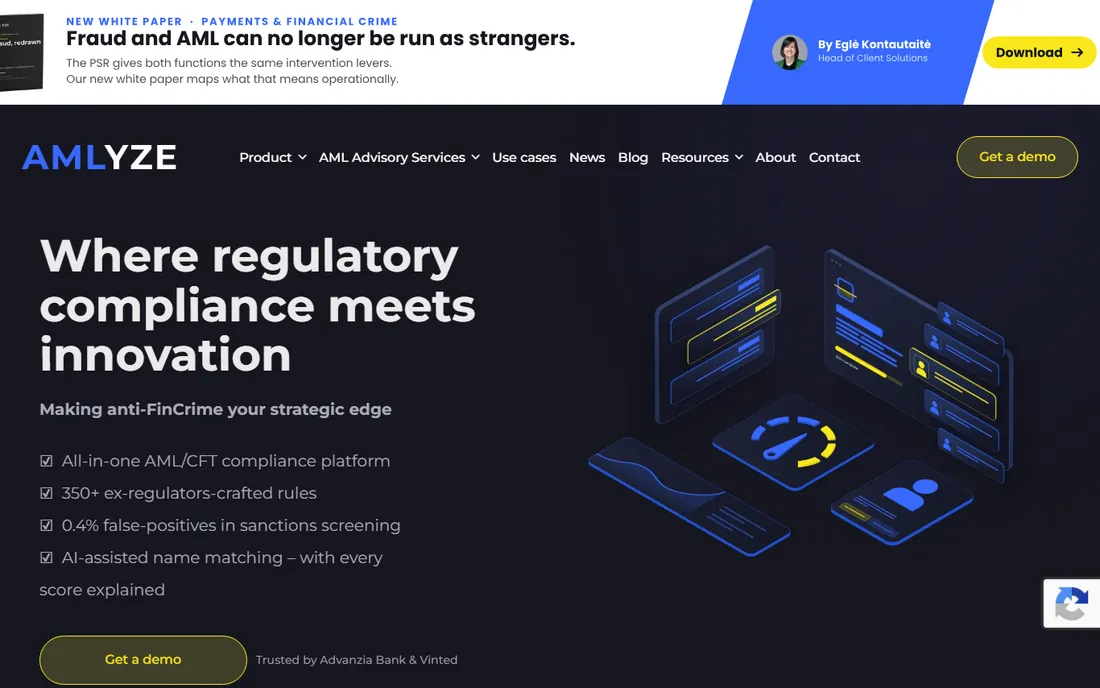
AMLYZE packages the whole AML workflow, transaction monitoring, customer risk scoring, sanctions and PEP screening, and case management, into one SaaS suite aimed at electronic money institutions, payment companies and neobanks. The reported starter tier around 500 EUR/month makes it one of the most accessible full-suite options, and the 14-day trial includes 500 test transaction runs.
It is strongest in the European EMI and fintech segment, where its regulatory fit is tightest. Large banks will find the enterprise suites deeper. For mid-market financial institutions that want one vendor for the full AML stack at a mid-market price, it belongs on the shortlist.
What we like- Full AML suite (monitoring, screening, risk scoring, case management) in one SaaS product
- Accessible entry price for mid-market
- 14-day trial with 500 test transactions
Watch out for- Smaller vendor footprint outside Europe
- Enterprise feature depth trails the biggest suites
- Brand recognition is limited with large-bank buyers
#7
Hawk AI
Best for: Banks and payment companies that need explainable AI
Visit hawk.ai
Starting priceSee website (custom quote)
Free planNo
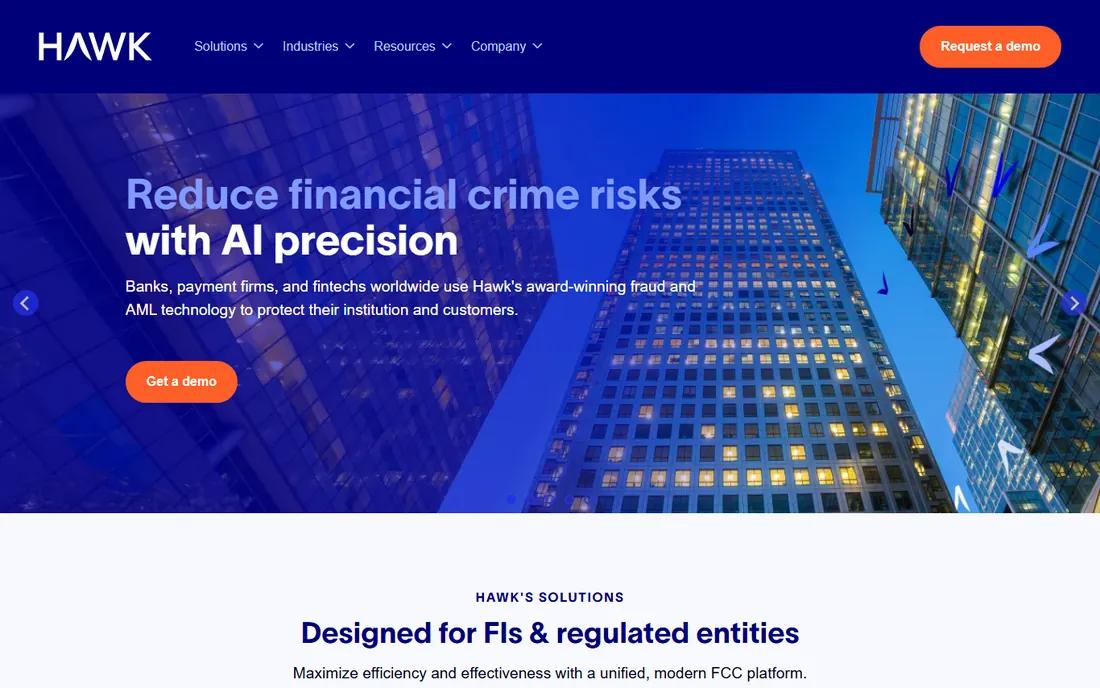
Hawk AI's differentiator is explainability: the platform pairs rule-based detection with machine learning anomaly detection, and every AI-driven alert comes with contextual explanations of the factors behind it. In regulated financial services, where investigators must justify decisions to regulators, that transparency matters more than raw model accuracy. The vendor reports 70% reduction in required investigation resources.
Pricing is not published and the evaluation runs through sales. It fits banks and payment providers that want AI-driven detection without the "black box" problem that makes some ML systems hard to defend in audits.
What we like- Combines traditional rules with explainable AI, giving investigators reasons behind every alert
- Covers structuring, layering and smurfing typologies
- Cloud-native with real-time monitoring
Watch out for- No published pricing
- Evaluation is sales-led
- Smaller ecosystem than the largest incumbents
#8
Napier AI
Best for: Institutions drowning in false positives
Visit napier.ai
Starting priceSee website (custom quote)
Free planNo
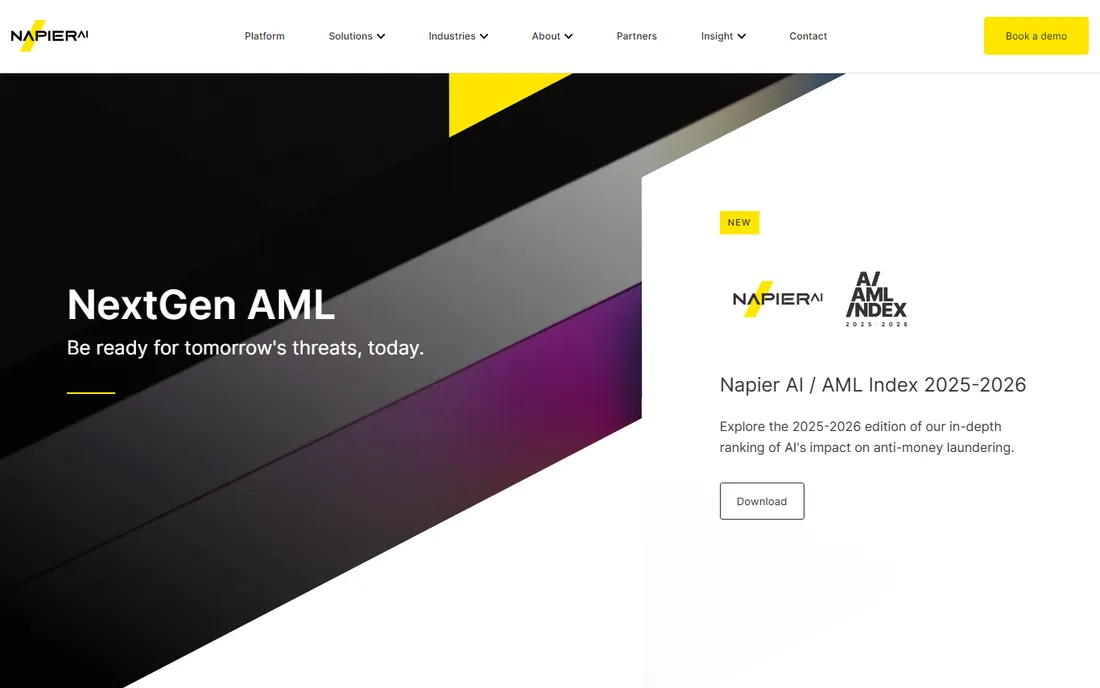
Napier AI attacks the industry's biggest cost driver: false positives. Its Continuum platform blends traditional rules with adaptive machine intelligence to spot laundering typologies that static rules miss, while cutting the noise that buries investigation teams. The company's AML Index research on global financial crime typologies feeds the product's detection models.
The platform joined the Microsoft Marketplace in 2026, letting Azure-committed customers count the spend toward their consumption commitments. Pricing is quote-based. It suits institutions where alert volumes have outgrown analyst capacity and the mandate is better detection with fewer wasted investigations.
What we like- AI-first approach to reducing false positives while catching more crime
- Strong typology research (structuring, trafficking, trade-based laundering)
- Available on Microsoft Marketplace with Azure billing
Watch out for- No published pricing
- Sales-led enterprise motion
- Best value requires commitment to the AI-driven workflow
#9
Sumsub
Best for: Fintechs that want onboarding, KYC and monitoring from one vendor
Visit sumsub.com
Starting priceSee website (custom quote)
Free planNo
Sumsub's advantage is consolidation: a fintech can run user onboarding, identity verification, AML screening and transaction monitoring through one platform and one API relationship. In 2026 the company added an AI agent that summarizes transaction details, identifies triggered rules and highlights anomalies, plus a deeper AI investigation workflow for analysts.
Dedicated transaction monitoring platforms offer deeper configurability, but every additional vendor is integration and contract overhead. For fast-growing fintechs that value a unified compliance stack over best-of-breed depth in each function, Sumsub simplifies the architecture meaningfully.
What we like- One platform for identity verification, AML screening, fraud prevention and transaction monitoring
- AI transaction overview agent and investigation copilot added in 2026
- Simplifies vendor architecture for growing fintechs
Watch out for- Transaction monitoring depth trails dedicated AML platforms
- Quote-based pricing
- Best suited to fintechs rather than traditional banks
How we chose
We shortlisted transaction monitoring platforms with a real 2026 market presence, from enterprise suites to fintech-focused APIs. Because vendors in this category do not publish prices, we used recent third-party pricing analyses (updated 2026) for entry-point estimates and marked them as reported. We weighed AI and false-positive-reduction claims against public evidence, regulatory reporting depth, deployment speed and fit for different institution sizes.
What regulators actually look at
Transaction monitoring is not a checkbox purchase; regulators examine whether the system fits your risk profile. Key questions examiners ask: are your detection scenarios mapped to your actual products and customer types, can you show the tuning history of your rules, and do your SAR filings demonstrate quality investigation rather than volume. A platform with strong case management and audit trails (Unit21, NICE Actimize, Flagright) makes those examinations shorter and cheaper.
Also confirm data residency and update frequency. Sanctions lists change constantly (OFAC published changes on multiple September 2026 dates alone), so the vendor's list-update speed and your data's geographic residency are compliance questions, not IT questions. Ask both before signing.
Pricing reality in this category
Nobody publishes real prices. Third-party analyses suggest entry points around $15,000/year for fintech-focused platforms (Flagright, ComplyAdvantage starter tiers), $30,000 to $50,000/year for mid-market API platforms (Unit21, Feedzai entry), and $100,000/year and up for enterprise suites (NICE Actimize). Implementation, data migration and tuning are usually separate line items.
Budget for the total cost of compliance, not just the license: analyst headcount is the biggest line item, which is why false positive reduction percentages matter more than per-seat prices. A platform that cuts false positives by 80% can save more in staffing than the license costs.
Frequently asked questions
What is transaction monitoring software?
It is software that watches financial transactions for signs of money laundering, fraud and sanctions violations. It screens transactions in real time, scores risk, generates alerts for investigators, and supports regulatory filings like suspicious activity reports (SARs).
How much does transaction monitoring software cost?
Vendors do not publish prices. Third-party analyses estimate entry points from about $15,000/year for fintech-focused platforms to $50,000/year for mid-market and $100,000+/year for enterprise suites. Implementation and tuning are usually extra.
What is the difference between transaction monitoring and fraud detection?
Transaction monitoring focuses on AML compliance: detecting money laundering patterns and sanctions violations for regulatory purposes. Fraud detection focuses on stopping unauthorized or abusive transactions to protect revenue. Many platforms (Feedzai, Sumsub) now cover both on one engine.
How do vendors reduce false positives?
By combining traditional rules with machine learning: behavioral profiling, anomaly detection and AI models trained on investigation outcomes suppress alerts that match known-good patterns. Reported reductions range from 70% (Hawk AI) to 93% (Flagright); ask for customer references to validate.
Do small fintechs need transaction monitoring?
If you move money as a licensed entity (EMI, money transmitter, crypto exchange), regulators expect it. API-first platforms (Flagright, Unit21, AMLYZE, ComplyAdvantage) are built for smaller teams, and Flagright's startup program offers free access to eligible early-stage fintechs.
How long does implementation take?
Fintech-focused API platforms deploy in weeks. Mid-market platforms take one to three months including rule tuning. Enterprise suites (NICE Actimize) take several months with data migration, scenario configuration and integration work. Rule tuning continues after go-live.
Sources we checked (13)
- https://www.niceactimize.com/products/transaction-monitoring/
- https://www.feedzai.com/products/transaction-monitoring/
- https://www.unit21.ai/pricing/
- https://www.complyadvantage.com/pricing/
- https://www.flagright.com/pricing/
- https://www.amlyze.com/pricing/
- https://www.hawk.ai/pricing/
- https://www.napier.ai/pricing/
- https://www.sumsub.com/pricing/
- https://github.com/ishandutta2007/awesome-aml-transaction-monitoring
- https://www.fraudio.com/roundups/best-anti-money-laundering-software-for-fintech
- https://walletinvestor.com/news/finance-news/top-transaction-monitoring-software-for-high-risk-financial-platforms/
- https://walletinvestor.com/news/finance-news/complyadvantage-alternatives-best-real-time-aml-and-sanctions-screening-software/
Is your product missing or out of date?
We review this list regularly. Vendors can request a listing, send updated pricing or ask about featured placement.

Shihab Mia · Founder, Rankite
Shihab has spent more than a decade helping SaaS and e-commerce brands grow through search. He writes Rankite's software buying guides from pricing pages, documentation and public user reviews. More about Shihab.