How we make this list: we compare pricing pages, product documentation and public user reviews. Rankite is independent; if a vendor ever pays for a featured spot, that listing is clearly labeled Partner.
Key takeaways
- Trade promotion management software replaces spreadsheet-and-email workflows with planning, approval, deduction, and ROI tracking in one system.
- Vividly and Promomash are the most approachable picks for mid-market and growing CPG brands; UpClear, CPGvision, and Visualfabriq serve established brands with deeper analytics needs.
- Aforza suits brands that need trade planning connected to field sales and retail execution, while Anaplan fits enterprises aligning trade with finance and supply chain.
- Pricing is quote-based across the category, so shortlist on fit, integration with your ERP, and deduction management depth before you talk numbers.
Quick comparison
| Tool | Best for | Starting price | Free plan |
|---|
 Vividly Vividly | mid-market CPG brands managing trade spend | See website | No |
 Promomash Promomash | growing brands wanting software plus managed services | See website | Free trial |
 UpClear UpClear | brands needing modular TPM, TPO, and deductions | See website | No |
 CPGvision CPGvision | TPM, TPO, and revenue growth management in one platform | See website | No |
 Aforza Aforza | trade planning tied to field sales execution | See website | No |
 Visualfabriq Visualfabriq | AI-driven promotion optimization | See website | No |
 Anaplan Anaplan | enterprise planning across trade, finance, and supply chain | See website | No |
Is your product missing or out of date?
We review this list regularly. Vendors can request a listing, send updated pricing or ask about featured placement.
The best tpm software
How do you know when your trade promotion process has outgrown spreadsheets? Usually it is the deductions: once invalid chargebacks and unvalidated claims start eating margin faster than your team can chase them, you need a system. The seven platforms below cover the category from SMB-friendly to enterprise, with honest notes on where each one fits.
Starting priceSee website
Free planNo
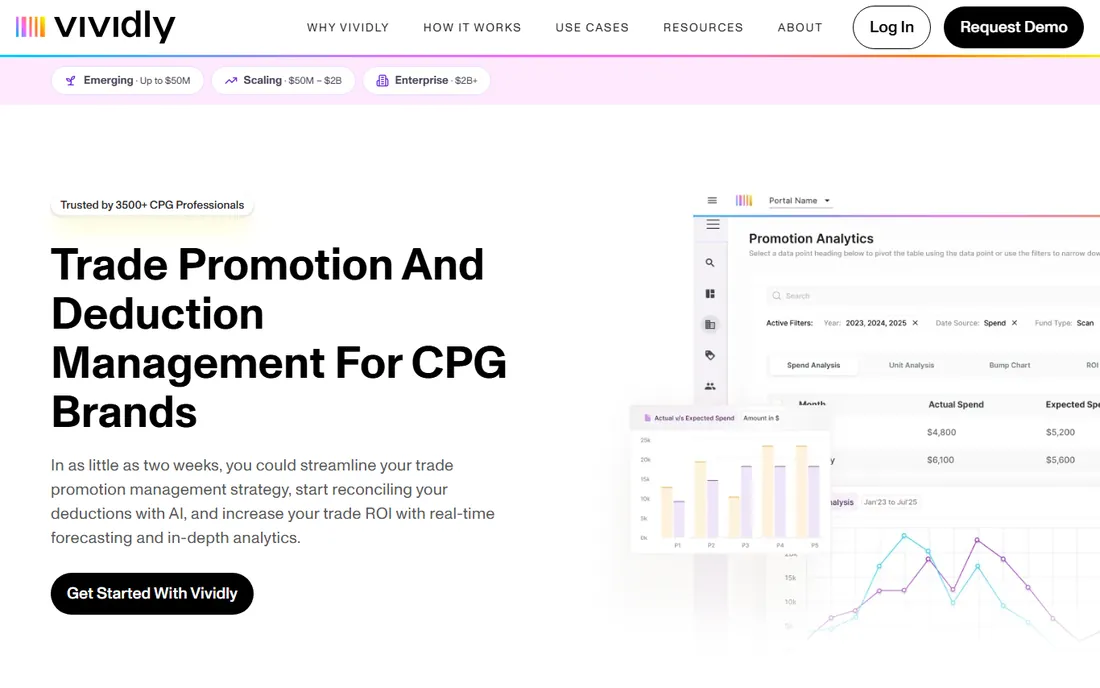
Vividly is a cloud platform built specifically for trade promotion management at consumer packaged goods brands, and its pitch is the pairing most teams actually need: promotion planning and tracking alongside AI-powered deduction reconciliation, with real-time forecasting and analytics on top. It connects with existing enterprise systems rather than asking you to rip anything out.
Founded in San Francisco in 2017, the company serves more than 2,500 CPG professionals and positions itself as the affordable, user-friendly alternative to legacy TPM suites. If your team is moving off spreadsheets and wants trade spend visibility plus deduction handling in one place, Vividly is the natural first demo.
What we like- AI-powered trade forecasting plus automated deduction management
- Built specifically for CPG rather than adapted from ERP
Watch out for- Quote-based pricing with no public plans
- Mid-market focus means less depth for global enterprise complexity
#2
Promomash
Best for: growing brands wanting software plus managed services
Visit promomash.com
Starting priceSee website
Free planFree trial
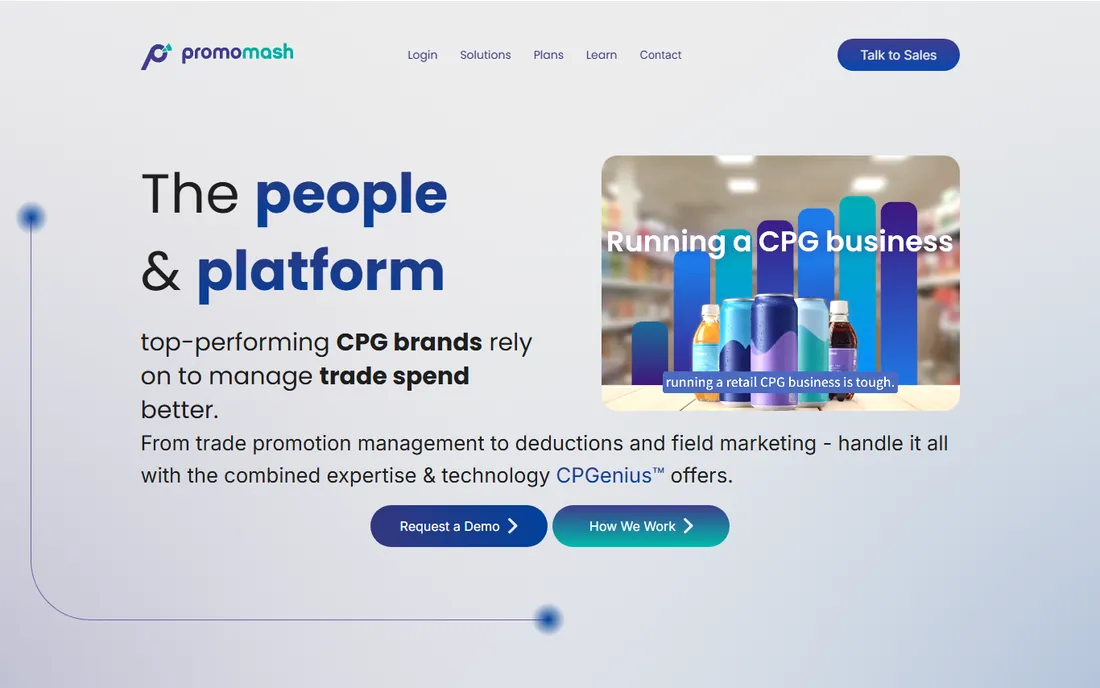
Promomash takes a different approach from most vendors on this list: it sells software and services together. The CPGenius platform covers trade promotion management, deduction management, and field marketing, and every client gets a dedicated trade success team with a client manager, deduction account manager, trade analyst, and deduction admin. For a lean brand team, that is effectively an outsourced trade desk.
The platform is built around a Plan, Execute, Settle, Optimize process, and a Crisp data integration gives clients a real-time view of actual trade spend. Founded in Pasadena in the mid-2010s by a founder who had watched his own CPG product fail on shelves, the company understands emerging brands. Confirm current pricing and trial terms directly, since published figures vary.
What we like- Combines software with a managed trade and deductions team
- PESO process keeps planning through optimization disciplined
- Field marketing included
Watch out for- Services-heavy model means less pure self-serve than some rivals
- Pricing not published
#3
UpClear
Best for: brands needing modular TPM, TPO, and deductions
Visit upclear.com
Starting priceSee website
Free planNo
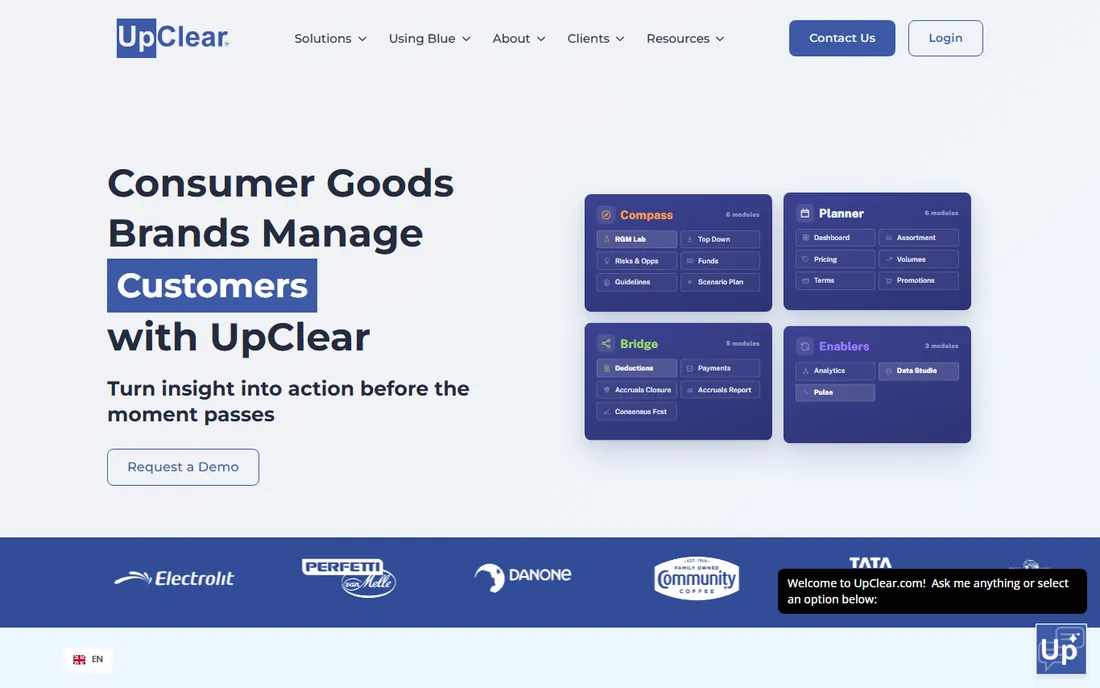
UpClear's BluePlanner is purpose-built SaaS for planning and executing the sales process in consumer goods, and its modular design is the differentiator: you deploy the modules that match your priorities and add capabilities over time. Blue RGM handles trade promotion optimization with machine-learning lift models that update as new sell-out data arrives, and BlueDeductions covers the claims side.
The company earned Promotion Optimization Institute best-in-class distinctions again in 2026 and cites go-live timelines as short as four to six weeks, which is fast for this category. With teams in New York, London, Paris, and Singapore, it serves brands globally. If you want one vendor for TPM, TPO, and deductions with room to expand, UpClear belongs on the shortlist.
What we like- Modular BluePlanner, Blue RGM, and BlueDeductions deploy by priority
- Fast 4 to 6 week go-live
- POI best-in-class recognition in 2026
Watch out for- Enterprise sales motion
- Quote-based pricing
#4
CPGvision
Best for: TPM, TPO, and revenue growth management in one platform
Visit cpgvision.com
Starting priceSee website
Free planNo
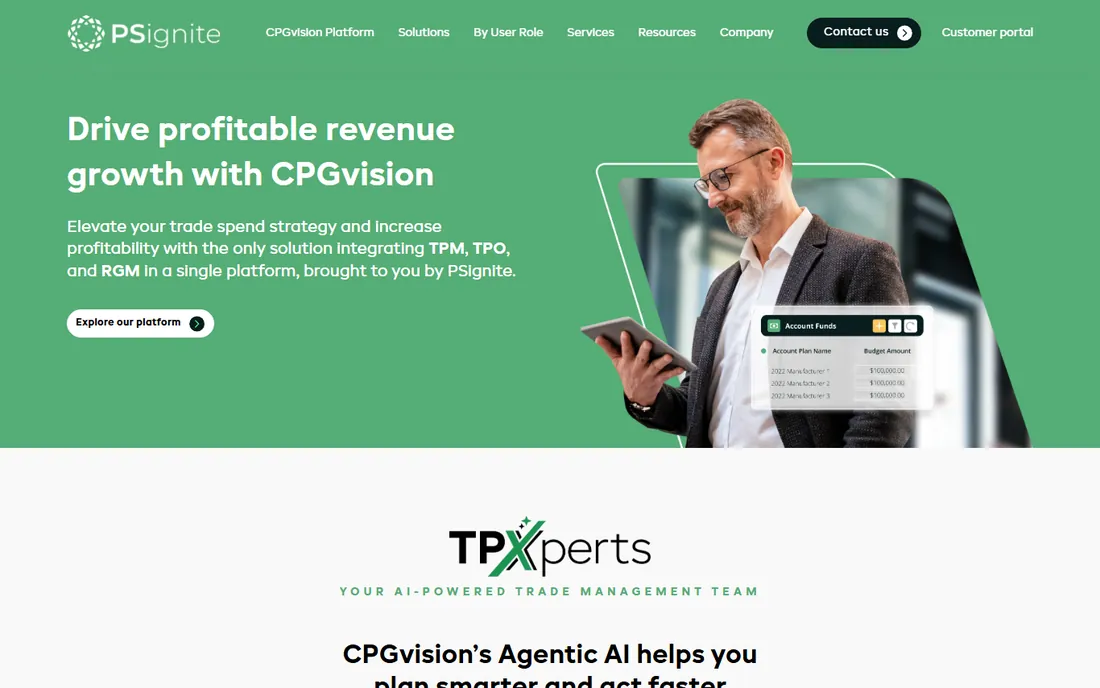
CPGvision, from PSignite, combines trade promotion management, trade promotion optimization, and revenue growth management in a single platform running on a unified dataset. The current v5 release uses feature flags so clients activate functionality as they are ready, with AI and machine learning applied to trade budget management, ROI evaluation, deduction management, and volume and spend forecasting.
The company, based in Krakow with US operations, serves customers in more than 60 countries and earned POI best-in-class distinctions across headquarter planning, internal collaboration, and tier 2 and 3 organization categories. It is a strong pick for brands that want advanced analytics without the weight of an ERP-embedded suite.
What we like- TPM, TPO, and RGM unified on one dataset
- AI and machine learning throughout
- Recognized by POI as best-in-class
Watch out for- Smaller vendor footprint than the enterprise giants
- Quote-based pricing
#5
Aforza
Best for: trade planning tied to field sales execution
Visit aforza.com
Starting priceSee website
Free planNo

Aforza connects trade planning and field sales teams in one system, which solves a problem pure TPM tools leave open: the promotion gets planned at headquarters but executed inconsistently in stores. Its cloud and mobile apps cover promotion planning, retail execution, pricing, and analytics, with offline-capable mobile apps for field teams and AI-driven insights for in-flight promotion adjustments.
Founded in 2019 and built on the Salesforce and Google Cloud platforms, it implements in weeks rather than months and releases three times a year. It earned POI best-in-class distinctions for retail execution. If your trade problems are as much about field execution as planning, Aforza's connected approach is worth a look.
What we like- Connects trade planning with field sales and retail execution
- Built on Salesforce and Google Cloud
- Offline mobile apps
Watch out for- Broader scope means more to implement than a pure TPM tool
- Pricing not public
Starting priceSee website
Free planNo
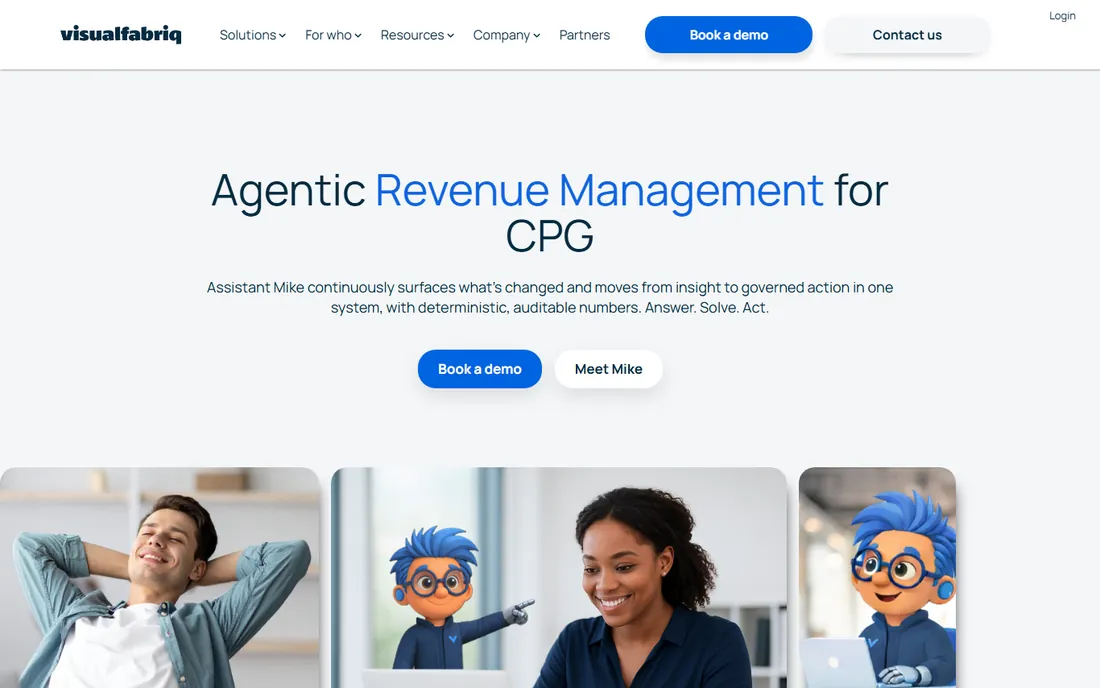
Visualfabriq, founded in the Netherlands in 2013, is a purpose-built TPM and revenue management platform for CPG. Its Trade Promotion Master lets commercial teams plan promotions and see predicted ROI immediately, with alternative scenarios suggested by AI, and pre- and post-evaluation using ex-factory, EPOS, and syndicated data sources. The company has added agentic AI that monitors promotion performance and surfaces deviations from plan.
Because it is true SaaS with no custom coding, teams avoid the lengthy consultancy engagements that highly customizable systems demand. Reviewers consistently praise its ease of use for a category not known for it. It is a strong fit for brands that want optimization intelligence without an IT project.
What we like- True SaaS with embedded AI and no heavy customization
- Trade Promotion Master unifies TPM, TPO, and RGM
- Strong G2 ratings
Watch out for- Netherlands-based vendor with smaller US presence than rivals
- Enterprise pricing not published
#7
Anaplan
Best for: enterprise planning across trade, finance, and supply chain
Visit anaplan.com
Starting priceSee website
Free planNo
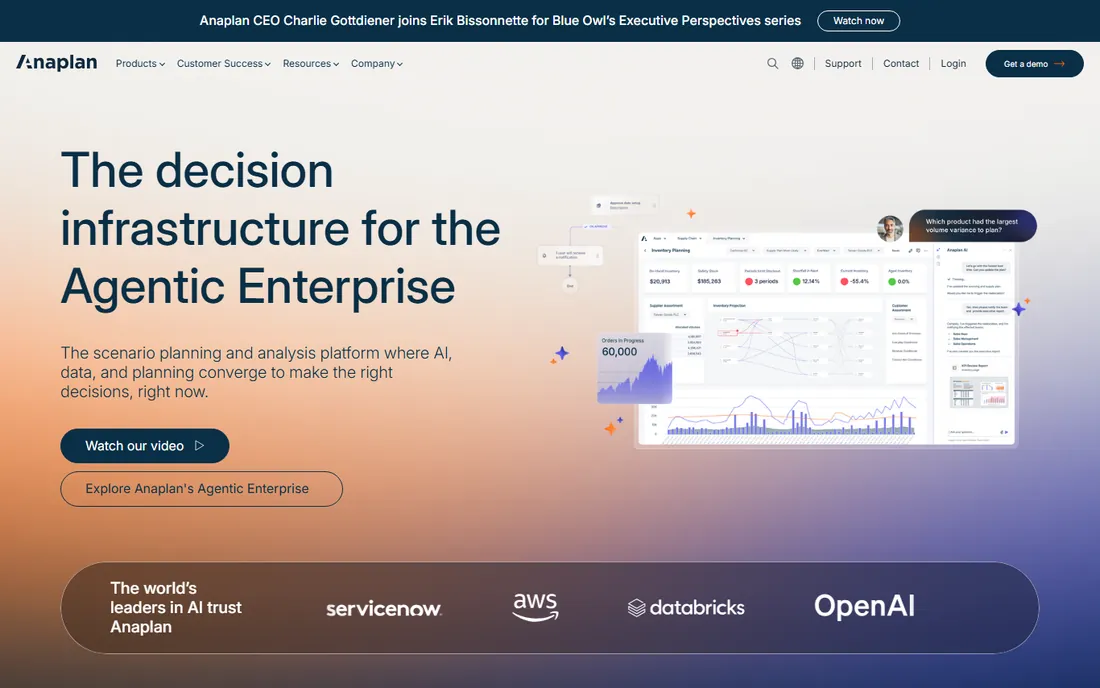
Anaplan is not a TPM specialist, and that is exactly why some enterprises choose it. Its connected planning platform lets finance, supply chain, sales, and trade teams work from one model, so promotional plans flow directly into demand forecasts, budgets, and financial outlooks. The scenario planning and what-if modeling are among the best in enterprise software.
Founded in 2006 and now owned by Thoma Bravo, Anaplan serves more than 2,400 global brands. The trade-off is specificity: you will build your TPM workflows on the platform rather than buying them ready-made, which takes longer and costs more than a purpose-built tool. Choose Anaplan when trade needs to live inside enterprise-wide planning, not when you need the fastest path off spreadsheets.
What we like- Connects trade planning with finance, supply chain, and sales on one model
- Powerful scenario planning
- 2,400+ brands
Watch out for- General planning platform, not a CPG-specific TPM
- Enterprise cost and implementation effort
TPM vs. TPO vs. RGM: what the acronyms actually mean
Vendors throw three acronyms around, and they are not interchangeable. TPM, trade promotion management, is the system of record: planning promotions, routing approvals, managing budgets, settling claims, and reconciling deductions. If you buy one thing, buy this.
TPO, trade promotion optimization, is the analytics layer on top: predictive models that estimate lift and ROI before you commit spend, and post-event analysis that feeds learnings back into future plans. RGM, revenue growth management, is broader still, covering pricing, assortment, and promotion strategy together to grow profitable revenue. Most platforms on this list now bundle all three, but ask which capabilities are included in your tier and which cost extra.
Start with your deduction problem, because it is usually the most expensive one. Ask each vendor to walk through their deduction workflow end to end: how claims are ingested, how they match to promotions, how disputes are filed, and what the recovery rate looks like for clients like you. A beautiful planning calendar means little if invalid deductions keep leaking margin.
Match the tool to your trade maturity
An emerging brand running its first retail promotions needs planning discipline and deduction support, which favors Promomash or Vividly. An established brand with syndicated data and a trade marketing team needs optimization modeling, which favors UpClear, CPGvision, or Visualfabriq. Buying enterprise optimization before you have clean baseline data wastes the investment.
Check the ERP and data integrations
Confirm native connections to your ERP, EDI, and syndicated data providers, and ask whether data flows are real-time or batched. TPM lives or dies on data freshness: a forecast built on last month's shipments will not catch this week's execution problems.
Get the implementation plan in writing
Ask for a named timeline with milestones, who does the data migration, and what your team has to provide. Go-live claims in this category range from weeks to many months; the difference is usually data readiness, so ask what the vendor needs from you on day one.
Price AI and optimization separately
Several vendors charge extra for AI-driven optimization, advanced analytics, or managed services. Get the full three-year cost including every module, add-on, and service tier you will actually use, not just the base platform quote.
How we chose
We compared trade promotion management platforms against the needs of CPG brands from emerging to enterprise, reviewing vendor documentation, TPM, TPO, and deduction capabilities, ERP and data integrations, and public reviews and industry comparisons from sources like the Promotion Optimization Institute, G2, and Capterra. We favored vendors with clear CPG specialization and transparent positioning, and included one general planning platform for enterprises that need trade inside company-wide planning. Pricing in this category is quote-based, so we did not publish estimates. We did not test any of these tools hands-on.
Frequently asked questions
What is TPM software?
Trade promotion management software helps consumer goods companies plan, execute, settle, and analyze trade promotions. It replaces spreadsheets with structured workflows for promotion planning, approvals, budget tracking, deduction management, and ROI measurement.
How much does TPM software cost?
Pricing is quote-based across the category and scales with company size, user count, and modules. Third-party estimates range from around $500 per month for SMB-focused tools to six-figure annual contracts for enterprise platforms. Always get a formal quote.
What is the difference between TPM and TPO?
TPM is the system of record for planning and executing promotions and managing deductions. TPO, trade promotion optimization, adds predictive modeling to estimate promotion lift and ROI before spending, plus post-event analysis to improve future promotions.
Do small CPG brands need TPM software?
Once trade spend becomes a meaningful share of revenue and deductions start piling up, yes. Emerging brands often start with Promomash or Vividly, which are built for smaller teams, before graduating to deeper optimization platforms.
Can TPM software integrate with SAP or other ERPs?
Most enterprise TPM platforms integrate with major ERPs including SAP, Oracle, and Microsoft Dynamics, either natively or through EDI and APIs. Confirm the specific integration your business runs during the demo, and ask whether data syncs in real time.
How long does TPM implementation take?
It varies from a few weeks for focused SaaS tools to several months for enterprise platforms with complex data integrations. The biggest factor is usually data readiness: clean promotion history, baselines, and master data shorten every timeline.
Sources we checked (12)
- https://www.govividly.com/
- https://www.promomash.com/
- https://upclear.com/
- https://www.cpgvision.com/
- https://aforza.com/
- https://visualfabriq.com/
- https://anaplan.com/
- https://www.guideflow.com/blog/trade-promotion-management-software
- http://www.leafio.ai/blog/retail-promotion-strategy-best-tools-and-techniques/
- https://www.softwareworld.co/trade-promotion-management-software/
- https://worldmetrics.org/best/trade-promotion-management-software/
- https://www.guideflow.com/blog/deduction-management-software
Is your product missing or out of date?
We review this list regularly. Vendors can request a listing, send updated pricing or ask about featured placement.

Shihab Mia · Founder, Rankite
Shihab has spent more than a decade helping SaaS and e-commerce brands grow through search. He writes Rankite's software buying guides from pricing pages, documentation and public user reviews. More about Shihab.