How we make this list: we compare pricing pages, product documentation and public user reviews. Rankite is independent; if a vendor ever pays for a featured spot, that listing is clearly labeled Partner.
Key takeaways
- The best sustainability management software centralizes ESG data, calculates emissions across all scopes, and produces audit-ready disclosures for frameworks like CSRD, GRI and CDP.
- IBM Envizi, Watershed and Persefoni lead the enterprise tier with audit-grade carbon accounting, while Greenly and Plan A suit mid-market teams getting their first footprint done.
- Sweep and Normative stand out for value-chain and supplier engagement, which is where most companies' emissions actually sit.
- Workiva is the pick when sustainability reporting must live next to financial reporting in one controlled, audited platform.
Quick comparison
| Tool | Best for | Starting price | Free plan |
|---|
 IBM Envizi IBM Envizi | enterprise ESG data at global scale | See website (priced by data volume) | No |
 Persefoni Persefoni | audit-grade carbon accounting | See website | Free trial |
 Watershed Watershed | end-to-end enterprise climate programs | See website | No |
 Sweep Sweep | value-chain and supplier data management | See website | Free trial |
 Greenly Greenly | mid-market carbon accounting, done fast | See website | Free trial |
 Normative Normative | science-based emissions engine with advisor | See website | Free trial |
 Plan A Plan A | decarbonization-first carbon accounting | See website | Free trial |
 Workiva Workiva | ESG reporting inside finance workflows | See website | No |
Is your product missing or out of date?
We review this list regularly. Vendors can request a listing, send updated pricing or ask about featured placement.
The best sustainability management software
#1
IBM Envizi
Best for: enterprise ESG data at global scale
Visit ibm.com
Starting priceSee website (priced by data volume)
Free planNo
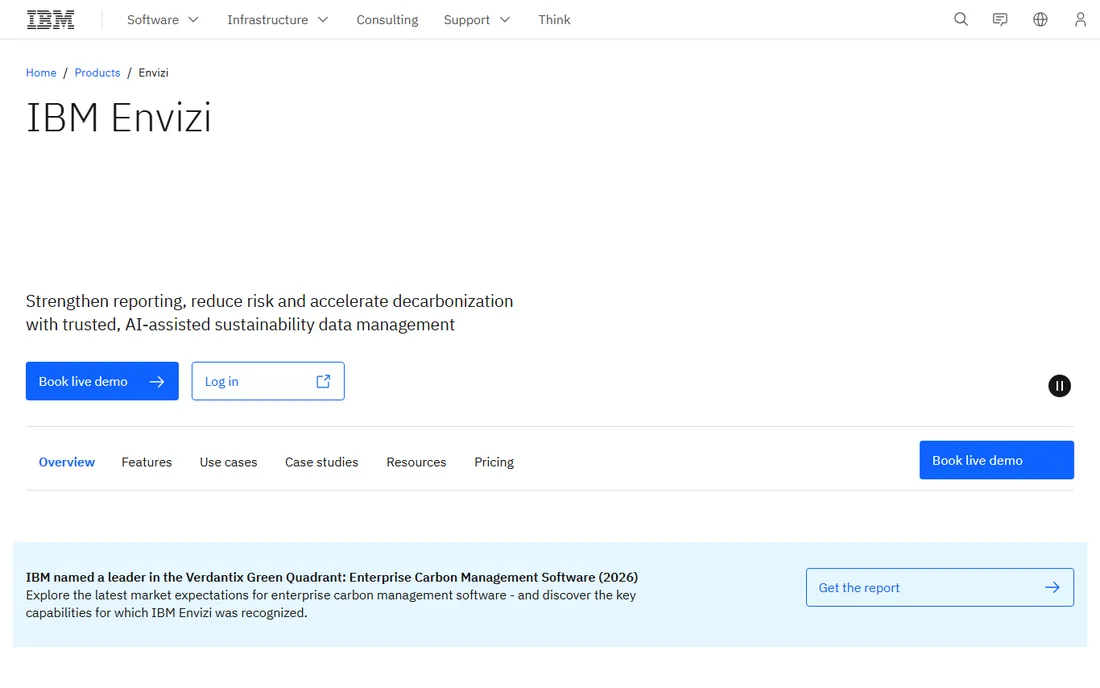
A chief sustainability officer at a multinational needs one auditable source of truth across hundreds of sites. A mid-market operations manager needs their first carbon footprint without hiring a consultancy. IBM Envizi is built for the first buyer, and it shows.
Envizi combines emissions management (Scope 1, 2 and 3 with a GHG Protocol calculation engine), ESG reporting across major frameworks, and decarbonization planning with AI-infused forecasting. Data ingestion pulls from ERP systems, IoT meters, utility providers and supplier portals, with finance-grade validation, full audit trails and organizational roll-ups that mirror real corporate structures. Pricing scales with data volume rather than seats.
The honest catch is that Envizi is enterprise software sold through an enterprise process: scoping calls, pricing calculators, implementation partners. Small teams will find it heavy and expensive. But for large organizations facing CSRD or SEC disclosure with auditors watching, Envizi's data rigor is exactly the point.
What we like- Finance-grade audit trails
- Strong Scope 3 and supply chain modules
- Integrates with the IBM stack
Watch out for- Enterprise sales process
- Overkill for small teams
Starting priceSee website
Free planFree trial
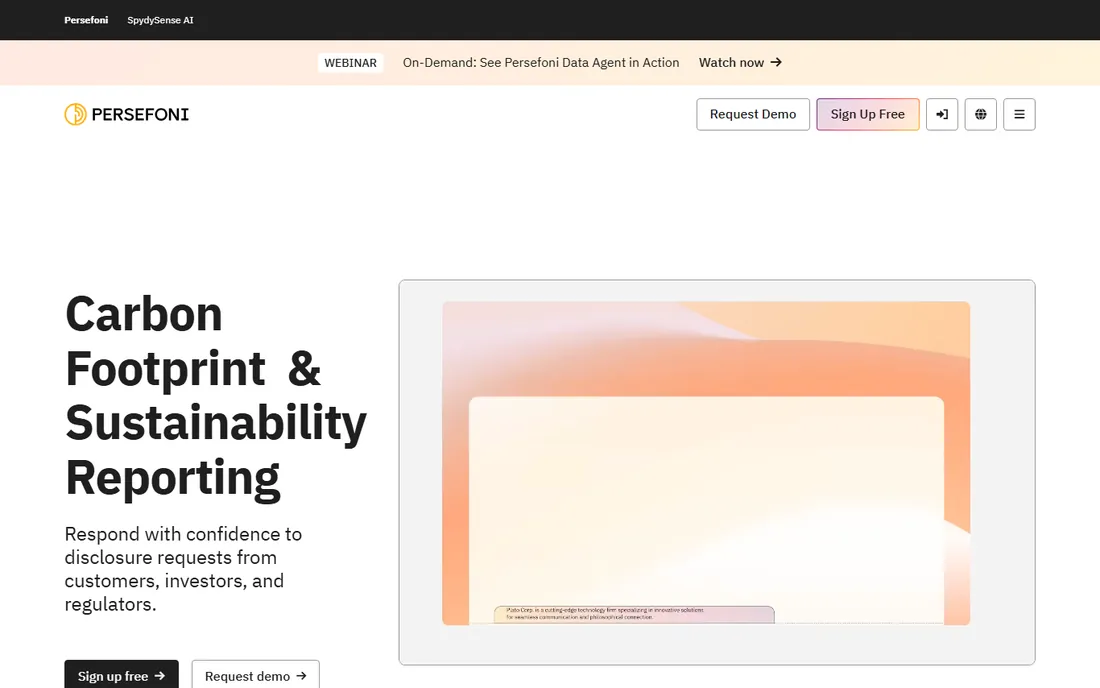
Persefoni calls itself the ERP of carbon, and the product follows through: carbon transactions managed with the same rigor as financial ones, a single source of carbon truth, and assurance-grade GHG reporting aligned to every major disclosure regulation. Pro covers Scope 1, 2 and 3 footprints for businesses of all sizes; Advanced adds net-zero modeling, supplier engagement and financed emissions for financial institutions.
PersefoniAI is embedded in every plan, with a Copilot chat interface for carbon accounting questions, anomaly detection on datasets like electricity consumption, and natural language emission factor mapping that parses spend files automatically. The platform supports frameworks from CSRD and TCFD to PCAF and SASB.
Pricing is quote-based and enterprise-grade, which puts it out of reach for small businesses. Persefoni Pro extends down-market somewhat, but this remains a tool for companies with serious disclosure obligations and the budget to match. For that audience, the audit readiness is the headline.
What we like- Built like financial accounting for carbon
- Strong financed emissions
- PersefoniAI assistants
Watch out for- Enterprise pricing
- Aimed at larger organizations
Starting priceSee website
Free planNo
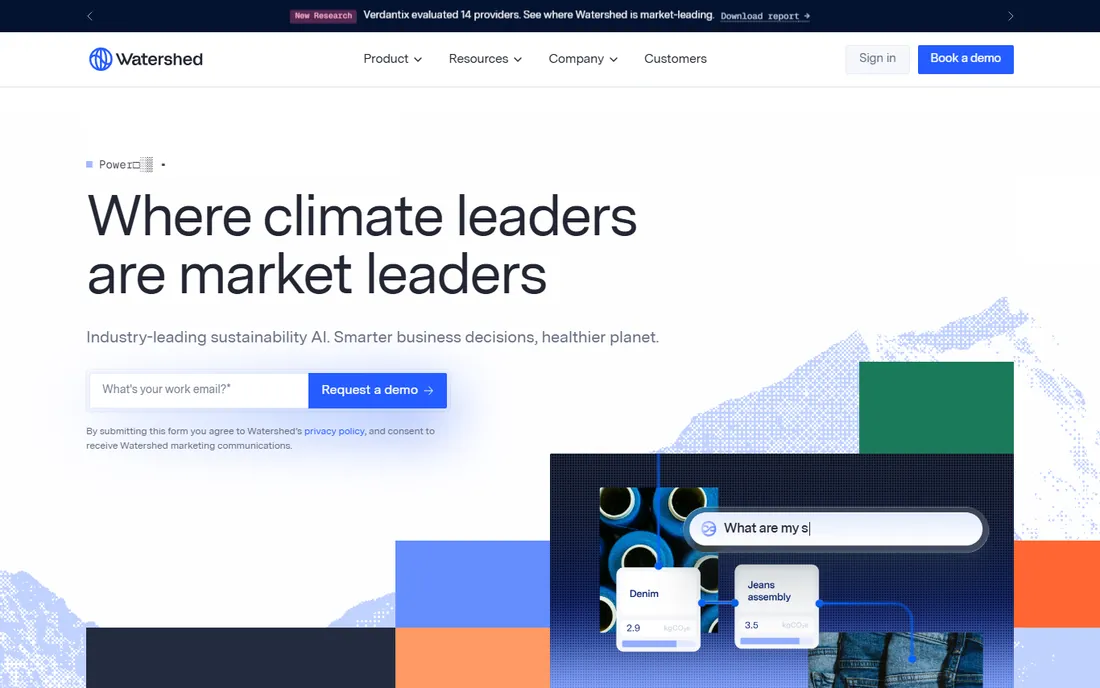
Watershed is the enterprise climate platform that covers measure, report and act in one place. Granular, audit-grade carbon measurement across all scopes feeds into automated ESG report drafting, and the platform connects to a marketplace of vetted carbon removal projects for the reduction side.
The 2026 positioning leans hard into sustainability AI: purpose-built agents handle data cleaning, formatting and analysis, with human review and transparent calculations kept in the loop. The company cites 4.1 gigatons of emissions under management and maintains an in-house science and policy advisory bench. Forrester named it a leader in sustainability management software for 2026.
There is no public pricing and no free tier; this is a sales-led enterprise product. Smaller companies should look at Greenly or Plan A instead. But for large enterprises that want one platform from raw utility bills to board-ready disclosure, Watershed is the current benchmark.
What we like- AI agents accelerate data cleaning
- Huge climate database
- Recognized leader by analysts
Watch out for- No public pricing
- Enterprise-only positioning
Starting priceSee website
Free planFree trial
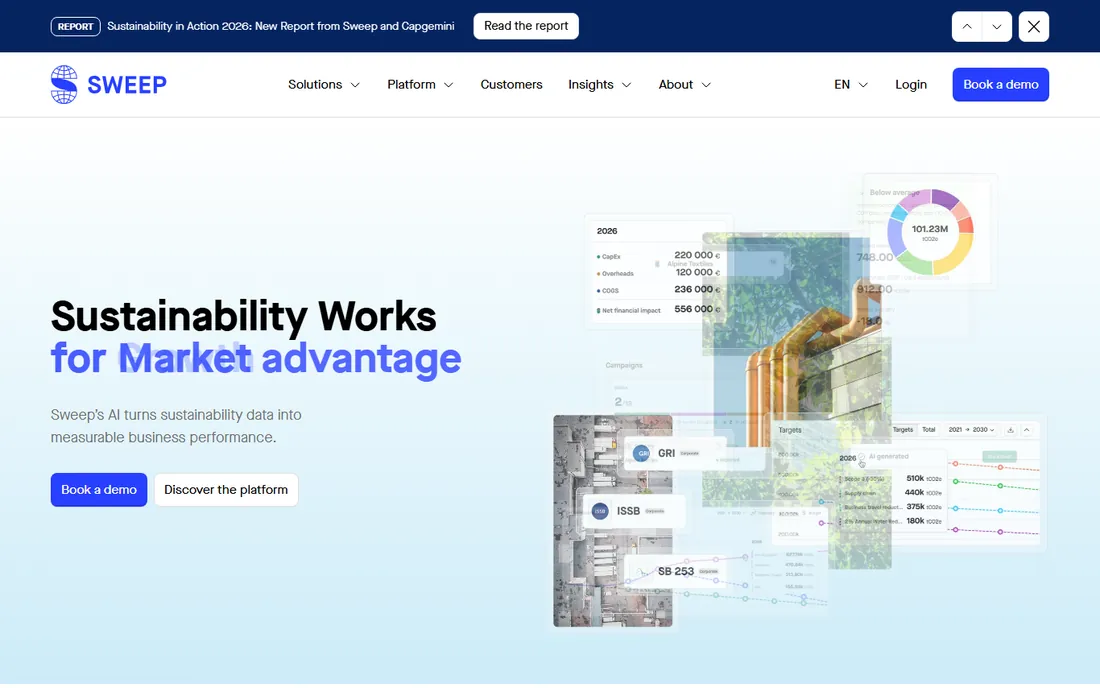
Sweep is a sustainability data management platform built around a truth most tools gloss over: the majority of a company's emissions sit in its value chain, not its own buildings. The platform centralizes sustainability data across the organization and suppliers, produces audit-ready disclosures from a single source, and includes Sweepy, an AI assistant that maps purchase data, drafts disclosures and builds dashboards in plain language.
Compliance coverage spans CSRD, ISSB, GRI, CDP, SASB, TCFD and the GHG Protocol. The company is B Corp certified and partners with consultancies like Capgemini, KPMG and ERM for implementation. A free sandbox trial lets teams test Scope 1 and 2 reporting before committing.
Sweep is headquartered in France, so US buyers should check support coverage and implementation partner availability in their region. Pricing is quote-based. For companies whose disclosure story depends on supplier data, Sweep's value-chain focus is a genuine differentiator.
What we like- Strong supplier engagement tools
- AI assistant Sweepy
- B Corp certified
Watch out for- European roots mean US support is thinner
- Pricing not public
Starting priceSee website
Free planFree trial
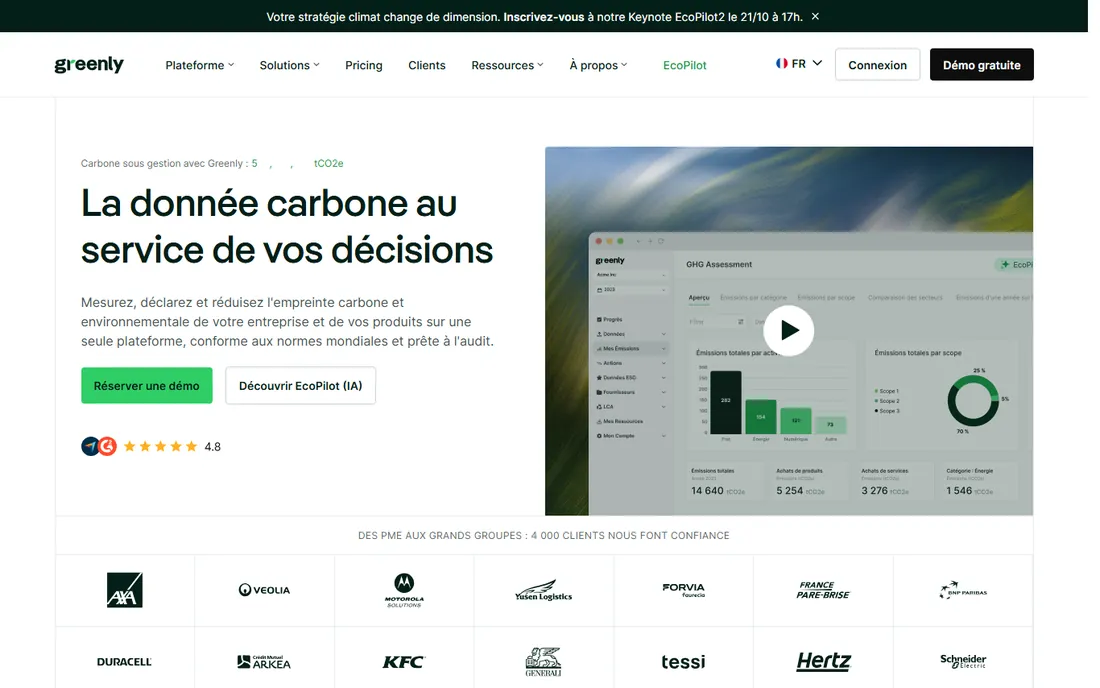
Greenly is the user-friendly carbon accounting platform for companies doing their first serious footprint. Measure, report and reduce carbon and environmental footprints on one platform, compliant with global standards and audit-ready, with an AI assistant called EcoPilot that automates repetitive tasks and answers questions in real time.
The platform covers carbon accounting, product lifecycle assessment and environmental product declarations, with compliance badges across SBTi, CSRD, CDP, B Corp, ISO 14067 and more. Greenly and Normative are joining forces to become a combined climate software group, which should deepen the product over time.
Enterprise buyers with complex multi-entity structures may outgrow it. The French homepage default is a minor annoyance for US visitors (an English version exists). But for a mid-market company that needs a credible footprint fast without a six-figure budget, Greenly is one of the most approachable options on this list.
What we like- Accessible for SMBs and mid-market
- AI assistant EcoPilot
- B Corp certified
Watch out for- Lighter on deep enterprise features
- Homepage defaults to French
Starting priceSee website
Free planFree trial
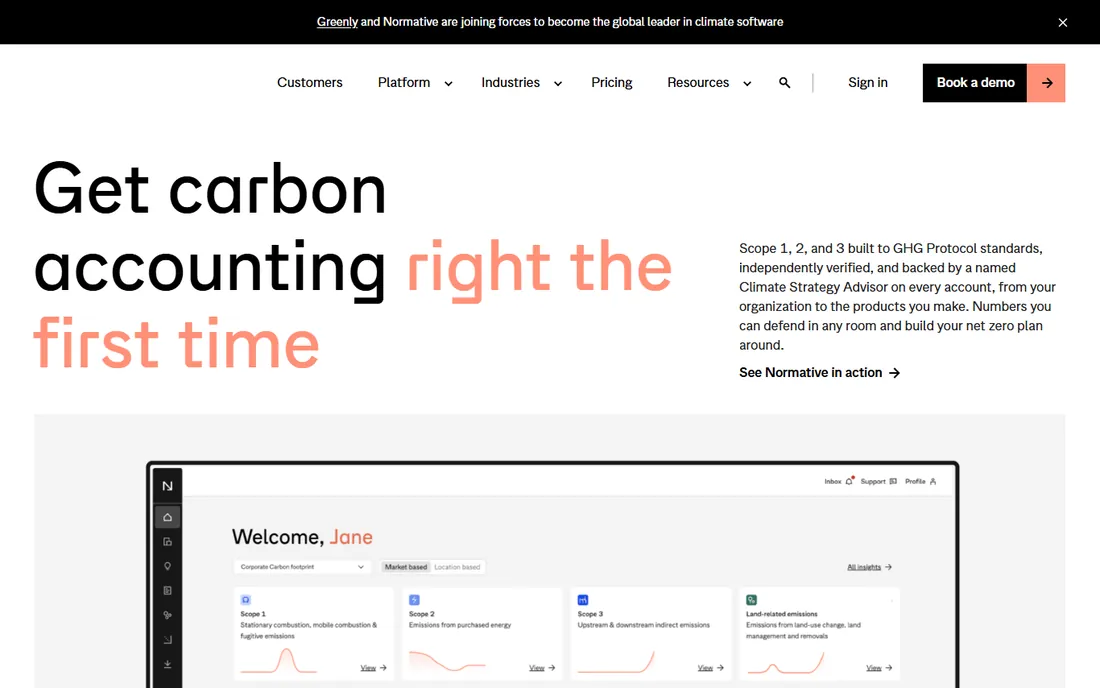
Normative's pitch is simple: get carbon accounting right the first time. The platform calculates Scope 1, 2 and 3 emissions using 349,000 verified emission factors, with every calculation traceable from source data to output, built to GHG Protocol standards and independently verified. Every account includes a named, GHG Protocol-certified Climate Strategy Advisor, not a shared helpdesk.
Automated data ingestion with AI-driven categorization handles the grunt work, while the Carbon Network provides verified supplier data for defensible value-chain numbers. The platform stays current on CSRD, CDP and evolving standards. Normative is joining forces with Greenly, combining scientific rigor with Greenly's product suite and reach.
Like most tools here, pricing is quote-based and aimed at enterprises. The named advisor model is the real differentiator: for teams without in-house carbon expertise, having one person who knows your data and methodology is worth more than another dashboard.
What we like- 349,000 verified emission factors
- Named climate advisor on every account
- Independently verified engine
Watch out for- Enterprise positioning
- Pricing not public
Starting priceSee website
Free planFree trial
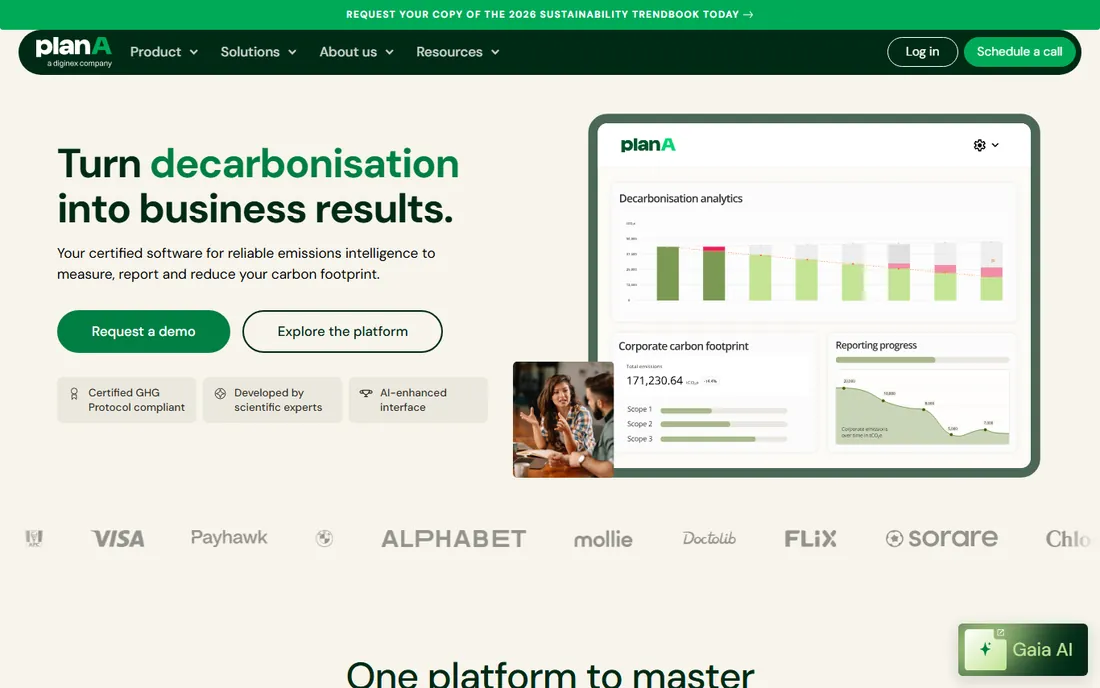
Plan A puts decarbonization, not just measurement, at the center of its platform. The Berlin-based company's certified software measures, reports and reduces carbon footprints with AI-enhanced workflows, ready-to-use calculation methods developed by in-house scientists, and a Scientific Advisory Board behind the methodology.
The platform emphasizes time-to-value: AI-powered data management, one-click corporate carbon footprint reports, and personalized services that guide companies from baseline to net-zero strategy. It is certified GHG Protocol compliant and B Corp certified, with strong positioning on CSRD alignment for European companies.
Note that Plan A signed a definitive agreement to be acquired by Diginex in early 2026, so the product roadmap may evolve under new ownership. US buyers should also confirm support coverage. For European mid-market and enterprise companies that want reduction planning baked in from day one, Plan A remains a strong scientific choice.
What we like- Certified GHG Protocol compliant
- Strong on reduction planning
- B Corp certified
Watch out for- European focus
- Acquisition by Diginex may change the roadmap
Starting priceSee website
Free planNo
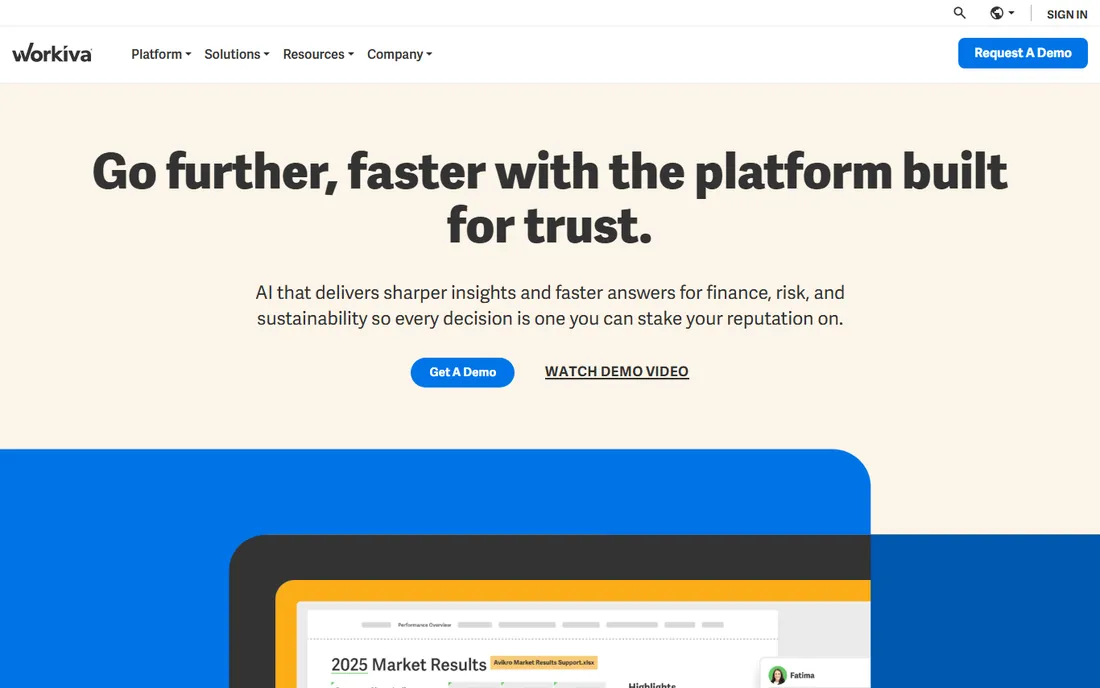
Workiva is the odd one out here, and deliberately so. It is not primarily a carbon calculator; it is the reporting platform where sustainability data meets financial reporting, audit and risk. Carbon accounting, sustainability program management, framework mapping, double materiality assessment and designed reporting all run on the same controlled platform that finance teams use for SEC filings.
That matters because ESG data is increasingly subject to the same controls as financial data. Workiva provides data collection automation, AI-accelerated drafting and framework alignment, and delivers standalone or integrated reports across global sustainability frameworks, with XBRL tagging for machine-readable disclosure. Over 6,700 companies use the platform.
Companies that only need a carbon footprint should pick a dedicated tool above and possibly feed results into Workiva. But for CFOs and controllers who need sustainability disclosures with financial-grade controls, Workiva is the natural home.
What we like- One platform for finance, risk and sustainability
- Audit-ready controls
- XBRL tagging
Watch out for- Not a pure carbon accounting tool
- Enterprise pricing
How we chose
We reviewed vendor product pages, documentation, analyst reports (Forrester, Verdantix) and public customer reviews on G2 and Capterra to compare emissions coverage, framework support, audit readiness, AI features and pricing models. We looked at company-size fit, from mid-market first footprints to enterprise disclosure programs. We did not run hands-on trials, and pricing in this category is overwhelmingly quote-based, so we note where published figures exist and mark the rest as see website.
What to look for in sustainability management software
Start with your disclosure obligations. If CSRD, California SB 253/SB 261, or SEC climate rules apply to you, you need a platform with framework-specific reporting, audit trails and assurance readiness, not a spreadsheet with emission factors. Enterprise tools like IBM Envizi, Watershed and Persefoni are built for this; mid-market tools like Greenly and Plan A cover the essentials with less overhead.
Scope 3 coverage is the next filter. For most companies, supply chain emissions dwarf direct ones, yet they are the hardest to measure. Ask how each platform handles supplier data: spend-based estimates, supplier surveys, or verified supplier data through networks like Normative's Carbon Network. If your value chain is your footprint, prioritize Sweep or Normative.
Check the emission factor library and methodology transparency. Defensible numbers require regionally specific, science-based factors and a clear audit trail from source data to reported output. Independently verified engines (Normative's is verified by TÜV SÜD; Plan A's is TÜV Rheinland certified) give auditors something to lean on.
Finally, consider who does the work. AI assistants like Sweepy, EcoPilot and PersefoniAI reduce the data-entry burden, and named advisors (Normative) or implementation partners (Sweep, Envizi) fill expertise gaps. A platform your team will actually use beats a more powerful one that sits idle after onboarding.
Why carbon accounting is becoming mandatory
Voluntary sustainability reporting is giving way to mandatory disclosure. The EU's Corporate Sustainability Reporting Directive, California's climate disclosure laws, and evolving SEC rules mean thousands of companies must now report emissions with the same rigor as financials, including limited assurance from auditors.
That shift is what separates this software category from generic ESG dashboards. Audit-ready data ingestion, finance-grade controls, and traceable calculations are no longer nice-to-haves; they are the price of admission. Companies still running carbon accounting in spreadsheets face a painful migration when their first assurance engagement arrives.
The consolidation wave, Greenly joining Normative and Diginex acquiring Plan A, signals a maturing market. Buyers should favor platforms with transparent methodologies and data portability, so a vendor's corporate changes do not strand their emissions history.
Frequently asked questions
What is sustainability management software?
Sustainability management software centralizes environmental, social and governance data, calculates greenhouse gas emissions, tracks reduction initiatives, and produces disclosures aligned to frameworks like CSRD, GRI, CDP and TCFD. It replaces spreadsheets with auditable, automated workflows.
What is the difference between carbon accounting and ESG reporting?
Carbon accounting measures greenhouse gas emissions across Scopes 1, 2 and 3. ESG reporting covers the broader environmental, social and governance picture, including labor practices, board diversity and ethics. Most platforms on this list do both, but tools like Persefoni and Normative lead on carbon depth while Workiva leads on reporting breadth.
How much does sustainability management software cost?
Most enterprise platforms are quote-based, with deals commonly reaching five or six figures annually depending on company size, data volume and modules. Mid-market tools like Greenly and Plan A publish lower entry points. Expect to pay for implementation and advisory support on top of the license.
What are Scope 1, 2 and 3 emissions?
Scope 1 covers direct emissions from sources you own, like company vehicles. Scope 2 covers indirect emissions from purchased electricity and heat. Scope 3 covers everything else in the value chain, from suppliers to product use. Scope 3 is usually the largest share and the hardest to measure.
Do I need this software if I am a small business?
If no regulation requires disclosure, you may not need a full platform yet, but customers and investors increasingly ask for emissions data. Mid-market tools like Greenly offer an affordable starting point, and a first footprint now is cheaper than a rushed one under a regulatory deadline later.
Can this software replace a sustainability consultant?
It reduces the need but rarely eliminates it. Platforms automate data collection and calculations, and some include advisors or partner networks. Complex Scope 3 programs, assurance engagements and reduction strategy still benefit from human expertise, which is why several vendors bundle advisory services.
Sources we checked (10)
- https://www.ibm.com/products/envizi
- https://www.persefoni.com
- https://watershed.com
- https://sweep.net/
- https://greenly.earth/
- https://normative.io
- https://plana.earth/
- https://workiva.com/
- https://kurums.com/carbon-accounting-software/
- https://gaiacompany.io/best-carbon-accounting-software/
Is your product missing or out of date?
We review this list regularly. Vendors can request a listing, send updated pricing or ask about featured placement.

Shihab Mia · Founder, Rankite
Shihab has spent more than a decade helping SaaS and e-commerce brands grow through search. He writes Rankite's software buying guides from pricing pages, documentation and public user reviews. More about Shihab.