How we make this list: we compare pricing pages, product documentation and public user reviews. Rankite is independent; if a vendor ever pays for a featured spot, that listing is clearly labeled Partner.
Key takeaways
- QuickBooks Online and Xero remain the two client accounting platforms bookkeepers must know.
- Karbon is the leading practice management layer for firms running on workflows.
- Dext automates receipt and invoice capture with 99%+ extraction accuracy.
- Wave and Zoho Books give budget-conscious clients genuinely capable free and low-cost options.
Quick comparison
| Tool | Best for | Starting price | Free plan |
|---|
 QuickBooks Online QuickBooks Online | US client standard | See website | Free trial |
 Xero Xero | clean multi-client books | See website | Free trial |
 Wave Wave | free client accounting | See website | Yes |
 FreshBooks FreshBooks | service business clients | See website | Free trial (30 days) |
 Zoho Books Zoho Books | budget multi-feature | See website | Yes |
 Sage Sage | established firm staple | See website | Free trial |
 Dext Dext | receipt automation | See website | Free trial (14 days) |
 Karbon Karbon | practice management | $59 per user/month (billed annually) | Free trial |
Is your product missing or out of date?
We review this list regularly. Vendors can request a listing, send updated pricing or ask about featured placement.
The best software for bookkeepers
Starting priceSee website
Free planFree trial
QuickBooks Online is the platform most American small business clients already use or expect. For bookkeepers, that network effect is the product: the accountant dashboard, client collaboration tools, and the ProAdvisor program are built for firms managing dozens of QBO clients. Bank feeds, receipt capture, and AI-assisted categorization handle the routine work.
The strength is ecosystem depth: payroll, payments, time tracking, and lending all live under the Intuit roof. The honest catch is cost trajectory. Intuit has raised prices steadily, and firms feel it across client portfolios. Still, for US bookkeepers, QBO fluency is table stakes. Learn it first, then add the tools below around it.
What we like- The US small business standard clients expect
- Deep payroll, tax, and lending integrations
- Strong accountant program
Watch out for- Price increases have frustrated firms
- Interface can feel cluttered with upsells
Starting priceSee website
Free planFree trial
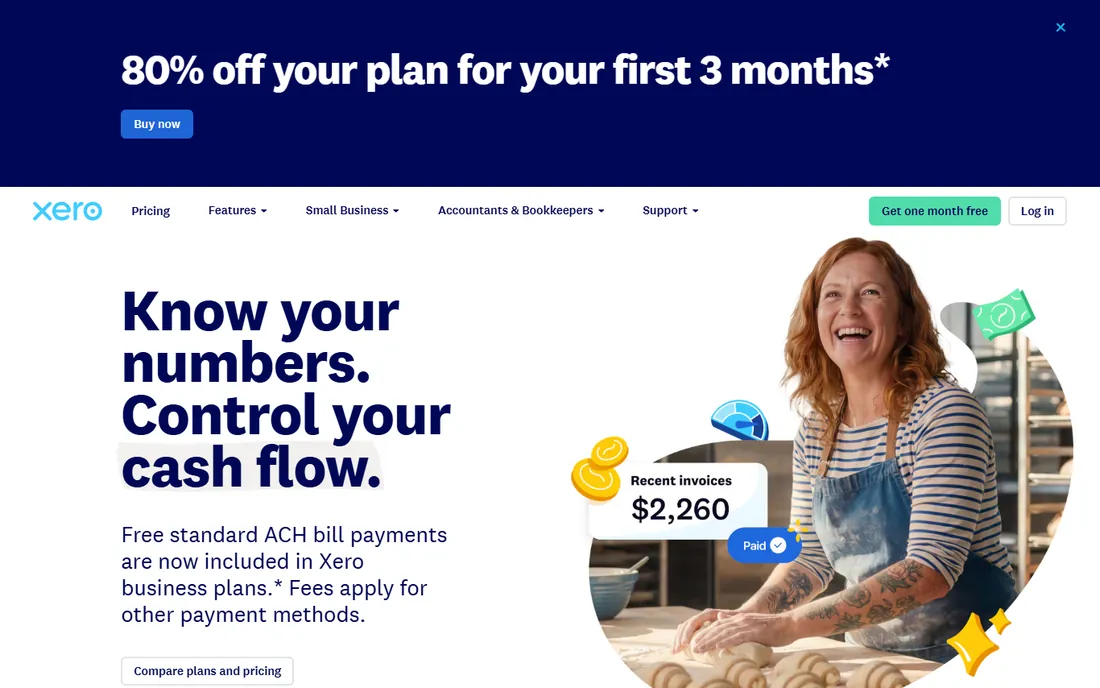
Xero is the favorite of bookkeepers who value a clean interface and sane workflows. Unlimited users on every plan means inviting clients and staff costs nothing extra, and the global app marketplace offers over a thousand integrations. Bank reconciliation in Xero is widely considered the smoothest in the industry.
For firms with international clients or tech-forward small businesses, Xero often wins the beauty contest and the usability one. The limitation for US practices is payroll: Xero's native US payroll story is thinner than QuickBooks, usually requiring a partner app. Firms split on this; many run both platforms and match the client to the tool.
What we like- Elegant interface bookkeepers love
- Unlimited users on all plans
- Strong global app ecosystem
Watch out for- US payroll is less integrated than QuickBooks
- Pricing varies by region
Starting priceSee website
Free planYes
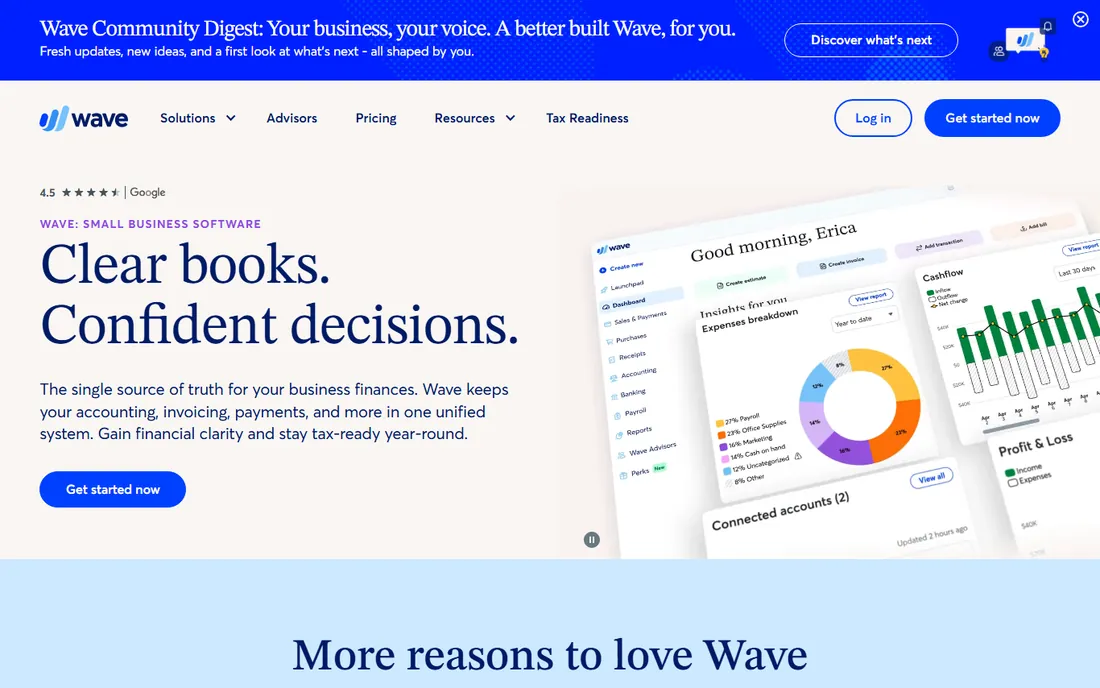
Wave offers free double-entry accounting, invoicing, and receipt scanning, which makes it the answer for micro-business clients who resist paying for software. Bookkeepers serving freelancers and side businesses can standardize these clients on Wave without a subscription conversation.
The fit is specific: simple businesses with straightforward books. Multi-entity, inventory-heavy, or complex clients will outgrow it. But for the long tail of tiny clients, Wave keeps them organized and billable instead of shoebox-shaped. Paid add-ons cover payments and payroll where available.
What we like- Genuinely free accounting and invoicing
- Simple enough for non-accountant clients
- Receipt scanning included
Watch out for- Limited advanced features
- Payroll available in limited regions
Starting priceSee website
Free planFree trial (30 days)
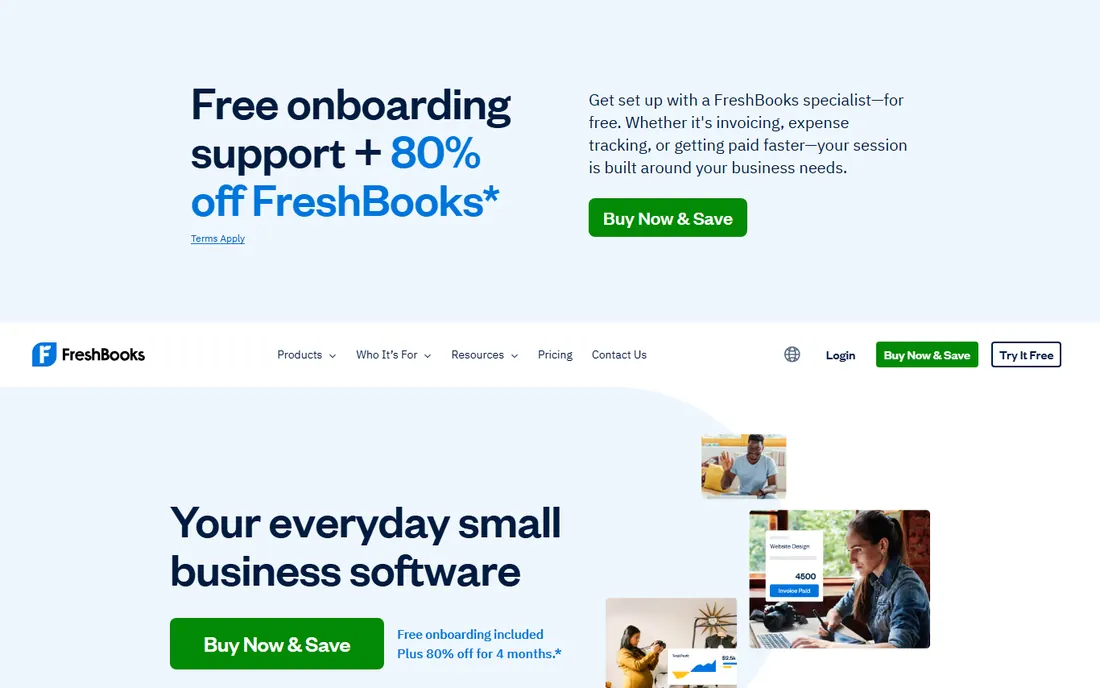
FreshBooks shines with service businesses: consultants, agencies, and freelancers who invoice for time. The invoicing experience is the best in the category, time tracking flows into invoices naturally, and clients adopt it willingly because it feels designed for them. A 30-day free trial lets bookkeepers test with real clients.
For bookkeepers, FreshBooks is a client-pleaser rather than a power tool. The double-entry accounting exists but is less deep than QBO or Xero. Firms often use it for service clients while keeping complex books elsewhere. When the client's main job is getting invoices out and getting paid, FreshBooks is hard to beat.
What we like- Best-in-class invoicing experience
- Time tracking built in
- Clients actually enjoy using it
Watch out for- Accounting depth is lighter than QuickBooks or Xero
- Pricing per client adds up for firms
Starting priceSee website
Free planYes
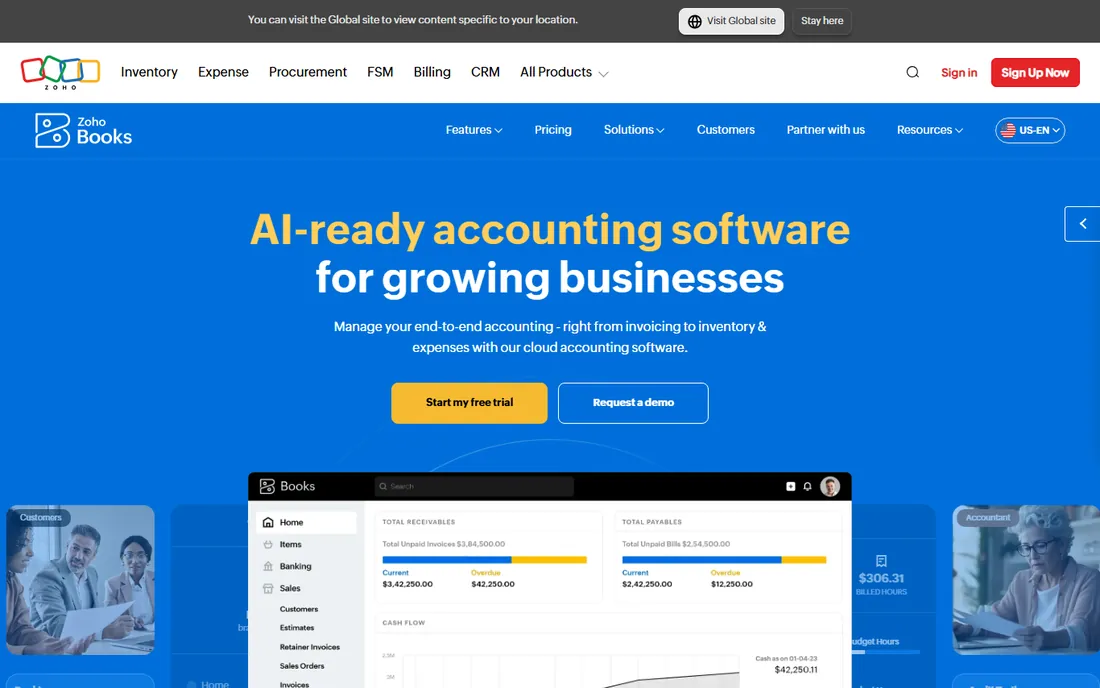
Zoho Books packs inventory management, project billing, and multi-currency into pricing that undercuts the majors, with a free tier for businesses under $50K in revenue. For bookkeepers with cost-sensitive clients, it is the value play: real double-entry accounting with features that usually cost more.
The Zoho ecosystem is the multiplier. Clients already on Zoho CRM, Inventory, or Expense get a unified suite. The honest limitation is market momentum: fewer US accountants know it, so firms may work alone on edge cases. Bookkeepers willing to be the local expert get a capable platform at a fraction of the cost.
What we like- Free tier for small businesses
- Deep features including inventory
- Zoho ecosystem integration
Watch out for- US market presence is smaller
- Some advanced reports lag competitors
Starting priceSee website
Free planFree trial
Sage has served businesses since 1981, and many established clients run on it. Sage Accounting covers small business needs while Sage Intacct serves clients scaling toward mid-market complexity. For bookkeepers inheriting legacy clients, Sage fluency protects revenue.
The challenge is the product maze: Sage 50, Sage Accounting, Sage Intacct, and regional variants confuse even experienced professionals. The cloud small business experience also trails QuickBooks and Xero in polish. But for firms with long-tenured clients on Sage, or clients outgrowing basic platforms, it remains a serious option.
What we like- Decades of trust with established businesses
- Sage Intacct for scaling clients
- Strong compliance features
Watch out for- Product line is confusing
- Small business cloud UX trails newer rivals
Starting priceSee website
Free planFree trial (14 days)
Dext sits alongside the accounting platform, not instead of it. Clients photograph receipts and invoices; Dext extracts the data with 99%+ accuracy and publishes it to QuickBooks, Xero, Sage, or Zoho. With 700,000+ businesses using it, it is the standard answer to the shoebox problem. A 14-day free trial requires no credit card.
For bookkeepers, Dext is a margin tool: it eliminates the data entry that used to consume hours. Supplier rules and bank statement extraction compound the savings. The cost is per-document volume, so high-transaction clients need the math checked. Pair it with any platform above and month-end gets dramatically shorter.
What we like- 99%+ receipt and invoice extraction accuracy
- Integrates with all major accounting platforms
- Expense management included
Watch out for- Per-document pricing scales with volume
- Another subscription to manage
Starting price$59 per user/month (billed annually)
Free planFree trial
Karbon is the operating system for the bookkeeping practice itself. It combines email, tasks, workflows, client communication, and time tracking into one platform designed for accounting firms. Work templates standardize month-end across clients, and automation moves jobs through the pipeline. Plans start at $59 per user per month billed annually.
For firms drowning in email threads and spreadsheet trackers, Karbon is transformative. Everything about a client engagement lives in one place. The honest catch is commitment: per-user pricing and the implementation effort mean it suits firms ready to systematize. Solo bookkeepers may find it heavy; growing practices will wonder how they worked without it.
What we like- Purpose-built for accounting firm workflows
- Email, tasks, and client work in one place
- Strong automation
Watch out for- Priced per user, which adds up for larger teams
- Implementation takes commitment
How we chose
We selected tools bookkeepers actually use in 2026: client accounting platforms plus the practice management and automation layers that surround them. Each vendor's homepage was opened and verified directly, and pricing reflects current vendor pricing pages. We weighed real workflow fit for firms, multi-client management, automation depth, and ecosystem, over raw feature counts. We never claim hands-on testing.
Building your bookkeeping tech stack
Most successful firms standardize on a stack, not a single tool.
The core ledger
Pick one primary client platform: QuickBooks Online for US mainstream clients, Xero for clean multi-client work or international clients. Add Wave or Zoho Books for micro-clients who will not pay for software.
The automation layer
Dext handles document capture across all platforms. Standardize every client on receipt capture and bank feeds; the firms that doubled their effective rates did it here, not in the ledger.
The practice layer
Karbon manages the firm's own work: who is doing what, for which client, by when. Firms above three people feel the absence of this layer first.
The advisory shift
The numbers behind the shift are hard to ignore. Firms that productize monthly close packages and cash flow reviews report steadier revenue and lower churn than hourly shops, because clients buy outcomes they can feel. Automation makes this possible: when Dext and bank feeds handle the data entry, the same headcount can serve twice the clients. Bookkeepers who only do data entry compete with software. The firms thriving in 2026 sell review, cleanup, and advisory: monthly close packages, cash flow forecasting, and KPI reporting. Every tool above automates the mechanical work; your value is the judgment layered on top. Price your services for outcomes, not hours, and let the software handle the hours. The firms that make this leap rarely look back, and their margins show it.
Frequently asked questions
What is the best software for bookkeepers?
QuickBooks Online and Xero lead as client accounting platforms, Karbon leads for practice management, and Dext leads for document automation. Most firms combine several of these.
What software do most bookkeepers use?
QuickBooks Online dominates the US market, with Xero strong among tech-forward and international firms. Practice management tools like Karbon and capture tools like Dext are increasingly standard.
Is there free software for bookkeepers?
Yes. Wave offers free accounting and invoicing, and Zoho Books has a free tier for small businesses. QuickBooks, Xero, and Karbon offer free trials but no permanent free plans.
What is the best software for a bookkeeping business?
For running the practice itself, Karbon is the leading choice, combining workflows, client communication, and time tracking. Pair it with QuickBooks Online or Xero for client books.
How much does bookkeeping software cost?
Client accounting platforms run roughly $15 to $100+ per month per client depending on the plan. Karbon starts at $59 per user per month billed annually. Dext pricing scales with document volume.
Can bookkeeping software replace a bookkeeper?
No. Software automates data entry and reconciliation, but review, categorization judgment, cleanup, and advisory still need a professional. The best software makes bookkeepers more valuable, not obsolete.
Sources we checked (8)
- https://quickbooks.intuit.com
- https://www.xero.com/us/
- https://www.waveapps.com
- https://www.freshbooks.com
- https://www.zoho.com/us/books/
- https://www.sage.com/en-us/
- https://dext.com/us
- https://karbonhq.com
Is your product missing or out of date?
We review this list regularly. Vendors can request a listing, send updated pricing or ask about featured placement.

Shihab Mia · Founder, Rankite
Shihab has spent more than a decade helping SaaS and e-commerce brands grow through search. He writes Rankite's software buying guides from pricing pages, documentation and public user reviews. More about Shihab.