How we make this list: we compare pricing pages, product documentation and public user reviews. Rankite is independent; if a vendor ever pays for a featured spot, that listing is clearly labeled Partner.
Key takeaways
- Facebook and Instagram remain the core pair for most agents: listings reach buyers, and Reels build local familiarity.
- YouTube rewards agents who teach: market updates and neighborhood tours compound into a lead engine over time.
- TikTok offers the cheapest reach, but the audience skews younger and further from a purchase.
- LinkedIn is underrated for agents chasing relocation, corporate clients, and referral relationships.
Quick comparison
| Tool | Best for | Starting price | Free plan |
|---|
 Facebook Facebook | listings and local community reach | Free | Yes |
 Instagram Instagram | visual listings and Reels | Free | Yes |
 YouTube YouTube | long-form market authority | Free | Yes |
 TikTok TikTok | cheap reach and viral tours | Free | Yes |
 LinkedIn LinkedIn | relocation and professional referrals | Free | Yes |
 X X | real-time market commentary | Free | Yes |
 Pinterest Pinterest | home ideas that drive search traffic | Free | Yes |
Is your product missing or out of date?
We review this list regularly. Vendors can request a listing, send updated pricing or ask about featured placement.
Starting priceFree
Free planYes
Facebook is still where the buyers are. The platform's adult user base overlaps almost perfectly with home-buying demographics, and features like Marketplace, local groups, and events put listings in front of people already thinking about moving. A well-run business page plus active participation in community groups generates a steady stream of inquiries.
The advertising side is the real power. Facebook's local targeting lets an agent promote a listing to likely buyers within specific zip codes, income bands, and life events. No other platform matches that precision for the price.
Organic reach is the honest catch. Business page posts reach a fraction of followers without paid boost, so agents should plan on a modest ad budget. And if your target buyer is under 30, they are spending more time on Instagram and TikTok.
What we like- Largest adult audience
- Marketplace and groups drive local discovery
- Precise local ad targeting
Watch out for- Organic reach for business pages keeps shrinking
- Younger buyers are elsewhere
Starting priceFree
Free planYes
Instagram is real estate's natural visual home. Carousel posts walk buyers through a property room by room, Stories show behind-the-scenes moments that humanize the agent, and Reels of home tours regularly reach far beyond an agent's follower count.
The direct message behavior matters more than people realize. Buyers who would never fill out a contact form will happily DM an agent about a listing they liked. Agents who respond fast turn casual browsers into appointments.
The platform's limits are real: you cannot put clickable links in most posts, and the audience skews younger than the typical buyer pool. But for building a recognizable local brand and showcasing listings beautifully, nothing beats it.
What we like- Perfect format for property visuals
- Reels get strong distribution
- DMs convert well
Watch out for- Link sharing is limited
- Audience skews younger than prime buyers
Starting priceFree
Free planYes
YouTube is the long game that pays the best. A neighborhood tour or monthly market update keeps generating views and leads for years, and it ranks in Google search where high-intent buyers actually look. Relocation buyers especially rely on YouTube to research areas from afar.
The format builds trust that short clips cannot. A ten-minute video of an agent walking a neighborhood and explaining prices, schools, and commute times does more for credibility than a hundred listing photos. Viewers arrive at the first call already convinced.
The catch is patience and effort. Growing a channel takes months of consistent posting, and video production is more work than phone photos. Agents who commit for a year rarely regret it; agents who post three videos and quit wasted their time.
What we like- Videos rank on Google for years
- Builds deep trust
- Great for relocation buyers
Watch out for- Slow to build an audience
- Production takes more effort
Starting priceFree
Free planYes
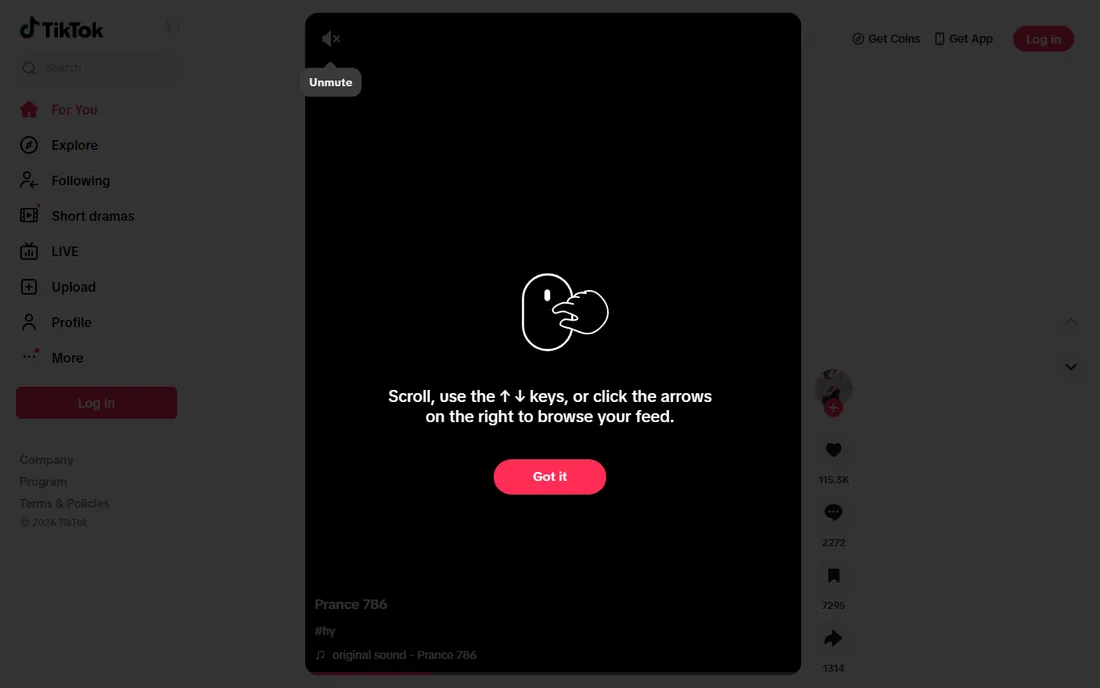
TikTok gives agents the cheapest attention on the internet. A phone-filmed home tour can reach hundreds of thousands of viewers overnight, something no other platform offers without ad spend. The casual, unpolished style actually suits real estate: viewers trust a quick walkthrough more than a produced commercial.
Smart agents use it for brand building and future pipeline rather than immediate closings. Today's renters are tomorrow's buyers, and the agent they have watched for two years gets the first call.
Lead quality is the honest weakness. Viral reach brings comments from people across the country who will never buy in your market. Treat TikTok as top-of-funnel brand work, and make sure your bio funnels local viewers to your other channels.
What we like- Enormous organic reach
- Home tour content performs well
- Low production bar
Watch out for- Audience is young and early in the buying journey
- Lead quality varies
Starting priceFree
Free planYes
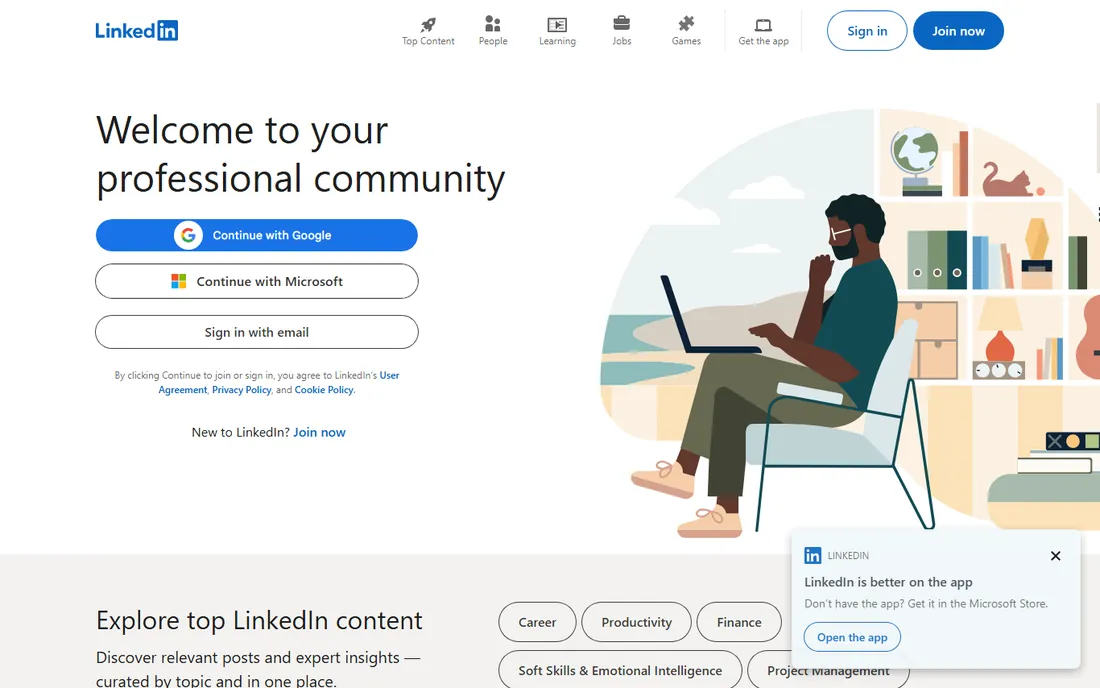
LinkedIn is the platform most agents ignore and should not. Relocating professionals, the highest-value buyer segment in many markets, live on LinkedIn. Market analysis posts, relocation guides, and thoughtful commentary on local economic trends reach exactly the people deciding where to move.
It is also the best referral network available. Mortgage brokers, financial advisors, attorneys, and HR managers who handle relocations are all on LinkedIn, and relationships with them produce steadier business than any ad campaign.
Do not post listings there; nobody is house-hunting on LinkedIn. Post expertise. One sharp market insight per week, aimed at professionals, builds the kind of authority that turns into relocation clients and referral partnerships.
What we like- Reaches relocating professionals
- Great for referral networks
- Content has long shelf life
Watch out for- Not a listing platform
- Smaller audience for consumer content
Starting priceFree
Free planYes
X rewards agents with opinions. Quick takes on interest rate moves, new developments, and local market data fit the platform's pace, and journalists looking for real estate quotes still search X first. A sharp, consistent voice can build a following that punches above its size.
The effort-to-output ratio is friendly: a few thoughtful posts a week take minutes. For agents who enjoy writing and follow market news closely, it is the lowest-cost platform to maintain.
The audience for actual home buying is small, and reach is unpredictable. Treat X as a credibility and media play rather than a lead channel. If a local reporter quotes you because of your posts, the platform has done its job.
What we like- Fast-moving conversation
- Good for media visibility
- Low effort per post
Watch out for- Small real estate audience
- Unpredictable reach
Starting priceFree
Free planYes
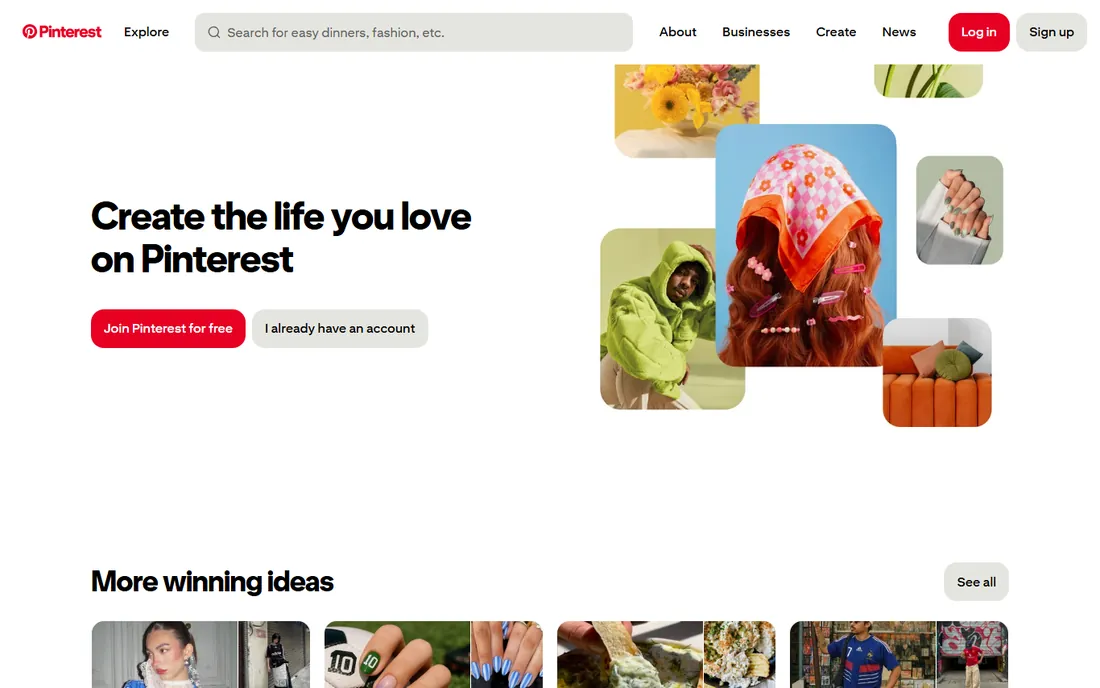
Pinterest works differently from every other platform here: it is a search engine for ideas, and pins keep driving traffic for months or years. Home decor, renovation ideas, and neighborhood guides pinned today still bring visitors long after a Facebook post has died.
The audience is planning-oriented. People saving kitchen remodel ideas today are future sellers and buyers. Agents who pin local content, market guides, and genuinely useful home advice build a quiet traffic engine to their website.
It will not generate conversations or immediate inquiries. There is no DM culture and no viral moment. But as a complement to an agent's website content strategy, Pinterest's longevity makes it worth the modest effort.
What we like- Content lives for months
- Users plan purchases
- Drives website traffic
Watch out for- Indirect path to leads
- Not a conversation platform
Where to focus if you are starting from zero
Pick two platforms, not seven. For most agents, that means Facebook for listings and local reach plus Instagram for visual brand building. These two share content easily, cover the broadest buyer demographics, and support both organic and paid strategies.
Add YouTube when you can commit to a schedule. It is the only platform here that builds an asset, a library of videos that keeps working while you sleep. Agents in competitive markets find that a YouTube presence differentiates them more than any other single channel.
Everything else is situational. TikTok if you enjoy short video and want reach, LinkedIn if you chase relocation and referrals, X if you like writing commentary, Pinterest if you publish website content. Depth on two platforms beats shallow presence on seven.
Turning followers into clients
Content builds the audience, but systems convert it. Every profile needs a clear next step: a link to book a consultation, a home valuation tool, or a simple contact form. Agents who treat social media as a broadcast channel get likes; agents who treat it as the top of a funnel get clients.
Speed matters enormously in the DM. A prospect who messages about a listing and hears back in five minutes books a showing; one who waits two days has moved on. Set up notifications and auto-replies so no inquiry sits overnight.
Finally, track what actually produces appointments, not just engagement. A platform with fewer followers that generates two closings a quarter beats a viral account that generates none. Review quarterly, double down on what converts, and cut what does not.
How we chose
We evaluated the major social platforms on how real estate agents actually use them: listing distribution, lead generation, local brand building, and referral development. The assessment draws on industry marketing data, agent case studies, and platform audience demographics rather than generic social media advice. Every platform listed is free to use with optional paid promotion, so the comparison focuses on fit and effort rather than software pricing.
The biggest mistake is posting only listings. A feed of nothing but "just listed" and "just sold" trains followers to scroll past. Mix in market education, neighborhood content, and personal moments that make people remember you when it is time to move.
Inconsistency is the second killer. Posting daily for a month then disappearing for three months builds nothing. Two quality posts a week, sustained for a year, outperforms any burst.
Finally, agents ignore the boring work of responding. Comments and DMs are where leads actually convert, and the agent who replies in minutes wins the business over the agent with the prettier feed.
Frequently asked questions
Which platform generates the most leads for real estate agents?
Facebook, through a combination of Marketplace, groups, and paid ads with precise local targeting. Instagram is close behind for agents who work it consistently. YouTube generates fewer but higher-quality leads, especially from relocation buyers.
Should I pay for ads or focus on organic content?
Do both, but in proportion. Organic content builds your brand and costs only time; paid promotion puts specific listings in front of likely buyers. A modest, consistent ad budget on Facebook and Instagram usually outperforms sporadic big spends.
How often should an agent post?
Quality and consistency beat volume. Three to five posts a week across your main platforms is plenty for most agents. YouTube can be weekly or even monthly if the videos are substantive. The key is sustaining the schedule for a year, not sprinting for a month.
Is TikTok worth it for agents over 40?
Yes, if you are comfortable on camera. TikTok's audience includes plenty of first-time buyers in their late twenties and thirties, and the algorithm does not care about your age. Authentic, knowledgeable content performs well regardless of who makes it.
Can I repurpose the same content across platforms?
Absolutely, with adaptation. A home tour can become a TikTok, an Instagram Reel, a YouTube Short, and stills for Facebook. Adjust the format and captions for each platform rather than cross-posting blindly, and you multiply every piece of content.
Sources we checked (7)
- https://www.facebook.com/
- https://www.instagram.com/
- https://www.youtube.com/
- https://www.tiktok.com/
- https://www.linkedin.com/
- https://x.com/
- https://www.pinterest.com/
Is your product missing or out of date?
We review this list regularly. Vendors can request a listing, send updated pricing or ask about featured placement.

Shihab Mia · Founder, Rankite
Shihab has spent more than a decade helping SaaS and e-commerce brands grow through search. He writes Rankite's software buying guides from pricing pages, documentation and public user reviews. More about Shihab.