How we make this list: we compare pricing pages, product documentation and public user reviews. Ratings come from G2, Capterra or Trustpilot, with the date we checked them.
Key takeaways
- SDR stands for sales development representative, the role that finds, qualifies, and books meetings with potential buyers before account executives take over.
- SDR software is the stack that supports that role: contact data, sequencing, dialing, CRM tracking, and conversation intelligence, usually across several tools.
- Apollo is the best all-in-one starting point at 49 dollars per user per month, while Outreach and Salesloft lead enterprise engagement at roughly 100 to 125 dollars.
- Most teams need only three good tools that talk to each other, plus a data layer they trust, rather than twelve overlapping products.
- Multichannel outreach across email, phone, and social beats single-channel outreach by a wide margin, so choose tools that cover more than one channel.
Quick comparison
| Tool | Best for | Starting price | Free plan |
|---|
 Apollo | All-in-one data and outreach | $49 per user per month | Yes |
 Outreach | Enterprise sequencing and analytics | $100 per user per month | No |
 Salesloft | Mid-market cadences and coaching | $125 per user per month | No |
 ZoomInfo | Deepest B2B contact data | See website | No |
 HubSpot Sales Hub | CRM-native engagement | $15 per user per month | Yes |
 Gong | Conversation intelligence | $100 per user per month | No |
 Clay | Multi-source enrichment workflows | $185 per month | No |
 Reply.io | SMB multichannel outreach with AI | $49 per user per month | No |
Is your product missing or out of date?
We review this list regularly. Vendors can request a listing, send updated pricing or ask about featured placement.
#1Apollo
Best for: All-in-one data and outreach4.7/5 on
G2 (9,847 reviews, checked Oct 2026)
Visit apollo.io
Starting price$49 per user per month
Free planYes
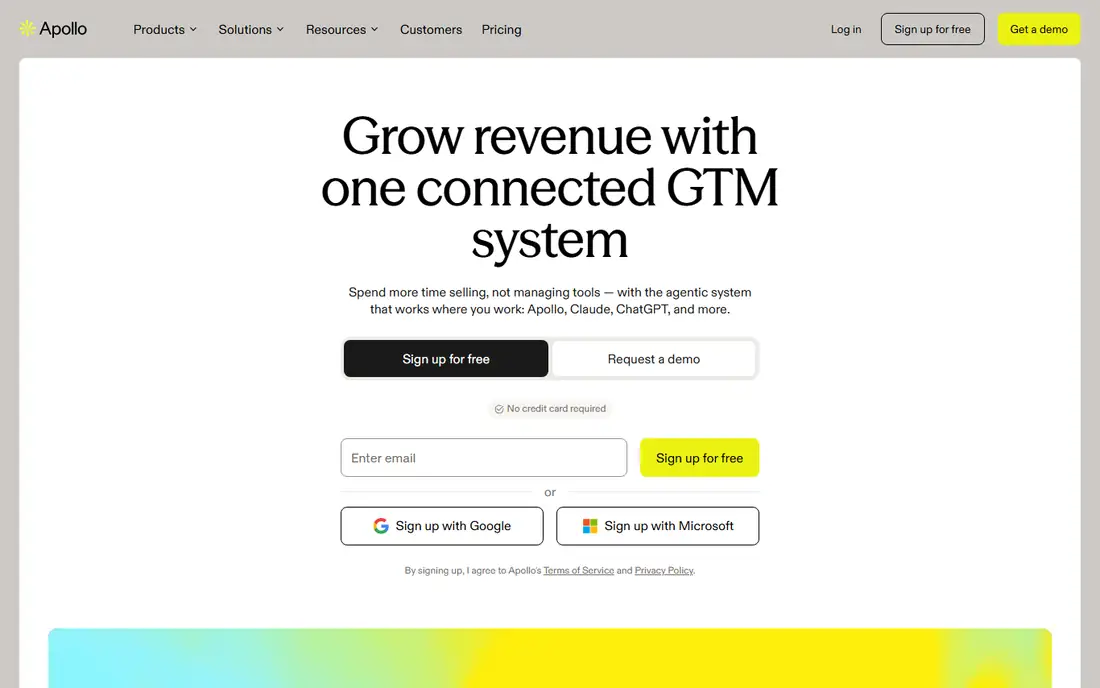
Apollo combines a B2B contact database with sales engagement, so a small team can find prospects, verify emails, run sequences, and dial from one platform. Paid plans start at 49 dollars per user per month, with a free tier for testing, and the database covers 275 million or more contacts. Its 4.7 rating on G2 across more than 9,000 reviews reflects broad satisfaction among startups and small businesses.
The limits are data freshness and dialer cost. Apollo data is a static database that refreshes on a slower cycle than real-time verification tools, and the advanced dialer costs 119 dollars per team per month as an add-on. Apollo suits startups and small teams that want data and outreach in one affordable tool.
What we like- Contact database plus sequencing in one tool
- Free tier available
- 275 million or more contacts
- 4.7 rating on G2
Watch out for- Data accuracy varies by segment
- Dialer add-on costs extra
- Enterprise features need higher plans
#2Outreach
Best for: Enterprise sequencing and analytics4.3/5 on
G2 (3,671 reviews, checked Oct 2026)
Visit outreach.io
Starting price$100 per user per month
Free planNo
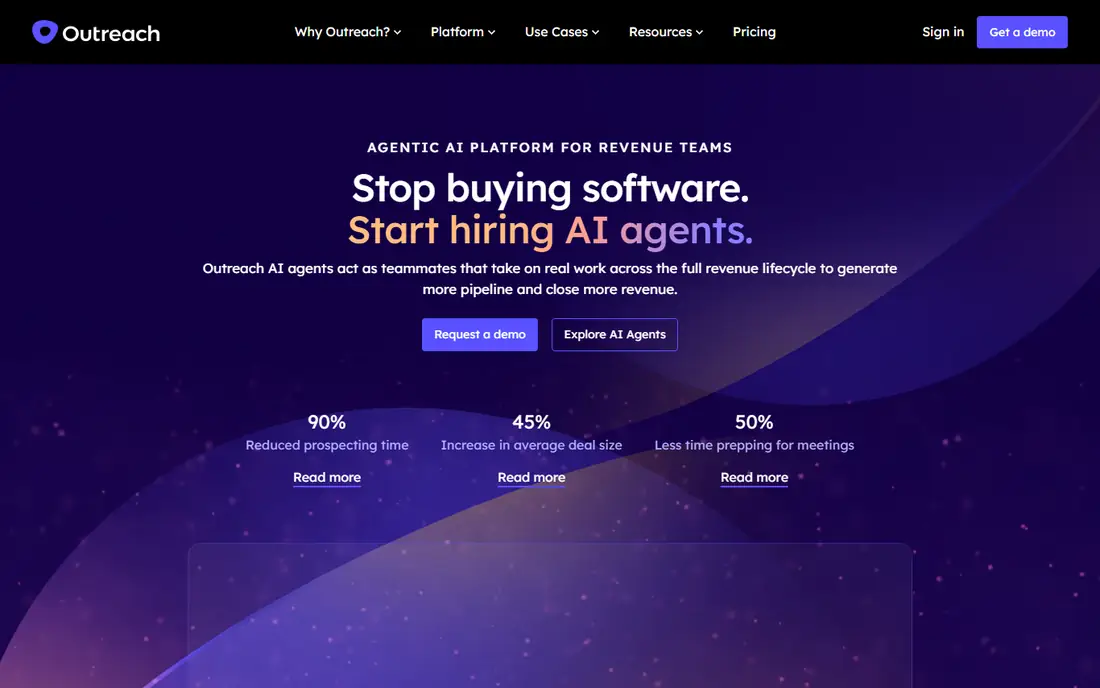
Outreach is the enterprise standard for sales engagement, running multichannel sequences across email, phone, and social touches, with deep analytics on reply rates, sequence performance, and pipeline contribution. It costs roughly 100 dollars per user per month on annual contracts, with enterprise pricing varying by seat count and AI credits. Outreach wins on sequence depth, enterprise CRM integration, and AI agent breadth, which is why mid-market and enterprise teams with 10 or more reps standardize on it.
The drawbacks are price and data. Outreach is an execution platform that assumes you source contacts from ZoomInfo, Apollo, or another database, so the total stack cost is higher than the seat price alone. Outreach suits enterprise SDR teams that need advanced sequencing and analytics at scale.
What we like- Deepest sequencing and analytics
- Strong enterprise CRM integration
- AI agent breadth
Watch out for- Annual contracts required
- Roughly 100 dollars per user
- Assumes you source contacts elsewhere
#3Salesloft
Best for: Mid-market cadences and coaching4.5/5 on
G2 (9,907 reviews, checked Oct 2026)
Visit salesloft.com
Starting price$125 per user per month
Free planNo
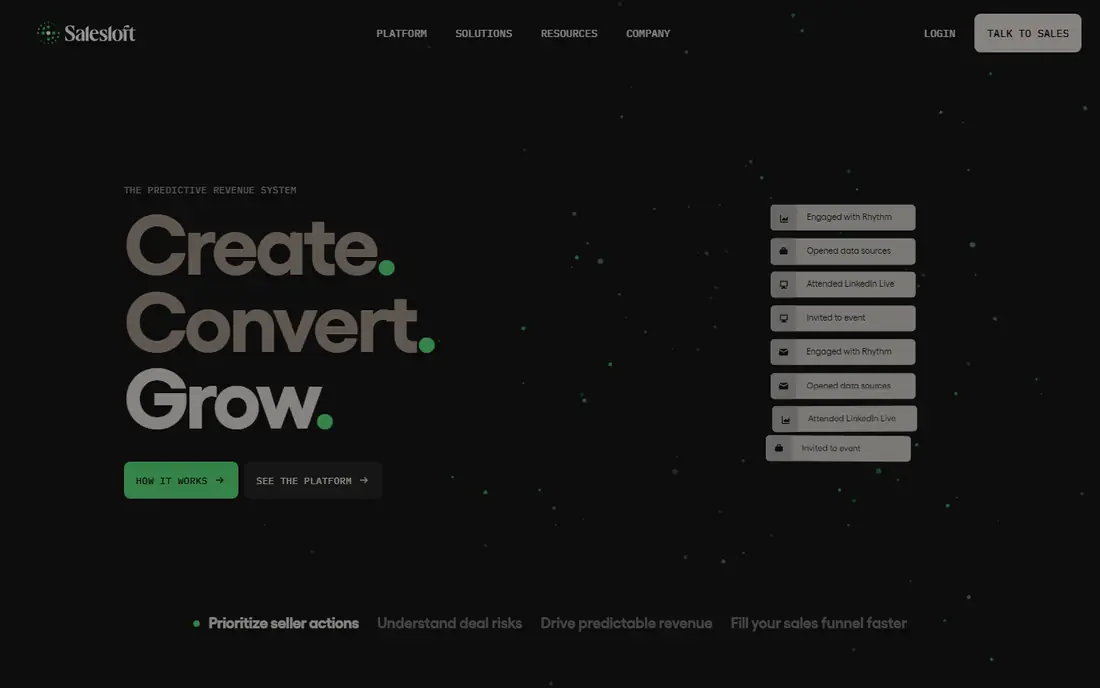
Salesloft serves small to mid-market teams that want an intuitive engagement platform with strong CRM integrations and coaching features. Its cadence builder, conversation intelligence, and Rhythm AI help managers coach reps on real calls, and its interface is widely rated as easier to learn than Outreach. Pricing estimates range from 75 to 180 dollars per user per month depending on plan and negotiation, with 125 dollars a common enterprise estimate.
The limits are contract terms and change. Annual contracts are required, and Salesloft merged with Clari in late 2025, so the combined roadmap may shift. Salesloft suits mid-market teams that value coaching, usability, and fast implementation over maximum sequence depth.
What we like- Intuitive interface
- Strong coaching and conversation intelligence
- Good CRM integrations
Watch out for- Annual contracts required
- Pricing estimates range 75 to 180 dollars
- Merged with Clari in late 2025
#4ZoomInfo
Best for: Deepest B2B contact data4.5/5 on
G2 (9,130 reviews, checked Oct 2026)
Visit zoominfo.com
Starting priceSee website
Free planNo
ZoomInfo is a data platform, not an engagement tool: it supplies verified contacts, company data, org charts, and buyer intent signals that SDRs use to build prospect lists. Pricing typically starts near 15,000 dollars per year on annual contracts, which puts it out of reach for most small teams but makes it standard for enterprise sales organizations. Its data refresh cycle, as fast as 7 days on some tiers, beats the industry average of roughly six weeks, and stale records directly slow pipeline velocity.
The drawbacks are cost and scope. ZoomInfo does not run sequences or dialers itself, so it pairs with Outreach, Salesloft, or Apollo for execution, raising total stack cost. ZoomInfo suits enterprise teams where data accuracy and intent signals justify a five-figure annual investment.
What we like- Deepest B2B database with intent signals
- 7-day data refresh on some tiers
- Strong enterprise coverage
Watch out for- Pricing starts near 15,000 dollars per year
- Annual contracts
- Overkill for small teams
#5HubSpot Sales Hub
Best for: CRM-native engagement4.4/5 on
G2 (14,364 reviews, checked Oct 2026)
Visit hubspot.com
Starting price$15 per user per month
Free planYes
HubSpot Sales Hub combines CRM and sales engagement, so teams already on HubSpot can run sequences, make calls, and track deals without buying a separate engagement platform. Paid seats start at 15 dollars per user per month, with a free CRM tier for testing, and conversation intelligence appears on higher plans. For small teams that want one system for contacts, deals, and outreach, HubSpot simplicity is a real advantage.
The limits are engagement depth. HubSpot sequences and analytics trail Outreach and Salesloft for large SDR teams, and advanced features require higher tiers. HubSpot suits small teams already on HubSpot CRM that want engagement without a second vendor.
What we like- Free CRM tier
- Engagement inside the CRM
- Sequences and calling without a separate platform
Watch out for- Engagement depth trails Outreach and Salesloft
- Advanced features need higher tiers
- Best only inside HubSpot
#6Gong
Best for: Conversation intelligence4.7/5 on
G2 (6,679 reviews, checked Oct 2026)
Visit gong.io
Starting price$100 per user per month
Free planNo
Gong records, transcribes, and analyzes sales calls, giving managers coaching insights from what reps actually say, not just what they log in the CRM. It costs roughly 100 dollars per user per month on annual contracts, plus a platform fee, with the Engage module adding more for outreach features. Gong conversation intelligence helps teams learn which talk tracks, questions, and objection responses correlate with booked meetings and closed deals.
The drawbacks are price and scope. Gong is not a sequencing or dialing platform, so it complements Outreach or Salesloft rather than replacing them, and small teams with low call volume gain less. Gong suits mid-market and enterprise teams that want coaching intelligence from real conversations.
What we like- Records and analyzes sales calls
- Coaching insights from real conversations
- Strong enterprise adoption
Watch out for- Roughly 100 dollars per user plus platform fee
- Needs call volume to justify cost
- Not a sequencing tool
#7Clay
Best for: Multi-source enrichment workflows4.6/5 on
G2 (234 reviews, checked Oct 2026)
Visit clay.com
Starting price$185 per month
Free planNo
Clay builds enriched prospect lists by combining data from many sources, with AI research agents that gather company and contact details, verify information, and score leads before outreach begins. It starts at 185 dollars per month, and its workflow builder lets teams create custom enrichment pipelines that no single database can match. For teams where list quality drives results, Clay multi-source approach beats relying on one database alone.
The limits are price and completeness. Clay is an enrichment and list-building tool, not a sequencer or dialer, so it pairs with Outreach, Salesloft, or Apollo for execution, and workflow setup takes learning. Clay suits teams that need multi-source enrichment and AI research for high-value prospect lists.
What we like- Enrichment from many data sources in one workflow
- AI research agents
- Flexible list building
Watch out for- Monthly price of 185 dollars before usage
- Learning curve for workflows
- Needs other tools for sequencing
#8Reply.io
Best for: SMB multichannel outreach with AI4.6/5 on
G2 (1,559 reviews, checked Oct 2026)
Visit reply.io
Starting price$49 per user per month
Free planNo
Reply.io offers multichannel outreach for small to mid-size businesses, with sequences across email, LinkedIn, calls, SMS, and WhatsApp, plus Jason AI, an autonomous SDR that handles replies and books meetings. Plans start at 49 dollars per user per month, with a 140 million contact database included, which makes it a strong all-in-one alternative to Apollo for SMB teams. Its AI reply categorization and multichannel coverage suit teams that want automation without enterprise pricing.
The limits are call gating and AI limits. Calls require the 89 dollar plan, and AI SDR reply rates still trail skilled human SDRs, so Reply.io works best with human oversight. Reply.io suits SMB teams that want multichannel outreach with AI assistance at a mid-range price.
What we like- Multichannel sequences across email, LinkedIn, calls, SMS, and WhatsApp
- Jason AI autonomous SDR
- 140 million contacts
Watch out for- Calls only on the 89 dollar plan
- AI SDR reply rates trail skilled humans
- Smaller enterprise presence
How we chose
We defined SDR software by role first, then compared tools across the five stack layers: data, engagement, dialing, CRM, and intelligence, using 2026 pricing and comparison coverage. We favored tools with published pricing and clear category fit, and we noted where enterprise pricing is negotiated, since quotes vary by seat count. We also weighed multichannel coverage, because teams running email, phone, and social touches together outperform single-channel teams by a wide margin.
How to choose the best SDR software
Start by mapping your current stack: you need data, engagement, dialing, CRM, and intelligence, but you do not need five vendors if one tool covers several layers. Next, match the stack to your budget: a lean stack under 500 dollars per month can cover a team of 1 to 5 with Apollo and HubSpot, while an enterprise stack above 2,000 dollars per month adds ZoomInfo, Outreach or Salesloft, Salesforce, and Gong. Then check data freshness, since stale records slow pipeline velocity directly. Finally, pilot with real prospects and measure reply rates and meetings booked, not just activity counts, before committing to annual contracts.
Frequently asked questions
What does SDR stand for?
SDR stands for sales development representative, the sales role that prospects, qualifies leads, and books meetings for account executives. Some companies use BDR, business development representative, for the same role.
Is SDR software one tool or many?
It is a stack, not one tool. A typical stack includes a contact database, a sales engagement platform for sequences, a dialer, a CRM for pipeline tracking, and conversation intelligence for coaching, though all-in-one tools such as Apollo cover several layers.
Do I need both a CRM and a sales engagement platform?
Yes, for most teams. The CRM stores contacts and deals as the system of record, while the engagement platform automates the outreach that creates pipeline. HubSpot is an exception, since it combines both in one system.
How much should a small SDR team spend on software?
A lean stack for 1 to 5 reps can run under 500 dollars per month with free or low-cost tools, while an enterprise stack runs 2,000 to 5,000 dollars per rep per month across data, engagement, CRM, and intelligence. Start lean and add tools only when volume justifies them.
Will AI SDRs replace human SDRs?
Not yet. AI SDRs book real meetings but at lower reply rates than skilled human SDRs, so most teams use AI for research, drafting, and reply handling, with humans owning complex conversations and closing.
What is the difference between Outreach and Salesloft?
Outreach wins on sequence depth, enterprise CRM integration, and AI agent breadth, while Salesloft wins on usability, coaching features, and faster implementation. Pricing is comparable once negotiated, roughly 75 to 165 dollars per user per month.
Sources we checked (0)
Is your product missing or out of date?
We review this list regularly. Vendors can request a listing, send updated pricing or ask about featured placement.

Shihab Mia · Founder, Rankite
Shihab has 5+ years in B2B and SaaS SEO. He writes Rankite's software buying guides from pricing pages, documentation and public user reviews. More about Shihab.