How we make this list: we compare pricing pages, product documentation and public user reviews. Rankite is independent; if a vendor ever pays for a featured spot, that listing is clearly labeled Partner.
Key takeaways
- Octoparse and ParseHub are the no-code picks for non-developers, with visual point-and-click extraction and cloud scheduling.
- Apify offers the best marketplace of pre-built scrapers, so check whether your target is already covered before building.
- Bright Data is the enterprise standard for scraping difficult targets at scale, with pricing to match.
- ScraperAPI and ScrapingBee give developers a simple API that handles proxies, retries and JavaScript rendering.
- Scrapy remains the free, open-source framework of choice for developers building large custom crawls.
Quick comparison
| Tool | Best for | Starting price | Free plan |
|---|
 Octoparse Octoparse | no-code visual scraping | See website | Yes |
 Apify Apify | pre-built scrapers plus cloud compute | See website | Yes |
 Bright Data Bright Data | enterprise-scale difficult targets | See website | Free trial |
 ScraperAPI ScraperAPI | simple scraping API for developers | See website | Free trial |
 ParseHub ParseHub | visual scraping of complex sites | See website | Yes |
 Diffbot Diffbot | AI-structured web data | See website | Free trial |
 Scrapy Scrapy | free open-source framework | Free | Yes |
 WebHarvy WebHarvy | desktop visual scraper | See website | Free trial |
 ScrapingBee ScrapingBee | dead-simple API scraping | See website | Free trial |
Is your product missing or out of date?
We review this list regularly. Vendors can request a listing, send updated pricing or ask about featured placement.
The best scraping software
Starting priceSee website
Free planYes
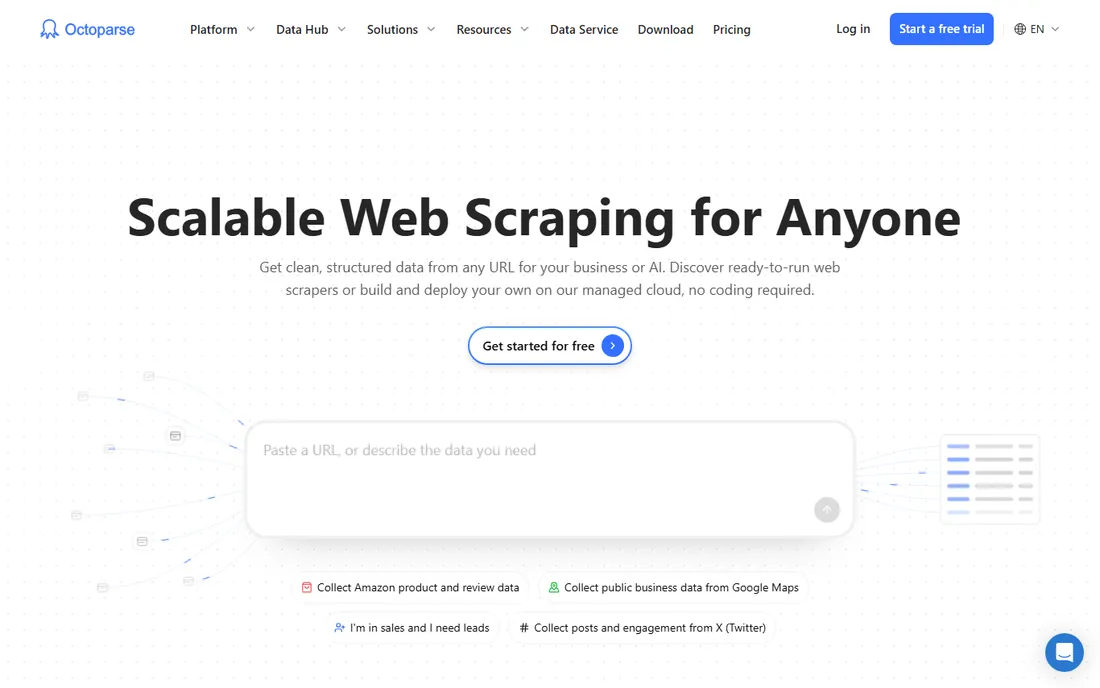
Octoparse is the most accessible serious scraper for non-developers. You click the data you want on the page, the tool detects the pattern, and scheduled cloud runs keep the data flowing with proxies handled for you. The template library covers common targets like e-commerce and directories, which shortens setup considerably.
The free tier covers local tasks with a monthly export cap, which is enough to evaluate properly. Paid plans scale with tasks and concurrent cloud processes. For marketers and researchers who need data without writing code, it is the default recommendation.
What we like- Point-and-click interface with auto-detection
- Large template library for common sites
- Cloud scheduling with proxy rotation built in
Watch out for- Advanced plans get expensive
- Very complex sites may still need custom configuration
Starting priceSee website
Free planYes
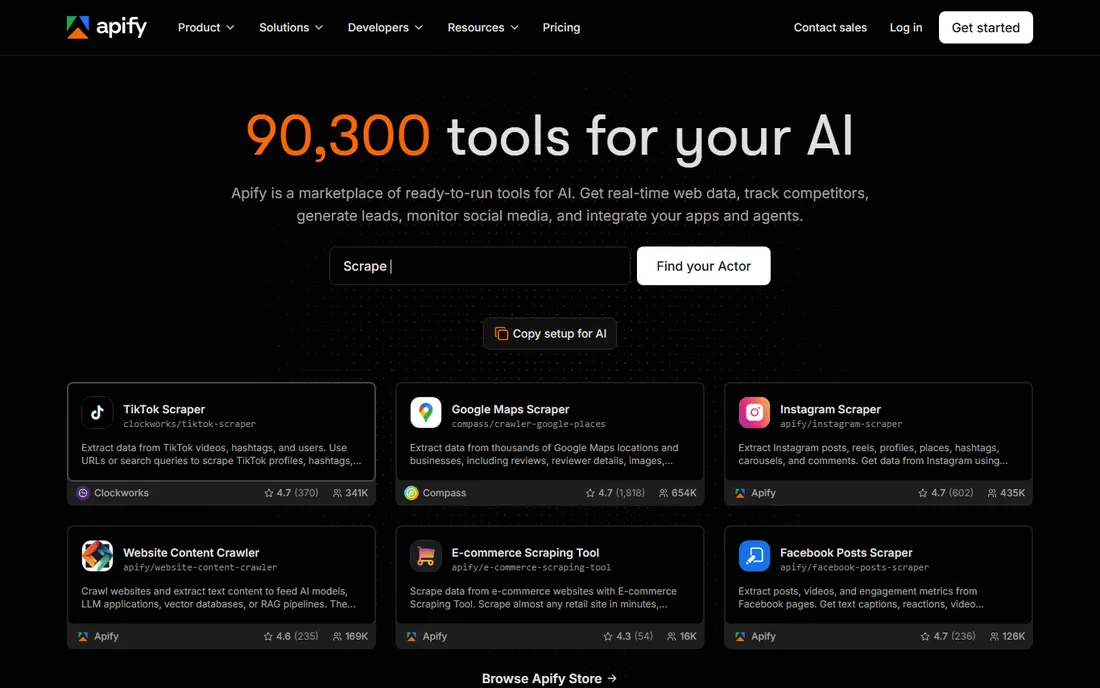
Apify's marketplace is its killer feature. Before building anything, search the Actor store: someone has probably already built and maintained a scraper for your target site, and you can run it on a schedule. The platform handles proxies, browsers and compute underneath.
The pricing model layers platform usage over Actor charges, so cost estimation takes some reading. For teams that scrape regularly, the combination of ready-made Actors and managed infrastructure beats maintaining scrapers and proxy pools in-house.
What we like- Marketplace of thousands of pre-built scrapers (Actors)
- Flexible pay-as-you-go compute
- Strong developer tooling
Watch out for- Pricing combines platform fees and Actor charges, which takes study
- Building custom Actors requires JavaScript or Python
Starting priceSee website
Free planFree trial
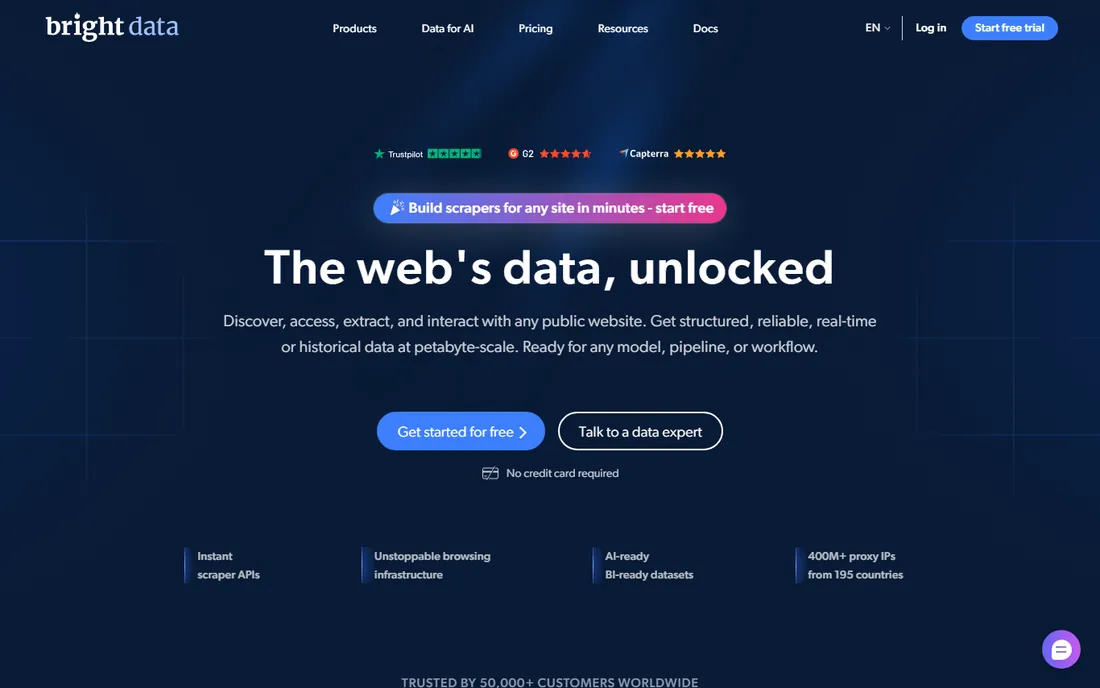
Bright Data is the infrastructure behind serious scraping operations. When a target actively fights scrapers with fingerprinting and behavioral detection, Bright Data's proxy network and unblocking tools are what companies reach for. The dataset marketplace and pre-built scrapers cover major e-commerce, social and search targets.
The pricing reflects the positioning: usage-based across proxies, scraper APIs and datasets, with enterprise contracts for volume. Small jobs should start with simpler tools. Large operations scraping protected sites at scale will find nothing else quite matches it.
What we like- Massive proxy network with 150M+ residential IPs
- Pre-built scrapers for 660+ domains
- Best-in-class unblocking for protected sites
Watch out for- Pricing is complex and enterprise-grade
- Overkill for small scraping jobs
Starting priceSee website
Free planFree trial
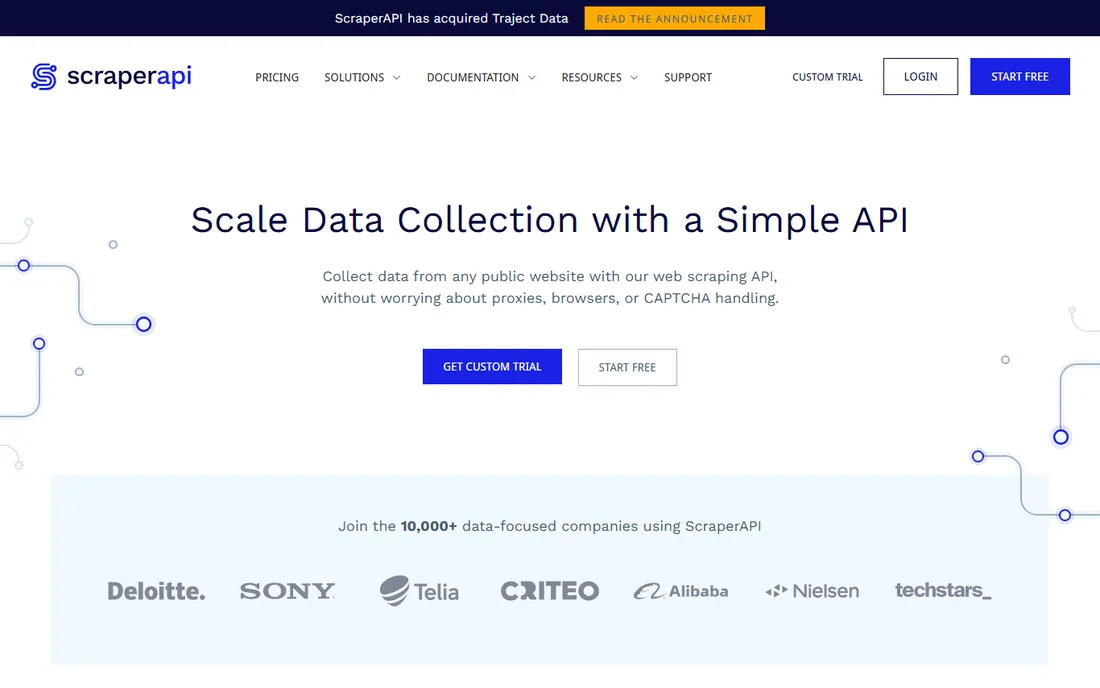
ScraperAPI does one job well: you send a URL, it returns the rendered HTML, handling proxies, CAPTCHAs and retries along the way. Developers keep their existing parsing code in Python or Node and stop maintaining proxy infrastructure. The API handles the access problem so you can focus on extraction.
It is not a no-code tool and does not structure data for you. But for developers who already know how to parse HTML and just need reliable fetching, it removes the most annoying part of scraping at a predictable per-request cost.
What we like- One API call handles proxies, retries and JavaScript rendering
- Simple credit-based pricing
- Easy to integrate into existing code
Watch out for- You still write your own parsing
- Heavy JavaScript sites cost more credits
Starting priceSee website
Free planYes
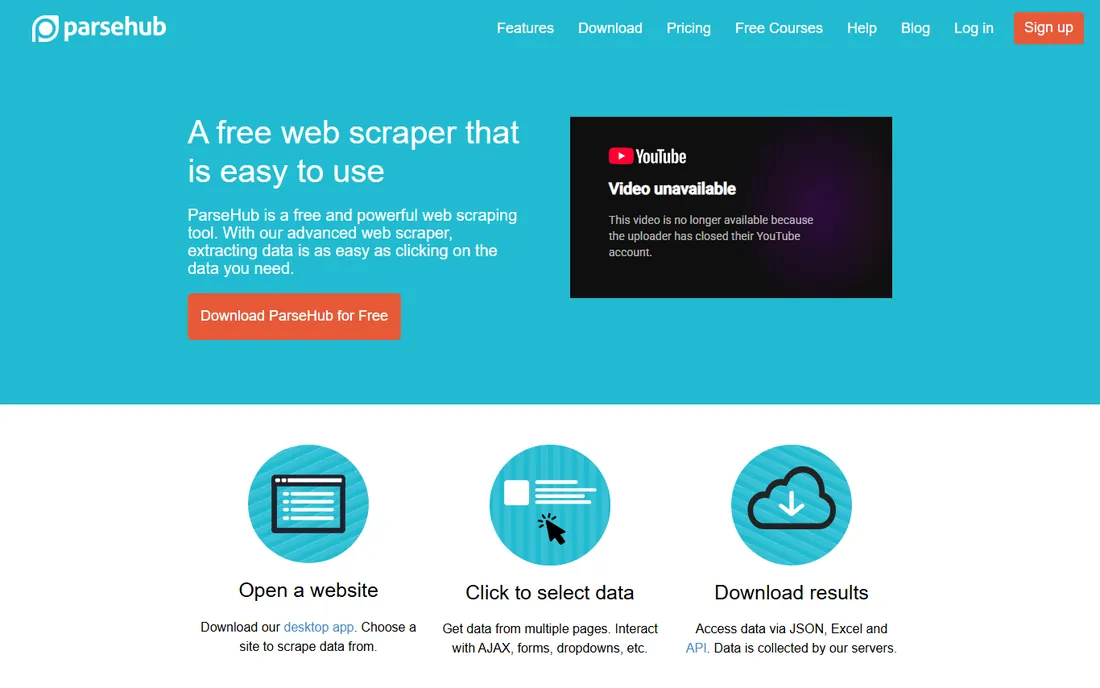
ParseHub is the visual scraper for difficult pages. It handles the interactions that break simpler tools: logging in, clicking through pagination, expanding infinite scroll, and dealing with JavaScript-rendered content. The desktop app is free with limits, and cloud execution runs scheduled jobs.
The notable gap is proxies. ParseHub does not rotate IPs natively, so scraping protected sites means supplying your own proxy setup. For complex but unprotected sites, it is excellent. For targets that fight back, pair it with a proxy service or choose a tool with unblocking built in.
What we like- Handles logins, infinite scroll and AJAX-heavy sites
- Desktop app plus cloud execution
- REST API for triggering jobs
Watch out for- No native proxy rotation, so bring your own for protected targets
- Paid plans start high
Starting priceSee website
Free planFree trial
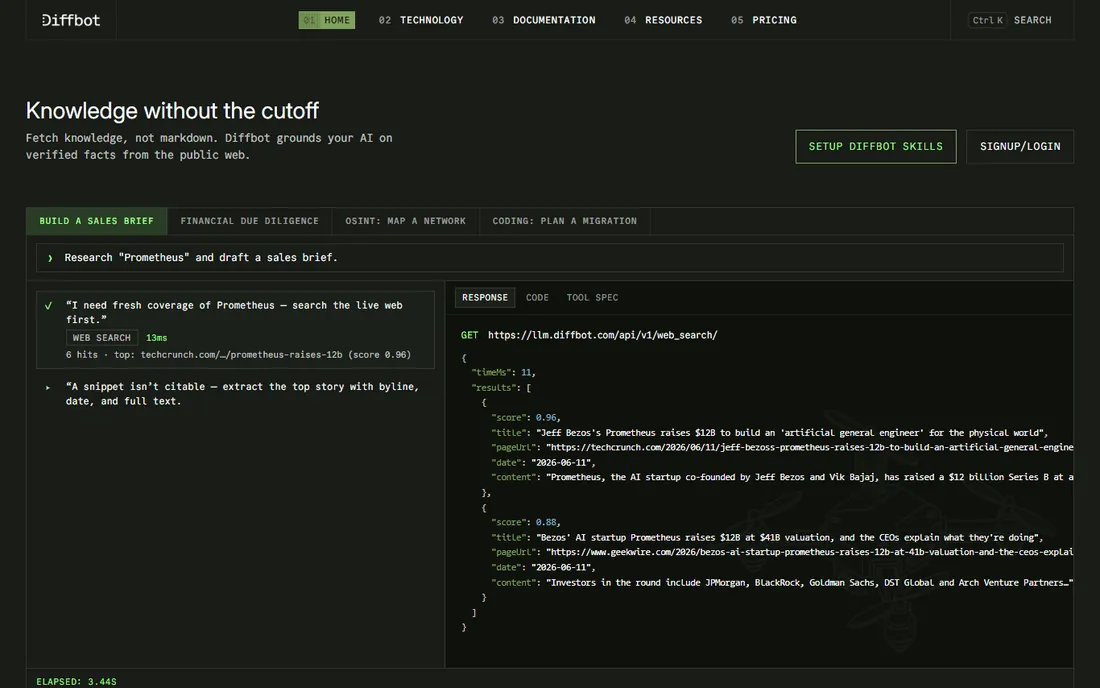
Diffbot takes a different approach: instead of you defining selectors, its AI reads the page like a human and returns structured data. Article extraction, product pages and discussion threads work without configuration. The knowledge graph product offers pre-extracted data across the web.
The tradeoff is control. When the AI's interpretation differs from what you need, you have fewer levers than with rule-based tools. Pricing targets business users rather than hobbyists. For teams that need clean structured data from varied pages without building scrapers, it is uniquely capable.
What we like- AI and computer vision structure pages automatically without manual rules
- Knowledge graph of the web
- Strong for article and product extraction
Watch out for- Pricing starts high
- Less control over extraction rules than manual tools
Starting priceFree
Free planYes
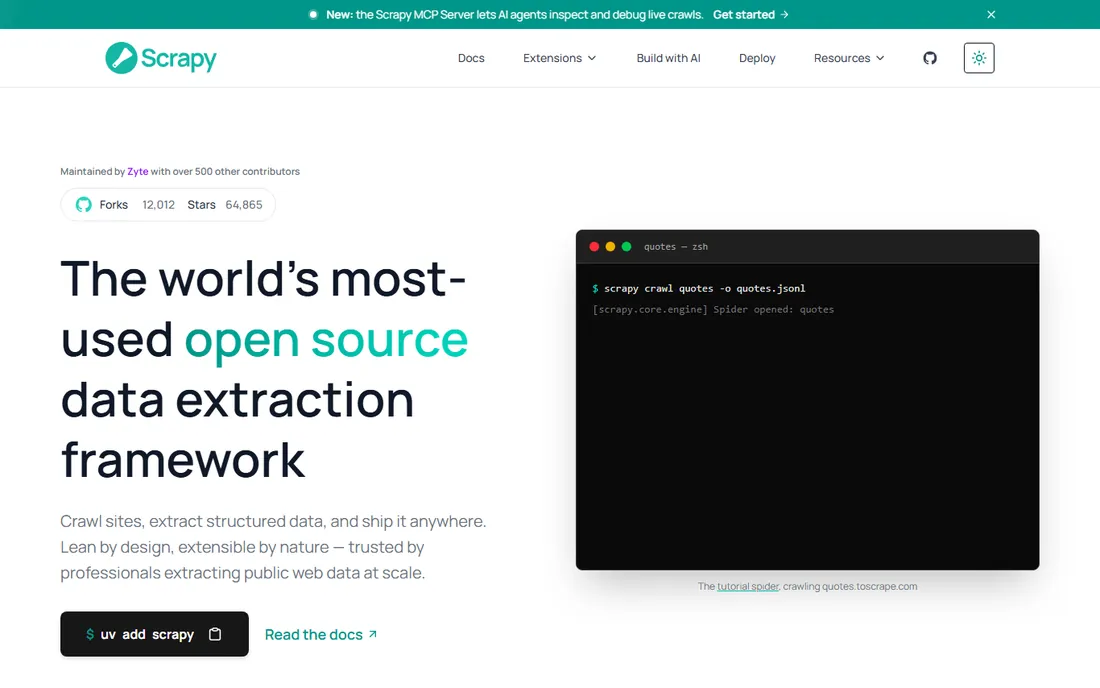
Scrapy is the framework behind a large share of the world's production crawlers. It is fast, mature, and free, maintained by Zyte with a community built over more than fifteen years. For developers building serious scraping operations with custom requirements, nothing else offers this combination of control and cost.
The cost is expertise and infrastructure. Scrapy does not solve the access problem: proxies, headless browsers and CAPTCHA handling are your responsibility, typically via services like Bright Data or Zyte. Teams with the engineering capacity get the cheapest per-page scraping available. Teams without it should buy a managed tool.
What we like- Free and open source with a huge community
- Extremely fast and scalable for large crawls
- Full control over every aspect
Watch out for- Requires Python expertise
- You handle proxies, browsers and unblocking yourself
Starting priceSee website
Free planFree trial
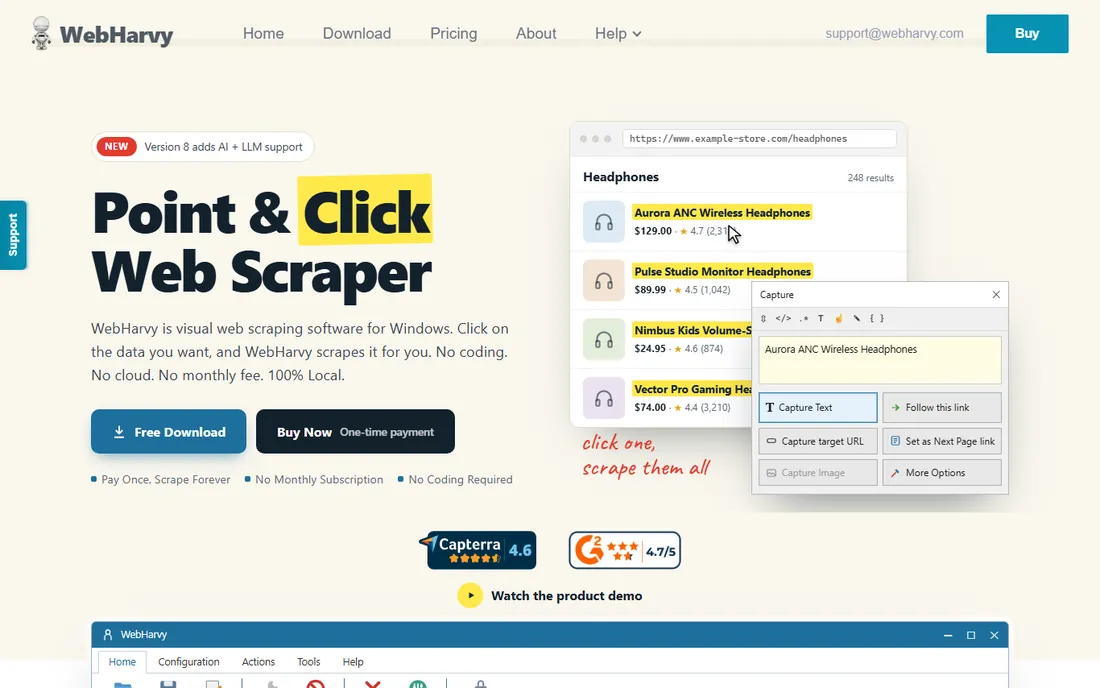
WebHarvy is the standalone desktop scraper for researchers and analysts. Point at the data, configure pagination and categories, and export to CSV, Excel or databases. It runs on your machine, which some users prefer for data privacy, and the licensing is desktop-style rather than subscription-metered.
It is not built for large scheduled pipelines or team collaboration. For the analyst who needs data from a few dozen pages this week, it is simpler and cheaper than cloud platforms. For ongoing production scraping, the cloud tools above fit better.
What we like- Point-and-click desktop scraping with no coding
- One-time-style desktop licensing
- Good for ad-hoc research jobs
Watch out for- Desktop-bound rather than cloud-scheduled
- Less suited to large automated pipelines
Starting priceSee website
Free planFree trial
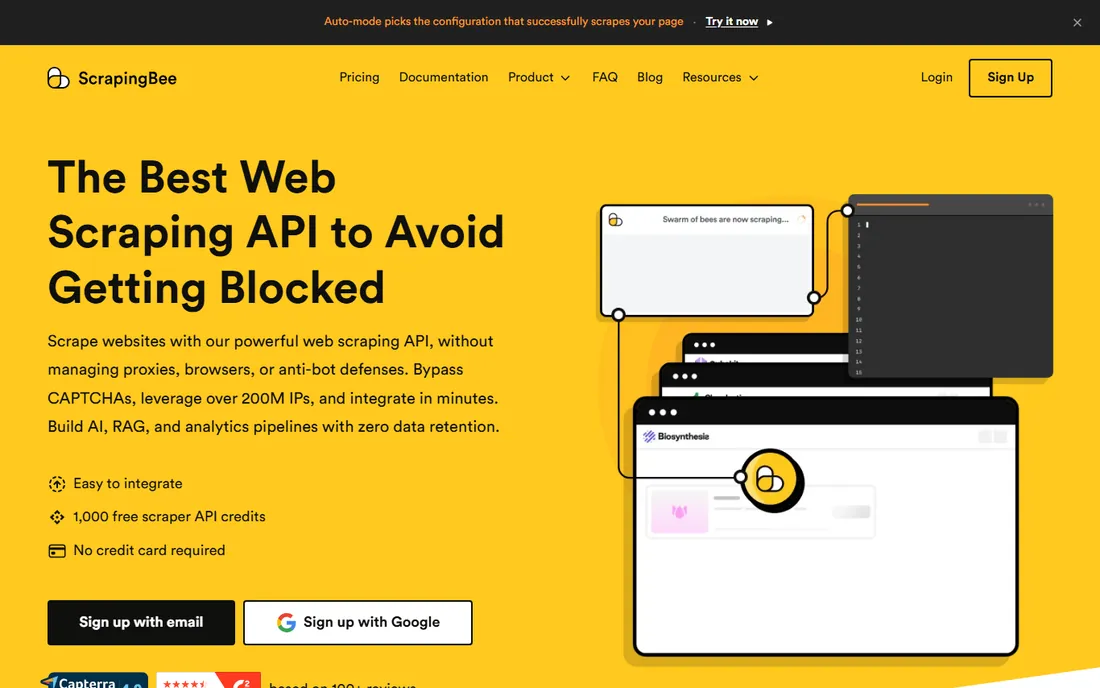
ScrapingBee is ScraperAPI's closest competitor with a similar pitch: one API call, rendered HTML back, proxies and browsers handled. Developers like the straightforward credit model and the minimal integration effort. It is a good middle ground between building on Scrapy and buying enterprise infrastructure.
For straightforward scraping jobs without extreme anti-bot protection, it is all most developers need. Teams hitting the hardest targets or needing massive scale will eventually look at Bright Data, but many never need to.
What we like- Simplest possible API for rendered scraping
- Handles proxies and headless browsers
- Credit-based pricing easy to understand
Watch out for- Smaller feature set than Bright Data
- Enterprise needs may outgrow it
Non-developers should start with Octoparse or ParseHub and never look at code. The visual interface, templates and cloud scheduling cover most research and monitoring jobs. Developers who want convenience without infrastructure should use Apify, ScraperAPI or ScrapingBee. Developers who want full control at minimum cost should build on Scrapy with a proxy service underneath.
The common mistake is buying infrastructure for a research project or buying a no-code tool for a production pipeline. Estimate your volume honestly: a few hundred pages a week is a research job, millions of pages a month is an infrastructure job, and the right tool differs completely.
What to check before you buy
Test on your actual target site during the trial, not on the vendor's demo pages. Anti-bot protection varies wildly by site, and a tool that sails through one target may be blocked by another. Check how the tool handles JavaScript rendering, logins and pagination for your specific pages.
Then check the legal and operational terms. Review the target site's terms of service and rate limits, and set crawl politeness accordingly: aggressive scraping gets blocked and can get your account banned. Confirm data export formats, scheduling options, and what happens to your jobs if you cancel. And estimate total cost including proxy or credit overages, not just the subscription.
How we chose
We covered the main approaches to web scraping: no-code visual tools, developer APIs, managed platforms, and open-source frameworks. Candidates had to be live, supported products in 2026. We verified each vendor's homepage through search results, since direct page loads were policy-blocked for two vendors during research, and we flagged that in our notes. Pricing in this category mixes subscriptions, credits and usage-based models, so entries list "see website" wherever vendor-page verification was not possible.
Frequently asked questions
Is web scraping legal?
Scraping publicly accessible data is common practice, but the legal picture depends on jurisdiction, the site's terms of service, and what you do with the data. Respect robots.txt, rate limits and terms of service, and get legal advice before scraping at scale for commercial use.
What is the easiest web scraping tool for beginners?
Octoparse. Its point-and-click interface and template library let non-developers extract data without code, and the free tier is enough to learn on.
How do I avoid getting blocked while scraping?
Use tools with proxy rotation and unblocking built in, respect rate limits, scrape during off-peak hours, and cache aggressively. The access problem is why managed tools exist: maintaining your own proxy pool is a full-time job.
What is the difference between Octoparse and Scrapy?
Octoparse is a no-code visual tool: click data, schedule runs, get results. Scrapy is a Python framework: write code, run it on your infrastructure, handle everything yourself. Choose Octoparse for speed and simplicity, Scrapy for control and scale.
How much does web scraping software cost?
From free (Scrapy, free tiers) to roughly $50-200 a month for serious no-code or API tools, to usage-based enterprise pricing at Bright Data's scale. Estimate your page volume first, since most pricing is volume-driven.
Can I scrape JavaScript-heavy websites?
Yes, with the right tool. ScraperAPI, ScrapingBee, Apify and Bright Data all render JavaScript. ParseHub and Octoparse handle dynamic content visually. Plain HTTP libraries like Beautiful Soup alone cannot.
Sources we checked (12)
- https://www.octoparse.com/
- https://apify.com/
- https://brightdata.com/
- https://www.scraperapi.com/
- https://www.parsehub.com/
- https://www.diffbot.com/
- https://scrapy.org/
- https://www.webharvy.com/
- https://www.scrapingbee.com/
- https://toolradar.com/guides/best-web-scraping-tools
- https://dataimpulse.com/blog/best-web-scraping-tools/
- https://www.webharvy.com/articles/best-web-scraping-software.html
Is your product missing or out of date?
We review this list regularly. Vendors can request a listing, send updated pricing or ask about featured placement.

Shihab Mia · Founder, Rankite
Shihab has spent more than a decade helping SaaS and e-commerce brands grow through search. He writes Rankite's software buying guides from pricing pages, documentation and public user reviews. More about Shihab.