How we make this list: we compare pricing pages, product documentation and public user reviews. Ratings come from G2, Capterra or Trustpilot, with the date we checked them.
Key takeaways
- Software composition analysis scans open source code for known vulnerabilities and license risks before they reach production.
- Snyk leads for developer-friendly scanning, while Black Duck suits large firms that need deep license and policy reporting.
- GitHub Dependabot is free for public and private repos and is the easiest starting point for teams already on GitHub.
- False positives and alert fatigue are the biggest SCA problems, so prioritize tools with reachability analysis and good fix guidance.
- SCA belongs in pull requests and CI pipelines, not as a quarterly report, since new vulnerabilities appear every week.
Quick comparison
| Tool | Best for | Starting price | Free plan |
|---|
 Snyk | Developer-friendly scanning | See website | Yes |
 Black Duck | Enterprise license compliance | See website | No |
 Mend | Automated remediation | See website | No |
 Veracode | AppSec platform breadth | See website | No |
 Sonatype Lifecycle | Repository policy control | See website | No |
 GitHub Dependabot | GitHub teams | Free | Yes |
 JFrog Xray | Artifact scanning | See website | No |
 FOSSA | License compliance | See website | No |
Is your product missing or out of date?
We review this list regularly. Vendors can request a listing, send updated pricing or ask about featured placement.
Starting priceSee website
Free planYes
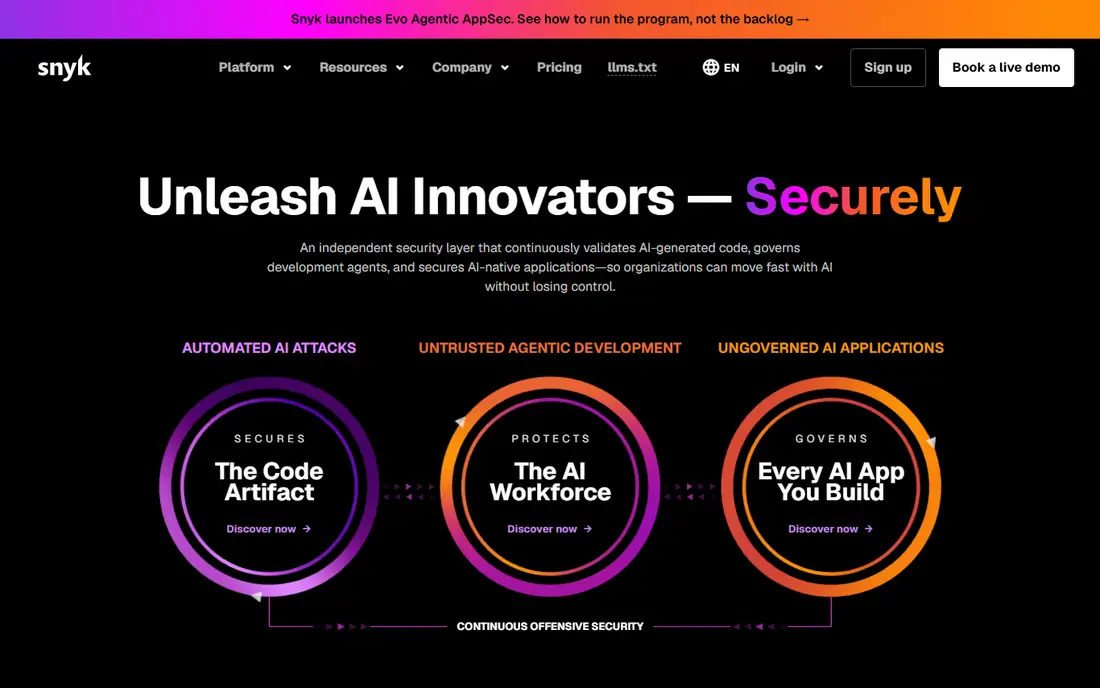
Snyk scans open source dependencies, containers, infrastructure as code, and code itself, and it is known for fitting into developer workflows rather than sitting in a separate security console. It flags vulnerabilities inside pull requests, suggests upgrades and patches, and can open fix pull requests automatically. A free tier covers small projects and open source work, which makes it easy to try before buying.
The limits are price and scope at scale. Costs grow with developer counts and projects, and some enterprise policy and reporting features need higher tiers. Even so, Snyk suits teams that want developers to fix vulnerabilities during normal work instead of handing security a report at the end of a release.
What we like- Fast scans in IDEs, repos, and CI
- Clear fix advice
- Free tier for small projects
Watch out for- Pricing grows with developers and projects
- Some enterprise policy features need higher tiers
Starting priceSee website
Free planNo
Black Duck, from Synopsys, is the enterprise standard for software composition analysis, with a large knowledge base of open source components, vulnerabilities, and licenses. It produces the detailed bills of materials and license reports that auditors, customers, and acquirers ask for, and it supports policy rules for blocking risky licenses or components. Large firms in regulated industries rely on it for compliance evidence.
The trade-offs are cost and complexity. Black Duck is priced for enterprises, setup and tuning take skilled staff, and the interface feels heavier than Snyk or Dependabot. Even so, Black Duck suits large companies that need audit-grade license and vulnerability reporting across hundreds of projects.
What we like- Deepest component and license database
- Strong policy reporting
- Good for audits and M and A diligence
Watch out for- High price
- Setup and tuning take time
- Interface is heavier than developer tools
#3Mend
Best for: Automated remediation4.7/5 on
G2 (133 reviews, checked Oct 2026)
Visit mend.io
Starting priceSee website
Free planNo
Mend, formerly WhiteSource, scans open source dependencies and focuses on fixing problems automatically rather than only reporting them. Its reachability analysis checks whether vulnerable code is actually called by your app, which cuts false alarms, and it can open pull requests that upgrade or patch dependencies. License reporting covers common open source licenses and policy violations.
The limits are naming confusion and price. Older guides still call it WhiteSource, which makes research harder, and pricing is quote-based. Some advanced features need the enterprise tier. Even so, Mend suits teams that want automated fixes and fewer noisy alerts in their pipelines.
What we like- Automatic fix pull requests
- Reachability analysis cuts noise
- Good license reporting
Watch out for- Formerly WhiteSource, so older docs confuse
- Pricing is quote-based
- Some features need enterprise tier
Starting priceSee website
Free planNo
Veracode is a full application security platform that includes software composition analysis alongside static, dynamic, and penetration testing tools. Its SCA scans open source components for vulnerabilities and licenses, and results sit next to other security findings in one dashboard, which helps security teams report risk in one place. That breadth suits firms building a formal AppSec program.
The trade-offs are focus and cost. SCA is one module inside a large platform, so teams that only need SCA may pay for more than they use, and pricing is quote-based. Setup takes planning to fit existing pipelines. Even so, Veracode suits enterprises that want one vendor for SCA, static analysis, and dynamic testing.
What we like- SCA plus static and dynamic testing in one platform
- Strong reporting
- Good for compliance programs
Watch out for- SCA is one part of a large platform
- Pricing is quote-based
- Setup takes planning
Starting priceSee website
Free planNo
Sonatype Lifecycle enforces open source policy where developers pull components, blocking risky or unapproved libraries before they enter a build. It draws on Sonatype's component intelligence data and pairs well with Nexus Repository, which many Java and JavaScript teams already use. Policy reports show which applications use which components, which helps security teams track exposure across the estate.
The limits are fit and setup. Lifecycle works best alongside Nexus, pricing is quote-based, and policy setup takes time to tune without blocking developers. Even so, Sonatype suits firms that want policy control at the repository level rather than only scan reports after the fact.
What we like- Policy enforcement at the repository
- Strong component intelligence
- Good for Nexus users
Watch out for- Best with Sonatype Nexus
- Pricing is quote-based
- Learning curve for policy setup
Starting priceFree
Free planYes
GitHub Dependabot is free for public and private repositories and is the easiest SCA starting point for teams already on GitHub. It monitors dependencies, alerts on known vulnerabilities, and opens pull requests that update libraries to fixed versions. Setup takes minutes, and it works with common ecosystems such as npm, Python, Maven, and Go.
The trade-offs are depth and scope. Dependabot covers known vulnerabilities well but offers less license analysis and policy control than Black Duck or FOSSA, and it only works inside GitHub. Even so, Dependabot suits small and mid-size teams that want solid, free vulnerability coverage without buying a separate platform.
What we like- Free and built into GitHub
- Automatic update pull requests
- Easy setup
Watch out for- Depth trails dedicated SCA vendors
- License reporting is basic
- Only for GitHub repos
Starting priceSee website
Free planNo
JFrog Xray scans binaries, containers, and build artifacts for vulnerabilities and license issues, which catches problems that source-only scans miss. It pairs with JFrog Artifactory, the artifact repository many teams use to store builds, and it can block promotion of risky artifacts to production. Watches and policies let security teams focus on the components that matter most.
The limits are fit and cost. Xray works best inside a JFrog setup, pricing is quote-based, and tuning needs JFrog knowledge. Even so, Xray suits teams that already use Artifactory and want artifact-level scanning across the build pipeline.
What we like- Scans binaries and artifacts, not only source
- Pairs with Artifactory
- Good policy and watch features
Watch out for- Best with JFrog Artifactory
- Pricing is quote-based
- Setup needs JFrog knowledge
Starting priceSee website
Free planNo
FOSSA focuses on open source license compliance, scanning dependencies to build license inventories, flag risky licenses, and generate attribution notices that legal teams need before shipping. It integrates with CI pipelines so license checks run on every build, and it supports policy rules for blocking licenses that conflict with company rules. That focus makes it popular with firms that ship commercial software built on open source.
The trade-offs are vulnerability depth and price. FOSSA's vulnerability scanning is thinner than Snyk or Black Duck, and pricing is quote-based. Even so, FOSSA suits companies whose main SCA worry is license compliance and legal review rather than vulnerability triage alone.
What we like- Strong license scanning and attribution reports
- Good for legal review
- Integrates with CI
Watch out for- Vulnerability depth trails Snyk
- Pricing is quote-based
- Smaller community
How we chose
We compared SCA tools on vulnerability database depth, license reporting, fix guidance, CI and IDE integration, and policy control, favoring tools with proven use in production pipelines. We excluded single-language scanners and tools that only list dependencies without vulnerability data. Prices in this category are mostly quote-based, so we wrote See website where a vendor does not publish a clear starting price.
Buying guide
Start by listing your ecosystems and your build pipeline, since SCA coverage varies by language, package manager, and where in the pipeline scans run. A tool that covers npm well may be thin on Go or Rust, so check your actual stack before buying. Next, test alert quality on one real repository, since noisy tools get ignored by developers. Look for reachability analysis and clear fix advice, which separate useful tools from report generators.
Then decide where enforcement belongs. Repository-level policy suits firms that want to block risky components early, while pull request scanning suits teams that prefer developer fixes. Finally, check license needs: if you ship commercial software, license reporting and attribution matter as much as vulnerability data, and legal review should be part of the trial.
Also plan for the long tail of old projects. Most firms have repositories that no one actively maintains, yet those projects still run in production and still carry vulnerable libraries. A good SCA rollout includes a plan for legacy code, whether that means patching, isolating, or retiring those systems, instead of only covering new work.
Frequently asked questions
What is software composition analysis?
SCA scans the open source libraries in your code for known vulnerabilities and license risks. It tells you which components you use, which are vulnerable, and which licenses apply.
Why do I need SCA if I already run security tests?
Static and dynamic tests check your own code, while SCA checks the third-party code your app depends on. Modern apps are mostly open source by weight, so SCA covers risk that other tests miss.
What is reachability analysis?
Reachability analysis checks whether the vulnerable part of a library is actually called by your code. It cuts false alarms by ranking vulnerabilities that can really be triggered above ones that sit in unused code.
Is Dependabot enough for a small team?
Often yes. Dependabot is free, easy to set up, and covers known vulnerabilities well for GitHub repos. Larger firms or teams with strict license needs usually add a dedicated SCA vendor.
How do I reduce SCA alert fatigue?
Tune policies to your stack, use reachability data, auto-fix low-risk updates, and set severity thresholds for blocking builds. A tool that reports everything with equal urgency will be ignored, so ranking and context matter as much as raw coverage.
Sources we checked (0)
Is your product missing or out of date?
We review this list regularly. Vendors can request a listing, send updated pricing or ask about featured placement.

Shihab Mia · Founder, Rankite
Shihab has 5+ years in B2B and SaaS SEO. He writes Rankite's software buying guides from pricing pages, documentation and public user reviews. More about Shihab.