How we make this list: we compare pricing pages, product documentation and public user reviews. Rankite is independent; if a vendor ever pays for a featured spot, that listing is clearly labeled Partner.
Key takeaways
- "Sales force automation" covers two different products: CRM-led automation (Salesforce, HubSpot, Zoho, Dynamics, Pipedrive, Freshsales) and field-sales execution (BeatRoute). Know which one you are buying.
- Salesforce remains the enterprise default at $25 per user per month to start, with the deepest customization and the largest app ecosystem.
- HubSpot Sales Hub and Zoho CRM are the value plays: HubSpot from $20 per seat per month with a free CRM tier, Zoho from $14 per user per month with a free plan for three users.
- Pipedrive at $14 per seat per month is the simplest pipeline CRM, but automation depth requires higher tiers.
- Outreach owns the sales engagement layer for outbound teams, while BeatRoute owns the field: visit planning, route optimization and retail execution.
Quick comparison
| Tool | Best for | Starting price | Free plan |
|---|
 Salesforce Sales Cloud Salesforce Sales Cloud | enterprises that need deep customization and a huge app ecosystem | From $25 per user/month (Starter Suite) | Free trial |
 HubSpot Sales Hub HubSpot Sales Hub | small and mid-size teams that want sales and marketing on one platform | From $20 per seat/month (Starter) | Yes |
 Zoho CRM Zoho CRM | teams that want maximum capability per dollar | From $14 per user/month (Standard, billed annually) | Yes |
 Microsoft Dynamics 365 Sales Microsoft Dynamics 365 Sales | enterprises already running on Microsoft 365 | From $65 per user/month (Professional) | Free trial |
 Pipedrive Pipedrive | small sales teams that want a pipeline they will actually use | From $14 per seat/month (Essential, billed annually) | Free trial (14 days) |
 Freshsales Freshsales | teams that want an AI-assisted CRM without enterprise pricing | From $15 per user/month (Growth) | Yes |
 BeatRoute BeatRoute | field sales teams in FMCG, retail distribution and building materials | See website | No |
 Outreach Outreach | outbound teams running sequenced, multi-touch engagement | See website | No |
Is your product missing or out of date?
We review this list regularly. Vendors can request a listing, send updated pricing or ask about featured placement.
The best sales force automation software
#1
Salesforce Sales Cloud
Best for: enterprises that need deep customization and a huge app ecosystem
Visit salesforce.com
Starting priceFrom $25 per user/month (Starter Suite)
Free planFree trial
Salesforce is the reference point everything else gets measured against. The Starter Suite at $25 per user per month covers leads, accounts, contacts, opportunities and email sync, which is genuinely enough for a small team. From there the ladder climbs: Pro Suite at $100, then Core, Advanced and Max editions reaching $550 per user per month for the full AI suite.
What you are really buying is optionality. No other CRM matches Salesforce for customization depth, and the AppExchange marketplace means almost any niche requirement already has a prebuilt answer. The 2026 platform leans hard into Agentforce, with AI agents that perform multi-step sales actions inside guardrails you control. The honest cost is not the license: it is the implementation. Most serious rollouts involve a consulting partner, and that services bill can exceed the first year's licenses.
What we like- Most customizable CRM on the market
- Agentforce AI agents for automated sales actions
- Massive AppExchange ecosystem
Watch out for- Costs escalate fast past Starter
- Implementations often need consultants
#2
HubSpot Sales Hub
Best for: small and mid-size teams that want sales and marketing on one platform
Visit hubspot.com
Starting priceFrom $20 per seat/month (Starter)
Free planYes
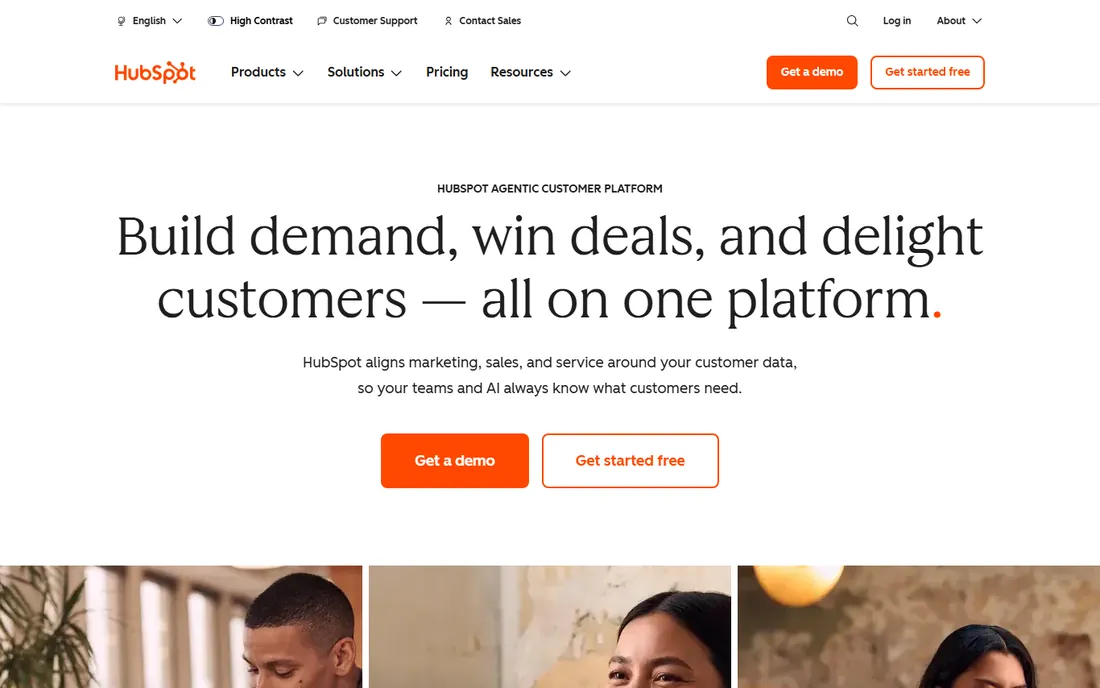
HubSpot wins deals on speed. A team can be running on the free CRM tier today and upgrade to Starter at $20 per seat per month when they need more pipelines, calling and basic automation. Sales Hub bills per seat, which keeps the math simple, and the native connection to Marketing Hub means leads flow into sequences without integration projects.
The pricing curve has a kink buyers should see coming. Professional costs $100 per seat per month with a five-seat minimum and a mandatory $1,500 onboarding fee, and features many teams consider standard, like custom reporting and real workflow automation, live at that tier. Enterprise is $150 per seat. HubSpot is the best value in its Starter tier and a premium product above it; budget for the tier you will actually need in year two, not the one you sign up for.
What we like- Free CRM tier to start
- Per-seat pricing that scales cleanly
- Deep native marketing integration
Watch out for- Professional tier jumps to $100 per seat with mandatory onboarding fees
- Costs stack across hubs
#3
Zoho CRM
Best for: teams that want maximum capability per dollar
Visit zoho.com
Starting priceFrom $14 per user/month (Standard, billed annually)
Free planYes
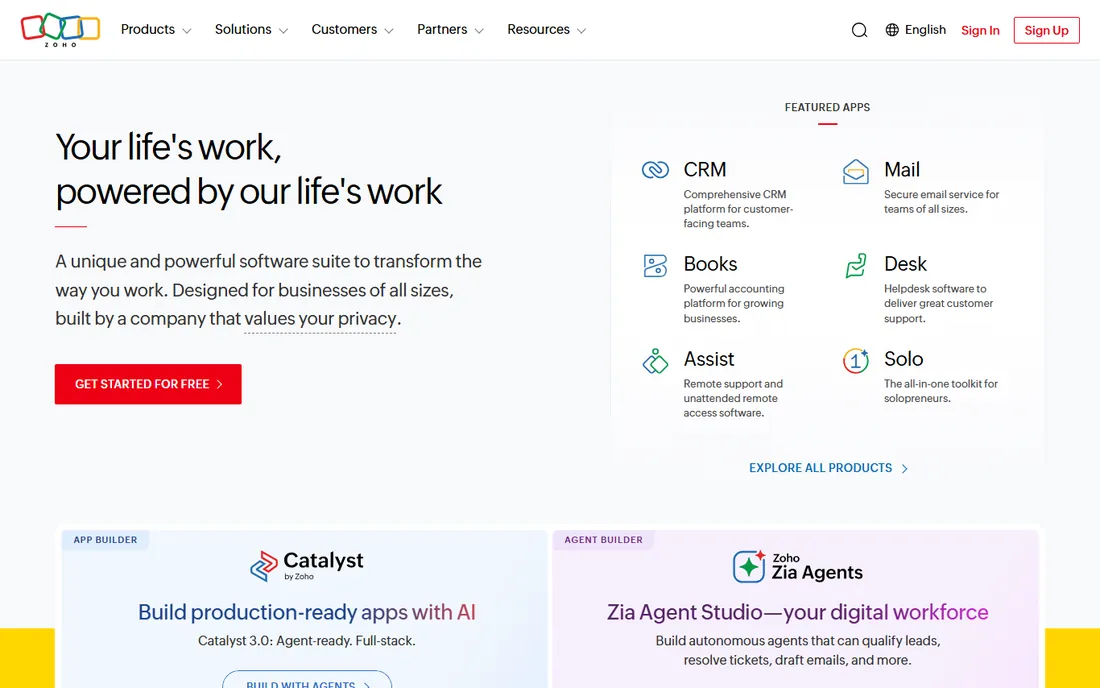
Zoho CRM is the price-performance champion of this list. The free plan covers three users, Standard is $14 per user per month billed annually ($20 monthly), Professional is $23, Enterprise $40 and Ultimate $52. Workflow automation starts at the Standard tier, which is remarkable at this price, and there are no mandatory onboarding fees at any level.
The broader Zoho ecosystem is part of the value: 50+ business apps, with Zoho One bundling everything for one per-user price. The trade-offs are real but manageable. The interface is functional rather than beautiful, and Zia AI features plus custom modules require Enterprise. For a 10-person sales team, Zoho CRM Professional runs roughly $2,800 a year where the equivalent HubSpot deployment approaches $12,000 plus onboarding. That gap is why teams switch.
What we like- Free plan for up to three users
- Standard tier includes workflow automation
- No mandatory onboarding fees
Watch out for- Interface feels busier than HubSpot or Pipedrive
- Advanced AI features need higher tiers
#4
Microsoft Dynamics 365 Sales
Best for: enterprises already running on Microsoft 365
Visit microsoft.com
Starting priceFrom $65 per user/month (Professional)
Free planFree trial
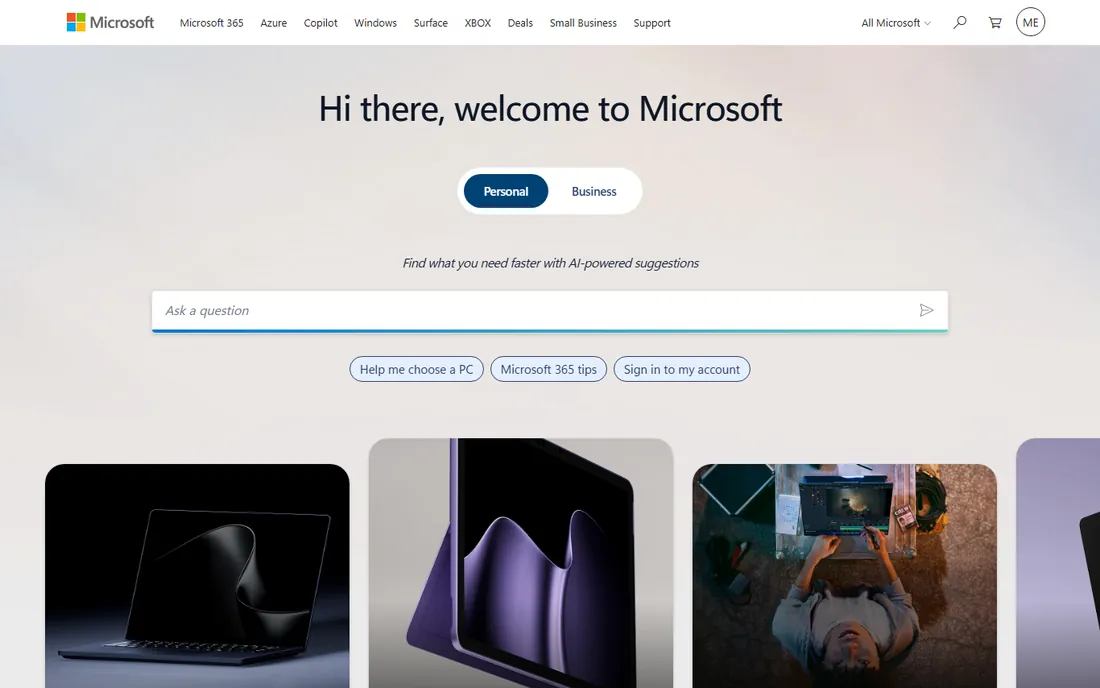
If your company lives in Microsoft 365, Dynamics 365 Sales removes an entire category of integration work. Outlook emails, Teams meetings, SharePoint documents and Power BI reports all connect natively, and the Power Platform handles custom automation without a separate iPaaS bill. Copilot brings generative AI to the workflow: summarizing interactions, drafting emails and surfacing deal insights.
Pricing starts at $65 per user per month for Professional, rising to $105 for Enterprise and $150 for Premium, all billed annually. Microsoft Relationship Sales, which bundles Sales Enterprise with LinkedIn Sales Navigator, runs higher still. The entry price is steep next to HubSpot and Zoho, and implementations commonly run three to six months with a certified partner. Outside the Microsoft ecosystem, much of the value evaporates, so this is a pick for Microsoft shops first.
What we like- Native Teams, Outlook and Power Platform integration
- Copilot AI built in from Enterprise tier
- LinkedIn Sales Navigator bundling available
Watch out for- $65 entry price is the highest here
- Implementations typically need certified partners
#5
Pipedrive
Best for: small sales teams that want a pipeline they will actually use
Visit pipedrive.com
Starting priceFrom $14 per seat/month (Essential, billed annually)
Free planFree trial (14 days)
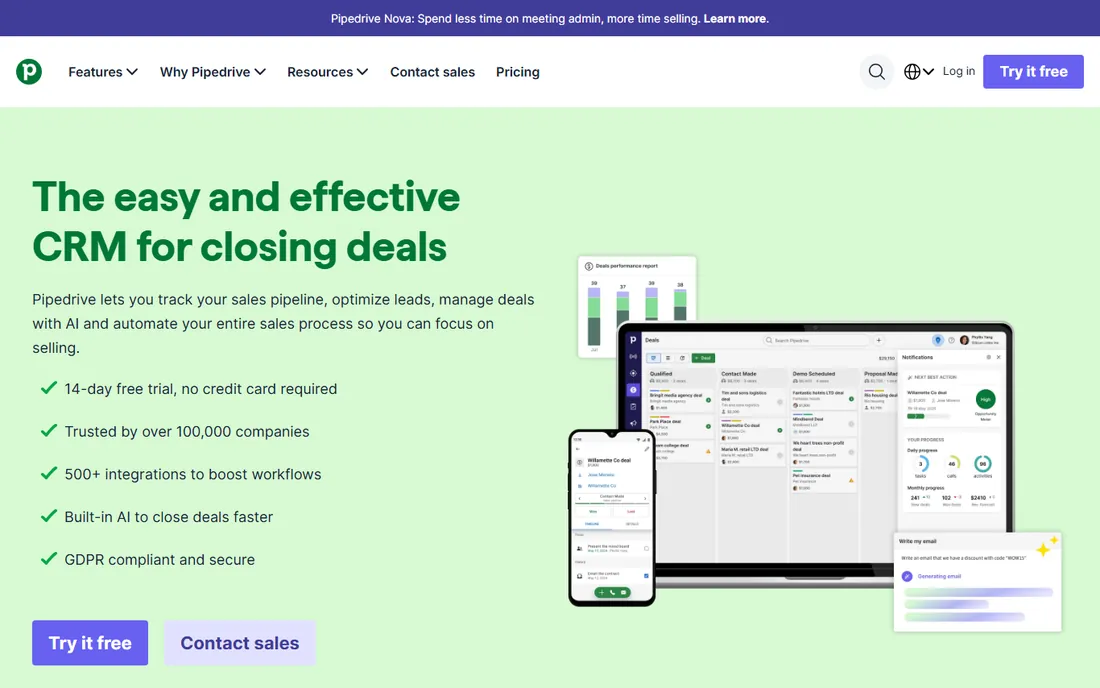
Pipedrive's kanban pipeline remains the clearest deal-tracking interface anywhere near $14 per seat per month. Reps see exactly what to do next, managers see the whole funnel, and setup takes days rather than months. The company reports 100,000+ customers in 179 countries, and the 14-day free trial requires no credit card.
The pricing structure rewards careful reading. Essential at $14 covers pipeline basics but only one-way email BCC and 30 automation actions. Advanced at $34 adds real email sync and automations; Professional at $49 adds forecasting and the AI sales assistant; Power and Enterprise climb to $64 and $99. Add-ons like LeadBooster, Campaigns and Web Visitors cost extra on every plan. A team that needs automation should price the Advanced tier, not Essential, because that is where the product starts working as advertised.
What we like- Clearest visual pipeline UI at this price
- Fast setup with no consultants
- 500+ integrations
Watch out for- No free tier
- Meaningful automation starts at higher plans
- Add-ons inflate the real bill
#6
Freshsales
Best for: teams that want an AI-assisted CRM without enterprise pricing
Visit freshworks.com
Starting priceFrom $15 per user/month (Growth)
Free planYes
Freshsales, the CRM product of Freshworks, packs an unusual amount of intelligence into its price. The free plan covers three users, Growth starts at $15 per user per month, Pro at $39 and Enterprise at $69. Freddy AI scores leads, predicts deal outcomes and suggests next actions, which are features competitors often reserve for their top tiers.
Built-in phone and email, sales sequences, web forms and a 360-degree contact view come standard, and the 21-day free trial on paid plans gives a real evaluation window. The ecosystem is the limitation: fewer third-party apps than Salesforce or HubSpot, and less customization depth for complex enterprise processes. For small and mid-size teams that want modern sales automation at a sane price, it is one of the strongest values on this list.
What we like- Free plan for up to three users
- Freddy AI lead scoring built in
- 21-day free trial on paid plans
Watch out for- Smaller app marketplace than Salesforce or HubSpot
- Advanced customization trails the enterprise CRMs
#7
BeatRoute
Best for: field sales teams in FMCG, retail distribution and building materials
Visit beatroute.io
Starting priceSee website
Free planNo
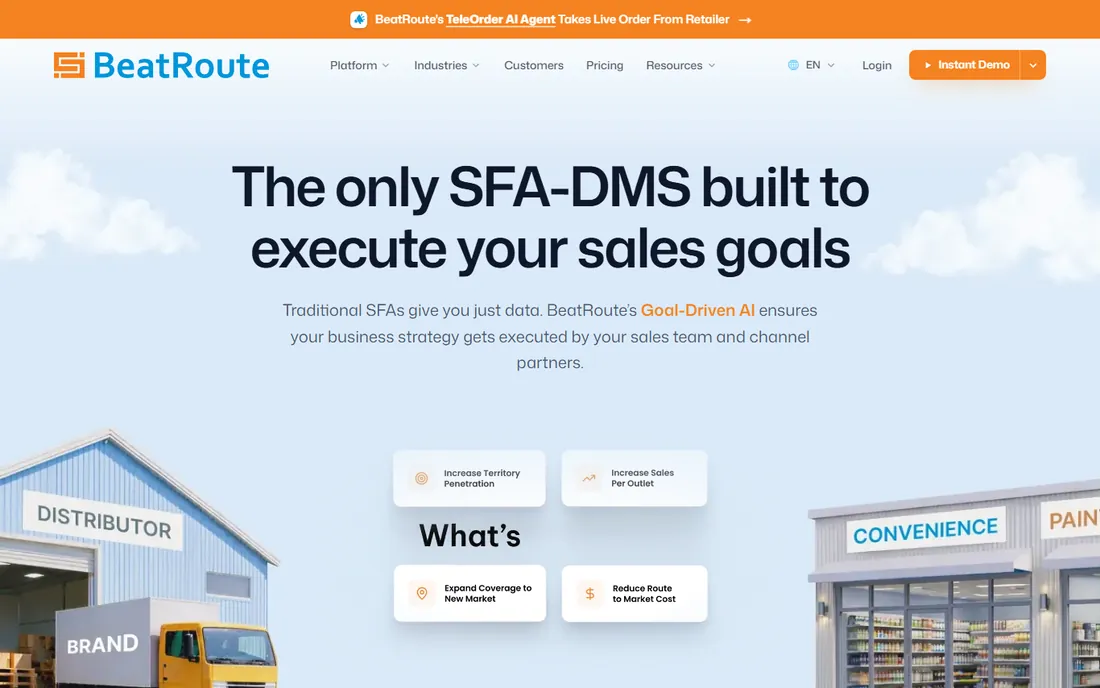
BeatRoute is the only tool here built for reps who sell in stores, not on Zoom. It handles the realities of field sales: territory planning, beat and visit scheduling, route optimization, order booking, and retail execution with shelf audits and scheme tracking. Its goal-driven AI points each day's visits at measurable business outcomes rather than just logging activity.
The platform is pre-configured for industries like FMCG, consumer goods, building materials, auto ancillaries and pharma, and changes can be made from the brand panel without developers. The company claims 100,000+ category leaders as users with a 4.7 out of 5 rating. Pricing is not public and demos are the entry point. If your sales force carries order books into outlets, this category of software matters more than any CRM feature; if they do not, skip it.
What we like- Visit planning and route optimization built for field realities
- Goal-driven AI tied to business targets
- Configurable without developers
Watch out for- No public pricing
- Irrelevant if your sales team never leaves the office
#8
Outreach
Best for: outbound teams running sequenced, multi-touch engagement
Visit outreach.io
Starting priceSee website
Free planNo
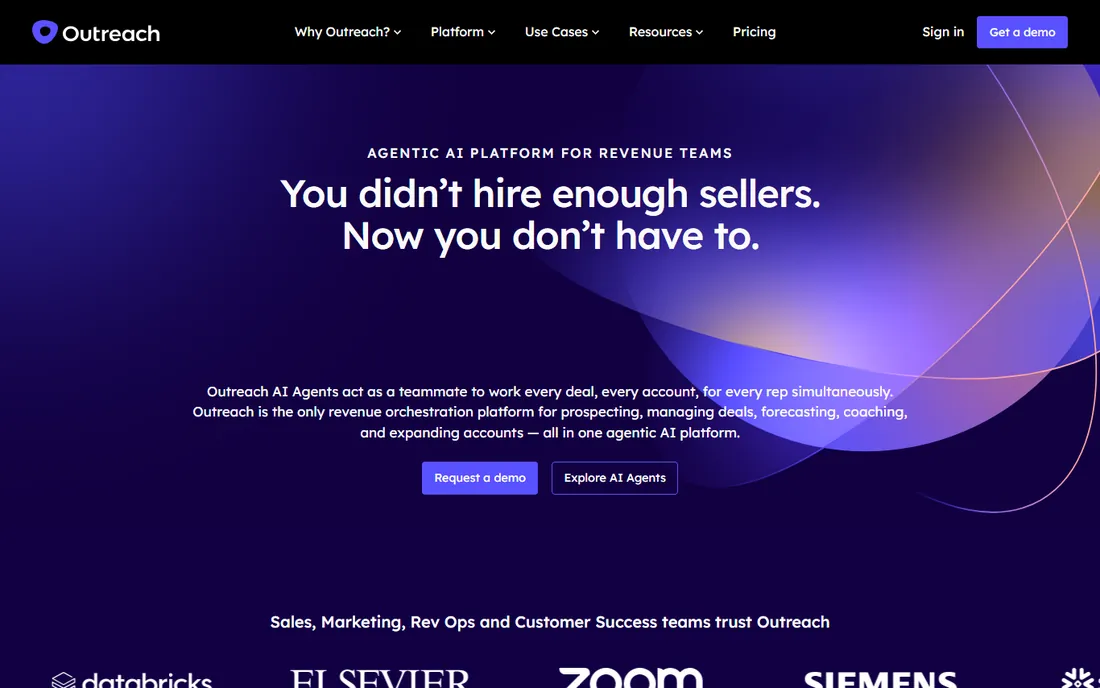
Outreach created the sales engagement category and still defines it. The platform orchestrates the full outbound motion: sequenced emails, calls and social touches, AI agents that prospect and manage deals, conversation intelligence for coaching, and forecasting for leadership. It sits on top of your CRM rather than replacing it, which is an important architectural point.
The 2026 platform pushes agentic AI hard, with agents that work accounts and deals simultaneously and a universal conversational agent for sellers. Pricing is quote-based and enterprise-oriented. Outreach fits teams with dedicated SDRs running high-volume outbound; an inbound-led team of five will get more value from HubSpot or Pipedrive at a tenth of the complexity.
What we like- The standard for sales engagement sequences
- AI agents for prospecting, deal management and forecasting
- Deep analytics on what works
Watch out for- Quote-based pricing
- Needs a CRM underneath it
- Overkill for inbound-led teams
What to look for before you buy
Start by naming your sales motion. Inbound teams need lead capture, routing and pipeline management, which every CRM here handles. Outbound teams need sequencing, deliverability and engagement analytics, which points to Outreach or HubSpot Professional. Field teams need visit planning and mobile order booking, which only BeatRoute covers. Buying a CRM when you need field execution, or vice versa, is the most expensive mistake in this category.
Automation depth is the second check. Basic plans automate reminders and follow-ups; real workflow automation, lead scoring and AI assistance usually sit one or two tiers up. Map your five most repetitive sales tasks and confirm each one is automated at the tier you plan to buy, not just at the tier in the demo.
Integration reality comes third. Every vendor lists hundreds of integrations, but the ones that matter are your email, calendar, phone system, marketing tools and ERP. Confirm the specific integrations you need are native and two-way, and check whether key ones, like Pipedrive's Campaigns or Web Visitors, cost extra.
Finally, model the three-year cost, not the entry price. Seat minimums, mandatory onboarding fees (HubSpot Professional and Enterprise), implementation partners (Salesforce, Dynamics) and add-ons (Pipedrive) all move the real number far from the headline. Get the full itemized quote before you compare.
The two kinds of SFA, and which one you need
CRM-led sales force automation is what most buyers mean: software that manages contacts, deals and pipelines while automating follow-ups, scoring and forecasting. Salesforce, HubSpot, Zoho, Dynamics 365, Pipedrive and Freshsales all live here. The differences are price, ease of use and ecosystem, not fundamental purpose.
Field sales automation is a different discipline. It optimizes the physical work of selling: which outlets to visit, in what order, with what targets, and whether the shelf actually reflects the plan. BeatRoute is the representative on this list, and it competes with tools like FieldAssist and Delta Sales rather than with Salesforce.
Then there is the engagement layer, represented by Outreach: software that runs the outbound cadence itself. Many teams end up with two of the three: a CRM plus an engagement tool, or a CRM plus a field tool. Be explicit about which layers you need before you shortlist, because no single product on this list covers all three well.
How we chose
We selected tools that are live, purchasable products in 2026 and genuinely automate sales work, whether through CRM automation, engagement sequencing or field execution. Research drew on vendor pricing pages, product documentation, public reviews on G2, Capterra and Reddit, and analyst coverage. Every homepage URL was verified by opening it directly. Prices come from vendor pricing pages or clearly attributed 2026 pricing analyses; where vendors keep pricing behind sales conversations, we wrote "See website" instead of guessing. We did not claim hands-on testing. Fit for company size and sales motion mattered as much as feature lists, since the wrong-shaped SFA tool is the usual reason for failed rollouts.
Frequently asked questions
What is sales force automation software?
Software that automates repetitive sales work: lead capture and routing, follow-up reminders, pipeline tracking, quoting, forecasting and reporting. The term covers CRM platforms with automation (Salesforce, HubSpot), dedicated engagement tools (Outreach) and field sales platforms (BeatRoute). The right definition depends on how your team actually sells.
How much does sales force automation software cost?
Entry points in 2026: Pipedrive from $14 per seat per month, Zoho CRM from $14 per user per month, Freshsales from $15, HubSpot Sales Hub from $20, Salesforce from $25, and Dynamics 365 Sales from $65. Real costs rise with tiers, add-ons, seat minimums and implementation services. Salesforce and Dynamics commonly need consultants; HubSpot charges mandatory onboarding on higher tiers.
Is a CRM the same as sales force automation?
Mostly, yes, in current usage. Modern CRMs include the automation that used to be sold separately: sequences, scoring, forecasting and workflow rules. The exceptions are field sales platforms and engagement tools, which automate work that CRMs do not cover. If someone sells you "SFA" as a separate product from CRM, ask exactly which sales work it automates that your CRM does not.
Which sales force automation tool is best for small business?
Pipedrive at $14 per seat per month is the simplest start for pipeline-driven selling. Zoho CRM at $14 per user per month gives more features per dollar with a free plan for three users. Freshsales at $15 adds AI lead scoring cheaply. HubSpot's free CRM tier is the lowest-risk way to begin. Choose based on whether you value simplicity (Pipedrive), breadth (Zoho), or the HubSpot ecosystem.
Do I need Outreach if I already have a CRM?
Only if you run serious outbound. Outreach automates multi-touch sequences, tracks engagement and coaches reps in ways CRMs do not do natively. Inbound-led teams usually get enough from their CRM's built-in sequences. If you have dedicated SDRs sending high volumes of prospecting email, Outreach earns its keep; otherwise it is an expensive overlap.
Sources we checked (27)
- https://salesforce.com/
- https://hubspot.com/
- https://www.zoho.com/
- https://www.microsoft.com
- https://www.pipedrive.com
- https://freshworks.com/
- https://beatroute.io
- https://outreach.io/
- https://crms.jobnaker.com/salesforce-sales-cloud-pricing-a-complete-guide-to-costs/
- https://b2b.cursosconfuturo.com/salesforce-pricing/
- https://www.g2.com/products/agentforce-sales-formerly-salesforce-sales-cloud/pricing
- https://tomba.io/blog/hubspot-pricing-reviews-pros-and-cons
- https://www.clarify.ai/blog/hubspot-crm-pricing
- https://www.apexure.com/blog/hubspot-vs-pipedrive
- https://www.method.me/blog/zoho-crm-cost/
- https://www.dotsquares.com/press-and-events/tech/zoho-crm-implementation-process-costs-best-practices
- https://ecommerceparadise.com/zohocrm-pricing/
- https://www.dynamicssquare.com/blog/dynamics-365-sales-pricing/
- https://www.lowcode.agency/blog/custom-crm-vs-microsoft-dynamics-365
- https://actonic.de/en/salesforce-vs-microsoft-dynamics-crm
- https://theautomationsguide.com/blog/2026-08-12-what-pipedrive-actually-costs-in-2026-seats-add-ons-and-hidd/
- https://albato.com/blog/publications/hubspot-vs-pipedrive-comparison
- https://meetergo.com/en/magazine/is-pipedrive-free
- https://www.freshworks.com/crm/software/free/
- https://www3.technologyevaluation.com/solutions/58910/freshsales
- https://tekpon.com/software/freshworks-crm/reviews/
- https://www.fahimai.com/how-to-use-freshsales-crm
Is your product missing or out of date?
We review this list regularly. Vendors can request a listing, send updated pricing or ask about featured placement.

Shihab Mia · Founder, Rankite
Shihab has spent more than a decade helping SaaS and e-commerce brands grow through search. He writes Rankite's software buying guides from pricing pages, documentation and public user reviews. More about Shihab.