How we make this list: we compare pricing pages, product documentation and public user reviews. Ratings come from G2, Capterra or Trustpilot, with the date we checked them.
Key takeaways
- Uber and Lyft remain the practical defaults in most US cities because of coverage, driver supply, and ride options.
- Curb and zTrip suit riders who prefer licensed taxis and meter based fares, especially during surge periods.
- Waymo suits riders in its active cities who want a driverless ride, but availability is regional and limited.
- Alto, Wingz, and Blacklane suit planned, premium, or airport trips where consistency matters more than lowest fare.
- Keeping two or three apps installed and comparing fares before booking usually saves more than loyalty to one service.
Quick comparison
| Tool | Best for | Starting price | Free plan |
|---|
 Uber | Everyday rides in most US cities | See website | Yes |
 Lyft | A strong second app with wide coverage | See website | Yes |
 Curb | Licensed taxis with meter fares | See website | Yes |
 Waymo | Driverless rides in select cities | See website | Yes |
 Alto | Consistent premium rides with employed drivers | See website | Yes |
 Wingz | Scheduled airport and flat rate rides | See website | Yes |
 Blacklane | Business and premium airport transfers | See website | Yes |
 zTrip | Taxis, vans, and airport rides | See website | Yes |
 Via | Shared and lower cost city rides | See website | Yes |
Is your product missing or out of date?
We review this list regularly. Vendors can request a listing, send updated pricing or ask about featured placement.
The best rideshare apps for US riders
Rideshare choice in the US is less about one winner and more about coverage in a specific city. Uber and Lyft cover the most ground, taxi apps cover regulated fleets, and specialist services cover airport runs, premium cars, and driverless rides. The apps below reflect that mix, with regional limits noted where they matter.
Starting priceSee website
Free planYes
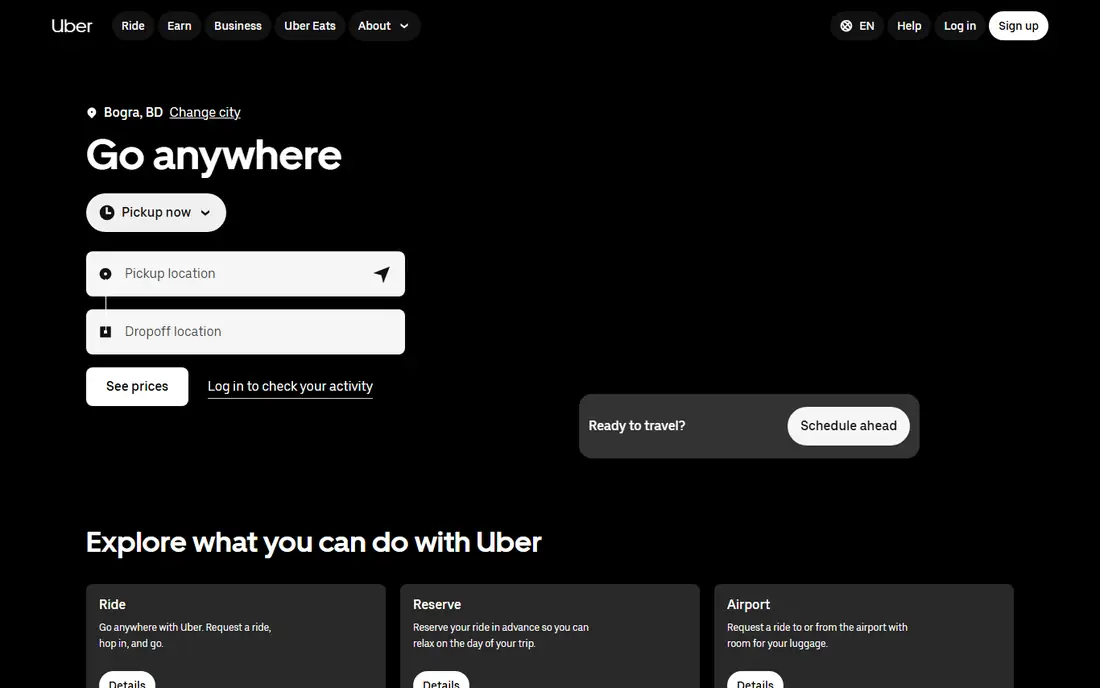
Uber is the default for a reason. It operates in most large and mid sized US cities, offers shared, standard, XL, premium, and wheelchair accessible options in many markets, and shows an upfront estimate before booking. For a traveller landing in a new city, Uber is often the first app that simply works.
The main drawback is price volatility. During rain, concerts, holidays, or late nights, surge pricing can double a fare, and the cheapest option may be a taxi or a second app. Uber also bundles food delivery and other services, which is convenient but can make the ride app feel crowded. Use it as the baseline, then compare.
What we like- Widest US coverage
- Many ride types from economy to premium
- Upfront fare estimates in the app
Watch out for- Surge pricing can raise fares sharply at peak times
- Service quality varies by city and driver supply
#2
Lyft
Best for: A strong second app with wide coverage
Visit lyft.com
Starting priceSee website
Free planYes
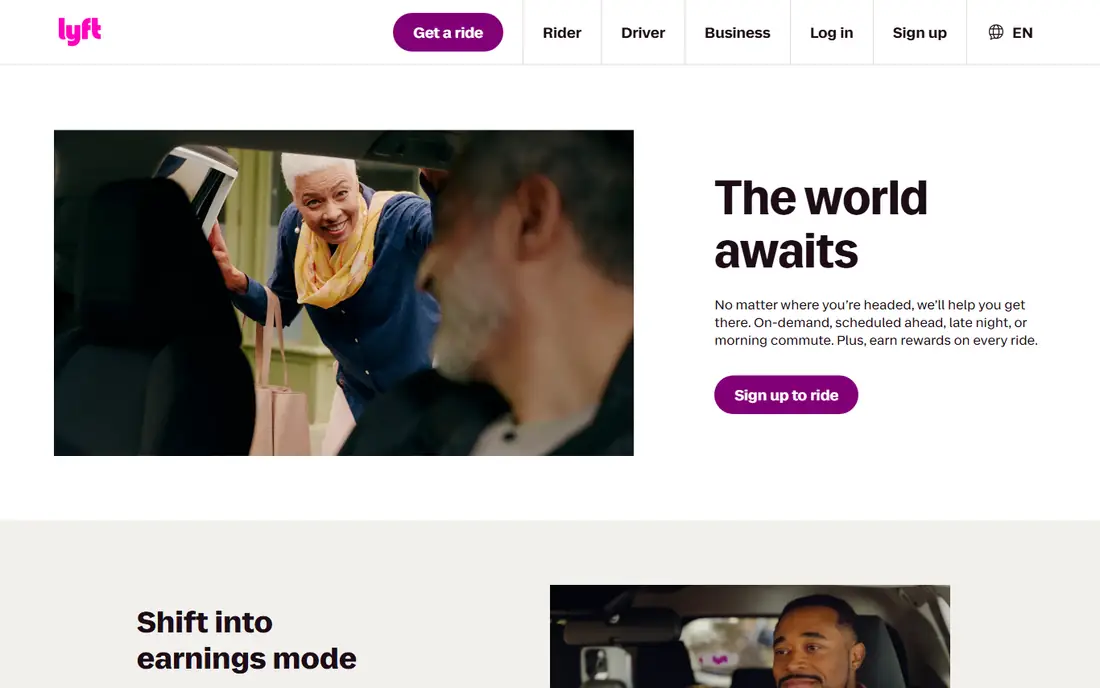
Lyft is the closest second app to Uber in the US, and that is exactly why it belongs on the phone beside Uber. In many cities the two services offer similar cars and wait times, but fares differ by demand at that moment. Checking both before booking takes seconds and often finds a lower price or a shorter wait.
Lyft also offers bikes and scooters in some cities, plus a subscription option for frequent riders that can reduce costs. The limit is familiar: outside large metros, driver supply drops, and neither Lyft nor Uber can guarantee a quick pickup. In those places a local taxi app may be the safer backup.
What we like- Wide US and Canadian coverage
- XL, luxury, and wait and save options
- Subscription perks for frequent riders
Watch out for- Often similar in price to Uber
- Coverage thins outside major metro areas
Starting priceSee website
Free planYes
Curb connects riders with licensed taxi fleets rather than private drivers. That matters in cities with strong taxi networks, especially New York, where yellow cabs remain a large part of street transport. Meter based fares also protect riders when rideshare surge pricing spikes, since the taxi fare follows local regulation rather than app demand.
Availability is the catch. Curb is useful where taxi fleets have joined the platform, and far less useful in suburbs or smaller cities without a participating fleet. Riders should check their city in the app before relying on Curb for an airport run, and keep it as a peak time alternative rather than a sole app.
What we like- Books licensed taxis
- Meter based fares in many cities
- Strong in New York and other taxi heavy markets
Watch out for- Coverage is city dependent
- Vehicle choice is narrower than Uber or Lyft
Starting priceSee website
Free planYes
Waymo One offers a different ride entirely: no human driver, a consistent car, and a quiet, predictable trip. Riders in Phoenix, San Francisco, Los Angeles, Austin, and other active markets can book through the Waymo app and ride in a defined service area. For riders who value privacy or who dislike small talk, the driverless format is a genuine advantage.
The limit is geography. Waymo does not cover most US cities, and even inside active cities the service area has edges. A trip that crosses outside the zone may not be bookable. Waymo is best treated as a local option where it operates, not as a national replacement for Uber or Lyft.
What we like- Fully driverless rides
- Consistent vehicle and driving style
- No driver conversation or tipping pressure
Watch out for- Available only in select cities and zones
- Service area limits can exclude suburbs and some destinations
Starting priceSee website
Free planYes
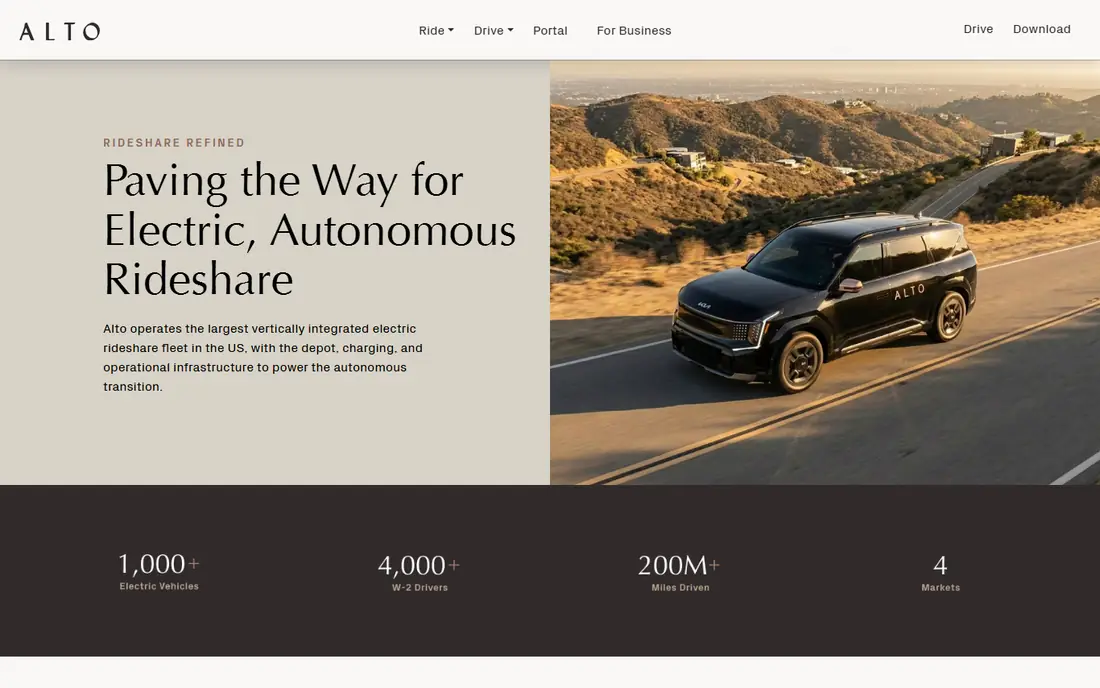
Alto takes a fleet approach. Drivers are employees, cars are owned and maintained by the company, and the experience aims for consistency from one ride to the next. That model suits evening outings, date nights, and business rides where a clean car and a professional driver matter more than the lowest fare.
Coverage is the trade-off. Alto operates in a limited set of cities, including Dallas, Houston, Los Angeles, Miami, and Washington, DC, with expansion over time. Riders outside those markets cannot use it, and even inside them, wait times may be longer than Uber at peak hours. Book ahead for planned trips.
What we like- Employed drivers and owned fleet
- Clean, consistent vehicles
- Strong for planned and evening rides
Watch out for- Limited to select cities
- Fares run higher than economy rideshare
Starting priceSee website
Free planYes
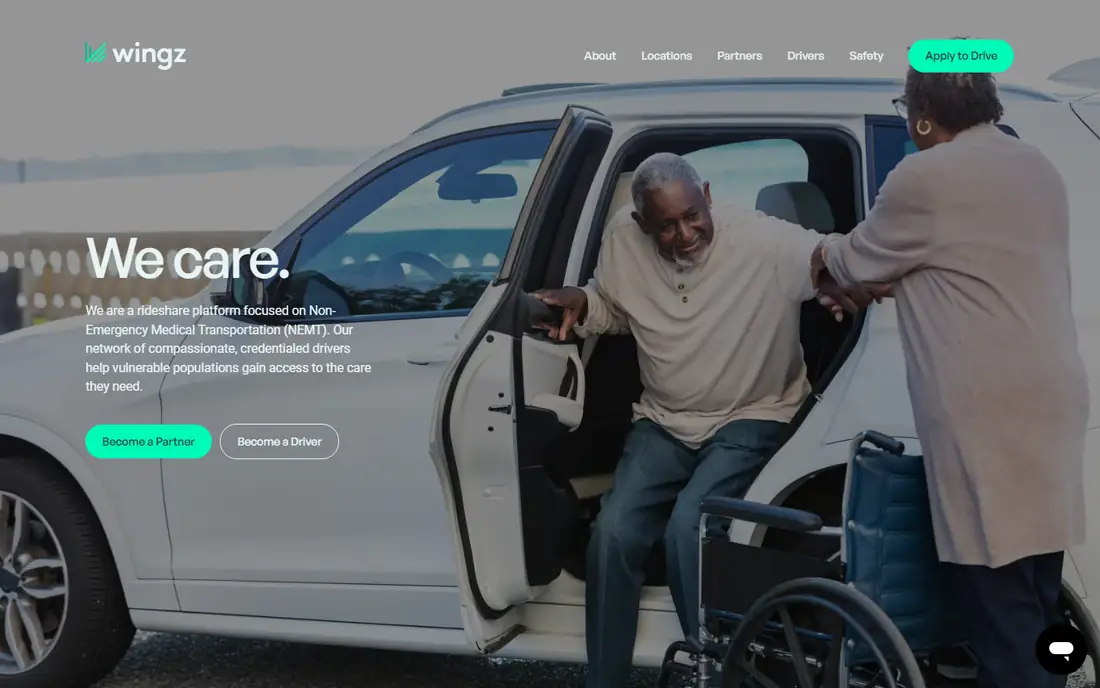
Wingz focuses on the trip many riders plan in advance: the airport run. Riders schedule a ride, see a flat rate for many airport routes, and get a named driver ahead of time. That predictability helps families, business travellers, and anyone with early flights, tight connections, or several bags.
Instant rides are not its strength. Wingz is a scheduling tool first, so a rider who needs a car in five minutes should use Uber, Lyft, or a taxi app. For airport trips booked a day or more ahead, Wingz often feels calmer and easier to budget than a surge priced on demand ride.
What we like- Flat rate airport pricing in many markets
- Scheduled rides with a named driver
- Good for groups and luggage
Watch out for- Not built for instant on demand rides
- Coverage varies by airport and city
Starting priceSee website
Free planYes
Blacklane serves the premium transfer market. Riders book a chauffeur driven car for airport pickups, business meetings, or city to city trips, with flight tracking and meet and greet options in many locations. Pricing is shown before booking for many routes, which helps corporate travellers who need receipts and predictable costs.
Everyday riders will find Blacklane expensive for short trips, and that is by design. It competes with car services, not with economy rideshare. For a client pickup, a wedding party, or a long airport transfer where presentation matters, the higher fare buys consistency and service.
What we like- Professional chauffeurs
- Pre booked airport transfers
- Fixed pricing shown before booking in many markets
Watch out for- Premium pricing
- Not suited to short, everyday city hops
Starting priceSee website
Free planYes
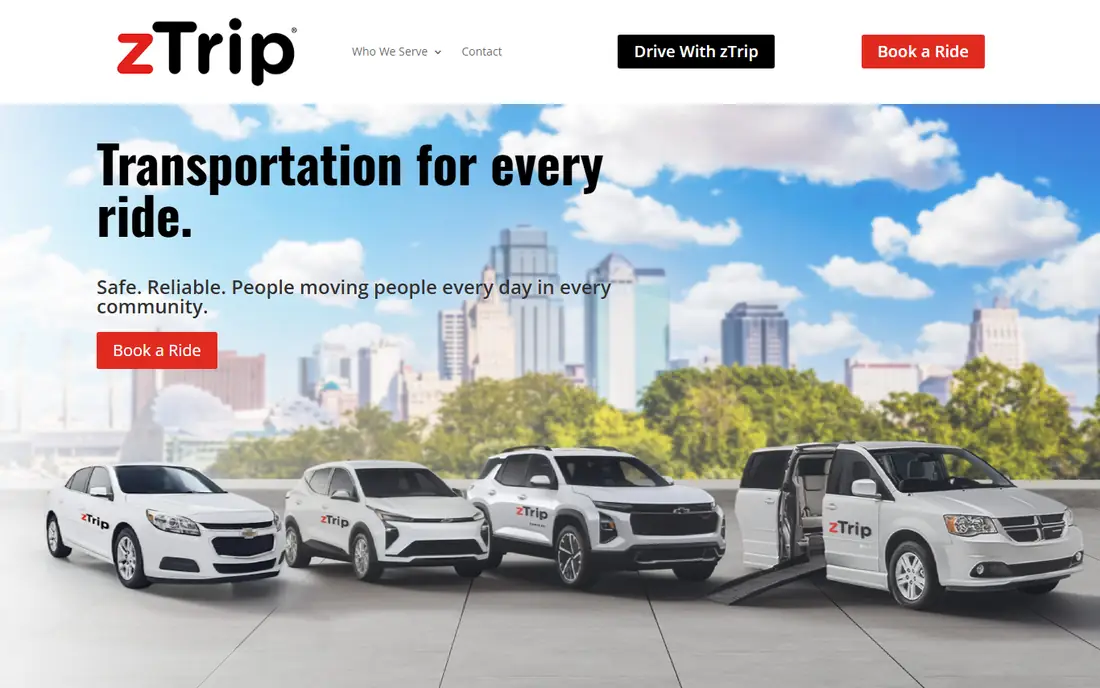
zTrip partners with local taxi and limo fleets to offer sedans, vans, and wheelchair accessible vehicles through one app. That mix helps groups, families with luggage, and riders who need a larger vehicle without booking a premium service. Airport rides are a natural fit, since fleets often know local terminals and pickup rules well.
The experience depends on the local fleet. Vehicle age, driver style, and app polish can vary from city to city, and zTrip is not available everywhere. Check the city list in the app, and use zTrip as a strong local taxi option rather than assuming national coverage.
What we like- Books taxis and larger vehicles
- Useful for airport and group trips
- Operates in many US metro areas
Watch out for- App experience varies by local fleet
- Coverage is not national
Starting priceSee website
Free planYes
Via built its name on shared rides that group passengers heading in the same direction. In active cities, that model lowers the fare compared with a private car, and it suits commuters who travel a regular route and can accept a few extra minutes. Via also partners with transit agencies in some places, which extends its role beyond a simple taxi alternative.
Sharing is also the limit. A shared ride may stop for other passengers, take longer, and require a short walk to a pickup corner in some services. Riders in a hurry, with luggage, or travelling late at night may prefer a private car. Via works best for routine, cost sensitive trips in cities where it operates.
What we like- Lower cost shared rides in active cities
- Simple pricing
- Useful for regular commuting routes
Watch out for- Shared rides add stops and time
- Coverage is limited to select cities and transit partnerships
How we chose
We compared vendor pages, service area listings, public documentation, and reviews on G2, Capterra, and Reddit, with a focus on US availability, ride types, pricing transparency, and suitability for everyday, airport, and premium trips. We checked that each service operates in the US in 2026 and noted where coverage is regional rather than national. Fares vary by city, time, demand, and ride type, so we list See website for starting prices and point readers to vendor pages in Sources for the fare shown for a specific trip.
Getting the best fare without losing time
Comparing apps helps, but only if the habit stays quick. A rider who opens five apps for every trip will waste the saving in time and frustration.
Build a two app habit plus a backup
Install Uber and Lyft as the main pair, then add one backup that fits the city: Curb or zTrip for taxis, Wingz for airport runs, or Waymo where driverless rides operate. Before booking, check the main pair for fare and wait time, then check the backup only when surge pricing is high or wait times are long. That routine takes under a minute once it becomes habit.
Plan airport and late night rides early
Airport trips, late night returns, and event nights are where fares spike and supply tightens. Schedule Wingz, Blacklane, or a taxi app the day before when possible, and allow extra time for pickup. For late nights, confirm the pickup point in the app and share trip details with a friend or family member using the in app safety features.
Use safety and receipt features every time
Check the car model, colour, licence plate, and driver name before getting in, and match them to the app. Use in app trip sharing for night rides and airport trips, and keep receipts for business travel. If a fare looks wrong, screenshot the estimate and the final charge, then raise it through the app support channel at once.
Frequently asked questions
Which rideshare app is best in the US?
Uber is the best default for most US riders because of coverage and ride choice, with Lyft as the closest second app. The best result usually comes from comparing Uber and Lyft for each trip and using a taxi app when surge pricing is high.
Is Lyft cheaper than Uber?
Sometimes, but not always. Fares depend on demand, driver supply, distance, and time of day in each city. Checking both apps before booking is the reliable way to find the lower fare for a specific trip.
Do rideshare apps work in small towns?
Coverage thins outside major metro areas, and wait times can be long or unavailable in small towns. Local taxi companies, hotel shuttles, and rental cars are often more reliable in those places, so check app availability before travelling.
Is Waymo available everywhere in the US?
No. Waymo operates in select cities and defined service areas, including Phoenix, San Francisco, Los Angeles, and Austin, with expansion over time. Riders should check the Waymo app for current service areas before planning a trip.
Can I book a rideshare in advance?
Yes, most apps allow scheduled rides, and Wingz and Blacklane specialise in pre booked trips. Scheduled rides still depend on driver supply at pickup time, so allow a buffer for airport trips and early morning departures.
Are taxi apps cheaper during surge pricing?
Often yes. Licensed taxis booked through Curb or zTrip usually follow meter or local regulated fares rather than app surge multipliers. During rain, concerts, or holidays, a taxi fare can be well below a surged rideshare fare for the same route.
Sources we checked (9)
- https://www.uber.com
- https://www.lyft.com
- https://www.gocurb.com
- https://waymo.com
- https://www.ridealto.com
- https://www.wingz.com
- https://www.blacklane.com
- https://www.ztrip.com
- https://www.ridewithvia.com
Is your product missing or out of date?
We review this list regularly. Vendors can request a listing, send updated pricing or ask about featured placement.

Shihab Mia · Founder, Rankite
Shihab has 5+ years in B2B and SaaS SEO. He writes Rankite's software buying guides from pricing pages, documentation and public user reviews. More about Shihab.