How we make this list: we compare pricing pages, product documentation and public user reviews. Ratings come from G2, Capterra or Trustpilot, with the date we checked them.
What is the best retail management software for sporting goods stores?
The best retail management software for sporting goods stores is Lightspeed Retail, because it handles size runs, seasonal inventory, supplier purchase orders and multi-location stock in one system built for specialist retailers. Sporting goods stores need more than a generic till. They sell apparel and footwear in full size runs, stock seasonal lines that turn over fast, take team and club orders, and rent out equipment such as bikes and skis. Lightspeed covers those needs while staying usable at the counter. Shopify POS is the best choice when online sales matter as much as in-store sales, and Square is the best free starting point for a small sporting goods shop.
Key takeaways
- Lightspeed Retail is the top pick for sporting goods stores that need size runs, seasonal stock and multi-location inventory.
- Shopify POS is the strongest option when your website drives a large share of orders.
- Square costs nothing to start and suits small shops with simple inventory.
- Heartland Retail fits stores that want payments, POS and back office from one vendor.
- PayPal Point of Sale (formerly Zettle) is the cheapest way to take card payments at a market stall or pop-up.
- Size-run and seasonal tracking separate real sporting goods software from generic retail POS.
How sporting goods stores should choose retail management software
Sporting goods retail has inventory problems other shops do not have. A shoe or jersey exists in a full size run, and a missing size is a lost sale. Seasonal lines arrive in waves: winter sports gear, then summer gear, then back-to-school. The software should track sizes properly, show which sizes are missing and flag slow-moving seasonal stock before it becomes dead stock.
Team orders are a second deciding factor. Clubs and schools order kits in bulk with names and numbers, often on a deadline before a season starts. The software should handle bulk orders, deposits and customer records so a team order does not get mixed up with normal counter sales.
Equipment rental is a third factor for stores that rent bikes, skis or kayaks. Rental needs booking, deposits, return dates and damage checks. A POS without rental features forces the store back to paper forms, which is where rental revenue leaks.
Online sales matter too. Customers check sizes online before visiting, and many prefer click and collect. A POS that syncs stock with a website in real time avoids selling the same pair of shoes twice. Price should be judged on total cost, not the headline monthly fee. Payment processing fees often cost more than the software subscription, so compare the software fee plus processing on your actual monthly card volume before deciding.
Quick comparison
| Tool | Best for | Starting price | Free plan |
|---|
 Lightspeed Retail | Sporting goods stores that need size runs, seasonal stock and multi-location control | $89 per month billed annually ($109 month to month), checked 23 Nov 2026 | No free plan; paid plans only |
 Square | Small sporting goods shops that want a free POS with fast setup | $0, checked 23 Nov 2026 | Yes, free POS with pay-as-you-go card processing |
 Shopify POS | Sporting goods stores where online sales matter as much as in-store sales | $89 per month per location for POS Pro, plus a Shopify plan from $29 per month billed annually, checked 23 Nov 2026 | No free plan; POS Lite is included with a Shopify plan |
 Heartland Retail | Sporting goods stores that want payments, POS and back office from one vendor | $89 per month starting, per the vendor page checked 23 Nov 2026; older third-party reads showed $69 per selling station, flagged for spot check | No free plan |
 Clover | Sporting goods stores that want counter hardware and payments bundled together | From $49.95 per month for Register, checked 23 Nov 2026 | No free plan |
 Epos Now | Budget-conscious sporting goods shops that want a cloud POS with optional add-ons | $39 per month for software only, checked 23 Nov 2026 | No free plan |
 KORONA POS | High-volume sporting goods stores that need flexible pricing and strong inventory | $59 per terminal per month for Core, checked 23 Nov 2026 | No free plan |
 PayPal Point of Sale | Pop-up stalls, market stands and mobile sporting goods selling | $0 monthly, card fee 2.29 percent plus 9 cents per transaction, checked 23 Nov 2026 | Yes, free to sign up with no monthly fee |
Is your product missing or out of date?
We review this list regularly. Vendors can request a listing, send updated pricing or ask about featured placement.
The best retail management software for sporting goods stores
#1
Lightspeed Retail
Best for: Sporting goods stores that need size runs, seasonal stock and multi-location control
Visit lightspeedhq.com
Starting price$89 per month billed annually ($109 month to month), checked 23 Nov 2026
Free planNo free plan; paid plans only
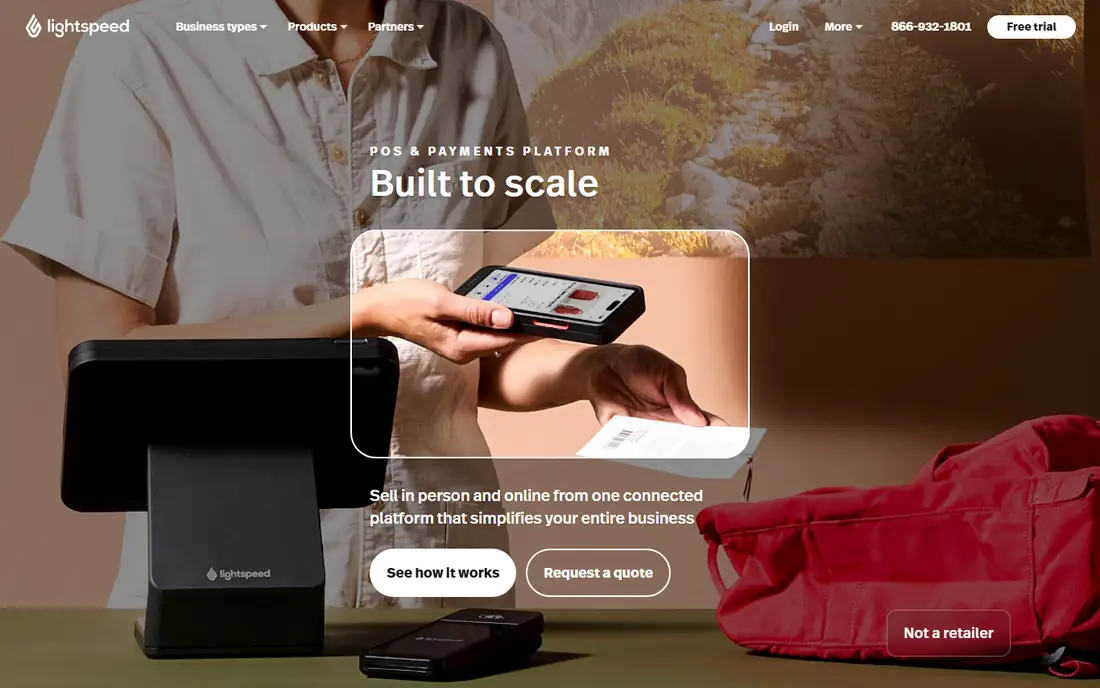
Lightspeed Retail is built for specialist retailers, and sporting goods is one of the categories it serves best. Size runs are handled as variants of one product, so a shoe in ten sizes stays one listing with clear stock per size. Seasonal lines can be grouped and tracked, and low-stock alerts warn before a popular size runs out mid-season. Multi-location stock is visible from any till, so staff can check another branch instead of losing a sale. Purchase orders flow from supplier catalogues, and the reporting breaks sales down by sport, brand and margin. The main drawback is price. At $89 per month billed annually, a small single-location shop pays a real subscription before processing fees.
What we like- Strong size-run and variant tools, seasonal inventory control, multi-location stock, supplier purchase orders, built-in ecommerce, detailed reporting by category and brand
Watch out for- Monthly cost is high for a single small shop, and setup takes time because the inventory system is deep
#2Square
Best for: Small sporting goods shops that want a free POS with fast setup4.6/5 on
G2 (1,208 reviews, checked Oct 2026)
Visit squareup.com
Starting price$0, checked 23 Nov 2026
Free planYes, free POS with pay-as-you-go card processing
Square is the easiest way to open a sporting goods shop and start selling the same day. The free plan includes the POS app, inventory tracking, a customer directory and sales reports, and the card reader is inexpensive. A small shop selling apparel, footwear and accessories can run the whole counter on Square without a monthly subscription. The inventory tools cover stock counts, low-stock alerts and purchase orders at a basic level, which is enough for a single location with a few hundred lines. The limits show as the business grows. Size runs, team orders and rental bookings need workarounds or third-party apps. Card processing is charged per transaction, so a shop with high monthly card volume may pay more in fees than it would save on subscription elsewhere.
What we like- No monthly fee to start, hardware is affordable, inventory and customer directory included, online store add-on available
Watch out for- Size-run and team order tracking is basic, and card processing fees add up at higher volumes
#3Shopify POS
Best for: Sporting goods stores where online sales matter as much as in-store sales4.4/5 on
G2 (368 reviews, checked Oct 2026)
Visit shopify.com
Starting price$89 per month per location for POS Pro, plus a Shopify plan from $29 per month billed annually, checked 23 Nov 2026
Free planNo free plan; POS Lite is included with a Shopify plan
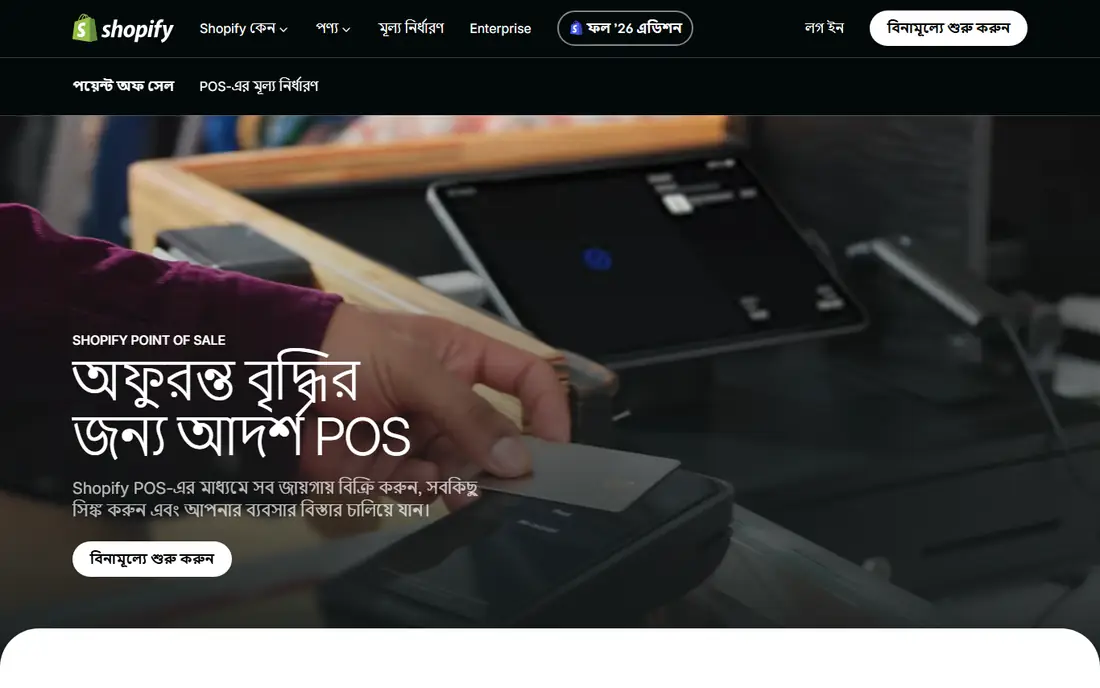
Shopify POS makes sense for a sporting goods store whose website is a real sales channel rather than a brochure. Stock, customers and orders are shared between the online store and the till, so a pair of shoes sold in the shop is immediately unavailable online and a web order can be collected in store. POS Pro adds staff roles, smart inventory management, low-stock reports and unlimited registers, which matter when several staff handle busy sale weekends. The app marketplace adds team order, rental and size-run tools that the core product lacks. The cost is the catch. POS Pro is $89 per month per location on top of a Shopify plan from $29 per month, so a two-location store pays several hundred dollars a month before processing.
What we like- Online and in-store stock stay in sync, strong ecommerce platform, staff permissions and smart inventory tools on POS Pro, large app marketplace
Watch out for- Full retail features need POS Pro, and the combined monthly cost rises with each location
#4
Heartland Retail
Best for: Sporting goods stores that want payments, POS and back office from one vendor
Visit heartland.us
Starting price$89 per month starting, per the vendor page checked 23 Nov 2026; older third-party reads showed $69 per selling station, flagged for spot check
Free planNo free plan
Heartland Retail combines a cloud POS with payment processing from the same company, which simplifies support when something goes wrong. The inventory tools cover matrix inventory, purchase orders, transfers between locations and customer purchase history, all useful for sporting goods. Multi-location stores can see stock across branches and move items where they sell. The customer tools support loyalty and targeted marketing, helpful for a store that depends on repeat buyers for each new season. The weakness is pricing transparency. The vendor page shows plans starting at $89 per month, while older third-party listings quoted $69 per selling station, so buyers should get a written quote before signing.
What we like- Payments and POS from one provider, strong inventory and customer management, multi-location support, US-based support
Watch out for- Pricing is not fully transparent on the public site, and the system is geared to US merchants
#5Clover
Best for: Sporting goods stores that want counter hardware and payments bundled together3.8/5 on
G2 (108 reviews, checked Oct 2026)
Visit clover.com
Starting priceFrom $49.95 per month for Register, checked 23 Nov 2026
Free planNo free plan
Clover sells the whole counter as a package: terminal, software and payments from one vendor. The Register plan starts at $49.95 per month and covers the core POS, inventory and reporting. The hardware is well made and suits a busy sporting goods counter, with options for customer-facing displays and barcode scanners. The app marketplace adds features the core product lacks, including deeper inventory, employee management and loyalty tools. Offline mode keeps card sales running if the internet drops, which matters during a busy sale weekend. The costs stack up though. Hardware is bought or leased separately, and several of the apps that sporting goods stores need carry their own monthly fees. Inventory depth is weaker than Lightspeed out of the box, and size-run tracking needs an add-on. Clover fits a store that values a tidy hardware bundle and simple setup over the deepest inventory control.
What we like- Polished counter hardware, app marketplace for inventory and loyalty, payments built in, offline mode for card sales
Watch out for- Hardware costs add up, and advanced inventory features need paid apps
#6Epos Now
Best for: Budget-conscious sporting goods shops that want a cloud POS with optional add-ons4.6/5 on
G2 (29 reviews, checked Oct 2026)
Visit eposnow.com
Starting price$39 per month for software only, checked 23 Nov 2026
Free planNo free plan
Epos Now is one of the cheapest ways to get a cloud POS into a sporting goods shop. At $39 per month for software only, a small store gets till, inventory, customer records and reporting without a large subscription. Because it runs in the cloud, the owner can check sales and stock from anywhere, and the system works on the shop's own tablets or terminals. The app store adds ecommerce, accounting, loyalty and staff management, so the store can add features as it grows instead of paying for them on day one. The trade-offs are real. Public reviews report uneven support, and several features that other systems include by default are paid add-ons here, so the true monthly cost depends on which apps are needed. Size-run and rental tracking also need add-ons. Epos Now suits a small sporting goods shop that wants low fixed costs and is comfortable assembling its setup from apps.
What we like- Low starting price, cloud-based with remote access, large app store, works on own hardware
Watch out for- Support quality varies in public reviews, and key features sit behind paid add-ons
#7KORONA POS
Best for: High-volume sporting goods stores that need flexible pricing and strong inventory4.7/5 on
G2 (72 reviews, checked Oct 2026)
Visit koronapos.com
Starting price$59 per terminal per month for Core, checked 23 Nov 2026
Free planNo free plan
KORONA POS is built for retailers that move a lot of stock and need pricing flexibility. It handles unlimited products, complex price rules, promotions and customer-specific pricing, which helps a sporting goods store running clearance on last season's lines, bundle offers on kits and club pricing for teams. Inventory is strong, with stock tracking, purchase orders and detailed margin reporting. Multi-location and franchise tools are included, so a growing chain can manage all branches from one back office. There is no long-term contract on the core plans. The interface is less polished than Lightspeed or Square, and getting the system configured takes more effort up front.
What we like- Unlimited products and custom price rules, strong inventory and reporting, franchise and multi-location tools, no long-term contract on core plans
Watch out for- Interface looks dated next to newer rivals, and setup needs more configuration
#8
PayPal Point of Sale
Best for: Pop-up stalls, market stands and mobile sporting goods selling
Visit paypal.com
Starting price$0 monthly, card fee 2.29 percent plus 9 cents per transaction, checked 23 Nov 2026
Free planYes, free to sign up with no monthly fee
PayPal Point of Sale, formerly Zettle, is the simplest way to take card payments away from the shop. There is no monthly fee, signup is free, and the card reader pairs with a phone or tablet in minutes. Tap to Pay on iPhone removes the need for a reader at all for small sellers. The app includes basic inventory and sales reports, enough for a stall selling caps, socks and accessories at a tournament or a pop-up. It is not a full retail management system. There is no size-run tracking, no team order workflow and no multi-location stock control, so it cannot run a proper sporting goods store on its own. It works best as a second till for events, a mobile selling tool, or a low-risk way for a new seller to start taking cards before investing in a full POS. The per-transaction fee of 2.29 percent plus 9 cents is fair for low volume but adds up as sales grow.
What we like- No monthly fee, quick setup, card reader and Tap to Pay on iPhone, inventory and sales reports in the app
Watch out for- No deep inventory, size-run or rental features, and it is not built to run a full shop
What sporting goods stores should check before buying
Check size-run handling first. Ask the vendor to show how one shoe is listed in ten sizes with stock per size, and how a missing size is flagged. Next, test the team order workflow if clubs are a real part of the business: bulk order, deposit, names and numbers, and a deadline. Check the ecommerce sync too: sell an item in store and watch the website update. Finally, work out the full monthly cost, including card processing on your real volume, hardware and any paid apps, before signing a contract.
How to set up retail software in a sporting goods store
Start with a clean stock count. Count every item by size, separate seasonal stock from core lines and remove dead lines before importing anything. Set up suppliers and purchase orders next, so reordering follows real stock levels instead of memory. Train staff on size lookups, team orders and returns before launch day. Run the new till alongside the old one for a few days if possible, then switch fully once the team is confident.
Frequently asked questions
What is retail management software for sporting goods stores?
Retail management software for sporting goods stores combines a point of sale with inventory, customer and reporting tools tuned to sports retail. It tracks size runs, seasonal lines, team orders and equipment rentals alongside normal sales. The best systems also sync stock with an online store and manage purchase orders from sports suppliers. For a small shop, a simple POS may be enough, but a store with team orders and several locations needs the deeper inventory features.
Do sporting goods stores need size-run tracking?
Yes, when apparel and footwear are a real part of the business. A size run links each size of a shoe or jersey to its own stock level, so staff can see at a glance which sizes are missing. Without it, a store cannot tell whether a popular shoe is out of stock in the size a customer needs. Systems such as Lightspeed Retail handle size runs natively, while simpler POS tools need add-ons or manual workarounds to do the same.
Which retail POS is best for a small sporting goods shop?
Square is the best starting point for a small sporting goods shop because there is no monthly fee and setup takes minutes. It covers the till, basic inventory and card payments in one free plan. A shop that grows into team orders, rentals and multiple locations will usually move to Lightspeed Retail or Shopify POS later. The right choice depends on whether the shop needs deep inventory control now or can start simple and upgrade later.
How much does retail management software cost for a sporting goods store?
Costs range from $0 per month for Square or PayPal Point of Sale to $89 per month for Lightspeed Retail or Shopify POS Pro, plus card processing fees on every sale. Hardware, paid apps and extra locations add to the total. A small shop can start free and pay only processing fees, while a multi-location store should budget several hundred dollars a month for software, processing and apps combined.
Can retail software handle equipment rentals?
Some systems can, with limits. Lightspeed Retail and Shopify POS handle rentals through third-party apps, while dedicated rental software does the job better for a rental-led business. Before buying, ask the vendor to show a rental booking with a deposit, return date and damage check. If rentals are half the business, a dedicated rental system linked to the POS may serve the store better than a POS with a rental add-on.
Sources we checked (9)
- https://www.lightspeedhq.com/pricing/
- https://squareup.com/us/en/pricing
- https://www.shopify.com/pos/pricing
- https://www.heartland.us/retail
- https://www.clover.com/pricing
- https://www.eposnow.com/us/pricing/
- https://www.koronapos.com/pricing/
- https://www.paypal.com/us/business/pos-system
- https://rankite.com/blog/best-retail-management-software
Is your product missing or out of date?
We review this list regularly. Vendors can request a listing, send updated pricing or ask about featured placement.

Shihab Mia · Founder, Rankite
Shihab has 5+ years in B2B and SaaS SEO. He writes Rankite's software buying guides from pricing pages, documentation and public user reviews. More about Shihab.