How we make this list: we compare pricing pages, product documentation and public user reviews. Rankite is independent; if a vendor ever pays for a featured spot, that listing is clearly labeled Partner.
Key takeaways
- Resume parsers split into standalone APIs (Affinda, RChilli, Textkernel, DaXtra, HireAbility, HrFlow.ai, Skima AI) and no-code or built-in options (CandidateZip, Zoho Recruit).
- Usage-based pricing starts around $0.10 per parse (HrFlow.ai, Affinda); monthly plans start at $30 (CandidateZip) and $75 (RChilli).
- Free entry points exist: Skima AI parses 100 resumes free, HrFlow.ai has a free tier, and Zoho Recruit includes parsing in its free ATS plan.
- Textkernel absorbed Sovren, so the old Sovren-versus-Textkernel debate is over; they are now one company.
Quick comparison
| Tool | Best for | Starting price | Free plan |
|---|
 Affinda Affinda | Transparent credit pricing with self-hosting option | From $800/year (6,000 annual parses) | Free trial |
 RChilli RChilli | High-volume parsing with Oracle and SAP ties | From $75/month | Free trial |
 Textkernel Textkernel | Enterprise parsing with skills taxonomy and matching | From $99/month | Free trial |
 DaXtra DaXtra | Staffing firms needing deep field extraction | See website | Free trial |
 HireAbility HireAbility | Privacy-strict parsing that never stores data | See website | Free trial (30 parses, 30 days) |
 Skima AI Skima AI | Free starter parsing with 200+ data fields | Free plan (100 resumes); volume pricing custom | Yes |
 HrFlow.ai HrFlow.ai | Developer-first parsing API with scoring and search | From $0.10 per parse (usage-based) | Yes |
 CandidateZip CandidateZip | No-code parsing into any ATS via Zapier | From $30/month | Free trial (7 days) |
 Zoho Recruit Zoho Recruit | Teams that want parsing inside a full ATS | Free; paid from $25 per user/month | Yes |
Is your product missing or out of date?
We review this list regularly. Vendors can request a listing, send updated pricing or ask about featured placement.
The best resume parsing software
#1
Affinda
Best for: Transparent credit pricing with self-hosting option
Visit affinda.com
Starting priceFrom $800/year (6,000 annual parses)
Free planFree trial
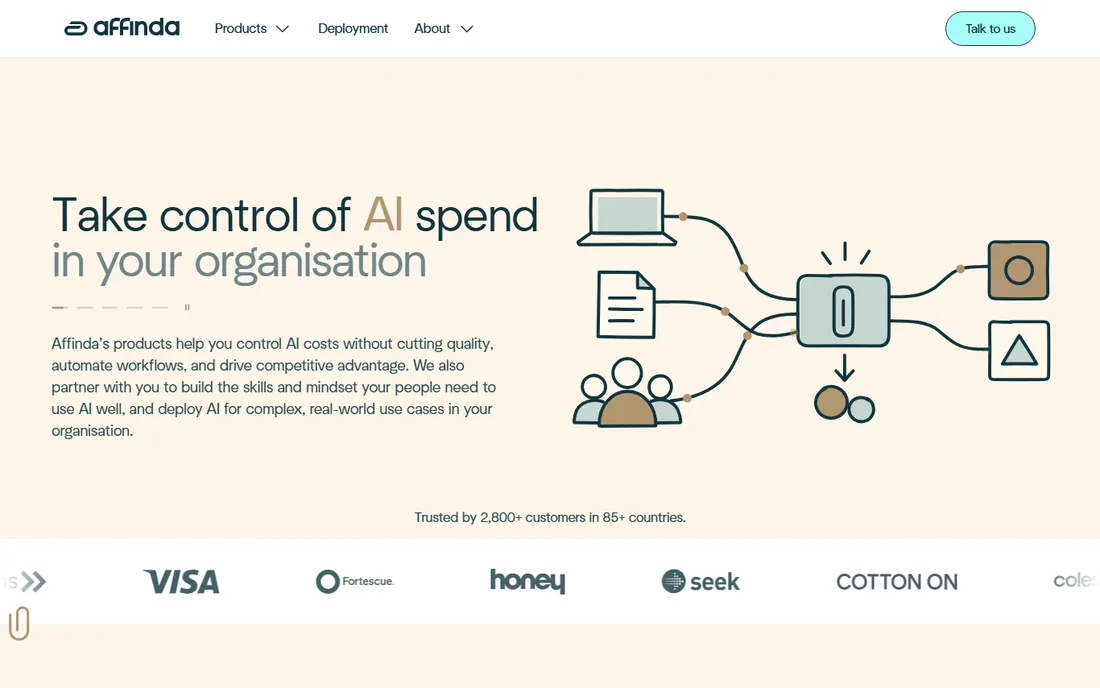
Affinda built its reputation by being the parser that tells you the price upfront. Annual plans start at $800 for 6,000 parses and scale to 780,000 parses, which makes budgeting simple for HR tech vendors and staffing firms that parse at volume. The engine extracts more than 100 fields, handles 50+ languages, and includes extras like job description parsing, semantic search, and resume redaction in the broader platform.
The self-hosted option deserves attention. If your legal team will not let candidate data leave your infrastructure, Affinda is one of the few modern parsers that can run inside your own environment. The trade-off is that you are buying from an Australian company founded in 2013, not a decades-old incumbent, so reference customers in your specific industry may be thinner.
What we like- Publishes clear per-parse pricing tiers
- Extracts 100+ fields in 50+ languages
- Offers a self-hosted deployment for strict data policies
Watch out for- Annual parse bundles can feel rigid for spiky hiring
- Smaller vendor than the enterprise incumbents
Starting priceFrom $75/month
Free planFree trial
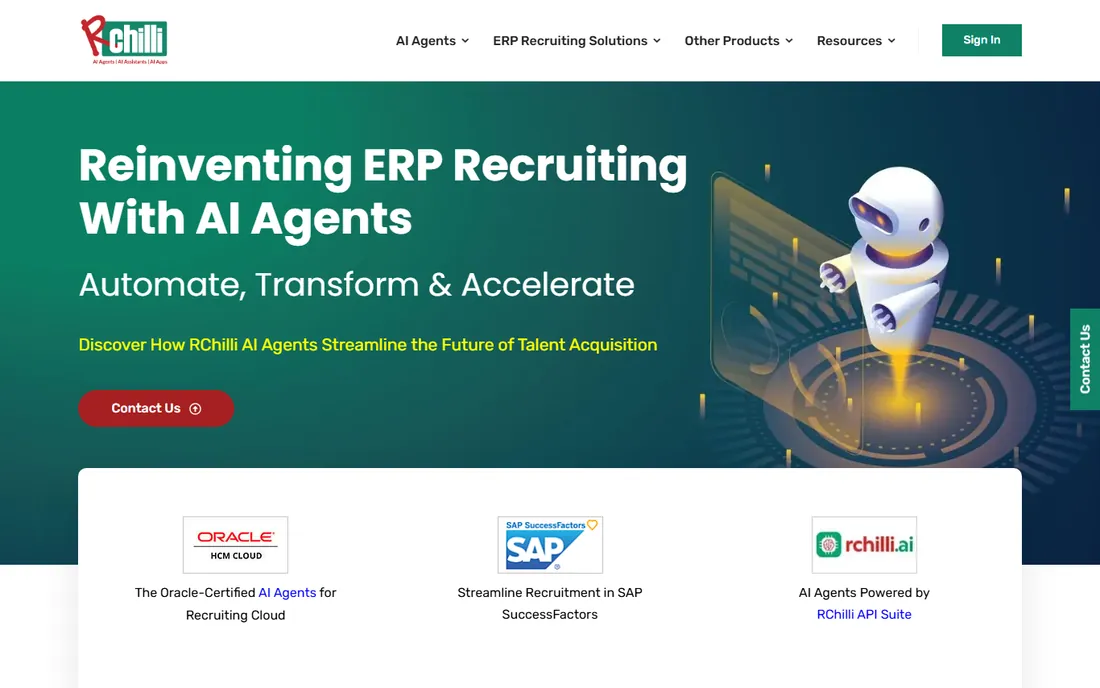
When an Oracle HCM or SAP SuccessFactors customer needs parsing, RChilli is usually the first name mentioned. The company is certified on both marketplaces, and its parser extracts 140+ fields with taxonomy-driven skills normalization. RChilli claims its technology processes more than 4 billion documents a year for 1,600+ recruiting platforms, which is the kind of scale that keeps accuracy stable under load.
The entry plan starts at $75 per month, which is approachable for a mid-size team. Beyond that, pricing is customized. RChilli also holds ISO 27001, SOC 2 Type II, and HIPAA certifications, plus GDPR compliance, so regulated industries can buy with fewer objections. Expect to lean on their support team during the first integration; reviewers note setup is not entirely self-serve.
What we like- Deep integrations with Oracle HCM and SAP SuccessFactors
- Parses 140+ fields in 40+ languages
- Processes billions of documents a year at scale
Watch out for- Pricing above $75/month is quote-based
- Initial setup often needs vendor help
Starting priceFrom $99/month
Free planFree trial
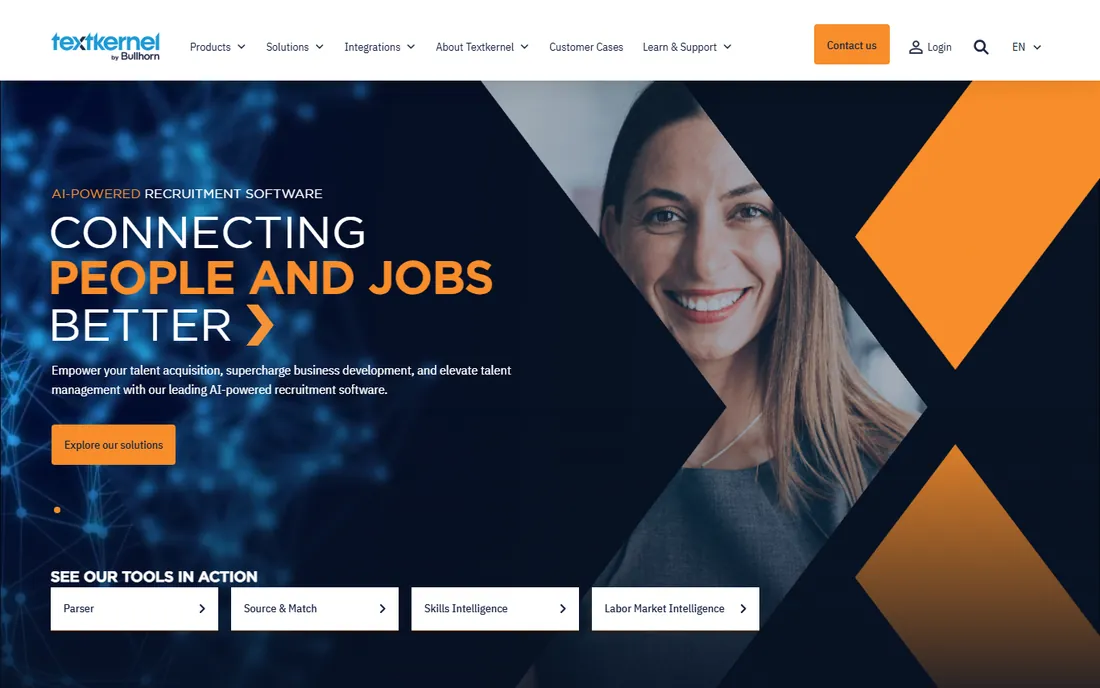
Textkernel calls its parser the industry's most used, and the customer list backs that up: more than 2,500 HR software vendors, employers, job boards, and government organizations build on it. The real strength is not just extraction but what comes after: a deep skills taxonomy that normalizes job titles and competencies, feeding the company's Source & Match engine and labor market analytics.
The Sovren acquisition consolidated the two oldest names in parsing under one roof, which simplifies the buying decision if you were comparing them. Entry pricing starts around $99 per month for up to 500 documents. Textkernel is ISO 27001 and SOC 2 certified and states compliance with GDPR and the EU AI Act. Small teams sometimes find the enterprise sales process heavier than API-first rivals, but for accuracy at scale it remains the benchmark.
What we like- The most widely deployed parsing engine in the industry
- Mature skills taxonomy powers search and matching
- Now includes former Sovren technology
Watch out for- Enterprise sales motion can be slow for small buyers
- Pricing beyond entry tier is customized
#4
DaXtra
Best for: Staffing firms needing deep field extraction
Visit daxtra.com
Starting priceSee website
Free planFree trial
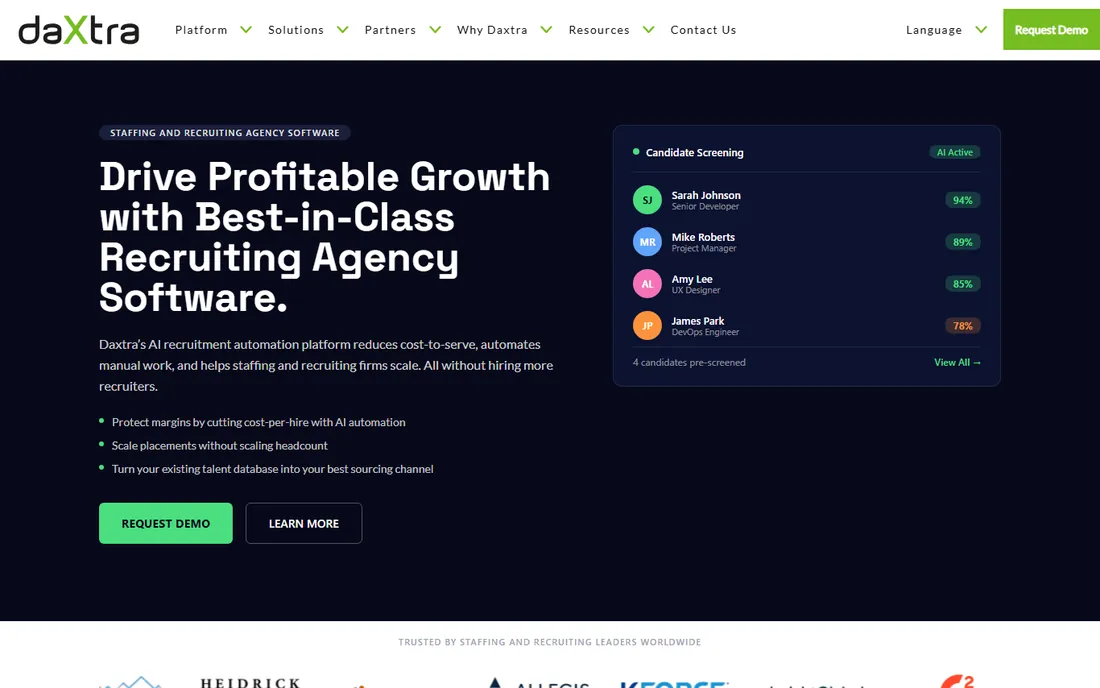
DaXtra has served staffing firms since 2002, and it shows in the details: sector-specific skills taxonomies for IT, finance, legal, healthcare, and engineering, plus parsing in 40+ languages. The parser extracts 150+ fields and plugs into Bullhorn, SAP SuccessFactors, and other staffing staples. More than 2,500 staffing firms and in-house teams use DaXtra products.
The company has expanded well beyond parsing into search, matching, and its TalentFlow workflow automation, which is good if you want one vendor but means the pure parser is now part of a bigger suite. Pricing is quote-based, so expect a sales conversation. DaXtra offers on-premise deployment for firms with strict data residency needs, a real differentiator against cloud-only APIs.
What we like- Extracts 150+ fields with sector-specific taxonomies
- Strong in staffing and recruiting workflows
- On-premise deployment available
Watch out for- No public pricing
- Product suite has grown complex beyond pure parsing
Starting priceSee website
Free planFree trial (30 parses, 30 days)
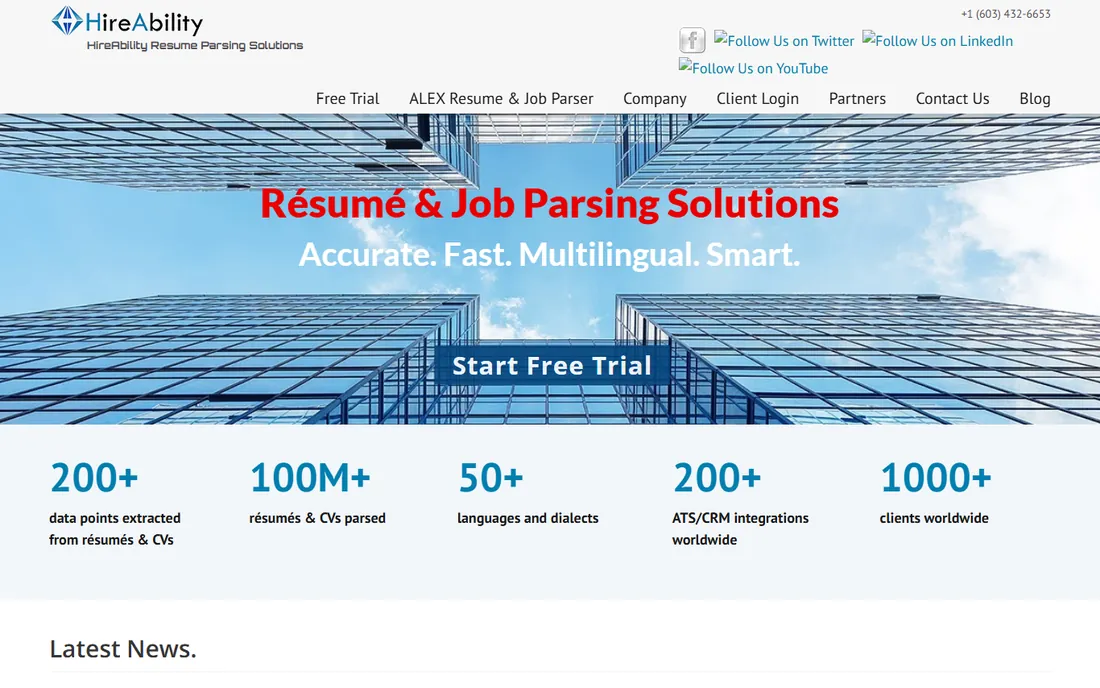
HireAbility's ALEX parser takes the strongest privacy stance on this list: your resume and job data is never stored on their servers, and the company is GDPR compliant. For legal, healthcare, and government-adjacent hiring, that architecture removes a whole category of vendor risk assessment. The parser handles 50+ languages, auto-detects the document language, and even parses the Matters section found in legal resumes.
The free trial includes 30 parses over 30 days, which is enough to test accuracy on your own documents. Pricing is not published, so you will talk to sales. HireAbility is a smaller US company founded in 1999, and while the technology is proven, the integration ecosystem is narrower than Affinda's or RChilli's. If privacy is your top criterion, though, few parsers make the case this cleanly.
What we like- Never stores resume or job data on its servers
- Parses 50+ languages and dialects
- ALEX engine has run since 1999
Watch out for- No public pricing
- Smaller company with a narrower ecosystem than rivals
#6
Skima AI
Best for: Free starter parsing with 200+ data fields
Visit skima.ai
Starting priceFree plan (100 resumes); volume pricing custom
Free planYes
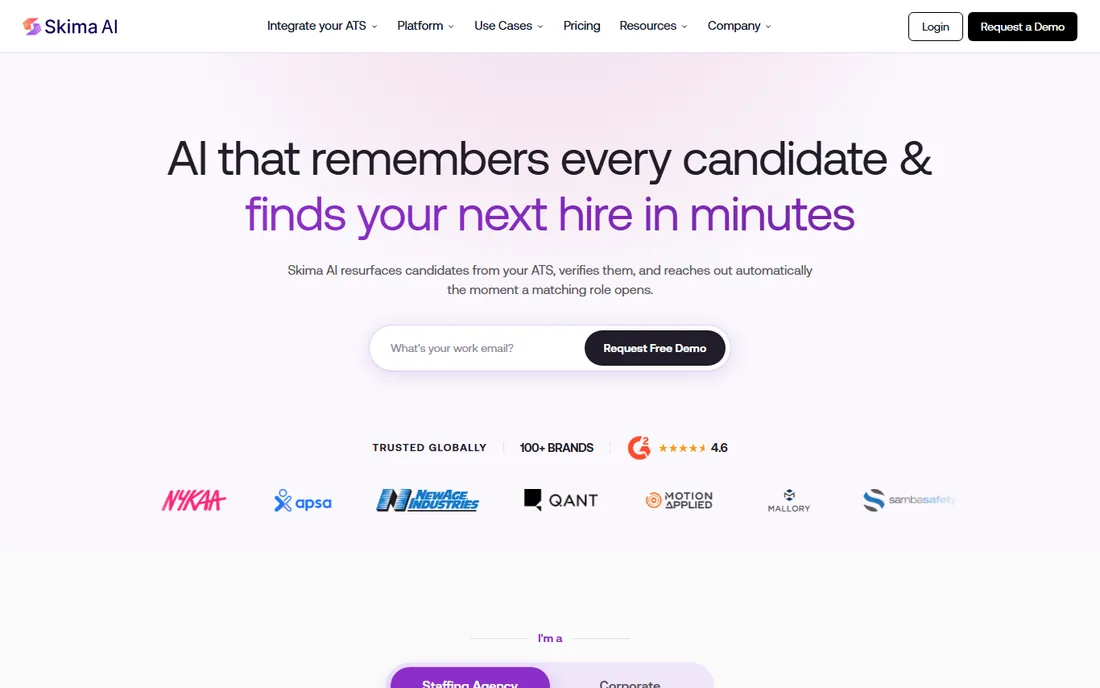
Skima AI is the easiest parser on this list to start using: the free plan covers 100 resumes with no credit card, extracting 200+ data fields across 56+ languages. That makes it a natural pick for a startup or a team testing whether parsing is worth the investment. The company is SOC 2 Type II certified and publishes bias audits for NYC Local Law 144 and EU AI Act compliance, which is unusual transparency for a young vendor.
Note the shape of the business, though. Skima has grown into a full AI recruitment platform with candidate rediscovery, fraud detection, and outreach, and paid engagements start with a demo rather than self-serve signup. Volume pricing is customized to your hiring volume. If you outgrow the free plan, expect a consultative sale, but the free tier alone handles real work.
What we like- Genuinely free plan with 100 resumes
- Extracts 200+ data fields
- SOC 2 Type II certified with published bias audits
Watch out for- No self-serve trial for the paid platform
- Volume pricing requires a demo
#7
HrFlow.ai
Best for: Developer-first parsing API with scoring and search
Visit hrflow.ai
Starting priceFrom $0.10 per parse (usage-based)
Free planYes
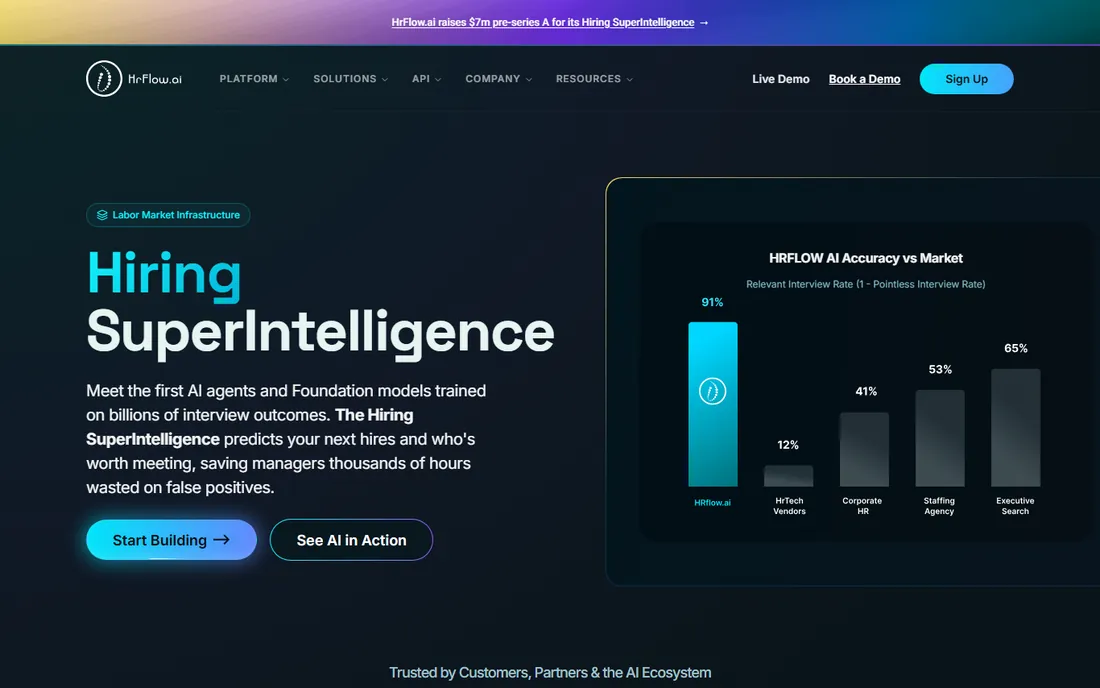
HrFlow.ai is infrastructure for HR tech builders. The Parsing API turns resumes into structured JSON, and it sits alongside Tagging, Embedding, Searching, Scoring, and Upskilling APIs on one platform, with 200+ connectors to ATS and HR systems. If you are building a recruiting product rather than just hiring, this composability matters: you can add candidate scoring or semantic search without a second vendor.
Pricing is usage-based from about $0.10 per parse, with a free tier covering essential requests. The docs are thorough, with a Python SDK and copy-paste examples. The honest catch is the audience: this is a developer product. An HR team without engineering support will get more value from CandidateZip or Zoho Recruit, but a technical team will move faster here than anywhere else.
What we like- API-first design with Python SDK and 200+ connectors
- Parsing is one module alongside tagging, scoring, and search
- Free tier for essentials
Watch out for- Built for developers, less friendly for non-technical HR teams
- Usage-based costs need monitoring at scale
Starting priceFrom $30/month
Free planFree trial (7 days)
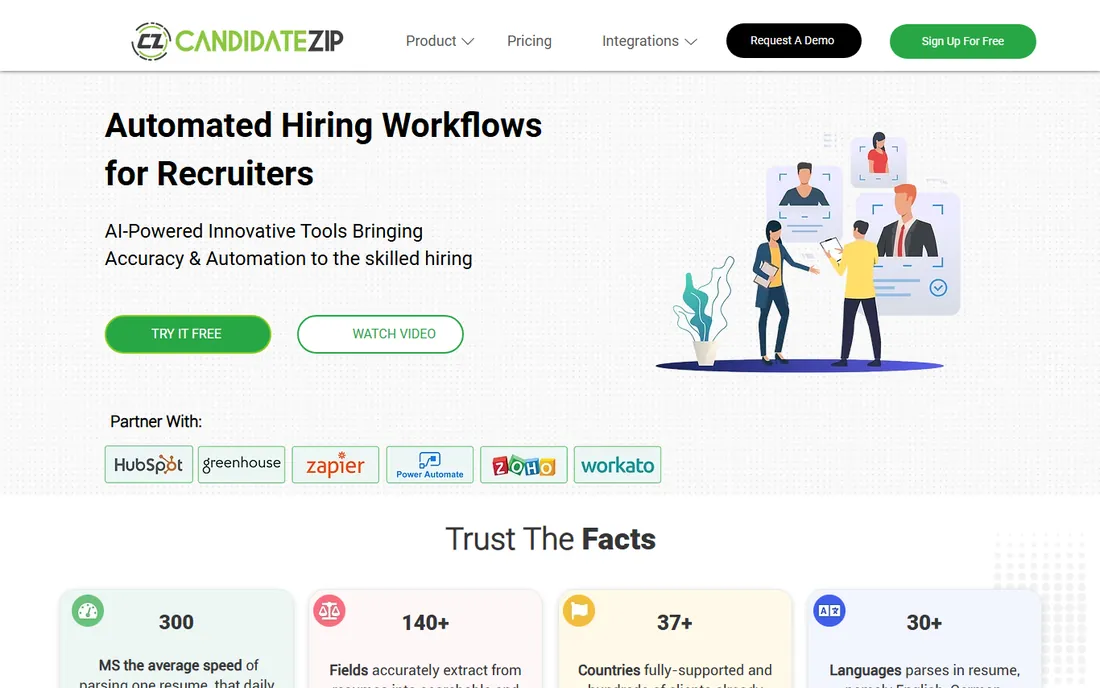
CandidateZip solves the integration problem instead of the parsing-accuracy problem. Rather than an API your developers wire up, it connects through Zapier, Workato, or Power Automate and drops structured candidate data into HubSpot, Greenhouse, Zoho, or any ATS with a one-time setup. Resumes can flow in from Gmail, Dropbox, or desktop folders automatically.
Plans start at $30 per month with pay-as-you-go billing and no long contract, which suits solo recruiters and small agencies with uneven hiring volume. The extraction covers 80+ fields in 9 languages, solid but narrower than the enterprise engines. The 7-day free trial is brief, so come prepared with test resumes. For non-technical teams, though, this is the fastest path from inbox chaos to structured candidate data.
What we like- No-code setup through Zapier, Workato, and Power Automate
- Works with any ATS or CRM
- Pay-as-you-go monthly plans you can cancel anytime
Watch out for- Parsing quality tied to simpler extraction (80+ fields)
- 7-day trial is short for evaluation
#9
Zoho Recruit
Best for: Teams that want parsing inside a full ATS
Visit zoho.com
Starting priceFree; paid from $25 per user/month
Free planYes
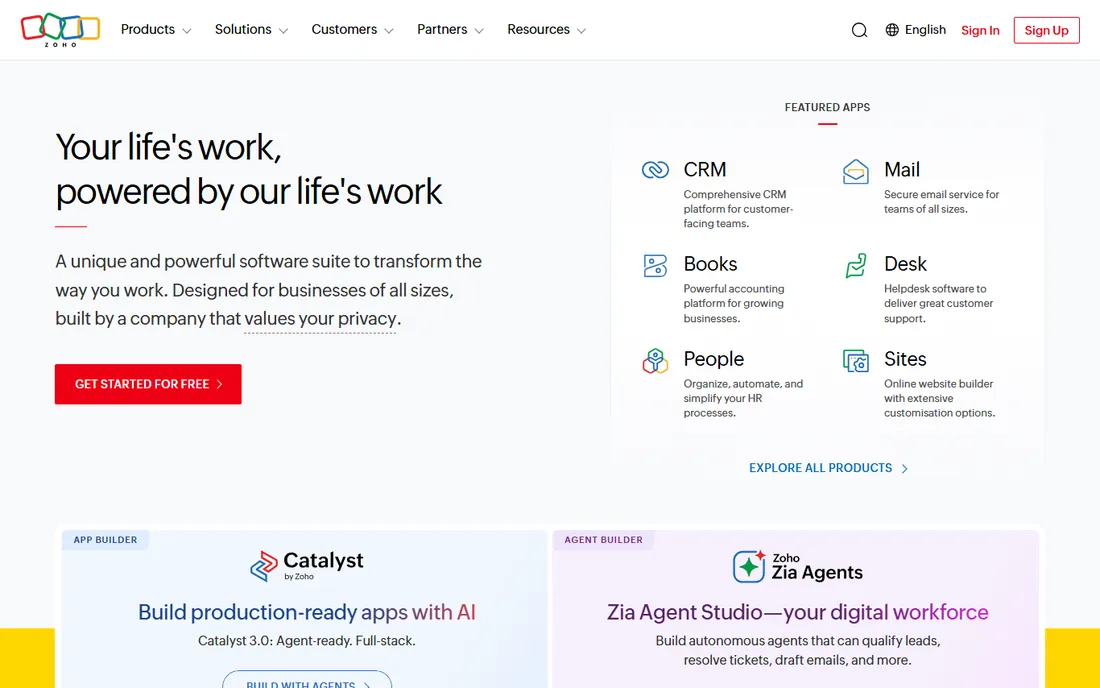
Zoho Recruit is the odd one out here, and deliberately so. Most teams do not need a parsing API; they need an applicant tracking system that happens to parse resumes on the way in. The free plan covers one active job, and paid plans start at $25 per user per month with 250 resume parses per day on Standard. If you already run Zoho CRM or Zoho People, the data flows between apps with no integration work.
Reviewers note the parser can miss details on unusual resume layouts, which is the price of a built-in tool versus a dedicated engine. But for small and mid-size companies, the math is compelling: one subscription covers the ATS, the career site, and the parsing. Teams with heavy or highly technical hiring will eventually want a dedicated parser feeding into Zoho, and CandidateZip integrates with it directly.
What we like- Parsing built into a complete ATS with a free tier
- Paid plans include 250 parses per day
- Deep integration with the Zoho ecosystem
Watch out for- Parser accuracy trails dedicated engines on complex resumes
- Parsing limits are tied to per-user ATS pricing
What to check before you buy a resume parser
Accuracy on your resumes, not theirs
Every vendor publishes accuracy claims. None of them were measured on your resumes. Run a trial with 50 to 100 of your own real resumes, including the messy ones: two-column layouts, scanned PDFs, non-English CVs. Score how many fields come back correct and how the parser handles edge cases like career breaks and consulting stints.
Field coverage and taxonomy
Count the fields you actually search on: skills, job titles, seniority, education, certifications, languages. Then ask how the parser normalizes them. A parser that extracts "React.js", "ReactJS", and "React" as three different skills will pollute your database. Taxonomy-driven normalization (Textkernel, RChilli, DaXtra) is what keeps search results clean over time.
Language support
If you hire across regions, verify each language you need, not just the headline count. Test resumes in those languages during the trial. Auto language detection (HireAbility, Skima AI) saves configuration work when documents arrive mixed.
Integration path
API-first tools (HrFlow.ai, Affinda, RChilli) need developer time but give the most control. No-code tools (CandidateZip) suit teams without engineers. Built-in parsing (Zoho Recruit) is simplest of all but least flexible. Match the integration path to the team you have, not the team you wish you had.
Data privacy and storage
Ask where candidate data is processed and whether the vendor stores it. HireAbility never stores data; Affinda offers self-hosting; most others process in their cloud under GDPR and SOC 2 controls. Your legal team will ask, so get the answer before the trial, not after.
How we chose
We started from vendor pricing pages and product documentation, then cross-checked features, field counts, and pricing against public review sources including G2, Capterra, Slashdot, SourceForge, and recent independent comparisons. We compared extraction depth, language coverage, integration options, privacy posture, and pricing models, weighting fit for small and mid-size US companies alongside enterprise-grade options. We did not claim hands-on testing of any product; every fact here comes from published vendor materials or public review data.
Parsing is only half the job
A parser that extracts perfect data into a database nobody can search is a filing cabinet. Before you buy, ask how the parsed data will be searched, filtered, and matched to jobs. Some vendors bundle semantic search and matching (Textkernel, DaXtra, Affinda, HrFlow.ai); others expect your ATS to handle it. If your ATS search is weak, a parser with built-in matching will deliver more value than a marginally more accurate parser with no search at all. The best buying decision considers the parser and the search layer together.
Frequently asked questions
What is resume parsing software?
Resume parsing software reads resumes in formats like PDF and Word and converts them into structured data: contact details, work history, education, skills, and certifications. Recruiters and ATS platforms use that structured data for searching, filtering, and matching candidates to jobs without manual data entry.
How accurate is resume parsing?
Top parsers report accuracy above 95% on standard resume formats, but real-world accuracy depends on your documents. Two-column layouts, graphics-heavy designs, scanned images, and non-English resumes all reduce accuracy. Always test with your own resumes during a free trial before committing.
How much does resume parsing software cost?
Usage-based APIs start around $0.10 per parse (HrFlow.ai, Affinda). Monthly plans start at $30 (CandidateZip) and $75 (RChilli). Annual bundles start at $800 for 6,000 parses (Affinda). Enterprise parsers like DaXtra and HireAbility use quote-based pricing. Free options include Skima AI (100 resumes), HrFlow.ai's free tier, and Zoho Recruit's free ATS plan.
Do I need a standalone parser or is my ATS enough?
If your ATS includes parsing (Zoho Recruit, Greenhouse, Lever), try it first; it may be enough for standard hiring. Consider a standalone parser when you need higher accuracy, more fields, multilingual support, or parsing outside the ATS, such as in a custom job board or HR tech product.
What is the difference between resume parsing and resume screening?
Parsing extracts structured data from resumes; screening uses that data (plus AI) to rank or shortlist candidates. Parsing is the foundation. Screening tools build on parsed data to score fit, detect fraud, or automate outreach. Many vendors now sell both, but they solve different problems.
Sources we checked (12)
- https://affinda.com/
- https://rchilli.com/
- https://textkernel.com/
- https://daxtra.com/
- https://daxtra.com/products/resume-parsing-software/
- https://hireability.com/
- https://skima.ai/
- https://hrflow.ai/
- https://developers.hrflow.ai/docs/resume-parsing
- https://www.candidatezip.com
- https://www.zoho.com
- https://www.itechguides.com/best/resume-parsing-software/
Is your product missing or out of date?
We review this list regularly. Vendors can request a listing, send updated pricing or ask about featured placement.

Shihab Mia · Founder, Rankite
Shihab has spent more than a decade helping SaaS and e-commerce brands grow through search. He writes Rankite's software buying guides from pricing pages, documentation and public user reviews. More about Shihab.