How we make this list: we compare pricing pages, product documentation and public user reviews. Ratings come from G2, Capterra or Trustpilot, with the date we checked them.
Key takeaways
- DoorDash, Uber Eats and Grubhub bring the largest customer reach, but they also take the largest share of each order through commission.
- Commission tiers matter more than the headline rate, because higher tiers buy placement and reach while lower tiers protect margin on regular orders.
- Courier only services such as DoorDash Drive and Uber Direct suit restaurants that already take orders on their own website or app.
- Commission free or low commission ordering tools such as ChowNow and Slice protect margin, but they bring less built in customer traffic.
- The best mix for most restaurants is one or two marketplaces for discovery plus a direct ordering channel for repeat customers.
Quick comparison
| Tool | Best for | Starting price | Free plan |
|---|
 DoorDash | Widest customer reach | 15% commission (Basic plan) | No |
 Uber Eats | Urban reach and Uber One customers | 20% commission (Lite plan) | No |
 Grubhub | Established marketplace presence | 5% marketing commission (Basic plan) | No |
 DoorDash Drive | Delivery for your own orders | See website | No |
 Uber Direct | Delivery for your own orders | See website | No |
 ChowNow | Commission free direct ordering | See website | No |
 Slice | Independent pizzerias | See website | No |
 Relay | Courier delivery in select cities | See website | No |
Is your product missing or out of date?
We review this list regularly. Vendors can request a listing, send updated pricing or ask about featured placement.
The best restaurant delivery service
Starting price15% commission (Basic plan)
Free planNo
DoorDash is the default marketplace for many US restaurants because it brings customers who are already ordering, not just customers who already know your restaurant. That reach is valuable for new locations and for restaurants in busy delivery areas. Tiered plans let you choose between a lower commission with less placement and a higher commission with more reach.
The cost needs honest math. A 30% commission on a low margin menu item leaves little room for food, labor and packaging, so many owners use the lower tier and raise delivery menu prices or limit the delivery menu to higher margin items. DoorDash works best when you treat it as a paid discovery channel, not as your only ordering channel.
What we like- Largest US marketplace audience
- Tiered plans from 15% to 30% commission
- Pickup commission of 6% on marketplace plans
Watch out for- Higher tiers take a large share of each order
- Promotion and ad costs sit on top of commission
- Menus and pricing need care to protect margin
Starting price20% commission (Lite plan)
Free planNo
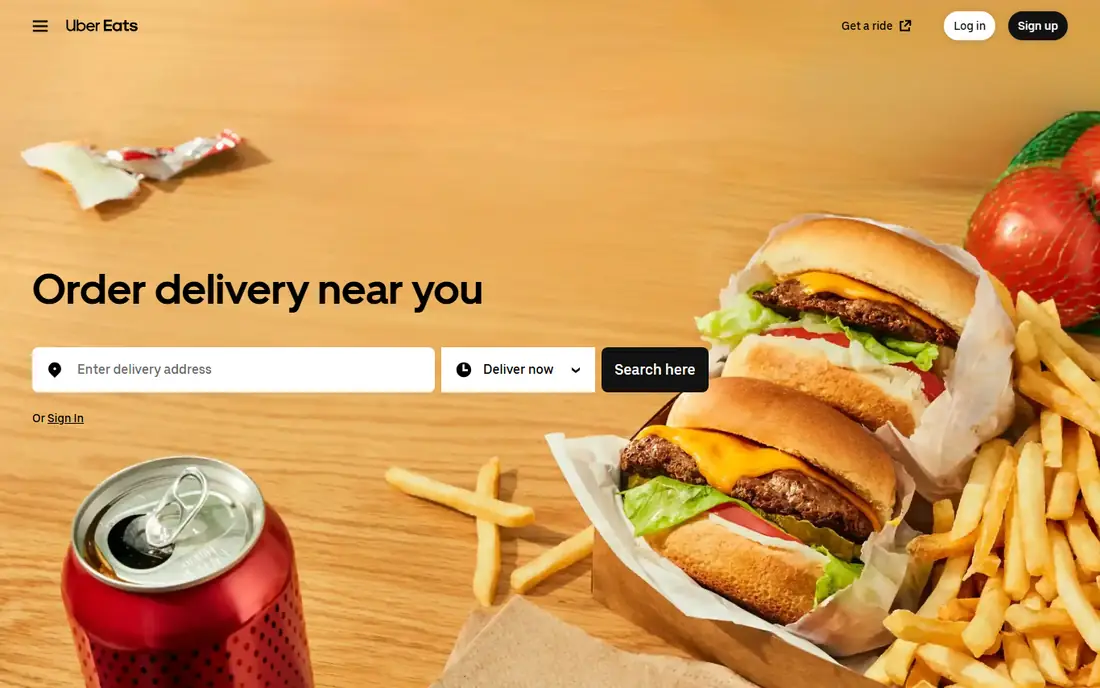
Uber Eats suits restaurants in cities where Uber is already part of daily life. Customers can move from a ride to a food order in the same app, and Uber One members tend to order often, which helps repeat volume. The tier structure is similar to DoorDash, so the choice often comes down to which app your local customers open first.
Watch the member order rules closely. On some plans, orders from Uber One members carry an extra charge, and the Lite plan does not serve those members at all. Before you pick a tier, check your local order mix and your margin per item, because a plan that looks cheaper on paper can cost more on member heavy weeks.
What we like- Strong presence in cities and with Uber app users
- Tiered plans from 20% to 30%
- Pickup pricing of 7% when in store pricing is validated
Watch out for- Uber One member orders can add cost on some plans
- Lite plan limits access to member customers
- Commission still takes a large share on popular items
Starting price5% marketing commission (Basic plan)
Free planNo
Grubhub remains a useful marketplace, especially in cities where it has a loyal customer base and in corporate ordering settings. The Basic marketing commission looks low at first glance, which can help smaller restaurants test marketplace delivery without committing to a high tier. That lower entry point is a real advantage for restaurants that want to compare marketplaces side by side.
The full cost is higher than the marketing rate alone. When you add Grubhub delivery, order processing and any paid placement, the total can reach the same range as DoorDash and Uber Eats. Ask for a full fee breakdown in writing, and compare Grubhub order volume in your neighborhood, not nationally, before you rely on it as a main channel.
What we like- Marketing commissions start lower than rivals on the Basic plan
- Long history in US delivery
- Corporate and campus ordering in some markets
Watch out for- Delivery fees start at 10% when you use Grubhub drivers
- Total cost rises once marketing, delivery and processing fees combine
- Reach varies by city
Starting priceSee website
Free planNo
DoorDash Drive is a different product from the DoorDash marketplace, and that difference matters. It delivers orders that customers place through your own channels, so you keep the customer relationship and avoid marketplace commission. For restaurants with a working website or app, it removes the need to hire and manage drivers.
The trade off is traffic. Drive does not bring you new customers, so it only pays when your direct ordering already works. If your website orders are thin, a marketplace will still be needed for discovery, and Drive becomes the delivery arm for repeat customers who already know you.
What we like- Lets you offer delivery on orders from your own website
- No marketplace commission on those orders
- Access to DoorDash courier network without hiring drivers
Watch out for- You pay a flat fee per delivery
- You must drive your own order volume
- Customer support is split between you and DoorDash
Starting priceSee website
Free planNo
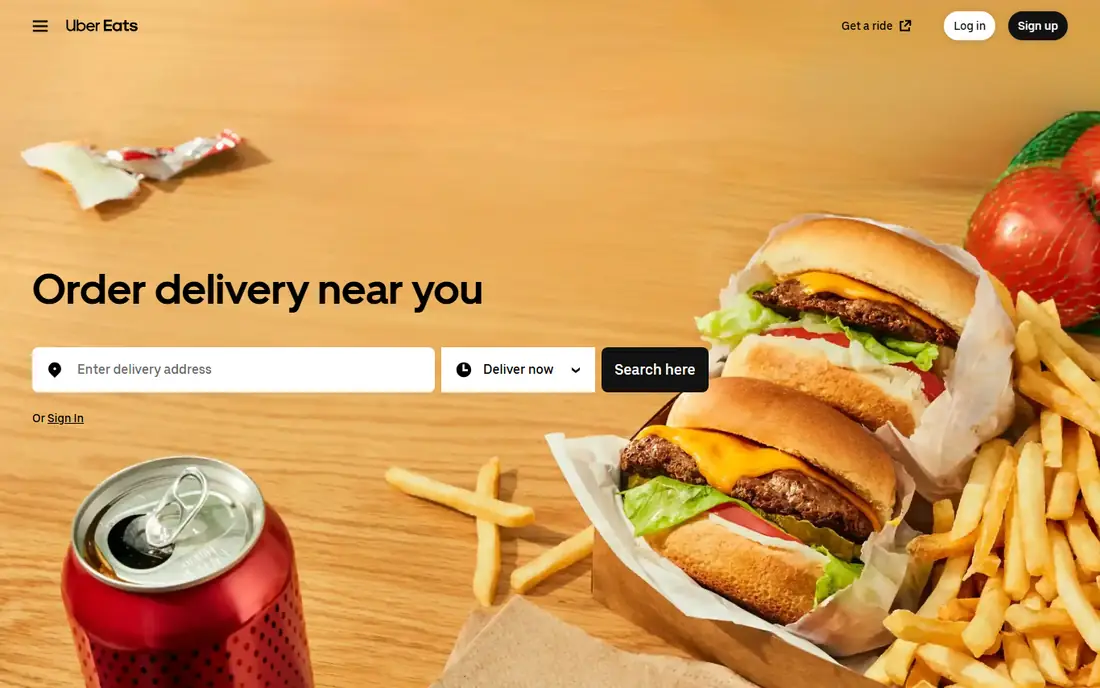
Uber Direct plays the same role as DoorDash Drive on the Uber side: it moves food for orders you generate yourself. Restaurants that already use Uber Eats, or that have strong direct ordering, can add delivery without building a driver team. It is a practical bridge between full marketplace delivery and self delivery.
As with Drive, the weakness is that it does not solve discovery. You need a website, app or phone ordering flow that customers actually use, and you need to price delivery fees or absorb them in a way that protects margin. Compare the per delivery fee against your average order value before you turn it on for every order.
What we like- Courier delivery for orders placed on your own channels
- Distance based pricing in many markets
- Ties into Uber courier network
Watch out for- Fees vary by distance and market
- You handle marketing and order volume yourself
- Setup depends on your ordering system
Starting priceSee website
Free planNo
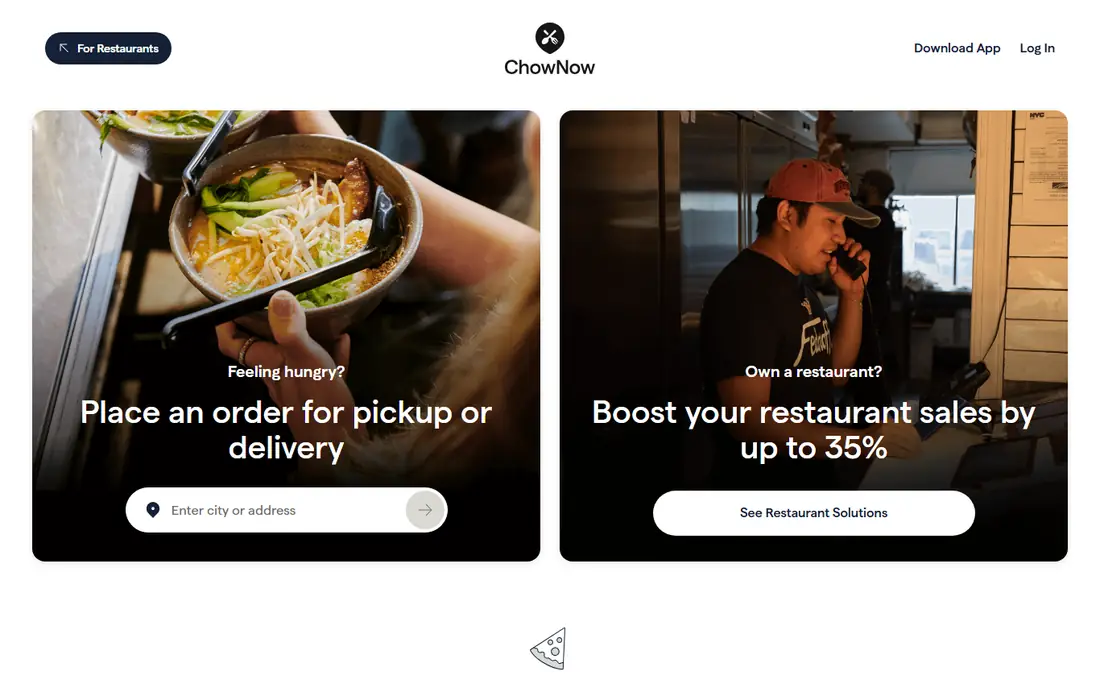
ChowNow is built for restaurants that want to keep more of each order. Instead of taking a percentage of every sale, it charges a subscription and lets customers order through your branded pages. Over time, that model can save a meaningful amount for restaurants with steady repeat orders, because the fee does not grow with order value.
The limit is reach. ChowNow will not put your restaurant in front of strangers browsing a marketplace, so you need signage, social posts, receipts and staff prompts to move customers to direct ordering. It works best as the second channel in your mix, paired with one marketplace for new customers.
What we like- No commission on orders placed through ChowNow
- Branded ordering pages and apps for restaurants
- Tools for loyalty and marketing to repeat customers
Watch out for- Monthly subscription cost applies
- Brings little built in marketplace traffic
- Success depends on your own marketing
Starting priceSee website
Free planNo
Slice deserves a place here because it serves one category well instead of serving every category thinly. Independent pizzerias get ordering, marketing and delivery support designed around pizza customers, including repeat ordering habits that general marketplaces do not always handle well. For a single location pizza shop, that focus can mean lower costs and better fit.
The catch is scope. If your menu goes beyond pizza, Slice will not cover the rest, and its customer base is smaller than DoorDash or Uber Eats in many cities. Use it as a specialist channel for pizza orders, and keep a general marketplace if you need broad reach for other items.
What we like- Built for independent pizza shops rather than chains
- Online ordering and delivery support for pizzerias
- Lower cost structure than general marketplaces for many shops
Watch out for- Focused on pizza, so it does not fit other cuisines
- Reach is strongest in pizza heavy markets
- Some services vary by location
Starting priceSee website
Free planNo
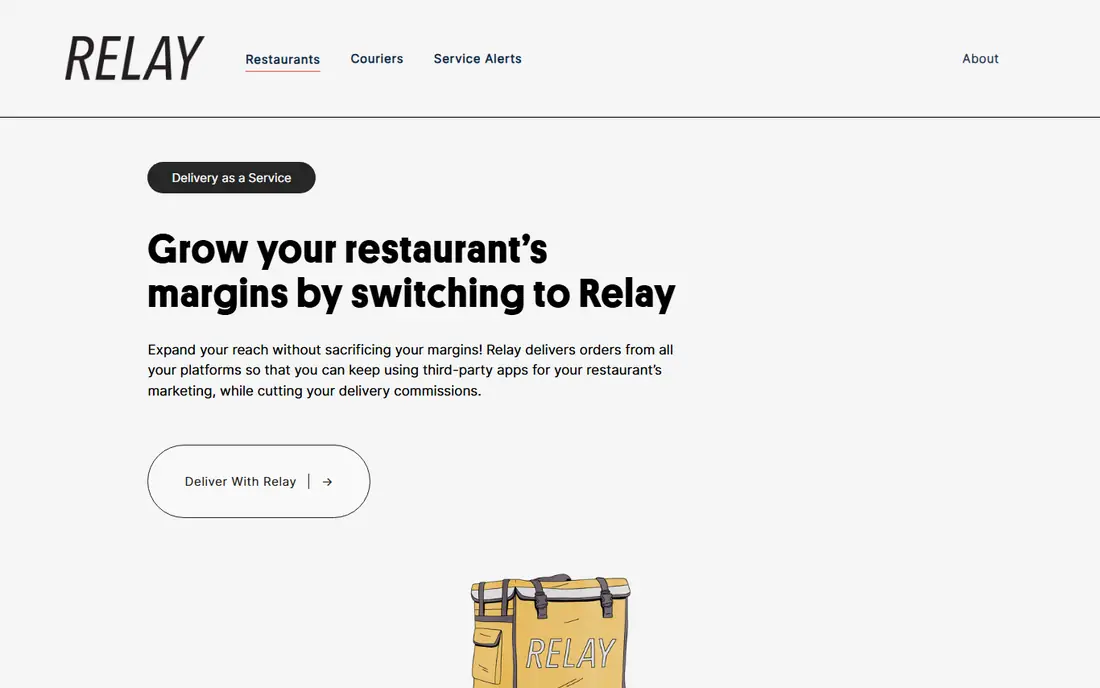
Relay is a courier option for restaurants that want delivery without a marketplace. It is useful when you already have orders, including catering or large group orders, and you need a driver quickly in a covered city. Like Drive and Direct, it keeps the customer relationship with you rather than with a marketplace.
Availability is the main limit. Relay does not operate everywhere, and it does not bring browsing customers to your menu. Check coverage in your delivery area, test response times during peak hours, and compare per delivery cost against Drive and Direct before you make it your default courier.
What we like- On demand courier delivery for restaurants
- Useful for catering and large orders in covered cities
- Lets restaurants keep direct ordering
Watch out for- Coverage is limited to select cities
- Pricing is quoted per delivery
- Not a customer marketplace for discovery
Picking a delivery mix that protects margin
Start with your numbers, not with the marketplace that looks most popular. List your average order value, food cost, packaging cost and labor per order, then subtract each platform commission to see what remains. A channel that brings many orders but leaves almost nothing per order is not a growth channel, it is a discount channel, and it needs a different menu or a different price.
Use marketplaces for discovery, direct channels for repeat orders
Marketplaces earn their fee when they bring a first time customer who would not have found you otherwise. Direct ordering earns its place when a repeat customer orders again, because there is no reason to pay a marketplace commission for a customer you already won. Put a direct ordering link on receipts, packaging and social profiles, and train staff to mention it at pickup.
Price the delivery menu separately
Delivery menus do not have to match dine in prices. Many restaurants set delivery prices slightly higher to cover commission, packaging and courier costs, and they limit the delivery menu to items that travel well and hold margin. Review the delivery menu each quarter, remove items that lose money after fees, and bundle low margin items with higher margin sides or drinks.
How we chose
We compared marketplace and courier services using vendor pricing pages, merchant help pages, and public reviews from restaurant owners on G2, Capterra and Reddit, plus published commission tiers for 2026. We favored services that operate in the US today, that serve restaurants directly, and that publish or confirm commission and fee details. Services were left out when they had closed, when they served only one narrow region with no national relevance, or when their restaurant pricing could not be confirmed.
Frequently asked questions
Which delivery service is best for restaurants?
It depends on your location, menu margin and order volume. DoorDash usually brings the widest reach, Uber Eats is strong in cities with heavy Uber use, and Grubhub can work well in markets where it has loyal customers. Most restaurants do best with one or two marketplaces plus a direct ordering channel for repeat customers.
How much commission do delivery apps charge restaurants?
DoorDash marketplace delivery commission runs from 15% to 30% by plan, Uber Eats runs from 20% to 30% by plan, and Grubhub marketing commission runs from 5% to 20% by plan, with delivery fees added when you use their drivers. Your total cost also includes processing fees, promotions and any paid placement, so ask for a full breakdown before signing.
Is it cheaper to use DoorDash Drive or Uber Direct?
For restaurants with their own ordering, courier only services are often cheaper per order than marketplace commission, because you pay a flat or distance based delivery fee instead of a percentage of the order. The saving only holds if you already generate direct orders, since neither service brings marketplace traffic. Compare the per delivery fee to your average order value and commission rate.
Should a small restaurant join every delivery app?
No, joining every app spreads staff thin and makes menu updates, tablet management and order errors harder to control. Start with the one marketplace that brings the most orders in your neighborhood, add a direct ordering channel, and only add a second marketplace when you can handle the volume without hurting dine in service.
What is the best delivery service for restaurants that want to keep more profit?
Direct ordering tools such as ChowNow, and courier services such as DoorDash Drive and Uber Direct, usually keep more profit per repeat order because they avoid marketplace commission. They require your own marketing to drive orders, so pair them with a marketplace for discovery rather than relying on direct ordering alone at the start.
Can restaurants set different prices for delivery?
Yes, in most cases restaurants can set delivery menu prices that differ from dine in prices, within platform rules and local laws. Many owners raise delivery prices modestly to cover commission and packaging, and they use bundles to protect margin. Check each platform's pricing rules before you publish a separate delivery menu.
Sources we checked (8)
- https://www.doordash.com
- https://www.ubereats.com
- https://www.grubhub.com
- https://www.chownow.com
- https://www.slicelife.com
- https://www.relay.delivery
- https://www.upmenu.com/blog/third-party-delivery-services/
- https://orderitto.com/blog/third-party-delivery-fees-restaurants
Is your product missing or out of date?
We review this list regularly. Vendors can request a listing, send updated pricing or ask about featured placement.

Shihab Mia · Founder, Rankite
Shihab has 5+ years in B2B and SaaS SEO. He writes Rankite's software buying guides from pricing pages, documentation and public user reviews. More about Shihab.